Monday, December 29, 2025
Home Blog Page 2961

Iran Blasts Saudi Foreign Minister’s Comments

Iran Summons French Envoy over Macron’s Anti-Islam Stances

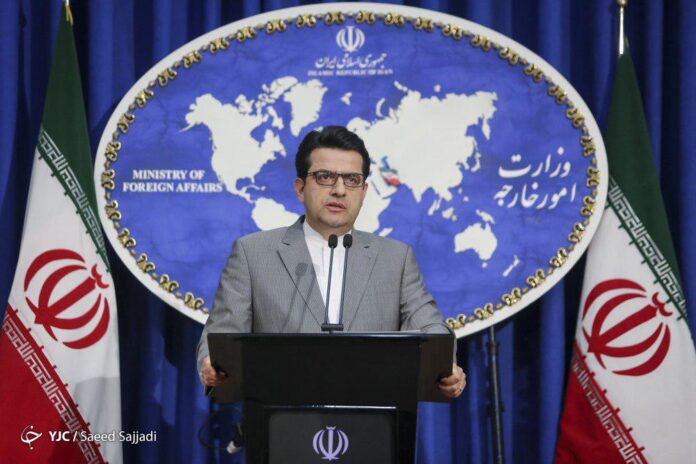
“Since Saudi Arabia sees itself as the godfather of Daesh (ISIS) and the terrorist groups, it imagines that the martyrdom of commanders of the axis of resistance at the hands of the terrorist president of the US has provided security for the terrorist groups and the terrorist-nurturing governments,” the Iranian Foreign Ministry spokesman said on Tuesday.

He also advised the Saudi foreign minister to refer to the reference books of the international law to check the subject of “right of self-defense” and observe the legal discoveries about the definition of the phrases such as the issue of right of self-defence.

“The fact that the Saudi minister of foreign affairs defines a brazen act of assassination as the right of self-defence by distorting the whole internationally-recognized laws is regrettable and deplorable. Martyr Lieutenant General Soleimani has been assassinated by the terrorist US Army on the soil of another country and without coordination with the host country (Iraq) and (the attack has been launched) against a formal guest of that country and against an official of the host country itself, yet in a civilian airport that, as confirmed by the host country, has been an action in violation of Iraq’s domestic regulations and absolutely in contravention of the unquestionable international law. The Saudi regime is an accomplice of Trump with such expression of support,” Mousavi added.
“What will result in the security of the region is the pullout of the troublesome and bullying alien forces who have been deciding the fate of certain countries,” he added.

“By entering into an alliance with Trump’s terrorist administration and the child-murdering Zionists, the Saudis have played a leading role in making the (situation in the) region critical, a clear example of which is the invasion of Yemen for several years and commitment of war crimes against the oppressed people of Yemen; the crimes that have been repeatedly acknowledged by the United Nations,” he concluded.


Related Articles:


Iran Deplores Trump’s Shameful ‘Treason of the Century’

Iran Deplores Trump's Shameful ‘Treason of the Century'

In a statement on Tuesday, Iranian Foreign Ministry Spokesman Seyyed Abbas Mousavi denounced the peace plan imposed by the US, known as “deal of the century”, as the “treason of the century” against the people of Palestine and the Islamic Ummah (community), and called on the free governments and nations in the region and the world to confront such shameful plot.

The Palestinian territories belong to the Palestinian people, the spokesman added, noting, “The Zionist regime is a usurper and occupying regime, and the only way to settle the Palestinian crisis will be holding a referendum among the main inhabitants of the Palestinian land, and such vicious plans are doomed to defeat.”

From the viewpoint of the Islamic Republic of Iran, the issue of Palestine and the holy al-Quds is the overriding issue of the Islamic world, Mousavi underlined, adding, “It’s a pity that certain Islamic countries have neglected such cause which has targeted the future and dignity of Muslims and the Islamic countries, have replaced the friend with the enemy, and are losing sight of more than 70 years of anti-human crimes committed by the Zionist regime, either intentionally or with strategic negligence.”

“Considering the urgency and importance of the issue of Palestine and the big plot that has been hatched against the Islamic Ummah under the guise of the so-called deal of the century, the Islamic Republic of Iran is prepared –regardless of its disagreements with a number of regional countries, many of which have been created by the usurpers of the holy al-Quds and the bargainers of the reputation, dignity, and honour of Muslims- to cooperate (with the regional countries) at any level for the sake of the Islamic world’s unity and in order to counter the big plot that has threatened the sovereignty of the Islamic Ummah,” Mousavi stated.

Iran Outlines Its Measures to Contain Coronavirus

Iran Condemns US Oil Deal with Syrian Kurdish Group

Asked by reporters about the Iranian Foreign Ministry’s measures and plans in the fight against the new coronavirus, Seyyed Abbas Mousavi emphasized on Tuesday that the Ministry of Foreign Affairs has been fully prepared for cooperation and interaction with the relevant organizations since the onset of the outbreak of the crisis.

“In this regard, Dr. Zarif has in the cabinet session proposed the idea of holding a meeting of the ministers concerned with the issue, with the participation of the foreign minister, minister of health and medical education, minister of tourism, and the minister of road,” Mousavi added.

The spokesman also highlighted the close cooperation and interaction between the diplomatic bodies and the health authorities across the country, above all with the Ministry of Health and Medical Education, noting, “Moreover, the Islamic Republic of Iran’s missions in China have been given the necessary instructions on the preventive measures, and the travel advisories have been also issued for the tourists and the Iranian nationals residing in China, and after the formation of a crisis headquarters at the Islamic Republic of Iran’s Embassy in Beijing as well as at our country’s Consulate General in Shanghai, the contact numbers have been publicized for providing services and guidance for the Iranian nationals.”

No Coronavirus Case in Iran

Mousavi also noted that Iran’s Embassy in Beijing has established contact with the Iranian university students residing in the Chinese city of Wuhan, and has dispatched packages of foodstuff to their dormitories considering a shortage of food in the city of ten million population.

The Foreign Ministry spokesperson finally noted that the request from the families of a number of the Iranian students in Beijing for the facilitation of return of their children to Iran and their release from quarantine are being considered.

Iran’s Qeshm Island; Major Hub of Tourist Attractions

Qeshm Island; Major Tourist Hub in Southern Iran

Qeshm, an Iranian island with a total area of about 1,500 square kilometers, is located in the Strait of Hormuz. It is the world’s biggest dependent territory whose area is larger than the total space of the world’s 22 smallest countries. The island, which comprises 65 hamlets and three towns, is also the biggest island in the Persian Gulf home to more than 100,000 people.

Thanks to its strategic position, Qeshm Island has always had a unique place throughout history from the Elamites period to the present time. As a result, the island benefits from multiple upsides, among them access to high seas, domestic and Central Asian markets and  the southern part of the Persian Gulf. Qeshm Island also has abundant skilled workforce. Besides, there are huge energy reserves in the island, including gas, deep coastline waters ideal for building wharfs to allow high tonnage vessels to dock; and intact coral reefs, especially in Naz, Hengam and Larak islands which are adjacent to Qeshm.

Take a look at some photos of Qeshm Island before reading about its main tourist attractions:

Qeshm Island’s Global Geopark

Qeshm Global Geopark with a total area of over 30,000 hectares is situated in the west of the Island. It was the Middle East’s first Geopark which made it to the Global Geoparks Network (GGN) supported by United Nations Educational, Scientific and Cultural Organization (UNESCO) in 2006. It was then removed from the UNESCO list in 2012, due to mismanagement of Qeshm Free Zone [Organization] and consequent failure to meet the required criteria for remaining on the list.

Qeshm Island Geopark has become a UNESCO Global Geopark in 2017 after obtaining the UN cultural body’s green card.

This Geopark spans several areas including Hara Forests, Salt Dome, Salt Cave, mineral springs, Chahku Strait, Tang-e Ali Strait, Bam-e Qeshm, Tandis-ha valley, Kalat Koshtar, and tens of rock and reef formations.

Qeshm Island's Global Geopark
Qeshm Global Geopark was the Middle East’s first one which made it to the Global Geoparks Network (GGN). Photo by qeshm.ir

Hara Forests of Qeshm Island

The Hara Forests is the common name for mangrove forests on Qeshm Island. Dominated by the species Avicennia marina, which is locally known as Hara, the forests are an important ecological resource.

The Hara tree, a salt-water plant that is often submerged at high tide, grows to heights of three to eight meters and has bright green leaves and twigs.

Hara Forests of Qeshm Island
Hara Forests are some major attractions of Qeshm island. Photo by rasekhoon.net

 ‌

Valley of Stars 

The Valley of Stars is not simply a location; it is a rare geological phenomenon. Located to the north of Berkeh-ye Khalaf village, the Valley of Stars is five km away from the southern edge of Qeshm Island in the Persian Gulf.

The beautiful place is there thanks to soil erosion triggered by surface water, torrential rain and high gusts in Qeshm Island.

Locals believe the valley has been named after the falling of a star centuries ago.

Qeshm Island's Valley of Stars
Qeshm Island’s Valley of Stars is a rare geological phenomenon. Photo by apochi.com

 ‌‌

Kharbas Caves of Qeshm Island

The historic Kharbas Caves of Qeshm Island in the Persian Gulf are one of the outstanding works of rock-cut architecture. There are indications – including multiple historical structures surrounding the caves and rock catacombs [man-made subterranean passageways for religious practice] which are scattered all across the island – that the caves date back to the Parthian and Sassanid periods.

Some experts say the caves were formed naturally more than 2,800 years ago due to receding water levels.

Many historians argue that Kharbas Caves in Hormozgan province- including Qeshm Island- have been a temple or a worshiping place for the followers of Mithraism or Anahita, the goddess of water and seas.

Kharbas Caves, Qeshm Island
Qeshm Island’s Khorbas Caves were shaped more than 2800 years ago. Photo by gazmak.ir

Namakdan Cave; Salty Attraction of Persian Gulf

In the southwest of Qeshm island there is a dome-like mountain, 237 meters above sea level. It has salt caves- called Namakdan Caves which are among the island’s most beautiful natural attractions. Strands of salt on the mountain create a beautiful scene from afar.

Marble, crystal icicles in different forms have blanketed the ceiling of Qeshm salt caves.

The salt in these caves is among the best common salt which is also rich in magnesium; that’s why it can be used for medical purposes, especially by professional athletes who take it in the form of capsules.
Studies conducted by geologists at Shiraz University and in the Czech Republic have revealed that Qeshm island’s salt cave is the world’s longest (6,400 meters long). So far more than 6,000 meters of the caves have been explored.

Salt caves in Qeshm Island are inside the salt dome which is one of the most elevated parts of the island. At the cave’s entrance you can see a stream of salt water running on the ground serving as a mirror, reflecting everything. Salt crystals are spread on the ground inside the cave. You will find no similar parts in the cave. Take a look at different parts and all you see are new forms and colors.

Namakdan Cave; Qeshm Island
Iran’s Qeshm Island Salt Caves are the longest in the world. Photo by qeshm.ir

Naz Island, one of Qeshm’s Seven Wonders

Some 22 km from Qeshm, you reach Naz Island, the only place you can wade on foot or by car one km into the Persian Gulf waters. It is one of the key tourist attractions of Qeshm Island.

Naz Island which is around three hectares in area does not have a sandy beach and is surrounded by rocky walls which are five to ten meters in height. The island’s surface is completely flat. When the tide ebbs or the water flows outward from the land, a strip of land temporarily connects the island to Qeshm’s coasts.

This island is one of the areas favored by tourists visiting Qeshm Island.

Naz Island in Southern Iran
You can wade on foot into Persian Gulf in Naz Island. Photo by S-travels

Aali Mohammad Valley; Abnama or Sangab Valley

Another geological phenomenon – Aali Mohammad Valley – is located near Chahkuh Valley in Qeshm Island. More attractive than Chahkuh thanks to its beautiful scenes, Aali Mohammad Valley has also created on its walls. Water that is easily seen in some parts of valley  added to its beauty.

Aali Mohammad Valley which is located in the western part of Qeshm Island and to the south of the Chahu-ye Sharqi spans along a north-south line. The valley’s northern opening is wide and vast, however it sharply narrows after a few meters.

The middle part of the valley becomes drastically narrow and almost impassable. In fact there are places where the walls get so close to each other that visitors need to lift themselves up to pass through. The height of surrounding walls together with the narrow and dark path creates an eerie condition for some visitors, while it excite others.

At its end, Aali Mohammad Valley leads to the northeastern walls of Salt Dome [of the Salt Cave]. From this point to the southern coast of Qeshm Island, the path is completely different, and features of the outer part of the salt dome can be seen.

Aali Mohammad Valley, Qeshm Island
Aali Mohammad Valley is another natural phenomenon of Qeshm Island. Photo by qeshm.ir

Naderi Castle

This castle, which is in Laft – an old village on Qeshm Island – beside Tala Wells, is known as Naderi or Nader Shahi (King Nader) Castle. But its construction predates Nader Shah. It is believed to have been built on the foundations of the ancient pre-Islamic fortresses. Ebrahim Kazerouni who visited the castle in Laft during the reign of Mohammad Shah, a Qajar king, has said that the castle dates to the Safavid era.
Naderi Castle of Qeshm – which has been built of stones and mortar – has one rampart, four towers and one gate which is located on its western side. Its architecture resembles that of Portuguese castles. The castle is now at the heart of the city surrounded by houses.
Naderi Castle, Qeshm Island
Naderi Castle of Qeshm Island is believed to be originally constructed in pre-Islamic era.Photo by Kojaro.com

Qeshm Island’s Tala Water Wells 

Tala Water Wells are located next to Naderi Castle in Laft. The hardworking people in the region dug them through Schist rocks which had covered the ground. Since a plaster layer lies at the bottom of the wells, water stays there healthy and cold for a long time.

The number of these wells is said to stand at 366, equal to the number of days in a leap year; each day people of Qeshm Island used the water of one well.

Tala Water Wells, Qeshm Island
There are 366 wells next to Naderi Castle in Laft, Qeshm Island. Photo by qeshm.ir

Kaseh Salakh 

Kaseh Salakh or Salakh Bowl is a featureless area, seven kilometers in length and about five kilometers in width, on the southern coast of Qeshm Island. It has no flora or vegetation; there are no traces of life in it.

Thousands of small and big dome-like hillsides and erosional patterns are seen in Qeshm, those which have bubbled from under the ground, dried there and formed wide, interconnected foothills.


Deep at the heart of this wilderness, a healing spring of sulfur water is bubbling up from the ground. All these factors suggest that huge oil and gas reserves are in the underground layers of the area.

This area on Qeshm Island has fewer visitors than other parts, but its wonderful attractiveness can cause man to plunge into deep thought. It can also serve as a haven for those seeking calm and serenity. The fluttering of the island’s big eagle in the blue sky is the only sound which punctuates the silence there.

Kaseh Salakh, Qeshm Island
Qeshm Island’s Kaseh Salakh has no flora or vegetation. Photo by Kojaro.com

Bibi Ab-Anbar of Qeshm Island

Ab-Anbar means cistern in Persian. The Bibi Ab-Anbar -Cistern- was built on Qeshm Island more than two centuries ago. The historical site, which is a lake-based cistern, is located in Shahab District and is one of the sightseeing sites of Hormozgan Province.

The Bibi Cistern is the first lake-based cistern which was built by Soghiyeh, a female benefactor and the wife of Sheikh Abdollah, a one-time ruler of Qeshm island.

Kaseh Salakh, Qeshm Island
Bibi cistern in Qeshm Island has been built by a ruler’s wife. Photo by Kojaro.com

Tourian Village

Tourian is a village about 31 km to the southwest of Qeshm. Agriculture is booming in this village. Vegetable cultivation, sunflower farms and beautiful palm groves are among the tourist attractions of this region.

At the time of Mongol invasion when anarchy was the order of the day in Iran, any tribe which could escape unharmed and survive the Mongol plunder would leave for a safe place.

A tribe headed by Touran settled in Qeshm Island. The tribal chief built a court, a mosque and a bathroom on the island and proclaimed himself the king. Later he was known as Touran Shah (King Touran).

History has it that two Touran Shahs were in this region: one on Hormuz Island and the other on Qeshm. Ibn Battuta writes in his travelogue: Touran, the king of this island, took up residence six farsangs from Qeshm. He is widely known as Mokhles or Tourian.

Tourian Village, Qeshm Island
Beautiful Tourian village in Qeshm Island. Photo by seeiran.ir

Bogh-e Pir in Tomsenati Village

Bogh-e Pir or Pir shrine, is located in the Tomsenati village close to the Tourian region of Qeshm Island. The shrine’s half-ruined building is still beautiful and lovely.

Beautiful semi-circular mortar plasterworks are seen around the neck of the dome. A short, narrow and small door forms the entrance of the shrine, with the Pir Shrine lying below the ground surface. This shows that the building was likely to be the temple of Mithraism and the place of worship for the god of Mehr or Mithra in Qeshm, prior to the Seljuq dynasty and before Pir was buried there. (Future excavations are likely to prove this.)

Tomsenati is in fact the name the Spaniards have used for Bogh-e Pir of Qeshm  Island; it is perhaps a variation of Tomb Saint.

Bogh-e Pir shrine, Tomsenati village, Qeshm Island
Bogh-e Pir shrine of Qeshm Island’s Tomsenati village is likely to have been a temple of Mithraism.

British Cemetery of Qeshm Island

The cemetery, which is situated 135 km away from Qeshm in the Basaedo Port, used to accommodate a group of Britons in the Fath-Ali Shah period. The tombs of a number of British government officials, lookouts and military officers who served in the British army are in this cemetery.

In the past the British cemetery of Qeshm Island used to be a small castle with a watchtower and a place for cannonballs to safeguard the castle. Among the cemetery’s attractions are old, broken gravestones, and a memorial column which is still standing. The structure of the column is in fairly good condition, but its epigraphs are broken.

British cemetery of Qeshm Island
The British cemetery of Qeshm Island used to be a small castle in the past. Photo by eghamat24.com

Laft Village, Port of Wind-catcher  

Laft is a small, beautiful village on Qeshm Island. This coastal village, which is located in the northwest of Qeshm and east of Hara Forests, was registered as a national site in 2006.

Hara Forests, traditional dhow building workshops, and Tala water wells are among the attractions of Laft Village.

Green tropical trees and long palms as well as different kinds of wind-catchers in different sizes have given special beauty to this village of Qeshm. Thanks to its architectural attractions, the village is one of the country’s top ten villages.

Laft village, Qeshm Island
Wind-catchers in different sizes give special beauty to Laft village of Qeshm Island.

Qeshm Island’s Geo-park Museum

Qeshm island’s Geo-Park Museum is one of the most complete wildlife museums in Iran as far as biodiversity is concerned. In an area of over 1,000 square meters, the museum is home to more than 3,000 animal species.

The museum was established in 1995 by the Qeshm Free Zone Organization. That the museum has more than 95 percent of indigenous species in it is its standout feature.

Qeshm Island's Geopark Museum
Qeshm Island’s Geo-park Museum is home to more than 3,000 animal species. Photo by Irantravels.com

Frequently Asked Questions about Qeshm

[vc_toggle title=”What are the top attractions to visit in Qeshm Island?” style=”arrow” color=”black”]

The top attractions to visit in Qeshm are:

See all attractions in Qeshm on Iran Front Page[/vc_toggle][vc_toggle title=”What are the most popular things to do in Qeshm Island with kids?” style=”arrow” color=”black”]

The most popular things to do in Qeshm with kids are:

See all kid friendly things to do in Qeshm on Iran Front Page[/vc_toggle][vc_toggle title=”What are the best outdoor activities in Qeshm Island?” style=”arrow” color=”black”]

The best outdoor activities in Qeshm are:

See all outdoor activities in Qeshm on Iran Front Page[/vc_toggle]

Iran’s Cheerful Face Depicted at FITUR 2020

Iran’s Cheerful Face Depicted at FITUR 2020

This year’s presence coincided with aspersions cast by some governments and foreign media on Iran’s safety over the recent events, making tourists doubtful about travelling to the country.

This is why in Iran’s booth, mounted by the Touring and Automobile Club of the Islamic Republic of Iran, a traditional dancing group from the region of great Khorasan showcased the cheerful side of Iran. The group’s performance during the five-day fair was one of the most popular and attractive sections of the Iranian booth.

Holding a press conference on tourism, a meeting with the Vice President of World Tourism Organization, an Iranian-Spanish tour-operators’ forum hosted by the Embassy of the Islamic Republic of Iran in Madrid, a meeting with the managers of Moscow Travel and Tour Exhibitions and of French Top Resa were on the agenda of Iran’s booth at FITUR.

Iran’s booth with an area of 297 metres was located in FITUR’s Hall 2 (the Middle Eastern Hall), neighboured by the booths of Lebanon, Egypt, Palestine, and Jordan. Nearly 20 tour and travel agencies alongside [the delegations of] the Free Zones High Council Secretariat, the Iranian provinces of Yazd and Kerman, and Tehran Municipality attended the festival.

FITUR wrapped up on 26 January. Many tour operators believe while compared to the past Tehran did not receive much visits during its days in Spain, and the fair may not alone improve the situation of Iran’s tourism experiencing days of crisis, nonetheless the mere presence of Iran is of such significance that any opportunity should be seized to showcase the country’s safety and peace to the international community.

Enjoying four decades of experience Spain’s FITUR is one of the main Latin-speaking countries’ tourist-commercial events which was held this year from 22 to 26 January in Madrid, attracting 253,000 attendants from 165 countries. The fair was covered by 8,000 correspondents and bloggers. Tourism, heath, creativity and technology were among the fair’s sections.


Related Articles:


No Coronavirus Case in Iran: Official

No Coronavirus Case in Iran Official

In a radio interview on Tuesday, Deputy Health Minister Iraj Harirchi dismissed concerns about the outbreak of the new coronavirus in Iran.

“People should not be worried and could take the same ordinary precautions as for cold and flu,” he noted, stressing that not a single case of coronavirus infection has been reported across the country.

Harirchi also noted that the Health Ministry and the Police are working in cooperation to screen every passenger from China at all airports and maritime checkpoints.

He noted that most of the passengers who have come to Iran from the infected cities are not being kept in quarantine, saying only 12 university students have been examined, but there is no cause for concern.

The deputy minister finally noted that the passengers departing from Iran for East and Southeast Asian countries receive travel guides to avoid the new virus infection.

Hundreds of people have been infected by the Wuhan coronavirus in mainland China, Thailand, South Korea, Japan, and a number of the North American and European states.

The death toll from the new coronavirus now stands at 106, with the number of infections almost doubling in a day to more than 4,500.

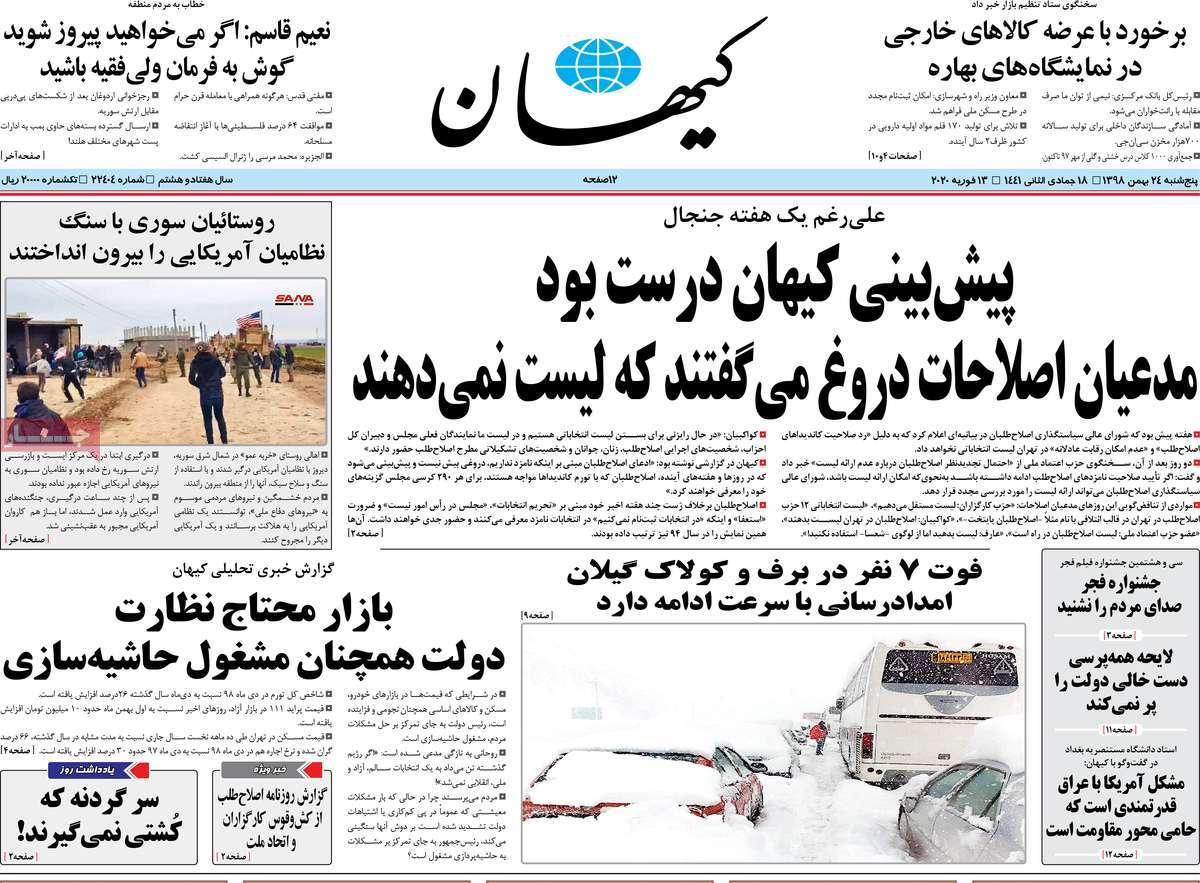
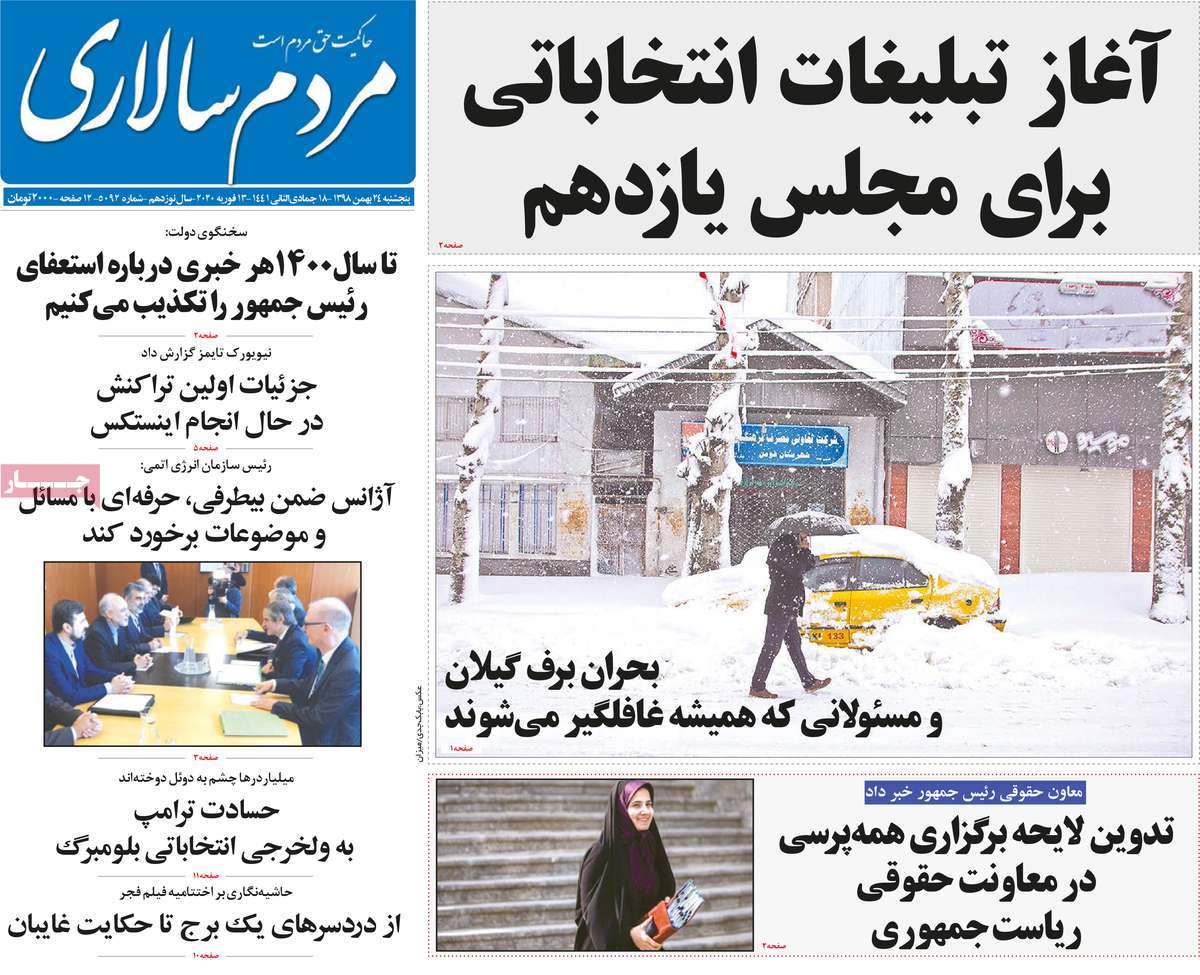
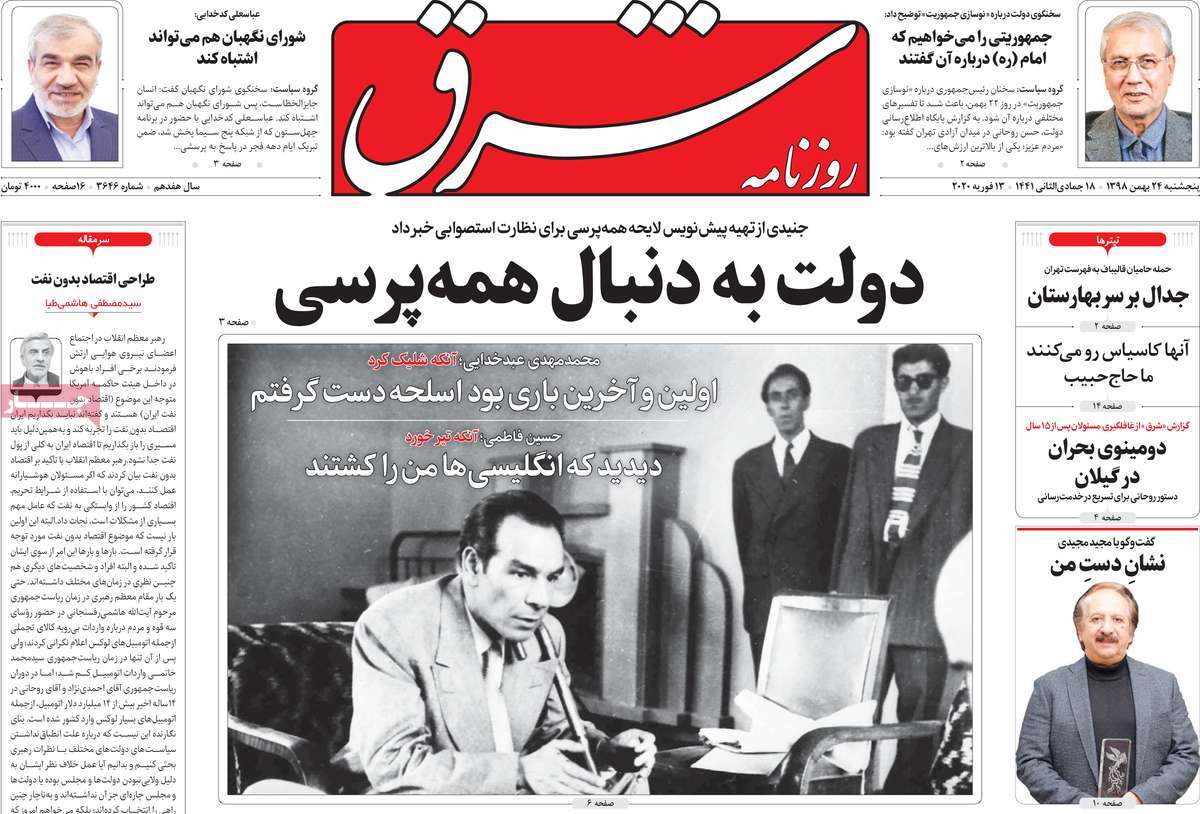
A Look at Iranian Newspaper Front Pages on January 28

Iran Newspaper Headlines in April 11

Iran Newspapers

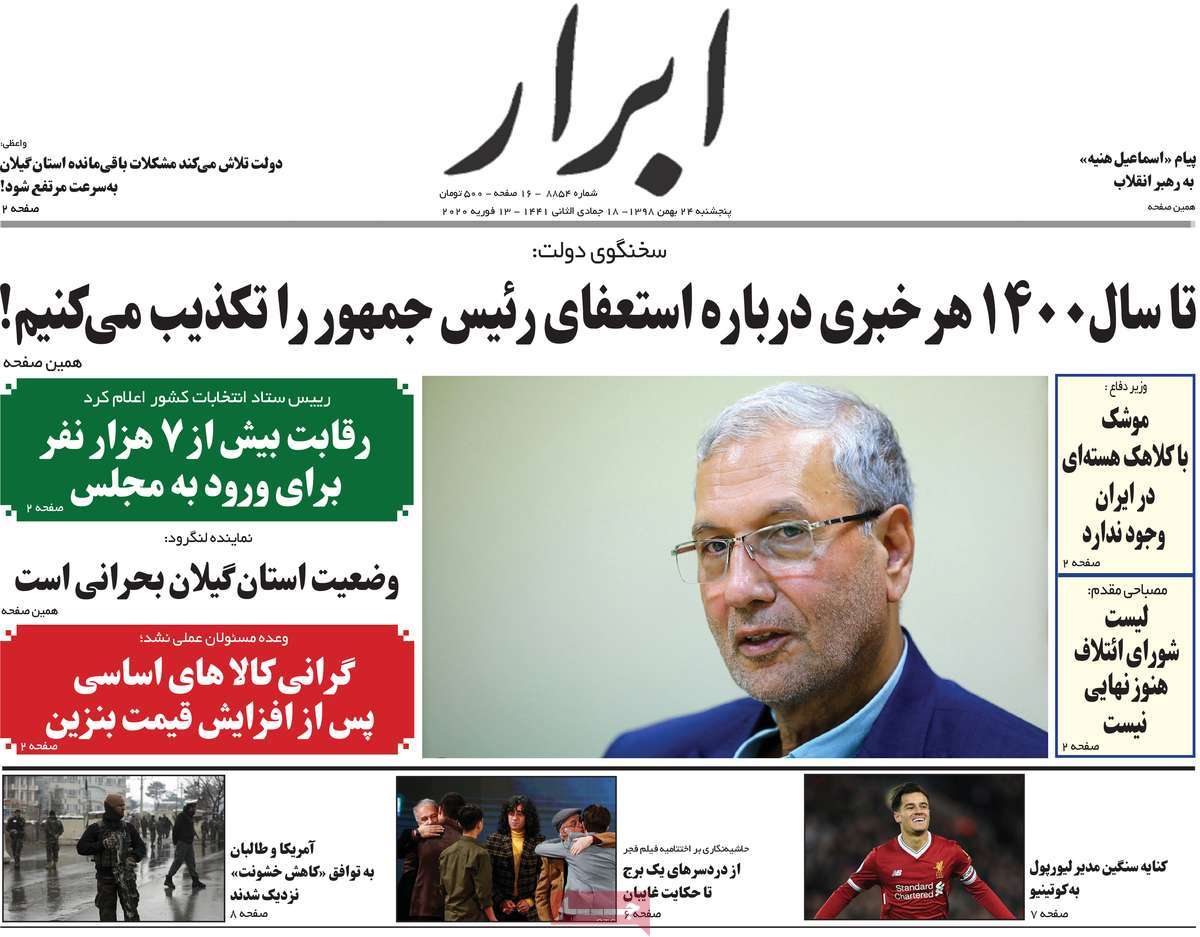
Abrar:

1- Lebanese Security Forces, Protesters Clash near Parliament

2- Iran Has No Trust in FATF: Expediency Council Secretary

3- We’ll Meet Murderers of Gen. Soleimani Sooner or Later, but Not for Negotiation: Raisi

A Look at Iranian Newspaper Front Pages on January 28


Afkar:

1- We Must Protest Our ‘Republic’: Rouhani

2- Plane Incidents, Again


A Look at Iranian Newspaper Front Pages on January 28


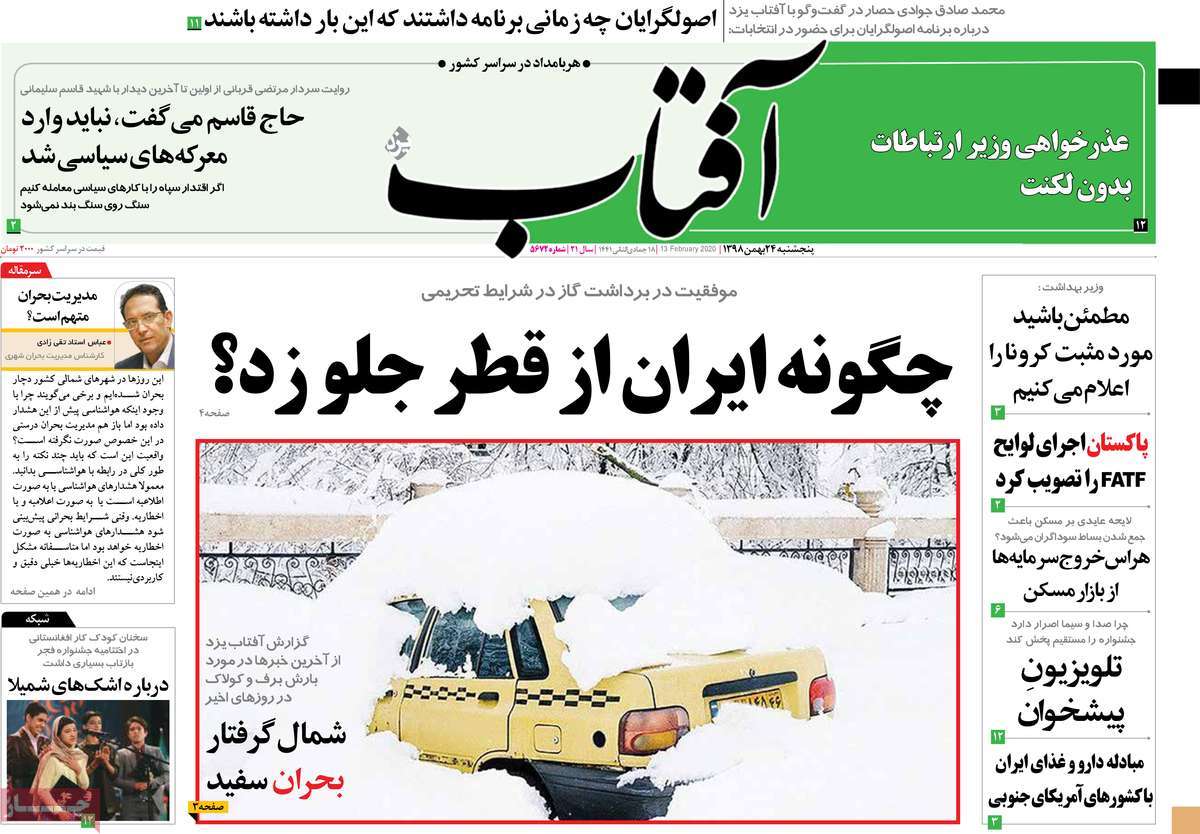
Aftab-e Yazd:

1- Three Air Incidents in Four Days! What’s Reason?

2- Prominent Iranian Singer Shajarian Hospitalized

3- Iran Three Generations Away from 5G: Official

4- Taliban Downs US Plane: Pentagon

A Look at Iranian Newspaper Front Pages on January 28


Arman-e Melli:

1- Rouhani Warns against Criminalization of Promoting ‘Republic’

2- Reformists to Announce Electoral List in Coming Days

3- State TV Once Again Refuses to Broadcast Rouhani’s Speech

A Look at Iranian Newspaper Front Pages on January 28


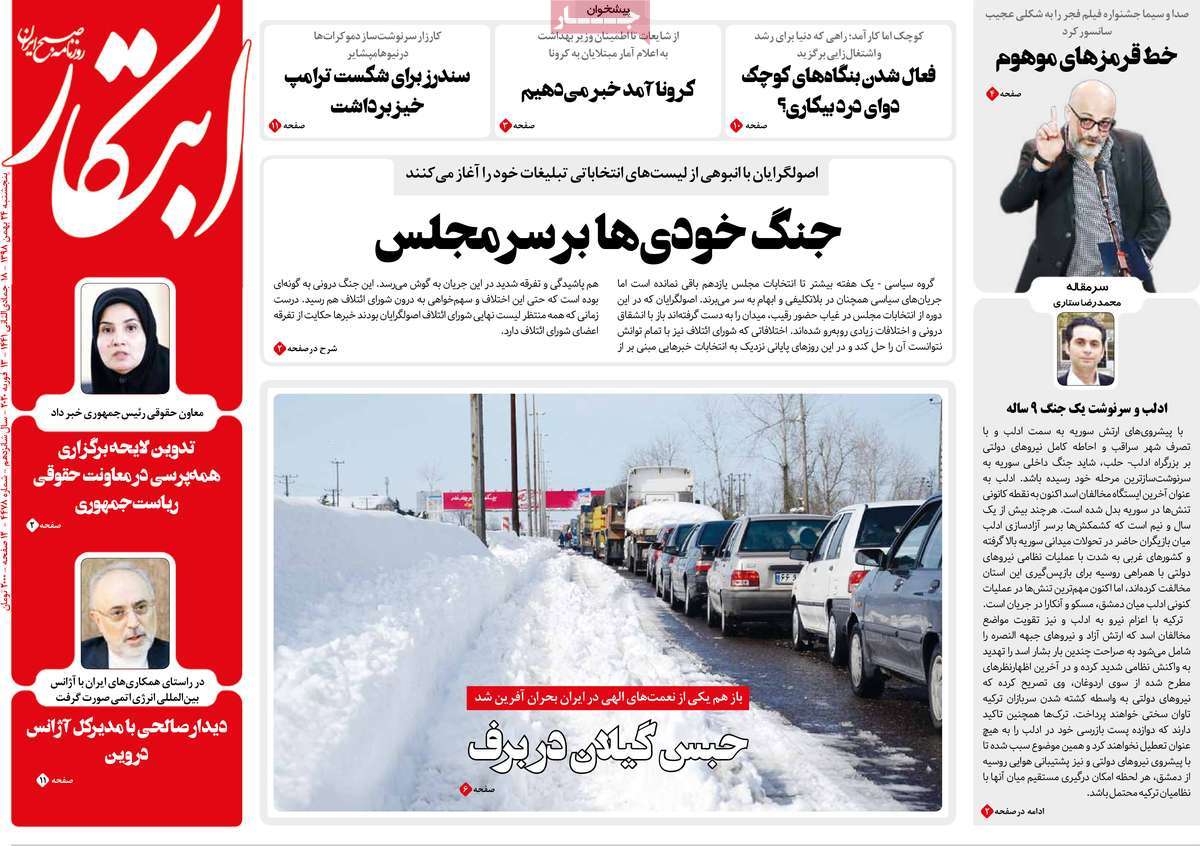
Ebtekar:

1- Death Flying over Iran’s Miankaleh Wetland

* Suspicious Deaths of 6,000 Migratory Birds

2- Middle East Getting New Order: Analyst

3- Taliban Deals Blow on US in Ghazni

A Look at Iranian Newspaper Front Pages on January 28


Jame Jam:

1- US Shocked by Downing of Its Plane in Afghanistan

A Look at Iranian Newspaper Front Pages on January 28


Javan:

1- Rouhani Speaks Like Opposition Figure!

* President, His Cabinet Evade Accountability

2- Continued Presence in Region Brings More Dead Bodies for Trump

3- Boeing Stops at Mahshahr Road without Casualties

A Look at Iranian Newspaper Front Pages on January 28


Kayhan:

1- Taliban Downs US Military Plane; Tens of CIA Officers Killed

2- Hashd al-Shaabi: We Didn’t Attack US Embassy; Our Response to Be on Par with Iran’s Reaction

A Look at Iranian Newspaper Front Pages on January 28


Khorasan:

1- Hunting CIA in Ghazni: Taliban Says Has Downed US Plane

2- Rouhani’s Straightforward Remarks about Elections

3- Iranians Worried about Maestro of Persian Music [Shajarian]

A Look at Iranian Newspaper Front Pages on January 28


Mardom Salari:

1- Any Negotiation beyond JCPOA Banned: Iran Foreign Ministry

2- Iranian People Concerned about Master of Persian Singing

3- Athletic World Shocked by Kobe Bryant’s Death

A Look at Iranian Newspaper Front Pages on January 28


Shahrvand:

1- Master Shajarian Hospitalized

2- Biggest Threat to Democracy Is Turning Elections into Formality: Rouhani

A Look at Iranian Newspaper Front Pages on January 28


Vatan-e Emrooz:

1- Bloody Day for Enemy: American Military Plane Downed in Ghazni

2- Judiciary Chief Vows Continued Punishment of Those Who Murdered Gen. Soleimani

A Look at Iranian Newspaper Front Pages on January 28

Iran to Open Marble Palace to Public after 40 Years

Iran to Open Marble Palace to Public after 40 Years


The Marble Palace was built upon the order of Reza Shah, the first Pahlavi king. It was designed by Iranian-Armenian architect, Leon Tadosian; and served as the king’s office before the formulation of Iran’s National Treasury Act which entailed the transfer of Iranian national jewelry from Golestan Palace to the building’s basement.

The Palace was renamed to “Pahlavi Museum” in 1976 with the aim of making people familiar with Reza Shah; and was registered in the Iranian National Heritage List in June 1978. The museum continued to operate until the fall of monarchy in 1979.

Located in downtown Tehran, the Marble Palace was operated by the Expediency Discernment Council for many years. The Mostazafan Foundation of Islamic Revolution took the building back this year, and decides to turn it into a museum again.

Parviz Fattah, the head of the foundation, announced that the doors of Marble Palace will open to the public after 41 years in less than a month. Journalists and media associates were the first people to visit the palace after decades on January 26th.

What follows are the photos taken by several Iranian news agencies from the Marble Palace during the visit:


Related Articles:


Iran, Russia Developing Ties Despite US Will: Rouhani

Iran, Russia Developing Ties Despite US Will Rouhani

Rouhani made the remark in a meeting with the visiting chairman of Russia’s State Duma Vyacheslav Volodin in Tehran on Monday.

“I stand assured that in spite of Washington’s pressures on the region and Iran in particular, the two countries will expand their relations more than ever before regardless of the White House’s will and intention,” Rouhani said.

Underlining that Iran is by no way interested in the spread of tensions across the region, Rouhani said, “Regional stability is of significance to Iran and Russia, and we are ready, as in the past, to further cooperation and deliberation between the two countries.”

The Iranian president also noted that, “Trilateral relations between Iran, Russia and China as well as joint maritime drills in the Sea of Oman indicate that the trio are bent on developing closer ties with each other.”

Rouhani expressed hope that the all the previous agreements between Tehran and Moscow for the promotion of joint investment will enter into force as soon as possible.

Volodin, for his part, said, “Despite increased tensions in the region, we should work towards defusing tensions and expanding ties without allowing such tensions to drift us apart.”

He added that the most important points raised during discussions within the framework of the two countries’ joint economic commission included the expansion of trade ties between the two countries, adding, “We believe that we can reach better conclusions through more meetings.”

US pushing region toward international dictatorship: Larijani

In a separate meeting with the Russian official, Iran’s Majlis Speaker Ali Larijani said the United States is pushing the West Asia region toward international dictatorship through its humiliating behavior.

“Americans are pushing conditions in the region toward international dictatorship and behave in a humiliating manner, which makes cooperation between Iran and Russia even more important,” Larijani said.

Expressing gratitude for the sympathy extended by the Russian Duma following the assassination of top Iranian anti-terror commander Lt. Gen. Qassem Soleimani, which proved America’s state terrorism beyond any doubt, Larijani said, “The Russian government acted very responsibly in this matter.”

On January 3, the US assassinated General Soleimani, commander of the Quds Force of Iran’s Islamic Revolution Guards Corps, and Abu Mahdi al-Muhandis, the second-in-command of Iraq’s Popular Mobilization Units (PMU), and a group of their companions in Baghdad. The operation was conducted with the authorization of US President Donald Trump. The US Department of Defense took responsibility for the assassination.

Both commanders enjoyed deep reverence among Muslim nations over their endeavors in eliminating the US-sponsored Daesh Takfiri terrorist group in the region, particularly in Iraq and Syria.

Pointing to close deliberations between Iran and Russia in various fields, Iran’s Majlis speaker said, “The two countries have taken joint strides particularly in the fight against terrorism, and also have good military and security cooperation, a recent instance of which was the joint naval drills between Iran, Russia and China.”

Larijani referred to the two countries’ joint economic commission as a venue for the expansion of bilateral economic ties, saying, “We hope the convention of this commission at such a level that depicts the two sides’ will for developing ties, will further contribute to the consolidation of relations.”

Stressing the need for the inter-parliamentary cooperation, Volodin, for his part, said, “Such interactions should help deepen ties between the two countries.”

Has Balance of Power Shifted in Iraq?

Has Balance of Power Shifted in Iraq

Many prominent international figures immediately called on both sides to exercise self-restraint, since they had the notion that any retaliatory action by Iran would result in a full-blown military reaction from the United States. However, this did not happen, as Iran attacked two military bases of the American forces in Iraq, although the strike did not cause casualties. Meanwhile, Donald Trump refused to take retaliatory action considering the internal problems surrounding his impeachment and his personal reluctance to start a war. But unlike what has been predicted, the course of developments has not ended pleasantly. Iraq which has gradually moved closer to neighboring Iran following the 2003 US invasion and, at the same time, requires the United States and the foreign forces to ensure its security has been stuck in these conflicts.

“After the killing of Iran’s Quds Force commander, Qassem Soleimani, and the deputy commander of the Iraqi Popular Mobilization Units (PMU), Abul Mahdi al-Muhandis, Iraq and its prime minister are where they don’t want to be — caught between America and Iran,” James Durso, the managing director of Corsair LLC -a supply chain consultancy- and a former US Navy officer has written in an op-ed article in The Hill.

Following the US strike, the Shiite bloc at the Iraqi parliament approved a non-binding resolution calling for the expulsion of the American and foreign forces. Prime Minister Abdul-Mahdi was also obligated to ask the United States to dispatch a delegation to Iraq for talks on the conditions of the pullout of American forces against his own wishes, which became clear later when he dragged his feet over implementing the Iraqi parliament’s resolution. The United States had once reduced the number of its forces in Iraq in 2011, under Barack Obama’s administration, but after the rise of ISIS and its conquest of Iraqi and Syrian territories, the US once again deployed forces into the region. There are currently 5,000 forces in Iraq. Washington’s response was already obvious: it rejected Iraq’s request.

The governments that have come to power in Iraq throughout the years after 2003 have made great efforts to create a balance in their relations with Iran and the US, and they have had a good reason for such efforts. It is a matter of national interests and foreign relations when it comes to the ties with the United States: If the presence of Americans in Iraq winds down, the Western presence in there will subside as well and the only option Iraq will have would be heavier dependence on Iran and probably on Russia and China. As regards Iran, Iraq is relying on its neighbor’s energy resources and the import of commodities, while another important issue is Iraq’s internal security as well as the ethnic and religious conflicts.

After toppling Saddam Hussein’s regime, the United States helped Iraq develop a new government structure in which every ethnic and religious group has a representative in the establishment: the prime minister is a Shiite Muslim, the president is Kurdish, and the parliament speaker is a Sunni Muslim.

Given that Shiite Muslims make up the majority of Iraq’s population, it can be concluded that such structure has been one of the major reasons for Iran’s growing influence in the Arab country. Following the most recent elections in Iraq, it took around three months until the local groups reached a consensus on the formation of a new government. In that period, many reports described Iran as the main victor in the field. Particularly after the rise of ISIS, the paramilitary Shiite groups in Iraq were acting under the guidance of General Qassem Soleimani, whose influence was even further extended after many commanders of those Shiite groups entered politics. This issue greatly affected the formation of the new government of Iraq. In the course of the nationwide elections in Iraq, General Soleimani held meetings with many prominent and influential political figures several times and provided great help in forming the ruling coalition government. But Abdul-Mahdi, the prime minister who was elected after all those efforts, has resigned from his post in the wake of the popular protests that have erupted since October 2019.

The internal consensus in Iraq on the formation of a new government appears to have become more difficult than ever following the escalation of tensions between Iran and US, and this could drive the political situation in Iraq into chaos. The majority of the Sunni and Kurdish legislators boycotted the parliamentary voting session on the expulsion of the foreign forces. Later, the Kurdistan Regional Government even made a proposal for the presence of American forces in that region.

“While Abdul Mahdi’s government made modest progress in reducing the political gap between Iraq’s constituent communities – Shiite, Sunnis and Kurds, including on the question of governing the contested, oil-rich city of Kirkuk – this gap is set to widen, as the future of the US military presence in Iraq becomes a new political fault line,” Galip Dalay, an IPC-Mercator Fellow at the German Institute for International and Security Affairs (SWP) and non-resident fellow at the Doha-based Brookings Institution has written in an article published in The Middle East Eye.

“Post-invasion Iraq was premised on Shia and Kurdish cooperation, while Sunnis felt marginalised and left out. As the future presence of US forces increasingly becomes the central item of debate, the gap between the Kurds and Sunnis is likely to decrease, while the gap between the Kurds and Shiite widens,” Dalay added.

The United States which has decided to continue its mission in Iraq will undoubtedly take advantage of the Kurdish and Sunni supports. But there is a bigger problem for Iran with regard to its neighboring state: finding a person with the level of influence that General Soleimani exerted in Iraq in order to remain close to the next government. In the recent demonstrations in Iraq, people have been protesting against corruption, economic mismanagement and the unemployment crisis. Since the protesters consider the Baghdad government to have close ties with Tehran, many slogans have been against Iran. The consultations between General Soleimani and various political groups in Iraq as well as his cooperation with the Popular Mobilization Units (Hashd al-Shaabi) were effective in supporting Abdul-Mahdi’s government, and even resulted in the parliamentary rejection of the prime minister’s resignation for about a month. A number of reports have even suggested that General Soleimani’s last visit to Baghdad was aimed at addressing the recent unrest in Iraq and holding consultations. However, Iran has now lost its influential commander; Abdul-Mahdi is heading a provisional government; and Abu Mahdi al-Muhandis –the deputy commander of Hashd al-Shaabi forces who was one of the closest allies of Iran- has been assassinated with General Soleimani.

The situation in Iraq over the past few weeks seems not to have been undesirable for Iran. The anti-Iranian sentiments in the popular protests in Iraq have turned into the anti-American sentiments, and many have accused the US of violating Iraq’s sovereignty and territorial integrity by launching the airstrike. Nevertheless, the prospect for Iran’s influence in Iraq does not seem very promising. While Iran is facing considerable economic problems under the pressure of the US sanctions, the private American companies and Iraq’s Arab neighboring states, including Saudi Arabia which is Iran’s main rival in the region, have been making investment in Iraq. Considering that the chaotic economic situation in Iraq has been the main reason for the popular protests, the investments and capital injection from the other regional and international actors could diminish Iran’s influence over the neighboring state.

Iran regards the influence in Iraq as a necessary component of its national security and is trying to prevent the repetition of the bitter experience of the 8-year war by whatever means possible. Moreover, Iran currently needs Iraq for bypassing the American sanctions. A waiver that exempts Iraq from the US sanctions against Iran to import natural gas and electricity will expire in February. Abdul-Mahdi’s government played an active role in persuading the Trump Administration to exempt Iraq from the anti-Iran sanctions, but it is not clear whether the Iraqi premier will be still able to do so or not. Moreover, it is probable that a new government will come to power in Iraq by then. As a result, it seems that Iran will not have much time to restore its influence in Iraq, while the US is also striving to make the most of this opportunity in order to make up for a tiny part of the great losses in the war in Iraq.