Tuesday, April 7, 2026
Home Blog Page 5131

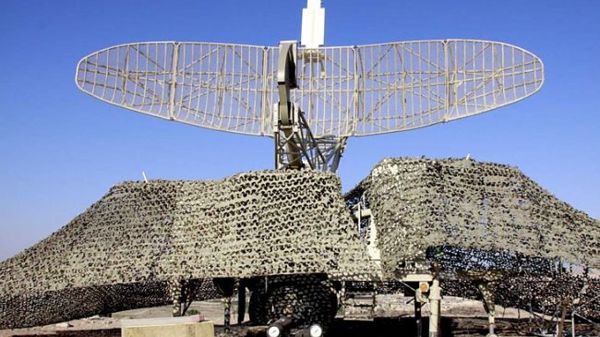
Iran launches cutting-edge Ghadir radar system

Iran radar system
Iran radar system

The advanced radar system, named Ghadir, was unveiled in a ceremony attended by military top brass, including Commander of Khatam al-Anbiya Air Defense Base Brigadier General Farzad Esmaeili on Monday.

The state-of-the art radar system uses three-dimensional (3-D) technology to detect airborne targets, including radar-evading aircraft, cruise and ballistic missiles, and satellites in low Earth orbits.

The system was first unveiled during the Great Prophet 6 military drills in 2011. It was later mass produced by the IRGC’s Aerospace Division and underwent several tests in recent months

The Phased Array radar can monitor targets within a radius of 1,100 kilometers at a maximum 300-km altitude.

In November 2013, Iranian navy unveiled an indigenous state-of-the-art array radar system, dubbed Asr (Age), which can detect long-distance targets.

In recent years, Iran has made major breakthroughs in its defense sector and attained self-sufficiency in producing important military equipment and systems.

Despite its great defense achievements, the Islamic Republic has repeatedly said its military might poses no threat to other countries, insisting that its defense doctrine is merely based on deterrence.

by Presstv

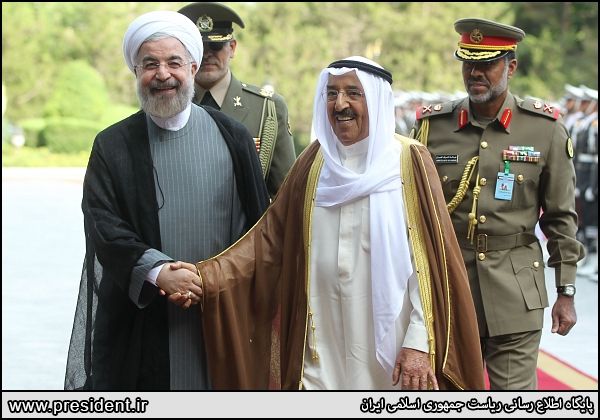
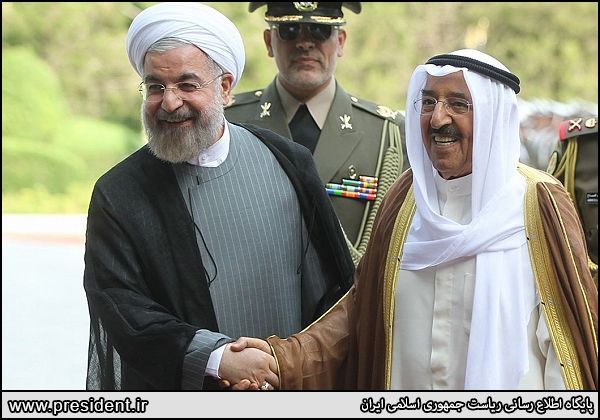
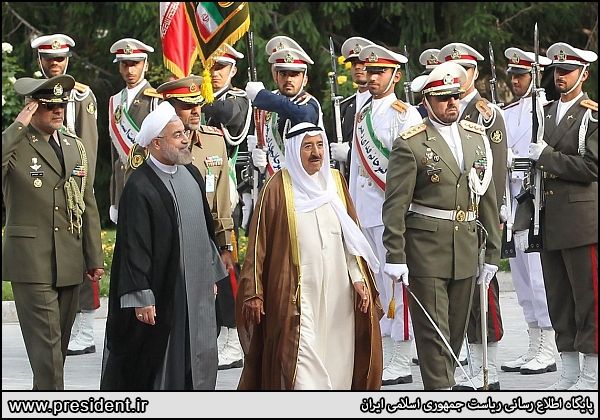
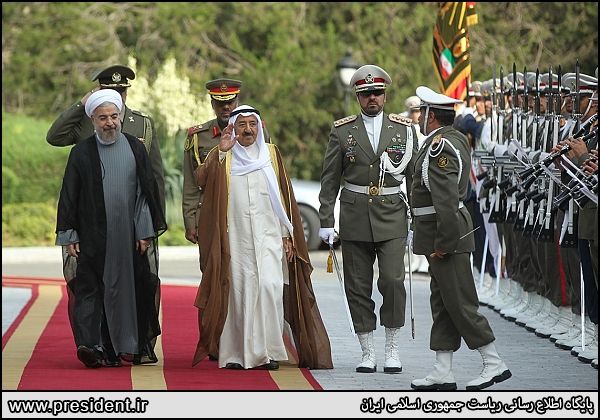
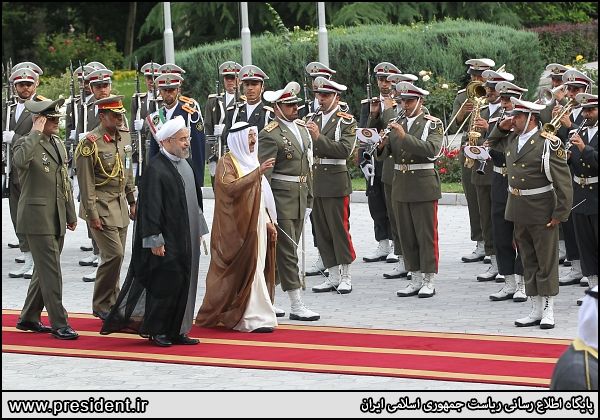
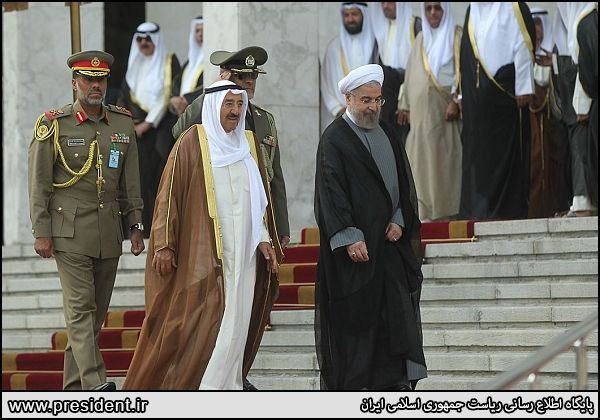
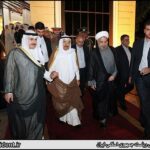
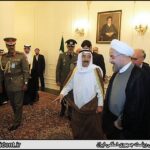
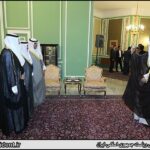
In photos: President Rouhani and Kuwaiti Emir Sheikh Sabah

Iran president-Kuwaiti Emir Sheikh Sabah

President receives the Kuwaiti Emir

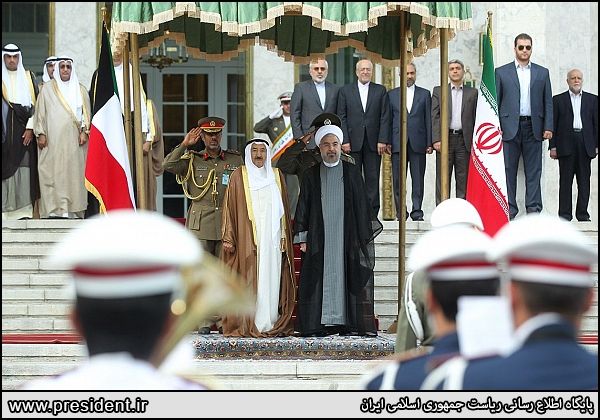
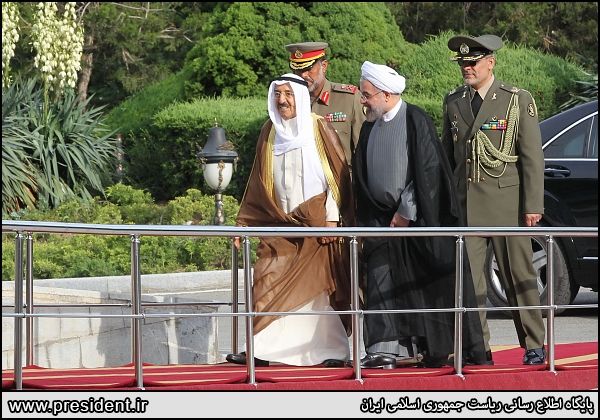
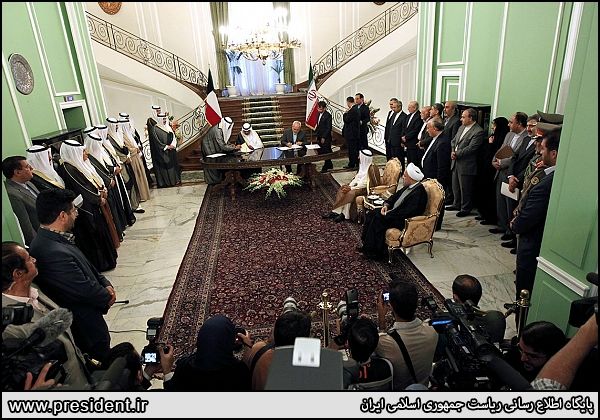
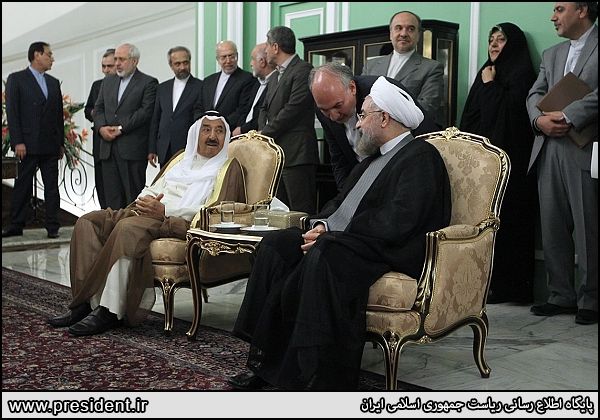
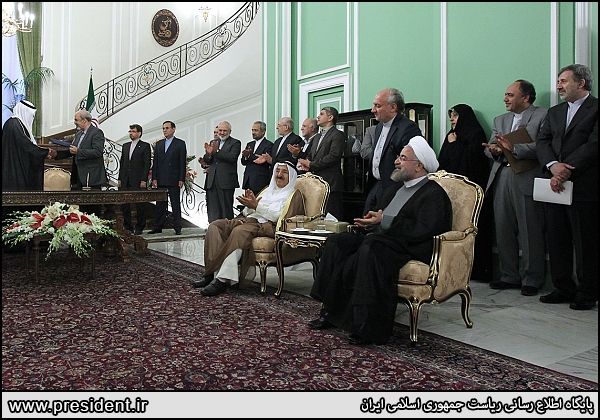
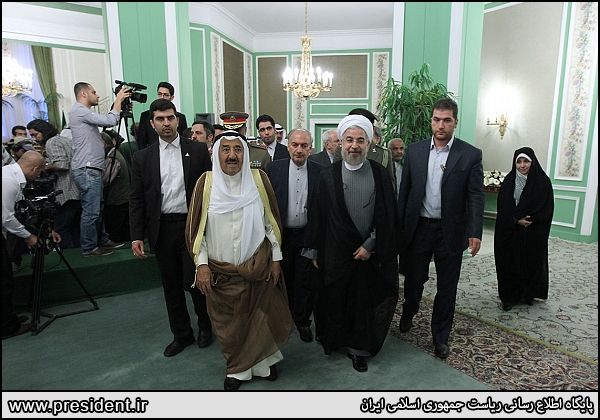
President Hassan Rouhani here on Sunday officially welcomed Kuwaiti Emir Sheikh Sabah al-Ahmad al-Jaber al-Sabah at Saadabad Historical Cultural Complex.

The Emir of Kuwait, heading a high-ranking delegation, arrived in Tehran Sunday morning for a two-day visit.
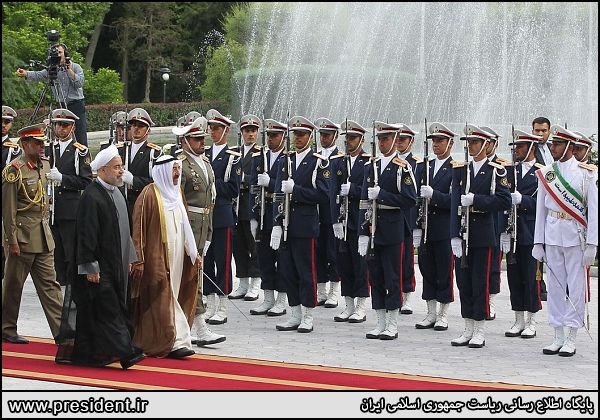
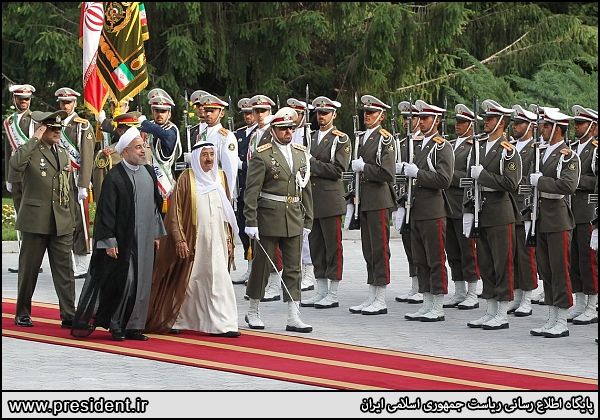
Formal ceremony was held and President Rouhani and the Kuwaiti Emir reviewed the guard of honor while national anthems of Iran and Kuwait were played.
Dr.Rouhani and Sheikh Sabah Al-Ahmad are expected to discuss the most important issues on key bilateral issues, ways of expanding mutual ties and important regional and international issues.


Iran – Kuwait signed 6 cooperation documents

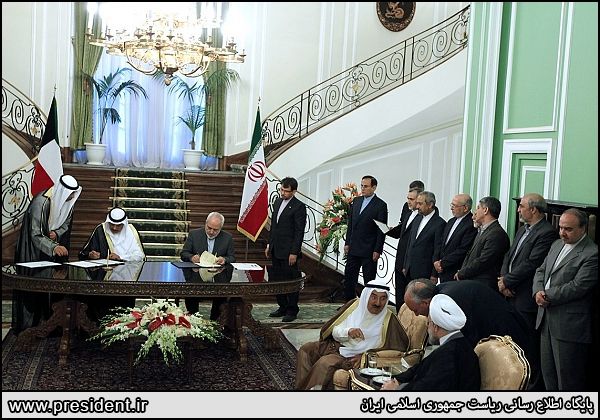
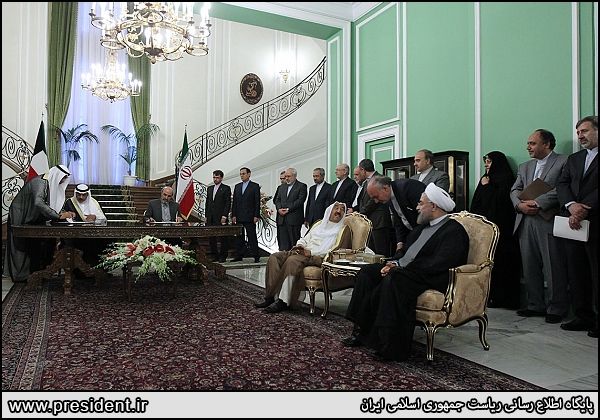
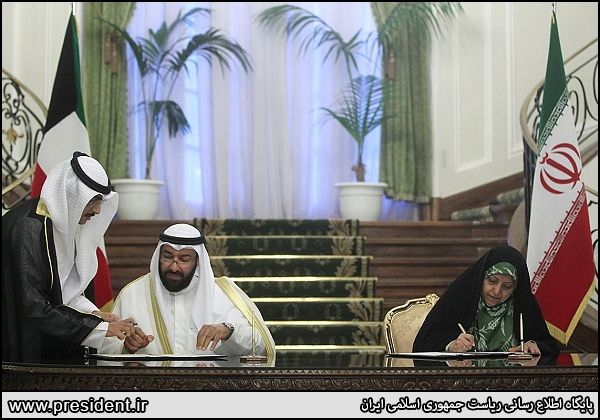
Iran and Kuwait signed six agreement documents on Sunday, aiming to further develop the comprehensive strategic partnership between the two countries.

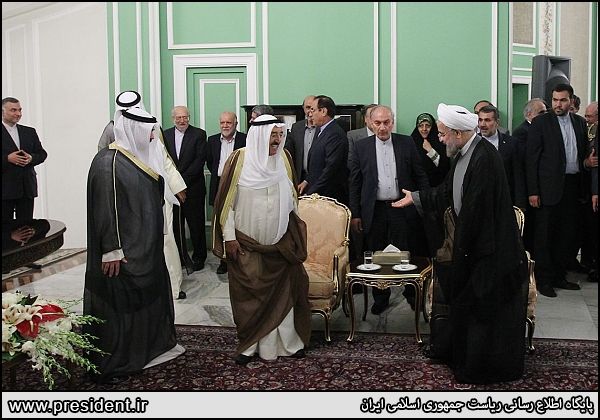
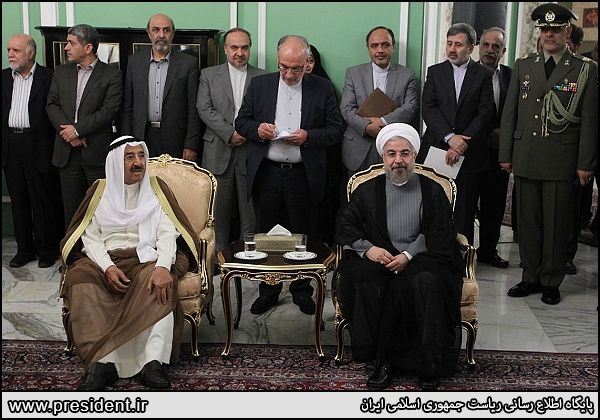
Dr. Hassan Rouhani and Sheikh Sabah al-Ahmad al-Jaber al-Sabah met each other and reviewed bilateral relations and ways to broaden and deepen relations between Iran and Kuwait then attended the signing ceremony of documents and collaboration.
At the ceremony 6 cooperation documents in various sectors was signed by ministers and senior officials of the two countries.
The documents included the memorandum of understanding on air Transportation, the memorandum of understanding on customs, the memorandum of understanding on security agreements, the memorandum of understanding on partnerships , the memorandum of understanding on sports, the memorandum of understanding on tourism ,the memorandum of understanding on environmental.


Kuwaiti Emir welcomed by president


Kuwaiti Emir attends president Rouhani’s banquet

Emir of Kuwait Sheikh Sabah al-Ahmad al-Jaber al-Sabah, who is in Tehran to discuss issues of mutual interest with Iranian senior officials, attended a dinner banquet on Sunday evening.

Sheikh Sabah discussed cooperation development and bilateral ties as well as international and regional issues with President Hassan Rouhani and Iranian senior officials on Sunday.
On the second day of his visit, Emir of Kuwait will meet and talk with other Iranian high ranking officials on Monday.

<< In photos: President Rouhani and Kuwaiti Emir Sheikh Sabah >>

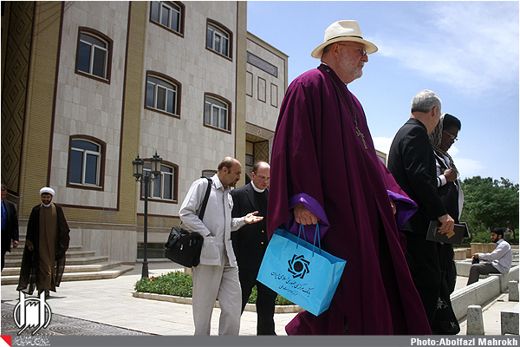
Iranian, US Religious Figures Meet

Iranian & US Religious Figures Meet

 The US religious figures met with Ayatollah Abdollah Javadi Amoli, a prominent Shiite leader, in Qom city on Thursday, and discussed issues of mutual interest.

Ayatollah Javadi Amoli told the US religious leaders that Iran has no problem with the American people but it is necessary that the US statesmen change their attitudes toward Iran.

Responding to a question by Dr. Joel Hunter, a senior Pastor of Northland Church, concerning the role of religious leaders of the both countries in improving relations between Iran and the US, he said that Iran has always lived peacefully with all nations and has tried to be fair and wise in its interactions with other countries.

The US delegation who met with Ayatollah Javadi Amoli included Dr. Joel Hunter, Dr. Barbara Skinner, Head of National Network of US-African Priests, Dr. James August Kovalevsky, Professor Anthony Destro from Faculty of Washington Catholic University, and Dr. Alex Roy Medley, the Head of the National Council of US Churches.

US religious have traveled to Iran to confer with a number of Iranian religious and cultural officials.

The United States and Iran broke diplomatic relations in April 1980, after Iranian students seized the United States’ espionage center at its embassy in Tehran. The two countries have had tense relations ever since, but have shown willingness to attend talks to help resolve regional issues, including security in Iraq. Yet, the two countries have avoided talks on bilateral issues for the last thirty years.

Washington and its Western allies accuse Iran of trying to develop nuclear weapons under the cover of a civilian nuclear program, while they have never presented any corroborative evidence to substantiate their allegations. Iran denies the charges and insists that its nuclear program is for peaceful purposes only.

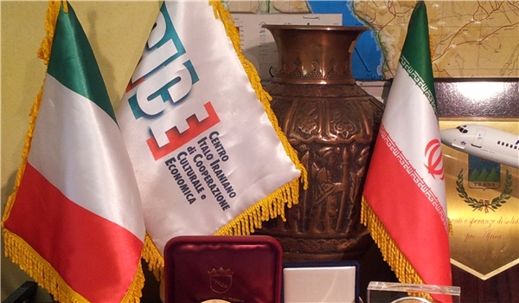
Iran, Italy Discuss Promotion of Cultural Cooperation

Iran and Italy culture

In a meeting between Deputy Head of Iran’s Cultural Heritage, Handicrafts and Tourism Organization (ICHHTO) Mohammad Hassan Talebian and Italian Ambassador to Tehran Luca Giansanti on Saturday, the two sides discussed expansion of cooperation on museums, carpets and Iranian traditional costumes.

Describing the pace of cooperation as positive, the Italian ambassador underlined the need to sign a memorandum of understanding (MoU) on museum cooperation.

Earlier this month, the former Italian Minister of Heritage, Cultural Activity and Tourism Massimo Bray, in an interview, said that Iranian culture and civilization is unique and unparalleled in the world.

When Massimo Bray visited Iran in January this year, he was a member of the Italian cabinet and the second Italian minister after the Foreign Minister Emma Bonino who  traveld to Iran in the last 10 years. However, following the resignation of Enrico Letta as the Prime Minister and the reshuffling of the cabinet, he was automatically removed from his post and replaced by Dario Franceschini in the Matteo Renzi cabinet.

Massimo Bray came to Iran to broaden and expand the cultural ties between Italy and Iran, the two countries that have historically maintained close and amicable ties. Mr. Bray was thrilled with his experience of visiting the tourism magnets and cultural attractions of Iran and said that Iran’s contributions to the world culture have been outstandingly important and indispensable. He traveled to different Iranian cities such as Isfahan, Kashan and Kerman and took a tour of the historical buildings and attractions of these cities.

“I believe that whoever will have – as I’ve had – the opportunity of visiting Iran couldn’t possibly disagree with me about Iran’s cultural, historical identity history being one of the most important of the world. Iranian civilization has had a huge impact on the history of mankind,” said Massimo Bray.

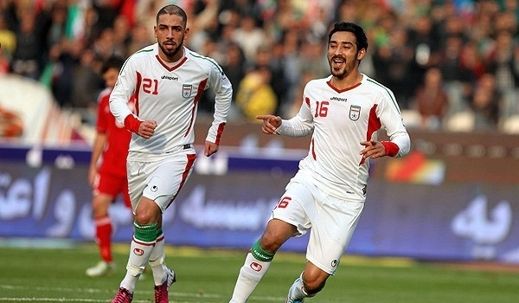
Iran coach Carlos Queiroz named the 24-man squad for World Cup

Iran in World Cup 2014

 Iran, playing in the World Cup finals for the fourth time after 1978, 1998 and 2006, have been drawn in Group F alongside Argentina, Nigeria and Bosnia-Hercegovina, and will open their campaign against the Nigerians on 16 June.

Squad:

Goalkeepers: Daniel Davari (Eintracht Braunschweig/GER), Rahman Ahmadi (Sepahan Isfahan), Alireza Haqiqi (Sporting da Covilha/POR)

Defenders: Hossein Mahini (Persepolis), Jalal Hosseini (Persepolis), Ehsan Hajsafi (Sepahan Isfahan), Amir Hossein Sadeqi (Esteghlal), Hashem Beykzadeh (Esteghlal), Khosrow Heidari (Esteghlal), Ahmad Alenemeh (Naft Tehran), Pejman Montazeri (Umm Salal SC/QAT), Steven Beitashour (Vancouver Whitecaps FC/CAN), Mohammad Reza Khanzadeh (Zob Ahan Isfahan)

Midfielders: Mehrdad Pouladi (Persepolis), Reza Haghighi (Persepolis), Andranik Teymourian (Esteghlal), Ghasem Hadadifar (Zob Ahan Isfahan), Bakhtiar Rahmani (Foolad), Javad Nekounam (Kuwait SC/KUW), Ashkan Dejagah (Fulham/ENG), Masoud Shojaei (UD Las Palmas/ESP)

Forwards: Karim Ansarifard (Tractor Sazi), Reza Ghoochannejhad (Charlton Athletic/ENG), Alireza Jahanbakhsh (NEC/NED)

Iran, New Zealand Review Ways to Develop Ties

Alaeddin Boroujerdi and Timothy Webster in Iran

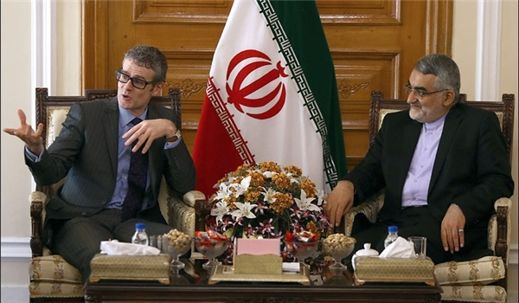
The meeting was held between Chairman of the Iranian parliament’s National Security and Foreign Policy Commission Alaeddin Boroujerdi and Advisor to New Zealand’s Prime Minister Timothy Webster on Saturday afternoon.

“The two countries enjoy abundant potentials to develop and expand mutual cooperation in different arenas, utilizing which will serve the two nations’ interests,” Boroujerdi said.

Elsewhere, he referred to the ongoing nuclear talks between Iran and the Group 5+1 (the US, Russia, China, Britain and France plus Germany), and stressed that in case of a final deal, all sanctions against Tehran should be removed.

Webster, for his part, underlined his country’s enthusiasm for the further consolidation of relations with Iran, and said, “Any progress in the trend of nuclear talks (between Iran and the world powers) is appreciated by us, and New Zealand welcomes the trend of the negotiations and progress in them.”

New Zealand has had an embassy in Tehran since April 1975, making it the country’s longest-standing mission in the Middle East.

In April, Iranian Foreign Minister Mohammad Javad Zarif in a meeting with New Zealand’s Ambassador to Iran Eamon O’Shaughnessy underlined the need for the broadening of Tehran-Wellington ties.

“Iran and New Zealand’s favorable capacities for the all-out development of relations, specially in trade and economic sectors, are among the very fertile grounds for the development of cooperation between the two countries,” Zarif said during the meeting in Tehran.

Iranian Speaker: Political Solution to Syrian Crisis Lies in Ballot Box

Iran - Friends of Syria Conference

 “The political solution to the Syrian crisis should come out of the ballot box and not from behind closed doors in certain countries …who can decide for a nation and another country like the Syrian nation,” Larijani said in Tehran on Sunday, addressing the second ‘Friends of Syria’ conference of the chairpersons of the national security and foreign policy commissions of the parliaments of those countries which have friendly relations with Syria.

He expressed the hope that the upcoming presidential election would be held in Syria successfully and would end the conflicts in the region.

Larijani blasted certain western and regional states for their financial and arms support for the terrorist groups in Syria, and said, “We pursue fighting terrorism in the region through democracy and not by sending weapons (to the terrorists).”

He also said that the presence of tens of the world states in the ‘Friends of Syria’ conference in Tehran today indicated these countries’ resolve to reach a political solution to the Syrian crisis.

Over 30 countries have sent their representatives to Iran to participate in the conference on the Syrian crisis.

Iran held the first ‘Friends of Syria Conference’ in the presence of the chairpersons of the foreign policy commissions of Iran, Algiers, Iraq, Syria, Lebanon and Russia in March this year.

Resolutions of the Syrian crisis through diplomacy and immediate end to violation of human rights were the main topics of the first conference.

Venezuelan and Cuban ambassadors to Tehran were also present at the event.

Iranian officials have repeatedly underlined that Tehran is in favor of negotiations between the Syrian government and opposition groups to create stability in the Middle-Eastern country.

In November 2012, Iran hosted a meeting between the representatives of the Syrian government and opposition to encourage them to start talks to find a political solution to their problems. The National Dialogue Conference kicked off work in Tehran mid November with the motto of ‘No to Violence, Yes to Democracy”.

The meeting brought together almost 200 representatives of various Syrian ethnicities, political groups, minorities, the opposition, and state officials.

Syria has been the scene of deadly violence since March 2011. Over 130,000 people have reportedly been killed and millions displaced due to the crisis.

The western powers and their regional allies – specially Qatar, Saudi Arabia and Turkey – are supporting the militants operating inside Syria.

Syria Is neither Egypt nor Tunisia

An interview Syria Is neither Egypt nor Tunisia
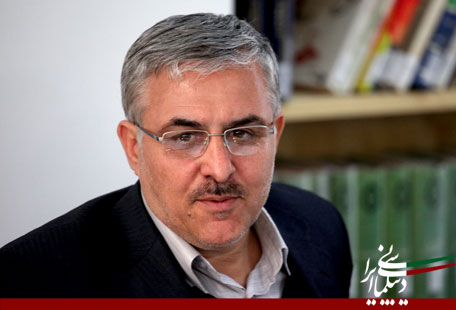
Mohammad Ali Sobhani, Iran’s former ambassador to Lebanon

Lakhdar Brahimi believes that Iran’s 4-point plan to resolve the Syrian crisis is like a beacon of light in darkness and is worth being discussed. These statements were made after his resignation while, during his tenure as the UN envoy to Syria, he had not taken any practical steps in studying the Iranian plan for Syria. Is there a contradiction in his behavior and words?
The statements made by Lakhdar Brahimi about Iran’s plan worth being discussed and also being a shot in the dark are contradictory by themselves. These statements bear the message that Iran cannot be ignored in the resolution of the problem in Syria. Of course, he is right in this regard. The statement that Iran’s plan is a shot in the dark is the viewpoint of a person who has great experience in this matter and naturally it is not unreal. The situation in Syria has become so complicated that political schemes must have a minimum of agreement over the method of political activities inside the country before reaching regional and international consensus. Such a thing has not happened yet. The fact is that political plans do not generally succeed. For example, if Mr. Brahimi had succeeded with the Geneva-2 plan, we could claim that political plans are implementable. I believe that the resolution of the Syrian crisis is something else. Before presenting any political plan, these plans must be based on internal agreement reached between the official groups involved, the accepted opposition and the government. This understanding could be based on the political process and dialogue.
The other issue is that if the relations between Iran and Saudi Arabia and other countries like Turkey and Qatar and other involved countries are not improved, finding a resolution for the Syrian crisis would be difficult or even impossible. At the same time, the US and Russia, which are currently involved in the Ukrainian crisis, have confronted each other in the Syrian issue as well. In Ukraine, deep differences have been created between the two countries and the situation in Syria has become more complicated with the impact of the conditions in Ukraine. Therefore, different parties such as Iran have this right and Mr. Brahimi must accept that under the most difficult conditions efforts to reach a political solution must not be eliminated. Any political plan and effort should be appreciated and respected. On the other hand, under conditions when minimum understanding has not been reached, presenting political plans would fail.

In his statements, Mr. Brahimi has continued that Iran’s purpose behind this plan has probably been the exit of Hezbollah and Iraqi forces and that it is on this basis that we could discuss this proposal. How has Mr. Brahimi reached this interpretation?

Although I could not express an opinion until hearing the official explanations, I believe that the presence of countries in Syria must only be aimed at helping to reach national reconciliation. I have never supported the presence of foreign forces in Syria. Of course, this would not mean that this absence would only be for one side, but for all parties and all of those who somehow help in the presence of the armed forces in various forms. I believe that this is not a proper solution. I believe that a network of Islamic forces must be established to provide security in Syria. Syria must not become the scene for clashes. These clashes may not be dangerous at first but all of the involved players will realize that the lack of security would lead to the empowerment of the terrorist groups, meaning a safe haven for the training the terrorists.

Lakhdar Brahimi has also talked about Russia’s analysis of the situation in Syria. Russia has claimed that Syria is not like Egypt, Libya and Tunisia where the governments were overthrown during a certain period of time through military forces. He has said that nobody accepted this fact at the time while this issue should have been assessed. Why does Mr. Brahimi talk about issues now which were previously proposed by Iran and Russia with regard to Syria while no efforts were made at that time to present these ideas?

We must not expect a political official to repeat the same statements which he had made a few years ago. The interpretations of the time were made on the basis of the realities of the time and the developments of the Middle East and North Africa believing that the Syrian government would soon be overthrown. Thus, Mr. Brahimi should not be blamed today for not insisting on his previous analysis. The point which must not be forgotten is that the demands of the people of the region were generally similar to each other. This means that the people of Libya had the same demands as those of the people of Syria. Now, these developments have either reached a deadlock or have become so complicated that this problem has been created in Syria and Bahrain today. The problem has continued and become complicated in Bahrain with Saudi Arabia’s interference. In Syria, the situation became more complicated due to the regional differences and regional and international interferences, particularly between Russia and the US. It was predictable that the reactions to people’s demands could be different in different countries based on the conditions and behavior of governments with regard to the opposition. Today everybody knows that the situation in Syria is different from other countries and the government of Syria has not easily left the scene. Today we are witnessing civil, ethnic, regional and international wars.

by irdiplomacy.ir

Shush: Major Iranian option for 2014 global registration

Iran heritage Shush UNESCO

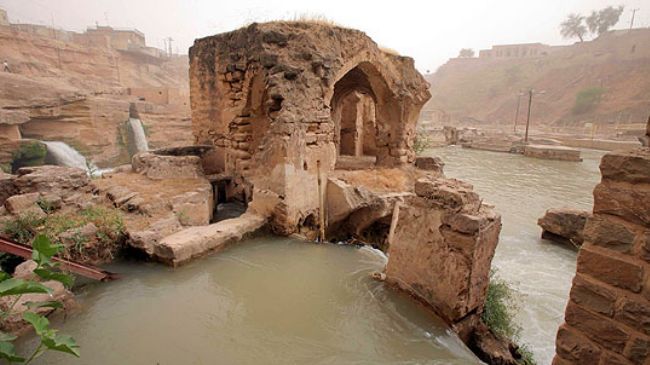
Located in Khuzestan province, Shush city will be Iran’s main option for entering the global heritage list in 2014, the Deputy Head of Iran’s Cultural Heritage, Handicrafts and Tourism Organization Mohammad Hassan Talebian announced.

UNESCO World Heritage Committee had earlier nominated the city in 2012, however, the site could not entered the final list.

Shush ancient city, called ‘Susa’ in Old Persian, is one of the oldest-known settlements of the region and the world.

The city was the capital of the Elamites and subsequently the winter capital of  Achaemenians for some 2800 years.

Since about 150 years ago, first the French Archeological Mission and then Iranian archaeological teams have carried out excavations in the city which led to retrieving artifacts, buildings and objects from various periods, and knowledge about Elamite history and culture.

In December 330 BCE, Alexander of Macedonia captured Susa and plundered the city, seizing some 40,000 talents of gold and silver from the treasury.

Armenian monastic ensembles of Iran, Bam and its cultural landscape, Bisotoun, Naqsh-e Jahan Square, Pasargadae, Persepolis, Sheikh Safi al-din shrine, Shoushtar historical hydraulic system, Soltaniyeh, Tabriz historic bazaar complex, Takht-e Soleiman, Tchogha Zanbil and the Persian garden are some of the Iranian historical heritage that have been inscribed on UNESCO’s World Heritage List so far.

World Heritage site is a title that is given to the locations, which have “outstanding universal value” to all of humanity, according to the UNESCO description.

Iran has also submitted six ancient linear treasures to the United Nations to be registered on the organization’s Memory of the World register list.

The submitted documentaries are the books inherited from ancient Iranian scientists and brilliant scholars of literature and science in different eras.

by Presstv

Iranian ancient legends contribute to a novel

Bahram and Bright Genie

Majid Sahfie, who is an author of teen and young adult books, told Mehr News that “a new novel, Bahram and the Bright Genie was in the process of composition and would be published by the Institute for the Intellectual Development of Children and Young Adults.

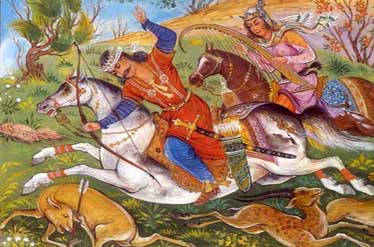
He maintained that the title was not final and other titles were available that might be chosen for the novel. “The story is generally about the labor child and the story turns to be a fantasy narrating Old Iranian legend stories.        I incorporated two legends, ‘Chel Gis’ and ‘Bahram Gur’ to the work,” said Sahfie and added that the latter had been featured in works of Persian poets’ works Nezami’s Haft Paykar (“Seven Beauties”) and Firdausi’s Shahnameh (The Epic of Kings).

“It is a modern rendering of the story of Bahram Gur for the readers,” said Sahfie.