Tuesday, April 7, 2026
Home Blog Page 5130

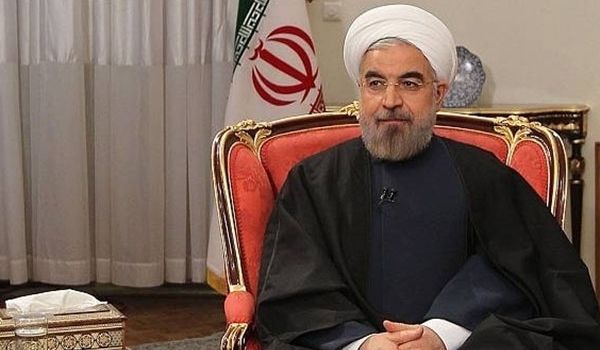
Iran’s President Planning to Visit Turkey on Monday

President rouhani visit turkey

During his stay, President Rouhani will hold separate meetings with Turkish President Abdullah Gul and Prime Minister Recep Tayyip Erdogan.

Iran and Turkey increased their trade transactions in the first two months of 2014 as compared with the figures of the corresponding period in the last year.

The value of trade transactions between Tehran and Ankara hit $2.115bln in January and February, the trade data recently released by the Turkish government said.

Iran and Turkey have in recent years increased their cooperation in all the various fields of economy, security, trade, education, energy and culture.

7500-Year-Old Motifs Inspire Modern Fabric Designers

7500-Year-Old Motifs Inspire Modern Fabric Designers

The collection, which was created by Elham Naderi, Hosna Elyasi, Armaghan Monshi and Raheleh Heidari, is currently on display in an exhibition at Tehran’s Shalman Gallery.

“This collection represents one of newest attitudes toward ancient art,” gallery director Ali Mazarei told the Persian service of ISNA on Friday.

“Most of the designs have been created for women’s wear fabrics, and the designers and the gallery aim to familiarize people with the style and elegance of the ancient motifs,” he added.

“Years before the fifth millennium BC, people in the Iranian plateau began to live on the plains under new conditions that occurred following a climate change. One of the oldest plain habitations was in the Sialk region,” he stated.

Mazarei said that motifs of animals like horses, goats, ibex, deer, rabbits, and snakes had certain symbolic meanings in the art of the region.

“This exhibition is a new reflection of Iran’s rich culture,” he added.

The exhibition will run until May 28 at the gallery, which can be found at 27, Kavusi Alley, off Rudbar-Gharbi St. and Mirdamad Ave.

Sialk Tepe was excavated for the first time by French archaeologist Roman Ghirshman and his team in 1933 and then again in 1934 and 1937.

Sialk Tepe, believed to be the world’s oldest ziggurat, consists of two mounds known as northern and southern Sialk, which are located about 600 meters apart. The artifacts unearthed in the northern mound are more ancient than those of the southern one.

As early as 3200 BCE, inhabitants of Sialk used a type of script known as proto-Elamite, whose symbols combined pictograms and numerals. Sialk was eventually abandoned at the end of the Iron Age before the advent of the first Iranian dynasty, the Medes.

Recent studies by Iranian archaeologists indicate that the first houses were built at the Sialk site about 7500 years ago.

Tehran Museum Mounts Photo Exhibition on Iran-Iraq War

Tehran Museum Photo Iran-Iraq War

Titled House on Fire, the exhibition has displayed some 70 photos, taken by 50 photographers.

The photos represent Iran’s sacred defense in hard conditions of the imposed war in several Iranian cities.

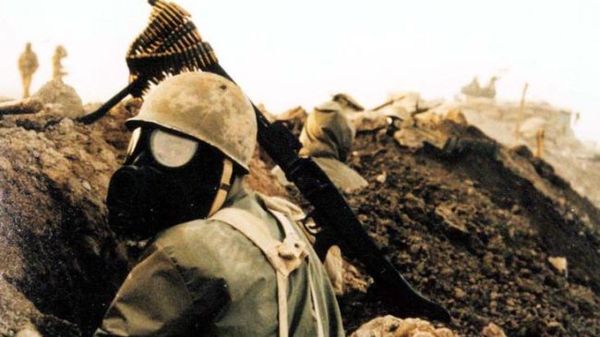
The 1987 Chemical gas attack of Iraqi forces on the Iranian town of Sardasht in northwest Iran has been also reflected in some exhibited photos.

Over 1000 individuals were killed and more than 8000 were permanently disabled due to the attack.

Many children gradually lost their vision after birth due to the consequences of the chemical bombardment at the area.

Seifollah Samadian, Hamd Nateq, Mehdi Monem, Mehrzad Atashi, Jasem Ghazbanpour are among the photographers whose works have been displayed at the exhibition.

House on Fire exhibition kicked off on May 25 and will run until June 21.

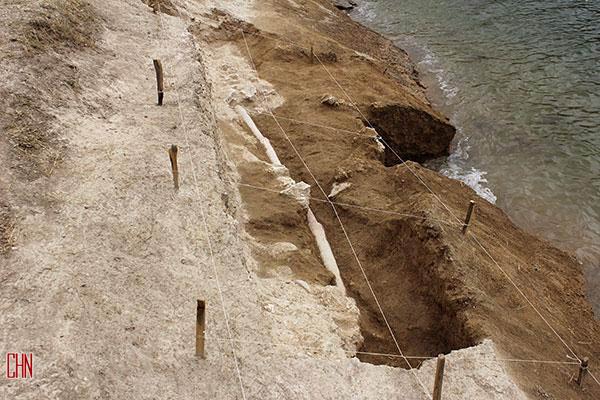
5000-Year-Old Water Pipeline Discovered in Western Iran

5000-Year-Old Water Pipeline Discovered in Western Iran

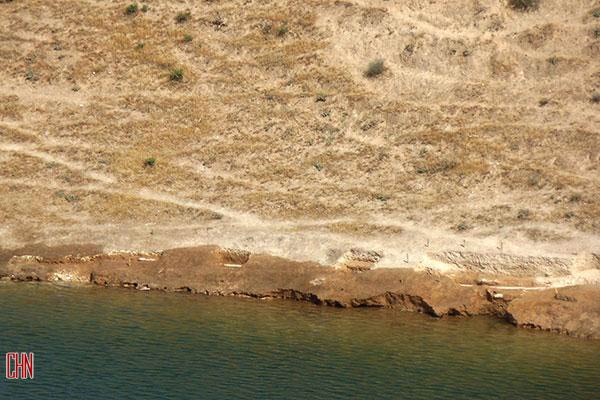
An archaeological team led by Leili Niakan has been conducting the second season of their rescue excavation since March, when the Seimareh Dam came on stream.

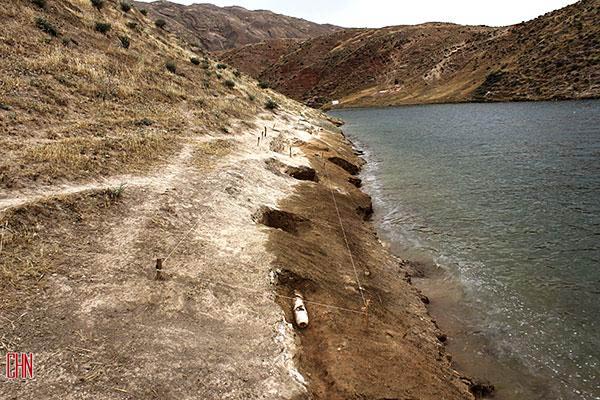
The team plans to save ancient artifacts and gather information about the ancient sites that are being submerged by the reservoir of the dam, which became operational in early March.

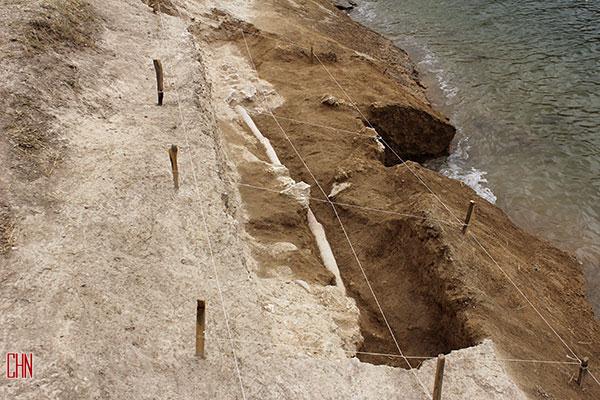
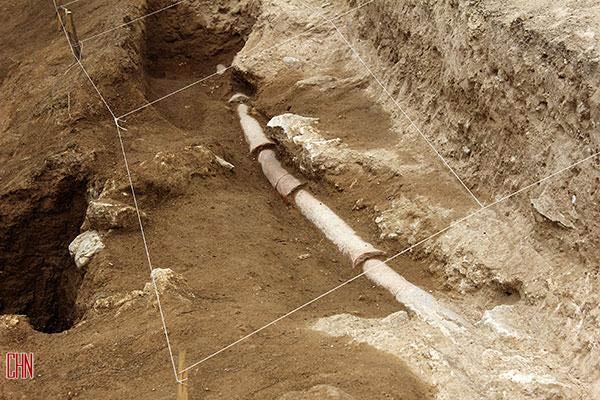
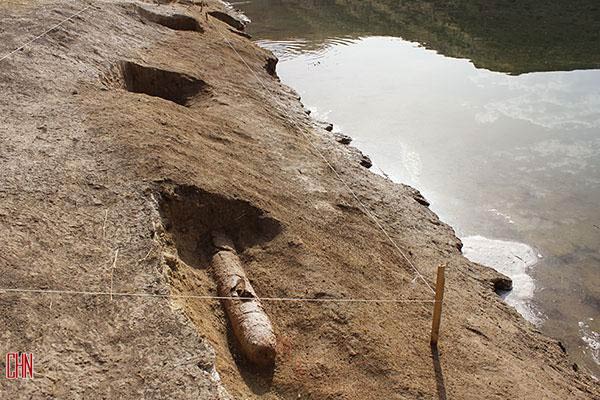
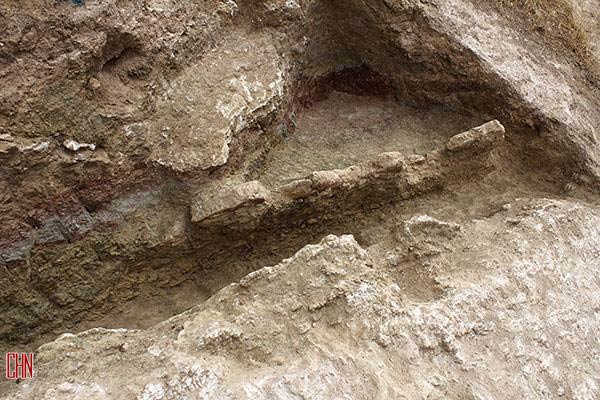
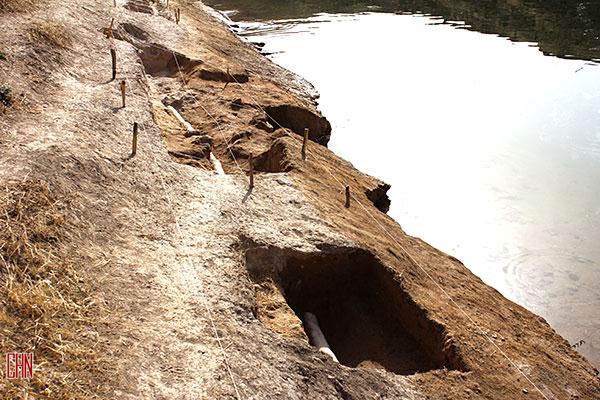
This system, which comprises a small pool and an earthenware pipeline, was discovered on the eastern shore of the reservoir of the dam on the border between Ilam Province and Lorestan Province, Niakan said.

Niakan said part of the water system has been submerged as the water level has risen. However, the team covered that part of the system beforehand to save it for future archaeological excavations when the dam is put out of commission, she added.

Each earthenware conduit measures about one meter in length, and it is likely that they were made and baked in this region, Niakan stated.

The team is still working on the site to unearth the rest of the pipeline, which may lead the archaeologists to the source of the pipeline, she added.

Over 100 sites dating back to the Neolithic, Bronze, Copper, and Stone ages and the Parthian, Sassanid, and early Islamic eras were identified in the projected area of the dam’s reservoir in 2007.

Afterwards, 40 archaeological teams from the Iranian Center for Archaeological Research (ICAR) were assigned to conduct rescue excavation operations at the 40 ancient sites in the area in the first season.

Signs of Mesopotamian influence in the region were also identified by studies conducted on the ancient strata of the area.

Most of the sites have been flooded by the reservoir of the dam, and the rest will descend beneath the water after the filling of the reservoir is completed.

Leader Underlines Washington’s Failure in Suppressing Islamic Awakening

Leader of Islamic Republic of Iran

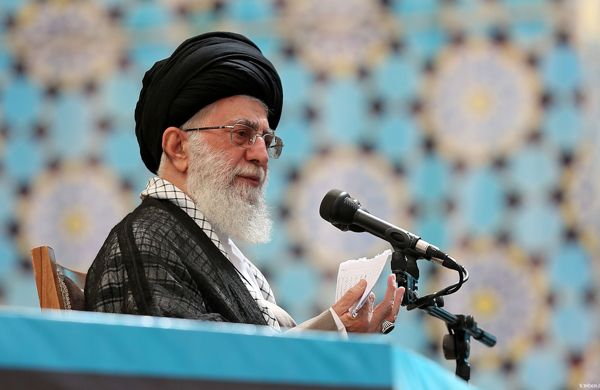
 “The Islamic Awakening might be suppressed in part of the Islamic world for a while but undoubtedly it would not be uprooted. It would keep growing. Such a concept and understanding seen in countries and the younger Muslim generation in the region is not something which can be easily discarded. Of course, they (hegemonic powers) will continue trying and their efforts might seem successful in certain domains for a short period of time, but will not continue in the long run,” Ayatollah Khamenei said, addressing a huge crowd of people participating in the 25th demise anniversary of the founder of the Islamic Republic and Father of the Islamic Revolution, the late Imam Khomeini, in Tehran on Wednesday.

“The Islamic Republic of Iran has the first say when it comes to policy making in the region; it stands alone against the usurper regime (of Israel), that is supported by the world bullying powers; it does not tolerate the tyrant while defending the oppressed,” the Leader added.

Ayatollah Khamenei further underscored Iran’s scientific and technological progress as well as political and social success, specially the country’s valuable achievements in the establishment of democracy in the years after the victory of the Islamic Revolution, and said, “In these 35 years, we have had 32 elections.”

“An exceptional instance of the elections was the Islamic Republic referendum with the highest rate of public participation, which was several times higher than the world average. Our elections are distinguished by 70 percent and 72 percent turnout, which is a clear instance of the establishment of democracy in the country. Two more exceptional instances for proving Iran’s democratic establishment are the rallies marking the victory anniversary of the Islamic Revolution in 1979 and the International Quds Day,” the Leader pointed out.

The Leader further noted Iran’s giant progress in the post-revolution era, and added that the country has sent satellites and living creatures into the space and has produced nuclear energy despite the Western sanctions.

The Leader reminded that the pace of Iran’s progress has been 13 times more than the world average.

Late in April, Ayatollah Khamenei said the Islamic Awakening has emerged in the form of a social and organizational movement under the influence of the intellectual movement of Imam Khomeini (RA) and the Islamic Republic.

The Islamic Awakening has proven its existence and influence in security and political disputes and is on the path to becoming an undisputed power on the international scene, the Leader said.

Imam Khomeini’s movement started in 1964 and finally led to the victory of the Islamic Revolution and establishment of the Islamic Republic in 1979.

For over thirty years, the imperialists have been trying to contain the influence of the Islamic Revolution to the borders of Iran, but finally the Islamic Awakening bore fruits and created great waves across the region.

Although Islamic Awakening has always been present among Muslims, Imam Khomeini turned it into a great force which revived the socio-political role of Islam. The Islamic Awakening emerged concurrent with the all-out aggression of the West against the Islamic world and the era of imperialism, and progressed through various stages since its beginning until the era of Imam Khomeini.

Formed on the basis of the ideas and thoughts of figures such as Seyed Jamal al-Din Assadabadi, the movement circulated among limited and known circles but it could never become a dominant discourse. Even when figures such as Hassan al-Banna and Sayed Qutb promoted the movement in Egypt, it could not enter the lives of all Muslims and cause a change.

For the first time, Imam Khomeini turned the Islamic Awakening discourse in to a “political practice”. He not only introduced it into the practices of all Muslims but also into the collective memory of all the oppressed people across the world.

Connection between collective memory and the Islamic Awakening discourse, thanks to Imam Khomeini’s insight, paved the way for obtaining major achievements for the Islamic and humane society. The first and foremost achievement was that the sub-discourse of Islamic Awakening turned into a dominant one.

Obtaining such achievement, however, was never easy because competing discourses always sought to obstruct its progress. The awakening discourse, engineered by Imam Khomeini, was a historic movement, never a temporary one, which will continue throughout the history, everlastingly.

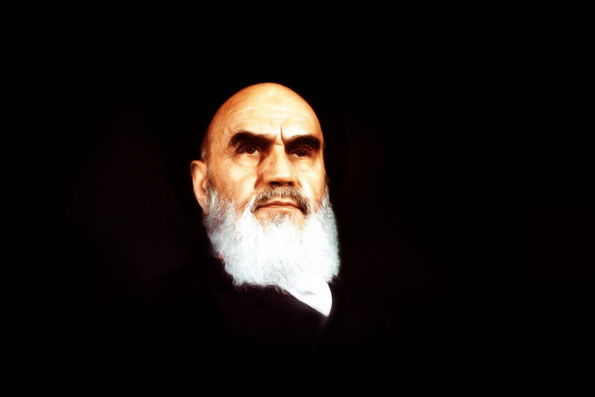
Iran commemorates Imam Khomeini’s death anniversary

Iran commemorates Imam Khomeini’s death anniversary

Imam Khomeini, the founder of Islamic Revolution of Iran, passed away on June 4, 1989. He founded the Islamic Revolution in Iran in 1979 with a massive support of Iranians.

A large number of people and officials annually gather at Imam Khomeini’s shrine in the south of Tehran for a commemoration ceremony. Millions of Iranians from around the country travel, some on foot, to pay tribute to the late architect of the Revolution.  

Leader of the Islamic Revolution Ayatollah Sayed Ali Khamenei, who was elected the Leader of the Islamic Revolution by Iran’s Assembly of Experts will be the chief speaker in the gathering this year. Also Iran’s president of the time, Dr Rouhani will give a speech on the occasion.

Imam Khomeini’s grandson, who is Reverend Custodian of Imam Khomeini’s shrine, Hojjatoleslam Sayed Hassan Khomeini, also delivers a speech during the ceremony every year.

Book to convey Iranian children’s peace message to World Cup

FIFA 2014 World Cup Brasil

 With cooperation of some organizations and ministries and Iran’s Football Federation the book will be a gift to the Brazilian children via Iranian football players.

The Portuguese translation will be unveiled today with some officials attending the introduction ceremony.

Ice Who Fell in Love with the Sun, written by Reza Mozouni and illustrated by Meisam Mousavi,  narrates a story of a piece of ice who falls in  love with the Sun; a love which lives longer till the coming of spring pleasant sunny days.

The story propagates themes of friendship and affection. In a part of the story the ice whispers “what is the benefit of a life without loving others? What is the benefit of a life loving someone and not looking at the beloved?”

The Portuguese version will be sent to Brazil as a gift to the Brazilian children.

Back cover text in Portuguese addresses the Brazilian children. “My dear friend, I know what you are thinking about. I am also thinking about you and the sun which is smiling to the whole world. We are distant lovers and cannot shake hands; so let’s think a lot about one another,” it reads.

Institute for the Intellectual Development of Children and Young Adults published the book and invited the Brazilian ambassador to Tehran to attend the unveiling ceremony of the book.

The Spanish version of the book had been already published.

Iranian musicians in Brazil for cultural ‘adventurism’

doremifairplay - Iranian musicians in Brazil for cultural ‘adventurism’

 Dara Daraie is one of these groups. He provided some details to Mehr News of the project. “The musical project includes some of the country’s popular music bands such as Kaveh Salehi, Mahyar Tahmasbi, Omid Nemati, Rouzbeh Esfandarmaz, Reza Kolqani, Darioush Azar, Ebrahim Alavi, Hamzeh Yeganeh and myself in the framework ‘Do Re Mi Fair Play’ to a cultural adventure in Brazil,” he told Mehr News.

“The soccer-musical project will be part of a documentary film focused on peace and cultural activities to establish a dialogue between us and composers from countries in Group F,” he said.

“However, the project has not yet finalized; but it would suffice to say that it will focus on representation of Iranian culture and art in the world cup,” he added, and that “the initial plan for the documentary will be detailed in the few coming days. It is surprising enough that we ourselves could not predict how the cultural adventurism would turn out to be.”

Daraie predicted that the audience would enjoy influential documentary. “Given the wider scope of the world cup and the publicity it enjoys, cultural elements such as music would attract the public attention to Iranian national team,” he said.

The members of the project had already posed with Iran’s national kit. A poster of them reads “follow us during the world cup from Brazil” and “cultural adventurism for playing for global peace.”

The project reportedly was inspired by Lionel Messi’s refusing to recognize Iran in the aftermath of the Iranians’ swarming of his Facebook page to “do its quota to introduce Iran’s art and culture in the world Cup.”

Qatar Keen to Consolidate Trade Ties with Iran

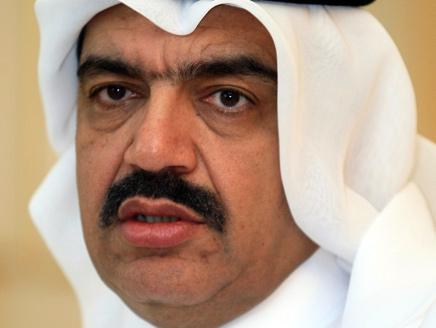
Qatari Foreign Minister Mohammad Bin Abdullah Bin Mutib al-Rumaihi

Speaking in a press conference at the end of a visit by Qatari economic and trade delegation to the Southern Province of Bushehr on Sunday, al-Rumaihi announce that the aim of his visit was economic development between private sectors of Iran and Qatar.

He voiced Doha’s enthusiasm for utilizing Iran’s valuable experiences in different industrial, commercial, and economic domains.

The Qatari official further added that in the trip, the delegation got more acquainted with the economic and trade capacities of Bushehr province.

Both Iran and Qatar have recently augmented efforts to further expand ties and cooperation in all the different political, economic, defense, security and cultural fields.

The two Persian Gulf littoral states recently signed several protocols to increase mutual cooperation.

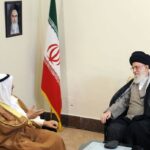
Leader: Persian Gulf security hinges upon ‘healthy’ relations in the region

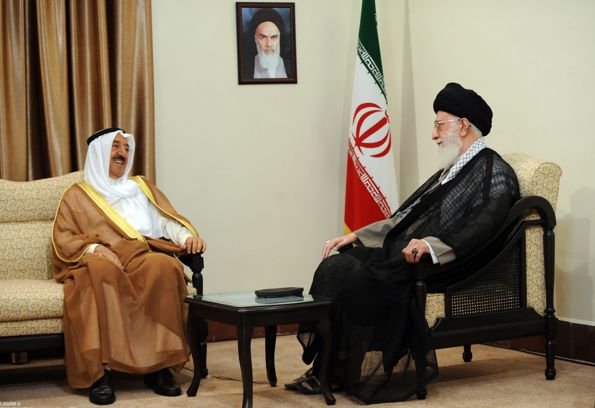
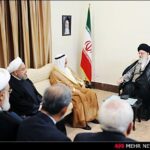
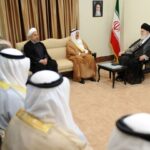
Leader of the Islamic Republic of Iran- Kuwait Emir Sheykh Sabah

Kuwaiti Emir Sheikh Sabah Al-Ahmed Al-Sabah arrived in Tehran on Sunday evening to explore ways of strengthening ties with the Islamic Republic of Iran.

Ayatollah Khamenei described the security of the region and the Persian Gulf as very crucial, which hinged upon ‘healthy’ relations between the countries. “The Islamic Republic of Iran pursued the same policy with his neighbors,” the Leader added, and that “healthy relations between countries in the region are salubrious for all; however, if the principle is abandoned, the resulting rifts will make happy our common enemies and distant the neighbors.”

The Leader described the brazen conduct of the Zionist regime as a result of the lack of the healthy ties. “The Islamic Republic of Iran had been tolerant in its relations with neighbors,” he asserted, believing that expansion of ties with Iraq and Kuwait as ‘in the interest of the whole region.’

“The Islamic Republic of Iran will accept and confirm what Syrian people decide,” he told the Kuwaiti delegation.

Ayatollah Khamenei also pointed to the threat of Takfirist groups to the stability of the whole region. “Some countries in the region underestimate the threat of these groups, and continue their support for Takfirist terrorists,” he said.

The Leader of the Islamic Republic believed that countries pouring fuel to the fire of violence and mass murders in Syria would soon face the inevitable plight of these groups, only to be inflicted with heavy costs of extirpating them.

He also pointed to Iran’s support for Kuwait in ‘critical times of the past’ and expressed gratitude for Kuwait’s ‘benevolent and wise’ position on the developments in the region.

On economic relations, the Leader believed that grounds for improving economic ties were on place, and that “a new chapter should be written in Iran-Kuwait economic relations.”

The meeting was also attended by Iran’s President Hassan Rouhani. Kuwaiti emir congratulated the Leader on the birth anniversary of Imam Hussein and praised the Leader as ‘the sage and the guide for the entire region.’

“Kuwait is willing and prepared to open new chapter in bilateral relations,” said Emir. He praised the Leader’s remarks on the necessity of a sort of convergence among the countries and Kuwait’s relations with Iraq, and believed that his country had a ‘very good relation’ with Iraq and that expressed hope that Syrian crisis would be solved according to what Syrian people demanded peacefully.

The meeting also agreed on boosting the current level of trade between the two countries.