
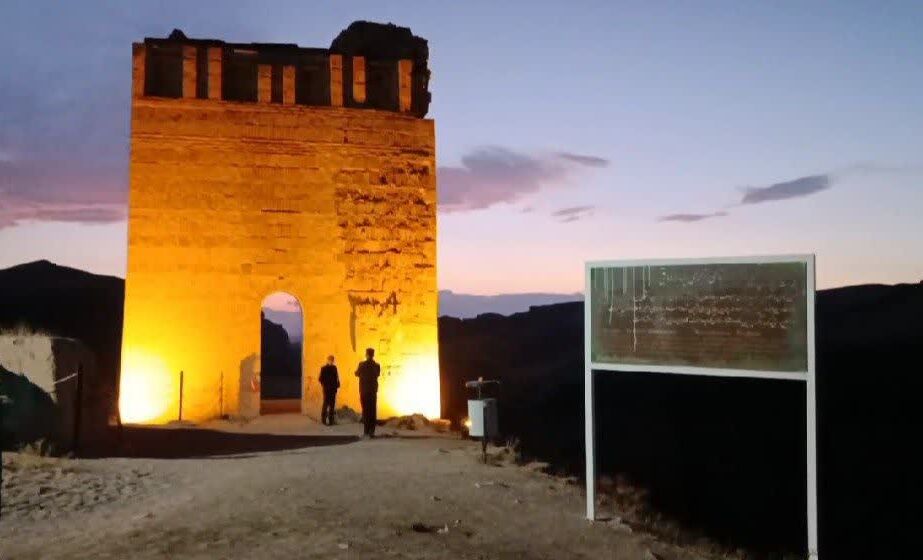
The lighting system, installed at an altitude of 1,800 meters above sea level, uses 34 photovoltaic panels generating 20 kilowatts of electricity.
The project, costing 15 billion rials, provides full nighttime illumination for the castle and its surrounding archaeological site.
Director General of East Azarbaijan’s Cultural Heritage, Handicrafts and Tourism Department Ahmad Hamzezadeh said the use of solar energy turns Zahhak Castle into a symbol of green tourism in the province.
He added that harnessing renewable energy in remote heritage sites reduces maintenance costs and ensures sustainable protection.
Zahhak Castle, also known as Narain Qala or Zahhak Qalasi, dates back over 2,000 years to the Parthian and Sassanid eras.
It was once a temple dedicated to Anahita, the goddess of water, and remains one of the most prominent archaeological landmarks in northwestern Iran.
