Wednesday, December 31, 2025
Home Blog Page 4471

ISIS Carrying Out Chemical Experiments on Prisoners

ISIS is reported to have set up laboratories in built-up neighbourhoods in the heart of its so-called caliphate to avoid being targeted by coalition air strikes, The Telegraph reported, as covered by ISNA.

The terror group is known to harbour chemical and nuclear ambitions, and is trying to manufacture weapons not only for attacks within Iraq and Syria but also the West.

It has a special unit for chemical weapons research made up of Iraqi scientists who worked on weapons programmes under the former dictator Saddam Hussein, as well as foreign experts.

The head of the unit, Suleiman Daoud al-Afari, was captured during a raid by US special forces outside Mosul in March and is now sharing intelligence on ISIS’s chemical operation.

An investigation by Syrian and Iraqi citizen journalists, who report under the name Sound and Picture, reveals that he has now been replaced by Abu Shaima, an Iraqi doctor who worked at the University of Baghdad during Saddam’s reign.

Other than his links to the late Iraqi dictator, little is known about Shaima, which is customary for top ISIS leaders.

He is said last month to have moved the group’s operations away from its main laboratories at the universities of Mosul and Tel Afar, which have both been hit in recent months, to residential areas to protect it against aerial attack.

Residents of al-Mohandseen – which had been a wealthy Christian neighbourhood until ISIS seized the city – said several houses had been taken over by ISIS officials in the last few weeks. A number of large unmarked trucks have been parked outside and more recently they reported seeing dozens of dead dogs and rabbits in nearby rubbish containers.

An ISIS insider confirmed to the journalists, who shared the information with The Telegraph, that they had been dumped there after they were used for chemical testing.

The report also claimed ISIS has been carrying out experiments on prisoners they are holding at a secret jail in al-Andalus, in the Nineveh governorate of Mosul, exposing them to chlorine and mustard gas to test the toxicity.

Residents near the prison have reported breathing difficulties and children developing severe rashes – some of the side effects of exposure to such substances.

The extremists have seized large quantities of industrial chlorine and are believed to have the expertise to make mustard gas. They are also feared to have captured chemical weapon stocks from the Syrian army across the border.


The militant group has already used chemical weapons against Kurdish Peshmerga forces in northern Iraq and Syria.

In March, a suspected ISIS chemical attack on the Iraqi town of Taza, south of Kirkuk, killed three children and wounded some 1,500 people, with injuries ranging from burns to rashes and respiratory problems.

Brigadier Roger Noble, the deputy commander of international troops training and supporting the Iraqi army, told The Telegraph that ISIS militants are expected to use chemical weapons against troops trying to retake Mosul, Iraq’s second city.

Hamish de Bretton-Gordon, former commanding officer of the UK Chemical, Biological, Radiological and Nuclear Regiment (CBRN) and chemical weapons adviser to NGOs in Syria and Iraq, told The Telegraph the revelations showed the group was adapting to the coalition’s punishing air strikes.

“ISIS’s chemical weapons operation has been heavily targeted – as is detailed in this report – and moving into residential areas is exactly what you would expect them to do now.”

He said Western security services should be concerned that their chemical operations have effectively gone underground, allowing them to continue their work outside of strike range.

“Now we know the extent of the ISIS chemical and dirty bomb aspirations we must make doubly sure that our security in the UK is absolutely water-tight against this threat.”

Iranian-Made Haemodialysis Machine Ready to Be Released

Arya Teb Firouz is the only company in Iran that manufactures haemodialysis machines, putting the country in the small list of countries that are able to produce such machines, Taheri said, as reported by IRNA and translated by IFP.

“Such countries as Germany, Japan, China, Italy, and the US are producing and releasing these machines, and we are the ninth company manufacturing it worldwide,” he went on to say.

The semi-industrial production of the haemodialysis machine was carried out by Iranian researchers, Taheri said, adding that the company can manufacture as many as 1000 machines per year.

The machine has passed all standard and clinical tests and received all required licences and approvals from Iran’s Health Ministry and Tehran University of Medical Sciences, Taheri said, explaining that the machine is being pilot-tested in two hospitals in the capital city.

Talks are underway with several countries, including Tajikistan, Kyrgyzstan, and Afghanistan, for the export of these machines, and with Iraq for the establishment of a dialysis centre, he added.

“We are seeking to receive European and American licences, including the FDA’s, to expand our exports,” Taheri said, adding that such licences would prepare the grounds for the export of these machines to developed countries as well.

Haemodialysis is a process of purifying the blood of a person whose kidneys are not working normally. It is a way of cleansing the blood of toxins, extra salts and fluids through a dialysis machine called an “artificial kidney”. It helps maintain proper balance of bodily chemicals such as potassium, sodium and chloride, and it keeps blood pressure under control.

Rose Harvest

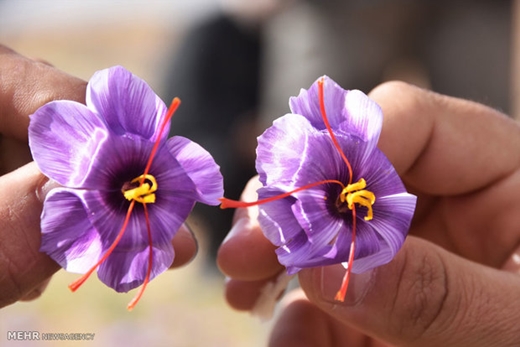
Iran’s Central Province, with its large fields of flowers and medicinal herbs, is one of the major sources of herbal extracts in Iran. Here, you can see photos of the yearly rose harvest, courtesy of Mehr. Rose petals and rose essence have been used for centuries in Iran in confectionery, cooking, perfume, traditional medicine and for flavouring tea.


Mandatory Food Standards Implemented to Help Control Non-Communicable Diseases

‘Traffic light’ tags – with information indicating how much fat, salt, sugar and trans-fatty acids (TFAs) a food product contains – have so far been placed on 60% of food products,” he said, IRNA reported.
“By the end of August it will become mandatory for all local food manufacturers to use food labels with nutritional facts. Also, measures to raise awareness about the importance of paying attention to the food labels will start from June through publicity campaigns,” he said, on the sidelines of the recent national meeting of health deputies of medical sciences universities. Stating that the worst Iranians dietary habits are consuming excess salt, sugar and oil, he noted that the import of trans-fatty acids into the country has been banned by the FDA.

Fighting TFAs
In order to achieve the document’s goals by the end of 2025, TFAs should be completely eliminated from the domestic food supply chain, he said.
According to the FDA, in 2005 the average amount of TFAs in edible liquid oils was 25%. This was brought down to 5% by 2014 and will further decrease to 2% by the end of the current fiscal year in March 2017.
On average, each Iranian consumes more than 19 kg of oil each year and improving edible oil standards can help improve people’s health. There are two kinds of fats in food products including TFAs and saturated oils. Although there is some disagreement among health experts about the effects of saturated oils on health, as some believe animal fat in butter and milk are beneficial, all experts agree that TFAs are definitely bad for people’s health.
Highlighting the negative effects of palm oil on people’s health, Dinarvand said that this year the tax on palm oil imports was increased by 16%. Use of palm oil in dairy products was banned in 2014.


War on Salt
High salt intake in the country poses serious risks to people’s health. Many countries are taking measures to reduce the intake of dietary salt to 5 grams per day, and some others to 3 grams per day. Per capita salt consumption is 12 grams per day in Iran, he said.
Traditional breads also contain high amount of salt. “Recently, an ultimatum was issued to all bakeries to reduce the amount of salt in all types of bread or nan. After the measure, the salt amount in breads has been reduced from the previous 2.3% to 1%.”
However, 60% of the problem is related to excessive salt added to home-cooked foods; therefore people’s cooperation is essential in addressing the problem. Stating that “We now have plans to reduce salt intake by 30% over a five-year period,” he said the scheme should be implemented gradually, as it takes time to change people’s sense of taste; otherwise they may oppose it.

Life Expectancy in Iran Rises to 73 for Men, 76 for Women

Eini-Zinab made the remarks in a conference on demographic policies held in the south-eastern city of Zahedan, as reported by IRNA and translated by IFP.

“Life expectancy among Iranian women has also risen during these years, rising from 38 in 1950 to 76 in 2011,” he said.

The rates are expected to increase in the coming years, but the rate of increase is going to be slower than previously, Eini-Zinab explained.

He further praised the country’s success in reducing fatalities, saying the death rate among Iranians under 18 years of age has decreased considerably in the 1996-2011 period.

However, he added, the rate of fatalities among citizens aged between 18 and 35 has increased, mainly because of drug addiction, car accidents, and social ills.

Speaker Larijani: One Third of Previous Parliament’s Decisions Focused on Economy

parliament

Talking to reporters on Wednesday May 25, one day after the conclusion of the last session of the legislative body, he said the parliament had paid special attention to economic issues as a main topic of debate in the country.

He noted that the legislators focused on the economic situation in the country in 30% of their ratifications.

Commenting on the most important achievements of the parliamentarian in the past four years, he referred to the debates about the nuclear negotiations, as well as the act on compensatory measures against the seizure of Iranian assets by the US as the most significant decisions adopted by the speaker.

He also pointed to extensive efforts by parliamentarians to expand dialogue and cooperation with their foreign counterparts as measures which also helped diplomatic endeavours.

He also said that the most outstanding outcome of the Joint Comprehensive Plan of Action (JCPOA) for the country was in improving conditions for entrepreneurs and investors.

US Policies Move Iraq towards Disintegration: Analyst

What follows is IFP’s translation of excerpts from KhabarOnline’s interview with Tajik.


Nosratollah Tajik“The US didn’t have a good understanding of Iraq’s domestic issues and lacked a transparent policy towards the country. For those reasons, it can be regarded as one of the main culprits behind the current situation in Iraq,” Tajik said.

“The economic interests that Iraq had for the US were reasons for Washington’s interference in the Arab country. Washington, therefore, has had the greatest influence on the arrangement of Iraq’s domestic politics and its ruling system, given the power it achieved through its interference in Baghdad,” he went on to say.

However, Tajik said, the US was unfortunately unaware of Iraq’s internal affairs and Iraqi society was not prepared [for US intervention], either.

Under such circumstances, the system pursued by the Americans will gradually move Iraq towards disintegration, he predicted.


Iran’s Reaction to the Current Crisis in Iraq

“In my opinion, Iraq is not on a good track. This undesirable trend might even have negative effects on our [Iran’s] national security,” he warned.

“We need to have well-ordered and calculated policies towards Iraq. The sectarian issues in Iraq will be of no help to our foreign policy, so we should prepare the groundwork for restoring stability and security to Iraq, and adopt an approach that helps them overcome the crisis.”

Afghan Official Thanks Iran for Sheltering Refugees

Atmar made the remarks in a Tuesday meeting with Reza Seifollahi, deputy secretary of Iran’s Supreme National Security Council (SNSC) in Chechnya’s capital of Grozny.

He further expressed the hope that Tehran’s support for Afghan nationals would continue and bilateral cooperation between the two countries would expand in all spheres, including politics, economics and security.

During the meeting, the two officials hailed the growing relations between Tehran and Kabul and stressed the need for further security cooperation in the fight against terrorist groups in the Middle East.

Iran has hosted Afghan refugees since the late 1970s, following the occupation of their country by the Soviet Union. Although many of those refugees returned to their country voluntarily, there are still hundreds of thousands of documented and undocumented Afghans in Iran.

Iran Exports First Consignment of Gas Oil to Iraq’s Kurdistan

According to Alireza Ashnagar, the Kordestan deputy governor general for political, security and social affairs, the consignment was sent to the Iraqi region as a move to help improve the living conditions of people in border areas, and also to reduce fuel smuggling across the region.

He said the exported gas oil was provided by the provincial oil storage center in the provincial capital of Sanandaj. He also said that the export deal was part of a project allowing cooperatives run by border people to export fuel to neighbouring regions.

Academic’s Open Letter to Aref about Parliamentary Presidency


Here’s IFP’s translation of excerpts from his letter, as published by Shargh newspaper.

Shargh: These days, the selection of next Parliament Speaker is one of the main topics in Iran’s political atmosphere. Aref, as the head of the reformists’ list [List of Hope] in the February 26 elections, and the chief of the High Council for Reformists’ Policy-Making, has received the highest number of votes among all MPs-elect, and now sees himself as the chairman of the Hope Faction [composed of reformist and moderate lawmakers] in the next parliament.

Certain reformist parties and figures consider him a great choice for the parliamentary presidency, and regard it as a change desired by people who voted for the left-wingers. On the other hand, some people prefer a more collaborative approach, as the next parliament will be divided between moderate conservatives, reformists, and pro-government figures.

In an open letter to Aref, Sadegh Zibakalam gives him some advice on the imminent competition for the role of Parliament Speaker.

He first offered his congratulations to Aref on the reformist success in the February 26 polls, “in spite of all obstacles,” and also on the formation of the “Hope Faction”, which is going to be headed by the senior reformist figure.

“We know that our unexpected victory in the elections was more surprising to us than it was to the conservatives. Millions of our compatriots accepted the invitation of reformist leaders and eagerly went to the ballot boxes on February 26 [first round] and April 29 [run-off] across the country, and as a result, expect that reformists take over the parliamentary presidency after 12 years of conservative leadership,” Zibakalam said in his letter.

According to Zibakalam, if a reformist figure isn’t elected as the Parliament Speaker, many of those who voted for the List of Hope, particularly the younger generation, would be disappointed, asking, “What was the point of taking part in the elections if no change was going to happen, and the legislature was going to remain in the hands of conservatives anyway?.”

“However, others have different considerations and concerns; while confirming these [aforementioned] arguments, they are worried that the reformists’ efforts to take the presidency of the Parliament would lead to an outright confrontation with the conservatives, and at the same time break an unwritten but fragile coalition of moderate conservatives with pro-government and reformist MPs,” he added.

“There is no doubt that both sides want the best for reformism. If many of these friends insist that you [Aref] should run for parliament presidency, they are concerned about our social support base weakening. On the other hand, if certain other friends do not pursue the same approach, that is because they are worried that your presidency in Parliament would provoke the other side’s [Conservatives’] anger, hindering the progress of reformism in Iran.”

Zibakalam further suggested that all reformists should wait for their leader, ex-President Seyyed Mohammad Khatami, and consider his opinion.

“From this point on, we should all abide by the reformist leader’s opinion; we should fully obey any decision made [by him]. We shouldn’t forget that you [Aref] didn’t want to withdraw from 2013 presidential elections in support of Rouhani. You might even have received more votes than Rouhani and today, you might have been the President instead of him, but you submitted to the reformist leader’s opinion, and paved the way for the victory of Hassan Rouhani by your historic decision,” he added.

Zibakalam further highlighted the important role the reformists’ faction, or Faction of Hope, is supposed to play in the 10th Parliament.

“Whether you are selected as the speaker of parliament or not, one thing is certain for now; a new faction has been formed in the tenth Parliament. Whether we call it the ‘Faction of Hope’ or the faction of reformists, it is a result of people’s votes for reformism […]. Although their first expectation is a change in the presidency of Parliament, such an expectation is more of a symbolic type, Mr. Aref. A more serious expectation they have is to see that the reformist MPs are really trying to realize and secure democracy, civil rights, civil freedoms, the rule of law, the improvement of economic conditions, and most importantly, to restore the Parliament to its real position, which is ‘in charge of all affairs’.”

Zibakalam outlined a long list of Iran’s domestic and international economic, political, and social problems, including unemployment, economic corruption, regional tensions, and social ills, stressing the important role of the Parliament under such circumstances.

“The government, as the executive body, is not able to settle all these problems alone,” he noted, reminding Aref and the reformist MPs of their huge responsibility in the new era.

“One of the adverse consequences of more than one decade of conservative domination over Parliament was the decline of its position in the country’s macro-management. As a result of conservatives’ presidency in three terms [7th, 8th, and 9th parliaments], the Majlis [Parliament] has practically been downgraded to a weak body, while it is supposed to be in charge of everything.”

He further referred to various cases in which previous parliaments had performed poorly, and criticized parliamentarians’ huge support for ex-President Mahmoud Ahmadinejad and his plans.

Zibakalam also questioned the inaction of the then parliaments in dealing with his “incorrect” policies, particularly his economic plans and foreign policy.

He finally concluded his remarks by urging Aref to restore the lost position of the Majlis, bringing it back to “being in charge of the country’s affairs”. Zibakalam described it as Aref’s first and most important duty as the leader of reformist MPs, and highlighted the role of Faction of Hope in this regard.

The faction can empower Parliament, as its members can join different commissions, including the Principle 90 Commission, where they can hold accountable the country’s most powerful bodies, including judicial, security, and even military and disciplinary ones, for their decisions and policies, he added.

“The voters expect that the Faction of Hope will be able to restore Parliament to its position, which is in charge of everything.  The reformist MPs should be able to realize the 100-year-old dream of ‘obeying the law’ in Iran, and this is more important than the presidency of Parliament and the share of each political faction.”

“The reformist MPs can work to revise the elections law, and to attract the attention of all Iranian bodies to the fact that, firstly, they should work within the framework of their legal authority, and more importantly, they have to be held accountable for their decisions and policies,” he noted.