Saturday, April 4, 2026
Home Blog

Turkey says to help Syria against Kurdish fighters if asked

Deadly clashes erupted this week between Syrian government forces and the Kurdish-dominated Syrian Defence Forces (SDF) after the two sides failed to reach a year-end deadline to merge the Kurdish fighters into the main Damascus military.

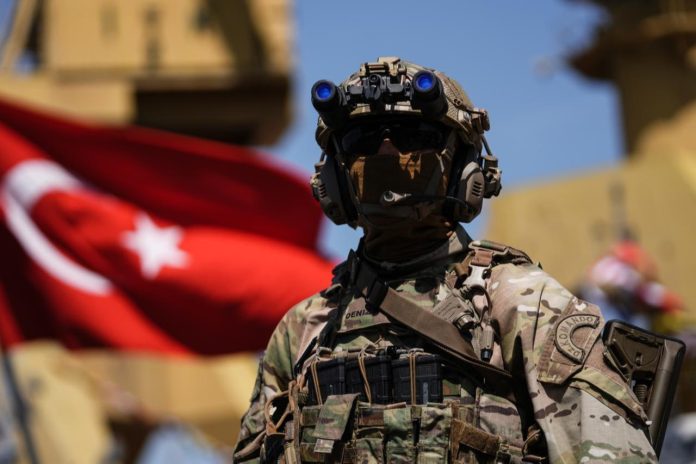
“Turkey supports Syria’s fight against terrorist organisations,” the official told reporters, saying Ankara was “closely monitoring” developments in the north.

“Should Syria request assistance, Turkey will provide the necessary support,” he added, echoing a long-standing offer by Ankara to extend military support to its allies in Damascus’s new government.

Turkey has long been hostile to the Kurdish SDF that controls swathes of northeastern Syria, seeing it as an extension of the banned Kurdish militant group PKK, seeing it as a major threat along its southern border.

It has repeatedly pushed for implementation of a March 2025 deal under which the Kurds’ semi-autonomous administration and military would be integrated into the Syrian military and security apparatus.

The Kurds are pushing for decentralised rule, an idea which Syria’s new authorities have rejected, blocking the deal’s implementation causing tensions that have occasionally erupted into clashes.

On Wednesday, the Syrian military began shelling two neighbourhoods in Aleppo after ordering all Kurdish fighters to leave the area following clashes that forced thousands of civilians to flee.

Parliamentary speaker Numan Kurtulmus said Turkey wanted to help end the clashes.

“Our aim is to bring an immediate end to the kind of clashes currently seen in Aleppo… and for a truly pluralistic, democratic regime that meets the needs of Syria’s people to be established rapidly. Turkey is ready to provide all necessary support for this,” he told reporters.

He also warned against any involvement by Israel in the ongoing dispute between Damascus and the SDF, echoing frequent concerns expressed by Turkish officials that Israel could exploit the unrest to further its own interests.

Israel on Thursday denounced Damascus’s operation “against the Kurdish minority in Aleppo”, describing it as “grave and dangerous” for Syria’s minorities, hiking concern it could weigh.

“Let me be very clear: Israel does not love the Sunni Arabs in Syria, nor does Israel love the Kurds of Syria,” Kurtulmus added.

“We know the fundamental aim of some countries in the region is to fragment and divide this region further, to turn people against each other on ethnic, religious, and sectarian grounds and even turn them into enemies.”
 

Lebanon Talks to focus on Israel’s threats: Iran’s FM

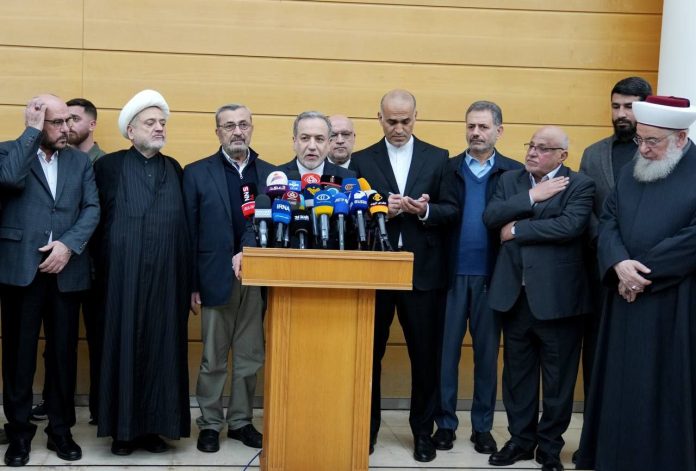
Araqchi arrived at Beirut’s Rafik Hariri International Airport on Thursday, January 8, where he was welcomed by Lebanese officials.

Speaking to reporters upon arrival, Araqchi said he would meet Lebanese officials over the course of Thursday and Friday, adding that his primary objective was to consult closely with them on regional developments.

“Today and tomorrow, I will meet with Lebanese officials, and the first goal is consultations with our Lebanese friends about regional developments,” he said.

He also thanked Khalil Hamdan, a representative of Lebanese parliament speaker Nabih Berri, for the reception and remarks at the airport.

Meanwhile, Araqchi warned that the region was facing serious challenges and threats that he said were clearly emanating from the Israeli regime.

“Our region is facing serious challenges and threats, threats that are specifically coming from the Israeli regime and perhaps have never been this serious,” he said.

He added that over the past two years, seven countries in the region, including Iran and Lebanon, had been attacked by the regime.

Araqchi said parts of Lebanese territory remain under occupation by Israeli soldiers and that a ceasefire in place over the past year had been repeatedly violated.

“Parts of Lebanese territory are still under occupation by Zionist soldiers, and over the past year the ceasefire that was established has been repeatedly violated,” he said.

He said the main purpose of his visit was to hold close consultations with senior Lebanese officials on these challenges and threats.

Separately, Araqchi described Lebanon as a key country in the region, saying it plays an important role in regional peace and stability.

He added that Iran was in consultations with all countries in the region and that his visit to Lebanon came at a very sensitive time.

Turning to bilateral relations, Araqchi said the second objective of his visit was to advance ties between Iran and Lebanon.

“Iran and Lebanon have long had political relations and economic and cultural ties, and we are seeking to expand these relations, especially economic relations,” he said.

He said Iran was pursuing comprehensive relations with the entire Lebanese government and that he would meet Lebanon’s economy minister during the visit to expand economic and trade cooperation.

Meanwhile, Araqchi said both countries possess rich cultures and civilizations, adding that cultural exchanges could help deepen friendship and interaction between the two nations.

“Iran and Lebanon also enjoy rich cultures and ancient civilizations, and cultural exchanges can help expand friendship and deep interactions between our two countries,” he said.

He reiterated Iran’s support for Lebanon’s territorial integrity, national unity and independence.

“Iran will always support Lebanon’s territorial integrity, national unity and independence, and the Lebanese government’s position toward Iran has always been the same,” he said.

He added that Tehran sought to expand relations based on mutual respect and shared interests.

Responding to a question about Israeli regime threats against Lebanon, Araqchi said Iran would hold close consultations with Lebanese officials on the issue.

In response to another question about threats by the United States and the Israeli regime against Iran, Araqchi said both had already attempted to attack Iran and failed.

“The United States and Israel once tried attacking Iran and they failed,” he said.

“Every time they repeat this experience, they will get the same result,” he added.

He said Iran was fully prepared for any scenario, while stressing that Tehran was not seeking war.

“We are not seeking war, but we are prepared,” he said.

He also said Iran was open to negotiations, provided they were based on mutual respect.

“We are also ready for negotiations, but negotiations that are based on mutual respect,” he said.

“Whenever the Americans accept that negotiations are different from dictation, negotiations can begin,” he added.

Report denies claims of Turkey evacuating citizens from Iran

Iran Flag

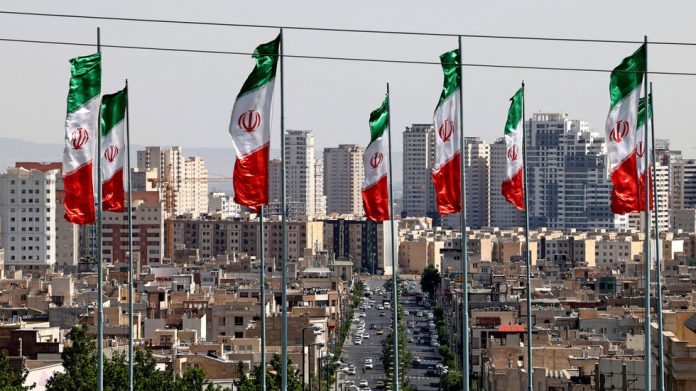
According to ISNA, follow-ups with the Turkish Embassy in Tehran confirm that claims published by some social media channels about Ankara removing Turkish nationals from Iran are not accurate.

Earlier, several online accounts had alleged that Turkey was taking such action due to developments in Iran and the region.

The embassy, however, dismissed these reports as unfounded.

This comes amid ongoing protests against Iran’s economic downturn and hiking prices.

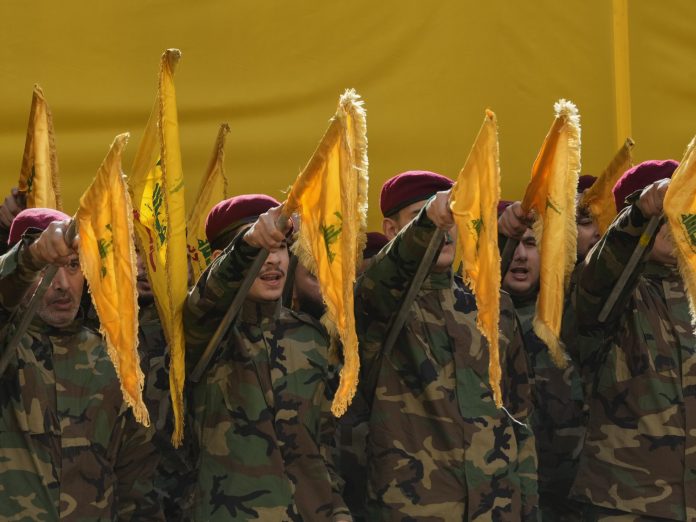
Lebanon’s military claims completed first phase of disarming Hezbollah

In a statement, the army said it had “achieved the objectives of the first phase” of its plan, with an intention to extend it to the rest of Lebanon.

Hezbollah, weakened after a deadly war with Israel in November 2024, refuses to surrender its weapons in the rest of Lebanon.

The army added it now controls the area in Lebanon south of the Litani River “with the exception of territory and positions still occupied by Israel” near the border.

Despite a ceasefire between Hezbollah and Israel in place for over a year, which stipulates that Israel must withdraw from Lebanese territory, Israel continues to occupy five strategic points near the border.

The Israeli army is still conducting operations against Hezbollah, which it accuses of seeking to rearm, and is questioning the effectiveness of the Lebanese army’s disarmament efforts.

Under the ceasefire agreement, Hezbollah must withdraw its forces north of the Litani River and have its military infrastructure dismantled in the evacuated areas.

The Lebanese army said its operations will continue south of the Litani to “complete the disposal of unexploded ordnance” and search for tunnels dug by Hezbollah.

It added that it will take measures to “permanently prevent armed groups from rebuilding their capabilities”.

Army Commander Rodolphe Haykal is scheduled to brief the government Thursday afternoon on the progress made.

The Lebanese government is under intense pressure from the United States to disarm the Iran-backed Hezbollah, amid fears of an escalation in Israeli attacks.

Israeli Foreign Minister Gideon Saar praised the Lebanese government and army’s efforts on Sunday, but added that they were “far from sufficient”.

A committee comprised of representatives from the United States, France, Lebanon, Israel and the United Nations is tasked with monitoring the ceasefire.


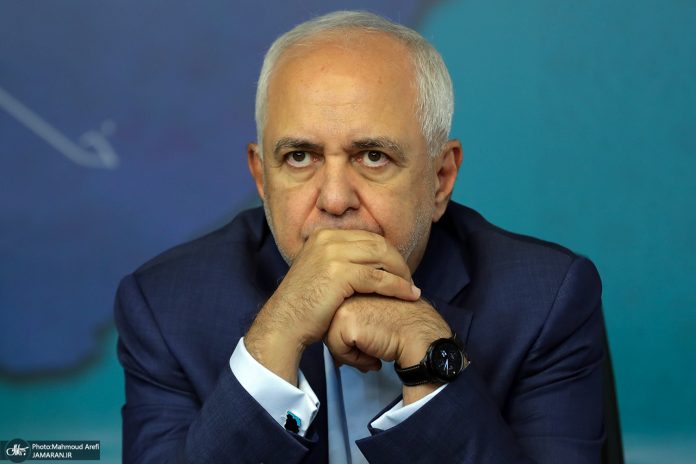
Former Iran FM Zarif says era of loyalty in global order over, citing Venezuela, Iran’s 12-day war

Javad Zarif

Speaking at the unveiling of the book “The World Ahead: Discourses on the Global Order”, Zarif said the current international system can no longer be described as clearly bipolar or multipolar.

He argued that the world has entered a “post-polar” phase in which power is fragmented across military, economic, and technological domains.

Referring to Venezuela, Zarif said the country’s experience demonstrated that loyalty does not work in today’s global system, noting that neither China nor Russia came to Caracas’s aid.

He added that a similar lesson was learned by Iran during the recent war with the US-Israeli coalition, when expectations of meaningful sacrifice or support from major powers proved misplaced.

Zarif also pointed to developments in the US, NATO, and transatlantic relations as evidence of shifting global dynamics, citing US positions on Ukraine and remarks by US President Donald Trump regarding Greenland.

According to Zarif, clinging to outdated, bloc-based views of the world leads to flawed analysis and conspiracy theories.

He stressed that Iran and other countries must adopt a new understanding of the international system to better anticipate global trends and protect their national interests.

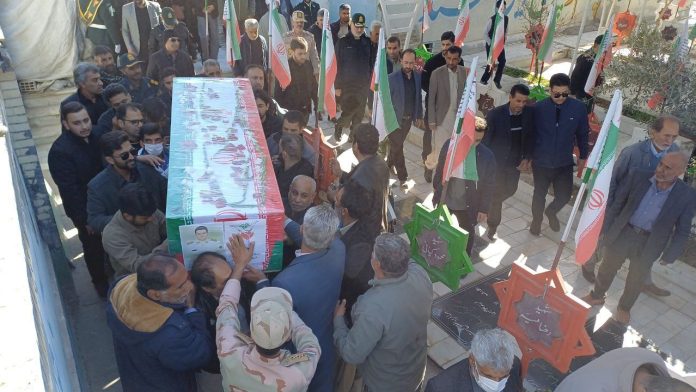
Large funeral ceremonies held in Iran’s Ilam, Zahedan for martyred security personnel

Residents from across the province joined the ceremony, expressing condemnation of violent unrest.

Lieutenant Aghajani, a member of the provincial law enforcement forces, was fatally shot in the chest during the confrontation with protesters on Tuesday. Despite efforts by medical teams, he succumbed to his injuries.

Three other officers were wounded in the same incident and transferred to medical centers for treatment.

Participants in the funeral emphasized that economic and livelihood-related demands should be pursued through legal and peaceful channels, while denouncing acts of violence.

Meanwhile, the southeastern city of Zahedan was also in mourning as residents held a solemn funeral for Lieutenant Mahmoud Haghighat, who was killed in a terrorist attack in Iranshahr.

According to official reports, Haghighat was shot by members of the so-called Jaish al-Adl militant group while on duty. The group claimed responsibility for the attack.

Haghighat is survived by two young children.

Cities across Iran have been witnessing growing protests for 11 days amid runaway prices and plunging national currency value.

Officials say they recognize peaceful protests but will not tolerate violent acts and will respond to them proportionately.

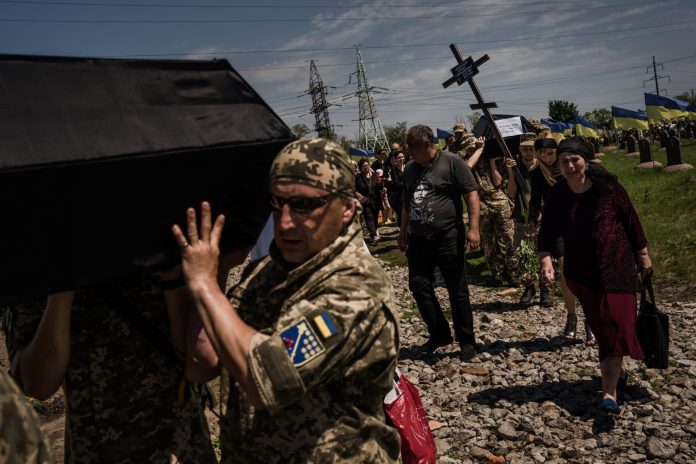
Europeans gave no ‘unequivocal answer’ about plan if Russia attacks Ukraine again: Zelensky

Russia Ukraine War

On Tuesday, European leaders and US envoys announced that they had agreed key security guarantees for Kyiv, including a US-led monitoring mechanism and a European multinational force that would be deployed if a ceasefire could be reached.

But when asked if he was sure that European allies would step in and defend his country in the event of another Russian invasion, Zelensky said Wednesday he had no “clear” answer on that.

“I personally very much want to get a very simple answer: yes, if there is aggression again, all partners will give a strong response to the Russians. And that’s the exact question I put to all our partners. And so far I haven’t received a clear, unequivocal answer,” Zelensky told reporters.

He added there was “political will” from Kyiv’s allies to “give us strong security guarantees”.

“But until we have such security guarantees — legal ones, backed by parliaments, backed by the United States Congress — we cannot answer this question.”

Envoys from the United States and Ukraine on Wednesday were continuing talks in Paris on the issues that Zelensky stated that were the most difficult: the fate of the Russian-occupied Zaporizhzhia nuclear power plant and control of territory in eastern Ukraine.


UN accuses Israel of ‘apartheid’ in West Bank

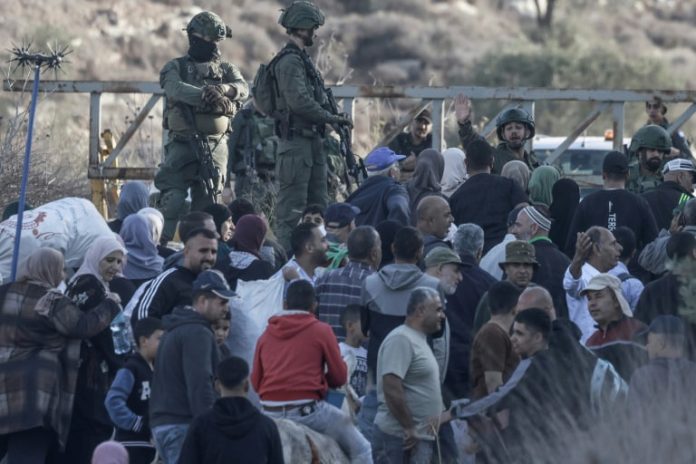
The United Nations human rights office has called on Israel to “dismantle all settlements” in the occupied West Bank, saying its “oppression and domination” of Palestinians resembles “apartheid”.

In a new report on Wednesday, the Office of the High Commissioner for Human Rights slammed Israel’s “systemic discrimination” against Palestinians, citing restrictions on movement through checkpoints, and “limited access to roads, natural resources, land and basic social facilities”.

“There is a systematic asphyxiation of the rights of Palestinians in the West Bank,” said UN rights chief Volker Turk in a statement.

“This is a particularly severe form of racial discrimination and segregation that resembles the kind of apartheid system we have seen before.”

While UN-affiliated independent experts have described the situation in the occupied Palestinian territories as “apartheid”, Turk’s comments marked the first time a UN rights chief used the term, which was coined during South Africa’s system of racial segregation that lasted from 1948 to 1994.

Turk added every aspect of life in the occupied West Bank is “controlled and curtailed by Israel’s discriminatory laws, policies and practices”, from accessing water to harvesting olives.

Wednesday’s report called out the Israeli authorities for treating Israeli settlers and Palestinians “under two distinct bodies of law and policies, resulting in unequal treatment on a range of critical issues”, with “large-scale confiscation of land and deprivation of access to resources”.

The laws had led to Palestinians being dispossessed of their lands and homes “alongside other forms of systemic discrimination including criminal prosecution in military courts during which their due process and fair trial rights are systematically violated”.

Israel has previously rejected the apartheid accusations, claiming its policies are driven by “security concerns” rather than racial or ethnic discrimination.

The UN rights office announced that the discrimination in the Palestinian territories is compounded by continuing and escalating settler violence in many cases “with the acquiescence, support and participation of Israel’s security forces”.

More than 500,000 Israelis currently live in settlements in the West Bank, occupied since 1967 and home to about three million Palestinians.

Violence has surged in the shadow of the genocidal war on Gaza, with Israeli attacks killing more than 1,100 Palestinians in the West Bank since October 7, 2023. Israeli authorities have arrested nearly 21,000 Palestinians during that period.

Meanwhile, Israel’s settlement expansion continues, with Israel recently approving 19 new settlement outposts in the occupied West Bank, as the right-wing government of Prime Minister Benjamin Netanyahu moves to prevent the formation of a contiguous Palestinian state.

At least 100 people killed during US attack: Venezuela’s interior minister

“So far, and I say so far, there are 100 dead, 100. And a similar number of injured,” Diosdado Cabello said late on Wednesday.

“People died who had nothing to do with a conflict, civilians, women who were in their homes… were hit by the impact of the powerful bombs launched against our country.”

The Cuban government announced on Sunday that 32 of its citizens were killed during the operation “in combat actions,” performing missions on behalf of the Cuban Armed Forces and interior ministry. Cabello did not specify whether this was part of the 100 reported dead.

US President Donald Trump previously stated that no US service members were killed, though some were injured when a helicopter was hit during the attack.


Tehran says US interventionism aimed at inciting violence in Iran

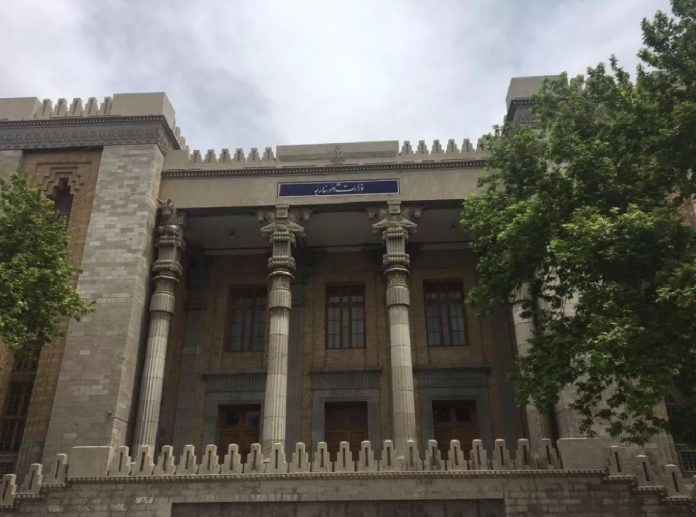
The Iranian Foreign Ministry

In a statement issued on Wednesday, the ministry said the US’s positions were not driven by concern for the Iranian people, but were aligned with a policy of “maximum pressure, threats, and interference” in the Islamic Republic’s domestic affairs.

According to the statement, the meddlesome stance seeks to incite violence and terrorism and undermine stability in the country.

The statement emphasized that, under the Iranian Constitution, peaceful protests were recognized and that the government spared no effort to address legitimate public demands within the framework of the law. It added that, while Iran is taking steps to alleviate economic difficulties, a significant portion of these challenges stemmed from the United States’ own all-out economic and financial war against the country through illegal and unjust sanctions.

The ministry noted that Washington’s actions against Iran extended beyond economic pressure and included psychological warfare, media campaigns, spread of false information, threats of military intervention, and incitement to violence and terrorism.

It underlined that such conduct contradicted the principles of the United Nations Charter, peremptory norms of the international law, and the foundations of the international human rights system.

Recalling the long record of US hostility and interference in Iran’s internal affairs, the ministry referred to the 1953 coup against the country’s then-democratically-elected government, US support for Iraq’s Ba’athist regime during the latter’s eight-year-long imposed war on the Islamic Republic, participation alongside the Israeli regime in Tel Aviv’s illegal war on the country in June, and imposition of the unilateral sanctions.

It reminded that these adversarial measures underscored the responsibility of the United Nations and international institutions to uphold the international law, particularly concerning respect for national sovereignty and non-interference.

The ministry called on the international community to recognize the illegal and inhumane nature of unilateral coercive measures imposed by the United States, saying the bans directly affected the livelihoods and daily lives of Iranians and constituted crimes against humanity.

The statement concluded by asserting that the Islamic Republic would confront foreign meddling through vigilance, reliance on its Islamic heritage, and strengthened national cohesion, and not allow US policies to undermine its sovereignty, independence, and dignity.

The remarks came after Foreign Minister Abbas Araghchi similarly addressed Washington’s uncalled-for statements, reiterating that Iran’s internal affairs were solely the concern of its people.

Recently, President Donald Trump and other American officials alleged that the United States would resort to fresh military aggression against Iran in the event of, what they called, Tehran’s “suppression” of sporadic riots that have followed the decline of rial, the Iranian currency.

The Islamic Republic has repeatedly stressed that it would exert due effort to address economic protests, but stands firmly in the face of attempts at derailing protests towards disorder.