Saturday, April 4, 2026
Home Blog Page 3

Iran condemns Israeli FM’s Somaliland visit as violation of Somalia’s sovereignty

Esmail Baghaei
Esmail Baqaei said on Wednesday that the unauthorized visit by Gideon Sa’ar, the Israeli foreign minister, to Somaliland constitutes a clear breach of Somalia’s sovereignty and territorial unity.
The visit marks the first trip by an Israeli foreign minister to the region following the regime’s recognition of Somaliland.
Referring to the international community’s emphasis on respecting the territorial integrity and national sovereignty of Somalia as an independent member of the United Nations, the Iranian spokesperson described the Israeli regime’s actions aimed at the fragmentation of Somalia as a dangerous precedent in international relations and a severe blow to the legal and normative foundations of the United Nations.
Baqaei also stressed the need for cooperation among the international community, as well as Islamic and African countries, to prevent the weakening of Somalia’s national sovereignty.
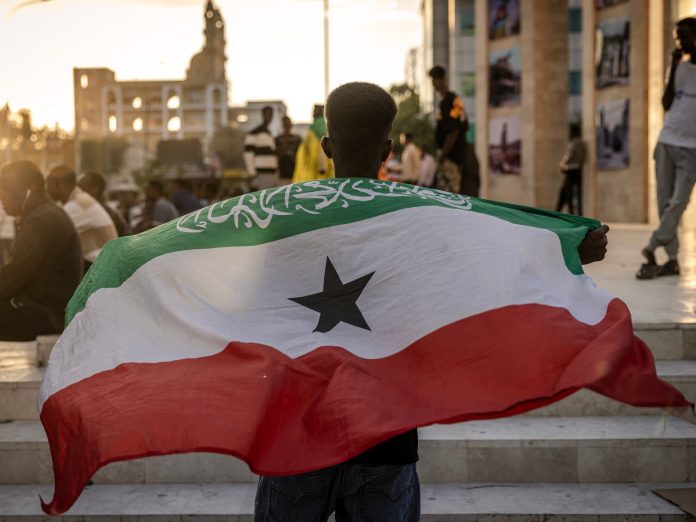
Somaliland is the name adopted by clans in five northern provinces of Somalia that declared separation from the country in 1991. The region has not been recognized by any country.
The recognition of Somaliland by the Israeli regime has faced strong opposition from many countries, including members of the African Union.


Iran’s army chief warns enemies of severe response to any threat

Iran Army

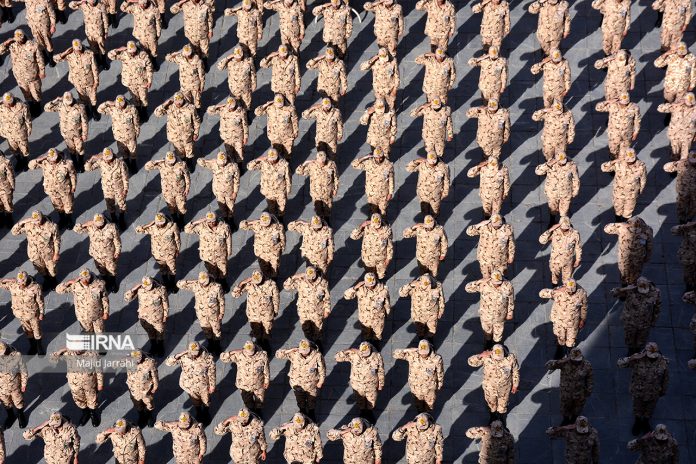
In an address to the students of the Army’s University of Command and Staff in Tehran, Major General Hatami shrugged off hostile rhetoric by Iran’s enemies and their interference in the internal affairs of the Islamic Republic, emphasizing that the current readiness of Iran’s Armed Forces is far greater than it was before the war imposed in June 2025.

The commander warned that if the enemy were to make any miscalculation, it would face a much more decisive response, adding that Iran would cut off the hand of any aggressor.

Iran views the intensification of hostile rhetoric against the nation as a threat and will not leave its continuation unanswered, he stated.

Major General Hatami described the oppressive sanctions as part of the enemies’ plan to harm the Iranian people through economic pressure, noting that while Iran, like all countries, faces certain problems that must be addressed, the enemies have placed special focus on inflicting damage on the people, a reality that should not be overlooked.

The commander added that the Iranian people’s livelihood and professional protests have nothing to do with the US president or the criminal prime minister of the Zionist regime. He recalled that despite their protests, the people refused to side with rioters, separating their path and declining to fall into the framework desired by the US president and the Israeli prime minister.


Britain and France ‘ready to deploy military forces’ to Ukraine after ceasefire

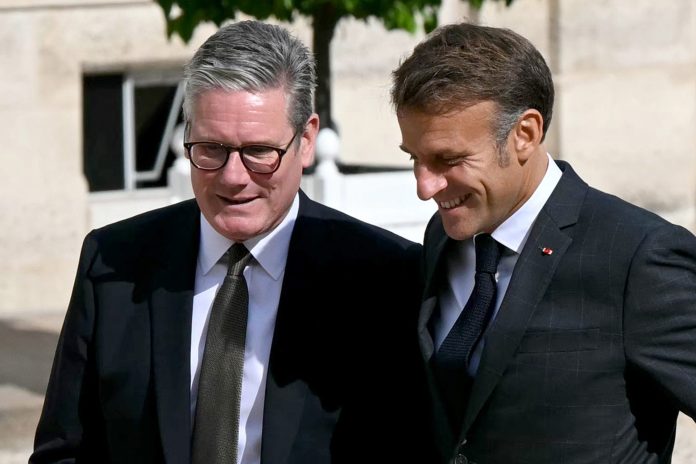
British Prime Minister Sir Keir Starmer and French President Emmanuel Macron

The announcement came after a summit in Paris hosted by the French president, Emmanuel Macron, and attended by more than two dozen leaders of the states that make up the “coalition of the willing” of Ukrainian allies, plus the US envoy Steve Witkoff and Donald Trump’s son-in-law Jared Kushner, who said the US president “strongly stands” behind the security protocols.

Macron, the UK prime minister, Keir Starmer and Ukraine’s Volodymyr Zelensky signed the trilateral declaration of intent on Tuesday evening after hours of talks, which they said would pave the way for the deployment of French and British troops on Ukrainian soil.

“Following a ceasefire, the UK and France will establish military hubs across Ukraine,” said Starmer.

However the planned ground force is unlikely to engage directly with Russian forces should Moscow relaunch an invasion of Ukraine. Macron made it clear that the goal of the force would be “to provide reassurance after the ceasefire” and noted it would be stationed “a long way behind the contact line”. There was no further clarity given immediately on the size or scope of the potential force.

Macron added the coalition had also drawn up a plan to take on “ceasefire monitoring commitments under American leadership” as well as “long-term support to Ukrainian armed forces who are and will remain in the frontline of defence”.

Answering a question about whether the US would come to the aid of European forces if they were attacked in Ukraine, Witkoff stated that the security guarantees were “as strong as anyone has ever seen” and were meant to “deter any further attacks […] if there are any attacks they’re meant to defend. And they will do both.”

He added: “The president does not back down from his commitments, he is strong for the country of Ukraine and for a peace deal. We will be there for the Ukrainians in helping them to get to that final peace,” said Witkoff.

Witkoff and Kushner were in Paris representing the US after the secretary of state, Marco Rubio, who had been due to attend the talks, pulled out after Trump’s Venezuela attack.

The talks in Paris came as Trump’s attention shifts from Ukraine to Venezuela, and as his repeated threats to annex Greenland are causing friction in the US-Europe relationship. Several questions at a joint press conference following the signing revolved around whether Europe could trust US security guarantees at a time when Trump was threatening another NATO member with military action.

Separately, US and Ukrainian delegations have been trying to sign a bilateral peace agreement for weeks, which the White House would then take to Russia. Zelensky and others from the Ukrainian delegation were due to meet separately with Witkoff and Kushner on Tuesday evening.

However, Zelensky said the issue of Ukraine giving up territory remained a sticking point in the talks.

“We have a number of ideas that could be helpful,” he continued, adding that if the negotiating teams could not come to an agreement, he was ready to discuss directly with Trump.

Witkoff agreed that territory “will be the most critical issue” in discussions.

“Hopefully we’ll be able to come up with certain compromises,” he stated.

Although Trump has repeatedly claimed that peace is just around the corner, there has been little sign that Moscow is ready for a deal, and Russian officials have repeatedly ruled out a temporary ceasefire or quick deal, saying they want a comprehensive settlement that addresses what they claim are the “root causes” of the conflict.

The Kremlin has also announced it will categorically oppose any NATO soldiers being based on Ukrainian soil as part of any deal, and as Moscow appears to be content with continuing fighting for now, the prospect of a negotiated deal followed by a subsequent force deployment seems unlikely at least in the short term.

Starmer ackowledged that reality in his comments on Tuesday.

“We are closer to [peace] than ever but of course the hardest yards are still ahead,” he said.

“We can only get to a peace deal if Putin is ready to make compromises. Putin is not showing he is ready for peace,” he added.

The Paris meeting gathered an impressive roster of world leaders, with 27 heads of state or government coming to Paris for the talks. There were also a series of meetings on the sidelines of the summit, including of French, British, Ukrainian and NATO military chiefs.

Italy’s Georgia Meloni and Poland’s Donald Tusk said after the talks that their nations would not contribute troops to any mission to Ukraine. German chancellor Friedrich Merz said German troops could contribute to a force, but would be based in neighbouring countries, not inside Ukraine.

Over the weekend, Zelensky stated that he feared that “not everyone is ready” to commit forces to Ukraine, and conceded that intelligence sharing and weapons transfers were also crucial modes of support. However, he said British and French commitments to deploy forces would be essential for any security guarantees to have meaning.

“Speaking frankly as president, even the very existence of the coalition depends on whether certain countries are ready to step up their presence,” he continued, adding, “If they are not ready at all, then it is not really a ‘coalition of the willing.’”

 

Iran Judiciary chief warns of no leniency for rioters, their supporters

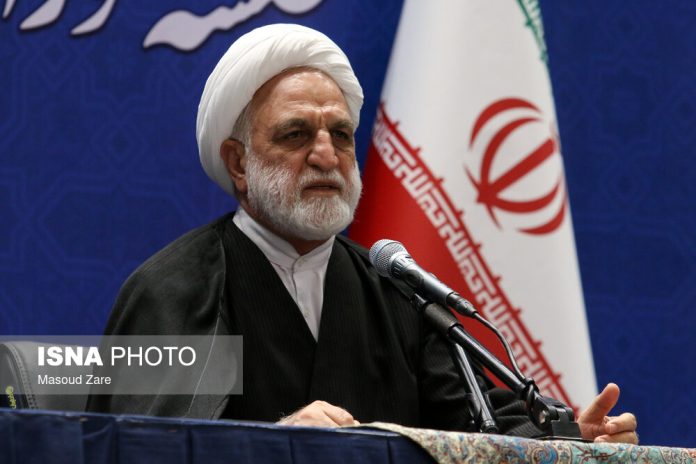
Mohseni Ejei

Speaking at a gathering of senior commanders of Iran’s Law Enforcement Forces, Ejei said hostile actors have openly supported the violent unrest, making the situation fundamentally different from previous years.

“The enemy has explicitly backed the rioters. Therefore, no excuses will be accepted from those involved, their supporters, or those who directed them,” he said, referring to the recent remarks by US President Donald Trump, among others, who warned Iran against cracking down on the protests.

Several Iranian cities have been the scene of protests, at time violent, over economic hardships for the past ten days. In many cases, these unrests have been accompanied by acts of sabotage carried out by opportunistic individuals.

While emphasizing firm action against violence and disorder, the judiciary chief acknowledged that some protests stem from legitimate economic grievances, particularly currency instability.

He said the State Inspectorate Organization had been tasked more than a month ago with a thorough investigation into currency fluctuations, alongside a special committee working on the issue.

Ejei argued that after failing to achieve their objectives during the 12-day conflict in June, Iran’s adversaries are now seeking to create insecurity from within.

U.S. officials assess Venezuela raid killed about 75

One person said that at least 67 people were killed in the predawn strike, while another said that about 75 to 80 people were left dead. The officials, who like others spoke on the condition of anonymity because of the issue’s sensitivity, said the assessments account for Venezuelan and Cuban security forces as well as civilians caught in the fray. The figures roughly match an estimate that Venezuelan officials have shared in recent days.

The sizable death toll adds meaning to President Donald Trump’s public remarks that the operation he approved was “effective” but “very violent.”

About a half-dozen U.S. troops were injured in the operation, with some suffering gunshot wounds in the firefight at Maduro’s compound. Some were transported to Brooke Army Medical Center in Texas, where they underwent surgery, two other officials said.

The Pentagon said in a statement Tuesday that two U.S. service members were still recovering from injuries suffered during the operation. Five others who were hurt have returned to duty.

“The fact that this extremely complex and grueling mission was successfully executed with so few injuries is a testament to the expertise of our joint warriors,” the Pentagon said.

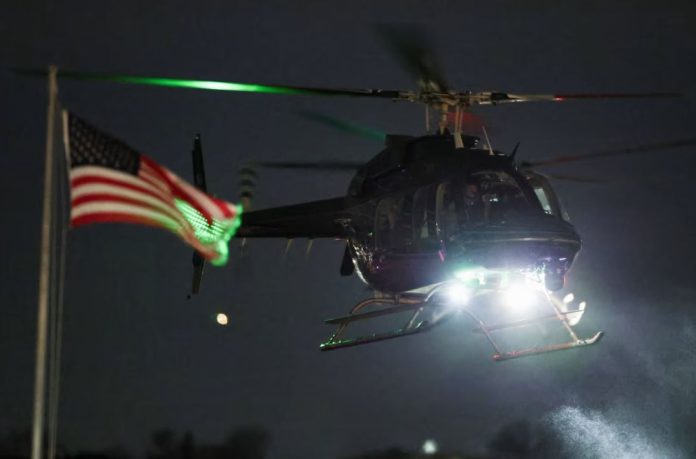
The raid was led by elite members of the Army’s Delta Force, who were teamed with Special Operations soldiers from the 75th Ranger Regiment and 160th Special Operations Aviation Regiment, which flies some of the military’s most dangerous missions. Helicopters launched from numerous warships off the coast off Venezuela and swooped in, flying low over the water to limit detection.

The details – disclosed to congressional officials this week as lawmakers demanded clarity on the Trump administration’s aims after forcibly removing Maduro and bringing him to the U.S. to face narco-terrorism charges – indicate that while the operation was “an astonishing feat,” it was somewhat miraculous there were zero U.S. fatalities, one of the officials said.

The details were disclosed after top administration officials – including Secretary of State Marco Rubio, Defense Secretary Pete Hegseth and Gen. Dan Caine, the Joint Chiefs chairman – held a classified briefing Monday night for senior lawmakers. A larger briefing for other lawmakers is expected Wednesday morning.

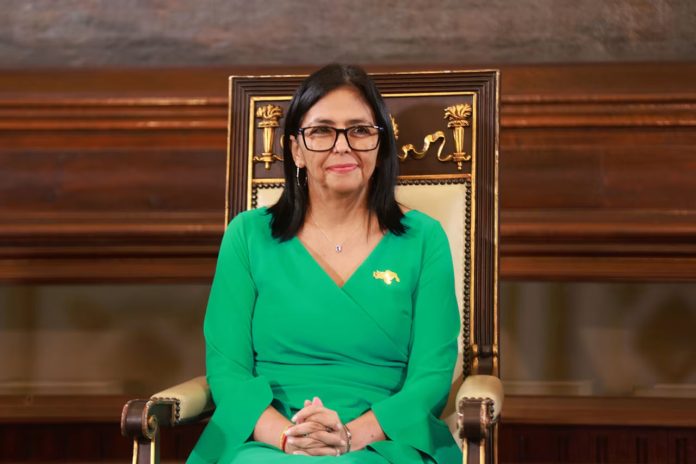
People familiar with Monday’s briefing said Rubio, who also functions as Trump’s national security adviser, did the majority of the talking and told congressional officials that he is confident he can work with Delcy Rodríguez, who had served as vice president under Maduro and is Venezuela’s acting president.

Administration officials also voiced confidence during Monday’s briefing that they have leverage over Rodríguez in part because they assess that unless she cooperates, Venezuela will run out of money within weeks and be unable to pay security forces and other government officials. Rubio did little to address whether an election is envisioned, people familiar with the matter said, and Trump suggested in an interview with NBC News on Monday that none will be held until the country is “fixed.”

Caine, the Pentagon’s top general, said during a news conference Saturday that the mission, known as Operation Absolute Resolve, was “meticulously planned” and involved more than 150 aircraft launched from 20 locations. Those making up the “apprehension force descended into Maduro’s compound,” Caine said, with other U.S. troops cordoning off the area to protect those capturing Maduro.

Helicopters involved in the mission came under groundfire as they swooped in, Caine said, and responded with “overwhelming force in self-defense.” One helicopter was hit but remained flyable.


“No external agent” is running Venezuela: Acting president

“There is no external agent who governs Venezuela. It is Venezuela. It is it’s constitutional government, the consolidated popular power,” she said in a televised address a day after being sworn in.

She stated that Venezuela is on a “painful path” because of “the aggression it suffered, unprecedented in our history.”

Rodriguez has also declared seven days of mourning for those killed in the US attack in Caracas.

“I have made the decision to decree seven days of mourning in honor, honor, and glory to the young men and women who died, who gave their lives defending Venezuela, defending President Nicolás Maduro,” she added.

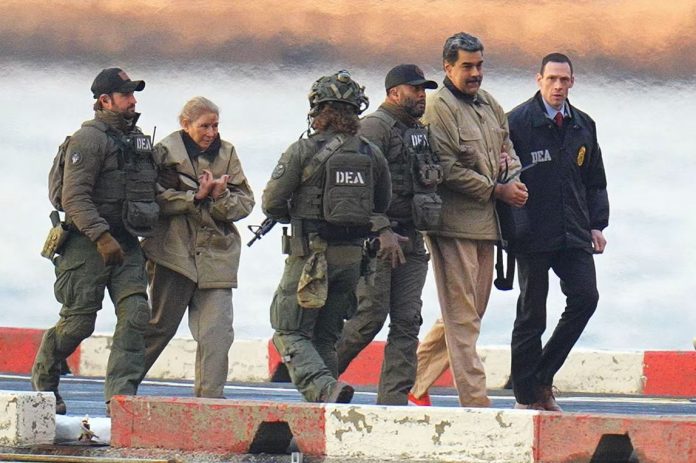
She also called for the return of Maduro and his wife Cilia Flores, who are currently in US custody in the Metropolitan Detention Center in Brooklyn, New York. They pleaded not guilty to drug and weapons charges on Monday.

“There is no war here because we are not at war. We are a people, a country of peace, that was aggressed and attacked,” Rodriguez continued.

The Venezuelan government has not specified the number of people killed or injured in the US attack but the country’s attorney general said three officials have been appointed to investigate the “dozens” of deaths. On Sunday, the Cuban government said 32 of its citizens were killed during the US operation.


Iran executes man convicted of spying for Israel’s Mossad

Iran Prison

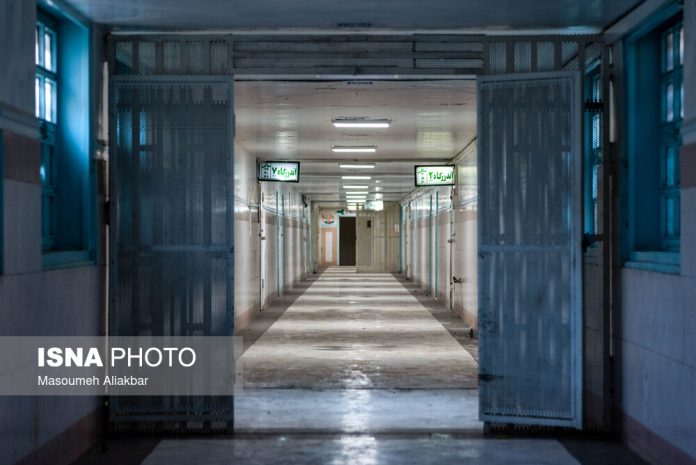
The death sentence of Ali Ardestani was carried out early Wednesday morning after his conviction for espionage in favor of the Israeli regime’s intelligence service, Mossad, was confirmed by Iran’s Supreme Court and finalized through the legal process.

According to the case file, the convict was recruited by the Mossad intelligence and terrorist service through cyberspace and, in exchange for receiving specified sums of money and empty promises, carried out missions on behalf of the Zionist spy agency.

Based on existing documents, evidence, and the explicit confessions of the convicted individual, Ardestani, acting on the orders of Mossad officers, provided the service with images and photographs of specific locations as well as information related to targeted subjects. Upon completing each mission, he received payments in the form of cryptocurrency.

The case documents also show that, in addition to maintaining virtual contact with Mossad officers, the convict had links with agents of the Zionist regime inside Iran.

Through Mossad officers, he met in person with an identified individual inside the country at various locations, handed over the collected information along with photos and videos, and then received new assignments.

Ardestani was arrested after being identified while he was in the process of carrying out a mission for the Zionist regime.

During interrogations and preliminary investigations, the convict stated that his motive for betraying the country had been to obtain a multimillion-dollar reward and a visa for the United Kingdom.


Israeli FM visits Somaliland

Saar landed in the capital Hargeisa on Tuesday and was received by government officials at the airport, according to a statement from Somaliland’s presidency.

He later met President Abdirahman Mohamed Abdullahi, with footage circulating online showing the two together at the presidential palace.

Somaliland declared independence from Somalia in 1991. Somalia’s federal government insists Somaliland remains an integral part of Somali territory and warned that recognition undermines Somalia’s sovereignty and territorial integrity.

Saar said Israel is undeterred by the criticism about the recognition, and the two governments will “soon” open embassies and appoint ambassadors.

“We hear the attacks, the criticism, the condemnations,” Saar continued, adding, “Nobody will determine for Israel who we recognize and who we maintain diplomatic relations with.”

Somalia’s Foreign Ministry condemned Saar’s visit as an “unauthorized incursion” into its sovereign territory, and “unacceptable interference in the internal affairs” of Somalia.

The ministry announced that any official presence or engagement in Somali territory without Mogadishu’s consent was “illegal, null, and void”.

Field reports on Tuesday gatherings in Tehran’s Grand Bazaar

Tehran Grand bazaar

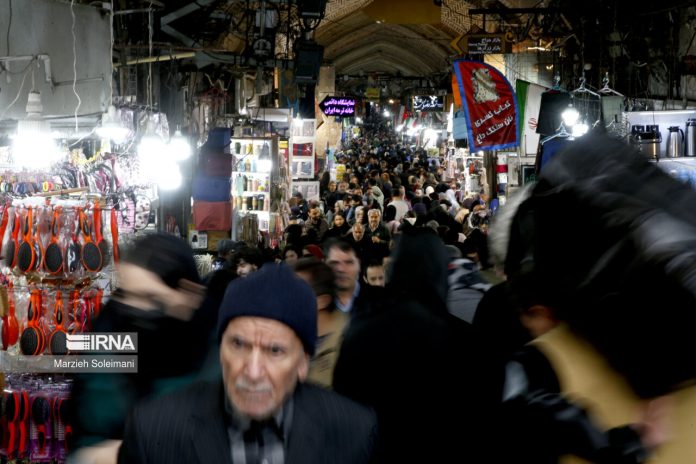
From midday onward, small groups—generally numbering in the dozens—were reported in areas including 15 Khordad Street, parts of the spare-parts market, and the shoemakers’ bazaar.

The situation was more tense near Globandak Square, where chanting was reported and police intervened to restore order, resulting in the arrest of several individuals.

During this period, business activity in the bazaar was partially disrupted, with many shopkeepers closing their stores by pulling down shutters.

Field observations suggested that some participants in the gatherings were not merchants or regular traders from the bazaar.

No notable activity was reported around the Alaeddin and Charsou shopping centers, where gatherings later dispersed. However, a heavy police and emergency services presence was observed along Republic Street, a major thoroughfare in central Tehran, where movement was closely monitored.

In the areas of 15 Khordad Street, the Nasser Khosrow intersection, the Grand Bazaar, and the gold market, most shops remained closed throughout the day.

Over 70% worried US will become too involved in Venezuela: Poll

In the two-day Reuters/Ipsos survey that concluded Monday, 72 percent of Americans said they are concerned the U.S. might get too involved in Venezuela, while 25 percent said they don’t share that concern.

Across the ideological spectrum, majorities expressed concern about the potential of the U.S. to get overly involved in the Latin America country, but Republicans are far more divided than Democrats.

Those who share this concern include 90 percent of Democrats, 74 percent of independents and nonaffiliated voters and 54 percent of Republicans. Meanwhile, 45 percent of Republicans, 19 percent of “other” voters and 9 percent of Democrats say they’re not worried about the U.S. getting overly involved.

After months of mounting pressure on Maduro from the Donald Trump administration, U.S. forces carried out a raid to capture Maduro and his wife from their residence and bring them to New York to face charges related to drugs and terrorism. The Venezuelan vice president is serving as interim president, as the U.S. maintains control over the country’s governance.

In the survey, Americans are sharply divided on what they think about the U.S. military action to remove Maduro: 34 percent disapprove, 33 percent approve and 33 percent say they don’t know or skipped the question.

Among Republicans, 65 percent approve and 6 percent disapprove; among Democrats, 65 percent disapprove and 11 percent approve; and among independents or “other” voters, 42 percent say they don’t know, 35 percent disapprove and 23 percent approve of the action.

The survey, which included 1,248 adults, was conducted Sunday and Monday. The margin of error is 3 percentage points for all adults and 5 percentage points for individual groups.