Tuesday, December 23, 2025
Home Blog Page 2992

Iran-Russia-China Naval Drill: Another Piece of Geopolitical Puzzle

Iran-Russia-China Naval Drill Another Piece of Geopolitical Puzzle
A Chinese Harbin guided-missile destroyer, left, and a Russian Ningbo Sovremenny class Type-956EM destroyer, right, during a week-long exercise. / Photo by AP

Iran, Russia and China are expected to hold a joint naval exercise in the Sea of Oman and northern Indian Ocean on December 27 this year, which is of its first kind since the Islamic Revolution in Iran in 1979. The timing, in addition to the nature of the manoeuvre is of paramount significance for Iran, and probably for Russia and China as well.

As tensions rose in the region as a result of attacks on oil tankers in the Persian Gulf and on Saudi Arabia’s Aramco oil facilities last summer, the United States tried to put the blame on Iran in order to isolate the country in the region and to exert “maximum pressure” against Tehran. Washington attempted to take advantage of the opportunity so as to create a naval coalition against Iran in the region.

Having denied any role in the attacks, Iranian officials made an effort to nix the American strategy by taking some initiatives. Iranian President Hassan Rouhani, during his United Nations General Assembly address in September, unveiled his Hormuz Peace Endeavour (HOPE) for ensuring the security and the stability in the region through cooperation between Iran, Iraq and six countries in Persian Gulf, as well as in coordination with the United Nations. A short time later, Iran brought up the idea of a joint naval exercise with Russia in the region. Weeks later, China also expressed that it was ready to join the drill.

This joint naval exercise with Russia and China is an important step for Iran. Tehran wants to make a case for what it terms “resistance” to US pressure, saying that the American strategy, despite being an economic burden on Iran, has failed to isolate Tehran in politics and security.

Russia sees this cooperation as being in line with the concept of collective security in the Persian Gulf that it proposed to the UN in July. Although the concept includes other regional and international players, this can contribute to the idea if joined by others.

China, as the world’s largest oil importer, relies on Persian Gulf suppliers for a great amount of its energy needs. So the country would be vulnerable to any volatility in Persian Gulf and Strait of Hormuz. As a result, Beijing would do anything short of direct confrontation with the US to diminish the likelihood of any military conflict between Iranians and Americans in the region. In so doing, if Iran seems less isolated, the chance of a war with Iran in Persian Gulf would also seem less likely.

While the naval exercise may benefit Iran in the regional balance against some Arab countries including Saudi Arabia, it seems that it might not share this motivation with Russia and China in conducting the drill. Due to the economic interests they share with the Arab countries, Moscow and Beijing are likely to assure Saudi Arabia and other Arab nations in the region that the drill is not aimed at working with Iran against them.

However, there is a point where all three countries – Iran, Russia and China – see eye to eye in holding the manoeuvre, and that is sending a message to their common adversary or rival, namely the United States. The US, in some ways, has applied a triple containment policy toward China, Russia and Iran. This would be enough to unite these three countries on some fronts against a common foe. Beijing, Moscow and Tehran are more than willing to undermine American hegemony in the region, hindering its presence and influence. For Iran, evading a likely isolation, and for China and Russia, a stronger presence in the region so as to benefit more, will be sufficient for them to bring a counterbalance against the US in the region. The Astana process on Syria has given Iran and Russia the confidence that they need that they can meet targets independent of the US.

All in all, Iran believes that the US intention to create a naval coalition is more aimed at securitizing the region than bringing security to it. Proposing the HOPE initiative, as well as conducting joint war games with the other countries, are a piece of a puzzle where Iran, along with friend and allies, may want to be guardian and guarantor of security and stability in the region, even if the US is not a company. The fate of such an action can depend upon the presence of new members and the durability of the current members in doing so.

‘US Sanctions to Hurt Even More If Iran Fails to Adopt FATF’

Foreign Ministry Condemns FATF’s Blacklisting of Iran

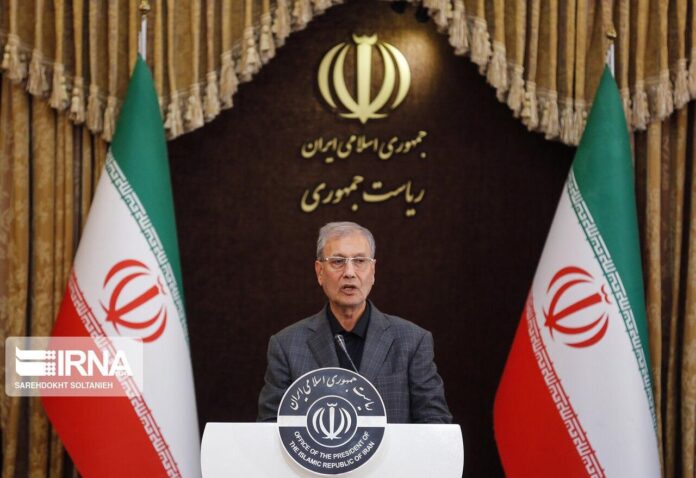
The remarks were made by Iranian Government Spokesman Ali Rabiei in a Saturday piece he published on the Iranian government’s official website.

At the beginning of the piece, he refers to US ambassador to UN Kelly Craft’s short conversation with the Iranian delegation on Thursday, during which she expressed condolences over the death of an Iranian EB child who succumbed to her wounds due to the US sanctions that deprived her of proper dressings and bandages.

The rare meeting came after Iranian envoy to the UN Majid Takht Ravanchi in a speech condemned the US cruel sanctions against Iranians especially those who have targeted the patients including the EB children.

“On Thursday evening, the story of the two-year-old Iranian girl’s death was narrated to UN Security Council members. Ava, who was suffering from EB, was a butterfly child from the southern city of Ahvaz. EB patients are called butterfly patients because their skin is as fragile as butterflies. These patients’ wounds must be covered with special bandages to prevent infection,” Rabiei wrote.

“Such a narrative led the US ambassador to the United Nations Kelly Craft to express condolences. A picture of the death of the Ahvazi girl Ava was given to the United Nations, indicating that this is the result of US sanctions.”

“This is the language one should speak to the public opinion of the world with. It is the body language. The body language of a child with EB disease whose skin is so sensitive that it cannot be dressed without the help of special bandages,” Rabiei added.

“Even Human Rights Watch reporter wrote that the ‘excessive adherence’ of banks and pharmaceutical companies to anti-Iran sanctions poses complex obstacles to the financial transactions to buy these drugs,” he added.

“Earlier, BBC showed in a report based on its research and correspondence with a number of major European banks that a new type of ‘Iranophobia’ called ‘financial and banking Iranophobia’ has emerged.”

The Iranian spokesman further complained about the steadfastness of some Iranian authorities who do not let the FATF bills – proposed by the government to take Iran out of the FATF – be approved and Iran join the anti-money laundering body.

“Alongside the silent war that the US is waging against Iranians and pursuing an agenda to pave the ground for the so-called anger and conflict inside the country, there are some people inside Iran, who rather than participating in the programs to stand against sanctions, are fueling the silent war in the name of combating the US,” wrote Rabiei.

“The country’s failure to join the anti-money laundering and FATF conventions will intensify the sanctions regime. That is to say, if we do not choose an anti-sanctions strategy, we will go into a situation where every Iranian could be subject to an inappropriate label, not just by the sanctions, but also by the FATF and anti-money laundering claims, which are also supported by the United Nations.”

Rabiei said, “Ava has been deprived of special wound dressings because the ‘money laundering’ and ‘terrorism’ tags are circulated to put more pressure on each Iranian citizen. The world banks assume they are trading with a terrorist in their most ordinary humanitarian deals with Iranians. Lack of a strategy to foil sanctions is kind of inattention to this procedure and the suffering of citizens.”

“When a group of economists and diplomats including Ali Tayyebnia, Karbassian, Seif, Hemmati, Zarif, Zangeneh, and Dejpasand say not joining the FATF will bring new wounds to Iran, it is our ethical and national duty to avoid labeling ourselves and to remove unnecessary labels from Iran,” he concluded.

Iranian Biological Fertiliser Saves Cocoa Farms in Africa

Iranian Biological Fertiliser Saves Cocoa Farms in Africa

Iran’s Nitro Kara Biological Fertiliser has attracted the attention of farmers as a way of treating the deadly disease of cocoa fields in Ivory Coast.

The swollen shoot virus has been widespread in Ivory Coast and Ghanaian farms for the past two years, and the disease is a serious problem for trees, according to governments and international organisations involved in the cocoa market.

And for this reason, unhealthy trees are cut down to plant new trees. Ivory Coast and Ghana produce the bulk of the world’s cocoa, and massive deforestation in both countries could affect the global cocoa market.

Meanwhile, some cocoa growers in Ivory Coast, who have been using the Iranian biological fertiliser for several years, say their farms are still productive.

The virus whitens the trunk and branches of the cocoa tree and leads to the tree’s complete death within three to five years.

It has been suggested that the only solution for nearly half of Ivory Coast’s farms, which supply a significant portion of the world’s cocoa, is to cut the trees.

Siamak Alizadeh, CEO of the company says he has managed to get orders for more than 60,000 packages of this fertiliser from Ivory Coast.

There are many knowledge-based companies that have been able to open new export horizons to Iranian technology products, relying on Iranian knowledge and attractive competitive prices.

Latest Football Scores of Matches from All Around the World

Do you want to take full advantage of modern technology? Then, follow the results of matches using the latest football scores, and you will receive an excellent opportunity to keep abreast of the latest events from around the world.

This season, the intense struggle to get into the zone of the Champions League is unfolding in the English Premier League. One of the main contenders for winning the coveted opportunity is Arsenal London. Last summer, the Gunners changed the head coach; Unai Emery took the lead and quickly enough managed to teach the team a bright and attacking style of football.

All this had a positive effect on the results of the club, who within the fall did not lose more than 20 matches in all tournaments. However, after that the team from the British capital suffered a decline in the game. It was kicked out of the FA Cup, plus Manchester United and Chelsea are their serious competitor in the fight for the top-4. You can watch the latest football scores of their matches, as well as their rivals’, on the site of sports statistics.

Arsenal score in convenient format

Despite all the difficulties, the Gunners have good chances to return to the Champions League after a short break. The team’s trump cards include:

  1. Well set gaming process. This is, first of all, Emery’s merit, who quickly managed to find a common language with all the players. Together with him, almost everyone gets time for enough practice.
  2. Individual skills of players. Here we should mention Aubameyang, one of the best scorers in the English Premier League.
  3. Lack of psychological pressure on the team.

The last seasons with Wenger were characterized by huge problems within the team, which was reflected at the Arsenal score.

However, if the team really expects to complete the task, then they need to give their all in every match. The Gunners will have a very tight schedule, and it will be extremely difficult to constantly score points.

Now, it becomes noticeable that the game of Emery’s team depends on the mood. If the athletes are in the mood, then they are capable of beating almost any opponent, but if things do not go right, then it is likely that the Gunners will lose even to the outsiders.

Follow Arsenal scores in a convenient format to not miss anything important and be the first to know about the results of the fight for the top-4 of the English Premier League. This battle promises to be tense and will certainly hold us in suspense until the very end of the championship.

Iranian People Celebrate Yalda Night Together

Yalda Night (Shab-e Chelleh) is Persian winter event which is commemorated on or around December 20 or 21 each year.

Today, Yalda celebrations have become a social occasion when friends and family gather to eat, drink and read poetry (especially Hafez) until after midnight.

Each member of the family makes a wish and randomly opens Hafez’s book of poems and recites the poem, which is believed to be an interpretation to the wish.

Fruits, particularly pomegranates and watermelons, and nuts are served in this night. The fruits signify the hope for having a fruitful spring and summer.

The red-colored fruits are believed to symbolize the crimson hues of dawn and glow of life, invoking the glory of Mithra. Pomegranates with angelica powder are also believed to protect individuals against the Devil.

Central Asian countries such as Afghanistan, Tajikistan, Uzbekistan, Turkmenistan and some Caucasian states like Azerbaijan and Armenia share the same tradition as well and celebrate Yalda Night annually at this time of the year.

Yalda Night was officially added to Iran’s List of National Treasures during a special ceremony in 2008.

The annual winter ceremony manifests the traditional concept of light and good prevailing over darkness and evil in the ancient Iranian religion.

Despite all the economic hardships, many Iranians today were seen making their purchases of fruits such as pomegranates, watermelons and various dried nuts for the night’s celebration.

What follows are photos of people at Tehran’s Tajrish Bazaar ahead of Yalda Night:

Japan Not to Join US-led Maritime Coalition in Persian Gulf: Iran

The Iranian president said Japan just wants to bring a surveillance ship to the region, not in the Persian Gulf and the Strait of Hormuz, but in the Bab el-Mandeb and part of the Oman Sea.
“The Japanese Prime Minister outlined his plan in this regard and of course, we told the Japanese that our view of regional security is a fixed one. We said we believe regional security should be provided by regional countries and therefore we have proposed the Hormuz Peace Initiative.”

President Rouhani made the comments upon his arrival at Tehran’s Mehrabad Airport on Saturday evening after paying a visit to Japan and Malaysia, where he attended the KL 2019 Summit.

Rouhani stated that Tehran, Kuala Lumpur, Ankara, and Doha have made very good decisions to cooperate quadrilaterally, and of course other countries are also invited to address the issue of development, especially in the field of new technologies and industries.

“The Kuala Lumpur Summit was a new way of gathering Muslims and Islamic thinkers in the presence of a number of Muslim leaders. The summit was in fact held to cooperate with Muslim countries to achieve a favourable development in today’s situation,” he added.

The president added that about 2000 thinkers and experts had been invited from about 80 countries including heads of Muslim countries like Iran, Turkey, Qatar.

“In addition to addressing the plenary, there was also a discussion on the first day of the summit on how to develop in the Muslim world.”

In addition to this summit, it is important for us to develop relations with Malaysia. Fortunately, since the beginning of the eleventh Iranian government, the ties between the two countries have strengthened and become more intimate than in the past. When Mahathir Mohamed assumed the Prime Minister’s post, the relations got much closer, noted Rouhani.
He also asserted that during this short period of time, bilateral relations were discussed two or three times, and the two sides made good decisions on bilateral ties. He added that a joint meeting of the two countries will be held soon and PM Mahatir Mohamed is interested in visiting Tehran in the near future.

“Fortunately, the two countries made good decisions to cooperate in industry, and especially in some of the most important industrial areas, and there were good discussions on economic and financial-banking issues. Iran’s proposal at the summit of Muslim countries was on the topic of digital economy and the common market in this field. The creation of a joint fund for new technologies and knowledge-based companies, as well as the issue of crypto-currencies and cooperation in artificial intelligence and cyber security were on the agenda. The leaders agreed to take practical steps in this regard,” underlined the Iranian president.

He went on to say that on the sidelines of this summit, he met with Turkish President Recep Tayyip Erdogan to discuss bilateral relations as well as regional issues, including Syria.

“We also had a separate meeting with the Emir of Qatar, in which we discussed cooperation between the two countries, especially the Hormuz Peace Initiative, which has been welcomed by Doha.”

Referring the goals of his trip to Japan, President Rouhani said this year is the 90th anniversary of political ties between Tehran and Tokyo.

“Fortunately this year, there was a meeting between Japanese Prime Minister Abe and me, once in Tehran, which a Japanese PM had after about 40 years, and he invited me to have a trip to Japan.”

The president added that Tehran hoped to make the trip this year, on the 90th anniversary of political relations between the two sides, and fortunately this came true.

The visit was also aimed at expanding bilateral relations and the political, economic and cultural ties between the two countries, he mentioned.

“The other night that we had a meeting with PM Abe, the Iranians had a meeting with some Japanese on the occasion of Yalda Night. The Japanese paid tribute to Yalda and decorated the table with the same traditional fruits.”

The president said there are generally good cultural commonalities between Iran and Japan, including Nowruz and Nature Day.

“Today, we had a meeting with representatives of the Japanese companies operating in Iran that are maintaining economic relations still under sanctions. They all insisted on continuing economic ties, and some problems were also addressed. In sum, it was a very good meeting.”

Regarding the sanctions he said “on the issue of sanctions some countries are more sensitive than the others. Except one or two countries in the world, the rest are opposed to sanctions, and everyone knows these sanctions are against international law and will not have any results. They all agree that Americans are forced to change their policy.”

President Rouhani continued that in fact, sanctions are something that is harmful to all countries – not just Iran. It is a lose-lose situation and the US has made the wrong decision.

“The Japanese, Europeans and others are working to break the sanctions and have suggestions and solutions that we have discussed. We do believe that breaking the sanctions and removing the US conspiracy to sanction Iran is a necessary national job, and it is our duty to break the sanctions. So we have consultations mostly with some European countries and Japan.”

Rouhani said both the Japanese and Iranian sides had a new proposal to break the sanctions. They were discussed and it was decided to continue consultations. Another issue that matters to the Japanese and, of course, to all the major countries in Asia and Europe, is the issue of energy security and shipping in the region; because their energy needs depend on the region and its security.

The security of the region is important to all countries, including Japan, so great discussions were held about the whole region, the president continued.

Rouhani noted that the Japanese have announced that they are going to invest in Chabahar, and PM Abe has said that Chabahar is very important to them.

“The South-North transit problem, which extends from Chabahar to the Caspian Sea and from there to Turkmenistan, is very important to them. We had also good and fruitful discussions on the Afghanistan issue and the two countries’ partnership for peace and reconstruction in Afghanistan. Excellent discussions were also held on other regional issues, including the rights of the Palestinian people and issues related to Syria and Iraq.”

The president said that they discussed the situation in Yemen in more detail adding that the Japanese believed we should all strive for peace, stability in Yemen.

Rouhani said it is expected that all friendly countries with closer relations with Iran can maintain both the security of the region and preserve the JCPOA which is of great importance to them as they say.

President Rouhani described his visit to Malaysia and Japan as very important at the moment and stated that very good agreements were made with four countries in Malaysia and also in Japan.

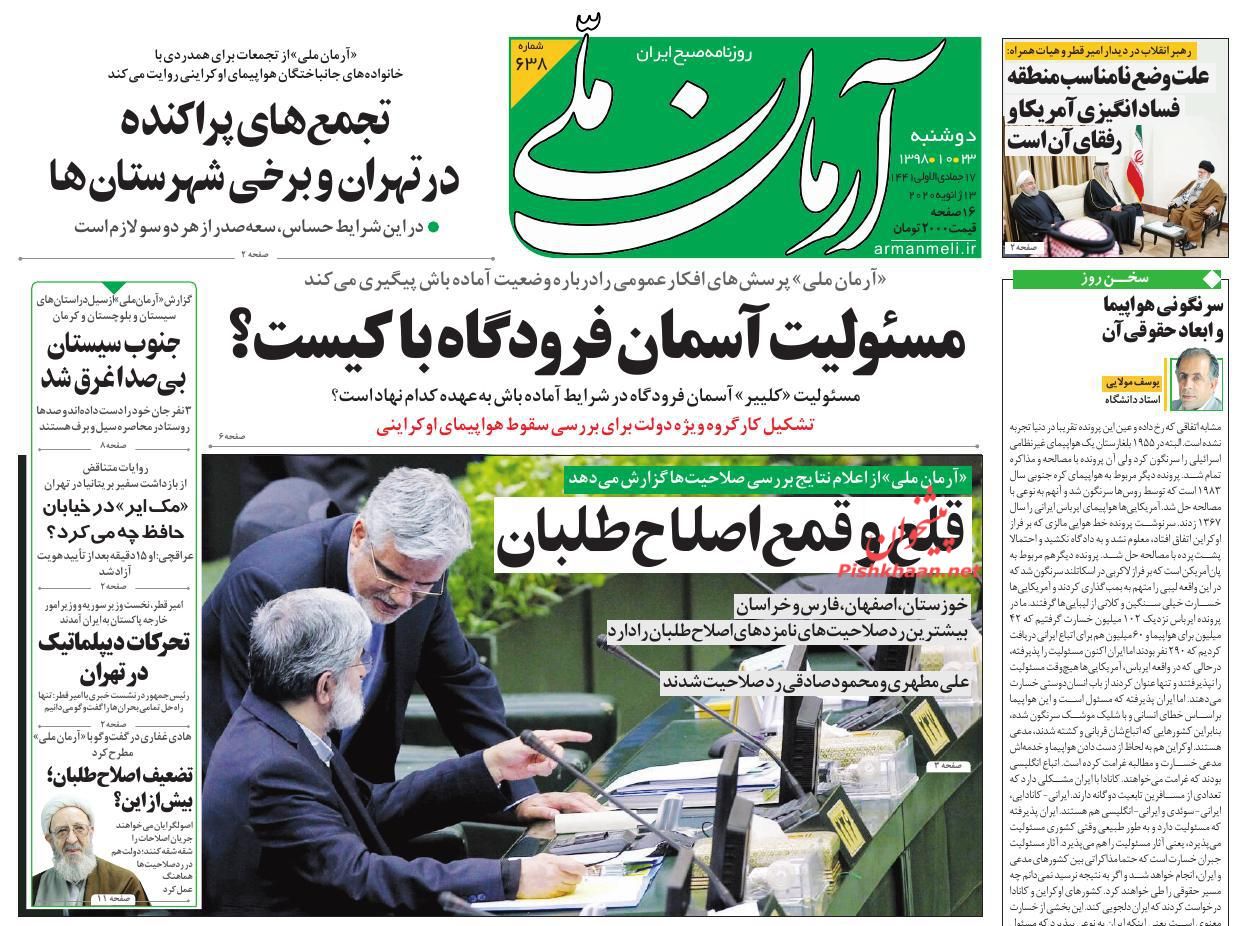
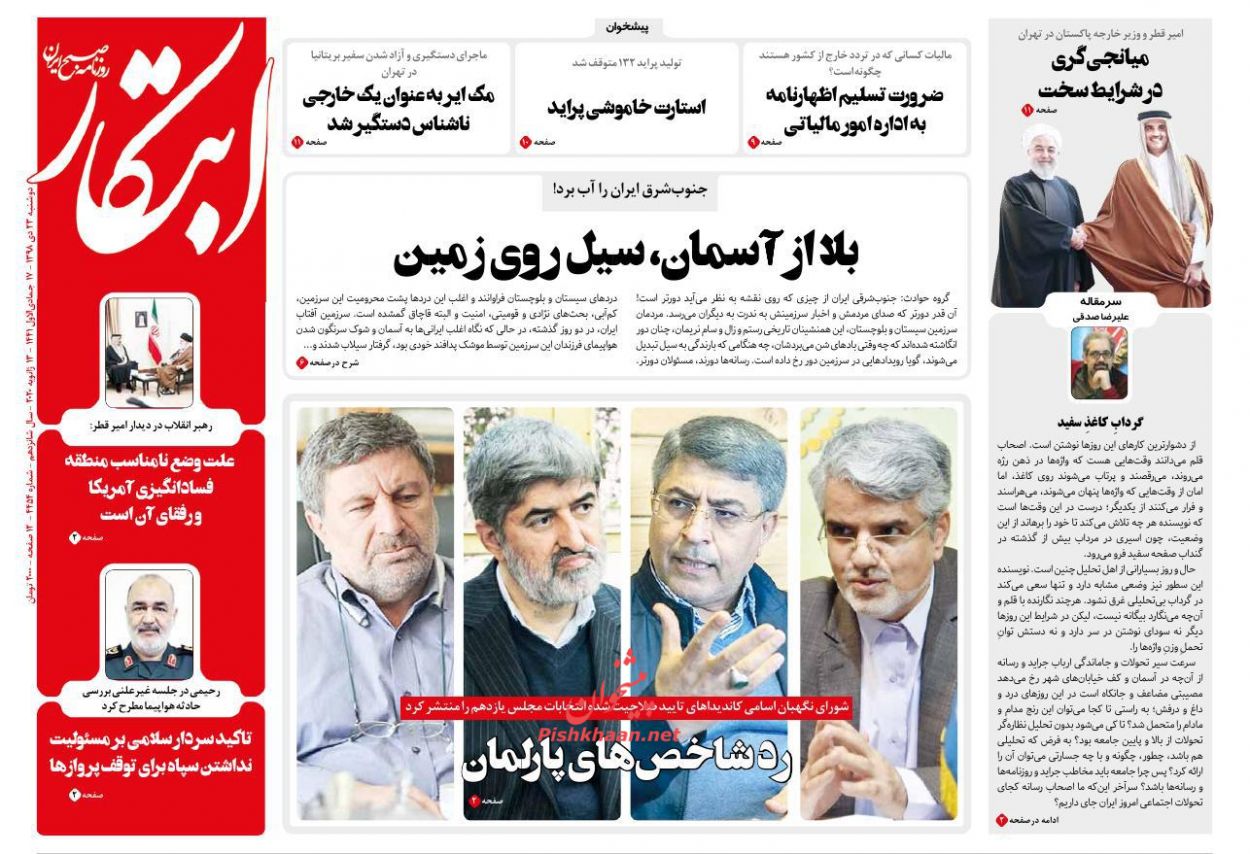
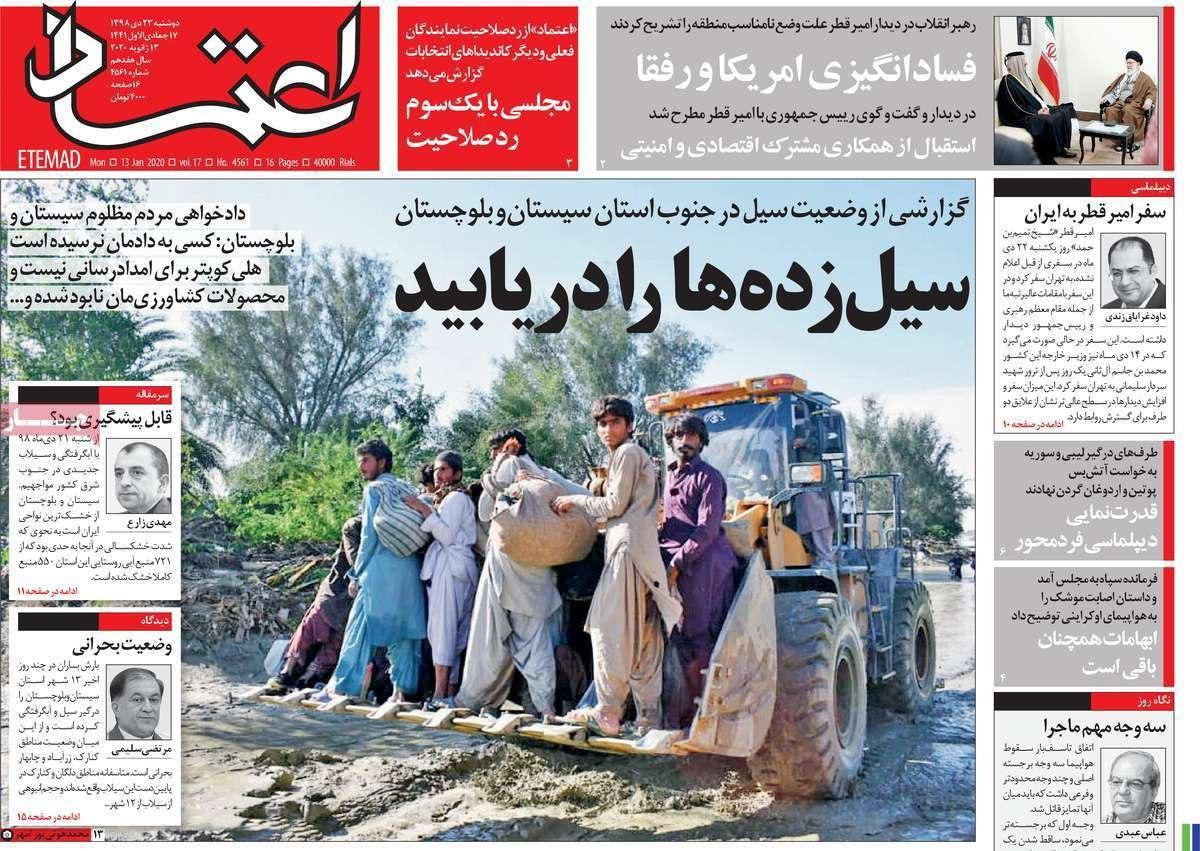
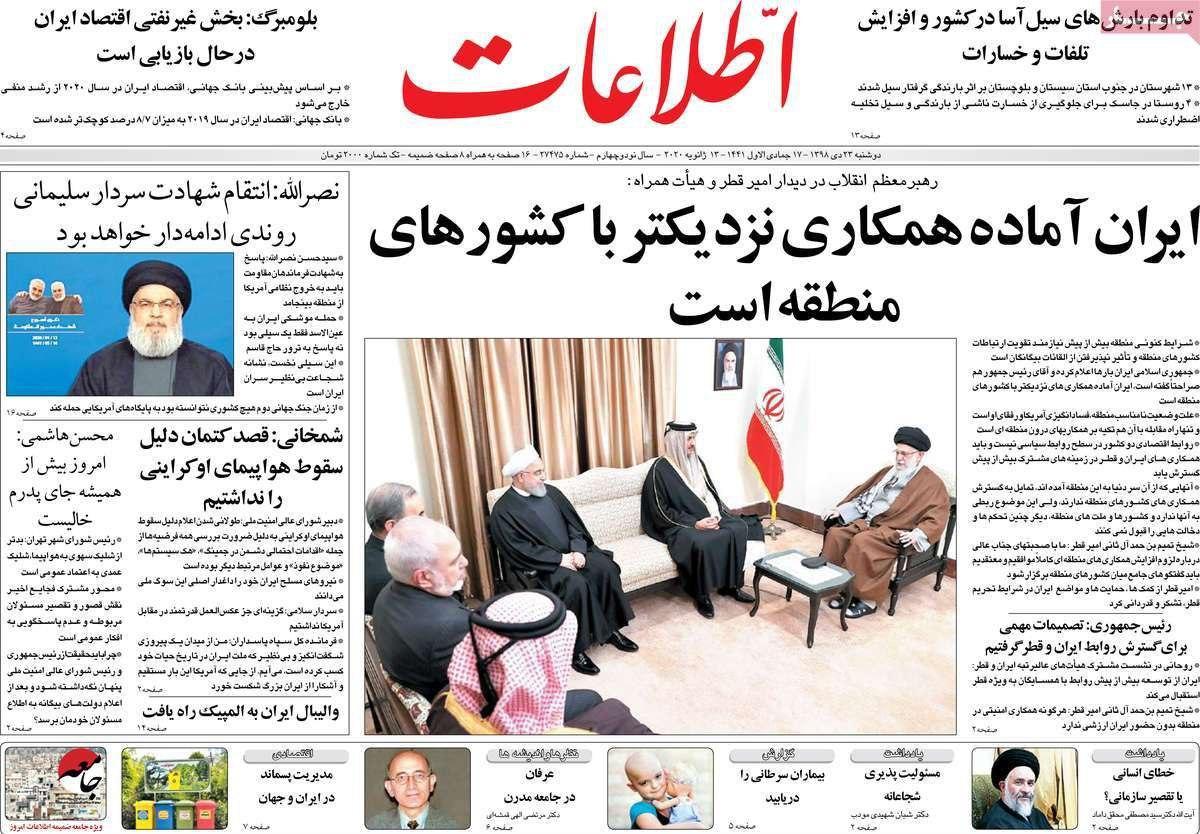
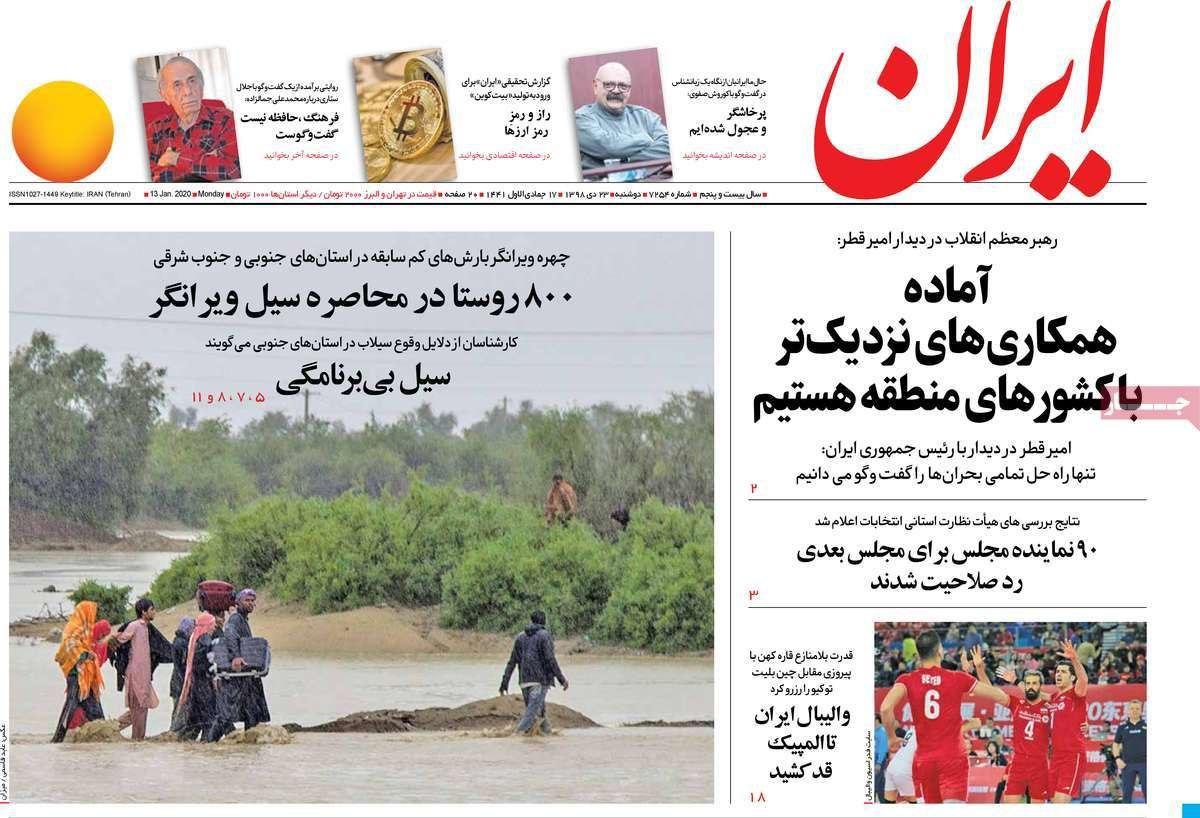
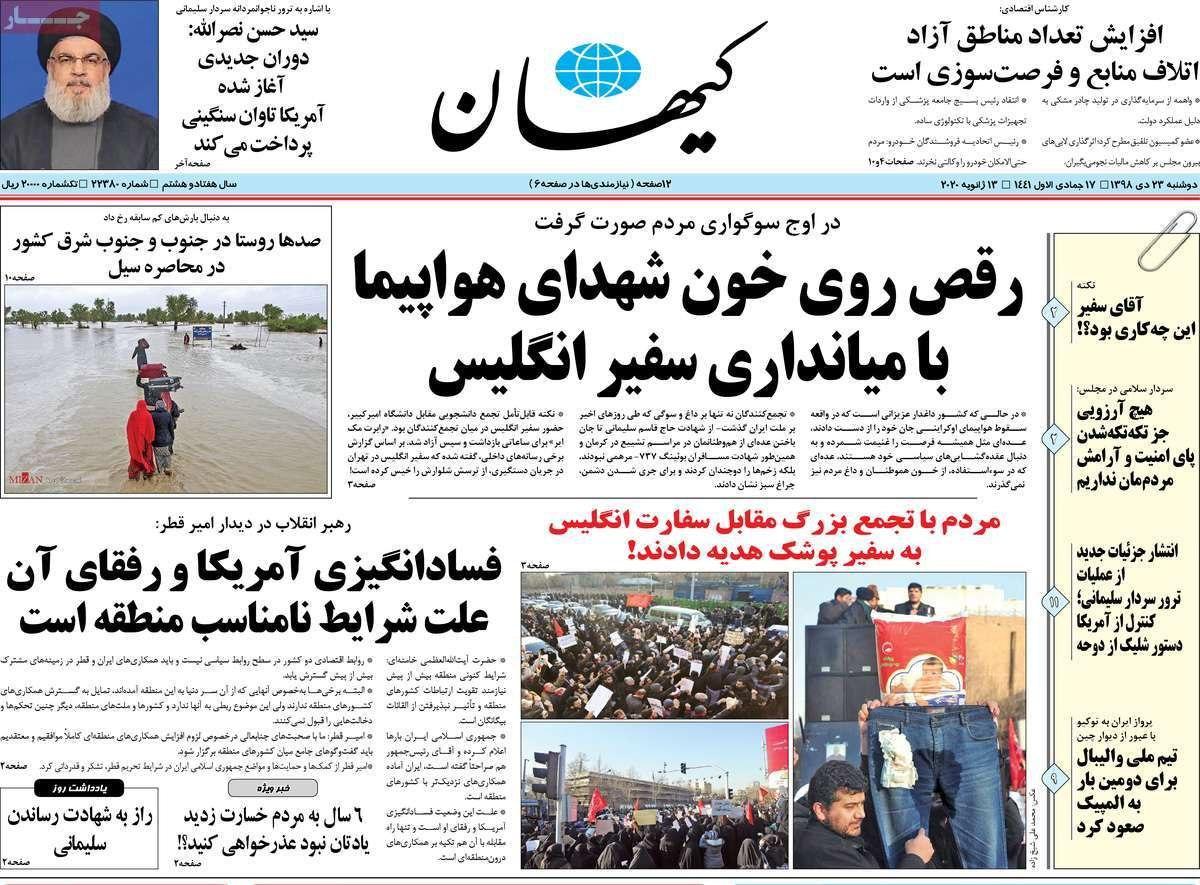
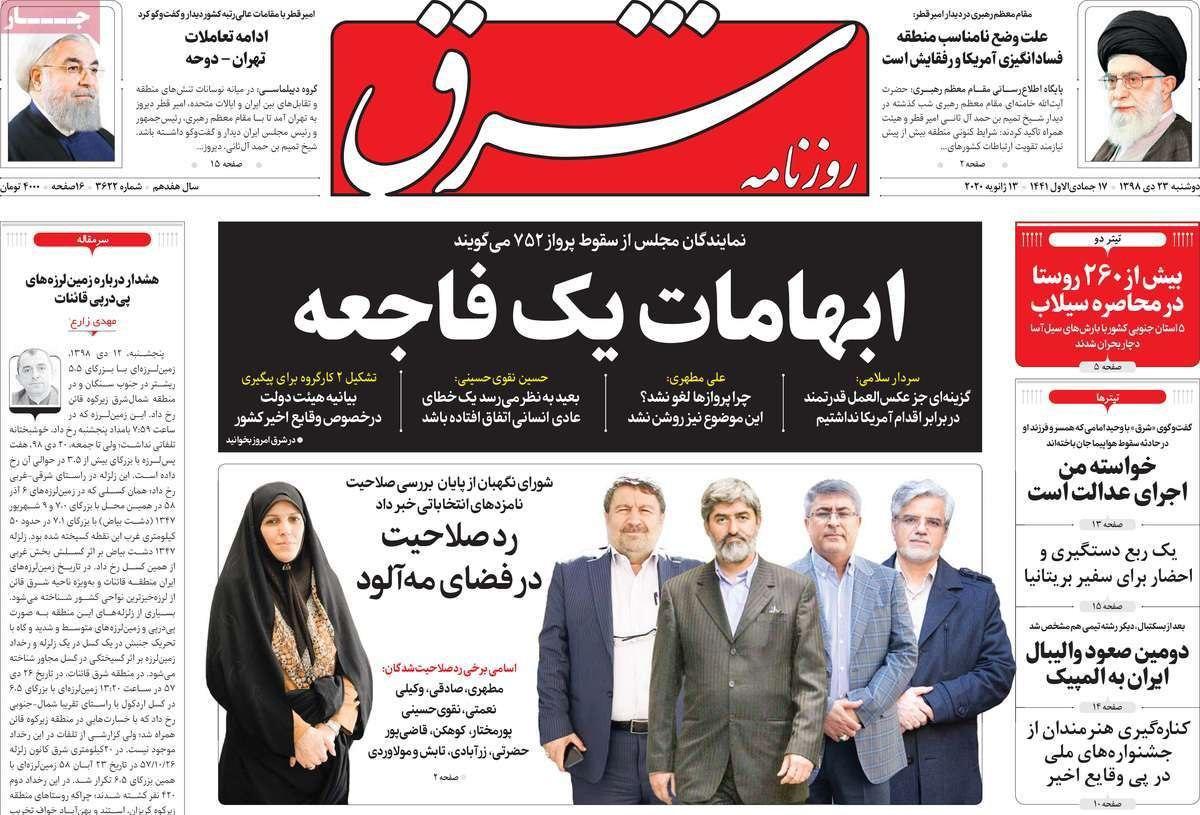
A Look at Iranian Newspaper Front Pages on December 21

Newspaper Headlines

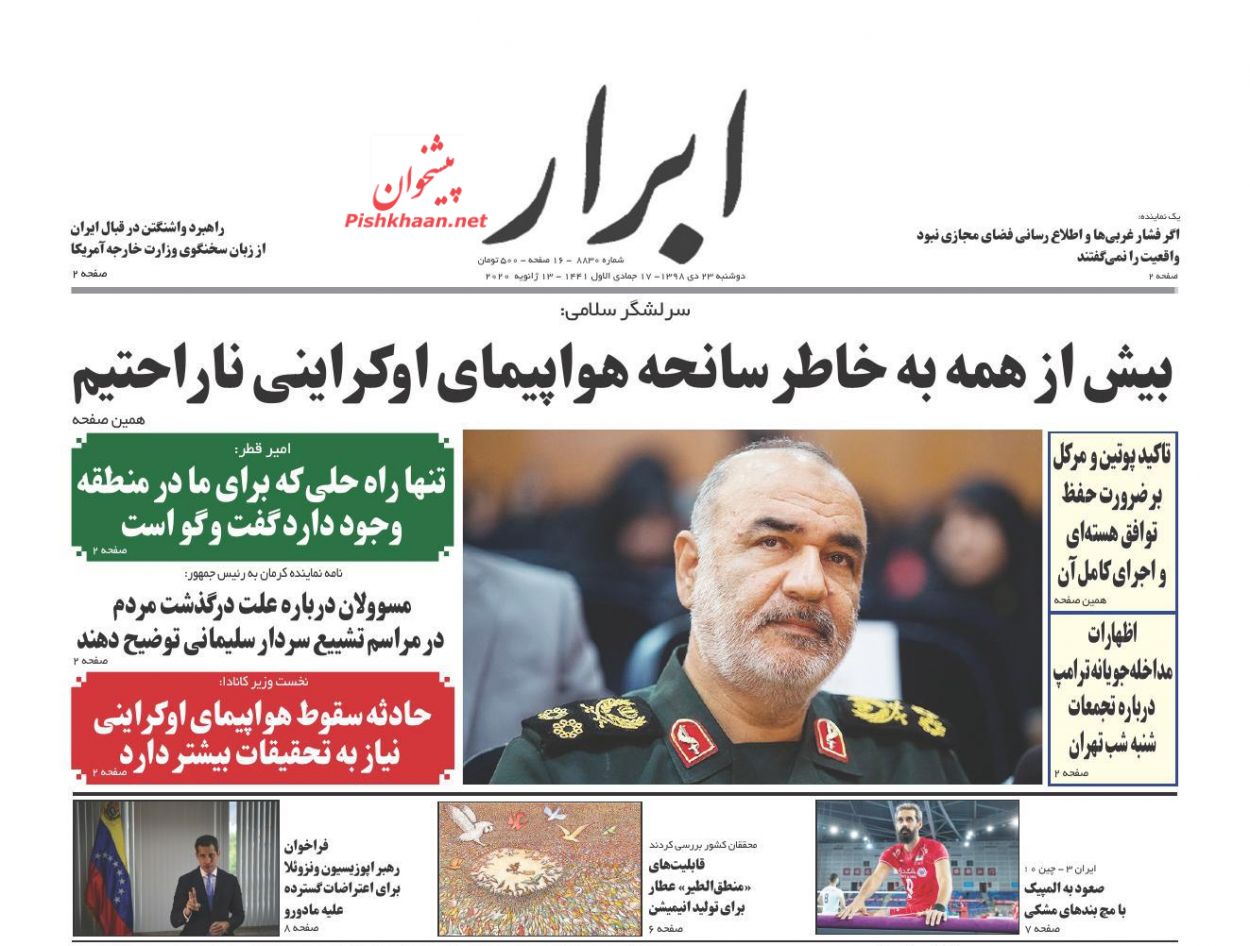
Abrar:
1- US Lawmakers Call for Immediate Probe into Turkey’s War Crime in Syria
2- Kyodo News: Abe, Rouhani Discuss JCPOA
3- US Exempts India’s Project to Develop Iran’s Chabahar Port

A Look at Iranian Newspaper Front Pages on December 21


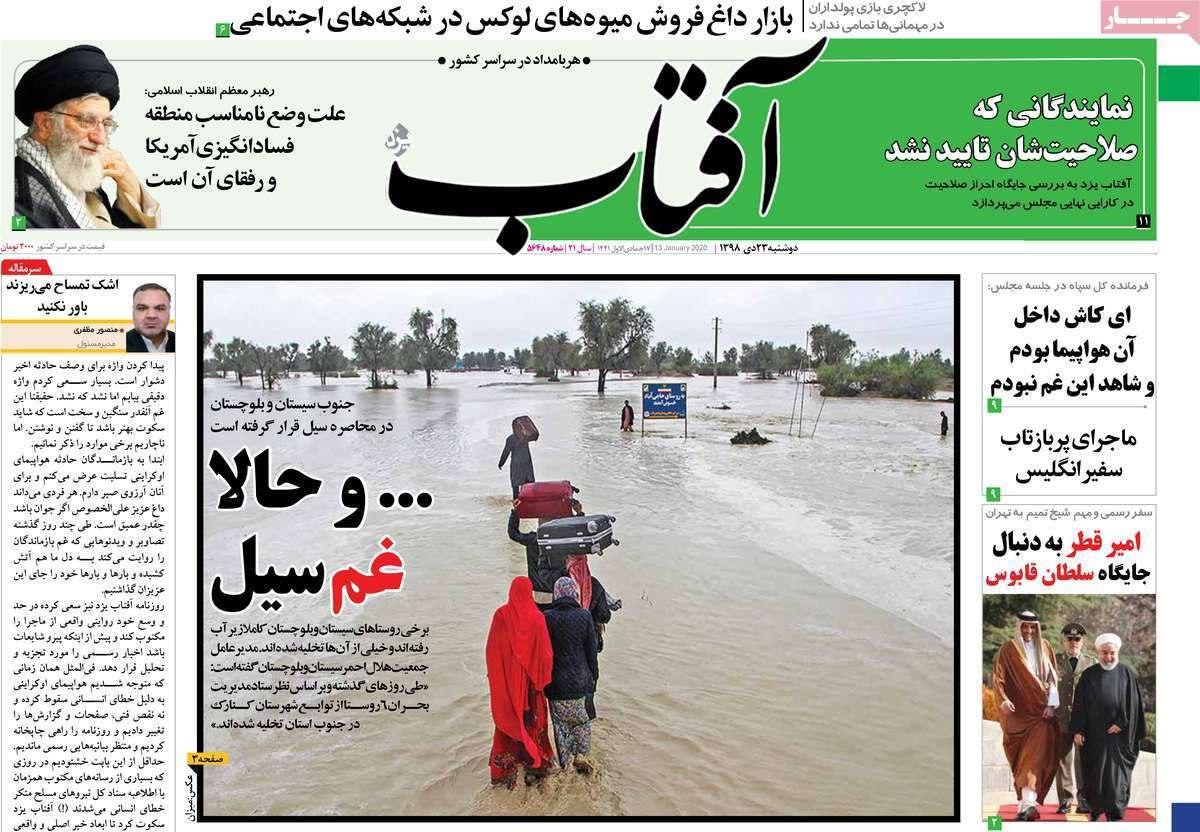
Aftab-e Yazd:
1- Bitter Story of Ava at UN
* Iran Envoy Talks of Iranian EB Patients’ Problems after US Sanctions
2- Japan, Iran and the US [Editorial]

A Look at Iranian Newspaper Front Pages on December 21


Arman-e Melli:
1- Rouhani’s Visit to Japan in Red Condition!

A Look at Iranian Newspaper Front Pages on December 21


Donya-ye Eqtesad:
1- Iran Welcomes Japan’s Oil Initiatives
2- Iranian, US Ambassadors to UN Meet for Short Time

A Look at Iranian Newspaper Front Pages on December 21


Ebtekar:
1- Eastern Asia Trying for Iran-US Reconciliation
2- Abe: We’ve Started Cooperation with 3 European States on JCPOA

A Look at Iranian Newspaper Front Pages on December 21


Etemad:
1- US Economic Terrorism Disgraced at UN
* US Envoy Shocked to Hear Impacts of Her Country’s Sanctions on Iran
2- 2020 Begins with Trump Impeachment

A Look at Iranian Newspaper Front Pages on December 21


Hamshahri:

1- Short Talks in New York, Consultation in Tokyo

A Look at Iranian Newspaper Front Pages on December 21


Iran:

1- Japan Standing behind JCPOA

2- UN Chief Calls for Trade Ties with Iran

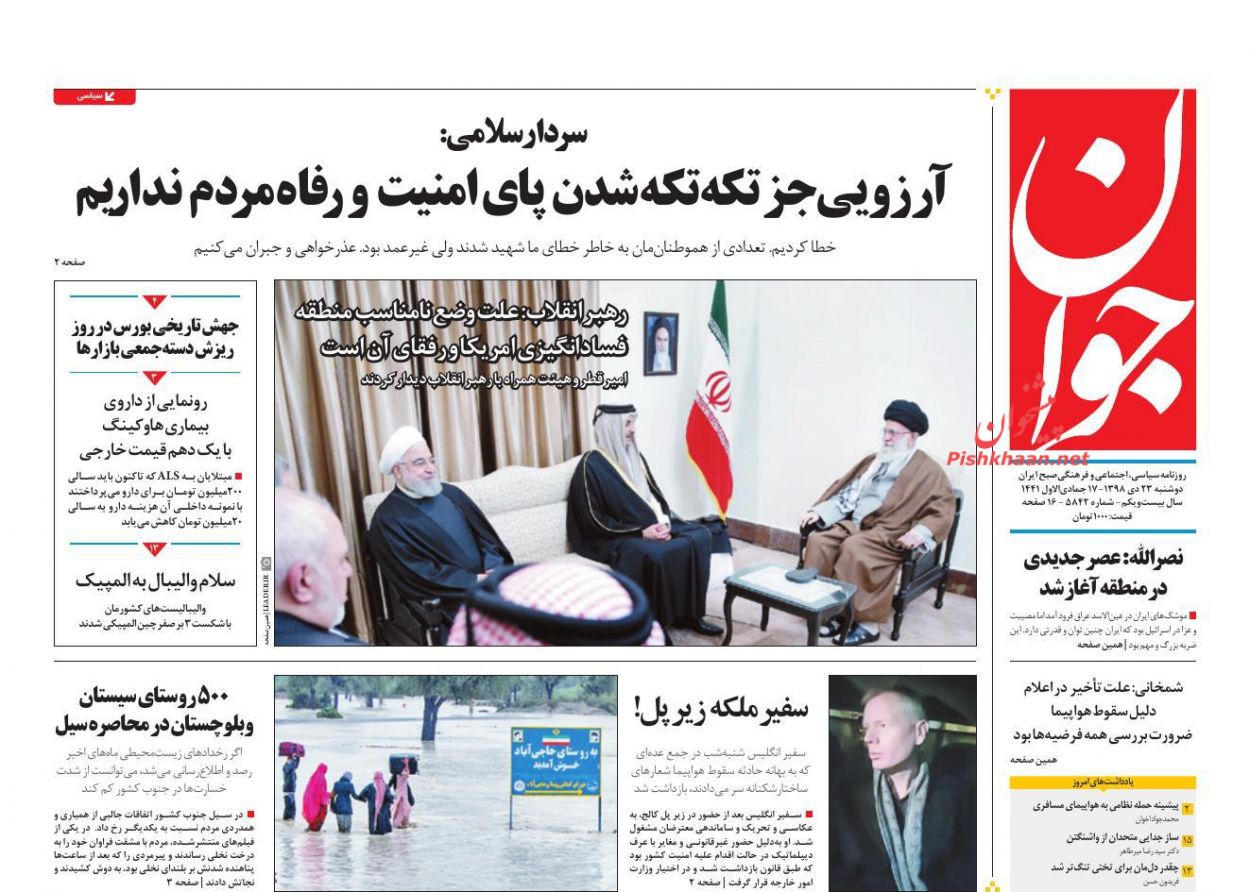
A Look at Iranian Newspaper Front Pages on December 21


Javan:

1- Call for Keeping JCPOA in Far East!

2- UN Security Council Says NO to US

* No One Pays Any Heed to Washington’s Anti-Iran Claims

3- Trump: Put Me on Trial ASAP

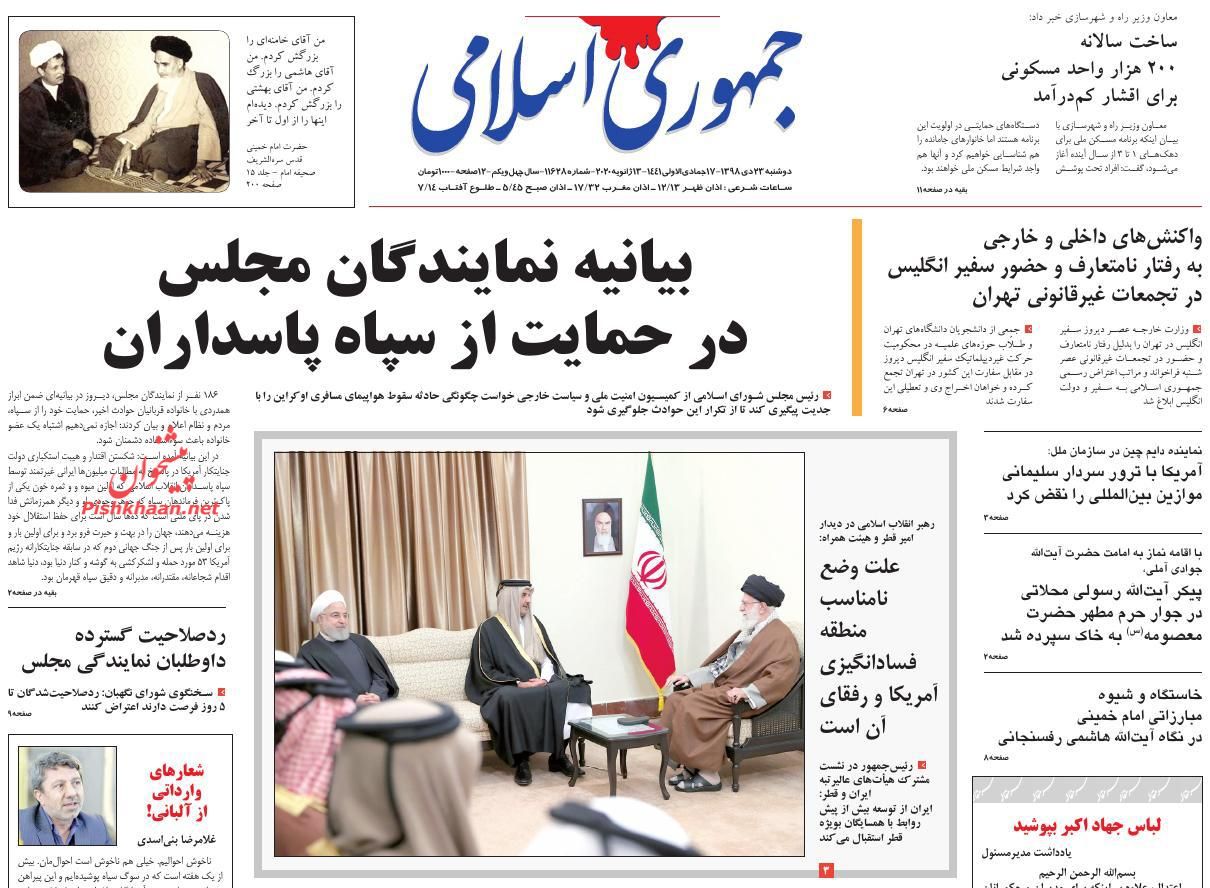
A Look at Iranian Newspaper Front Pages on December 21


Jomhouri Eslami:

1- UN Chief: US Sanctions on Iran against Resolution 2231

2- Consequences of Trump Impeachment at US Congress

A Look at Iranian Newspaper Front Pages on December 21


Kayhan:

1- Iran’s Passive Diplomacy Makes Europe Rabid!

* Europe Threatens to Activate Trigger Mechanism

2- Rouhani to Abe: US’ Violation of Its Commitments Endangers Global Peace

A Look at Iranian Newspaper Front Pages on December 21


Mardom Salari:

1- Iran Envoy: Tehran Won’t Negotiate While Sword on Its Neck

2- Rouhani: Result of US Sanctions Is Lose-Lose

A Look at Iranian Newspaper Front Pages on December 21


Setareh Sobh:

1- Rouhani: We Don’t Avoid Negotiation for Reaching Deal

2- Iranian, US Ambassadors Hold Short Talks Standing at UN Hall

3- Trump under Blade of Impeachment

A Look at Iranian Newspaper Front Pages on December 21


Shargh:

1- Abe’s Continued Efforts to Ease Tensions

2- Iranian, US Officials Say They Talked about ‘Ava’

A Look at Iranian Newspaper Front Pages on December 21

Iranian Korsi Brings Family Members Together on Yalda Night

Iranian Korsi Brings Family Members Together on Yalda Night

Korsi is a type of low table commonly used in Iran, with a heater underneath it, and blankets thrown over it. It is a traditional item of furniture in the Iranian culture. Family members sit on the floor around the korsi during meals and special events, like Nowruz and Yalda night. Although the tradition of sitting around the korsi has somehow begun to fade away among Iranians, some families have still kept the tradition alive.

Korsi was originally used to bring family members together, though it is also used as a heater during the cold season.

Iranian Korsi Brings Family Members Together on Yalda NightA korsi is defined in some books as a table measuring three spans of a hand high, one meter long, and one meter wide.

People would put heaters under the korsi. Heaters were first powered by coal, then oil and later by electricity. Families who could not afford a heater used a hole under the korsi instead. They would make fire inside the hole to be used as a heater.

Iranian Korsi Brings Family Members Together on Yalda NightFamily members would spread on the korsi a 4m x 4m quilt, which was sometimes as large as 7m x 7m. The korsi quilt was usually part of the bride’s dowry and was so heavy. The quilt was usually made of red-coloured velvet or satin with decorative patterns in the middle and was covered with a white sheet. Over the quilt, they would spread another piece of fabric often made of cashmere or loosely-woven woolen cloth. They would put on that cloth a big round copper tray in which they would put the samovar and food plates.

They would spread comfortable mattresses around the korsi to sit on, and cushions to lean against. The mattresses were often red-coloured with diamond patterns.

The whole thing would provide a warm atmosphere for a friendly get-together and chit-chats.

In the past, people would usually not buy any food items from the market. Women usually collected food items during the year and served it on Yalda night along with food items that guests brought with them. The food items included walnut, watermelon seeds, melons, raisins, Russian olives and dried white mulberry, among others.

As for the tradition of sitting around the korsi, the elder of the family would sit in a place what was rather far from the door of the room, and then other members would sit down next to each other one by one. The closest spot to the door was usually allocated to children.

Members of each family would take a lantern with them each, which would finally result in a beautiful scene when all lanterns were put next together.

Iranian Korsi Brings Family Members Together on Yalda Night

Want to Save Your Winnings?

To help with such problems and satisfy customers desires owners suggest to some interesting offers.

Here are a few words about them if you are not aware. Usually, such bonuses can be divided into the next groups:

  1. Free (test) currency. It is analogue to the money available only on the website. After getting the cash you can use it in different games but you can’t withdraw it because of wagering requirements or other rules.
  2. Non-cashable funds. It is more popular way to encourage new players in comparison with free money. Free spins seems to be more interesting approach because player starts playing right after arrival and become more involved in the process. As other no-deposit bonuses it also has its withdrawal rules. Often, you can get free spins when the website promotes a certain new game to introduce it to the society.
  3. Demo versions of certain games. The balance isn’t important here. Try as much as you want without any regrets.
  4. Frequently speaking the same as free money but another name. The only difference is that bonuses you can get after entering the special codes.

Claiming this extra balance varies from site to site. First ones need just a registration and automatically charge you account while other require activating special codes that you can get from the people or the owners of the website. Also, some places expects filling in details like number of credit cards to verify you as a real person.

But notice that free funds you use commonly to test the website or a new game. Raising money with them seems to be useless because of extremely big wagering requirements. Of course, it is possible to win jackpot or something else but you will lose a great part of it. Also, some games mostly from casino section aren’t available to play with test cash. It is due to the high chances to win, depending on player skills and strategy. So don’t expect huge prizes from such activity.

After successful checking the game, you can get additional balance and prizes. First of all, they are welcome bonuses which we are all familiar. Log-in, make the first deposit, and get the reward. They are simple and generous. The next category is loyalty schemes and referral systems. The more you play –the more you get.

Actually, there are a lot no deposit casinos because a lot of new places of online gambling appear. They need players and such methods are a good way to attract people. Among the interesting and worth examples there are:

  • mFortune with its up to 10£ bonus cash and 200% first deposit.
  • The same amount of free funds with a big collection games.
  • Vegas Crest Casino offers 20 Free spins.
  • Spin which can give you 50 spins without any deposits.

Iran, Japan Agree to Continue Close Consultations: Araqchi

Azerbaijan-Armenia Peace Deal Based on Iran’s Proposal: Araqchi

Speaking to reporters at the conclusion of President Rouhani’s visit to Japan, Iranian Deputy Foreign Minister for Political Affairs Seyyed Abbas Araqchi said a series of issues were mooted in the meetings between the Iranian and Japanese authorities, including the bilateral, regional and international issues, as well as the subjects pertaining to the 2015 Iran nuclear deal (JCPOA) and the US sanctions against Tehran.

“It was decided that the two countries continue close consultations,” he added.

Araqchi also noted the presidential visit to Japan took place in response to a June visit to Iran by Japanese Prime Minister Abe Shinzo during the 90th anniversary of establishment of diplomatic relations between the two nations.

Hailing Japan as an “old friend and trade partner” of Iran, the deputy minister said, “We’ve always had close political consultations with Japan. Also this year, it was necessary for the two countries to hold closer and more intensive negotiations because of the 90th anniversary of diplomatic relations between the two countries and considering the ongoing developments, including the US pressures (on Iran) and the unfair sanctions that have been imposed (on Iran) after the (US) withdrawal from the JCPOA.”

According to Araqchi, the Iranian and Japanese officials have held “heavy and intensive negotiations” in Tokyo.

President Rouhani left Tokyo for Tehran on Saturday after a tour that took him earlier to Malaysia.