Thursday, December 25, 2025
Home Blog Page 2951

Iranian Scientists Produce Medicine for Gastrointestinal Patients

Iranian Scientists Produce Medicine for Gastrointestinal Patients

Irritable Bowel Syndrome is a common gastrointestinal disease that accounts for approximately 30 to 50 percent of patients referring to gastroenterologists. It affects the colon without any structural defects, and people with this disease suffer from abdominal pain, severe diarrhea and fever, severe intestinal mucus discharge, indigestion, severe bloating, colitis, and degrees of depression.

Due to the complexity of the disease, it does not have a definite cure. The capsule is a slow-release, enteric-coated formulation that can move purposefully throughout the gastrointestinal tract and reach the intestine without metabolizing the stomach. Therefore, this capsule will be of great help in the treatment of IBS.

It is a hard gelatin capsule containing 187 mg peppermint essence. If it is released at once in the gastrointestinal tract, and especially in the stomach, it can cause severe irritation in the stomach and digestive tract, and in people prone to reflux, it will cause a severe reaction.

However, this amount of essence, if released slowly and steadily throughout the digestive tract, uses the calcium antagonism in the smooth muscle of the gastrointestinal tract to prevent the onset of painful intestinal muscle contractions and improves gastrointestinal spasms and colic and symptoms of the disease.


Related Articles:

Iraq President Names Allawi as New Prime Minister

Iraq President Names Allawi as New Prime Minister

Allawi would run the country until early elections can be held. He must form a new government within a month.

In a video message, Allawi announced that he has been picked by Salih, but urged protesters to continue their peaceful demonstrations until early elections are held and their demands are met.

Salih’s move to pick Allawi ended more than two months of a political deadlock. The new prime minister was chosen on the day when a deadline set by Iraq’s president for parliament to name a new premier expired.

Iraq has been gripped by four months of anti-government rallies demanding snap elections, a politically independent prime minister and accountability for corruption and protest-related violence.

Faced with pressure from the street and from the Shiite religious leadership, Iraqi Prime Minister Adel Abdel Mahdi resigned in December after just over a year in office.

The new prime minister, Mohammed Tawfiq Allawi, is an Iraqi politician who served as the Minister of Communications from May 2006 until August 2007, and from 2010 to 2012. 

Coronavirus: Iran to Send Plane to Evacuate Citizens from China

Coronavirus: Iran to Send Plane to Evacuate Citizens from China
File photo of a Turkish plane sent to China's Wuhan to evacuate people from the heartland of Coronavirus

“Today a direct flight, with a medical team on board and with full medical equipment and masks, will fly to China’s Wuhan in order to expatriate 70 Iranians from the Chinese city,” Namaki said on Saturday.

“These people will remain quarantined for two weeks, and if not affected by coronavirus, they will be free to get back to their families,” he added.

He said no coronavirus case has been reported in Iran so far, and urged people not to be worried at all.

Earlier, Iran’s Roads minister had noted that health ministry teams have been deployed in all land borders, ports and airports, including Imam Khomeini Airport, to monitor and take necessary measures against the deadly coronavirus.

Mohammad Eslami said “all flights are controlled and suspicious cases are investigated.”

“Fortunately, no suspicious case of coronavirus affection has been reported so far, but more intensive monitoring will be carried out.”

He noted the halt of flights from China has been announced to the Chinese government.

The death toll from China’s deadly coronavirus outbreak has risen to over 250.

The central province of Hubei, the centre of the epidemic, is under a virtual quarantine, with roads sealed off and public transport shut down. Elsewhere in China, authorities have placed restrictions on travel and business activity in a bid to contain the spread of the virus.

Officials have confirmed over 1,300 new cases of coronavirus infection, raising the total number to nearly 12,000. Apart from China, there have been dozens of confirmed cases in nearly 30 countries around the world.

Many countries have declared a state of emergency over the outbreak and limited flights from/to China.

The World Health Organization declared the coronavirus outbreak a global health emergency on Thursday but did not advise international imposition of travel restrictions.

The virus that broke out in the central Chinese city of Wuhan causes severe acute respiratory infection. There is no specific cure or vaccine for the deadly illness yet.


Related Articles:


Iran Starts 10-Day Celebration of 1979 Revolution Anniversary

Iran Starts 10-Day Celebration of 1979 Revolution Anniversary

Nationwide ceremonies kicked off at 9:33 a.m. local time (0603 GMT), marking the exact time when Imam Khomeini, the late founder of the Islamic Republic, landed in the Iranian capital.

A special public ceremony is also held at the Imam Khomeini mausoleum, with a host of senior state and military officials as well as thousands of people from all walks of life in attendance.

Imam Khomeini’s return to the country ultimately resulted in the overthrow of the shah, Mohammad-Reza Pahlavi.

Despite being contrary to the wishes of Iran’s rulers at the time, the Imam’s return, after a 15-year exile, was made possible due to the sheer abundance of popular support for the revolutionary leader among the masses.

IRGC Installs Last Platform in South Pars Phase 14

IRGC Installs Last Platform in South Pars Phase 14

At the beginning of a 10-day period marking the anniversary of victory of the Islamic Revolution, Iran Marine Industrial Company (SADRA), a subsidiary of the Islamic Revolution Guards Corps, installed the last platform of the Phase 14 of South Pars on Saturday.

CEO of SADRA told Tasnim that the giant platform has been designed and manufactured by local experts.

According to Mohsen Samadi, it was the eighth platform from the 10 oil and gas extracting structures manufactured by the Iranian company and it was also carried and held in place with a special shipment system developed by SADRA.

The new structure weighs approximately 2,500 tons, he said, adding the platform will increase the capacity of gas extraction in Phase 14 by 14.2 million cubic meters.

The total daily capacity of gas production in the Phase 14 is going to hit 56 million cubic meters, the official noted.

In April 2017, the South Pars Phases 17, 18, 19, 20 and 21 were inaugurated by Iran’s President Hassan Rouhani.

The gas field, whose development has been divided into 28 phases, is located in the Persian Gulf straddling the maritime border between Iran and Qatar.

It covers an area of 9,700 square kilometers, of which 3,700 square kilometers belongs to Iran.

It is estimated that the Iranian section of the field contains 14 trillion cubic meters of gas and 18 billion barrels of condensates in place.

Iran Announces Measures to Tackle Coronavirus

Iran Announces Measures to Tackle Coronavirus

Rabiei said on Saturday the issue was discussed at a Friday meeting where the Iranian Ministry of Health, Treatment and Medical Training was picked as the authority to take care of the issue and disseminate relevant information.

He said the ministry has set up laboratories and positioned experts at all Iranian border entry points where there is a possibility of the virus getting in or out.

“The country’s air, land and sea borders will be controlled,” the spokesman added.

He further thanked the Chinese government for making every effort to contain the killer virus.

He added Iran will offer as much help it can to China to cope with the outbreak.

“This is a disease which spreads fast, and its human infection rate as well as the intensity of its occurrence is very high,” said Rabiei.

Also present at the meeting was Iranian Health Minister Saeed Namaki said no cases of coronavirus infection has been observed in Iran so far.

“All Chinese nationals working in different industries in Iran as well as individuals with Chinese nationality who have travelled to Iran as tourists have been identified and examined. Fortunately, there are no worries regarding the individuals’ possible infection with the coronavirus,” said the health minister.

Also at the meeting, it was decided to make arrangements to bring home Iranian students studying in China’s Wuhan city and to suspend direct flights between Iran and China.

3 Iranian Cities, 1 Village Listed as Global Hubs of Handicrafts

3 Iranian Cities, 1 Village Listed as Global Hubs of Handicrafts
Chador shab weaving in Qassemabad village, Gilan province

“With the registration of the cities of Shiraz, Zanjan and Malayer as well as Qassemabad village on the world list of cities and villages with handicrafts, the number of Iranian cities, towns and villages registered on the list has risen to 14,” said Iranian Minister of Cultural Heritage, Tourism and Handicrafts Ali-Asghar Mounesan.

He further explained why each of the several cities or villages from Iran have been registered on the list.

“Shiraz from Fars province as the world city of handicrafts, Zanjan as the city of filigree work, Malayer from Hamadan province as the universal city of furniture decorated with inlaid woodwork, and Qassemabad village from Gilan province as the global village of chador-shab weaving have been put on the global list of cities and villages known for their handicrafts,” the minister added.

“Based on international statistics, as many as 48 cities and villages around the world have, so far, been registered as the ones known for their handicrafts. Of that number, 40 cities are located in Asia and the Pacific, six in Latin America and two in Europe,” he added.

He said 14 cities and villages from Iran have been registered on the list so far, bringing the country to the top of the list as far as the number of global towns and villages with handicrafts are concerned.

Zanjan’s filigree art consists of curling, twisting, or plaiting fine, pliable metal threads and soldering them at their points of contact with each other and, if there is one, with the metal groundwork. Filigree is delicate, lacelike ornamental openwork composed of intertwined wire threads of gold or silver, widely used since antiquity for jewelry.

Celebrated as the heartland of Persian culture for over 2000 years, the southern city of Shiraz was one of the most important cities in the medieval Islamic world and was the Iranian capital during the Zand dynasty (1751–1794).

Malayer is also located in west-central Hamadan province, and is home to over 4,000 furniture workshops in which more than 8,000 wood masters and some 25,000 crafters are engaged. It was named a national city of woodcarving earlier in 2017.

Situated in Roodsar county, Gilan province, Qassemabad village is nationally known for its traditional costumes because of their vibrant colours and uniquely beautiful designs. However, the Chador Shab, a kind of homemade outer-garment for women, was the main subject for the WCC assessment.

Last December, WCC-APR Director Ghada Hijavi along with fellow experts visited various handicraft workshops, stores, exhibits as well as craftspeople in the four destinations to follow up on their assessments.

Iran’s handicrafts exports reached $289 million in 2018, showing three percent growth year on year, based on data released by the Ministry of Cultural Heritage, Tourism and Handicrafts.

Traditional ceramics, pottery vessels, handwoven cloths as well as personal ornamentations with precious and semi-precious gemstones are among Iranian exports to Iraq, Afghanistan and Germany, the US, the UK, and other countries.

Many Iranian cities have been registered in the World Crafts Council’s list previously: Tabriz for carpet, Isfahan for creative handicrafts, Mashhad for gemstones, Lalejin in Hamadan province for pottery, Marivan in Kurdestan province for Kalash-bafi (Giveh), Sirjan in Kerman province for Kilim weaving, Abadeh in Fars province for woodcraving, Maybod in Yazd province for Zilu carpet weaving, Khorashad village in South Khorasan province for Tobafi fabric weaving, and Kalpouregan in Sistan and Baluchestan province for its 7000-year-old pottery.

Trump Adds Six More Countries to His Travel Ban

Trump Adds Six More Countries to His Travel Ban

Trump on Friday added six countries to his list of nations facing stringent travel restrictions, a move that will virtually block immigration from Africa’s most populous nation, Nigeria, and from Myanmar, where the Muslim minority is fleeing genocide.

Beside Nigeria, three other African countries, Eritrea, Sudan and Tanzania, will face varying degrees of restrictions, as will one former Soviet state, Kyrgyzstan. Myanmar’s Rohingya Muslims could also be caught in the crossfire.

All six countries have substantial Muslim populations. The total number of countries now on the restricted travel list stands at 13.

Immigrant visas, issued to those seeking to live in the United States, will be banned for Nigeria, Myanmar, Eritrea and Kyrgyzstan. The ban will also prevent immigrants from Sudan and Tanzania from moving to the United States through the diversity visa lottery, which grants green cards to as many as 50,000 people a year.

The proclamation will take effect on February 22. Immigrants who obtain visas before then will still be able to travel to the United States, officials said. Nonimmigrant visas, including those for students and certain temporary workers, as well as visas reserved for potential employees with specialized skills, will not be affected by the ban.

Immigrants will be able to apply for waivers from the restrictions. The administration has said waivers are issued to those who would experience undue hardship if denied entry into the United States, although the process has been criticized as opaque.

The administration has argued that the ban, enacted in 2017 to restrict travel from Muslim-majority countries, is necessary to ensure that countries satisfy security requirements for travel into the United States, or face restrictions until they do, the New York Times reported.

The expansion of the restrictions, which already affected more than 135 million people in seven countries, is likely to hinder more than 12,300 potential immigrants in the next year from resettling, finding work or reuniting with their families in the United States. The effect on Nigeria, not only Africa’s most populous country but also its largest economy, could be particularly severe. The United States issued more than 7,920 immigrant visas to Nigerians in the 2018 fiscal year, the second-most of any African country.

Officials with the Department of Homeland Security and the State Department who briefed reporters on the condition of anonymity said Eritrea, Tanzania and Kyrgyzstan were being added to the list because each country had either had not satisfied the administration’s information-sharing requirements related to terrorism or did not have updated passport systems.

The officials said Sudan remained a state sponsor of terrorism, even though the country has transitioned to a civilian-run government from one ruled by its military.

While Nigeria has partnered with the American military, the officials noted an “elevated risk and threat environment in the country,” when justifying the travel restrictions.

The ban drew several legal challenges but, after some adjustments, was narrowly upheld by the Supreme Court in June 2018. The ban initially restricted travel from Iran, Libya, Syria, Yemen, Somalia and Chad — as well as Venezuela and North Korea. Chad was later removed from the list. The court’s majority argued that the policy was not a Muslim ban, citing the inclusion of North Korea and Venezuela and the administration’s process of granting exemptions.


Related Articles:


UK Finally Leaves EU, Leaps into the Unknown

UK Finally Leaves EU, Leaps into the Unknown

The UK’s departure became official at 11 p.m. (2300GMT), midnight in Brussels, where the EU is headquartered.

Thousands of enthusiastic Brexit supporters gathered outside Britain’s Parliament to welcome the moment they’d longed for since Britain’s 52%-48% vote in June 2016 to walk away from the club it had joined in 1973.

The flag-waving crowd erupted in cheers as Big Ben bonged 11 times — on a recording. Parliament’s real bell has been silenced for repairs.

In a message from nearby 10 Downing St., Prime Minister Boris Johnson called Britain’s departure “a moment of real national renewal and change.”

But many Britons mourned the loss of their EU identity, and some marked the passing with tearful vigils. There was also sadness in Brussels as British flags were quietly removed from the bloc’s many buildings.

Whether Brexit makes Britain a proud nation that has reclaimed its sovereignty, or a diminished presence in Europe and the world, will be debated for years to come, AP reports.

While Britain’s exit is a historic moment, it only marks the end of the first stage of the Brexit saga. When Britons wake up on Saturday, they will notice very little change.

The UK and the EU have given themselves an 11-month “transition period” — in which the UK will continue to follow the bloc’s rules — to strike new agreements on trade, security and a host of other areas.

The now 27-member EU will have to bounce back from one of its biggest setbacks in its 62-year history to confront an ever more complicated world as its former member becomes a competitor, just across the English Channel.

French President Emmanuel Macron called Brexit a “historic alarm signal” that should force the EU to improve itself.

“It’s a sad day, let’s not hide it,” he said in a televised address. “But it is a day that must also lead us to do things differently.”

He insisted that European citizens need a united Europe “more than ever,” to defend their interests in the face of China and the United States, to cope with climate change and migration and technological upheaval.

In the many EU buildings of Brussels on Friday, British flags were quietly lowered, folded and taken away. This is the first time a country has left the EU, and many in the bloc rued the day. EU Commission President Ursula von der Leyen lamented that “as the sun rises tomorrow, a new chapter for our union of 27 will start.”

But she warned Brexit day would mark a major loss for the UK and said the island nation was heading for a lonelier existence.

“Strength does not lie in splendid isolation, but in our unique union,” she said.

Johnson insisted post-Brexit Britain would be “simultaneously a great European power and truly global in our range and ambitions.”

“We want this to be the beginning of a new era of friendly cooperation between the EU and an energetic Britain,” Johnson said in a pre-recorded address to the country broadcast an hour before Britain’s exit.

Leader Pays Tribute to Imam Khomeini ahead of Revolution Anniversary

Leader Pays Tribute to Imam Khomeini ahead of Revolution Anniversary

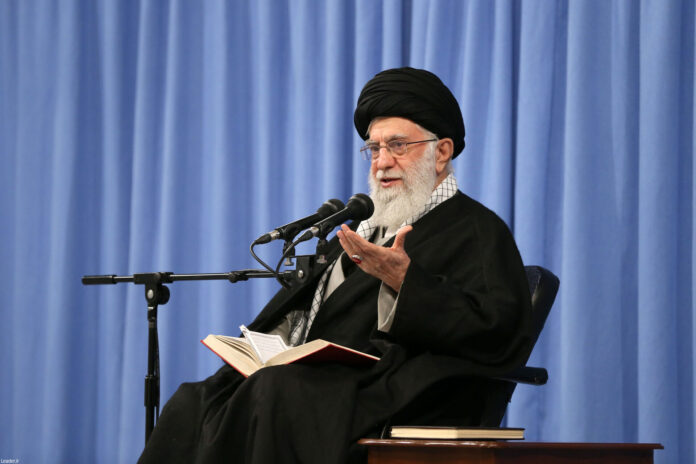
On the occasion of the of the 41st anniversary of the victory of Islamic Revolution in 1979, Ayatollah Khamenei paid tribute to the late founder of the Islamic Republic Imam Khomeini in his mausoleum in southern Tehran.

During the visit, the Leader also paid homage to the martyrs of the Hafte Tir bombing and the Iranian Prime Minister’s office bombing, both of which were carried out by the MKO terrorist group in 1981.

The office of Mohammad Javad Bahonar, Prime Minister of Iran, was bombed on 30 August 1981 by the MKO, killing Bahonar, President Mohammad Ali Rajai, and six other Iranian government officials.

The briefcase bombing came two months after the Hafte Tir bombing, which killed over seventy senior Iranian officials, including Chief Justice Mohammad Beheshti, then Iran’s second-highest official.

What follows are photos of Ayatollah Khamenei’s Saturday visit: