According to the Head of Cultural Heritage, Tourism, and Handicrafts Department of the city of Tabas in central Iran, the award is given by Studienkreis fur Tourismus und Entwicklung, after a call for proposals from all over the world.
Rasoul Behbehani noted the awards ceremony will take place in one of the biggest tourism fairs in the world in early March in Berlin, and the village will also have the opportunity to present its project in the event.
“Unfortunately, Iranian students have not been allowed to step on the US soil recently,” Bahram Salavati said.
Although the exclusion of Iranian students, professionals and nationals with residence permits from entering the US, especially after tensions between the two countries, may have political reasons, the purpose of this piece is to analyse the issue from another perspective.
“Perhaps to some people, Washington’s restrictions on entry into the US should be analysed in the context of the Trump administration’s overall anti-immigration policy. In particular, the most significant effect of this executive order was the significant reduction in F1 student visas and J1 visas for Iranian professors, scholars and specialists, which has dramatically decreased over the past three years,” continued Salavati.
The Financial Times refers, in a report, to the special visa restrictions on Chinese students since 2017 when Donald Trump began his term in office. Interestingly, these restrictions have tightened for Chinese students as tensions between the US and China, especially in the economic field known as the “trade war” intensified.
“The reason for such decision can be traced in the results of the return of Chinese students to their home country after graduation. In fact, they have been the main sources of science and technology transfer from US advanced universities and research centres to China over the past two decades,” added Salavati.
“US understands the importance of returning Chinese experts as the country’s moving engine for science and technology development, so it has pushed its trade war with China into a kind of visa-based one to counter the influx of Chinese students and professionals into its science and technology market,” he underlined.
“With the decline in the number of visas issued, the growth rate of international students in the US has been negative for two consecutive years and the economic value of the higher education market in the country has dropped to $ 5 billion.”
However, the Trump administration continues to insist on visa-restrictive policies for some countries, such as China and Iran, despite fundamental concerns about maintaining US economic prosperity and job creation.
Indeed, in addition to the US government’s political tension with countries such as China (on a global scale) and Iran (on a regional scale), it is in some ways concerned about transfer of its knowledge and technology from its science and innovation centres (particularly in the fields of sensitive industries).
The United States has adopted a “visa-confrontation” approach to prevent some students and professionals from entering the US with high probability of returning to their home country, which may be referred to as “brain warfare”.
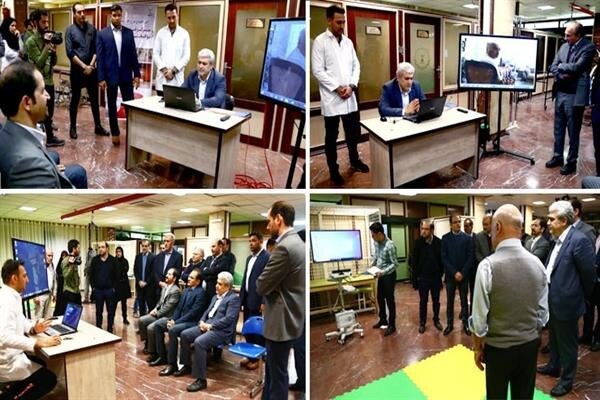
According to the Iran’s Vice Presidency for Science and Technology, over the past four years more than 1,400 Iranian specialists and graduates abroad have returned home from universities and research centers, especially from the world’s top universities and those in the United States.
Most of these people are either teaching or researching at universities or forming start-ups and knowledge-based businesses. Some of them have also simulated successful examples of technology and global businesses in Iran, and on an industrial and industrial scale.
In fact, the United States is afraid of the access of Iranian and Chinese students to its academic and research centres, as well as the possibility of transferring world-class knowledge and technology by professionals and graduates, maintained Salavati.
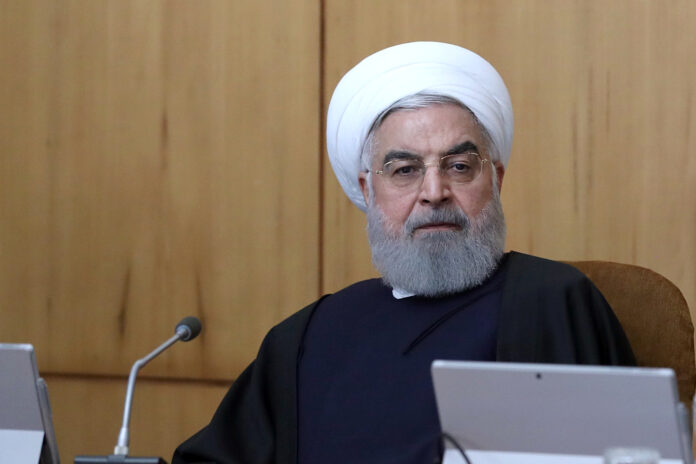
In a meeting with the European Union’s new foreign policy chief Josep Borrell, Hassan Rouhani said Tehran stands ready to work with Europe to settle issues surrounding the nuclear deal known as the Joint Comprehensive Plan of Action (JCPOA).
Rouhani touched upon the trend of efforts made over 12 years that resulted in the conclusion of the JCPOA.
“Unfortunately, the United States’ unilateral withdrawal from the agreement created innumerable hurdles and problems for other parties in the way of full implementation of the deal,” said Rouhani.
He added Iran’s scaling down of its obligations under the JCPOA has been within the framework of the agreement and aimed at preserving it.
“The Islamic Republic of Iran remains prepared for interaction and cooperation with the European Union to resolve issues, and Iran will return to its commitments whenever the other side fully delivers on its obligations,” the president said.
Rouhani said joint efforts and cooperation by Iran and Europe can be instrumental in settling many of the regional and international issues.
Rouhani also condemned Washington’s policies vis-à-vis countries in the region.
“So far, they have made numerous strategic mistakes with regards to regional countries, including Iran, Iraq, Lebanon, Yemen, Syria and Afghanistan, and its recent move whereby they proposed the so-called ‘Deal of the Century’ in collusion with the Zionist regime [of Israel] was in line with the very same mistakes and is doomed to fail,” he noted.
The EU foreign policy chief, in turn, noted that the European countries are seeking to preserve the JCPOA and settle issues. He said he would try his utmost to bring about strong interaction in line with preserving the JCPOA.
Borrell also touched upon Iran’s key role in regional issues and the promotion of peace, stability and security in the region.
Iranian Parliament Speaker Ali Larijani also took a swipe at Europe for its “weak behaviour” in dealing with the US as far as the JCPOA concerned.
In a meeting with the EU foreign policy chief, Larijani also criticized Europe for failing to fully live up to its commitments under the nuclear deal. Borrell, in turn, said Larijani was right to be critical of Europe’s behaviour.
Larijani also expressed Iran’s readiness to help settle regional issues.
The top parliamentarian also dismissed the U-Israeli “Deal of the Century” plan as despicable.
In comments on Monday, Abdolnaser Hemmati said the value of the medical imports financed by the Central Bank of Iran during the first 10 months of the current Iranian year has exceeded $4 billion, which is 2,000 times greater than those of the shipments that have been received through a Swiss financial channel.
He also played down the flashy display of the medical shipments provided by the Swiss Embassy in Tehran, stressing that Iran would never rely on the decisions and measures of others to fulfill its needs in such critical sectors.
Hemmati then lashed out at the US government for its attempts over the past year and a half to prevent and hamper the export of pharmaceutical products to Iran, saying the Central Bank of Iran and other Iranian organizations have been combatting the US sanctions and have managed to ensure an uninterrupted import of the necessary medicines.
On Thursday, a Swiss humanitarian channel to bring food and medicine to Iran kicked off trial operations. The Swiss Humanitarian Trade Arrangement (SHTA) seeks to ensure that Swiss-based exporters and trading companies in the food, pharmaceutical and medical sectors can sell their products to Iran without fear of the US sanctions.
According to the Swiss government, SHTA gives firms that sell humanitarian goods a secure channel with a Swiss bank through which payments for their exports to Iran are guaranteed.
In a telephone conversation on Monday evening, Minister of Foreign Affairs of the Islamic Republic of Iran Mohammad Javad Zarif and his Pakistani counterpart Shah Mehmood Qureshi discussed the latest developments in the Islamic world.
The two ministers also rejected the deal of the century and stressed the need for the Muslim world’s unity and solidarity in support of Palestine.
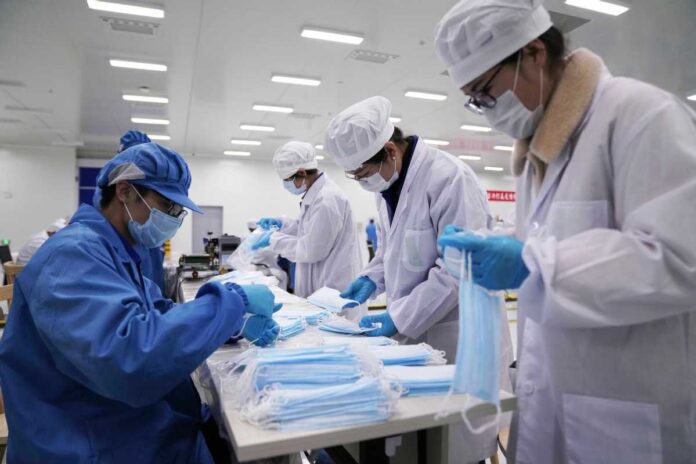
In a telephone conversation on Monday evening, Foreign Minister Zarif and Foreign Minister of the People’s Republic of China Wang Yi talked about the latest developments concerning the outbreak of coronavirus in China and other issues of mutual interest.
In the phone call, Foreign Minister Zarif lauded the Chinese government for its responsibility and efforts to control the crisis and prevent the spread of the virus, and expressed his opposition to politicization of such issues.
During the meeting, the two sides exchanged views on various bilateral issues with the European Union, the JCPOA and the most important regional and international developments.
Persian Gulf conditions and the need to reduce regional tensions, the so-called “deal of the century” and its dangerous consequences for the region and the world, the INSTEX, the Iran nuclear deal, developments in Iraq, Syria and Yemen were among the most important topics discussed by FM Zarif and Josep Borrell.
“Apart from poor wisdom and sometimes lack of understanding on the part of some [Saudi] officials … we continue to insist on the stance we have adopted and believe is a principled one,” Mousavi told a press conference on Monday.
“We believe the only way for the region to get out of the crisis, of the tension, is cooperation among the states of the region, and the only disruptive factor is the foreigners’ interference,” he added.
“We continue to maintain and believe that Quds and the issue of Palestine are the Islamic world’s first issues, and if the Islamic states are divided, if they have misunderstandings, it is really worthwhile for them to set them aside for now or forever, on each and every level, and to stick to the top issue facing the Islamic world.”
He also expressed hope that Saudis will not repeat the “unity-breaking measures” like their recent refusal to issue visa for the Iranian delegation for attending the conference of the Organization of Islamic Cooperation” which has been held for the sake of unity among Islamic states.
“I am saying that the Islamic world, the Arab world will not have a better friend than the Islamic Republic of Iran, and I hope that a handful of states which think otherwise wake up and come to the same conclusion,” he added.
A picture taken on February 3, 2020 shows a general view of the emergency ministerial meeting of the Organisation of Islamic Cooperation (OIC) in the Saudi port city of Jeddah to address US President Donald Trump's Middle East plan. (Photo by AFP)
The OIC convened in Jeddah on Monday to discuss the plan Trump unveiled alongside Israeli prime minister Benjamin Netanyahu at the White House on Tuesday.
The 57-member organization said it “calls on all member states not to engage with this plan or to cooperate with the US administration in implementing it in any form”.
The deal would, among other contentious things, enshrine Jerusalem al-Quds as “Israel’s undivided capital” and allow the regime to annex settlements in the occupied West Bank and the Jordan Valley.
All Palestinian groups have angrily rejected the plan, while Israeli groups of different political persuasions have enthusiastically embraced it, hailing it for offering them more than they expected.
Palestinian Authority leader Mahmoud Abbas on Saturday cut relations with the US and Israel after saying he did not want his name to go down in history for betraying the Palestinians.
Riyadh, however, has welcomed the initiative, saying “the Kingdom appreciates the efforts made by President Trump’s administration to develop a comprehensive Palestinian-Israeli peace plan”.
Saudi government media on Sunday urged the Palestinians not to miss “this opportunity” and to approach the deal with a positive mindset.
State-run newspaper Okaz went on as far as to say that “the Palestinian cause is no longer the Arabs’ main cause”.
Saudi Arabia meanwhile barred an Iranian delegation from the OIC meeting in Jeddah, Iran’s Foreign Ministry spokesman Abbas Mousavi said.
Iran, he said, has filed a complaint with the OIC and chastised Saudi Arabia for misusing its position as the host for the organization’s headquarters.
Iranian officials have condemned Trump’s plan as a non-starter after it was officially announced last week. The Palestinian leadership has rejected the plan, saying it heavily favors Israel and will deny them a viable independent state.