
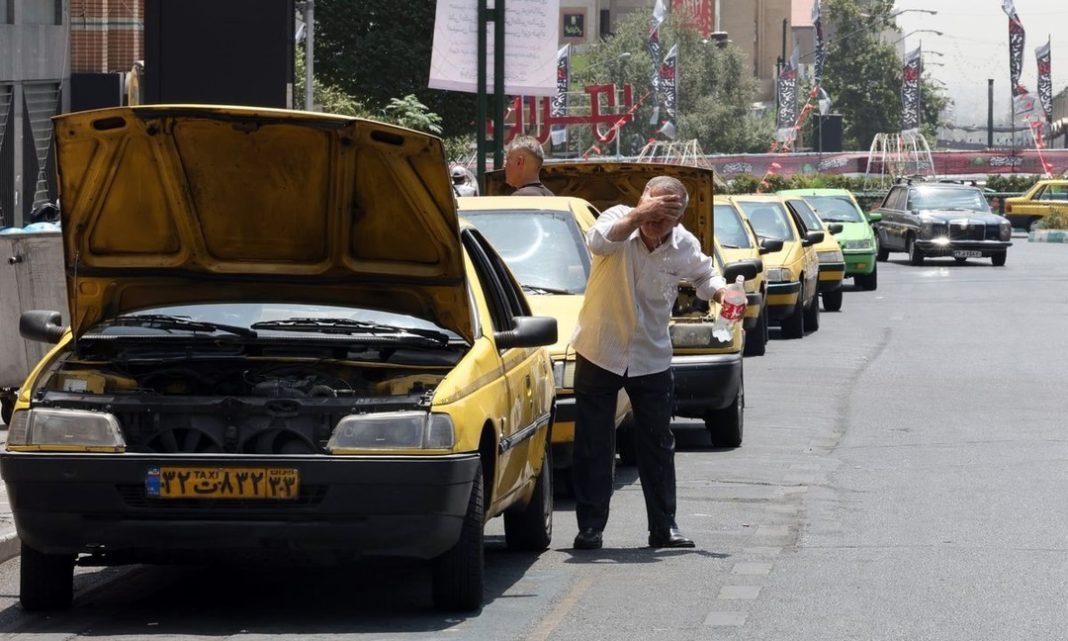
While the official meteorological report for Friday listed the city’s air temperature at 38°C, laser thermometers placed on asphalt in central districts recorded readings between 52°C and 55°C.
The Lut Desert averages around 50°C during summer.
At midday in August, solar radiation over Tehran reaches about 900 watts per square meter. Dark asphalt absorbs over 90 percent of that energy, while glass-clad buildings reflect and concentrate sunlight.
The “urban heat island effect” can raise city surface temperatures by up to 15°C compared with surrounding areas, according to a University of Tehran research.
In areas like Valiasr Square, idling vehicles and motorcycles emit exhaust gases at 50-60°C, adding to the heat. Even after sunset, street surfaces can remain near 40°C as trapped heat slowly escapes from asphalt layers.
Observers note that direct contact with pavement can cause a burning sensation in seconds, and under such conditions, an egg can fry on the street within minutes – a dramatic indicator of the capital’s mounting heat challenge.
