Thursday, December 25, 2025
Home Blog Page 4814

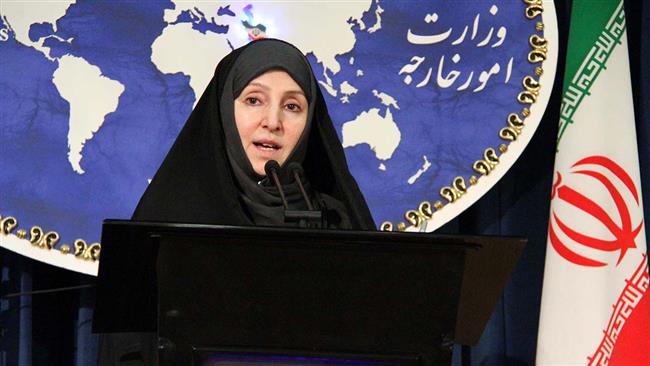
Some simpletons are contributing to the ‘Shiite Crescent’ plot: FM advisor

seyed-mohammad-sadr

In an interview with Seyyed Mohammad Sadr, who serves as a senior advisor to Foreign Minister Mohammad Javad Zarif, Aftab Yazd daily has asked the veteran diplomat to dissect Iran’s stance on developments of Yemen. What comes next is the translation of an excerpt of the interview the newspaper published on July 5:

Tell us about the Houthi line of thinking? Is there any affinity between Iran and Yemen when it comes to ideology? If so, does this closeness go far enough to warrant Iran’s strong support for this faction in Yemen?

Houthis are Zaidiyyah [Shiites]. They have ruled Yemen for over 1,000 years. In fact, the Imams of Yemen [Zaidiyyah Imams] were in power up until 50 years ago, but in the aftermath of a coup, mounted when Egyptian President Gamal Abdel Nasser was in power, Yemen was divided into two parts. Zaidiyyah people account for 37 percent of the Yemeni population.

Affinity is not at issue here. Prior to the current developments, during the Arab Spring when the democratic movement was in full swing, Iran supported the Yemeni people.

Before the Arab Spring when Ali Abdullah Saleh was still in office, I traveled to Yemen. As a matter of fact, we had logical relations with Yemen and there was not much sensitivity about Tehran-Sana’a ties.

One of the miscalculations of Saudi Arabia is that it views Yemen and Iraq as its enemies and believes that because the two neighboring countries have a large population and enjoy rich resources, the best course of action is to have them divided into some smaller countries to counter the perceived security threat they pose to Saudi Arabia.

Iran has relations with all Muslim countries, whether Shiites or Sunnis. That Iran only supports Shiites is a plot. You never heard the late Imam Khomeini call our revolution a Shiite revolution. His line of thinking focused on the Islamic world. Imam Khomeini even designated a week as Shiite-Sunni Unity Week which was a right strategy because in the Muslim world, unlike Iran, Shiites are in minority.

Imam Khomeini acted in a way that he could address America and the West on behalf of 1.2 billion Muslims. Therefore, sectarianism is not in play. Iran deems Israel as a made-up occupier and backs anyone who fights it, whether Shiite like Lebanon’s Hezbollah or Sunni like Hamas and the Palestinian Islamic Jihad.

Our relations with the Islamic and Arab countries are in keeping with the strategy of unity within the Muslim world.

The Muslims unity strategy and Iran’s interests require it to act in line with the framework of the Islamic world rather than get itself isolated on the one hand and have America and Israel lined up against it on the other.

Is Iran as influential in Yemen as Saudi Arabia claims?     

Such statements are part of the Shiite Crescent plot. Some simpletons in Iran get pleased at the mention of such remarks. Whoever makes such comments intends to incite others against Iran and deal a blow to us.

Iran has vehemently said that it favors peace and wants all Yemeni people to form a government which is approved of by all. Such a thing happened four years ago.

These simpletons at home are not aware that sometimes some people intentionally play up the influence of someone they intend to bring down. These comments about Iran are not true; Tehran has ties with the entire Muslim world. We go out of our way to promote peace, freedom movements and respect for the rights of the public, be it in Yemen, Tunisia or Egypt.

Artists in Mashhad transcribe holy Koran in Ramadan

31-1

A number of Iranian calligraphers in the northeastern city of Mashhad have transcribed verses of the holy Koran and Islamic hadiths (known as Kitabat) to mark the birth anniversary of Imam Hassan, the second Shiite Imam.

The following images are released by jamejamonline.ir on July 3:


UN Tehran Office, a follower of Must See Iran campaign

mustseeiran

One year into the launch of the mustseeiran campaign, a hashtag aimed at promoting Iran’s image the world over, the number of photos posted by people on social networking sites has hit 300,000.

Khbaronline.ir on July first released a report on the biggest public campaign in Iran which was launched by Seyyed Ali Araghchi, a nephew of Iran’s nuclear negotiator, saying that the United Nations has announced its Resident Coordinator and UNDP Resident Representative Gary Lewis in Iran supports the national campaign. The following is the translation of part of that report:

According to what has been published on the UN website, both in Farsi and English, #MustSeeIran has managed to polish the black image painted of Iran by showcasing Iran’s traditions, culture and tourist attractions. The UN says this campaign is trying to transform the tarnished image of Iran and display a real picture of the country.

The Twitter campaign by Araghchi soon turned into a platform for the Iranians to share images of Iran’s natural and historic sites through the hashtag on social networking sites.

The UN says several international officials, among them Tehran-based foreign ambassadors, as well as Iran’s President Hassan Rouhani have joined the campaign and re-tweeted the post.

Ali Araghchi, the creator of #mustseeiran, says the Twitter page has gained more followers among environment lovers and those interested in tourism by the day.

He went on to say that the campaign pursues five main objectives: painting a positive picture of Iran; encouraging Iranian and foreign travelers [to visit different places in Iran]; boosting a spirit of solidarity; promoting national unity and participation; and streamlining the inflow of hard currency to Iran, something which will help the country’s economy and tourism industry thrive.

He further said that the campaign has made great achievements so far thanks to the feedback it has received from the people.

Iran, a four-season country, has multiple natural and historic attractions, Araghchi said, adding over this past year people showed that big goals are achievable through national unity, citing what his campaign to introduce the real picture of Iran to the world has achieved in a year.

Efforts by people helped this campaign – which had no government support – make it to the world’s top media, he said, adding we still have a long way ahead, but the result so far is a unique experience.

On his new plans, he said that new pages will be launched for different cities in Iran, adding the visitors can go to http://instagram.com/mustseeiran_insta and get familiar with the matchless beauties of the Iranian cities.

Araghchi concluded that foreign arrivals can drive up employment and earn the country more foreign exchange, saying this campaign can serve as the powerful arm of the Iranian economy because the more tourists arrive in the country, the more people feel motivated to work and increase national wealth. People can share their beautiful photos of Iran and play their role in improving the image of Iran, he added.

Comments of Hashemi Rafsanjani on Iran-Iraq relations

hashemi-heydaralebadi

Chairman of the Expediency Council Ayatollah Akbar Hashemi Rafsanjani says Iran and Iraq have a lot in common and pose no threat whatsoever to each other.

In an interview with the Arabic-language daily Al-Vefagh, the top councilor talked about a wide range of issues, including his relationships with the Supreme Leader, Iran-Saudi Arabia ties and cross-border relations between Iran and Iraq. On July 5, Alef.ir published a Farsi version of the interview. The following is the translation of PART TWO of the interview which focuses on Tehran-Baghdad ties:

On Iran’s support for Iraq, Hashemi Rafsanjani said, “Presently, we view Iraq as important as our own country, because firstly, it is an immensely important nation; it is also located in a key geographical position. In terms of demographics and natural resources, Iraq is a force to be reckoned with. Iraq has been at the heart of civilization for millennia; it is the birthplace of the Code of Hammurabi; and last but not least the Iraqis are good people.”

He added, “Under Saddam, because of his dictatorial tactics, the country stayed as one entity. However, after his ouster, the country was divided into three or even more opposing and at times warring camps. Such conflicts are gradually coming to surface and that has raised the alarm.”

Hashemi stated, “If God willing, Iraqi leaders carry on with their wise strategies and put aside superficial divisions, either religious or ethnic, and unite over the country’s territorial integrity, Iraq could be a powerful country in the region. Ties between Iran and Iraq are nothing new.”

The councilor went on to say, “When the previous regime was in power, many Iranians were in Iraq; likewise, a large number of Iraqis were in Iran. Many Iraqis have stayed in Iran since the Iran-Iraq war and work in the country like the Iranian people do. Crossing the border is easy. Holy sites in Iraq are popular with Iranians. That’s why on Ashura [the anniversary of the martyrdom of Imam Hussein] and Arba’een [the 40th day after Ashura] many Iranians travel to Iraq. In fact, Iranian people are in love with Iraqi holy sites. If one day the visa requirement is waived, half of Iran’s population will always in Iraq, and accordingly half of the Iraqi nation will be in Iran.”

Hashemi Rafsanjani reaffirmed Iran is sending aid to Iraq and said, “We are serious in helping Iraq and our assistance is not confined to one area. We help the Iraqis with whatever they need, and whatever is possible for us to provide.”

The top councilor added Iran’s relations with the Iraqi government have always been good. In response to Western expression of concern about the growing presence of the Iranians in Iraq, former Iraqi President Jalal Talabani once said: “What do you think the Iranians want from us?”

The chairman of the Expediency Council added, the former Iraqi president had said, “All Iraqi officials like the neighboring country and there is no need for Tehran to pose a threat to Baghdad; in fact, Iran cannot find a better friend than Iraq for itself and Iraq does not perceive Iran as a threat, Iran has helped us to ride out the storm and get to the point where the country is.”

Hashemi reaffirmed the comments of Talabani and added, “Such remarks are entirely wise and accurate. Iran has no designs on Iraq, and Iraq constitutes no threat to Iran at all; to us, ensuring Iraq’s security amounts to contributing to our own security.”

Deal is round the corner: Former British ambassador to IAEA

81672470-70016413

Peter Jenkins, former British Ambassador to IAEA suggests that all signs indicate that a deal is inevitable and that achieving an agreement is in Britain’s interest.

The retired British diplomat expressed his willingness for the success of the nuclear negotiations between Iran and P5+1 and suggested that a deal is round the corner.

Following is the full text of an interview with Mr. Jenkins delivered by IRNA:

Do you think that the negotiations will be successful in the extra time?

I think it’s quite likely that there will be a success; if I had to bet on it I would certainly bet on it being a success if not by Tuesday, then by Wednesday or Thursday.

The Americans are under some pressure to have an agreement by Tuesday because they want to be able to present the agreement to Congress before the 9th July.

All the signs that are over the last week there show that there has been significant progress in relation to one of the remaining obstacles to an agreement; which was how to handle the so-called possible military dimension and the need of the IAEA for better cooperation from Iran to resolve that issue.

Also Mr. Amano was in Tehran in the course of the week and what he has said sounds encouraging.

So it looks as if the issues have been resolved and the resolution at that issue has opened the way to the resolution of the sanctions issue.

And all the other major issues seem to have been previously resolved in other words, how many centrifuges that Iran would operate during the confidence building period, what the stock of low enriched Uranium in Iran would be in the confidence building period, and what kind of modernization to the design of the Reactor of ARAK would be undertaken.

What persuades the West to have a deal with Iran?

For many years there has been a fear that Iran wanted to acquire nuclear weapon.

Rightly or wrongly that fear becomes entrenched in the minds of the Western politicians and officials well over a decade ago and for some times the West believed that the solution to their concern was to persuade Iran to completely abandon the enrichment of Uranium, in other words to dismantle whatever facilities had for enriching Uranium.

It took them a long time that eventually they came to understand that Iran was not prepared to do that and that the only way that could be achieved would be by actually invading Iran and physically dismantling the facilities.

That was a deeply unattractive way forward; so they finally came to understand that the best thing was to negotiate an agreement which would enable them to acquire greater confidence in the assurances that had been coming ever since 2003 from people like Dr. Rouhani now President Rouhani, the assurances that Iran did not want nuclear weapons.

So at first the West was very skeptical when they were told that Iran did not want nuclear weapons, they come around to thinking that maybe that is the case but let’s give ourselves a period to acquire some degree of certainty that it’s the case.

What impact would the deal have on other issues apart from the nuclear matter? Would this help reopening of the British embassy in Iran? Does the West look at the deal as a means of influencing the region?

As far as the British-Iranian relationship is concerned, my understanding is that there has been quite a lot of progress over the last year towards the reopening of embassies and what has been holding it up [are] fairly technical issues; so I do not think that concluding a deal would make a great deal of difference to that.

But it does pave the way for more cooperation between Iran and the West especially the US over Iraq in particular, possibly in bringing an end to the civil war in Syria.

It would therefore be very positive and helpful.

If the negotiation fails for any reason (e.g. Sabotage of its enemies), what would be the impact?

I think it is very unlikely that the negotiations will fail in a sense that there would be a complete collapse and the two parties will walk away in opposite directions and say we never want to talk to one another again; I think that’s almost inconceivable.

They might fail to meet the latest deadline but if they do, then I think they will give themselves still more time and set yet another deadline.

All the signs are that they made so much progress and have eliminated so many of the obstacles that had divided them and that they don’t have a long journey and long way to go in order to get an agreement.
Having said all of that of course there are in the US people who would love the talks to fail and what they would then press for is an increase in the sanctions.

However, my own belief is that they would have some difficulty in persuading the rest of the world to go along with that; I am not sure if even the Europeans would be ready to support the Americans in adding to the burden of sanctions on Iran.

What if the US Congress blocks the deal?

Congress cannot be ignored by the US administration; however I don’t think there would be a total collapse and a throwing away of all that has been achieved.

I think almost certainly that the administration would want to find some other way of cementing in place of whatever has been agreed with Iran and would also want to consult the Iranians how to proceed at that point.
On the other hand, the ambassadors of Britain, France and Germany have been quite active this year in making known to Congress that Europe is now strongly committed to achieving the kind of nuclear deal that looks likely to emerge this week.

There is absolutely no doubt that they will be very disappointed if Congress were to block that deal. However, I think rather than walking away and going off in a different direction, what they would do is work even more closely with the administration to try and find a solution to the problem that has been created by Congress.

What is Britain’s position in achieving the deal?

Because of our constitutional arrangements, the government always has majority in the parliament and therefore parliament tends to be much readier to fall in with whatever policy the government wants the country to follow.

The British ambassador has also been an active advocate of the deal that is emerging and the British government is now strongly committed to achieving this kind of deal.

They are of course not strongly committed to achieving any kind of deal but I think realize that the kind of deal that is emerging is a good deal; it’s a deal that is in Britain’s interest and it’s a deal that is in the interest of the whole international community.

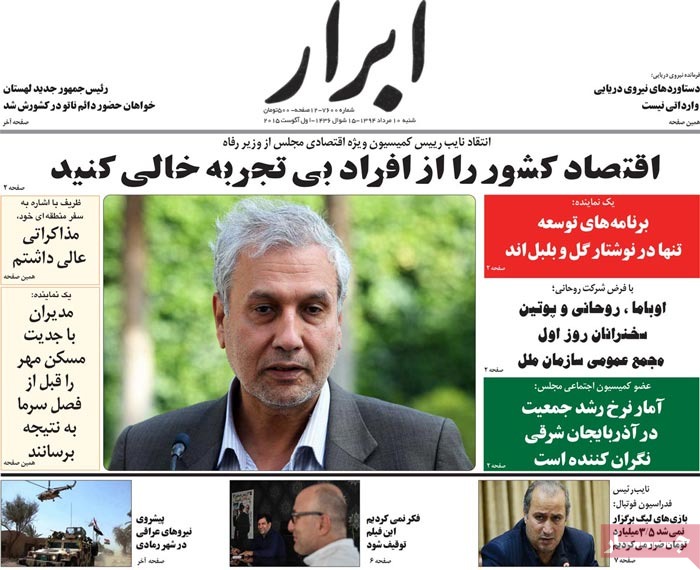
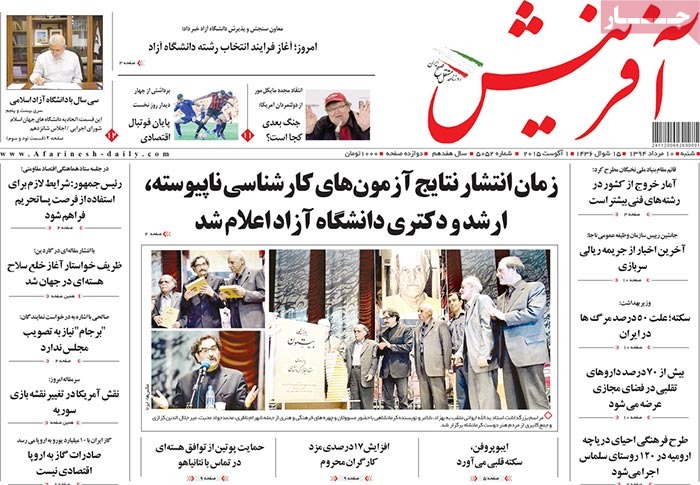
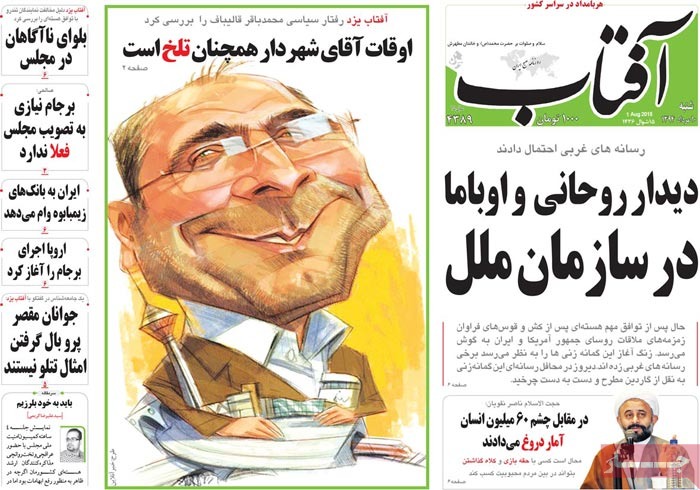
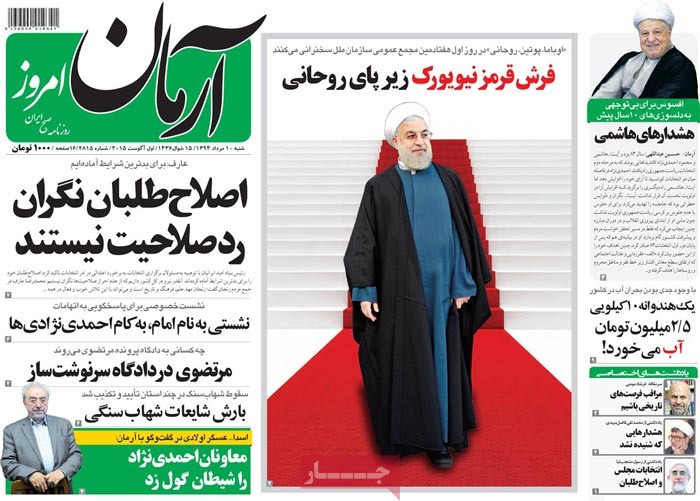
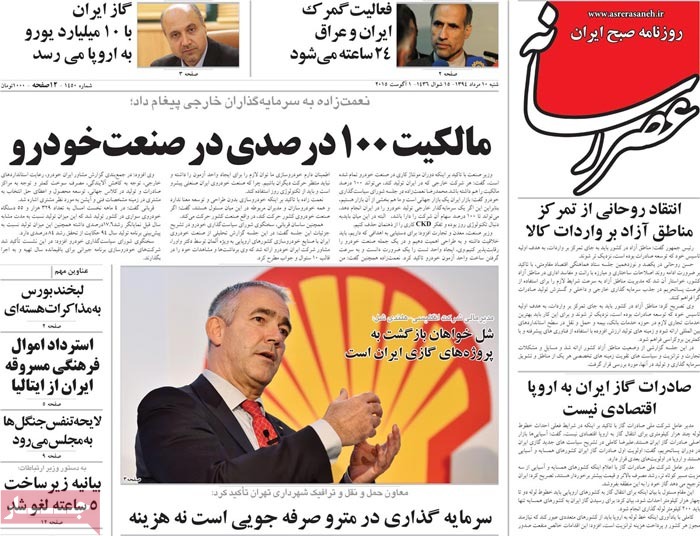
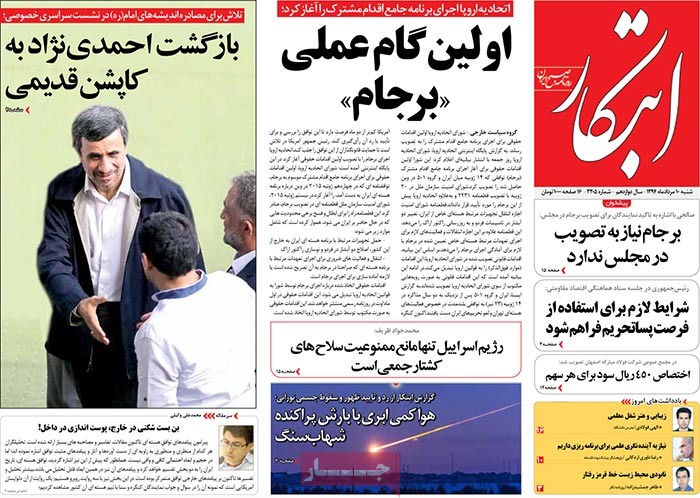
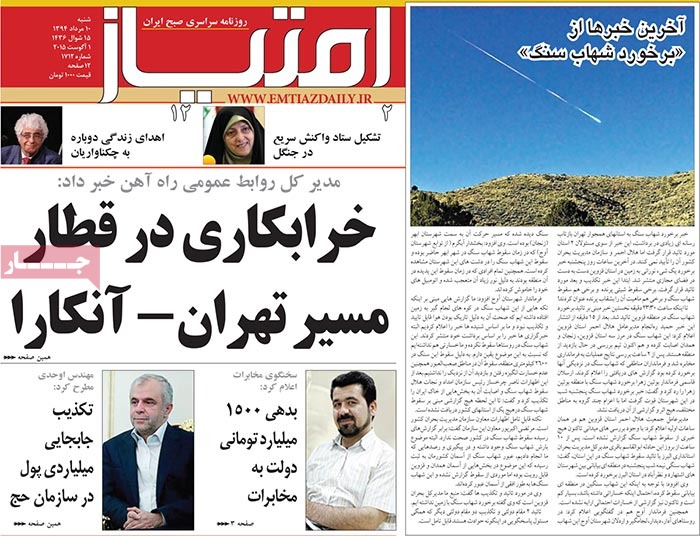
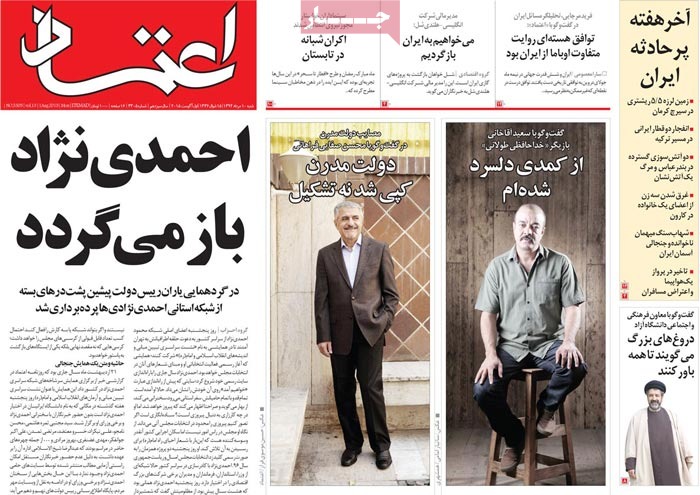
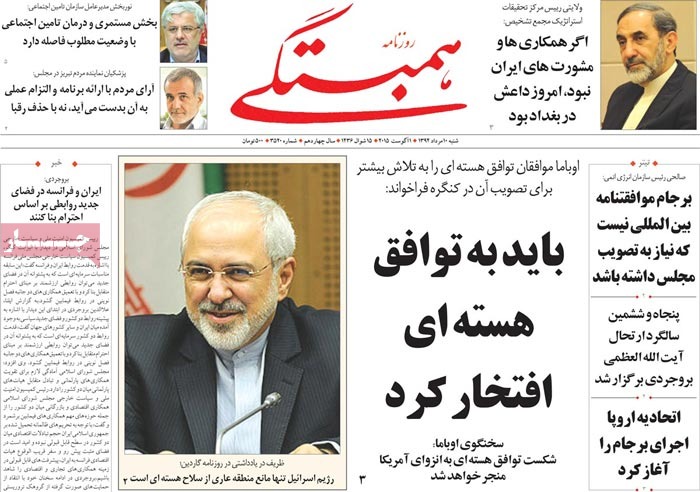
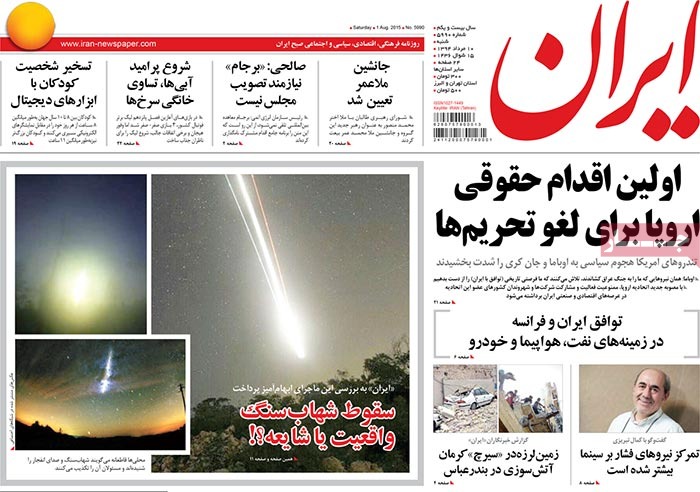
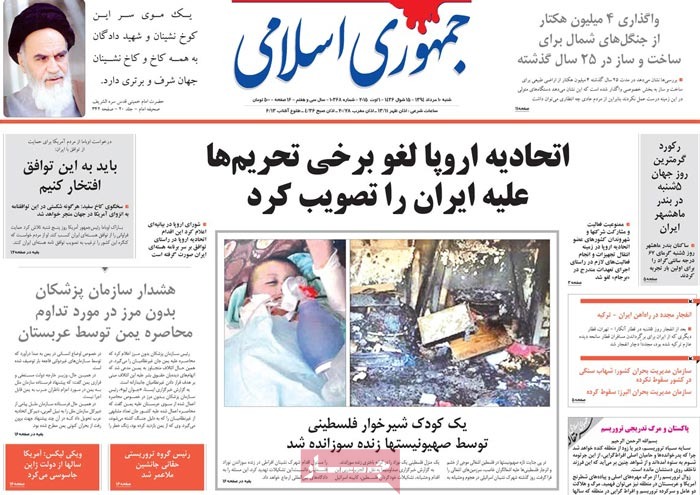
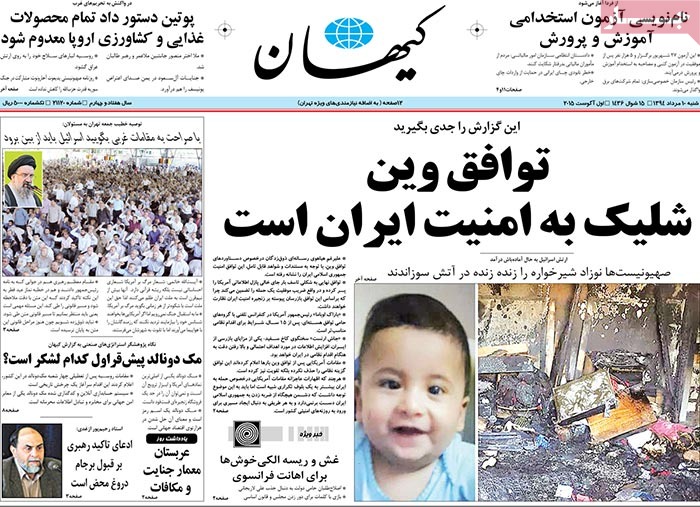
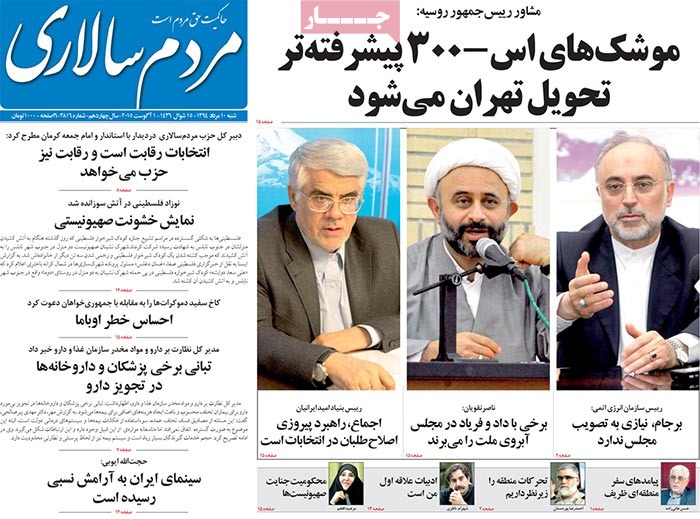
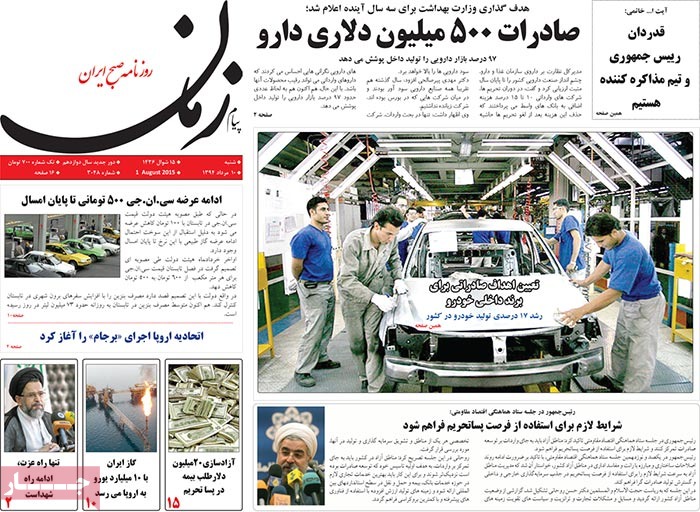
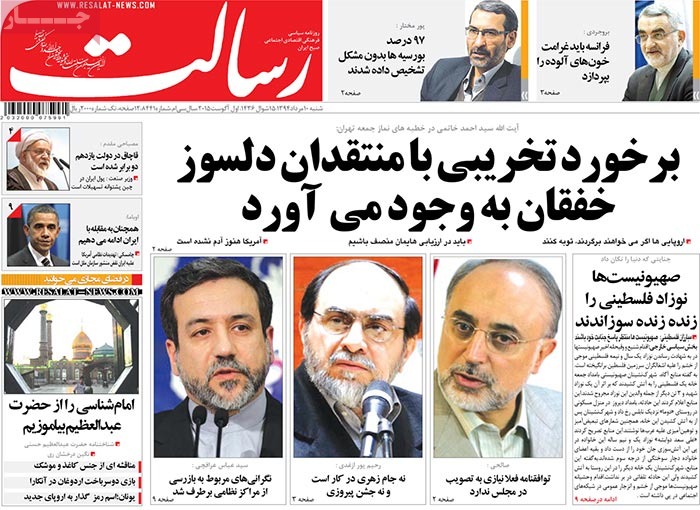
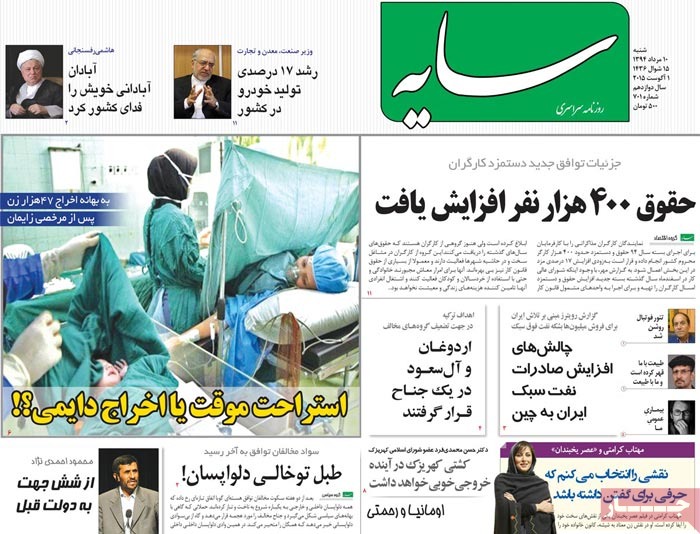
A look at Iranian newspaper front pages on July 6

Iranian Newspapers Headlines

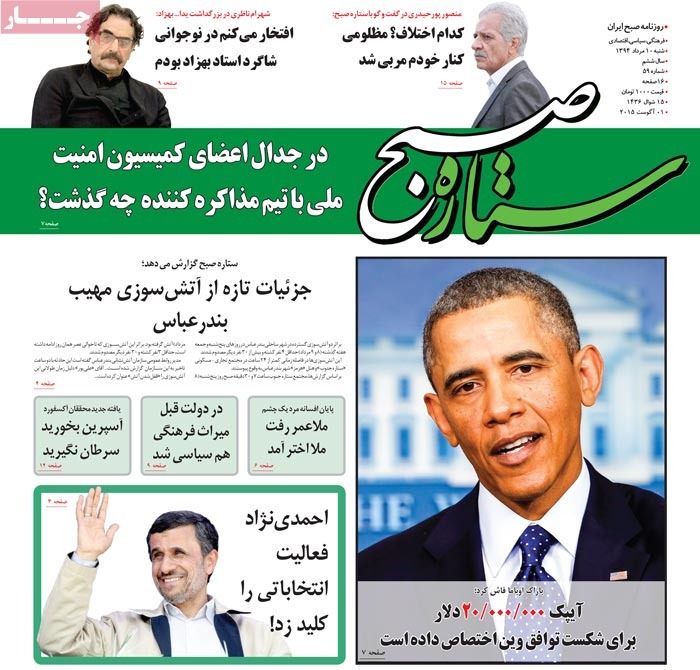
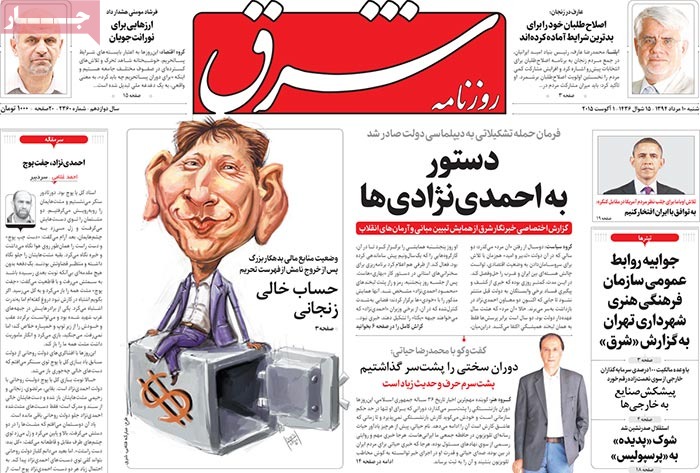
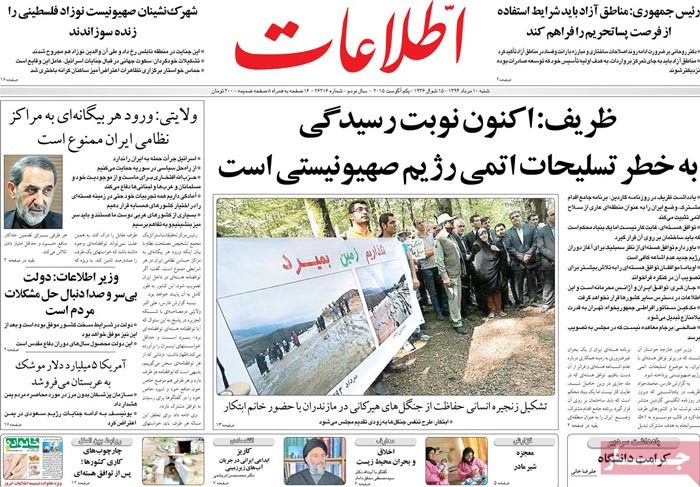
Nuclear talks in Vienna between Iran and P5+1 and the comments of the chairman of the Expediency Council about a wide range of issues including his relationship with the Supreme Leader dominated the front pages of Iranian newspapers on Monday.


Ettela’at: “All sanctions will be lifted on the day a deal takes effect,” said Iranian nuclear negotiator Abbas Araghchi.

He further said: “Never during the course of the past talks did we make so much progress. The deal will be made official with the approval of the UN Security Council. On our side, implementation of technical issues will take 2-3 months.”

Araghchi also said that there will be an agreement if the negotiating team clinches what the Iranian people want by July 7, if not, it prefers to return home empty-handed.


Abrar: The Iraqi army has foiled an attack by IS terrorists on Haditha.

Abrar: “A tentative order for an attack on Syria has been issued,” the Turkish prime minister said.


A look at Iranian newspaper front pages on July 6


Arman-e Emrooz: “Some suspects have been arrested in connection with a rash of acid attacks in Isfahan,” police said in reaction to comments by a lawyer for the victims of the 2014 attacks.


A look at Iranian newspaper front pages on July 6


Asrar: “Regional countries should be afraid of Israel, not Iran,” said Expediency Council Chairman Ayatollah Akbar Hashemi Rafsanjani.


A look at Iranian newspaper front pages on July 6


Ebtekar: [Unauthorized] construction by the Islamic Revolution Guard Corps at the capital’s Eshratabad Square has come to a halt.

Ebtekar: “We are preparing ourselves for a parliament which acts in line with the wishes of the government,” said Mohammad Reza Aref, a reformist leader and a onetime vice-president.


A look at Iranian newspaper front pages on July 6


Emtiaz: The chief of the Criminal Investigation Department of the Iranian police has said that 129 rings smuggling in goods have been busted.


A look at Iranian newspaper front pages on July 6


Hamkari-e Melli: Each year as many as 8,000 Iranians are pronounced brain dead. And each day ten patients who are on organ transplant waiting list pass away.


A look at Iranian newspaper front pages on July 6


Hemayat: “Genocide in Yemen should come to an end,” said the secretary of Iran’s Human Rights Council.


A look at Iranian newspaper front pages on July 6


Jomhouri Islami: “The Saudis committed a major mistake by attacking Yemen,” said Ayatollah Hashemi Rafsanjani.

Jomhouri Islami: A Saudi billionaire prince is to pay a visit to Israel.


A look at Iranian newspaper front pages on July 6


Kaenat: Iran exported more than $8 billion in oil and gas condensates in the spring.


A look at Iranian newspaper front pages on July 6


Kayhan: A deal and sanctions, the US wants both.

The daily reports on the vague prospects of the talks.


A look at Iranian newspaper front pages on July 6


Payam-e Zaman: Parliament Speaker Ali Larijani has called for efforts to contain HIV/AIDS and the scourge of drugs.

Payam-e Zaman: The department [the previous government set up to oversee the sales of fuel in gas stations] has been dissolved.


A look at Iranian newspaper front pages on July 6


Highlights of Ettela’at newspaper on July 6

Ettelaat july-7

 “All sanctions will be lifted on the day a deal takes effect,” said Iranian nuclear negotiator Abbas Araghchi.

He further said: “Never during the course of the past talks did we make so much progress. The deal will be made official with the approval of the UN Security Council. On our side, implementation of technical issues will take 2-3 months.”

Araghchi also said that there will be an agreement if the negotiating team clinches what the Iranian people want by July 7, if not, it prefers to return home empty-handed.
 Chairman of the Expediency Council Ayatollah Akbar Hashemi Rafsanjani has said that the Supreme Leader plays a pivotal role in the survival of the Islamic Revolution.

In an interview with the Arabic-language daily Al-Vefagh, the former president said he has a very close relationship with Ayatollah Khamenei.

 The Syrian Army and Lebanon’s Hezbollah have staged a massive attack on IS positions in Zobdani, which had been under the control of the terrorist grouping since 2012.

♦ EU ambassadors based in Tehran have met with the Iranian economy minister.

At the meeting, Ali Tayyebnia underlined efforts to promote Iran-EU economic cooperation.

♦ “Skilled workforce is conspicuous by its absence in the Education Ministry,” said the spokesman of Tehran Education Department.

“The unregulated hiring initiated by the previous government has not only not solved the problems of the Education Department, but exacerbated them,” he said.

 “The root causes of social harms should be identified and targeted,” said Parliament Speaker Ali Larijani.

He further said that the Welfare Organization needs to tap into public potential to be able to fulfill its responsibilities.

 The Health Ministry has warned that the pesticides used in the cultivation and preservation of some imported fruits are 10 times the permitted level.


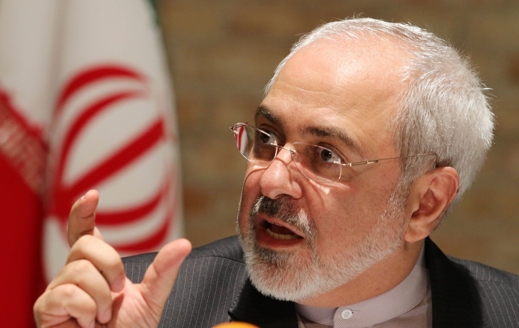
FM Zarif asks people to pray for nuclear team

Zarif-Vienna-Ghadr-9

Foreign Minister Mohammad Javad Zarif said late Sunday that some gaps still remain between the two sides in nuclear talks, asking people to pray for the expediency of the country, Islam and Muslims.

After attending a religious vigil in Vienna to mark the 19th night of the holy month of Ramadan, the top diplomat told reporters that the result of the talks still remains unknown, adding the Iranian team is doing what is needed.

The clocks are ticking and the two sides are working against time in Vienna to reach an agreement by the extended deadline of July 7.

The following are a series of photos fararu.com released on July 6 of the religious ceremony in the Austrian capital with the foreign minister and his accompanying team attending:


Abu Azrael in holy shrine of Imam Reza

Abu Ezrail

Ayyub Faleh al-Rubaie – a university lecturer, a Taekwondo champion and the popular face of the fight against ISIL in Iraq – has paid a visit to the holy shrine of Imam Reza in Mashhad and received a warm welcome by the locals.

A commander of the Kataib al-Imam Ali, an Iraqi Shiite militia group of the Popular Mobilization Forces that is fighting ISIL in Iraq, Rubaie is known as Abu Azrael and has a long record in fighting Takfiri terrorists and has turned into a nightmare for terrorists.

He first came under the spotlight when foreign media described him as Iraq’s Rambo [or the Angel of Death], releasing photos of him with sword and ax fighting ISIL terrorists.

He taunts and mocks the extremists on social media, saying he has dispatched them in droves with an arsenal that would satisfy any video-game aficionado: a scoped rifle, hand grenades and, when things get dicey, an ax or sword.

The following are the pictures the Iranian Students’ News Agency (ISNA) released online on July 5 of the Angel of Death in the holy Shrine of the eighth Shiite Imam in northeastern Iran:


Iran vows to double oil exports after sanctions lifted

oil ship

Iran said on Sunday that it has serious plans to increase its oil exports to almost double the current levels after sanctions against the country have been lifted.

Mansour Moazami, Iran’s deputy oil minister for planning and supervision, has been quoted by the media as saying that Iran’s oil exports would reach 2.3 million barrels, compared with around 1.2 million barrels a day today.

“We are like a pilot on the runway ready to take off. This is how the whole country is right now,” Moazami has told the Wall Street Journal.

He added that Iran is presently pushing to convince fellow members of the Organization of the Petroleum Exporting Countries (OPEC) to renew its quota system.

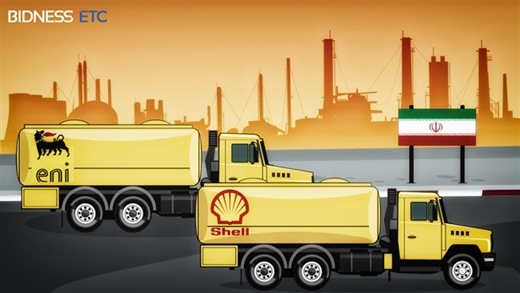
Iran is already in contact with former oil buyers in the European Union—traders such as Vitol Group and big oil producers such as Royal Dutch Shell PLC, Total SA and Eni SpA—and existing importers in Asia to help absorb the potential new shipments, the Journal report has added quoting Iran’s Ministry of Petroleum and the companies.

At its last meeting on June 5, Oil Minister Bijan Zanganeh informed other OPEC ministers Iran’s production would increase if sanctions are lifted and offered to reinstate the quotas.

[…]