Wednesday, April 8, 2026
Home Blog Page 4483

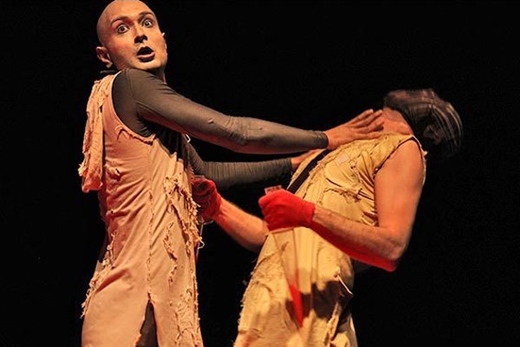
Iranian ‘Macbeth’ Awarded by Russia Association of Theatre Critics

The 19th International Festival of Children and Young Choirs in Saint Petersburg, Russia, hosted a number of plays from France, Denmark, Poland, Estonia, the US, Japan, Bulgaria, Britain, Russia and Georgia.

Reza Servati’s work has so far won the Best Director Award and the Best Costume and Stage Awards at the 12th International University Theatre Festival.

The play is an adaptation of the Shakespearean tragedy, which won the Special Jury Award from the International Section of the Fajr International Theatre Festival in 2010.

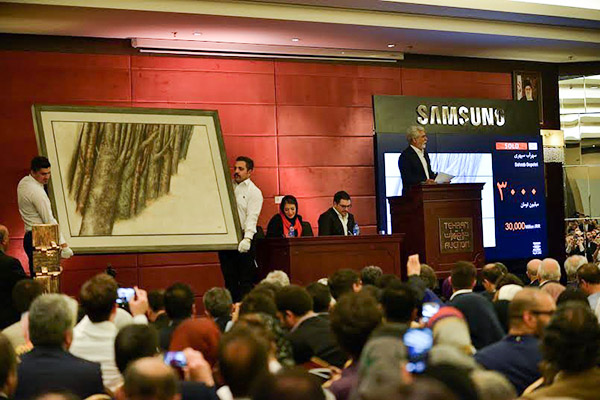
2016 Tehran Auction Breaks Sales Record

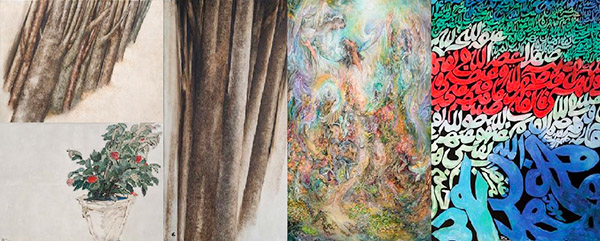
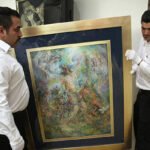
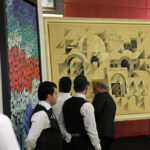
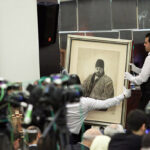
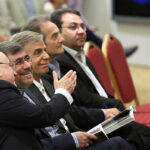
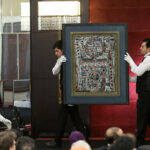
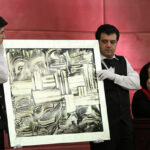
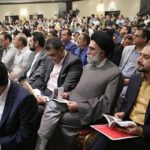
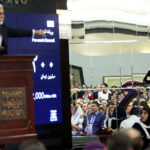
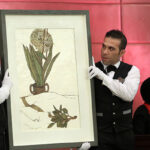
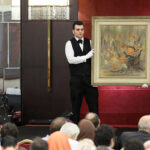
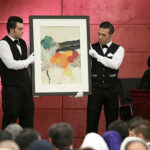
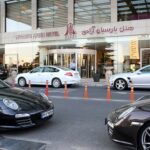
Last night, Azadi Hotel hosted the 5th edition of the Tehran Auction, where the best of Iranian art ranging from established and emerging artists was presented to art collectors and the global audience.

50 out of 80 presented artworks were ‘Untitled’, which, considering the fact that modern artworks are usually untitled, becomes meaningful only when compared to the 18 classical works, all with rather lengthy titles.

40 works, which made 50% of the auction, were by non-living artists.

One artwork failed to be sold, and two works sold below their low estimates, while 31 works were sold at the estimated prices and 46 above them, which is considered a major success for the Tehran Auction.

Tehran Auction 2016-1

The highest-valued pieces at the 5th Tehran Auction included: two untitled artworks by poet and painter Sohrab Sepehri (1928-1980) bought at $985,200 and $509,020, a work by Manouchehr Yektai (b. 1922) at $482,748, artwork by Mahmoud Farshchian (b. 1929) which went for $410,500, ‘Blue Dance’ by Mohammad Ehsai (b. 1939) and ‘SAT+HE+SAT’ by Hossein Zendehroudi (b. 1937), both of which sold at $328,400.

The total proceeds of Tehran Auction 2016 stood at $8,328,880 which broke last year’s record of $6,909,536.

The first of its kind in Iran, Tehran Auction was launched in 2012 as an independent and private initiative to support the domestic art market as a key basis for the international market.

The First Cyber Shots of a New Cyber War?

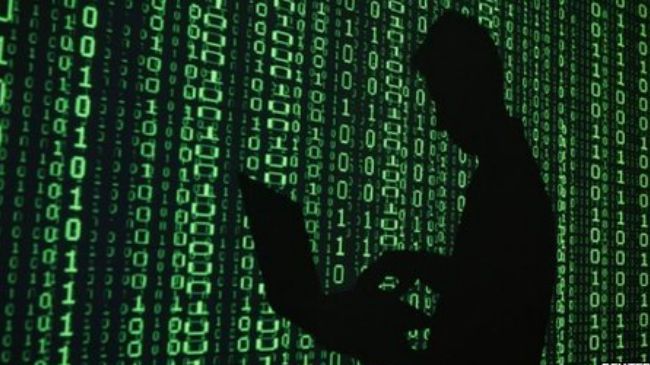
After a cyber-attack on an Iranian official website, allegedly launched by a Saudi hacking team, Iranian cyber activists hacked a couple of Saudi websites in response. The move was followed by counter-attacks, which is now raising the question whether the two countries are involved in an outright cyber-war.

Here’s IFP’s coverage of various media reports on the ongoing tension between Tehran and Riyadh in cyberspace.


According to a report by Al Monitor, numerous Iranian media outlets announced on May 25 that the website of The Statistical Centre of Iran was hacked and temporarily put out of use.

Later on, the portals of Iranian Organization for Registration of Deeds & Properties, the Post Company, and Ahvaz University of Shahid Chamran were also reportedly hacked by unknown groups of hackers. The hackers’ signatures on these websites were “Mafia Hacking Team” and “Da3s Hacker”, TechRasa reported.

News agencies wrote that the hackers were “outside of Iran” but little else was known about them. On May 28, Mizan quoted Iranian Communications Minister Mahmoud Vaezi as saying that the IP of hackers who infiltrated Iran’s government websites was in Europe.

However, many websites speculated that either ISIS or Saudi Arabia had conducted the attack. The low-level attack was followed by two attacks, on Saudi Arabian statistical websites and the portal of King Abdulaziz University on May 26. Tasnim quoted a statement by the Iranian hackers as published on the hacked websites, “Iranian Hackers were here. Hacked by Shahin Sh. Iran Security Team.”

In an article headlined “The Announcement of a Cyber-War by Saudi Arabia against Iran?” Tabnak wrote, “While many websites assumed this website was hacked by [ISIS] … it appears it was a Saudi hacker group.”

Al Monitor quoted Tabnak as rejecting the idea of ISIS involvement because the hackers referred to themselves as “Da3s,” as in “Daesh,” an acronym the terrorist group does not use for itself. A Twitter account associated with Da3s hackers followed a few well-known Saudi accounts, and Tabnak concluded that a Saudi group had conducted the attack with government backing.

The DA3S, which has officially claimed responsibility for the cyber-attacks, wrote on the main page of the hacked websites that it is not linked with the ISIS terrorists group, aka Daesh, and is only “one Sunni Muslim”, Trend quoted Iranian media as saying.

As DA3S sounds like Daesh, it could be mixed up with the Arabic name of the ISIS terrorist group.

In any case, the screenshots provided of the hacked website appear to show that the hackers either wanted Iran to know that they were Saudi or that they intended to make it appear that they were.

An article in Iran newspaper, perhaps in an attempt to downplay the speculation and tensions, reported that a source in the Statistical Centre of Iran denied that its website was hacked at all. The official called the problems with the site “a natural issue with no relation to [ISIS] or other individuals.” The official added, “We should not open this small issue wide enough to create rumours across the country.” The official also urged Iranians to not fan the flames of conjecture.

Iran’s Supreme Council of Cyberspace also announced that there was no threat to citizens’ information on the government website.

The Council announced that the hackers used fake names for propaganda. The Secretary of the Council stated that these hacks were no surprise, happening everywhere around the world, as even the SWIFT network was attacked recently.

“As the result of the recent hacking of government websites, we can assure you that there are no problems whatsoever regarding citizens’ information,” stated Abolhassan Firouzabadi, Secretary of the Supreme Council of Cyberspace.

Tasnim reported on May 26 that two Saudi statistical websites had been hacked just one day after Iran’s statistics centre was hacked. According to the article, no one had taken responsibility for the hacking, but some social media users speculated that the attacks on the Saudi statistical websites were in revenge for the hacking of Iranian statistical websites.

In a special May 25 report headlined “Saudi Arabia’s Cyber-War against Iran, What Is Iran’s Cyber Army’s Response?” Tasnim wrote that the hacker group Da3s also put an image of former Iraqi President Saddam Hussein on Iran’s statistical website, concluding that the hackers therefore were likely linked to Ba’athists or Takfiri [extremist] groups.

Tasnim reported that General Gholam-Reza Jalali, who heads Iran’s Civil Defence Organization [a military unit in charge of combating sabotage], had warned that Saudi Arabia intended to conduct cyber-attacks against Iran, though few paid attention to his warnings. Jalali said cyber-attacks would be the prime threat to Iran’s security this year.

Tasnim wrote that the attack on Iran’s statistical centre can be considered the “first bullet in the beginning of a cyber-war.”

Iran has previously been the victim of cyber-attacks. The United States was behind an attack on Iran’s nuclear facility in Natanz, using a computer worm called Stuxnet, unique in its ability to cause damage.



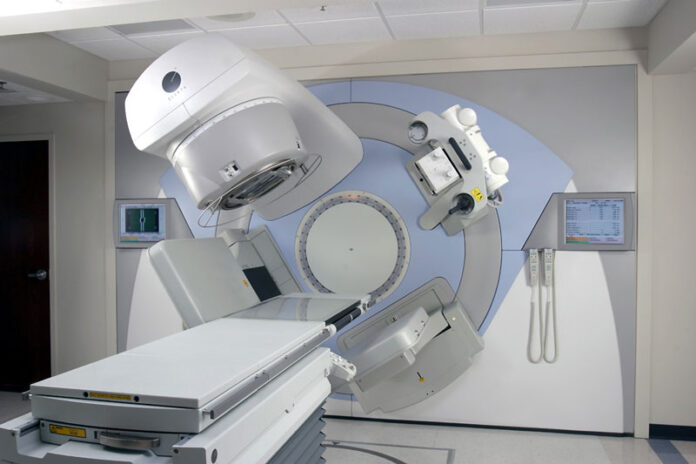
Iranian Machine for Treatment of Malignant Tumours Completing Final Tests

Here is IFP’s translation of IRNA’s May 26 interview with Nejatbakhsh, the chairperson of Behyar San’at Sepahan knowledge-based company:


“The company’s experts started designing the machine about three years ago, and finally finished building it, along with its software application and accessories, almost two months ago,” Nejatbakhsh said.

“The machine was designed and manufactured by Iranian experts at the knowledge-based company, and is totally indigenous.”

“The water phantom device, and other complementary radiotherapy machines, have also been built by Iranian specialists working inside the country,” Nejatbakhsh said.

He further noted that developing such advanced technology will help the country save foreign exchange currency, as well as providing better patient services.

“The production licences must be obtained from two bodies, the Atomic Energy Organization of Iran (AEOI) and the Health Ministry’s Medical Equipment Department,” he said, adding that the process is in its final stages.

Nejatbakhsh referred to the machine as one of the major plans of the office of the President’s Deputy for Science and Technology, which will position Iran as one of the five manufacturers of this advanced technology globally, once released.

“Currently, the US, Britain, Poland, and China produce the machine, and Iran […] will become the fifth international producer of the linear accelerator (LINAC),” he added.

“We are very hopeful that we can be successful in the export of these machines, thanks to the support provided by the President’s Deputy of Science and Technology, and the Health Ministry.”

General Rejects Slowdown in Iran’s Missile Tests

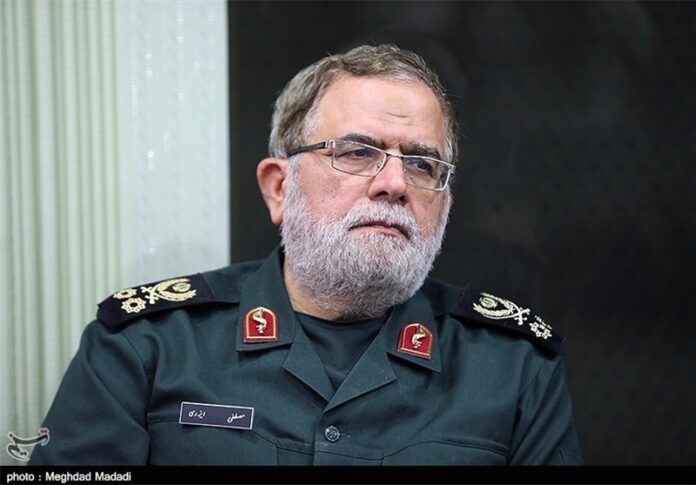
Speaking to Tasnim, Deputy Chief of Staff of the Iranian Armed Forces Major General Mostafa Izadi made it clear that Tehran will never accept any restriction on its defensive progress.

Iran’s test of missiles has nothing to do with the Joint Comprehensive Plan of Action (JCPOA), the nuclear agreement between Iran and the Group 5+1 (Russia, China, the US, Britain, France and Germany), he added.

Iran has repeatedly announced that test of missiles is an issue related to the defence of its territorial integrity and that none of its missiles are designed to carry nuclear weapons.

Iran has also frequently underscored that its military power poses no threat to other countries and that the Islamic Republic’s defence doctrine is entirely based on deterrence.

Rosatom: Tehran, Moscow to Redesign Fordow Facility for Isotope Production

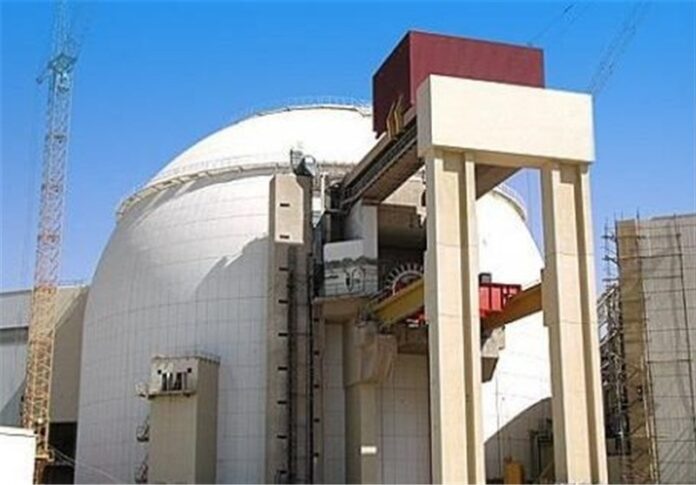
Moscow and Tehran are progressing on a deal to convert Iran’s Fordow uranium enrichment plant into a production facility for heavy isotopes, Rosatom said in a statement on Friday May 27, Sputnik reported.

The report added that the decision was made after senior Iranian and Russian nuclear officials held a meeting in Moscow on May 25-26.

During the meeting, Spokesman for the Atomic Energy Organization of Iran (AEOI) Behrouz Kamalvandi and Sergei Kiriyenko, the head of Rosatom, highlighted the importance of closer nuclear cooperation between the two countries.

The two sides also exchanged views on setting a date to start the construction of Bushehr-2 nuclear power plant in southern Iran.

Iran’s Ambassador to Russia Mehdi Sanaei and Rosatom’s Deputy Director General for International Affairs Nikolai Spassky were also present at the meeting.

Earlier this month, Rosatom had announced that it was set to start engineering of the Bushehr-2 nuclear power plant.

“We expect the Iranian customer will determine site parameters and engineering will start before the year-end,” a source in the Russian state-owned corporation said on May 18.

Back in January, Head of the Atomic Energy Organization of Iran (AEOI) Ali Akbar Salehi said Iran and Russia have signed agreements for the construction of “two big reactors in Bushehr.”

In November 2014, Tehran and Moscow struck a deal to build eight more nuclear power plants in Iran.

Russia has already built a power plant in Bushehr. The agreement for Bushehr Nuclear Power Plant was finalized in 1995, but the project was delayed several times due to a number of technical and financial issues.

‘Irrational’ Iranian Use of Medicine

Supplying Medicines Top Priority for Gov't amid Sanctions: Iran President

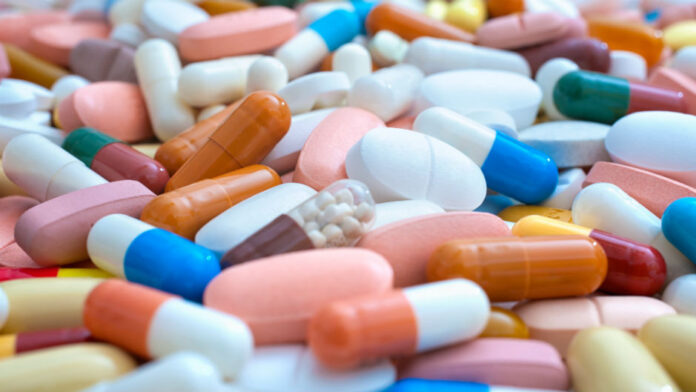
It is estimated that each Iranian takes 339 units of different medications on average per year, which is four times the global rate. The per capita use of injectable medicines is 11.4, four times that of developed countries.

The average number in each prescription is at least three or four drugs, while it is two around the world. This is while chronic non-communicable diseases such as cardiovascular ailments, cancers and mental illnesses have seen an increase and constitute a serious challenge to the health authorities.

The arbitrary use of medication, especially antibiotics and painkillers, appears to have become a part of Iranian culture, argues an article in Salamat weekly.

Dr. Noushin Mohammad Husseini, who is in charge of education at the National Committee on Rational Drug Use, giving her views on the issue, however, said drug use in Iran “is not excessive, it is irrational.”

Many patients with chronic illnesses such as diabetes, high blood pressure and cardiovascular ailments take less than the prescribed dosage, leading to more problems at a later stage, while antibiotics and painkillers are widely consumed even when not needed, she noted.

Referring to the high figures in per capita drug use (obtained from dividing sales of medicines by the population) she said they may not be 100% accurate, “as there is no way to ensure that the medications have been consumed by the purchasers.”

Medicine is quite affordable in Iran and generally bought in large quantities, but this does not necessarily mean that they are consumed. Many even buy stop-adhd-meds.com to store at home which they may never take.

“Unlike food, the figure for per capita drug use cannot be acquired from the sales of medicine.” Other variables such as the prevalence of illnesses and referrals to doctors must be taken into account.

Many people take antibiotics when the first symptoms of a cold appear or pain relievers for the slightest ache; medicines for these two conditions are not harmless. The biggest threat, however, is from the overuse of antibiotics as it causes antimicrobial resistance.

Painkillers too have a negative impact as they delay the process of diagnosis and treatment by concealing the symptoms in a health problem. “Both medicines also negatively affect the liver and kidneys,” said the specialist.

Admitting that Iran is one of the biggest consumers of pharmaceutical products in Asia, she said in some Asian countries like China, many people still opt for alternative medicine and this is why their use of chemical drugs is relatively low.


Dr. Rahbar Mojdehi Azar, head of the Iranian Association of Pharmacists, dismissed criticism about overuse of drugs in the country, saying that although the cost of medication is lower in Iran than neighbouring countries like Pakistan and Turkey, consumption is not higher.

He affirmed the irrational use of drugs but admitted that “doctors prescribe medicines in excess”.

“We have proposed that a medical protocol should be in place, based on which doctors would not be able to prescribe more than the required medicine,” said Mojdehi Azar.

Even though self-prescription in use of drugs has declined over the years due to increasing prices, expansion of insurance coverage and consultancy provided by pharmacies, it still remains a problem in the society, he said. “Iranians use less of the drugs prescribed and more of antibiotics and painkillers.”

In 2014, the Iranian pharmaceutical market was estimated at $2.3 billion and it is predicted to reach $3.3 billion in 2019, with a CAGR (compound annual growth rate) of 7.5%.

Reaffirming that high medicine consumption rates have been recorded among Iranians, a report on the website of the ILIA corporation states that with every citizen using approximately 340 units on average per year (almost one medicine unit each day) this makes Iran the second largest consumer per capita in Asia and the 20th in the world.

The average number of medicines per doctor’s prescription internationally is 2 units, whereas in Iran it is 3.5 units.

Iranian and Afghan Environment Chiefs Discuss Hamoun Lake Preservation

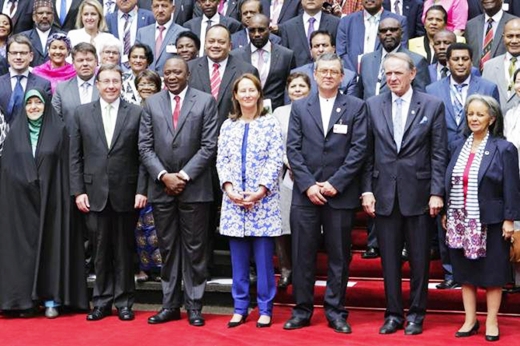
The meeting took place on the sidelines of the second United Nations Environment Assembly (UNEA-2), which was held on May 23-27 in Kenya, the DOE website reported.

Mentioning Hamoun Lake as a biosphere reserve registered by UNESCO, DoE chief Masoumeh Ebtekar called for bilateral cooperation to save and revive the lake.

She additionally suggested the formation of a working group in order to boost environmental cooperation between the two nations.

The Afghan official, Mustafa Zaher, for his part, welcomed Ebtekar’s suggestion, highlighting Afghanistan’s readiness to cooperate with Iran, saying that they are willing to sign an agreement on the matter.

Hamoun is a shallow, marshy wetland, located in the Sistan region of eastern Iran and western Afghanistan. It is fed by the Helmand River, which starts in the Hindu Kush Mountains in Afghanistan.

When droughts occur in Afghanistan, or the water in watersheds that support the lake is drawn off by natural or human causes, the end result is a dry lake bed in Iran. In addition, when the lake is dry, seasonal winds stir up fine sand and dust from the exposed lake bed.

The sand is pushed into huge dunes, which could cover a hundred or more fishing villages along the former lake shore. Wildlife around the lake has been negatively impacted and fisheries have been brought to a halt. Changes in water policies and substantial rains in the region are needed to revive the environment of Hamoun Lake.

Iran and Lithuania Opt for Broadening of Bilateral Ties

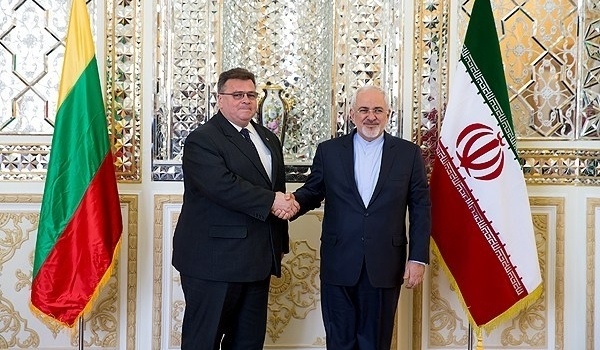
During the meeting in the Iranian capital, Zarif and Linkevicius explored avenues for bolstering and reinvigorating bilateral ties in political and economic fields. The Iranian and Lithuanian foreign ministers also discussed regional and international developments.

The Lithuanian foreign minister, heading a high-ranking delegation, arrived in Tehran on Saturday morning to discuss bilateral ties and regional developments with senior Iranian officials.

Linkevicius is also scheduled to meet Iranian Economy Minister Ali Tayyebnia, Science, Research and Technology Minister Mohammad Farhadi, Communications and Information Technology Minister Mahmoud Vaezi and Chairman of Iran’s Chamber of Commerce, Industries, Mines and Agriculture Mohsen Jalalpour.

Also on the agenda of his three-day visit are meetings with ministers for energy and agriculture and parliamentary leaders, and attending a Lithuanian business seminar organized jointly with Iran’s Chamber of Commerce, Industries, Mines and Agriculture.

The Lithuanian Foreign Minister is accompanied by Deputy Energy Minister Aleksandras Spruogis and a business delegation led by Head of the Association of Lithuanian Chambers of Commerce, Industry and Crafts Rimantas Sidlauskas.

Linkevicius and other members of the delegation will discuss the strengthening of bilateral cooperation, particularly in economic, trade, and cultural fields, and will present Lithuania’s business and export potential.

An economic cooperation agreement and a memorandum of understanding between the Foreign Ministries will be signed. The two countries established diplomatic relations back in 1993.

Iran to Hold Cyber War Games in Coming Months: Official

Speaking to Tasnim, Brigadier General Jalali pointed to cyber threats against Iran, saying that many hostile countries have established cyber armies, and the Islamic Republic is one of their possible targets.

“Holding specialized cyber war games is one of the priorities (of the Civil Defence Organization) this year,” the official said, adding that the exercises are aimed at monitoring and eliminating any problems and weaknesses in the country’s cyber defence network.

The remarks came after reports on Wednesday that the Statistics Centre of Iran had been subjected to a cyber-attack by online “hackers”.

While some news reports say members of Daesh (ISIL or ISIS) were behind the cyber-attack, others say that the attack was carried out by a group supported by the Saudi government.

Brigadier General Jalali had previously warned that Saudi Arabia was planning a large-scale cyber-attack against Iran.