Tuesday, December 30, 2025
Home Blog Page 4482

Maldives Severs Diplomatic Relations with Iran

“The Government of the Maldives has today decided to sever diplomatic relations with Iran. The Maldives believes that the policies that the Iranian Government pursues in the Middle East, and in particular, in the Arabian [Persian] Gulf region, is detrimental to peace and security in the region, which, in many ways, is also linked to the stability, peace and security of the Maldives,” the Maldives’ Foreign Ministry announced in a Tuesday May 17 statement, Sputnik reported.

Referring to the OIC (Organization of the Islamic Cooperation) summit held in Turkey last month, it further asserted, “The Maldives calls on Iran to show more commitment and tangible results in implementing the recommendations of the OIC,” the ministry said.

The decision came after Saudi Arabia cut diplomatic ties with Iran on January 3 following attacks on Saudi diplomatic missions in Tehran and Mashhad by angry people protesting the kingdom’s execution of prominent Shiite cleric Ayatollah Baqer Nimr al-Nimr.

The Maldives is heavily under the influence of the Saudi regime.

Prince Salman, who is also Saudi Arabia’s defense minister, earlier was on an official business visit at the invitation of Maldives President Abdulla Yameen, who was elected in November after two years of political turmoil.

Riyadh has already promised the Maldives a five-year soft loan facility of $300m (£181m), pledged last year when the country’s previous president visited Riyadh.

It is just one example of the growing role of Saudi investment in the archipelago, a factor which may have made the Maldives’ government unwilling to ruffle the feathers of Saudi Arabia’s rulers.

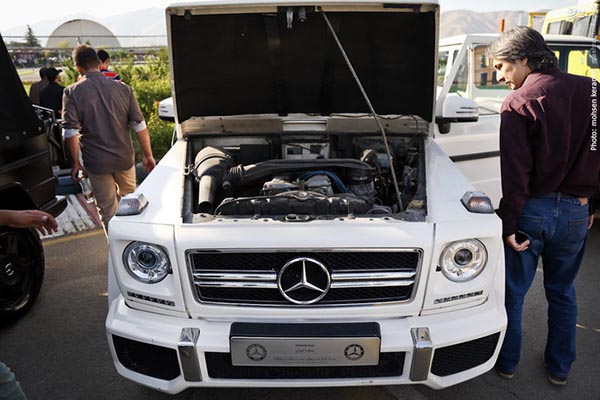
Iranian Cars to Enter North African Market

The MoUs were penned in Tehran on Tuesday May 17 in the presence of the Iranian Minister of Industry, Trade and Mines, Mohammad Reza Nematzadeh and Algerian Minister of Industry and Mines Abdeslam Bouchouareb.

The documents allow a number of Iranian automakers to gain a foothold in North Africa where they will manufacture cars, vans and trucks.

Iran’s second-largest carmaker SAIPA, along with other auto companies such as Zamyad Co. and Pars Khodro, won deals to introduce its products and transfer technology to Algeria.

On top of the auto MoUs, the two countries clinched other agreements on cooperation in areas of mining, exploration of natural resources as well as extraction and processing of raw materials.

Iran’s Industry Minister said that Tehran was also ready to pass on its energy expertise and petrochemical knowhow to Algeria as North African states enjoy considerable oil and gas resources.

On Monday, the Algerian Minister of Industry and Mines met with Iranian First Vice-President Es’haq Jahangiri where the two sides discussed a boost in bilateral relations.

Bouchouareb, who is in Iran at the head of 100 delegates from Algerian companies, said the trip has provided a good opportunity to get acquainted with Iranian capabilities and weigh plans for closer cooperation.

Last November, Algerian Prime Minister Abdelmalek Sellal also traveled to Tehran to discuss closer relations and cooperation in the fight against terrorism as well as other regional issues.

The two countries have in the past had limited economic exchange, mostly in the food processing sector.

Last year, Iran formed a tripartite partnership with Algeria and Italy to establish a date processing plant in the North African country.

That contract envisaged the construction of the date processing plant in Algeria where the factory is expected to conduct all stages of processing, including the production of sugar from dates and date seed oil.

Saudi Arabia’s Iran Spying Trial ‘Mockery of Justice’: HRW

Saudi prosecutors are seeking death penalty against 25 of the 32 people the kingdom has detained since 2013.

The men are accused of spying for Iran but the charge sheet, which Human Rights Watch said it had reviewed, contains numerous allegations that do not resemble recognizable crimes.

According to the New York-based rights group, the defendants are accused of “supporting demonstrations,” “harming the reputation of the kingdom,” and attempting to “spread the Shiite confession.”

The kingdom began trying the men in February 2016 at the Specialized Criminal Court in Riyadh.

According to Human Rights Watch, Saudi authorities have not permitted the defendants to meet with lawyers or provided all of the court documents necessary to prepare a defence after more than three years of detention and investigation.

“This trial is shaping up as another stain on Saudi Arabia’s grossly unfair criminal justice system,” said Sarah Leah Whitson, HRW’s Middle East director.

“Criminal trials should not be merely legal ‘window-dressing’ where the verdict has been decided beforehand,” she said.

According to the charge sheet, the defendants include 30 Saudis, one Iranian and one Afghan citizen.

An individual with direct knowledge of the case has told Human Rights Watch that all but one of the Saudi defendants are Shiite Muslims.

Local Saudi media outlets reported in March that some of the defence lawyers refused to participate in court proceedings.

Saudi Arabia’s Shiite citizens face systematic discrimination in public education, government employment, and permission to build houses of worship in the majority-Sunni country.

Riyadh has long been under fire at the international level for its grim human rights record.

Human Rights Watch said it had obtained and analysed seven Specialized Criminal Court judgments from 2013 and 2014 against men and children accused of protest-related crimes following demonstrations by members of the Shiite minority.

“In all seven trials, detainees alleged that confessions were extracted through torture, but judges quickly dismissed these allegations, admitted the confessions as evidence, and then convicted the detainees.”

Famous Artworks to Embellish Tehran for Second Year

Over 2,000 billboard ads will be replaced with images by Pablo Picasso, René Magritte and Henri Matisse and reproductions of traditional Persian miniatures, carpets, calligraphy and many more for ten days, turning the face of the city into a huge art gallery.

The images selected for the project, “A Gallery as Large as a City”, are paintings generally kept in world museums, director of Tehran Municipality’s Beautification Organization Issa Alizadeh said in a press release published on Monday May 16.

“There has been a slight change in the second edition of the project, making the notes on each image easier to read. We have also tried to avoid the repetition of one work on several billboards in the city,” he explained.

On displaying images selected from works by deceased artists, project manager Mojtaba Musavi said, “There needs to be more efforts to introduce works by deceased artists. Moreover, we have avoided showcasing works by living artists, since we need to observe the copyright law.”

Musavi also said that most of Tehran’s billboard spaces are run by private companies; however, they have agreed to dedicate their billboards to promoting culture across the city for a short period of time.

“Thankfully, people welcomed the idea last year, and we believe this project will help the citizens raise their knowledge of art and make them more familiar with artists and their works,” Musavi said.

“Our people are too busy to go to museums and galleries,” he said, adding, “So we decided to turn the entire city into a huge gallery.”


∗ Photo: A billboard displays “Garrowby Hill” by David Hockney during the project “A Gallery as Large as a City” in Tehran last year. (Mehr/Hossein Esmaeili)

Norwegian Envoy Calls for Developing Economic Ties with Iran

Norheim Aud Lise expressed the Norwegian private and state sectors’ interest in investing in Iran.

Describing the situation and investment potential in Iran, Khazaei emphasized developing bilateral economic ties in fields such as monetary funds, like the Oil Revenues Stabilization Fund of Norway with the National Development Fund of Iran, pension funds, financial cooperation and banking credit funds, water resource management, fisheries and aquaculture.

Products imported from Norway include electrical and electronic devices, refrigerating system equipment, drugs and medical devices, paper, ship engines and fish.

Iran exported oil, chemical products, semi-finished materials, steel products, dried fruit and carpets to Norway.

Oil CSR Conference Opens in Tehran

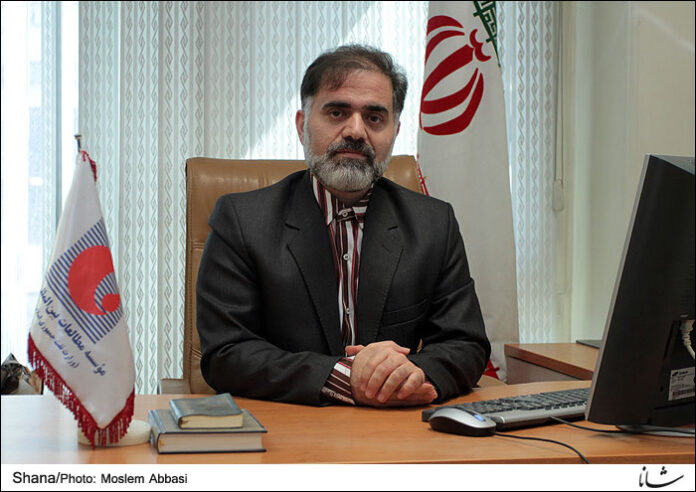
Iranian Minister of Petroleum Bijan Zangeneh, Minister of Health Hassan Ghazizadeh Hashemi, Deputy Petroluem Minister Kazem Vaziri Hamaneh, and a number of other senior Iranian energy and government officials attended the opening ceremony of the event at the conference hall of the Research Center of Petroleum Industry (RIPI).

The conference is aimed at promoting social responsibility issues in petroleum projects, and will present the experiences of oil and gas companies in being socially responsible.

Informing energy managers and executives about CSR issues is another goal of the conference. The two-day event wraps up on Wednesday.

ISIS Bulldozes Another Ancient Assyrian Site in Mosul

The palace dates back to the 7th Century BCE and was built by the Assyrian King Sennacherib, as reported by Basnews and covered by Entekhab news website.

The extremist group recently released pictures of the palace being bulldozed by the militants.

After the fall of Mosul in the hands of ISIS in mid-2014, the militants started to flatten historical and religious sites. Ever since, they have destroyed and looted numerous ancient locations.

Hezbollah’s Mustafa Mughniyeh to Replace Badreddine

According to a report by Asharq Al-Awsat, as covered by ISNA, well-informed Lebanese sources said that Mughniyeh is the son of Badreddine’s sister who was married to Hezbollah’s previous military chief, Imad Mughniyeh.

The source said that Mustafa was given the same name as his uncle because he was born when Badreddine was serving a jail term in Kuwait.

Mustafa Mughniyeh is a mysterious personality who has never appeared in the media based on a decision by the party to give him high-ranking posts, the sources said.

Unlike his brother Jihad, who on many occasions had appeared behind Hezbollah Secretary-General Sayyed Hassan Nasrallah, Mustafa has stayed away from the media glare.

He even steered clear of the media when his brother Jihad was killed in an Israeli raid in the Syrian region of Quneitra last year.

Israeli intelligence analyst Ronen Solomon says that Mustafa Mughniyeh is not known to have any photos. His photo wasn’t even taken when he was born in Tehran in 1987.

Mustafa became close to his uncle after his father’s death in a 2008 car bombing in Damascus.

“He has participated in several missions with the security agencies that fall under Badreddine’s command and held several security posts for top party figures,” said Solomon.

Iran’s SNSC Approves Taking Assets Seizure Case to ICJ

Mostafa Pour-Mohammadi said on a television talk show on Monday May 16 that bringing a complaint against the US at The Hague would be only one of the available ways to pursue the case in a serious juridical manner.

The minister stressed that Iran will also try other options, including “overt and covert political ways”, to follow up the case.

One of the other options, he explained, is to resort to the Iran-US Treaty of Amity, signed in 1955.

According to Pour-Mohammadi, Iran still considers it as a treaty that can be referred to, like when Americans hit Iranian oil platforms in the Persian Gulf during the Iraqi-imposed war in the 1980s.

Last week, Iranian President Hassan Rouhani had unveiled plans for filing a complaint with the ICJ against the US.

On April 20, the US Supreme Court upheld the Congress and President’s actions to hold Iran financially responsible for the 1983 bombing that killed 241 Marines at their barracks in the Lebanese capital, Beirut.

The ruling allows the families of the Marines and victims of other attacks that courts have linked to Iran to seize some $2bn in assets held in New York’s Citibank, belonging to the Central Bank of Iran (CBI), which had been blocked under US sanctions.

Senior Clerics Condemn Rafsanjani’s Daughter for Meeting Baha’i Figure

Faezeh recently met Fariba Kamalabadi, one of the seven leaders of the Baha’i cult in Iran, after she [Kamalabadi] was granted a furlough from prison after eight years. A photo showing the two, along with a number of other Baha’i figures, provoked severe criticism, especially among clerics.

Hashemi Rafsanjani
Ayatollah Hashemi Rafsanjani

Ayatollah Rafsanjani soon reacted to the meeting, saying his daughter had made a bad error, and urging her to make up for it.

“The deviant cult of Baha’ism was made up by the colonialists, and has always been known for its deviance. We have always renounced the cult, and we’ll do so in future,” he said.

Later, Grand Ayatollah Nasser Makarem Shirazi condemned Faezeh, and stressed that she should face prosecution.

“I was waiting to see whether anyone would protest at this event or not. Finally, I heard her father make a mild objection. This is still promising, but we should ask why others kept silent,” Makarem Shirazi said in an address to his seminary students in Qom.

Makarem Shirazi
Grand Ayatollah Nasser Makarem Shirazi

“I’m opposed to this deviant cult, not just because of their enmity towards Islam, but because they are mercenaries of the US and Israel,” he went on to say, according to a report by Fars.

“The most important bases of Baha’i cult are located in the US and Britain… The enemies of Islam have used the cult as a means [against Islam] throughout its history,” Makarem Shirazi added, warning that such moves [by Faezeh] might be aimed at helping them be recognized in Iran.

Ayatallah Mamdoohi
Ayatollah Hassan Mamdouhi

Ayatollah Hassan Mamdouhi, another senior cleric, also described the move by Faezeh as very unpleasant and improper, saying that such meetings are against Islamic rules.

“These people are spies and enemies of the Iranian nation… The meeting is condemned, and officials should take appropriate legal measures against it,” he said, stressing that the meeting was treason against the Iranian nation, and its religious and national values.

More than 1,500 businessmen and shopkeepers in Tehran’s grand bazaar also signed a statement and petition to voice their protest at the meeting.


Faezeh Defends Herself, Saying She Did It for Sake of Human Rights

Faezeh said in a television interview with Euronews Persian that she had only visited “a friend”.

“It was a normal and harmless visit. I just visited a friend, that’s all,” she said.

She also told the opposition website, IranWire, “My relations with Fariba and others were friendly. I see this as a human rights issue. I believe that Baha’is should be allowed to enjoy all human rights, just like other citizens. They have no rights. It does not matter that I am a Muslim and they are Baha’is, or which religion is good and which one is bad. This is not the question. The question is human rights. And unfortunately certain sections of our society are denied basic rights. This is not acceptable — and Islam does not accept this discrimination either. There are many statements in Islam and Koranic verses that refer to this. We have the advice that Imam Ali gave to his companion, which says you have to observe the rights of those who do not share your faith. So what we see here is not Islamic behaviour. This is what we are witnessing in the Islamic Republic.”


This Is Not Human Rights

In its Tuesday editorial, Jomhouri Eslami newspaper referred to Faezeh’s remarks about the importance of civil rights in Islam, and stressed that Imam Ali’s advice applied to followers of other religions and non-hostile figures, not the followers of Baha’ism, which it referred to as a deviant cult created by colonialists.

Jomhouri Eslami Newspaper“In the Islamic Republic of Iran, even followers of polytheism are allowed to live freely, and no one takes any action against them as long as they do not disturb the Establishment. If these people, or even the most religious Shiites of Iran, happen to be mercenaries or spies, [… ] the law requires taking action against them. Baha’i elements are the same, and the Establishment decides about their civil rights and other affairs based on certain conditions,” the editorial added.

It also stated that the meeting damages Ayatollah Rafsanjani’s reputation and emboldens his opponents.

It went on to say that all of the outcry, using the pretext of Faezeh’s meeting, was aimed at destroying Ayatollah Rafsanjani, the pillar of the Islamic Revolution, and thus, his children should beware of their actions.


Cooperation with Baha’is against National Security: Judiciary Chief

In one of the most recent criticisms, Ayatollah Sadeq Amoli Larijani, the Iranian judiciary chief, slammed Faezeh’s move, saying that those close to clerics and officials with the Islamic Establishment should be ashamed of such actions.

Amoli Larijani“They should know if such socially inappropriate moves lead to criminal acts, we will take severe actions against them,” he said, according to the Judiciary website.

Larijani went on to say, “One should ask why the centre of Baha’i cult is located in Israel, if they are not the spies of Iran’s enemies,” stressing that cooperation with such networks is against the national security of Iran, and will be strongly punished.


Secrets behind Faezeh’s Meeting with Leaders of Israeli-Affiliated Movements

Ahmad Salek, an Iranian MP and the head of the Parliament’s Cultural Commission, also criticized the move in a Tuesday press conference, saying that the secrets behind the meeting should be clarified.

Ahmad SalekHe further noted that supporting the Baha’i cult is a crime and the judiciary should prosecute her.

“More than 348 satellite channels covered Faezeh Hashemi’s meeting with the Baha’i leader and used it as an excuse against the Islamic Republic,” he said, stressing that he is responsible, as the representative of Iranian people, for protesting her action in defence of Iranian people’s rights, Tasnim reported.

“If the meeting was just a gathering of two friends, she shouldn’t have publicized it,” Saleh said, stressing that such a meeting should be interpreted as the demonstration of her official stance towards the Baha’i cult.