Tuesday, December 30, 2025
Home Blog Page 4481

Leader: Some Regional Governments Betraying Muslims

“Some Islamic governments are betraying their people and the Islamic Ummah, and paving the way for American influence,” the Leader told participants at an international Qur’an competition in Tehran on Wednesday May 18.

“Certain (governments) in the Islamic world, instead of clinging to the Qur’an, are clinging to Taghut,” Ayatollah Khamenei said, using the Arabic word for idolatry or the worship of anything except Allah.

“America is a major Taghut and the Great Satan,” the Leader added.

“Those who are implementing American policy in the region are adhering to Taghut and do not have disbelief in Taghut,” Ayatollah Khamenei added.

The Leader also said Takfiri terrorists and Wahabbi affiliates are doing the enemy’s bidding by “consigning the Palestinian issue to oblivion” through their reign of terror in the Middle East.

“Satanic powers are scared of Islam and the 1.5bn-strong Muslim community,” the Leader said, adding tremendous sums of money are being spent to harm Islam and Muslims but that “We have no doubt victory belongs to Islam.”

Ex-IRGC Official: Iran’s Military Power in Some Areas Comparable to US and Russia

“We outdo some major world countries not only in the missile filed, but also in the sphere of armored weaponry, drones, submarines, and all parts of the military industry,” Brigadier General Mohsen Rafiqdoost said on May 18.

He underlined that Iran’s capabilities in certain fields are comparable with those of the US and Russia.

Iranian military experts and technicians have in recent years made great headway in manufacturing a broad range of indigenous equipment, making the armed forces self-sufficient in the military sphere.

“One of the benefits of the [Iraq-imposed] war … was that it laid the groundwork for us to promote our defence power, relying on the country’s younger generation rather than needing foreign facilities,” Rafiqdoost said.

Iran has made it clear that its military power poses no threat to the regional countries, saying that the Islamic Republic’s defence doctrine is entirely based on deterrence.

Families, Including Women, Should Be Allowed into Stadiums: Deputy Minister

IFP: The controversial ban on women’s attendance in Iranian stadiums has long been debated in Iran. In some cases, including in men’s volleyball games in Tehran a few years ago, women were allowed to attend, but now it has been declared as illegal, despite domestic and international criticism.

An Iranian official has talked about the measures being taken to remove the ban, or at least ease it for Iranian women. Here is IFP’s translation of a report by ISNA.


“Women’s attendance in sports venues is what all women in [Iranian] society want, not just those working in sporting fields,” Shahriyan said in a meeting also attended by VP for Women’s Affairs Shahindokht Mowlaverdi.

“We have studied the presence of women in sports venues, and separated the fields where women can watch the games from other fields,” she went on to say.

“It is not necessary that women go to stadiums to watch events such as wrestling and swimming, but their attendance in other fields is possible, and the grounds should be made ready for this.”

She stressed that other bodies should also cooperate to facilitate women’s attendance, but at the same time noted that it takes time to make the required arrangements.

Families, including women, attended men’s Taekwondo games a few months ago, and no problem was reported, she said, adding that the focus is on the presence of families in stadiums.

“For example, a mother might like to watch her child’s game along with her husband. In such cases, it is necessary to pave the way for the presence of families in stadiums,” the Iranian official added.

Iranian and Pakistani Cities to Restart Rail Freight Transport

The agreement was reached during a trip to Pakistan by the regional director of Iran’s Rail Transportation Co., Seyyed Mostafa Davoudi.

The two sides agreed to recommence rail freight transport between Zahedan, the provincial capital of Sistan-Baluchistan in Iran’s southeast, and Quetta, the main city in Pakistan’s southwestern Balochistan Province.

The deal reopens a route for weekly freight train transport, one which has mostly been blocked over the past few years.

Back in March, Iranian President Hassan Rouhani paid a two-day state visit to Pakistan. His trip was aimed at enhancing bilateral trade and economic ties with the neighbouring country.

President Rouhani described Iran’s relations with Pakistan as strategic, saying that the two nations shared much common ground.

Tehran and Islamabad then agreed to adopt necessary strategies and make use of their capacities to increase the volume of bilateral trade.

Speaking at a business conference with Rouhani on March 26, Pakistani Prime Minister Nawaz Sharif said Islamabad and Tehran had signed an agreement to increase their annual trade volume to $5bn by 2021.

Trade between Pakistan and Iran fell to $432m in 2010-11, down from $1.32bn in 2008-09, according to the Trade Development Authority of Pakistan.

In the presence of the Iranian president and the Pakistani premier, the two countries’ officials signed six documents for cooperation in different fields, including trade and commerce, insurance, culture, higher education, health and medicine.

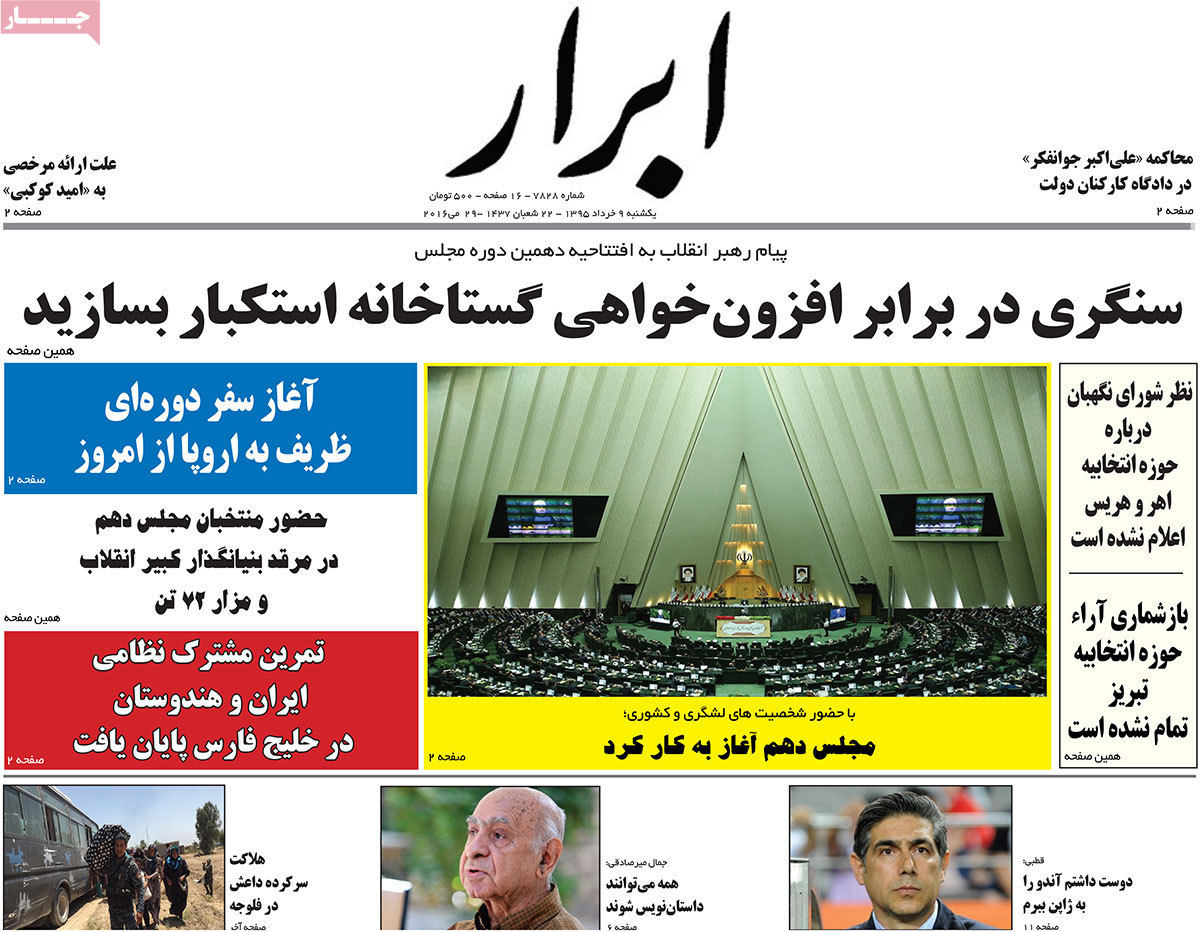
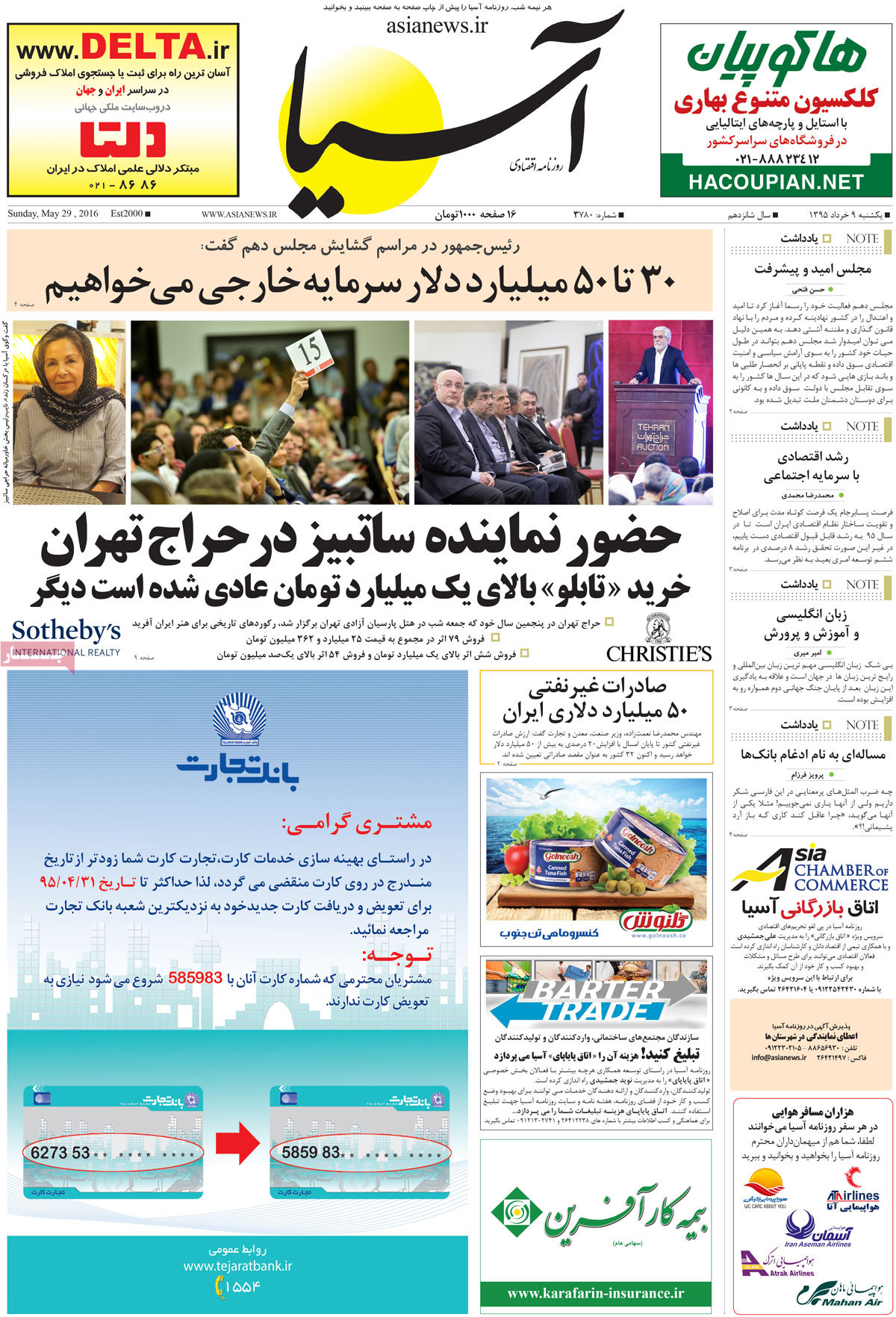
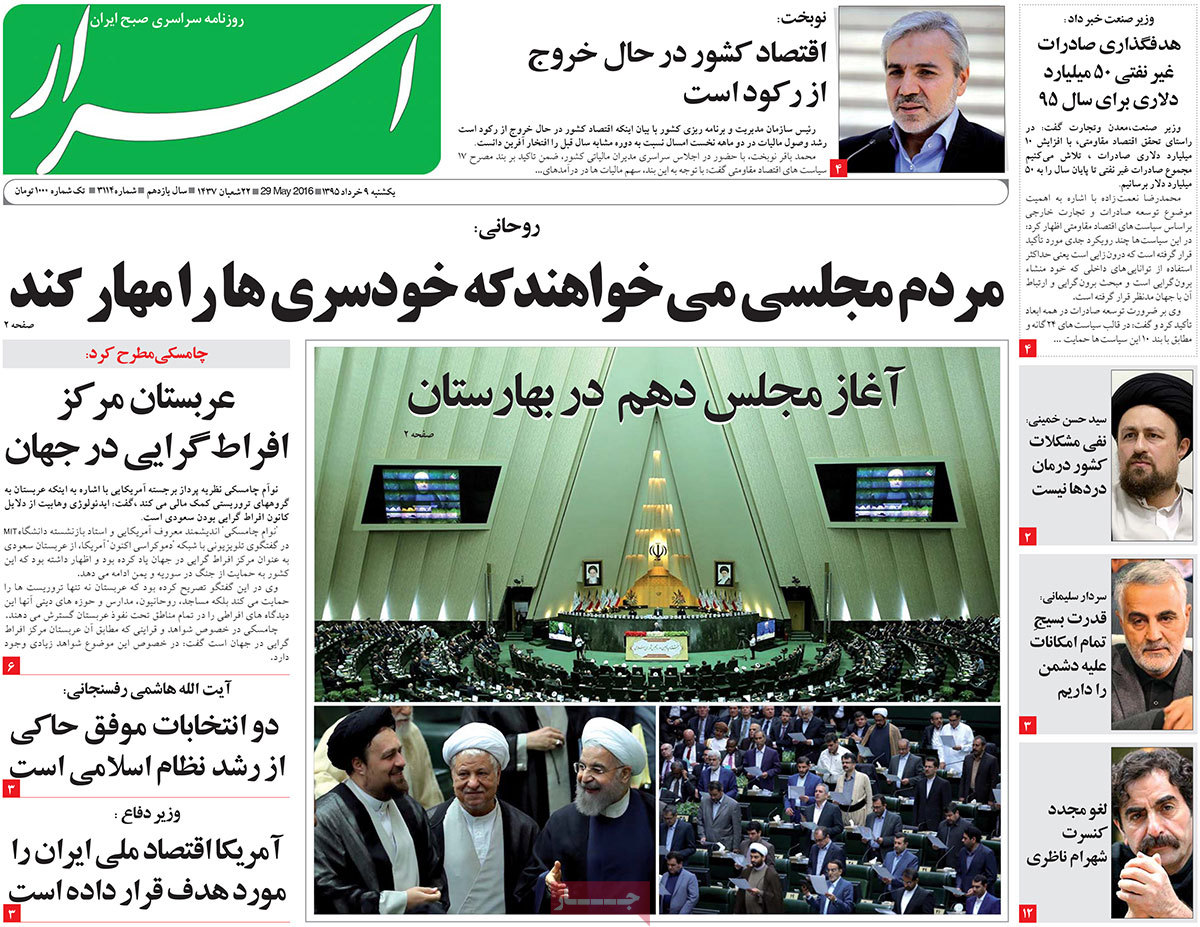
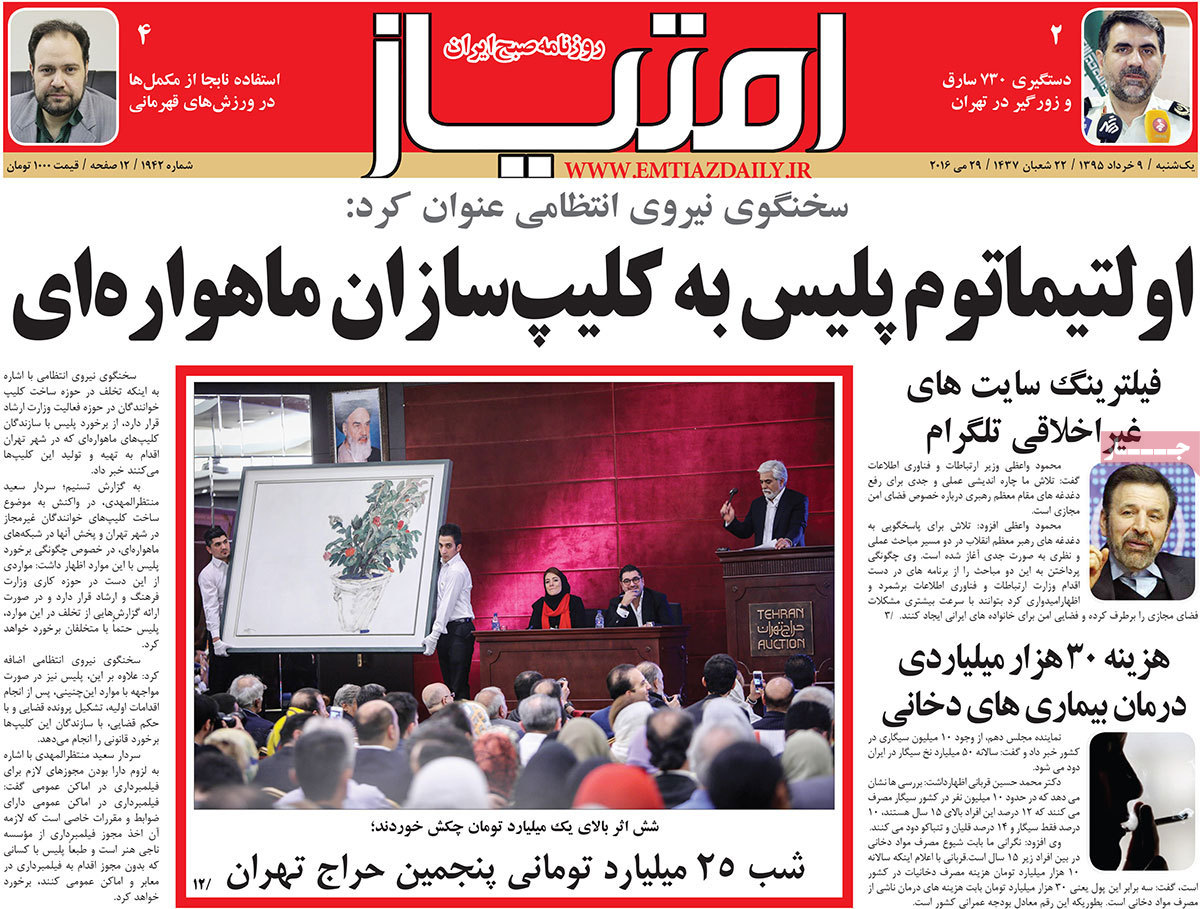
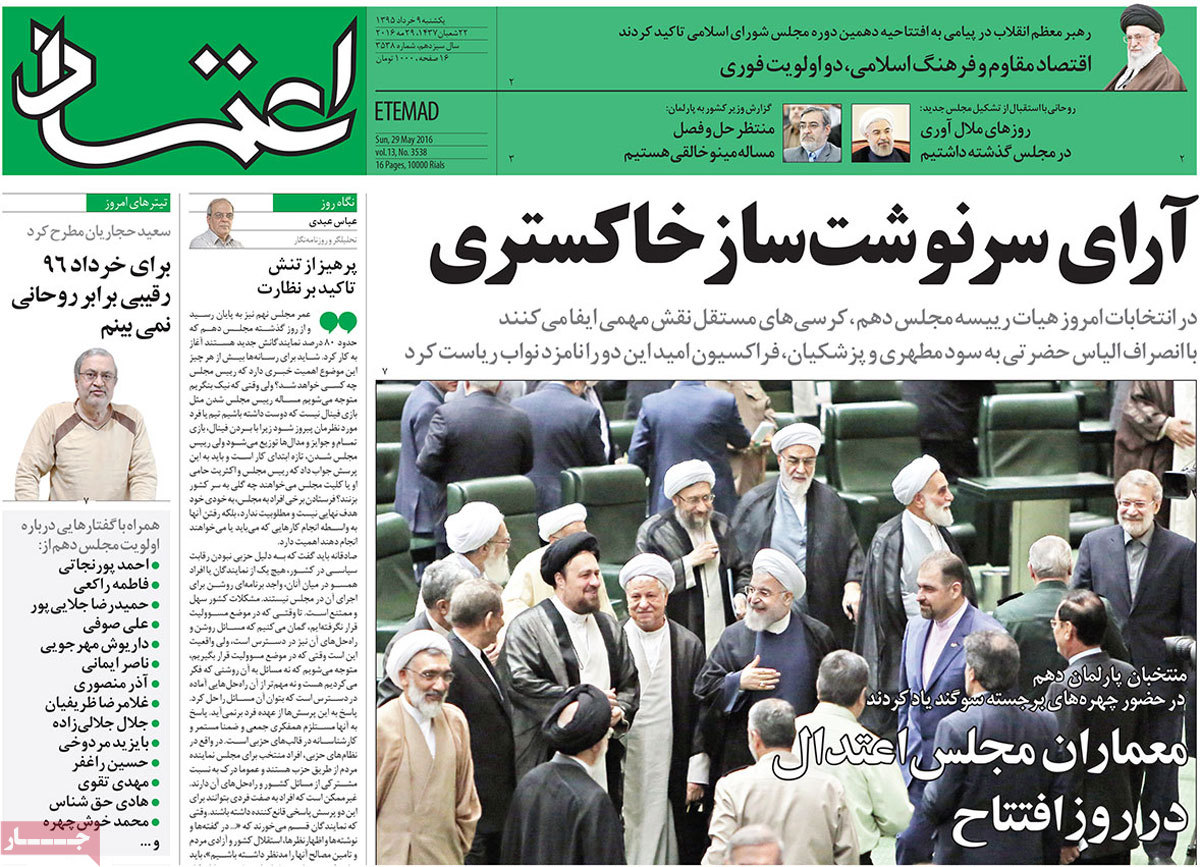
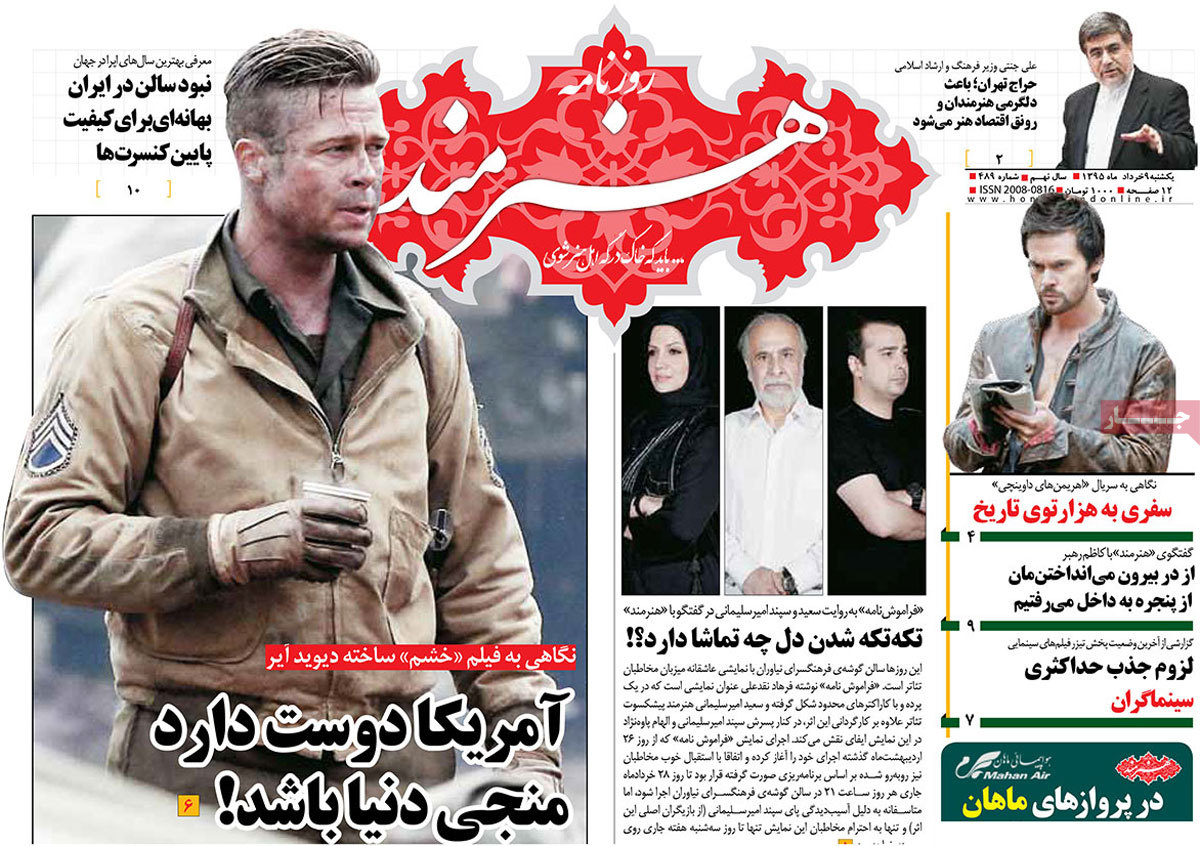
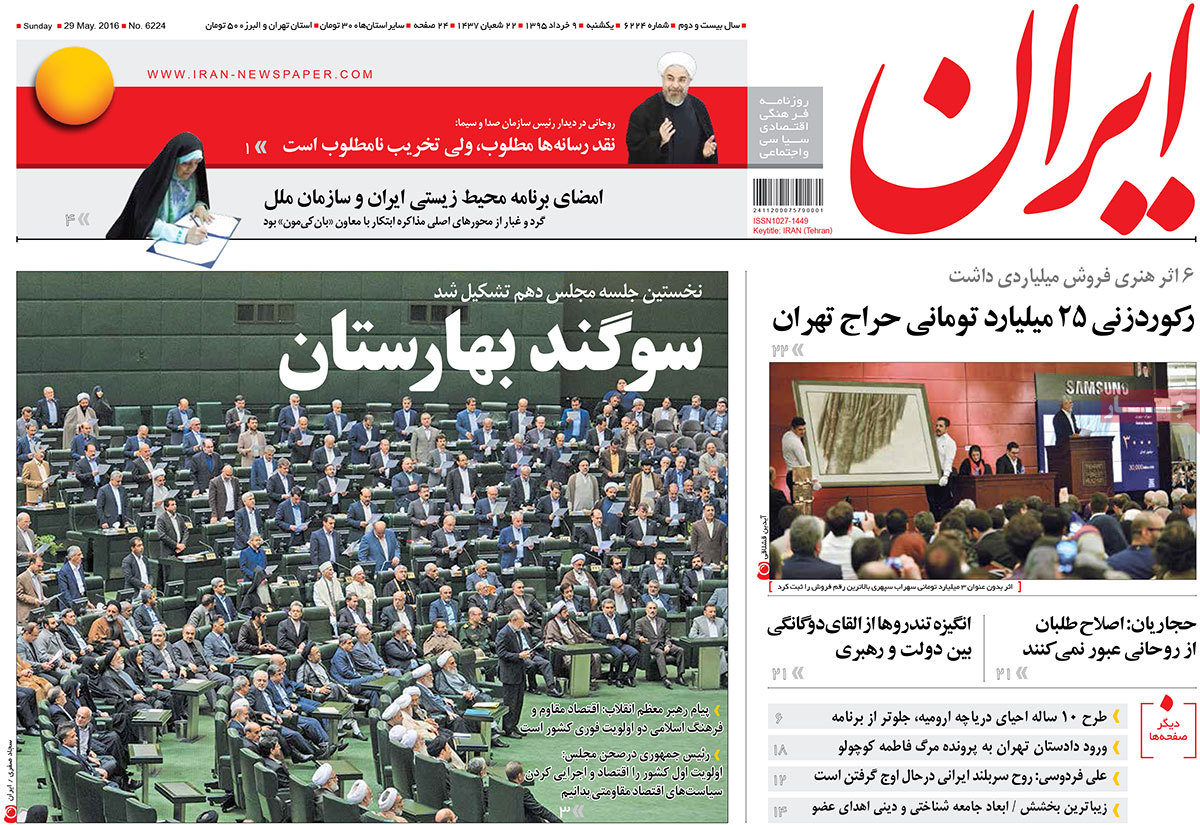
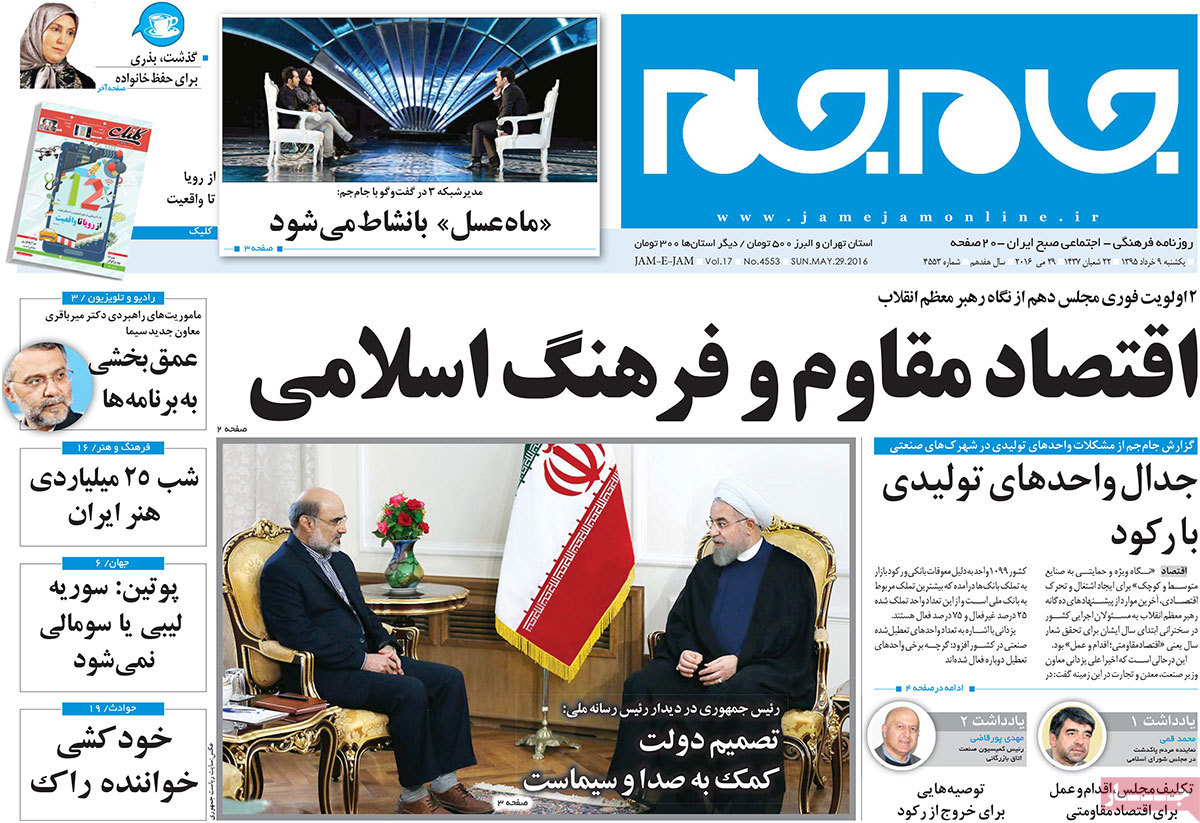
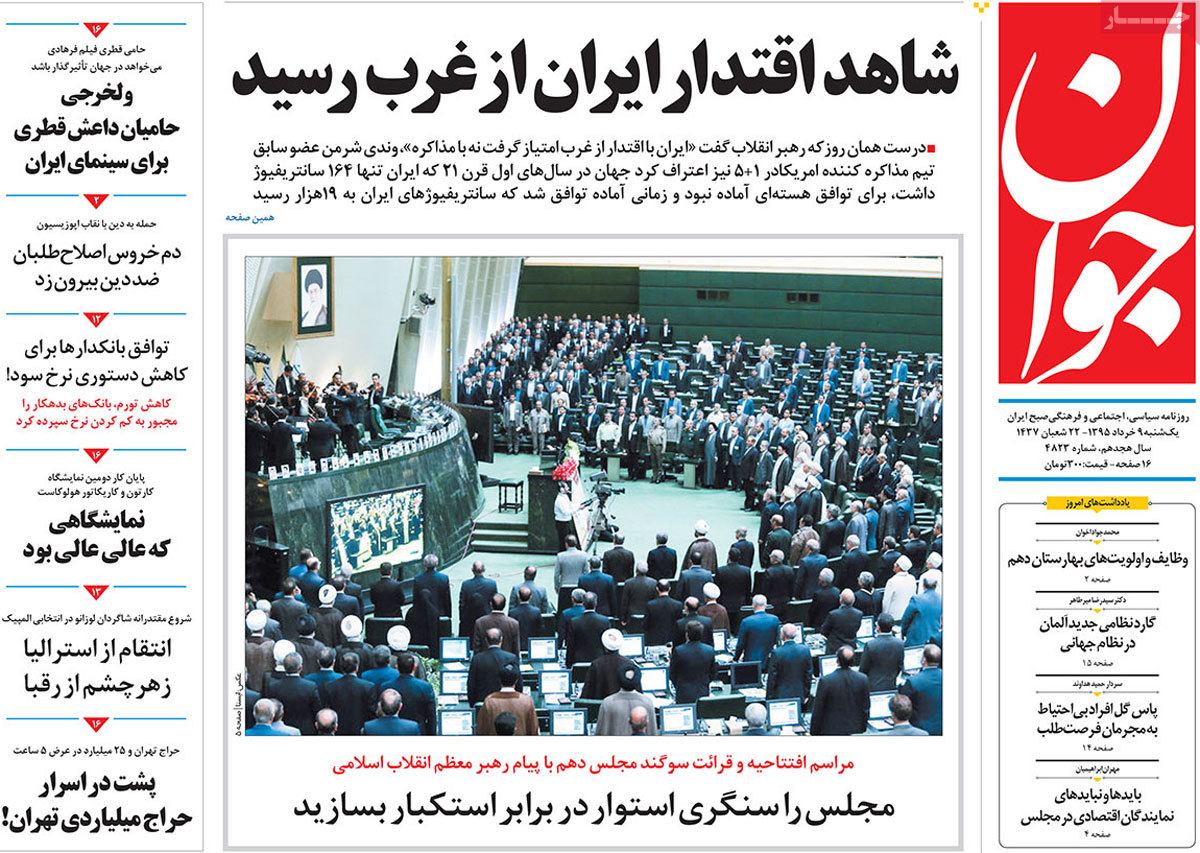
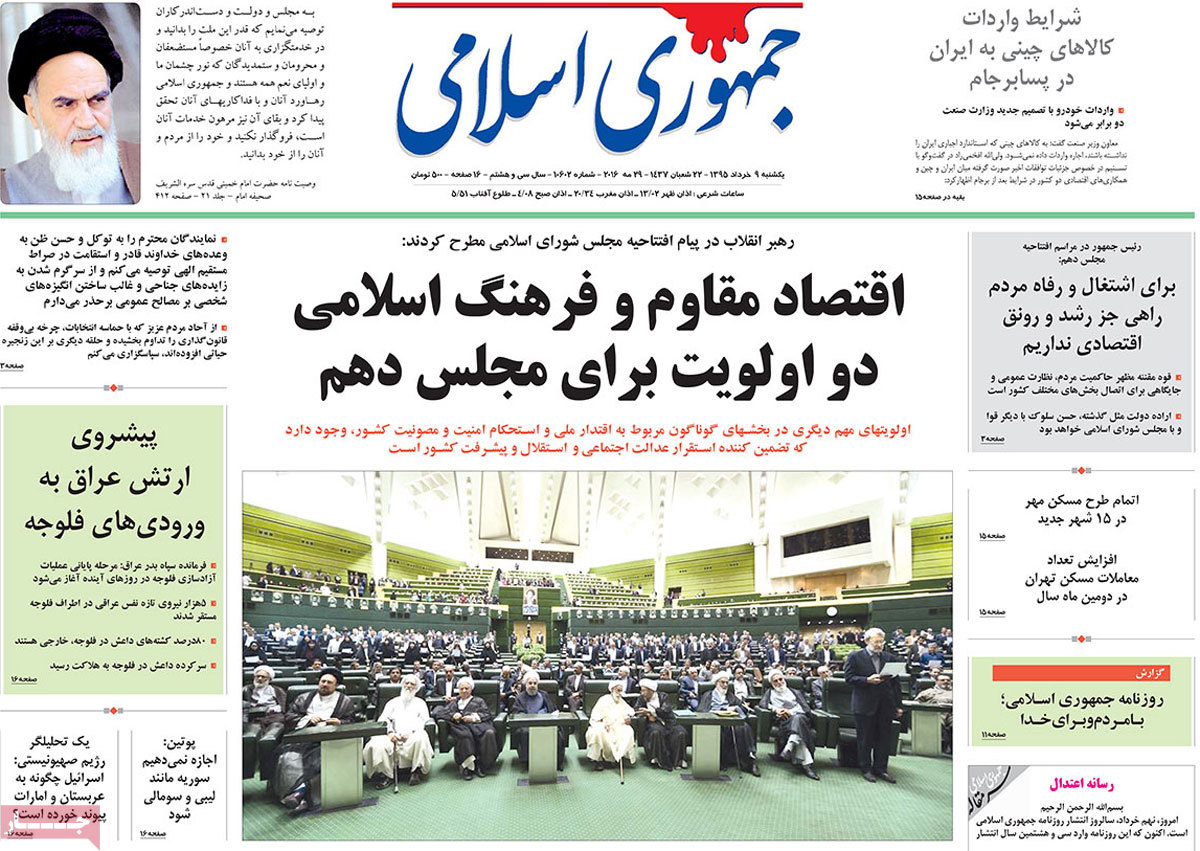
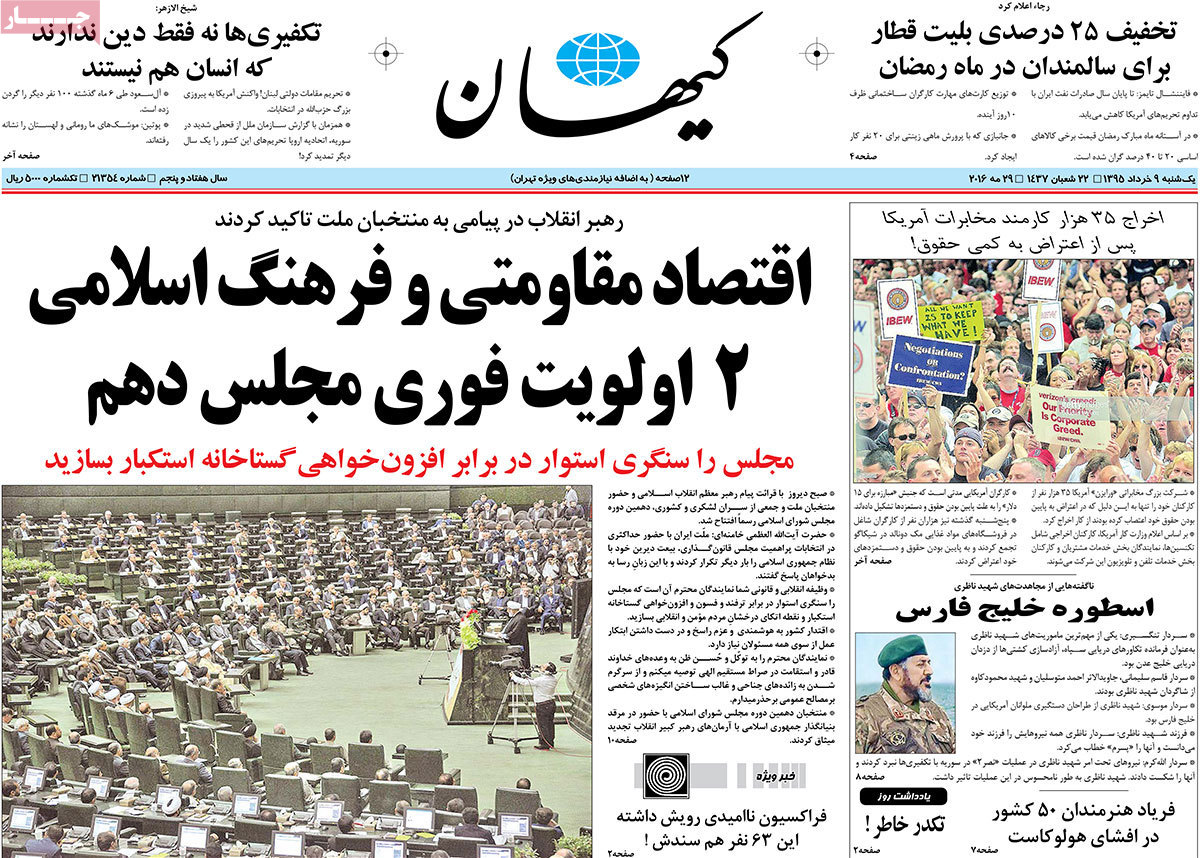
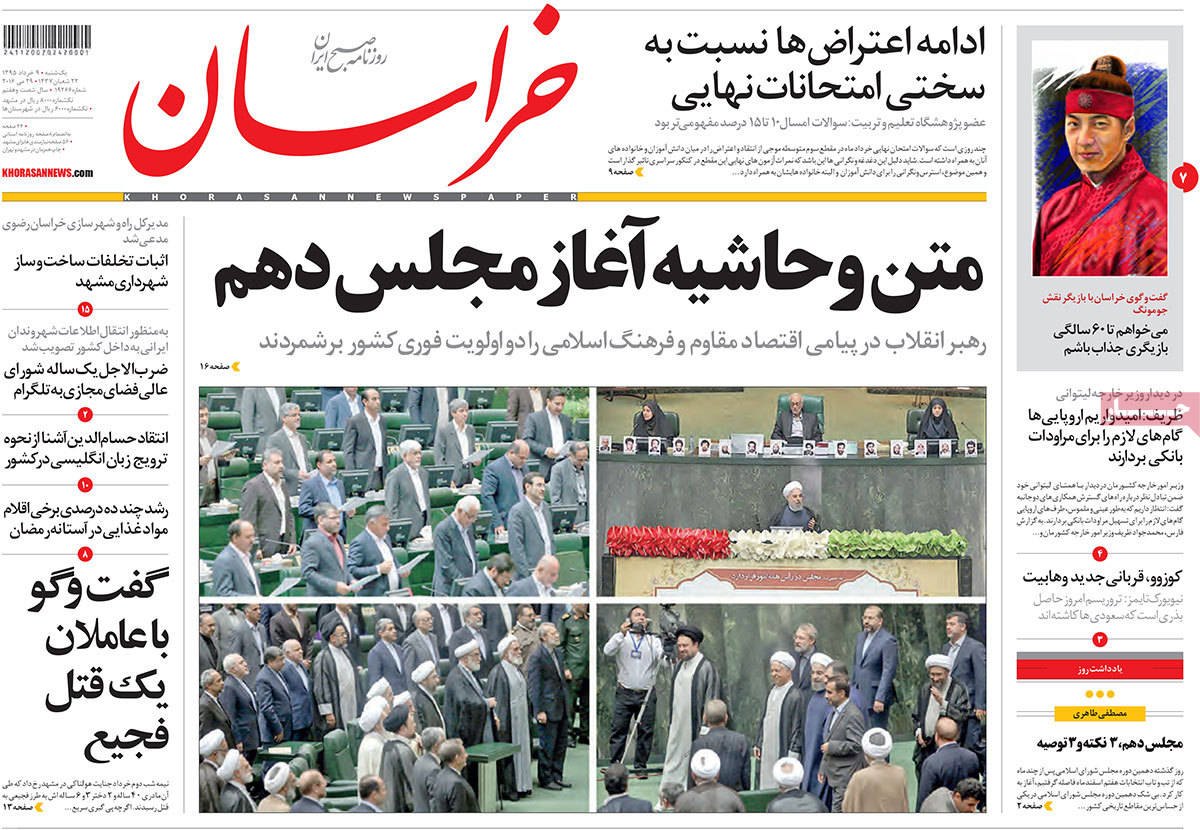
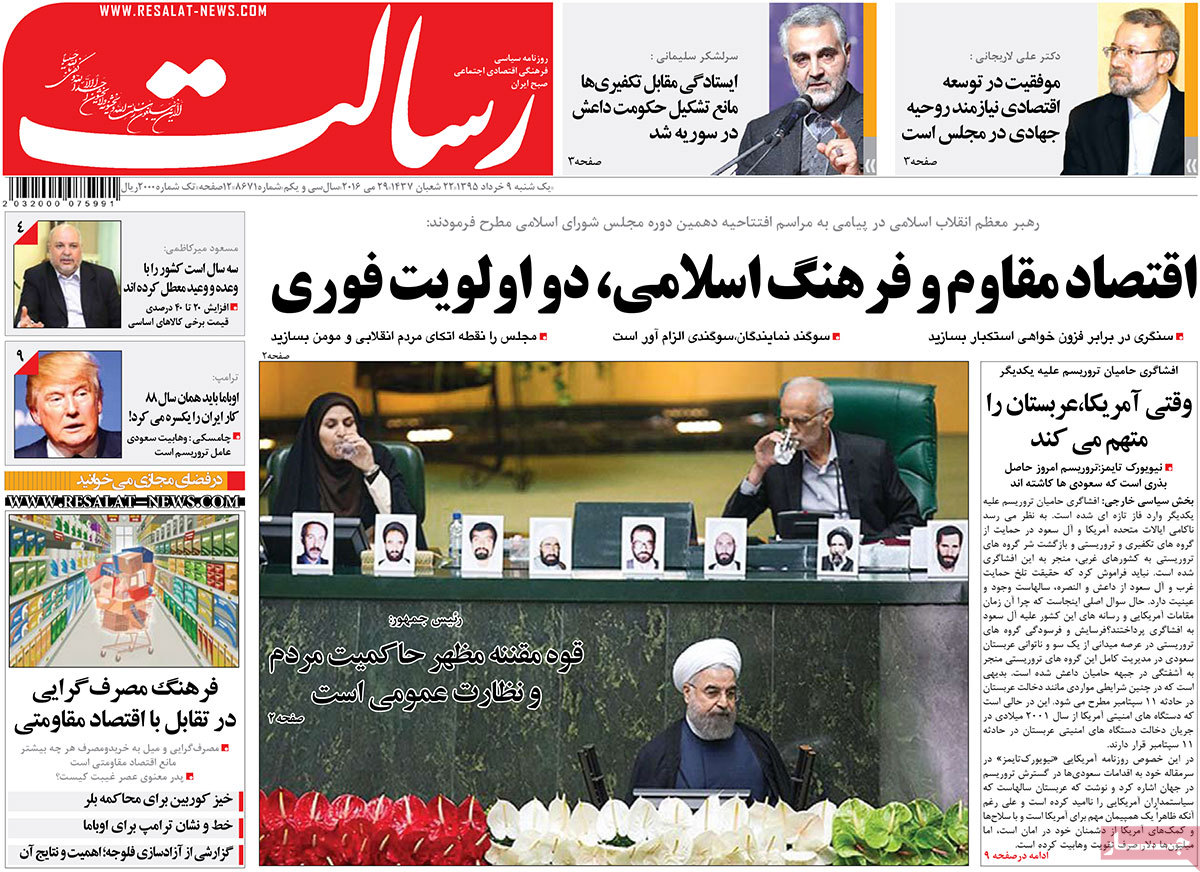
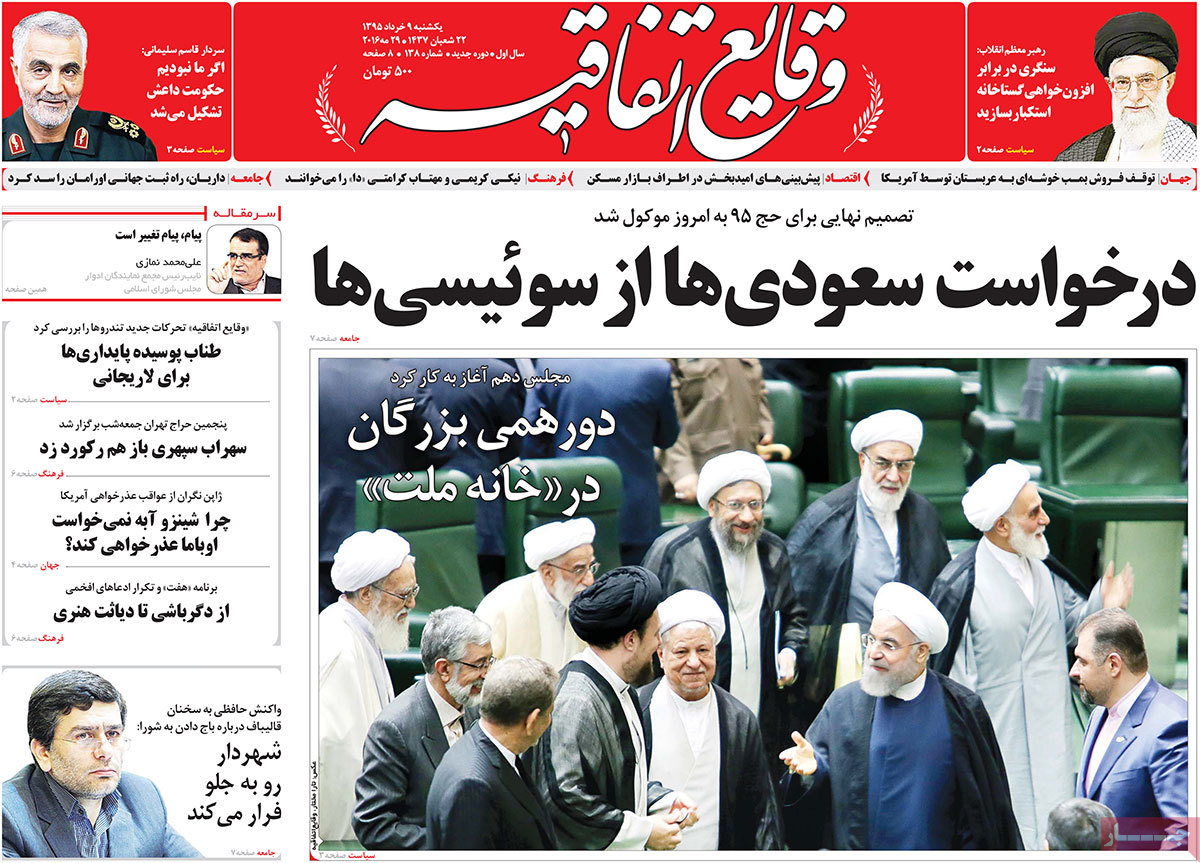
A Look at Iranian Newspaper Front Pages on May 18

Iran Newspaper front pages

Iran’s Parliament on Tuesday discussed a plan on receiving compensation from the US over its moves against the country. One of the MPs urged the government to seize US assets in the Persian Gulf, but other lawmakers were opposed to the proposal as it might make the Persian Gulf seem insecure. This was one of the hot stories in Iranian newspapers on Wednesday.

The Iranian press also covered a farewell ceremony for the previous IRIB chief Mohammad Sarafraz, in which the new chief Abdolali Ali Asgari was also presented.

An ongoing visit to Tehran by the Croatian President Kolinda Grabar-Kitarović was also focused on by many media sources.


Abrar:

1- Parliament Rejects MP’s Plan to Confiscate US Assets in Strait of Hormuz

2- Republicans Are Either Lying or Have False Information about Nuclear Deal: White House


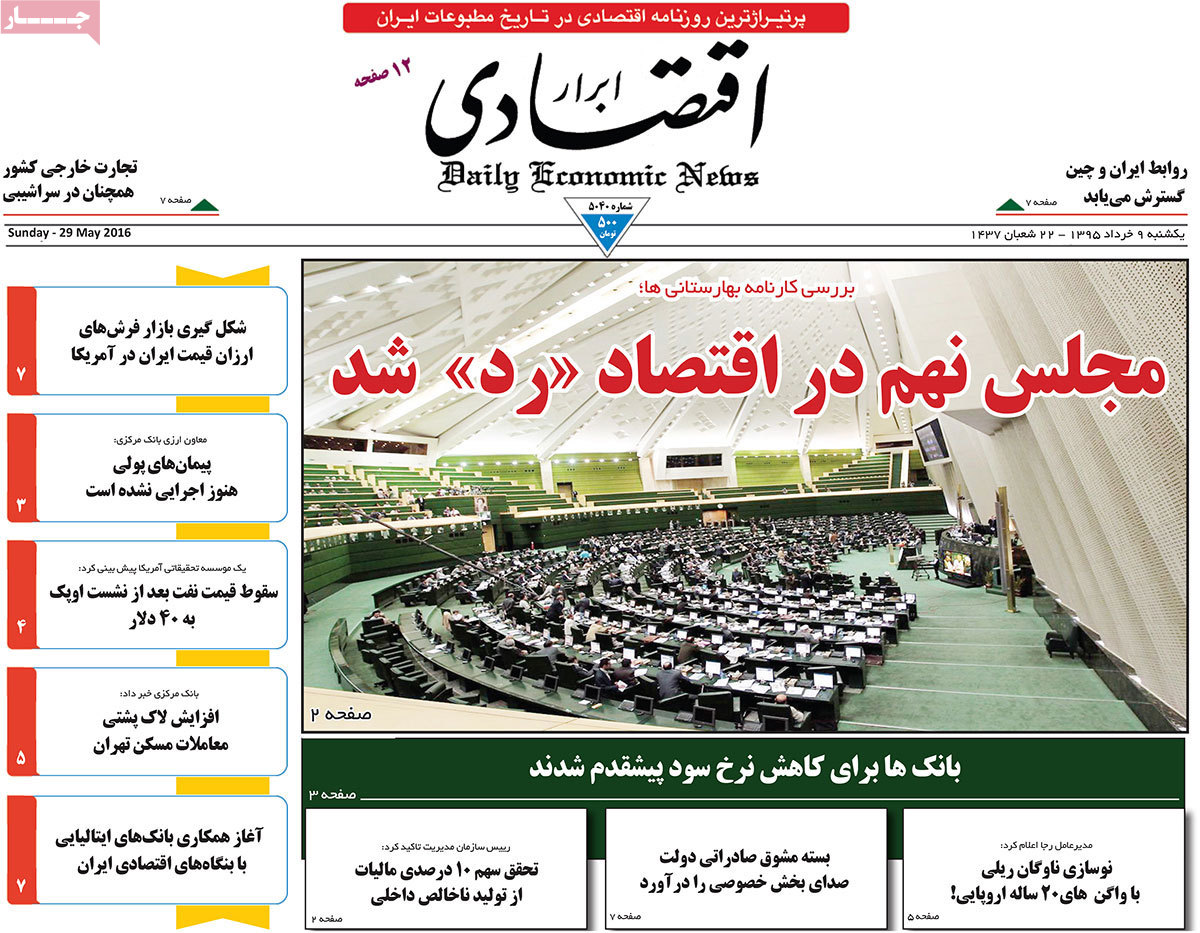
A Look at Iranian Newspaper Front Pages on May 18


Abrar-e Eqtesadi:

1- IMF Ready to Standardize Iran’s Banks

2- Car Industry Has a Turnover of $33bn: IKCO Chief


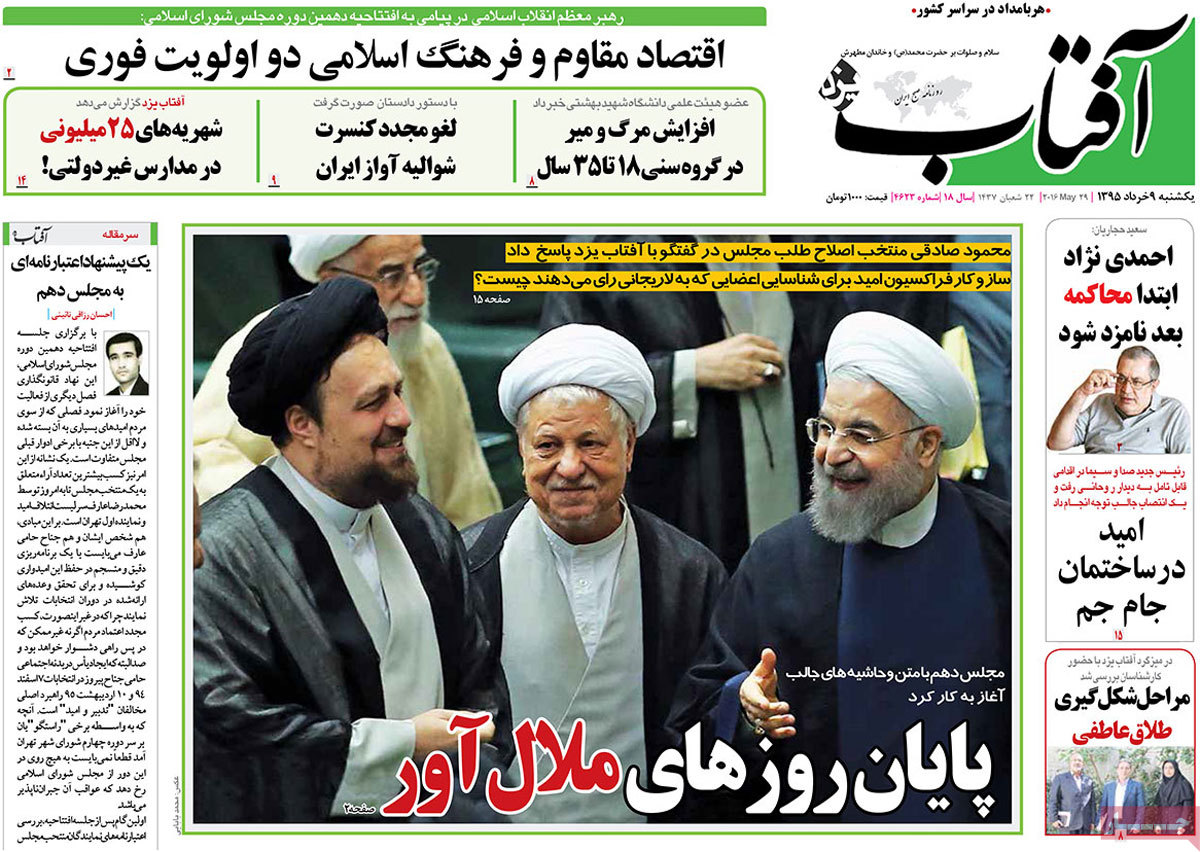
A Look at Iranian Newspaper Front Pages on May 18


Afkar:

1- IORA [Indian Ocean Rim Association] Summit [in Chabahar] Golden Opportunity to Introduce Iran

2- We’ll Pursue US Compliance with Its JCPOA Commitments: Zarif


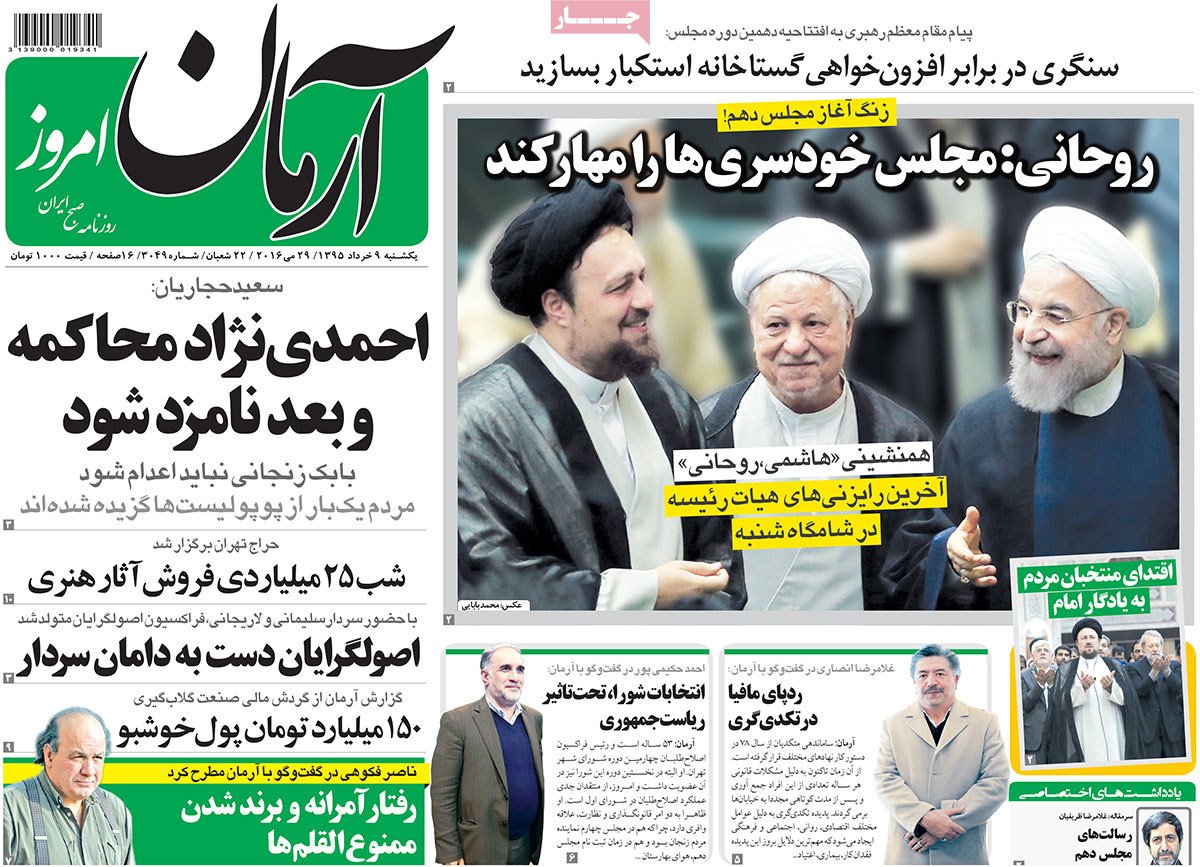
A Look at Iranian Newspaper Front Pages on May 18


Arman-e Emrooz:

1- Zarif and Kerry Meet to Discuss Proper Implementation of JCPOA

2- President Rouhani Dissatisfied with Cancellation of Concerts: Spokesman

3- Trump or Clinton No Different for Iran: Analyst


A Look at Iranian Newspaper Front Pages on May 18


Asia:

1- Indian PM to Visit Tehran on May 21

2- Croatia, Iran’s Gate to Europe

3- US Committed to Follow Through Termination of Iran Banking Sanctions: Treasury Secretary


A Look at Iranian Newspaper Front Pages on May 18


Asrar:

1- Larijani [Parliament Speaker] Slams IRIB’s Approach towards JCPOA

2- Transfer of Water from Caspian Sea to Lake Urmia Cancelled

3- Iranian Courts Rule that US Should Pay $50bn [Compensation]: Deputy FM

4- 40% Increase in Iran’s Medical Tourism


A Look at Iranian Newspaper Front Pages on May 18


Ebtekar:

1- New Chapter Opened in Tehran-Paris Ties: Rouhani

2- Reformist “Faction of Hope” Decides Its Board Members

3- Demand for Compensation with Empty Hands! [An analysis of a recent motion passed by the Parliament to receive compensation from the US for its hostile moves]

4- 20% of Iran’s Population Will Be Elderly by 2050


A Look at Iranian Newspaper Front Pages on May 18


Emtiaz:

1- 150 Historical Sites to Be Renovated This Year

2- 18m Iranians Are Socially Marginalized

3- Video Games Can Lead to Sterility

4- Rate of Female Drug Addiction Doubled


A Look at Iranian Newspaper Front Pages on May 18


Etemad:

1- ISSG Summit Ends with Repetition of Statement

2- Exhibition Opened to Display Historical Seals Returned from US

3- A Bitter End for IRIB


A Look at Iranian Newspaper Front Pages on May 18


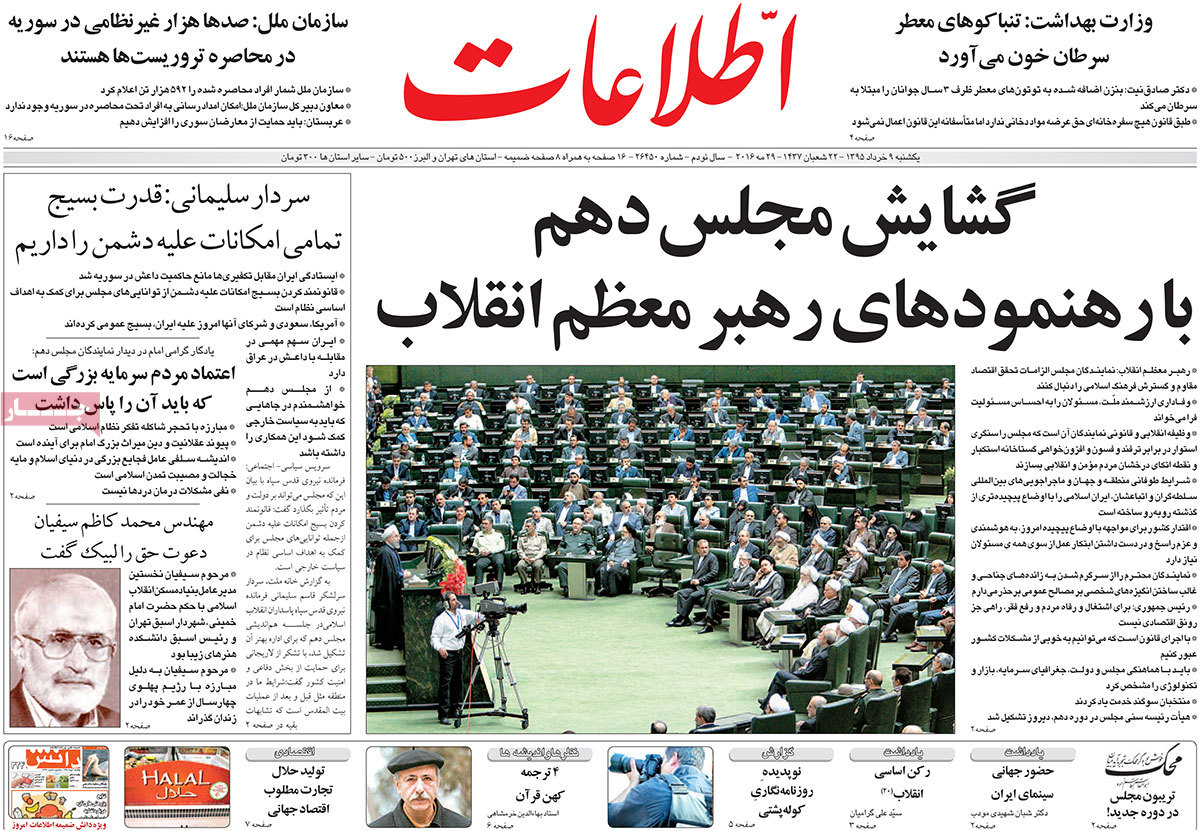
Ettela’at:

1- Iran’s Syrian Crisis Position Was Always Political Resolution: Zarif

2- New Chapter Opened in Iran-Europe Ties, Rouhani Says in Meeting with French and Slovakian Ambassadors

3- Croatian President Welcomed in Tehran

4- Iran’s Rights Being Pursued in The Hague: Justice Minister


A Look at Iranian Newspaper Front Pages on May 18


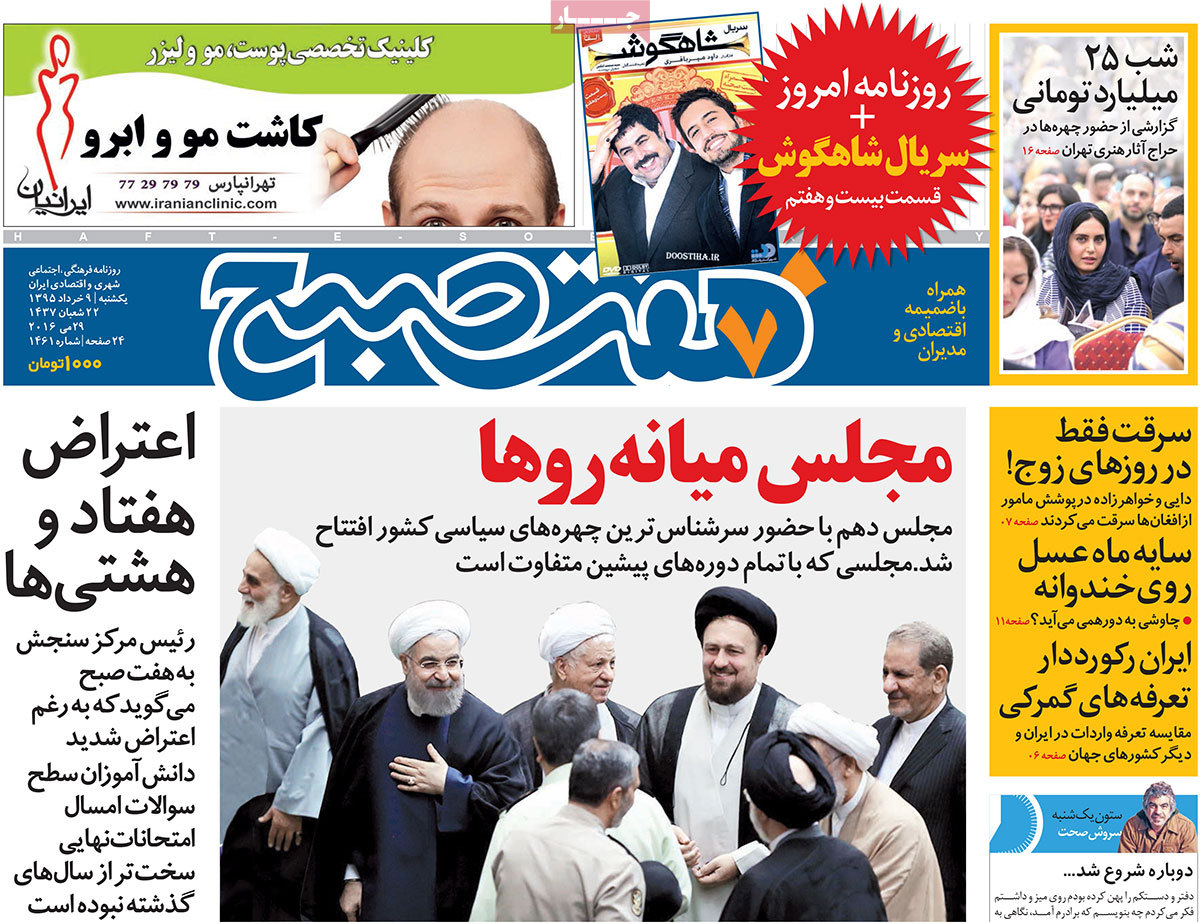
Haft-e Sobh:

1- All Fans of Grabar-Kitarović: Growing Google Trend about Croatian President

2- 69 Iranians on Interpol Red Notice Wanted List: Fugitive Banker Khavari Removed!


A Look at Iranian Newspaper Front Pages on May 18


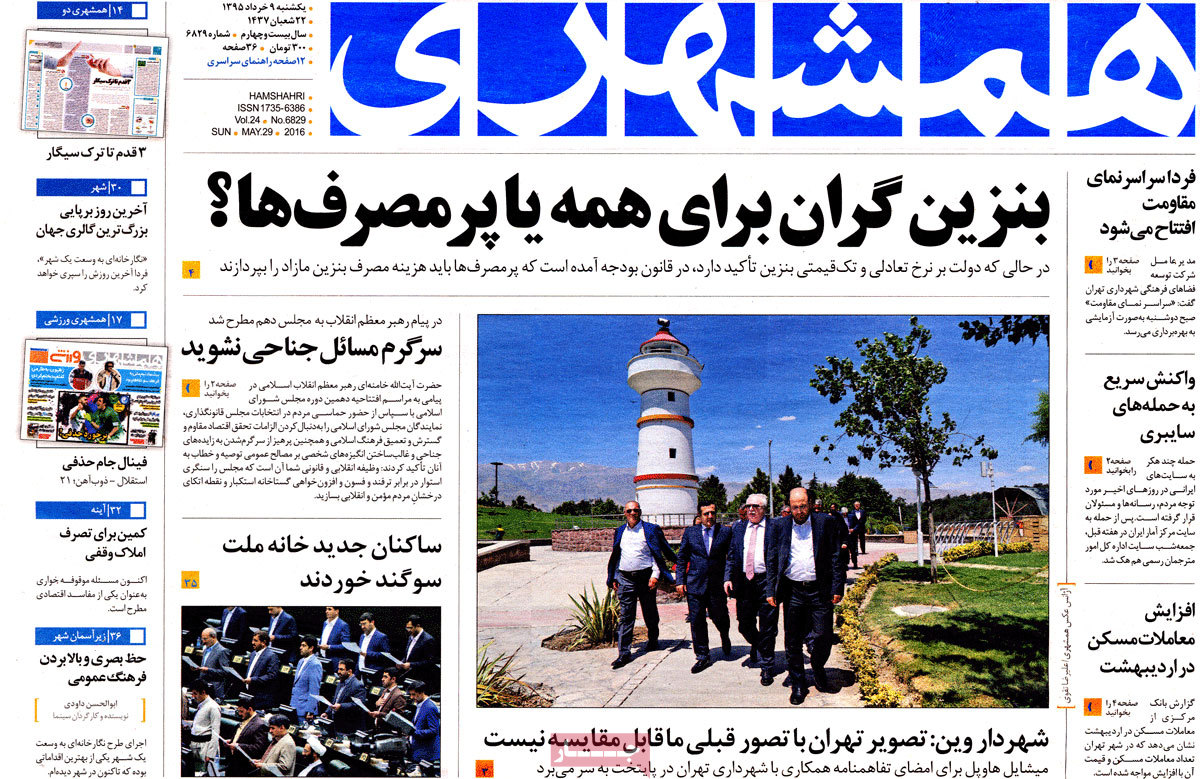
Hamshahri:

1- On International Museum Day: People Can Visit Museums for Free Today

2- Syria Meeting Ends without Any Results Once Again


A Look at Iranian Newspaper Front Pages on May 18


Hemayat:

1- Excessive White House Demands: Trade with Iran Hinges on Behaviour Change

2- JCPOA Is a Means, Not a Solution: Report on the High Economic Expectations of the Nuclear Deal


A Look at Iranian Newspaper Front Pages on May 18


Iran:

1- Coexistence of Muslims and Christians Possible: Pope

2- Aref Takes the Lead in [Reformist] “Faction of Hope”

3- Playing Football 40km Away from ISIS: 2 Iranian Female Players Talk about Playing Football in Iraq

4- Iranian Culprits behind US Seizure of Iran’s Assets Should Face Prosecution: Gov’t Spokesman

5- Social Development of Oil-Rich Regions Using Oil Budget: 2% of Expenses Dedicated to Social Objectives


A Look at Iranian Newspaper Front Pages on May 18


Javan:

1- “Maintaining Terrorism” on the Table for the West in Vienna: Assad’s Ouster Once Again Removed from Agenda

2- BBC and Baha’is Worried about Rafsanjani’s Family!


A Look at Iranian Newspaper Front Pages on May 18


Jomhouri Eslami:

1- Iranian and Russian Customs Offices Sign Largest-Ever Cooperation Document

2- Muslim Women Should Be Allowed to Wear Hijab: Pope Criticizes French Laic Laws


A Look at Iranian Newspaper Front Pages on May 18


Kayhan:

1- CIA, Mossad, and Riyadh Jointly Carried Out 9/11 Attacks: Ex-Officer at Pentagon

2- 1m More Unemployed, But Gov’t Still Waiting for JCPOA: MP

3- 69 Martyred, 100 Wounded in 4 Terrorist Blasts in Baghdad


A Look at Iranian Newspaper Front Pages on May 18


Resalat:

1- Iran’s Banking Ties with the World Still Unofficial: Tehran’s Chamber of Commerce Chief

2- Democrats and Republications’ Joint Plan to Keep Anti-Iran Sanctions in Place

3- West Forced to Change Its View on Syria

4- HRW: Being a Shiite Is a Crime in Al Saud’s View


A Look at Iranian Newspaper Front Pages on May 18


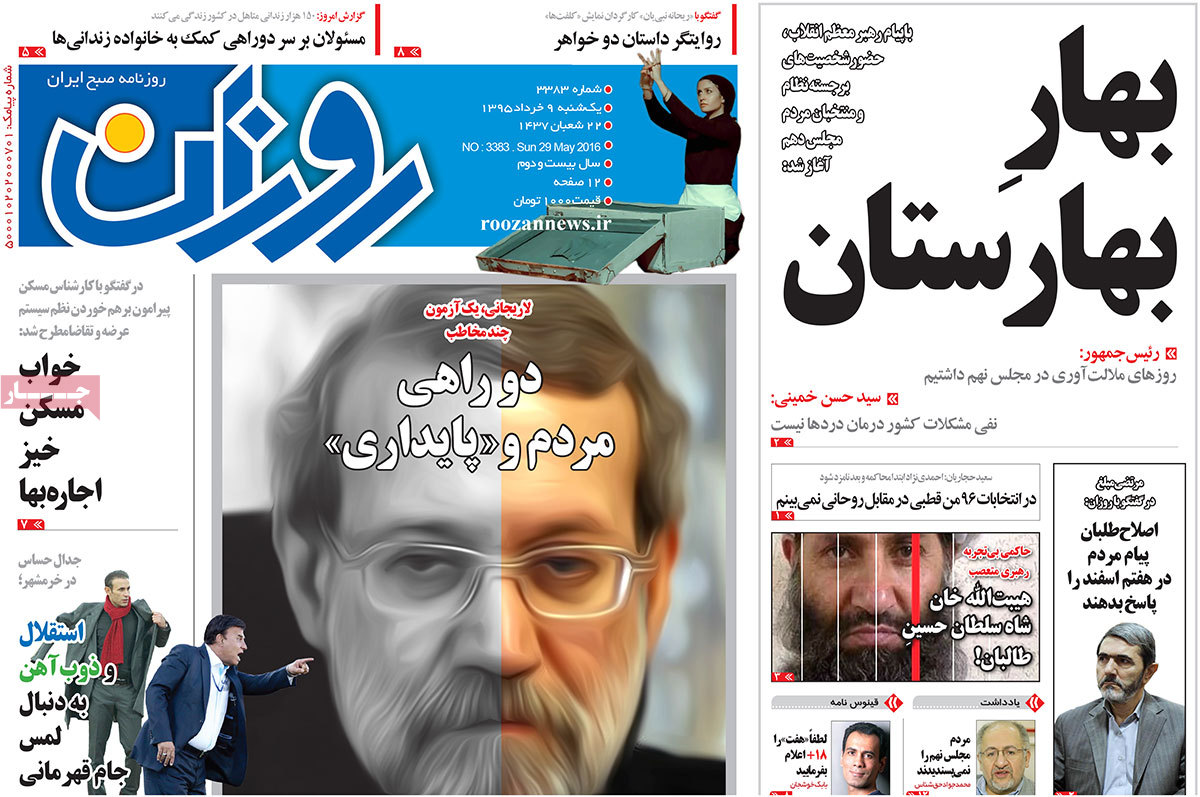
Roozan:

1- JCPOA, Telegram, and Concerns: Victims of February Elections [Conservatives’ Alleged Loss]

2- Parliament Opposed to Seizure of US Assets: Destabilizing Persian Gulf Will Be Detrimental to Iran, VP Says


A Look at Iranian Newspaper Front Pages on May 18


Sayeh:

1- Syria Meeting, an Opportunity to Stress Ceasefire Observance: Zarif

2- Will Death Penalty Cease for Drug Traffickers?


A Look at Iranian Newspaper Front Pages on May 18


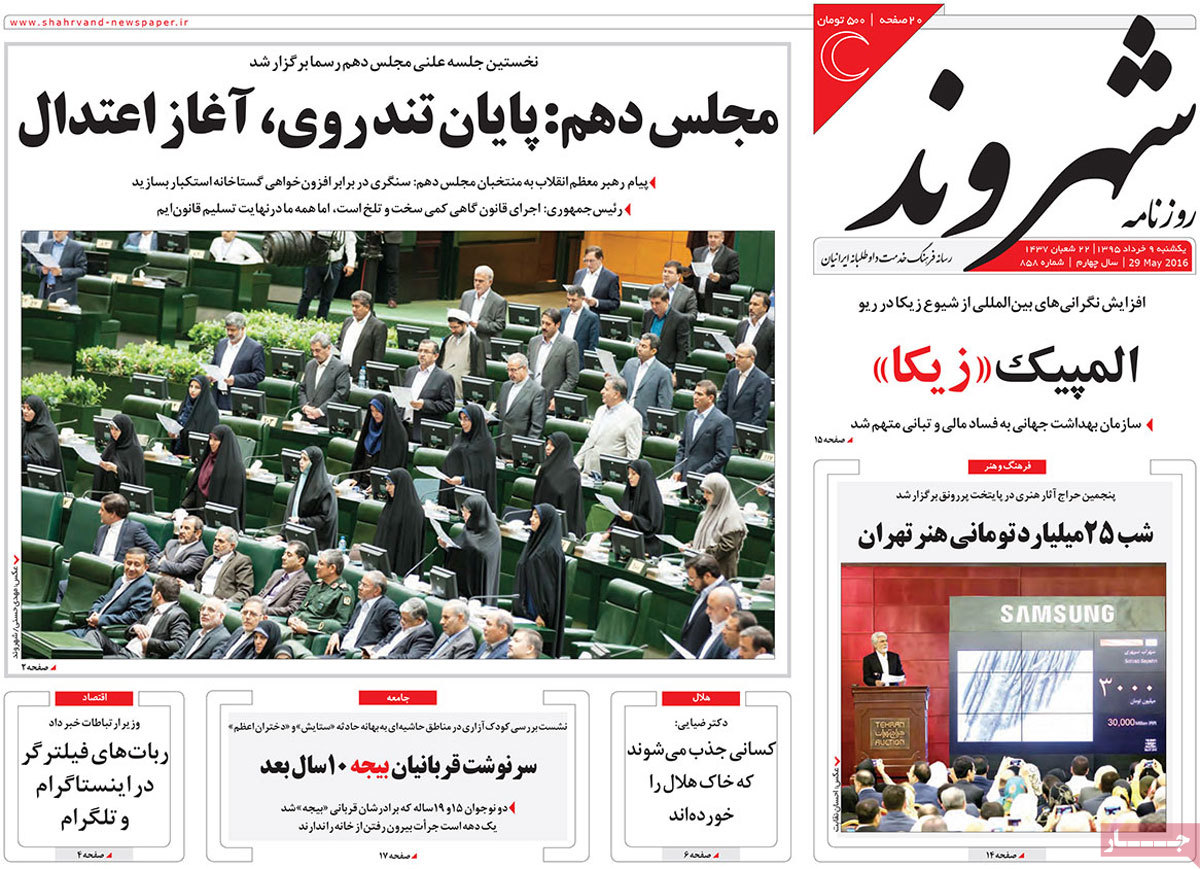
Shahrvand:

1- Foreign Visitors Flock to Tehran’s Hotels: All Hotels Reserved until Mid-June

2- 237% Increase in Visits of Foreign Delegations to Iran

3- Regional Unrest Causes More Tourists to Choose Iran

4- 95% of Iranians Stressed about Their Livelihood

5- 13m Couples Missing Appropriate Fertility Age


A Look at Iranian Newspaper Front Pages on May 18


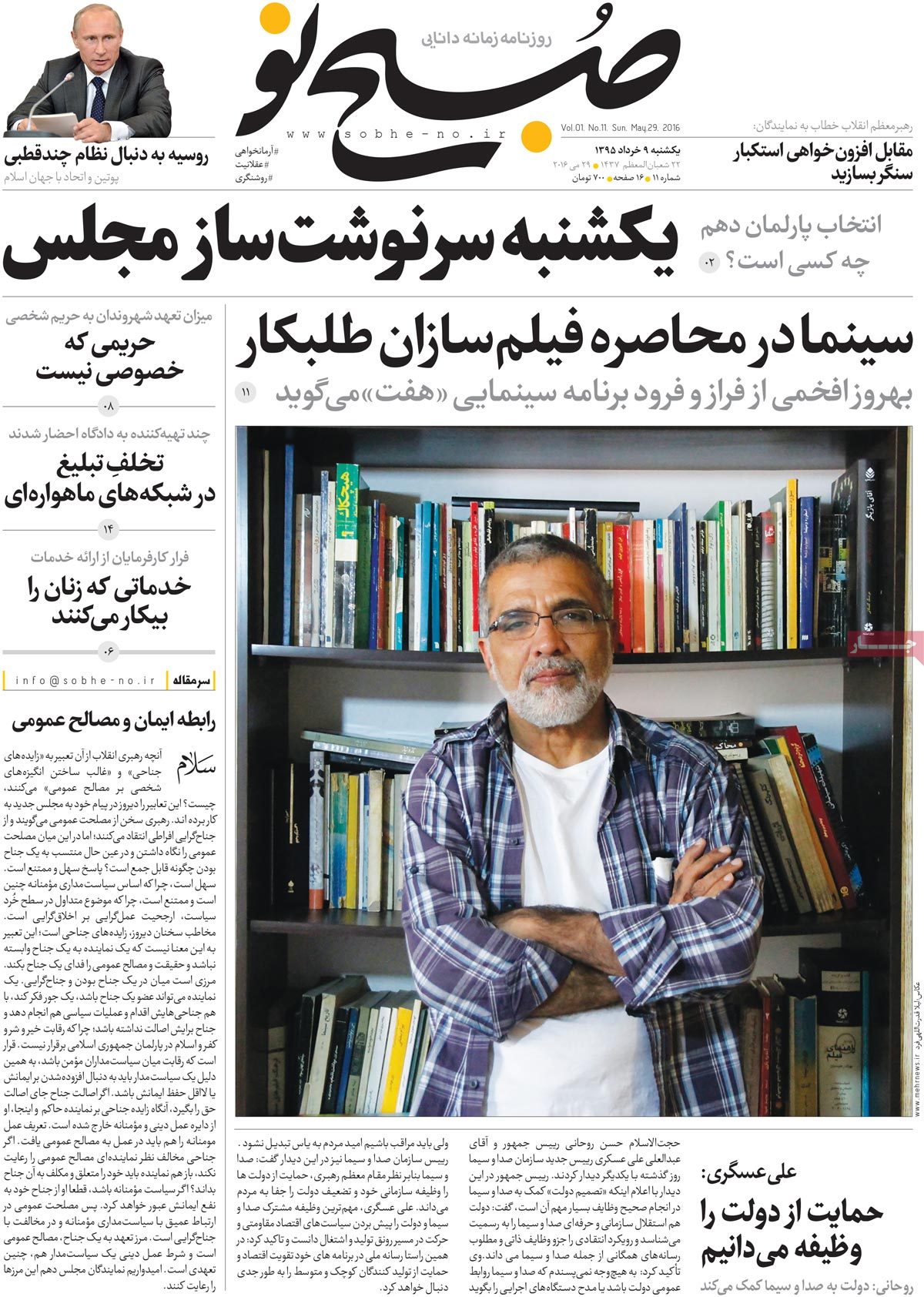
Sobh-e Now:

1- A Report on Illegal Photography Courses: Those Trapped by Modelling

2- Oman to Replace UAE as Iran’s Main Trade Partner

3- Online “Mujtahid” Protests in a Silent Society: Loudest Voice in Saudi Arabia Heard via Twitter


A Look at Iranian Newspaper Front Pages on May 18


Iran and the Next US President

The Middle East presents variety of complicated partnerships for the next United States President.  In recent years, the US has been experiencing a strategic reversal of its position in the Middle East.  In the past, Washington’s posture in the region was more assertive, but more recently it has shifted towards greater restraint, particularly during Barack Obama’s second term. However, it appears that neither posture has worked particularly well for the United States.

Today, nationalism, religious fanaticism, and political extremism are on the rise and will complicate future stability in the Middle East. Furthermore, the traditional allies of the US have strained relations with Washington. There are ongoing civil wars and unrest in at least five countries where the US has either directly or indirectly supported regime change (Iraq, Afghanistan, Libya, Yemen, and Syria). In its current state, the Syrian civil war in particular risks creating even greater regional sectarian conflict. US traditional partners throughout the region are also more vulnerable than they were just a few years ago.

The strategic tools used historically by previous presidents do not appear to work well in the Middle East. However, two recent opportunities created by the Obama administration should provide a glimpse of hope for the next president as well as more room for political maneuvering to create successful collaborative engagement. Firstly, there is the Obama administration’s ability to rally Sunni nations to join the coalition against ISIS.  Even more importantly, the nuclear deal with Iran offers a truly unique but limited opportunity to improve overall relations with Tehran.

The next US president cannot ignore or undermine the fact that Iran’s role is vital and must be properly addressed and managed, with a collaborative approach that could yield a new trilateralism that might facilitate the long-term strategic pivot to Asia, reinforce transatlantic ties, and provide greater support to deal with instability in the Middle East. These complexities require the next Commander in Chief to show more political flexibility, and Iran will be an illustration and ultimately test-case of this intention.

The next administration should constantly be aware that, in addition to China, Iran also presents a distinctive opportunity for the United States to capitalize on some common interests with a long-time adversary, and to reduce the potential for conflict while enhancing broader regional stability. The next US president should consider two important developments when assessing the future relationship with Iran. The first is the nature of the July 2015 nuclear deal; the second is Iran’s broader role in the Middle East. Iran’s influence in the region has grown in recent years, in part because of the disruption created by the US invasion of Iraq and Afghanistan, therefore any attempt to limit this role will be disadvantageous to the United States and the region.

Despite their many differences, the next American president should not disregard the fact that Iran and the United States share a strategic interest in the free flow of oil through the Strait of Hormuz. They also share an interest in the successful implementation of the JCPOA, at least in the short-term.  Also, with the rise of ISIS, Iran and the United States are reluctantly cooperating to defeat a common enemy, even though both nations have been unwilling to formalize these cooperative arrangements.  The next step in defeating ISIS may require US-Iranian cooperation in Syria. There is further room for improving US-Iranian relations, which, if achieved, could affect the future of the Middle East.

The difficult task for the next US president is to rebuild ties with traditional yet increasingly vulnerable allies as it simultaneously creates a new relationship with Iran, a new approach should be designed for the Middle East, despite the constant pressure of partisan politics in Washington. Therefore, a hybrid approach is urgently needed. The daunting task of designing a regional strategy for the Middle East is the least well-defined compared to the strategy for Europe or Asia. It is vital, however, for the next president to realize that he or she must seek to contain the consequences of the violent chaos that currently exists in the region, but without drawing the United States in so deeply that it is unable to focus on challenges of greater strategic relevance in Europe, and most importantly, Asia. In that respect, enhancing its partnership with Iran is vitally important.

In order to achieve a partnership that is more fluid than those in Europe and Asia, the next US president must attempt to construct a more cooperative relationship with Iran, despite fundamental differences, in the post-JCPOA era. In the course of successful implementation of the JCPOA, the next US president should also think about launching new regional initiatives, including a broader regional security summit that should and must include Iran. This approach will help design a new balance for the Middle East.

By Bijan Bonakdar and Roozbeh Aliabadi

Bijan Bonakdar is director of Strategic Initiatives at the Institute for Political and International Studies (IPIS) of the Iranian Foreign Ministry.

Roozbeh Aliabadi is an advisor at the Institute for Political and International Studies (IPIS) of the Iranian Foreign Ministry.

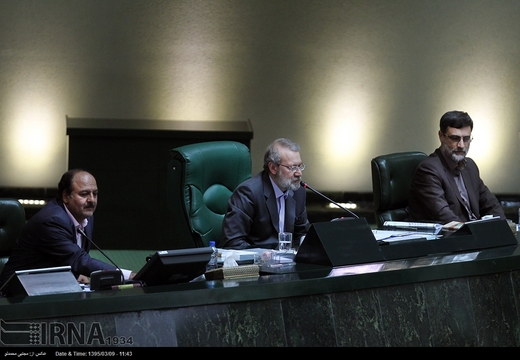
Larijani: Incumbent Gov’t More Successful in Acting Lawfully

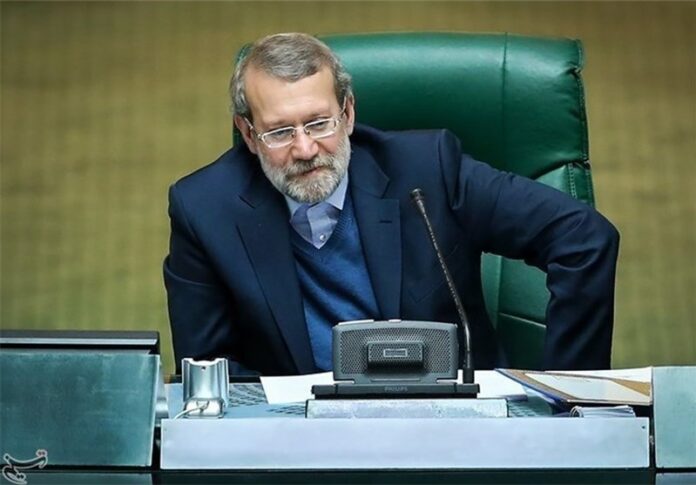
Ali Larijani

“The incumbent government has acted in a more coordinated way with the parliament than the previous one,” Larijani said on Tuesday May 17, addressing a meeting of the Moderation and Development Party with elected Iranian lawmakers.

The Majlis speaker reiterated that when the government respects the parliament, the MPs will surely respect the government, and said, “If this doesn’t happen, there will be no consensus, and the government and the parliament will do their own jobs [separately].”

“Achieving consensus in society needs to have leadership,” Larijani added.

Iranian Director Wins Young Talent ‘Women in Motion’ Award at Cannes

2078886On May 15th, during the Cannes Presidential Dinner, Geena Davis and Susan Sarandon presented the ‘Women in Motion’ Award to Iranian director and writer Ida Panahandeh, along with Tunisian director Leyla Bouzid and Syrian filmmaker Gaya Jiji.

Ida Panahandeh is an Iranian film director who won the Best Short Film prize in the 10th Tehran International Short Film Festival for Those Hands, which was also screened at Vienna Independent Shorts.

In 2012, she wrote and directed the TV series The Lost Honour of Mr. Sadeghi and won Best Film Script from the First Tehran Video Film Festival.

In 2015, Panahandeh wrote and directed Nahid, and won five prizes, including the Promising Future Prize, at Cannes Film Festival (Un Certain Regard). The same year, she was nominated for Golden Camera Prize and Un Certain Regard Award at the Cannes Film Festival.

International Museum Day Celebrated in National Museum

Treasures from the museum’s collection were put on display, and the conference was addressed by the president of the International Council of Museums (ICOM), Hans-Martin Hinz.


For more on the conference, see here.


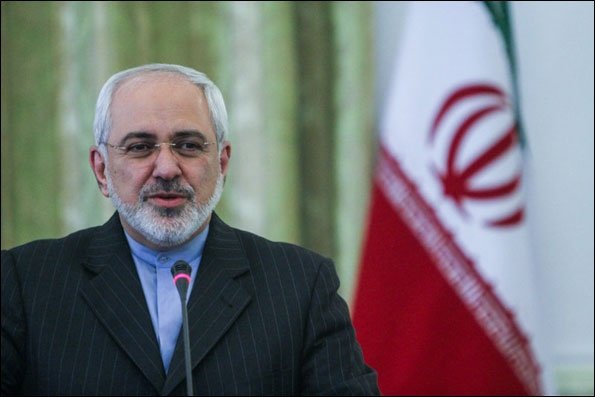
Iranian FM Meets US and British Counterparts in Vienna

The 17-nation ISSG convened in Vienna on Tuesday to discuss the latest developments in war-torn Syria and look for ways for a sustainable ceasefire in the Arab country.

On the sidelines of the gathering, the Iranian foreign minister had a meeting with his American counterpart to discuss the ways to effectually implement the Joint Comprehensive Plan of Action (JCPOA), a lasting nuclear deal between Tehran and the Group 5+1 (Russia, China, the US, Britain, France and Germany).

In a separate meeting, Zarif and Hammond also met to talk about Tehran-London bilateral relations and about better ways of carrying out the JCPOA, particularly in the field of international banking ties with Iran after the termination of the sanctions.

In addition to the two meetings, the top Iranian diplomat also sat down with Oman’s Foreign Minister Yusuf bin Alawi. They held consultations on bilateral ties and regional developments.

Elsewhere in Vienna, Iran’s Deputy Foreign Minister for Legal and International Affairs Abbas Araqchi and EU’s Deputy Foreign Policy Chief Helga Maria Schmid held a meeting to discuss the recent decisions made at an April meeting of the JCPOA Joint Commission.

During the meeting, Schmid gave a report on the European Union’s efforts to facilitate trade with Iran under the JCPOA.

Back in March, Leader of the Islamic Revolution Ayatollah Seyyed Ali Khamenei said Americans have yet to fulfill what they were supposed to do as per the nuclear deal.

Iran still has problems in its banking transactions or in restoring its frozen assets, because Western countries and those involved in such processes are afraid of Americans, Imam Khamenei said, criticizing the US for its moves to prevent Iran from taking advantage of the sanctions removal.