Iran’s northern province of Gilan is full of exquisite mountains and hidden villages. “Olasa Blanga” village is one of the most picturesque, located at the heights of Talesh, 25km northwest of Masal.
The 5th Green International Film Festival celebratory dinner was held in the presence of Fariba Ebtehaj, the deputy of Iran Environment Organization, Farhad Tohidi, the festival director, festival managers, the selection committee, the juries, and the executives of the festival.
According to the Public Relations department of the 5th Green International Film Festival, at this ceremony, Iranian and international artists and executives were present and had an enjoyable night. Mehdi Tohidpour, the executive manager of the festival, Seyyed Mehdi Tabatabayinezhad, the Head of DEFC, and many other Iranian directors were also present at the ceremony.
The 5th Green International Film Festival is being held at Felestin theatre and Saba Artistic-Cultural Center in Tehran, as well as in other provinces across the country on 13-20 May 2016.
The festival is organized by Iran’s Department of Environment, with the aim of promoting the culture of environmental protection through artistic expression, and recognizing valuable artworks to increase public awareness on environmental issues.
For further information, please visit the festival website at www.iigff.com.
The mosque of Jamkaran, six kilometres east of Qom, has been a sacred place since February, 984 CE. It was expanded and renovated on a grand scale after the Islamic Revolution, and at present it is one of the largest mosques in the country.
In a joint press conference following a Wednesday May 18 meeting in Tehran with his Croatian counterpart, Kolinda Grabar-Kitarović, Iranian President Hassan Rouhani said the two sides have agreed to enhance their anti-terrorism cooperation given the current wave of terror threats plaguing some regional states.
Rouhani said his earlier talks with Grabar-Kitarović focused on the need to expand bilateral anti-terrorism cooperation, among other issues of mutual interest.
Elsewhere in his remarks, the Iranian president called for closer relations between Tehran and Zagreb in various areas, especially economics, culture and tourism, saying the visit by Grabar-Kitarović at the head of a high-ranking economic delegation shows the political will in Croatia to bolster trade ties with the Islamic Republic.
Grabar-Kitarović, for her turn, highlighted the scourge of terrorism gripping countries like Iraq, Syria and Afghanistan, stressing that her country would “keep up cooperation with Iran in efforts to uproot terrorism and extremism.”
She also described her trip to Tehran as a “turning point” in Iran-Croatia relations, particularly in the economic sphere, saying the two countries should work to expend their relations, “which are not currently at a satisfactory level.”
“The Islamic Republic of Iran can view Croatia as a good friend and partner in the European Union,” Grabar-Kitarovićadded.
Zagreb is aware that Iran is seeking to modernize its industry and economic infrastructure, said Grabar-Kitarović, adding that “Croatian companies stand ready to cooperate with Iranian firms to that effect.”
Ahead of the two presidents’ press conference, senior officials from Iran and Croatia signed two agreements for the enhancement of economic and trade cooperation between Tehran and Zagreb.
Grabar-Kitarović arrived in Tehran for a three-day visit on Tuesday and was officially welcomed by her Iranian counterpart on Wednesday.
Solar Eclipse will be performed at the Qashqai Hall of Tehran’s City Theatre Complex for a month from June 5, he informed the Persian service of MNA on Monday.
In Solar Eclipse, a romance blooms between Meymand, a young Afghan who fled his native Afghanistan, and Sorayya, the daughter of an Iranian gypsy family.
Theatergoers gave the play a warm reception in 2010, when Aqakhani and his troupe performed it at the same theatre.
“The play will go on stage with the same cast, i.e. Hamidreza Azarang, Nasim Adabi and myself,” he said.
“In fact, it will be recollection of the memories of a play that we liked,” he added.
Aqakhani said that the play has a deeply humanistic view on Afghan migrants in Iran and added, “I want to evoke sympathy from the audience for Afghan migrants and the sad fate that awaited them.”
He also said that his decision to stage the play resulted from feelings of sympathy for the family of Setayesh Qoreishi, a six-year-old girl who was raped and killed, allegedly by a teenage Iranian neighbour, in the Tehran suburb of Varamin in April.
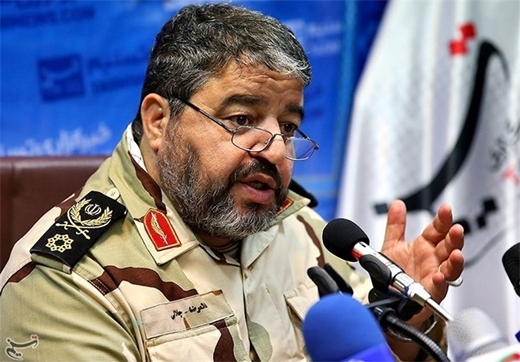
“Today, we are facing a growing wave of demands to be sent to Syria and Iraq, and many young people from different parts of Iran and of different ethnicities have volunteered,” Ramezan Sharif said.
He also warned of enemy plots to hit Iran through terrorist groups, including ISIS and al-Qaeda, but underlined, “The Iranian Armed Forces have grown so powerful that the enemy doesn’t dare to make the slightest aggressive move against the country.”
“This is not a slogan; it is an undeniable reality,” Ramezan Sharif stressed.
Iran has pioneered in helping regional states fight terrorism, especially Iraq and Syria, and has demanded regional and world states to partner it in the war on terrorist groups.
In relevant remarks in April, Lieutenant Commander of the Iranian Army Brigadier General Abdolrahim Moussavi announced that the country will continue dispatching volunteer military advisors to Syria.
“Since the start of the conflict in Syria, the Islamic Republic of Iran’s Armed Forces voiced readiness for (overseas) deployment and pressured their commanders to be dispatched to the region,” General Moussavi said.
He said Supreme Leader of the Islamic Revolution and Commander-in-Chief Ayatollah Seyed Ali Khamenei was then informed of the Iranian military men’s preparedness and interest, and the Leader agreed to dispatch a number of advisors.
General Moussavi underlined that the dispatch of military advisors to Syria is done fully voluntarily, and said, “This will continue as long as necessary.”
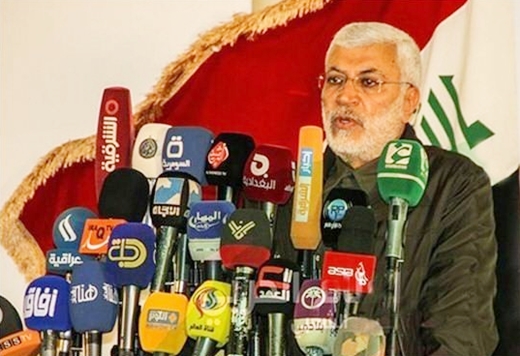
On Wednesday May 18, Jaberi Ansari censured the deadly bombings and expressed condolences to the families of victims and the Iraqi nation and government.
He said the terrorists’ move to intensify their crimes follow their failures in battlefields.
Desperate to make up for their defeats, the terrorists are exploiting the political conditions in Iraq and making use of every opportunity to take revenge on the Iraqi nation, government, army and popular forces, he said.
Jaberi Ansari lauded the Iraqi army and popular forces for their victories against the terrorists and called on the Arab country’s officials and political currents to keep vigilant, maintain unity and expedite efforts to resolve the current political issues and problems, which he described as an important factor in defeating the terrorists and their supporters.
He further described Takfiri terrorism as a global threat and said supporting Iraq and Syria against the threat is tantamount to backing world security.
On Tuesday, at least 70 people were killed and over 100 others wounded in four bombings in different neighbourhoods of Baghdad.
An explosion in a market in al-Shaab district left 34 people dead and 75 injured, while a car bomb in the al-Rasheed area killed eight and wounded another 22 victims.
In al-Rasheed, a roadside bomb exploded outside concrete blast walls surrounding the open air market, before a female suicide bomber blew herself up in a crowd of people who gathered to help the initial victims.
Later, a suicide car bomb was reported at another market in Sadr City, killing at least 18 people and injuring 35.
In a fourth attack, the suicide bomber killed nine people at a restaurant in the Habibia district.
On Sunday, bomb attacks by Daesh killed at least 15 people in and around Baghdad.
The increase in the number of terrorist attacks has angered local populations, who blame the Iraqi government for failing to provide tighter security.
Iraqi Prime Minister Haider al-Abadi has said a political crisis sparked by his attempt to reshuffle the cabinet in an anti-corruption bid is hampering the fight against Daesh and is giving the terrorist group a freer hand to target the civilian population.
Some Iraqis say, however, Daesh is trying to make up for its loss of ground to Iraqi security forces over the past months.
New estimates by the government show that Daesh now controls only 14 percent of Iraqi territory, down from the 40 percent it held in 2014, with top officials vowing to clear the entire Iraqi soil from militants in 2016.
The Iraqi army along with Popular Mobilization forces has been engaged in battles with Daesh to remove it from the areas it has overrun in Iraq.
On Tuesday, the 40-year-old racer for Shardari Tabriz Cycling Team covered a distance of 180.7 kilometres (112.2 miles) from the city of Sareyn in Iran’s northwestern Ardabil Province to Sahand Ski Resort in 5:16.38, to be awarded the gold medal.
Arvin Moazzemi Goudarzi of Iran’s Pishgaman Yazd Cycling Team clinched the silver medal, and Shardari Tabriz Cycling Team rider Mehdi Sohrabi pocketed the bronze.
The 31st edition of Tour of Iran (Azarbaijan) kicked off on May 13, and will run through May 18, 2016.
A total of 21 teams from sixteen different countries, including Armenia, Australia, China, Georgia, the Islamic Republic of Iran, Kazakhstan, Malaysia, Morocco, Syria, Turkey and Uzbekistan, are taking part in the event. The tour has six stages, with a total length of 1,005 kilometres (624.4 miles).
For the first time in the history of Tour of Iran (Azarbaijan), American UCI Continental Cycling Team Illuminate is participating in the tournament.
Prime Minister Modi is scheduled to meet Ayatollah Khamenei, marking his first visit to the country since the historic nuclear agreement with world powers was signed, and the US lifted secondary sanctions in January 2016, according to a report by The Hindu, as covered by TejaratNews.
The development project of Chabahar port, Iran’s south-eastern strategic port city, will top Modi’s agenda in Iran.
Modi’s visit will complete the triangle, as he is expected to sign a trilateral trade treaty with Iran and Afghanistan for Chabahar, which was finalised during External Affairs Minister Sushma Swaraj’s trip to Tehran last month.
On Tuesday, May 17, the Ministry of External Affairs announced that Modi would visit Iran on May 22-23 to meet President Hassan Rouhani in an official visit that would “provide a timely thrust to the ongoing efforts of the two countries and their business entities to expand bilateral cooperation and mutually benefit from new opportunities in the wake of lifting of secondary sanctions against Iran earlier this year.”
Repayment of Dues
As The Hindu reported on Monday, among issues on the agenda are agreeing on a channel for the repayment of $6.5 billion in unpaid dues from India to appropriate corresponding banks in Iran, a Memorandum of Understanding (MoU) on developing the Chabahar port project and the trilateral transit trade agreement with Afghanistan, India’s stake in the Farzad-B oilfields, the announcement of investments from Indian companies in the Chabahar “Free Trade Zone,” and security and defence pacts.
“The visit of the Prime Minister to Iran will seek to build on these commonalities by focusing on specific cooperation in regional connectivity and infrastructure, developing energy partnership, boosting bilateral trade, facilitating people-to-people interaction in various spheres and promoting peace and stability in the region,” a Ministry of External Affairs release read.
PM Modi’s visit to Iran is a rare stand-alone visit, indicating that India hopes to fast-track ties and build on the alternative route for trade with Afghanistan and Central Asia.
Vice President Masoumeh Ebtekar made the call during an interview with Yonhap News Agency, saying Iran believes nuclear disarmament is a “necessity” for all countries.
“We believe not only in a Middle East with no nuclear weapons, but also a globe with no nuclear weapons,” she said in response to a question about her view on North Korea’s nuclear weapons program.
“So we believe in the disarmament issue for all countries, and it should be seen in a just and equitable manner with no double standards.”
Iran has often been cited as an example for North Korea to follow after Tehran struck a landmark nuclear agreement with the US and five other world powers last year. Under the deal, Iran agreed to curb its disputed nuclear program in exchange for the lifting of crippling economic sanctions against the country.
North Korea has come under stronger sanctions from both the UN and individual nations following its nuclear and missile tests earlier this year.
Ebtekar, who also heads Iran’s Department of Environment, was keen to highlight the wider impact the sanctions had on her country.
“The sanctions were detrimental for our economy, yes, but we survived,” she said. “We managed to develop a resilient economy and to survive, but the environment was really under pressure during the sanctions.”
With the sanctions in place, Iran had limited access to the technologies it needed to curb air pollution and upgrade the standards of its refineries, according to Ebtekar.
“Those sanctions were adversely affecting not only our environment but the global environment,” she said, declining to comment directly on the sanctions on North Korea. “I think our example is very clear in itself.”
The vice president is the first high-ranking Iranian government official to visit Seoul since President Park Geun-hye made a state visit to the Islamic Republic earlier this month.
Park’s visit was a “milestone” in the two countries’ relationship, according to Ebtekar, as the two sides seek to expand cooperation from trade and investment to the environment, culture and tourism.
As a growing number of South Korean firms push to make inroads into the emerging Iranian market, the vice president called for close attention to environmental standards, saying it is a priority of her government to guard against the adverse health effects of pollution in the air, water and soil.
Ebtekar was first appointed vice president of Iran in 1997, becoming the first female Iranian to hold the post.
During her three-day visit to Seoul, she has attended the Asian Leadership Conference, signed a memorandum of understanding with South Korea’s environment ministry and met with Park.