Tuesday, December 30, 2025
Home Blog Page 4479

Iran Commemorates World Day for Cultural Diversity

Here is IFP’s translation of IRNA’s report about the ceremony.

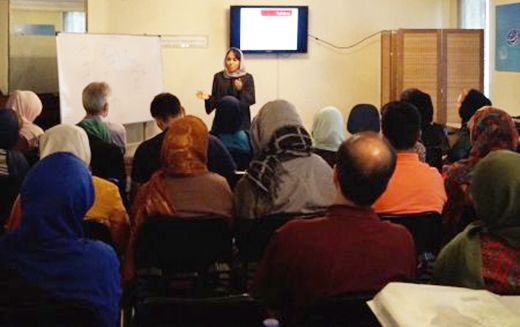
Speaking at the ceremony, Deputy Head of Iran’s Cultural Heritage Organization Mohammad-Hassan Talebian referred to the coincidence of the World Day for Cultural Diversity for Dialogue and Development with International Museum Day, the beginning of Cultural Heritage Week in Iran, the 100th anniversary of the establishment of the first museum in Iran, and the 70th anniversary of ICOM (The International Council of Museums) establishment.

“ICOM’s motto this year is ‘Museums and Cultural Landscapes’, which shows how cultural heritage is dependent on the cultures of different nations,” the Iranian official noted.

He further underlined the need for respecting cultural diversity and different thoughts in the world, and described it as a global goal.

“Iran is a symbol of cultural diversity. People in Iran live together while they speak 50 different languages,” he added, referring to Semnan Province as an example, where six official languages are spoken.

“If we study this carefully, we will find that most of these languages have common roots, which shows our unity in diversity,” Talebian said, stressing that the diversity in Iran is attractive for tourists, and can make a great contribution to the country’s development.

“Since long times ago, members of all ethnicities and religions have been coexisting peacefully in Iran,” he went on to say.

The ceremony was organized by UNESCO in cooperation with the Non-Aligned Movement Centre for Human Rights and Cultural Diversity; the Iranian Cultural Heritage, Handicrafts and Tourism Organization (ICHHTO); the Iranian National Commission for UNESCO; and the embassies of Bangladesh, Mexico and Turkmenistan.

The grand celebration consisted of a series of cultural performances from Turkmenistan and different provinces of Iran, as well as a cultural exhibition and a traditional food festival with dishes from Bangladesh, Turkmenistan and the Iranian city of Rasht.

The open-air celebration was attended by Director and Representative of the UNESCO Tehran Cluster Office Esther Kuisch Laroche as well as many embassies, government officials, artists, NGOs and UN agencies, and was also open to the general public. Hundreds of tourists stopped by to visit the exhibition space and watch the cultural performances.

Jakov Kitarović, husband of the President of Croatia, Kolinda Grabar-Kitarović, also paid a surprise visit and attended part of the ceremony.

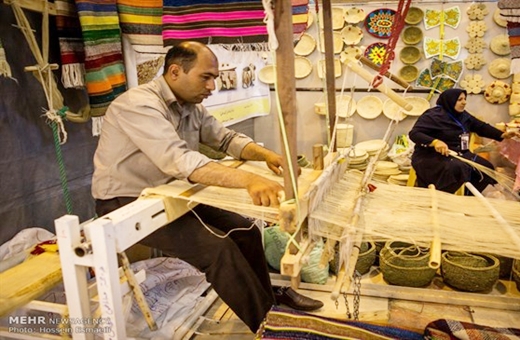
The culture exhibition, which took place alongside the ceremony, consisted of photos from Iran’s 19 World Heritage Sites, handicrafts from different parts of the countries, as well as cultural exhibitions from Bangladesh, Mexico and Turkmenistan.

The ancient site Chogha Zanbil and the culture of Khuzestan province, Gonbad Kavoos and the Turkmen culture, Persepolis, Qashqai culture, bazaar of Tabriz and the culture of Azarbaijan, Bisotun and the Kurdish culture, Shahr-e Sukhteh and the culture of Sistan and Baluchestan, and Armenian churches as well as their culture were introduced to the visitors.

In 2001, UNESCO adopted the Universal Declaration on Cultural Diversity and in December 2002, the UN General Assembly, in its resolution 57/249, declared May 21 to be the World Day for Cultural Diversity for Dialogue and Development.

The day provides us with an opportunity to deepen our understanding of the values of cultural diversity and to learn to live together better.

Iran Ready to Settle Row with Saudi through Talks: Deputy FM

“Our policy is [based on] stability and peace in the region and we are ready to solve our issues with regional countries such as Saudi Arabia through dialog,” Araqchi told reporters at Japan National Press Club (JNPC) in Tokyo on Friday.

He added that Iran regards Saudi Arabia as an important country in the Muslim world.

“I think that the Saudi move to cut ties with Iran stemmed from a miscalculation,” the Iranian diplomat pointed out.

Saudi Arabia cut diplomatic ties and halted flights to and from Iran on January 3 following attacks on vacant Saudi diplomatic premises in the Iranian capital and the city of Mashhad by angry people protesting Nimr’s execution.

This as more than 2,400 foreign pilgrims, including 464 Iranians, were killed after two large masses of pilgrims converged at a crossroads in Mina, near the holy Saudi city of Mecca, during the symbolic ceremony of the stoning of Satan in Jamarat on September 24, 2015.

The diplomatic conflict between Tehran and Riyadh has caused problems for Iranian pilgrims seeking to perform the annual Hajj rituals.

The issuing of visas and security arrangements for the Hajj have been two sticking points in the talks pertaining to this year’s rituals.

Saudi Arabia says Iranian pilgrims should travel to a third country to obtain a visa. However, Iran has been insisting that Saudi Arabia issue visas through the Swiss embassy in Tehran, which has looked after Saudi interests since Riyadh broke off ties.

Iran, Japan Should Boost Anti-Terror Cooperation

Araqchi also stressed the importance of regional peace and stability and Iran’s role in this regard and called for stronger cooperation with Japan in the campaign against terrorism and extremism.

In a meeting with members of Japan’s International Friendship Exchange Council (FEC) in Tokyo, Araqchi added that as acts of terror are threatening all countries across the world, Iran and Japan can broaden cooperation in countering terrorism.

He also said a planned visit by Japanese Prime Minister Shinzo Abe to Tehran would be very important in various trade and economic sectors given new developments in Iran’s relations with world countries following the implementation of last year’s nuclear agreement, dubbed the Joint Comprehensive Plan of Action (JCPOA), reached between Iran and the P5+1 group of countries.
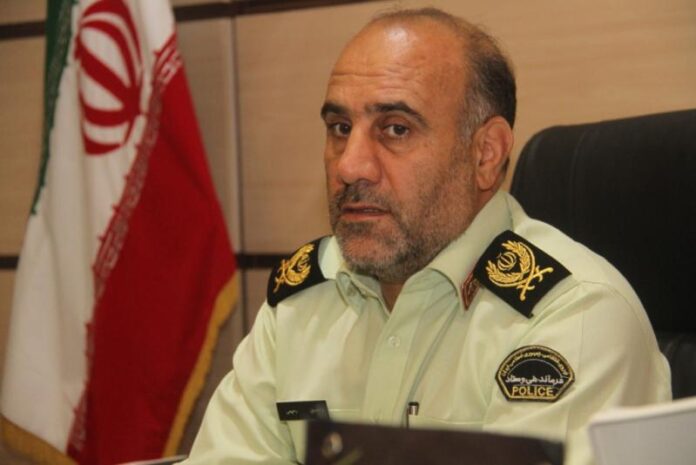
The trip can be regarded as a new chapter in relations between Iran and Japan, the Iranian official added.

Abe plans to visit Iran in late August to strengthen economic ties between Tokyo and Tehran, according to reports by Japanese media. He will be the first Japanese prime minister to visit the Islamic Republic in 38 years.


Iran Dismantles More than 20 Terrorist Groups in One Year

Iran's Intelligence Minister Seyyed Mahmoud Alavi

Addressing worshipers at the weekly Friday Prayers in Tehran, Mahmoud Alavi added that a number of would-be bombers were killed or arrested during several sting operations by Iranian intelligence forces.

He said that a large amount of weapons and ammunition was confiscated from the terrorists.

The minister reaffirmed that Iran enjoys high security while insecurity has been prevailing in most countries in the Middle East and across the world.

“Despite plots by intelligence services of hostile countries and terrorist groups to [cause] security challenge [in Iran], the Islamic Republic experienced a year full of security and peace,” Alavi said.

The Iranian intelligence minister emphasized that the country witnessed no instance of insecurity.

He said Iran’s intelligence forces also arrested several teams supporting terrorist groups and uncovered centers where terrorist operatives were manufacturing explosives.

The forces killed the ringleader and most members of the Ansar al-Forqan terrorist group in the southeastern parts of the country, he added.

On April 22, the head of the Ansar al-Forqan terrorist group, Hesham Azizi, and two other members were killed in a successful security operation by Iranian security forces in the southeastern province of Sistan and Baluchestan. Two other members of the terrorist group were also captured during the operation.


CBI Chief: Europe, US Failed to Meet Commitments on JCPOA

Speaking at the Euromoney Iran Conference held in London on Thursday, Seif emphasized that according to the Joint Comprehensive Plan of Action (JCPOA),Europe and the US are committed to take all executive and regulatory measures necessary to remove anti-Iran sanctions and facilitate the country’s return to the international markets.

“As we witnessed in the past few months, the commitments (of the US and Europe) have not been met because of the problems that the banking community is facing,” the Iranian official noted.

The Euromoney Iran Conference was held with the aim of providing a platform for Iranian and international banks to discuss the necessary steps for Iran’s re-integration into the international financial community.

In addition, capital market participants discussed the means by which international institutional investors can get exposure to one of the best performing frontier markets.

While the JCPOA, a 159-page nuclear agreement between Iran and the Group 5+1 (Russia, China, the US, Britain, France and Germany) came into force in January, some Iranian officials complain about the US failure to fully implement the accord.

Earlier in March, Leader of the Islamic Revolution Ayatollah Seyed Ali Khamenei said Americans have yet to fulfill what they were supposed to do as per the nuclear deal.

Iran still has problems in its banking transactions or in restoring its frozen assets, because Western countries and those involved in such processes are afraid of Americans, the Leader said at the time, criticizing the US for its moves to prevent Iran from taking advantage of the sanctions removal.


1000-Year-Old Mosque in the Middle of a Forest

Espi Mazget (White Mosque) is located in the middle of dense forests in the southeast of Gisoon Forest Park along the Dinachal River in Gilan Province. It is the oldest mosque of the province.


A Look at Iranian Newspaper Front Pages on May 19

Iran Newspaper front pages

Most Iranian newspapers on Thursday covered the remarks by the Leader of the Islamic Revolution Ayatollah Seyyed Ali Khamenei, who called the US “the Greater Satan” and called on Muslim society to raise their power.

The ongoing visit of Croatian President Kolinda Grabar-Kitarović to Tehran and her meetings with Iranian officials including President Hassan Rouhani and Chairman of Iran’s Expediency Council Ayatollah Akbar Hashemi Rafsanjani were also a hot story in today’s media.


Abrar:

1- Iran and Croatia Sign 2 MoUs

2- Release of Petrol in 2 Different Prices Will Pave the Way for Corruption: MP


A Look at Iranian Newspaper Front Pages on May 19


Abrar-e Eqtesadi:

1- Iran’s Oil Exports to Be Increased by 60%: Reuters

2- 12% Rise in Employees’ Salaries as of Next Week

3- Iran to Take Part in Uzbekistan’s Oil and Gas Tenders

4- 3 Global Economic Challenges for Iran: IMF Official


A Look at Iranian Newspaper Front Pages on May 19


Aftab-e Yazd:

1- Arab Teams Have Mistaken Football Field with Hospital: Teraktorsazi Coach

2- “Ayatollah” [Rafsanjani] Withdraws from Running for Presidency of Experts Assembly

3- Ahmadinejad Didn’t Have a Single Penny of Financial Abuse: MP

4- Cleric: Female MPs-Elect Are Dangerous Creatures!


A Look at Iranian Newspaper Front Pages on May 19


Arman-e Emrooz:

1- Croatia, a Gate for Iran’s Relations with Europe

2- Details of Explosion in Tehranpars

3- I’m Currently Not into Running for Presidency of Assembly of Experts: Rafsanjani


A Look at Iranian Newspaper Front Pages on May 19


Asrar:

1- More than 11m Young Iranians Have Never Been Married

2- Iran Should Be Top Regional Economic Power: First VP

3- People Are Tired of Extremism and Radicalism [in Politics]: Minister


A Look at Iranian Newspaper Front Pages on May 19


Besharat-e Now:

1- Judiciary Spokesman: Legal Action to Be Taken against Faezeh Hashemi [Rafsanjani’s daughter, who recently met a Baha’i leader in Iran]

2- They Feel Threatened by Reformists’ Taking Power

3- Iranian Population Hits 80m


A Look at Iranian Newspaper Front Pages on May 19


Ebtekar:

1- Leader: US Is “Greater Taghut” and “Greater Satan”

2- 34,000 Villages Evacuated in Past 50 Years: Immigrant Out of “Desparation”

3- Haft-e Tir Bomber [Recently Announced to Be Arrested in Albania] Isn’t under Arrest: Spokesman

4- Expansion of Ties with Affluent Countries: Zarif to Visit Northern Europe

5- Cooperation with EU Effective on Reinforcement of Economy and Industry


A Look at Iranian Newspaper Front Pages on May 19


Etemad:

1- “Political Crime” Enacted into Law in Iran

2- It’s Now Time for Economic Transparency: IMF to Iran


A Look at Iranian Newspaper Front Pages on May 19


Ettela’at:

1- Regional Countries Implementing US Policies in Mideast Are Betraying Islamic Ummah: Leader

2- Dangerous Reforms in Saudi Arabia: Al Saud’s Efforts for Survival

3- US Senate Approves Plan to Prosecute Saudi Arabia over 9/11 Attacks

4- Syrian Army Liberates Strategic Heights in Northern Latakia


A Look at Iranian Newspaper Front Pages on May 19


Haft-e Sobh:

1- How Instagram Has Changed Our Lives: Horrible Backyard of Our Life

2- Bloody Stormy Wednesday: A Day with Deadly Thunderbolt, Deadly Crash of Buses, Explosion in Khak-Sefid, etc.


A Look at Iranian Newspaper Front Pages on May 19


Hemayat:

1- Ayatollah Khamenei: Resistance to US Excessive Demands Is Main Reason for Iran’s Might

2- Production of Illicit Synthetic Drugs in Iran at Alarming Level: Police


A Look at Iranian Newspaper Front Pages on May 19


Javan:

1- US Afraid of Iranian Nation’s Islamic Might: Leader

2- Fight against Terrorism Should No Longer Be for Show: Rouhani

3- Iranian Doctors Sent to European Medical Exhibition Will Receive Commission for Equipment They Import to Iran

4- Forgotten Responsibilities of Council Responsible for Monitoring JCPOA [Implementation]


A Look at Iranian Newspaper Front Pages on May 19


Jomhouri Eslami:

1- US Policies Hinders Iran’s Gas Exports to Europe: Rafsanjani in Meeting with Croatian President

2- Russia Ready to Design Second Unit of Bushehr Nuclear Power Plant [in southern Iran]

3- Iran Ready to Transfer Its Engineering and Technical Experiences to Croatia: Rouhani

4- Saudi Arabia Calls for Foreign Military Intervention in Syria


A Look at Iranian Newspaper Front Pages on May 19


Kayhan:

1- Sisi’s Plan to Compromise with Israel, Latest Betrayal of Egypt to Palestinian Cause

2- Infiltration of Powers through New Oil Contracts

3- Larijani One Step Closer to Presidency of Next Parliament: Reformists Bypassing Aref


A Look at Iranian Newspaper Front Pages on May 19


Khorasan:

1- US Postpones Implementation of $2bn Court Ruling [to seize Iran’s assets] after Iran’s Reactions: Media Report

2- Growing Crisis in Saudi Arabia


A Look at Iranian Newspaper Front Pages on May 19


Resalat:

1- If Muslims Have Power, Issue of Palestine Won’t Be Forgotten: Leader

2- Washington and Al Saud Desperate in Damascus: Results of Vienna Talks


A Look at Iranian Newspaper Front Pages on May 19


Shahrvand:

1- Living in Villages, Not Anymore Possible in Iran

2- Popular Campaign against US Robbery of Iran’s Assets: Cultural Figures Protest at Court Ruling

3- Return of Achaemenid Relics to Iran after 81 Years


A Look at Iranian Newspaper Front Pages on May 19


Safavid Monuments; Hidden Gems in Iran’s Qazvin

Chehel-Sotoun in Iran's Qazvin
Chehel-Sotoun, Most Famous Safavid Monument in Qazvin

Qazvin contains several notable buildings from the Safavid era, dating back to the period in which it was capital of Persia. Perhaps the most famous of the surviving edifices is the Chehelsotoon (Kolah Farangi) mansion, which today is used as a museum in the town centre.

Here are some photos of more of the city’s Safavid-era constructions, from private residences to mosques and other public buildings. Photos courtesy of Mehr.

Have a look at previous IFP galleries focusing on Jameh MosqueSa’ad-ul-Saltaneh Bazaar, and House of Aminis, 3 of the buildings seen above.

Any Threat against Iran to Draw Army’s Prompt, Crushing Action: Commander

General Ahmad Reza Pourdastan -1

Speaking to reporters in the northern city of Gonbad-e Kavus on Thursday, Brigadier General Ahmad Reza Pourdastan underlined that Iran develops proportional defensive preparedness to deal with any types of threat, either at or outside the borders.

He emphasized that the military forces’ level of readiness is so high that they will never face a surprise attack.

If anyone poses a threat to Iran, the Army will immediately knock them out, he added.

Earlier in 2015, Iran’s Army Commander Major General Ataollah Salehi highlighted the Armed Forces’ high preparedness to defend the country against any possible hostile moves.

“The mighty army of the Islamic Iran enjoys the ability and power to show prompt response to any kind of unwise movement in the region, especially against our dear country of Iran,” Salehi underscored.

Iran has repeatedly assured other nations that its military might poses no threat to other countries, saying that the Islamic Republic’s defense doctrine is entirely based on deterrence.


US Finalizing Deal to Buy Iran Heavy Water

“We are still in the process of executing that first transaction,” Energy Secretary Ernest Moniz said Wednesday at a policy forum hosted by Politico in Washington.

“We would facilitate a first purchase, and a first purchase only,” Moniz added, as quoted by the Washington Examiner.

Iran’s Deputy Foreign Minister for Legal and International Affairs Abbas Araqchi said in April that Iran under a deal with the US will sell 32 metric tons of heavy water to the country – what was seen as a major step in the commercialization of Iran’s nuclear energy program.

Other officials have emphasized that the material will be provided to commercial and research entities, including a national lab, inside the US.

Iran’s President Hassan Rouhani said last August that Iran will begin to commercialize its nuclear technology after the implementation of the Joint Comprehensive Plan of Action (JCPOA).

“We will import yellow cake from abroad and we will export enriched UF6,” President Rouhani told reporters.

Iran and the P5+1 group of countries – the five permanent members of the Security Council plus Germany – agreed over the JCPOA last July. Based on it, Iran will restrict certain aspects of its nuclear energy activities in return for the removal of certain economic sanctions imposed against the country.

The JCPOA gives Iran the right to sell, dilute or dispose of the heavy water it has produced under certain conditions.

It also allows Iran to sell its enriched uranium material – called UF6 – and to buy natural uranium or “yellow cake” in return.

Russia announced in April that it is considering buying metric 40 tons of heavy water from Iran in what could make Moscow the second customer of the nuclear material from Iran after Washington.


Etemad Editorial: Saudi Arabia’s Vision 2030 Not Possible without Respecting Citizens’ Rights

Here is IFP’s translation of Abdi’s article, entitled “Saudi Arabia and Iran’s Experience”.


About 15 years ago, I wrote an article on the lessons most regional countries had learned from the fall of Iran’s Shah. We were in the middle of the crisis, and might not have understood the lessons of that [1979] Revolution well. However, we can now say that Saudi Arabia, fortunately or unfortunately, is going to repeat the same horrible mistakes made by Mohammad Reza Pahlavi, namely, not learning from the Shah’s political arrogance, and dreams of reaching the Gate of Great Civilization but without considering its prerequisites.

Today, I was reading Saudi Arabia’s Vision 2030. At the same time, I was also reading an article about the memoirs of Asadollah Alam [a Prime Minister and Minister of Royal Court under Mohammad Reza Shah]. The coincidences between the two texts were interesting to me. Whatever role Alam had in the past regime, he did future Iranian society a great service by writing his memoirs; that is, if we and future generations are able to learn from them.

Saudi Arabia’s Vision 2030 and its regime’s behaviour are very similar to the behaviour and objectives of the previous regime in Iran during the years when the country enjoyed a tremendous oil income. Military interference in Oman and the Horn of Africa, playing the role of Gendarme in the Middle East, giving away the country’s petrodollars and sharing them among allied governments, and at the same time mocking Westerners and others, all while stating that Iran would soon become a developed civilization – all these were all among the prudent policies of Iran’s King.

Saudi Arabia’s Vision 2030, however, is not created by King Salman, but by his son Mohammed bin Salman. Mohammed is the deputy Crown-Prince and the Defence Minister of Saudi Arabia. He was born in 1985 and is not yet 31 years old. He was appointed as the Defence Minister after King Abdullah died and his father King Salman took power. Mohammad is also the chief of the House of Saud’s royal court. As soon as he came to power, he waged a war against Yemen. He is also the chair of the Council for Economic and Development Affairs! He is said to be the only one in Saudi Arabian cabinet with a black beard, because all the others are white-bearded!

At the beginning of the Vision, Mohammed has written, on behalf of his father, “My first objective is for our country to be a pioneering and successful global model of excellence, on all fronts, and I will work with you to achieve that.”

There are three pillars in this vision: First, the heart of the Arab and Islamic worlds, second, an investment powerhouse, and third, a hub connecting three continents.

When we read this vision, we realize that its authors or leaders have a very simplistic view of development and progress. The weak points and vulnerabilities of [Saudi] society are not mentioned anywhere in this vision. The political and societal repercussions of such an ambitious plan are not referred to at all, anywhere in the plan. Neither does it say how the country is going to diminish the social, political, and cultural side-effects of development using this vision.

In all sections of the document, the authors have used the pronoun “We” (meaning “I”) for the implementation of the plan; however, they don’t know that the implementation of such a plan is impossible without the participation of both the people and the elites. Such participation is nothing more than a mirage if there is no freedom and people have no civil presence. In this case, the plan will suffer the same fate as those of similar regimes.

Saudi Arabia’s Vision 2030 reminds me of a Persian proverb, which says, “A good spring promises a flourishing year” [that is, the spring shows whether the year will be a good one or a bad one]. From the very beginning and as a first step, they changed the Petroleum Minister, and their Ministry of Petroleum was renamed to the Ministry of Energy, Industry, and Mineral Resources, as if a change of name would solve everything! When the 30-year-old Minister of War, who studied law in the totally closed Saudi system, and who is engaged directly in Yemen war and indirectly in Syria war, is responsible for such a plan, it becomes clear that Saudi Arabia has not only failed to take any step forward in engaging its citizens, but it has also marginalized a considerable number of the ruling family’s members.

In a society where all these duties are assigned to this young man, certain people would naturally oppose him, and try to stall the plan. There is no doubt that, without free participation of all social forces, such an objective could not be realized, at least not in a sustainable way.

However, it is crystal clear that Saudi Arabia is not able to open some space in society for the massive participation of political and social forces. This is why the West is becoming increasingly mistrustful of the country’s fate and stability. US behaviour towards Riyadh on the recent developments and terrorist attacks linked to the Royal Family or their relatives are an example of this distrust.

In Vision 2030, there is no clear plan for the improvement of the political and social situation and the civil freedom of Saudis.  Al Saud has kept silent on these issues. The entire Vision is based on a very simplistic view that the country can become independent from oil in just a few years. The country’s regional situation today is totally a result of its oil income. When the Al Saud family gives a $681m “gift” to the Malaysian Prime Minister, the value of these gifts given to the leaders of other Islamic and non-Islamic countries can be guessed. If it were not for these gifts, the bubble of Saudi Arabia’s influence would easily burst.

Those who remember Mohammad Reza Shah Pahlavi’s situation from 1973 to 1977 know how much he was respected, even flattered by countries that received aid from Iran. However, when his regime started to decline, his friends forgot him and even refused to allow him into their countries. If we look at Saudi Arabia’s situation from this perspective, we will see it becoming unstable in the coming years. It is even possible that a political earthquake, larger than the one in 1979, could shake the region. The occurrence of this earthquake is imminent; it is just a matter of time, whether it comes sooner, or later.