Wednesday, April 8, 2026
Home Blog Page 4478

Government Working Vigorously to Revive Lake Urmia

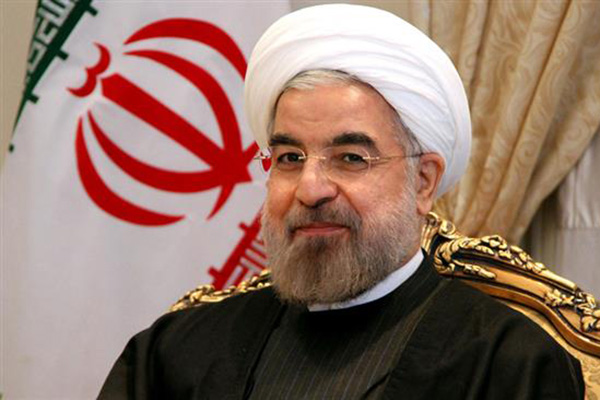
Hassan Rouhani

Addressing a gathering of people in the northwestern city on Monday May 30, he said the government was steadily working to improve the status of the lake, noting that the lake’s water level has already risen by almost 10cm.

The president also said that the positive vote of the people during the latest elections was an approval of officials’ performance in regards to economic prosperity. It was also a strong “no” to violence and extremism.

Rouhani arrived in Urmia Monday to pay his 28th visit to the country’s provinces. A number of cabinet members are accompanying President Rouhani during his provincial visit.

During his two-day stay, the President is scheduled to meet Ulema [religious authorities] and war veterans, as well as attending a meeting with businessmen.

VP Says Iran Will Guarantee Foreign Investments

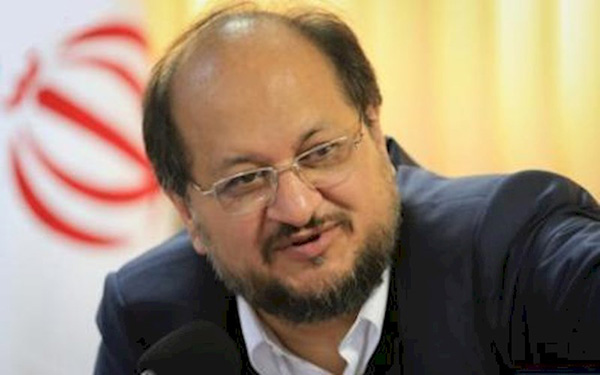
Mohammad-Shariatmadari

Talking to a group of Azerbaijani Iranian expats in the northwest of Iran on Sunday May 29, he said that the government is willing to remove the obstacles to investments made by Iranians living abroad, by offering a series of investment incentives.

He said that the relevant ministries are trying to prepare the necessary grounds for attracting foreign investors.

The Vice President further said that the implementation of the Joint Comprehensive Plan of Action (JCPOA) will further encourage investment in Iran.

Stating that the removal of the United Nations sanctions against Iran after the signing of a nuclear deal has facilitated foreign investment in Iran, the official expressed his hope that the remaining banking obstacles will be removed soon.

InterCity Group to build hotels in Iran

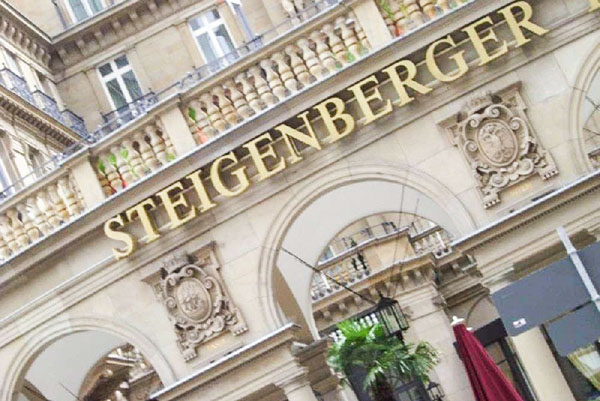
hotels

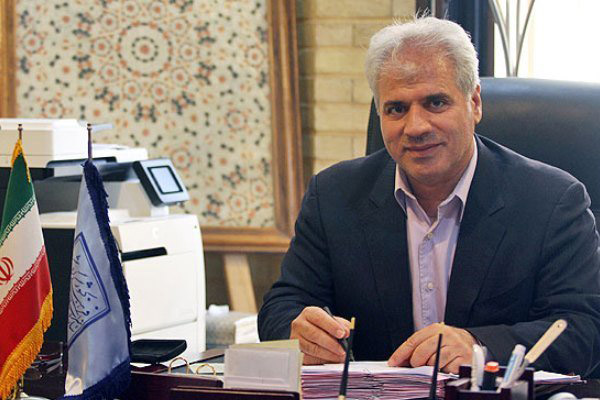
Massoud Soltanifar and Steigenberger Hotels’ Puneet Chhatwal agreed that the German holding company build 10 hotels within 7 to 10 years in different cities in Iran, the public relations office of the organization announced on Sunday May 29.

The meeting was part of a broader campaign by the Cultural Heritage Organization to invite foreign companies to contribute to Iran’s tourism and hotel infrastructure. Chhatwal is the company’s CEO who, along with a group of Middle East advisors, is visiting Iran. Iranian private sector enterprises also attended the meeting, along with the participation of Saeid Shirkavand, Soltanifar’s deputy for Planning and Investment.

“We have plans to build 4-and 5-star hotels, as well as to improve our existing 3-star hotels. We predict to add 25 such hotels [4- and 5-star] by the next decade; the private sector has already been working on the project,” he told the meeting.

“Currently, the private sector is already building 170 high-quality hotels. Turkish hotel builders will also contribute to this construction rush soon, through an MoU with the country’s tourism officials, where they will build 10 5-star hotels. Investors from Arab countries are also building 3 hotels in Mashhad,” he detailed. “During the next three months, we will hold joint sessions with world’s giants in hoteling and tourism. The government welcomes the influx of foreign investment in this sector, and our domestic companies will contribute to foreigners’ efforts as coordinating bodies.”

“An MoU between the Organization and the InterCity Group will contribute to preparing a roadmap,” Soltanifar added.

Chhatwal, for his part, believed that Iran had been taking serious steps towards developing its tourism infrastructure. “Our experts have visited Iran’s metropolitan cities four times in six months, and have looked at Isfahan, Tehran, Shiraz, and other locations to get a feel for the general tourist market. As a company with 70 years of experience in hoteling, we will provide Iran with our experience to contribute to tourism development,” he said. “In a highly unstable Middle East, Iran is an island of stability and a paradise for investors, which provides investors the best options in every regard.”

Chhatwal described the agreement and discussions as constructive. “There are excellent grounds and shared views of the situation from the German and Iranian sides on the project. We are currently looking for proper Iranian partners to launch hotel-building projects.”

Zarif Urges Iranian Elite to Help Strengthen World Economic Ties

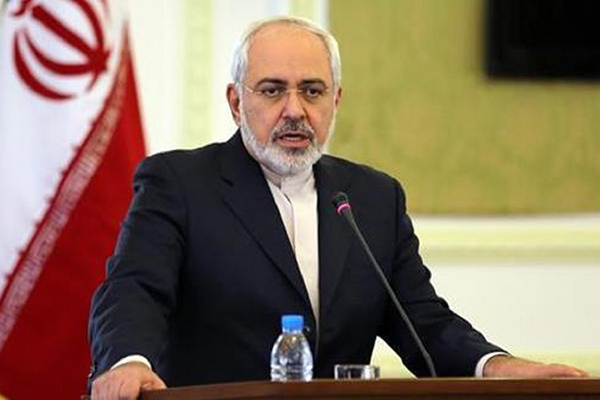
Mohammad Javad Zarif

Talking to a group of Iranian elite figures on Monday May 30, he said all should make use of the new opportunities opened for the country after the removal of sanctions, and enhance Iran’s economic relations.

Though Europe has been a good partner for Iran in economic areas, the minister noted, Iran is not restricting itself only to European countries, but rather seeks to develop relations with all the world.

Zarif said countries in eastern or northern Europe could be good trade partners for Iran.

He further explained that this was his first “real” business trip to Europe, as a big delegation comprised of private sector businessmen are accompanying him to economic discussions in four European countries.

He said the nation’s resistance during years of sanctions and its overwhelming participation in the 2013 elections had led to a remarkable cut in the volume of sanctions.

The Foreign Minister said Iran should become resistant to sanctions in a way that no other country would ever even think of imposing sanctions on it.

He said Iran is a secure country because security comes from inside and is not dependent on any foreign country, stressing that the same should happen in the economy.

‘Peace and Friendship’ at Tehran Intangible Cultural Heritage Meeting

Mohammad-Hassan-Talebian

The Regional Research Centre for Safeguarding Intangible Cultural Heritage in West and Central Asia, under the auspices of UNESCO (Tehran ICH Centre), is holding the meeting from May 28 to 30 at Tehran’s Laleh Hotel.

Talebian stressed the importance of attending the event by representatives from other member countries since “It will lead to more understanding and friendship in the region.”

“Eleven countries are already members of the centre, and Oman, Qatar, Turkmenistan, and Kuwait have applied for membership,” he said.

The members are Iran, Armenia, Afghanistan, Iraq, Kazakhstan, Kyrgyzstan, Lebanon, Pakistan, Palestine, Tajikistan, and Turkey.

In 2006, Iran joined the 2003 Convention for the Safeguarding of Intangible Cultural Heritage, and on April 28, 2010, the agreement regarding the establishment of the Tehran ICH Centre was signed by Iran and UNESCO. The Centre was officially inaugurated in November 2012.

Iran Task Force to Follow Up on Frozen Assets: Araqchi

Araqchi

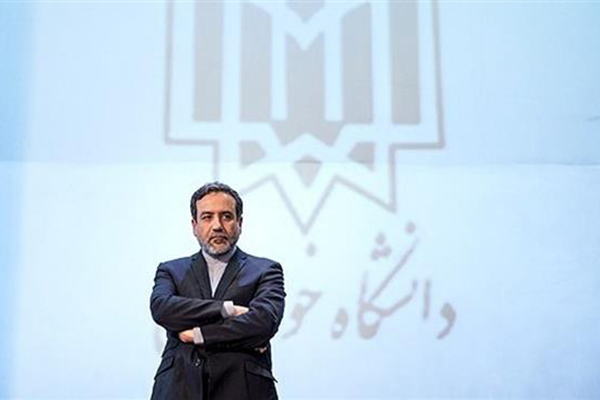
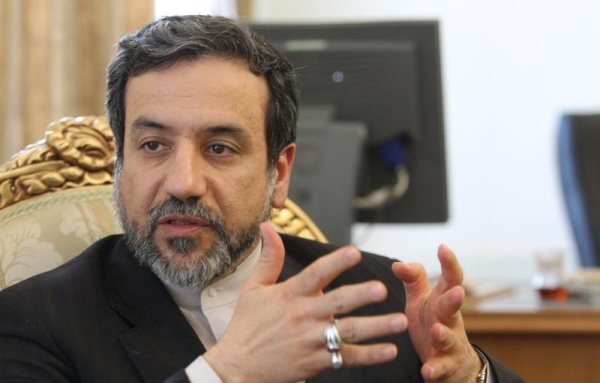
Iranian Deputy Foreign Minister for Legal and International Affairs Abbas Araqchi made the announcement while speaking at an event at Kharazmi University in Tehran. “The government has formed a special working group in this regard,” he said, adding, an investigation was being conducted.

Iranian lawyers are pondering “how to deal with the seizure of $2bn of Iranian assets,” Araqchi said.

He further commented on the US purchase of heavy water from Iran. “The US has applied for 32 tons of Iran’s heavy water. We are also in negotiations with Russia for the same amount,” said the high-ranking official, noting the deal with the US had been clinched.

He also said that Iran “Still continues heavy water production” and is in talks to sell “around 40 more tons” of the highly sought-after product.

Last month, the US government completed an $8.6-million deal to buy 32 metric tons of heavy water from Iran. On Wednesday, 251 American Congressmen voted for a bill that would prohibit such purchases next year. The measure is yet to be approved by the US Senate.

11th International Energy Conference Starts in Tehran

11th international energy conference iran

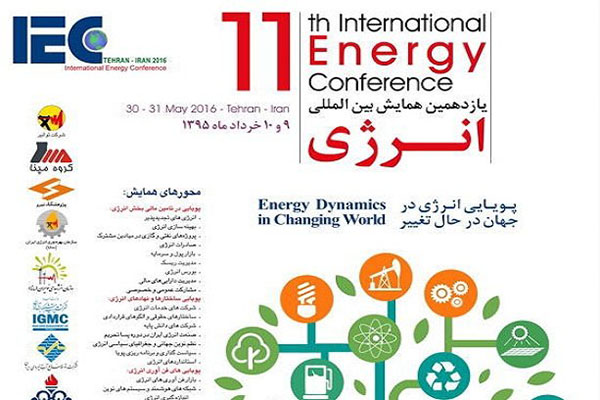
The 11th International Energy conference (IEC), organized by the Iranian National Energy Committee, the member of World Energy Council (WEC), is underway at Niroo Research Institute (NRI) in Tehran and runs until May 31.

Held under the main theme of “Energy Dynamics in the Changing World”, the IEC includes various items including paper presentations, workshops, key speaker addresses and professional round tables.

Among the key speakers at the conference are Dr. Urban Rusnák, Secretary General, Energy Charter Treaty (ECT); Dr. Alessandro Clerici, the Executive Chair of the World Energy Council’s RES Systems Integration study, Italy; Dr. Carole Nakhle, Director of Crystol Energy, UK; Christopher Cook, Director of Petro Scotland limited, Dr. Ken Koyama, Chief Economist and Managing Director, Institute of Energy Economics, Japan; and Prof. W. D. Walls, Department of Economics, University of Calgary, Canada, as well as a number of other prominent experts in energy sector.

At this two-day conference, experts from more than 20 countries, including the US, Germany, Belgium, India, Finland, and Greece will share their ideas related to current energy challenges, in the form of four specialized panels.

The IEC aims to create a forum where energy experts can confer on specialized national and international deliberations, accomplishments and contemporary research activities in the energy sector.

London Branch of Melli Bank Reopens

Iranian bank-London

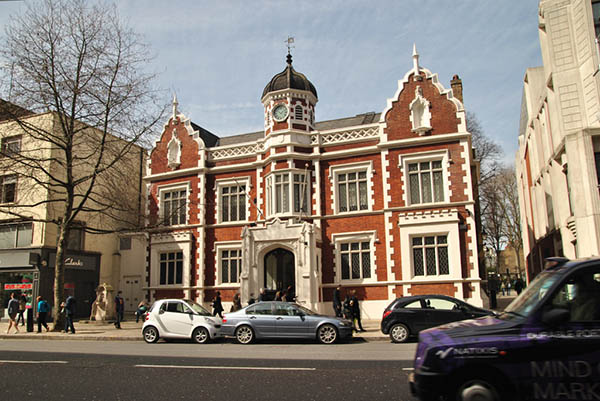
“Melli Bank is linked to the Society for Worldwide Interbank Financial Telecommunications (SWIFT), and we are currently trying to expand our correspondent ties with other lenders,” the BMI website quoted him as saying.

Bank Melli, Plc. came under sanctions in August 2008, and its activities in Britain were halted. The bank has a long history in London and had been active in the world’s top financial district since 1967, before being restricted eight years ago.

Bank Melli Iran is in the process of expanding its international operations. Its officials have called for enhanced coordination between the bank’s overseas branches to improve performance in the post-sanctions era.

Abdolnasser Hemmati, former head of BMI, said earlier that the Bank Melli branch in Hamburg had been granted authorization and a licence to restart its activities in Germany. “With the issuance of this licence, all of our blocked funds in our Hamburg branch in Germany were released,” the website quoted him as saying.

“It’s been a while since we made the arrangements to restart our international activities, and it was just recently that Bundesbank (Central Bank of Germany) issued a new licence authorizing the BMI branch in Hamburg to restart work.”

He added that limitations on money transfers for BMI branches in the UAE have also been lifted.
“BMI’s subsidiary in Russia, Mir Business Bank – Moscow), faces no obstacles in its activities and will restart normal business in the near future.”

BMI is the largest commercial bank in Iran and the Middle East with over 3,300 domestic branches and 43,000 employees. It has 18 overseas branches.

Since 1933, BMI has grown into a large retail bank with several domestic and international branches. BMI opened its first foreign branch in Hamburg in 1965. Bank Melli Iran has 18 international branches and services in 11 countries.

Too Soon to See JCPOA Results in National Economy

Seyyed Abbas Araghchi

Araghchi told Mehr on Sunday evening, May 29, that sanctions had been removed; however, “It would be naïve to assume that its effects should be translated into concrete changes and improvements in our economy easily; the damage wrought upon the country by the Iraqi-imposed war [1980-88] wasn’t fixed in four months either,” he emphasized.

“For example, Iran’s oil production cannot immediately regain its pre-sanctions status, and it will be a matter of time, since we were deprived of markets and customers during the time when sanctions bit our economy with full force. The situation is the same for other items, so trade in Persian carpets will have to reattain the level it had before sanctions,” he detailed. “In our absence, Indian, Pakistani, and Chinese carpets have filled the vacuum created by Iran’s exit from the markets. You can apply the situation from oil down to trade and banking, and a host of other fields.”

Araghchi believes that for an economy to repair and recreate itself requires time and patience. “We should allocate a reasonable time to recover from the shock of sanctions and rebuild our economy. On top of these difficulties, add sabotage by other governments hostile or reluctant to renewed Iranian presence in global markets and trade, which has contributed to the failure of sanctions removal in revealing its effects during four months. However, we have been making efforts to face these difficulties to regain our place.”

World Islamic Forum Urges Increased Unity among Muslim States

World-Islamic-Forum-3

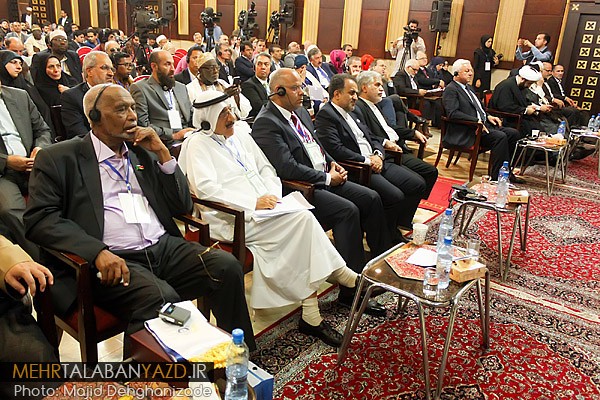
Nearly 100 guests from 35 countries attended the two-day international event, which kicked off on May 24, and was supported by the Iranian Foreign Ministry. The theme of the Forum was “Strategic Communications: Reference Values, Institutions and Individuals.” The Forum is supported by the Organization of Islamic Cooperation (OIC).

The important goals of the Forum included bringing global Islamic think-tanks closer together and discussing the issue of a world free from violence and extremism.

The Iranian President’s Advisor on Ethnic Groups and Minorities’ Affairs Ali Younesi, as well as a number of thinkers from different countries, attended the closing ceremony of the Forum, held on Wednesday, May 25.

The Forum wrapped up its two-day summit by releasing a 22-article statement read aloud at the closing ceremony. The statement underlined the need for promotion and reinforcement of solidarity and unity among member states.

It also called on Muslim states to be internationally responsible and fight the root causes of immigration, displacement, and the refugee crisis, as well as their social repercussions.

The statement further expressed concern over the spread of Islamophobia and the exacerbation of actions against Muslims in the West, and strongly condemned the attacks on Muslims and Islamic centres, as well as social restrictions placed upon the followers of Prophet Muhammad (PBUH)’s religion.

It thus urged the countries that host Muslim minorities to take necessary action against such Islamophobia.

The member states also hailed the resolutions passed by the United Nations General Assembly on the Dialogue of Civilizations and the World against Violence and Extremism [WAVE], both of which were proposed by Iranian presidents.

The ratification of such resolutions not only prepares the grounds for increased understanding, enhanced unity, fewer causes for conflict and disputes, and finally a decrease in violence, extremism, and terrorism, but it would also encourage the international community to pursue the implementation of such plans more seriously.

The Forum voiced its concern over the support provided for violent and extremist thought being propagated via public media in the name of freedom of speech, and also denounced any politically-motivated discrimination, limitation, and censorship against independent media.

The statement also underlined the necessity for a stronger role to be played by academics, religious authorities, and scientific institutions in the expansion of strategic communications, and called for further dialogue among religions, cultures, and more respect for human rights, as well as measures to remove the root causes of extremist and violent ideologies.

The Forum stressed that the emergence of Takfiri terrorist groups and the increase of their actions in different parts of the world, particularly in the Middle East and North Africa, are the result of plots by common enemies to cause rifts among Muslims and war between Islamic states.

Therefore, it added, the elites of the Muslim world should join hands and show resistance to these plots hatched by common enemies and their implicit and explicit support for extremist and terrorist phenomena.

The Forum referred to the issue of the occupying Israeli regime and its uncontrolled crimes against Muslims, particularly the people of Palestine and Lebanon, as the biggest problem of Muslim world, and urged all member states to spare no effort in countering the challenge and finding solutions to the issue.

It finally urged the international community including all countries, think-tanks, researchers, and religious authorities to fight the ISIS terrorist group, emphasizing that it is “unconstructive” and “wrong” to divide terrorists into “bad” and “good” groups.