Wednesday, December 24, 2025
Home Blog Page 3623

Tehran, Ankara Agree on Repatriation of 700 Iranian Inmates

In remarks made on Wednesday, Abbasi noted that over the past years, the Islamic Republic has started concerted efforts to repatriate Iranian inmates from a number of countries.

He pointed to the Justice Ministry’s active judicial diplomacy since the beginning of the new Iranian calendar year on March 20th, and said, “283 Iranian inmates in Turkmenistan were repatriated in exchange for 4 Turkmen inmates in Iran in the wake of the visit of Iranian President Hassan Rouhani to the country.”

The Persian-language Iranian Students’ News Agency (ISNA) quoted him as saying that over the past weeks, five Iranian inmates in Afghanistan have been transferred to Iran and the Justice Ministry is seeking to repatriate 47 Iranian prisoners in Kuwait.

“We have 700 inmates in Turkey. A preliminary agreement has already been reached to repatriate them in exchange for a number of Turkish inmates in Iran,” he said.

Abbasi further noted that Iran and Brazil have also signed four judicial treaties including extradition of inmates.

He underlined that Iran is expected to sign similar treaties with an Arab state in the near future and noted arrangements are underway for signing further treaties with other states.

Oliver Stone Blasts Western Media for Portraying Negative Image of Putin

In response to a question about his view on President Putin, Stone described him as a great politician who has been at the upper echelons of power in Russia over the past 18 years.

“For the Putin Interviews, I held conversation with Putin for more than 30 hours. He never asked me to give him the questions in advance and also never asked for any changes to the final product,” he noted in an address to a workshop for filmmakers from across the world in Tehran.

Stone, who is visiting Iran to attend Fajr International Film Festival, blamed Western media for portraying a negative image of Putin and said unfortunately media in the West is dominated by biased ideologies. “During the interviews, I tried to behave as a filmmaker not a journalist.”

Touching on his film Snowden, he said “I like to make movies which others are not interested in making them. Snowden is one of these films. In the US and even other parts of the world, there is an urgent need for whistle-blowers like Snowden.”

He underlined that due to the controversial theme of the film, he and his crew failed to convince leading broadcasting companies to screen the film. “Since Snowden is among the unfavourable figures of the Americans, we had poor sales in the US.”

He said most Americans have a negative view of Snowden because he has disclosed the country’s secret information. “In the governmental circles, he is called the violator of the US Constitution.”

In response to a question on how much freedom he has in producing anti-US films in America, he said some people in the US and even Iran think that “I’ve not been killed yet because I’m a CIA agent. But so far, I’ve not even met a CIA officer. It goes without saying that the CIA is seeking to exert its influence on my films through its deep influence in Hollywood.”

Stone said he is going to respond to many questions raised about Hollywood mechanisms in his autobiography to be released soon.

“Today, despite the growing penetration of the cyberspace into our societies, there is no understanding of the extent of the knowledge that the governments have about their people. We should prepare ourselves for the worst-case scenarios. The cyberspace has provided the governments with unlimited power. Their military budgets have increased drastically at the cost of social budgets,” he was quoted as saying in a report by the Persian-language Fars News Agency.

Stone went on to say that today the world is the scene of costly cyber wars and added the US holds the leadership of the cyberspace as the fifth pillar of its army. “The private companies pay money for information and sometimes the government secretly collaborates with them.”

He referred to the former first lady’s live remote appearance from the White House in 2013 at the Oscar ceremony to announce the year’s best-picture winner (Argo) and said the event showed how deep the relations between Washington and Hollywood are.

In response to a question raised by a Chinese student about Stone’s interest in making a film in China, the American film director said his plan to make films in China has been rejected due to the censorship in the country.

On how he leads the casting process of his films, Stone said he always picks up actors and actresses who are attractive to the audience. “The viewers should enjoy watching the actors and actresses of your movie. I’m really wondering how on earth many Iranian and Indian filmmakers pick up boring actors and actresses but win awards in international film festivals!.”

Asked by an Iranian student about the historical distortions in his movie Alexander (2004), Stone said he made the movie based on his own interpretation of history.

“Nobody can say what has happened exactly in the ancient times. Of course, I must confess that I made the film in a bad time. A short while after the film, the Bush administration waged a war against Iraq and I didn’t know what was going to unfold next. Meanwhile, the Warner Brothers Company edited the film in line with its own interests, cutting about 26 minutes of the original film. I advise you to watch the complete copy edited by me.”

Oliver Stone Blasts Western Media for Portraying Negative Image of PutinThree-times Oscar winner briefly visited the historical city of Isfahan in central Iran before hosting the workshop for filmmakers in Tehran.

Stone is best known for his films on controversial themes including Platoon, Scarface, Born on the Fourth of July, and Natural Born Killers.

He has already produced two documentaries about Latin American politics: Comandante (2003) about Cuban dictator Fidel Castro, and South of the Border (2009) which focused on several other left-wing leaders, notably Venezuelan President Hugo Chávez.

The legendary director also created Untold History of the United States (2012). It is a 10-part television documentary on the American political history.

In 2007, Iran’s former President Mahmoud Ahmadinejad rejected a proposal by Stone to make a film about him.

In 2012, Stone’s son Sean Stone visited Iran and converted to Shiite Islam.


Oliver Stone Blasts Western Media for Portraying Negative Image of Putin

Iran to Build 100 Movie Theatres This Year: Minister

Seyyed Abbas Salehi said cultural centers inject fresh blood into the society and expressed hope the new developments could lead to inspiring events in the cultural area.

“We first need to open further cultural centers across the country and then take full advantages of them,” the minister was quoted as saying in a Farsi report by Fars News Agency.

He then called for attracting public investments in the cultural area and noted the plans to open further movie theatres across Iran reveals that the ground is prepared for cultural projects and the government needs to put its focus on them.

Iranian films in recent decades have garnered international fame and now enjoy a global following. Along with China, Iran has been lauded as one of the best exporters of cinema in the 1990s.

Some critics now rank Iran as the world’s most important national cinema, artistically, with a significance that invites comparison to Italian neorealism and similar movements in past decades. A range of international film festivals have honoured Iranian cinema, particularly in the last twenty years.

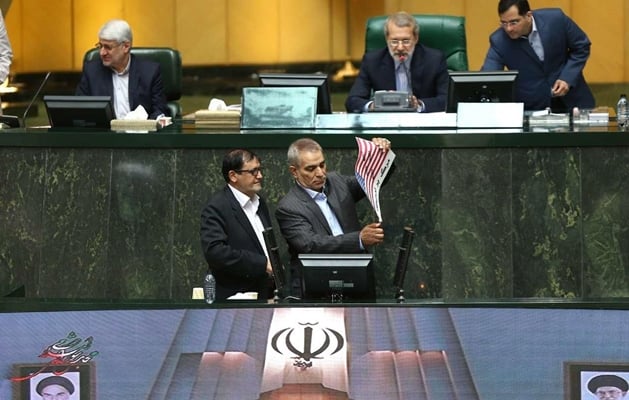
Iranian MPs Issue Statement to Express Support for IRGC

The statement says that the anniversary reminds every one of the efforts made by the organisation to defend the country, nation and the Islamic Republic during the past forty years.

“The formation of IRGC was aimed at preserving the revolution and the nation of Iran against the military, cultural, and political plots of the enemies,” read the statement, as reported by ICANA.

“Over the past 40 years, the IRGC has defended the Islamic Revolution against the military and cultural invasion as well as political conspiracies.”

The Iranian MPs have also hailed the significant role of the IRGC during the 8-year imposed war, their advisory role in Syria against the plots of US, Saudi Arabia, and Israel, as well as their constant efforts in reconstructing the country next to their cultural, social, security role in the country.

Reiterating their support for the IRGC, these lawmakers have called on the authorities of the country to frustrate the enemies, especially the Zionists, the US and Al Saud, by helping this popular entity.

It’s Time for World Powers to Stop Hegemonic Illusions: Iran

Zarif made the remarks while addressing the 72nd High-level Meeting on Peace building and Sustaining Peace at United Nations Headquarters in New York on Tuesday.

“Conflict prevention requires focusing on the root causes, including the mutually reinforcing afflictions of occupation, foreign intervention and extremism. Additionally, advancing hegemonic illusions or attempting to achieve security at the expense of others through exclusion and block formations, have invariably caused tension and conflict, and led to destructive arms races,” he added.

Zarif also noted that Persian Gulf countries must join forces in order to maintain regional peace instead of trying to become regional powers.

The Iranian foreign minister further called for the establishment of a “Regional Dialogue Forum” and the establishment of new security networks aimed a replacing current national security blocs.

“It is crucial to now shift to a new paradigm based on joining forces to create strong regions, instead of anyone seeking to be the strongest in our region. And shifting from forming security blocks to accepting security networking. Both are predicated on respect for the interest of all stakeholders–large and small–coupled with a win-win philosophy. In the current inter-connected world, no country’s security can be assured at the expense of others,” he noted.

On Monday, Zarif said that era of zero sum games is long gone while addressing the Council on Foreign Relations on Monday in New York.

“In the wars of 20th and 21st centuries, there are no winners; only the degree and amount of loss will be different. In the globalized era… you cannot have security at the expense of insecurity of others,” he said, adding, “The era of hegemonic influence is long gone.”

He added that Saudi Arabia is trying to introduce Iran as a regional threat, while adding that more dialogue is needed among regional states.

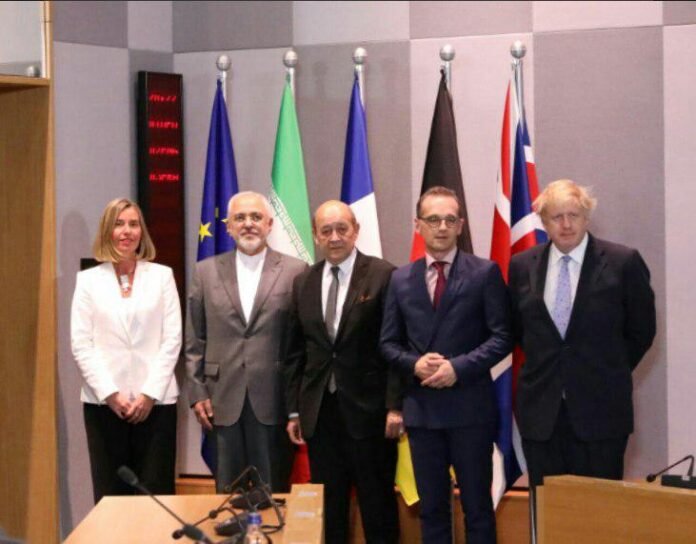
Iran, Germany Stress Political Settlement of Syria Crisis

In the Tuesday meeting in New York, the two top diplomats conferred on the situation in Syria and emphasised the need to make efforts to restore stability to the Arab country through political talks.

They also rejected any military solution to the crises in the Middle East.

Accordingly, Zarif and Maas discussed Syria while stressing the trend of Astana talks as well as a peaceful and political settlement of the crisis in the country.

In addition to regional and international issues, the two foreign ministers underlined the need to enhance bilateral relations and mutual cooperation on different fronts.

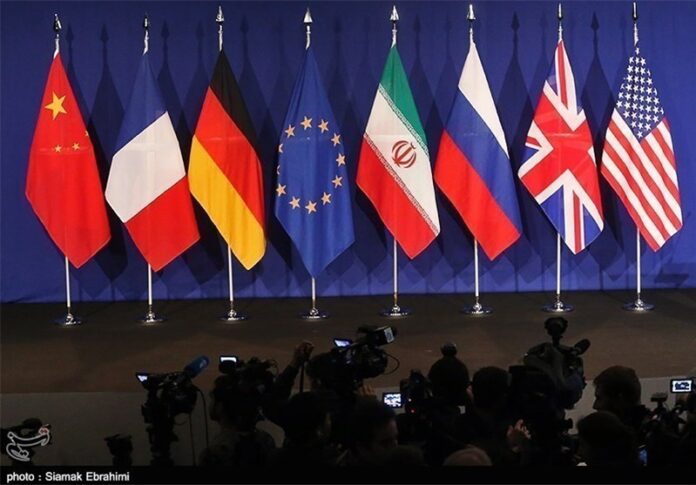
They further discussed the future of the Iran nuclear deal and the necessity of more efforts and commitment on the part of European countries to preserve it.

Among other key topics on the agenda were upcoming trips to the US by European leaders and their attempts to maintain the nuclear agreement as well as the need for them to make all parties to the deal fully live up to their obligations under the JCPOA.

Iran, Germany Stress Political Settlement of Syria Crisis


Zarif, UN Chief Rule Out Military Option in Syria

Later in the day, Zarif also met with UN Secretary General Antonio Guterres.

High on the agenda of the talks were the developments in the Middle East, especially the situation of Syria and Yemen, and the UN’s role in helping restore peace and stability to the region through political dialogue.

The two sides also rejected any military solution to the crises in the region.

The UN chief further expressed his support for efforts to preserve the Iran nuclear deal while stressing the need for all signatories to the deal to make good on their obligations under the agreement.

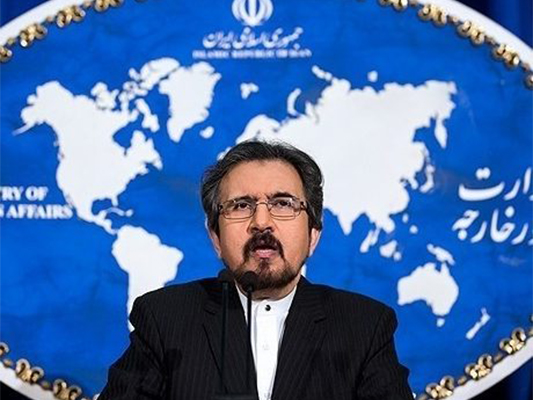
Iran Offers Condolences on Martyrdom of Yemeni Official

In a statement on Tuesday, Qassemi condoled with his family, Yemeni people and members of the Council.

Pointing to the three-year resistance of the brave and patient people of Yemen, Qassemi said the Yemeni nation will soon reap the fruits of their resistance and endeavours against the aggressors.

Samad was killed in Hodeidah on Yemen’s west coast.

The leader of the Houthi movement, Abdul Malik al-Houthi, said in a televised speech on Monday that Samad’s death will have severe consequences for Saudi Arabia.

Iranian Entrepreneur Donates 85,000 Saplings to Help Resolve Dust Pollution

Hassan Varshowchi, the founder of Rana Agro-Industry Company, has donated about 85,000 palm tree saplings worth about $500,000 to the villagers who planted them in Ahvaz, Dezful, Izeh, Abadan, and Minoo Island. The number of donated saplings would reach 100,000 by autumn 2018.

Varshowchi says he has been working as the founder of the plant tissues cultivation industry in Iran for 25 years. With the advice of Issa Kalantari, the Head of Iran’s Department of Environment, he has chosen to donate the saplings to Khuzestan province where more than 3.5 million of palm trees died during the Iran-Iraq war.

Now, with its daily drought and rising dust mounds of about 700,000 hectares, Khuzestan province is suffering from dust pollution almost every day.

What follows is an interview with Varshowchi conducted by the Persian-language Shahrvand daily:

Q: What was your motivation for donating this number of saplings? Why didn’t you enter other fields?

A: Due to the nature of our work in plant production, and after years of providing saplings for Khuzestan province, we have been in touch with the Agriculture Organization of the province. On the other hand, due to the environmental problems of this province, especially the dust pollution, we focused more on this issue. We wanted to take steps to support and help reduce the environmental crisis in Khuzestan; therefore, we felt it would be better to give this gift to Khuzestan province.

In our consultations with those who were involved, they said there are other polluted provinces like Ilam, Kermanshah, Sistan and Baluchestan, Hormozgan, etc. but these days, all the focus is on Ahvaz’s weather. For this reason, the board of the company decided to give this gift to Department of Environment, but we consulted with the top authorities first, because of the huge number of saplings. Therefore, we talked with Kalantari, and his offer was Khuzestan. Of course, we plan to provide saplings for other provinces that are suffering from dust pollution as well.

Q: Why did you choose palm trees?

A: The palm is a plant which is mentioned in the holy Quran and is a sacred tree. In palm-producing provinces, palm trees are considered as a human being. When a palm tree’s life comes to an end after about one hundred years and it does not bear fruits anymore, the farmers cut it and use the verb “kill” for the act. The palm has a behaviour and character similar to humans. Even in some provinces during the fertilisation and pollination season, a palm wedding is set up. Every person, even those who are not familiar with a palm grove, feel different when they go among the trees because they would be influenced by the beauty and grandeur and especially the patience of palm trees. Many of those, who have served during the war, witnessed that the palms were thrown into salt water due to the dismantling of irrigation systems and rivers, but they bore fruit. This is what I mean by patience. This is really amazing.

Iranian Entrepreneur Donates 85,000 Saplings to Help Resolve Dust PollutionQ: Are the expenses paid by your company?


A: Yes. Issa Kalantari, who was informed about the establishment of the company, referred to me as the person who donated these trees, but the move is not carried out independently from Rana Company.


Q: Given the critical situation across the country, can the help of other people involved in growing saplings be effective in reducing dust pollution?

A: If the problems of the province are solved and they can spend a significant portion of the water to develop greeneries, it will help resolve the dust pollution problems. Although the problem is much more complicated than one may think, we must finally start the job. It’s a fact: we started to take actions too late. Dust is a common problem for all of us, but it is a pity that we took actions very late.

Two More Iranian Architects Honoured by A’ Design Awards

The A’ Design Award and Competition is a prestigious international competition aimed at highlighting the excellent qualifications of best designs, design concepts and design oriented products worldwide.

In the 2018 edition of the competition, an unprecedented number of Iranian architects managed to win the top prizes.

The Entrance Gate of Gilan province, a structure which is to be built in the Heyran village of the Astara border town based on a design by Nima and Sina Keivani, was among the works that failed to win a prize, but was honoured by the jury of the competition in Italy.

According to a Farsi report by Mehr News Agency, the Keyvani brothers had earlier won a silver A’ Design Award for their construction and interior design of a building in Kiev, Ukraine, called “Mehr-Khaneh” last year.

Inspired by the Iranian culture and the nature of the Gilan province, these two brothers designed the “Gate of Gilan” this year and managed to grab the attention of the jury and gain their appreciation.

“In the designing of this building, the regional elements are observed. One of these elements is the use of sloped roofs as the main frame for the design, which is the general form of the traditional houses in the region,” Nima Keivani says.

“Another thing is the natural elements of the region. The Caspian Sea, forests, and winding roads are the other symbols of this region, which are used in the designing of this structure. The curved style used in the lower part, the blue color, the sea wave pattern alongside the single cypress tree are the elements of Gilan region that can grab the attention of anyone who enters through this gate,” he added.

Two More Iranian Architects Honoured by A’ Design Awards

The gates of cities are somehow symbols of their identity, he noted, adding that in an era with, more or less, homogeneous forms of cities, this has been the main inspiring idea for designing the project.

“This is the first time that such a gate is going to be constructed in such a region in Iran. The novel form of the gate involves a set of meaningful symbols which allude to the traditional features of the location.”

“The gate is designed in a way that the viewer faces various forms from different angles. Those who approach the entrance receive a sense of entering a green area by its curvy design and the way the tree is designed in it. From another angle, you see a traditional house of the region being viewed in a winding road before arriving at the gate. Actually, when you move towards the gate, you see the changes of its form during various times. On the other hand, since the overall design is inspired by the architecture and nature of the region, there is a good interplay between the building and the nature around it,” added Keivani.

A’ Design Awards is a premier annual design competition that honours the best designers, architects, engineers, design studios and design oriented companies worldwide to provide them publicity, fame and recognition.

Iranian architects in recent years have always been among the winners of the prestigious award in various sections.

This year a record-breaking number of Iranian architects managed to bag the prestigious award in many sections.

Iran Says Turkey’s GAP Project Destroys Regional Ecosystem

Referring to Turkey’s construction of large and small dams on the Tigris and Euphrates rivers, Mohammad Mehdi Boroumandi said that “Turkey plans to construct 22 dams on the two major rivers by carrying out GAP project.”

“The Turkish government has signed an agreement with the Zionist regime to export the drinking water collected from the GAP project to the occupied territories in the future,” noted Boroumandi in an interview with the Persian-language news agency ICANA.

“Currently, with the launch of the Atatürk Dam they have collected 50 billion cubic metres of water, which has led to the drying up of a large part of the lands in Iraq. Dust pollution in Iran’s Khuzestan Province and western and northwestern regions of the country are due to the dryness of these lands in Iraq.”

Boroumandi further noted that the Ilisu dam is expected to be launched in 2019 with a volume of 11 billion cubic metres, making the situation in the region much harder.

“I think we will be damaged by the GAP projects, so I would like to summon the Minister of Energy to the Parliament to ask him about it. This Turkish project could cause irreparable damage to Middle East ecosystem.”

Meanwhile, Abbas Papizadeh, a representative of Khuzestan Province at the Iranian Parliament, also complained about Turkey and Saudi Arabia’s non-cooperation in resolving the dust pollution problem saying that the issue of haze pollution is not on the agenda of Ankara and Riyadh.

Turkey says the Southeastern Anatolia Project is a multi-sector integrated regional project based on the concept of sustainable development for the 9 million people (2005) living in Turkey’s Southeastern Anatolia region. The total cost of the project is over 100 billion Turkish lira. The project area covers nine provinces which are located in the basins of the Euphrates and Tigris and in Upper Mesopotamia.

Current activities under GAP include sectors like agriculture and irrigation, hydroelectric power production, urban and rural infrastructure, forestry, etc. Water resources development envisages the construction of 22 dams and 19 power plants and irrigation schemes on an area extending over 17,000 square kilometres.