Wednesday, December 24, 2025
Home Blog Page 3624

Iraq Elections: Fake Sex Tapes Created to Taint Female Candidates

The main victims of the campaign, Hala Qasim al-Yaseri from the Civilized Alliance led by Faiq Al Sheikh Ali, and Entezar al-Shamri from the Victory Alliance led by Iraqi Prime Minister Haider al-Abadi, have vehemently denied the videos as fake.

They called the sex videos politically-motivated, according to a report by the Persian-language Islamic Republic News Agency (IRNA).

Experts say a new software application has been developed by Israel which can fabricate sex tapes drawing on the man or woman’s photos.

“The software is developed by the Zionist regime to tarnish the image of Muslims in the world and suppress the people who are against them,” experts say.

Following the release of the vulgar videos, Entezar al-Shamri who also serves as a university professor in Baghdad withdrew from the election competition. There is no report yet on the withdrawal of Hala Qasim al-Yaseri.

Over the past years, similar videos have been released in Iraq with the aim of tainting the image of artists and media figures, mostly women. But this is the first time that election candidates are targeted directly by such videos.

Some political leaders in Iraq have harshly reacted to the fabricated videos, saying some foreign hands are at work to defame Iraqi women.

Many others resemble the new video campaign to a report by Saudi paper Asharq Al-Awsat published two years ago claiming the huge turnout of Iraqi women in Arbaeen pilgrimage is mainly due to their devil goal to satisfy their sexual demands.

Arbaeen is a Shiite Muslim religious observance that occurs forty days after the Day of Ashura and commemorates the martyrdom of Imam Hussein, the grandson of Prophet Muhammad (PBUH).

The report sparked massive protests in Iraq so much so that the Saudi paper was forced to apologize to the Iraqi nation.

Iraq is preparing for its fourth parliamentary and provincial assembly polls since the country ousted long-time dictator Saddam Hussein in 2003. Scheduled to be held on 12 May, the elections will decide 329 members of the Council of Representatives who will in turn elect the Iraqi President and Prime Minister.

6,904 candidates have registered to run for elections. The figure is less than that of 2014, when 9,000 candidates put their names in the ring. According to reports, around 90% of the candidates are incumbents and election turnout is expected to be less than 60%.

Iraq’s 2005 Constitution reserves a quarter of the seats in the Parliament for women, but in practice, women hold only about 17%.

Iran to Use Qatar, Instead of UAE, as Its Hawala Trade Hub

“Several Iranian banks have opened accounts with Qatar National Bank, through which the transactions of payment orders in foreign currencies will be carried out,” Fars news agency reported Tuesday, citing what it described as a senior official at the Central Bank of Iran.

“Due to the difficulties that have arisen with Dubai for foreign exchange transfers, forex relations are expanding with Qatar,” the official said, adding “our effort is to turn Qatar into a forex hub” for Iranian financial transactions and fill the void as a result of problems with Dubai.

Dubai emerged as an important link between Iran’s economy and the rest of the world after the Islamic Republic was frozen out of the international banking system under intensified US and European sanctions in 2011.

Informal dealers replaced normal banking channels to process flows of money into and out of Iran, providing currency to ordinary Iranians and turning Dubai into a center for handling trade and investment for Iran.

The system being used is called hawala, under which dealers take in payments in Dubai and pay out in Iran through their connections.

The dealers were licensed by UAE authorities and while the hawala trade initially did not appear to violate any regulations, new restrictions are reportedly complicating it.

The practice has also created problems in Iran where dealers have been at the center of a rush by some Iranians buying foreign currencies in the face of the depreciating rial.

Antiquities Advertised for Online Sale Seized in Iran

The antiquities were advertised on the popular and frequently visited website Divar, a website similar to the eBay. Iranian cultural heritage authorities tracked the suspect and finally seized the items in his home in Bushehr province, southern Iran.

The accused was arrested and handed over to judicial officials to go through legal proceedings, reported the Persian-language Azad News Agency (ANA).

The ancient objects included the base of a pillar of a fire temple, pieces belonging to the holders of fire pots, stone mortars and millstones, among other things.

According to cultural heritage experts, the objects have historical value and belong to the Sassanid era.

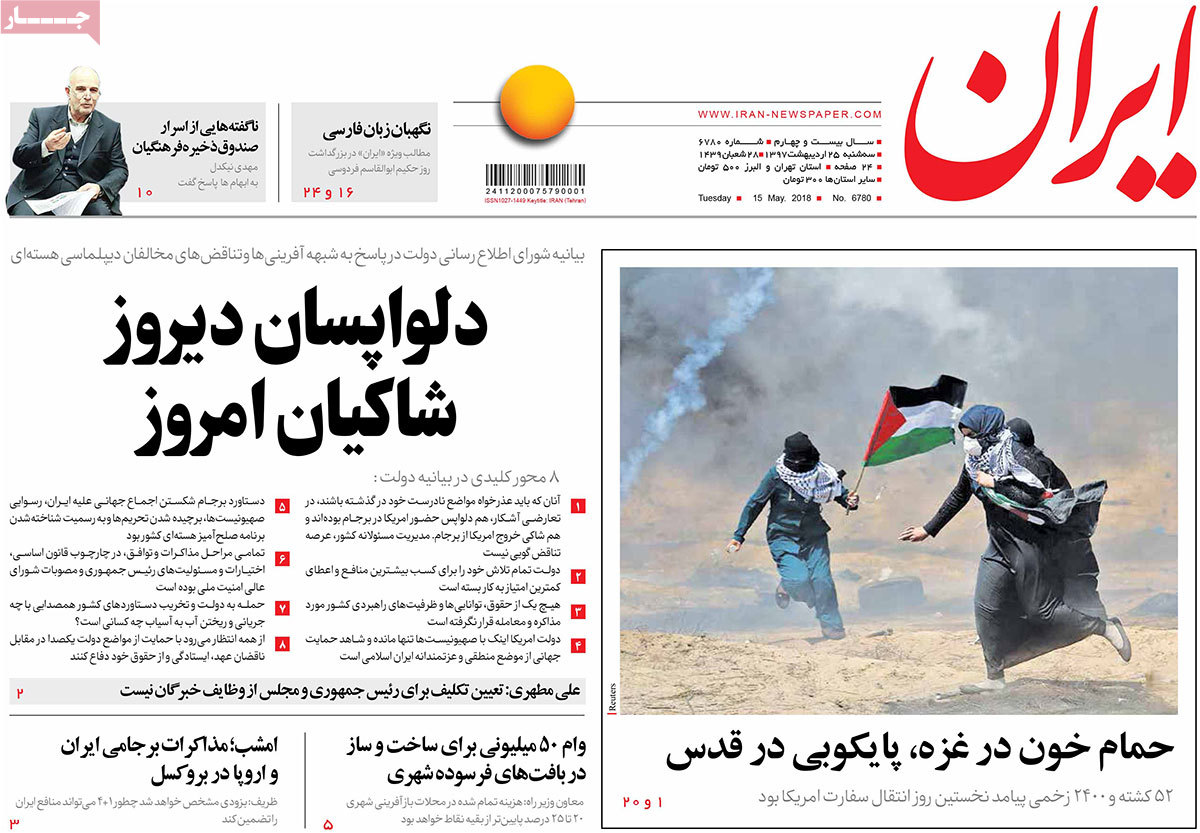
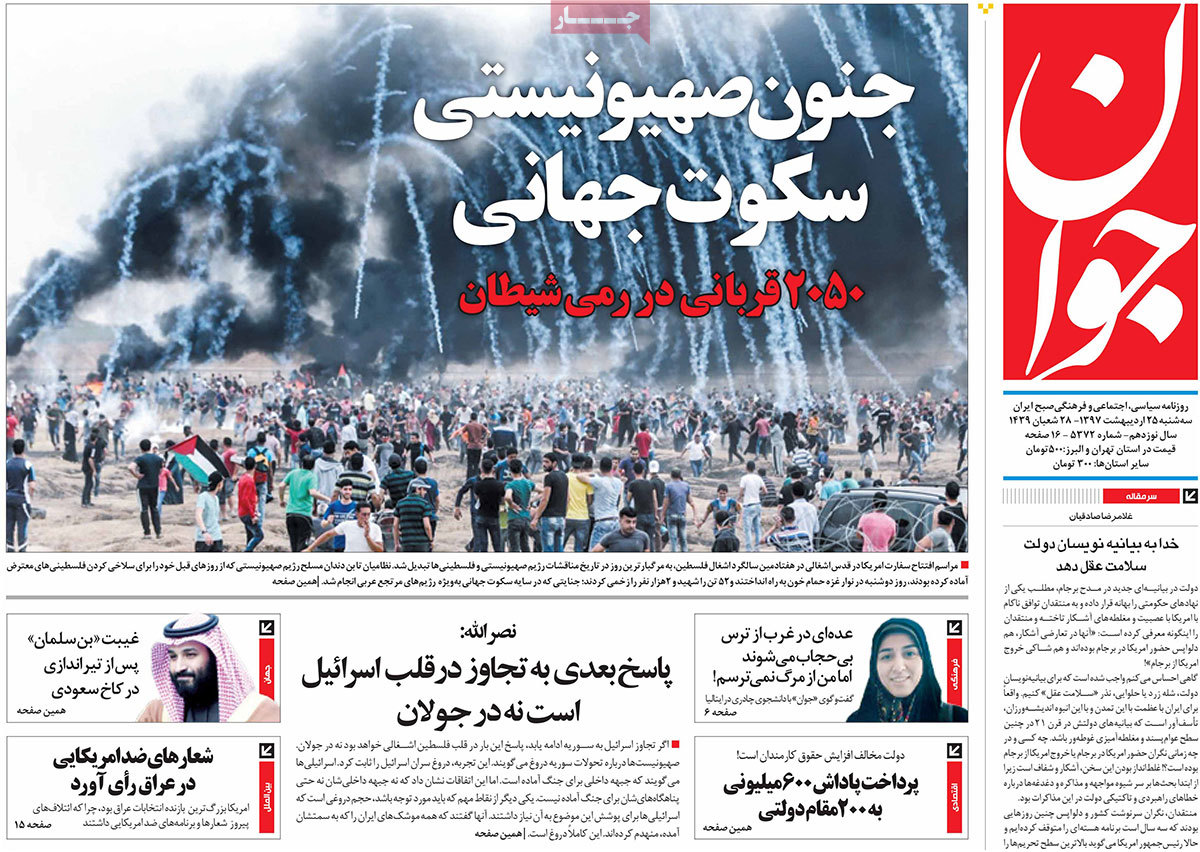
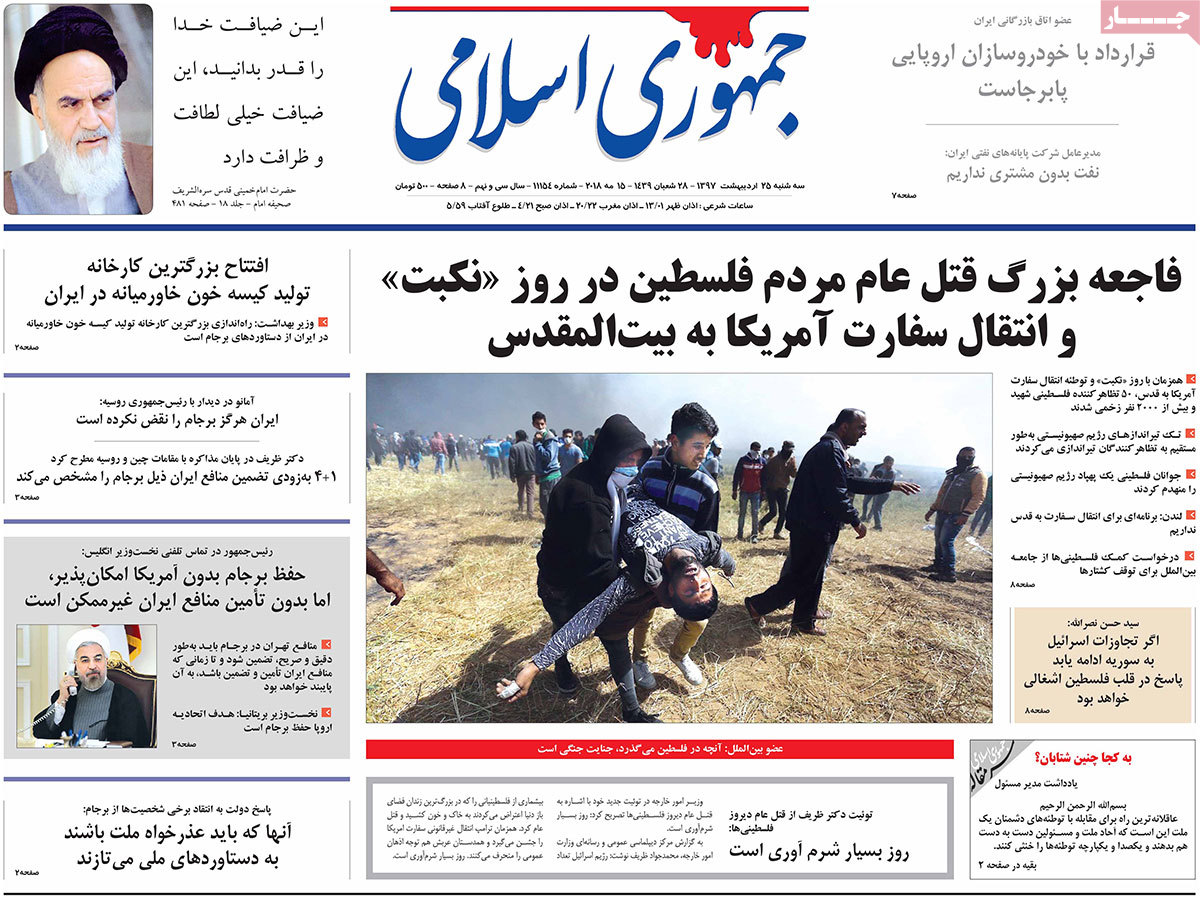
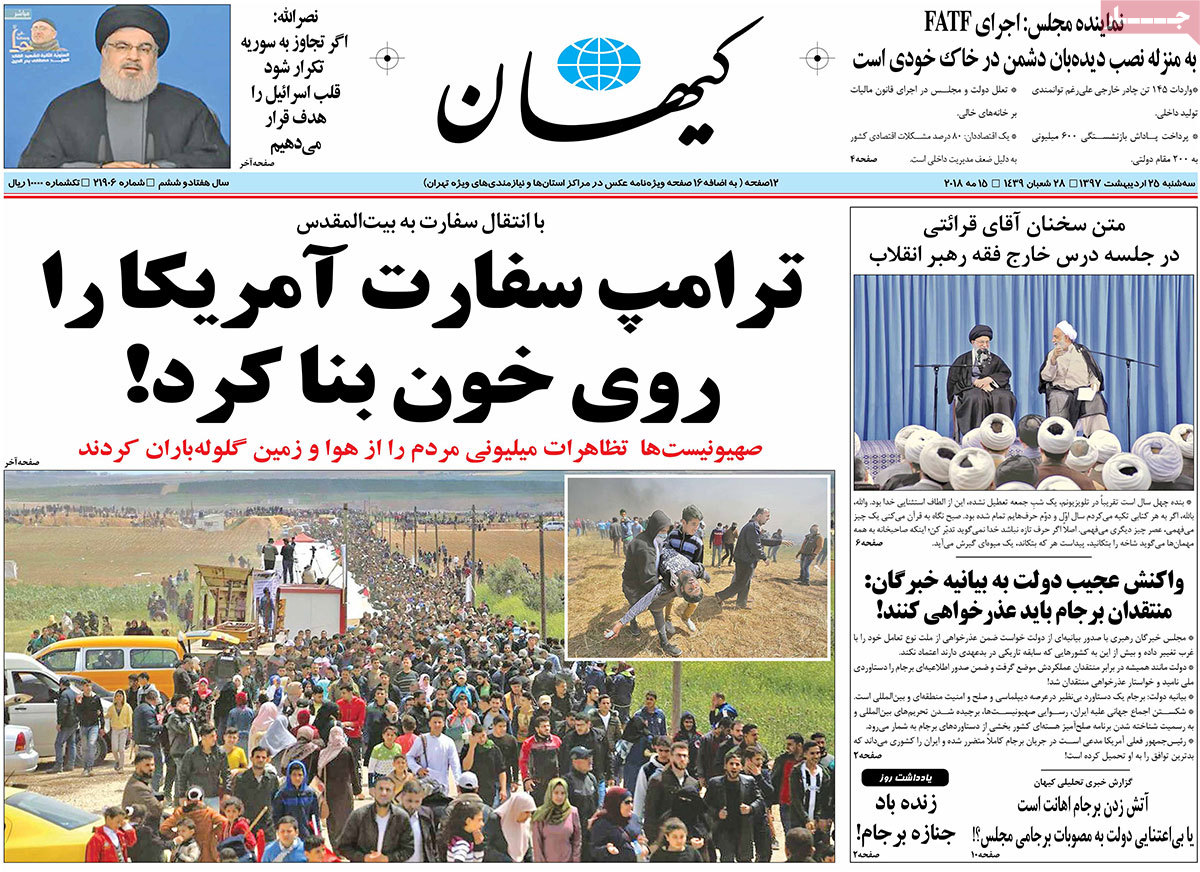
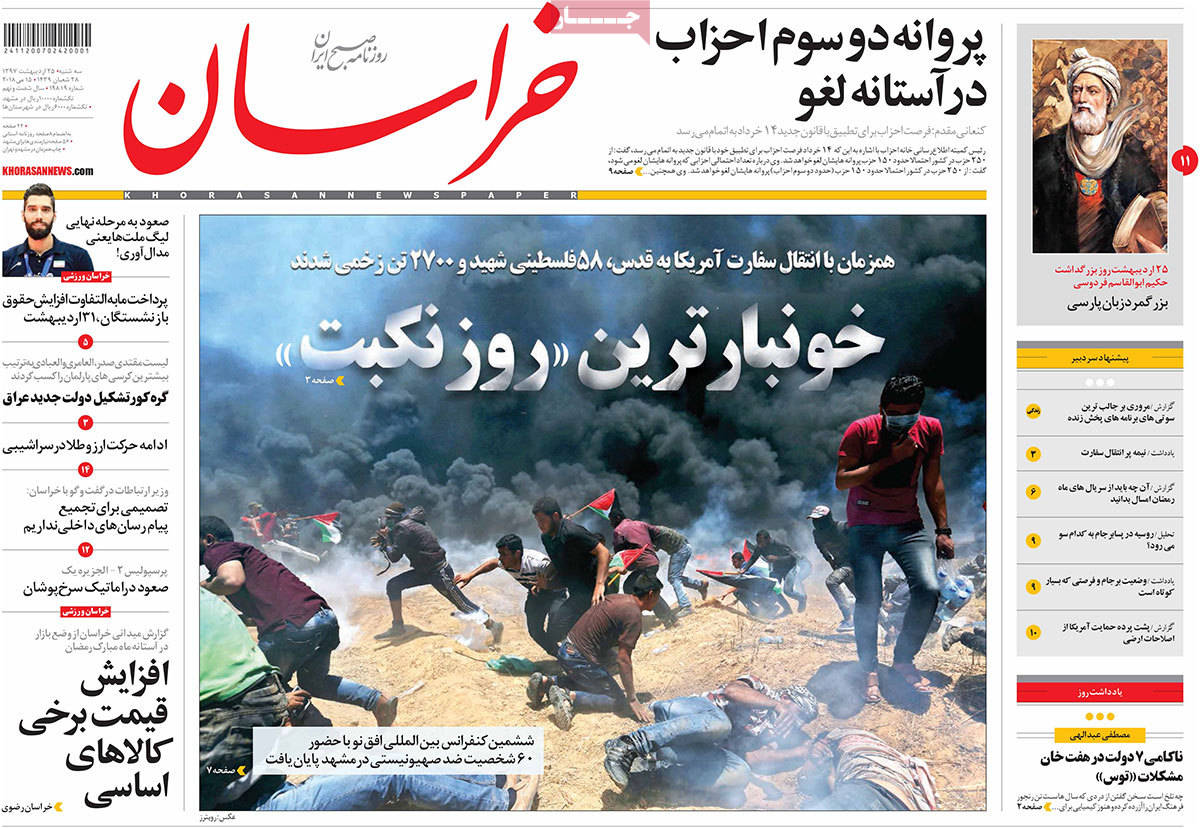
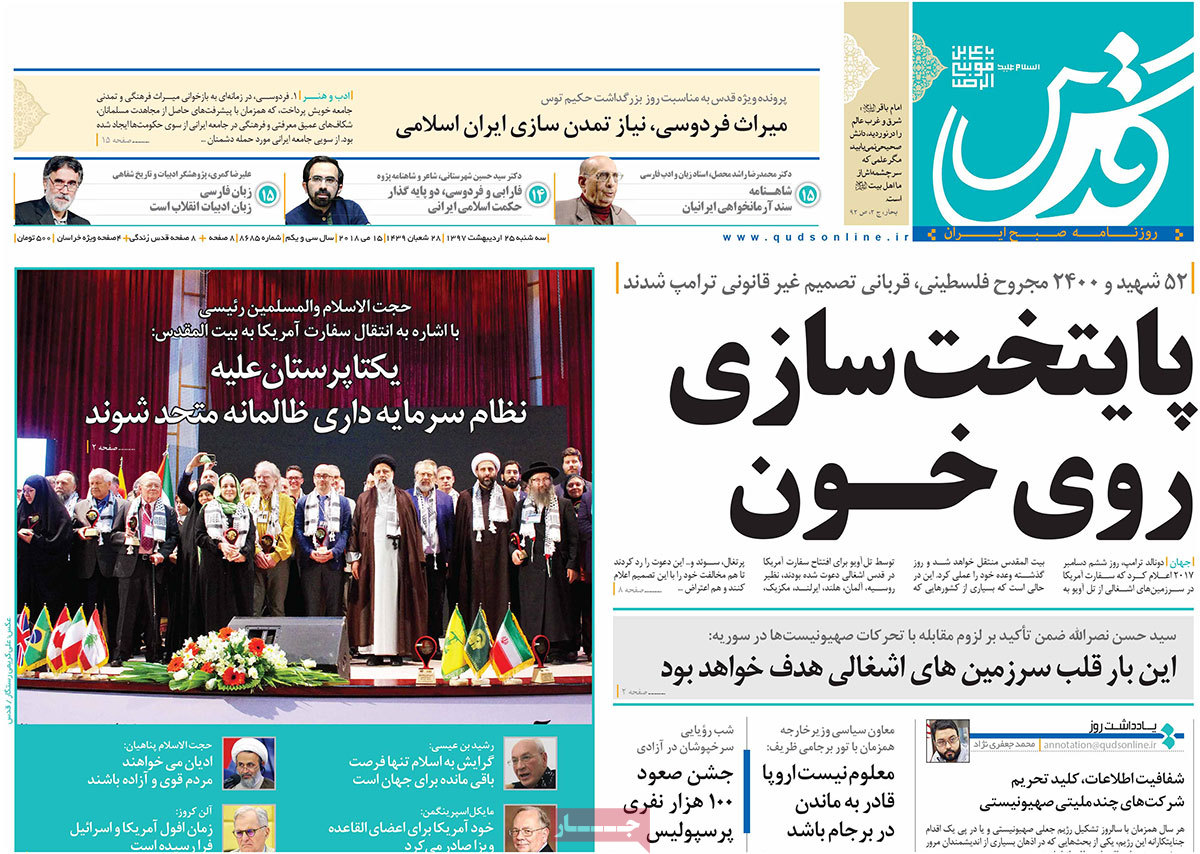
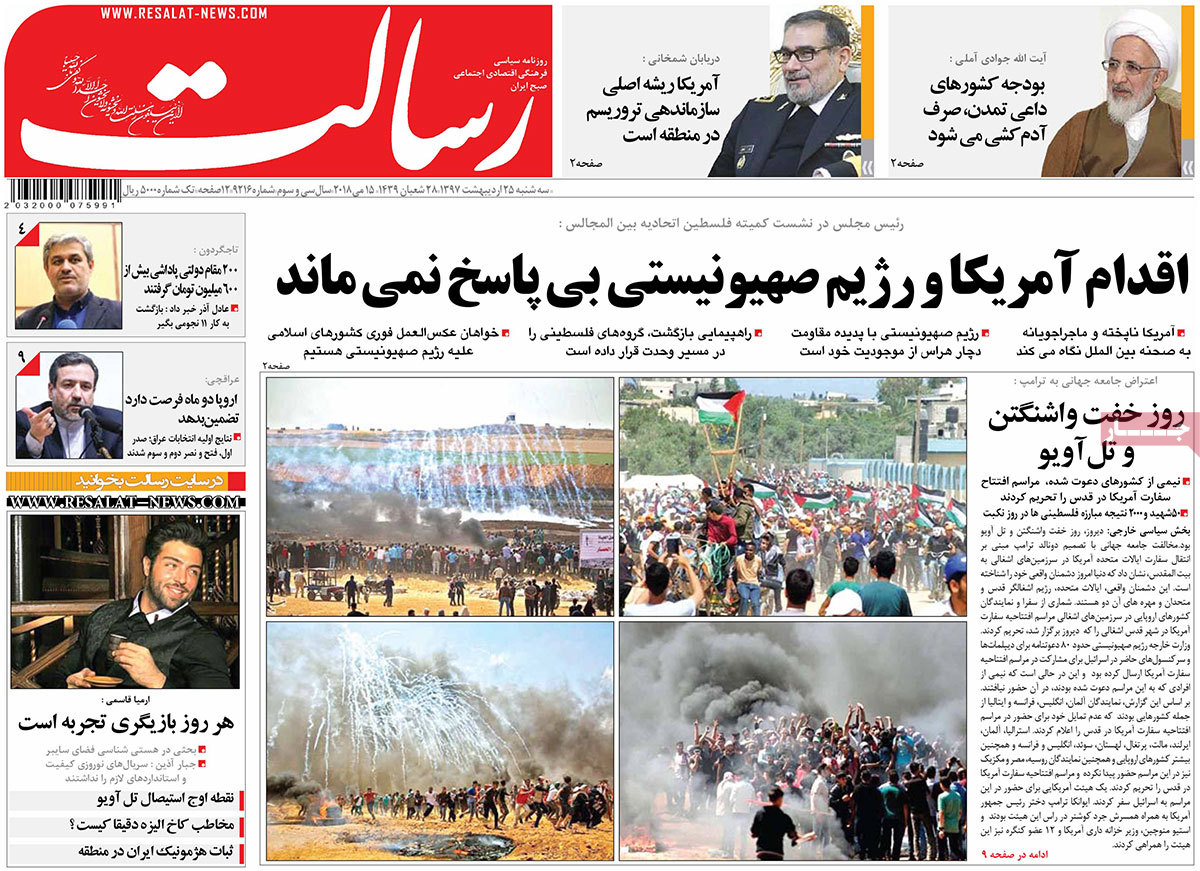
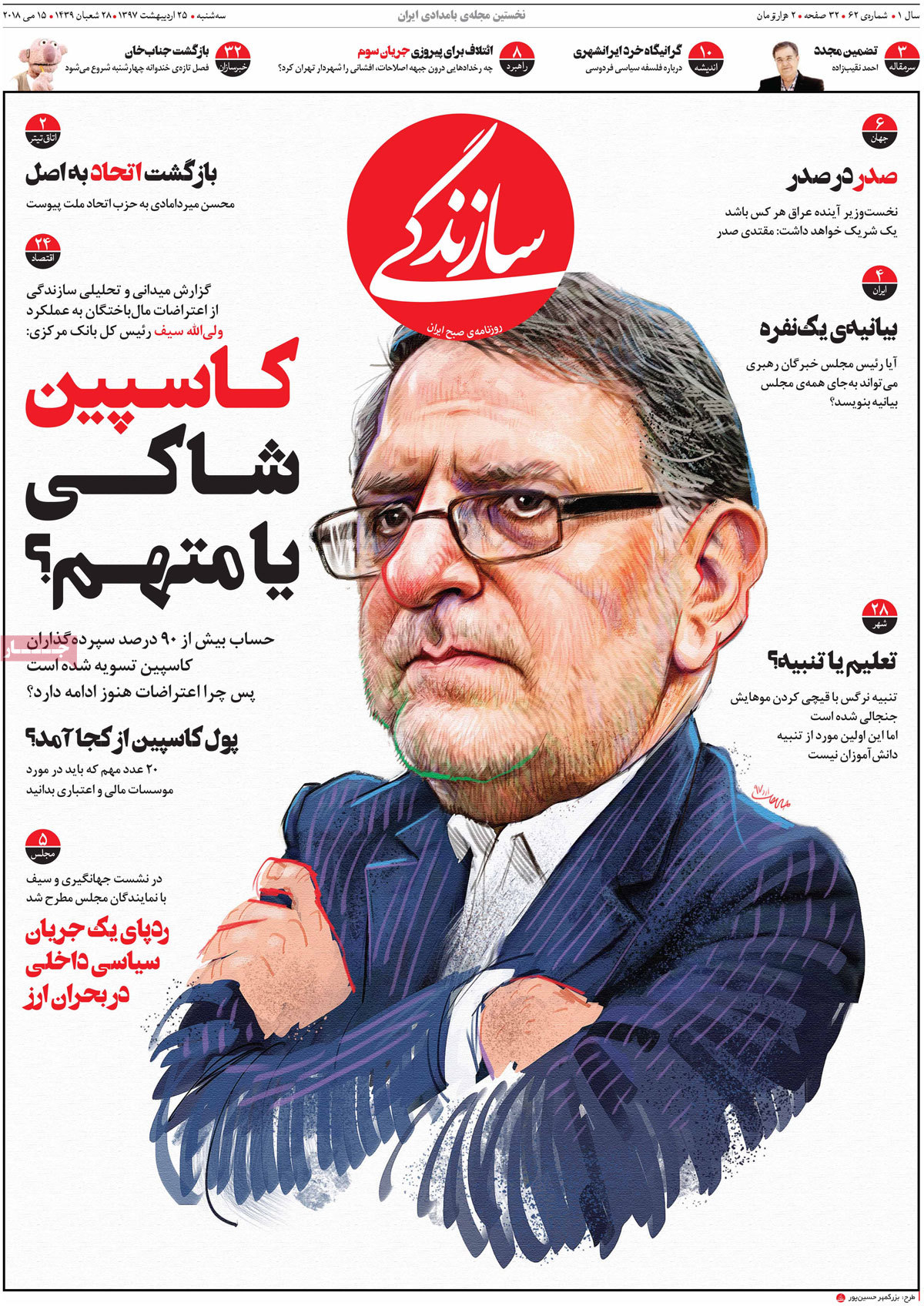
A Look at Iranian Newspaper Front Pages on April 24

A Look at Iranian Newspaper Front Pages on November 19

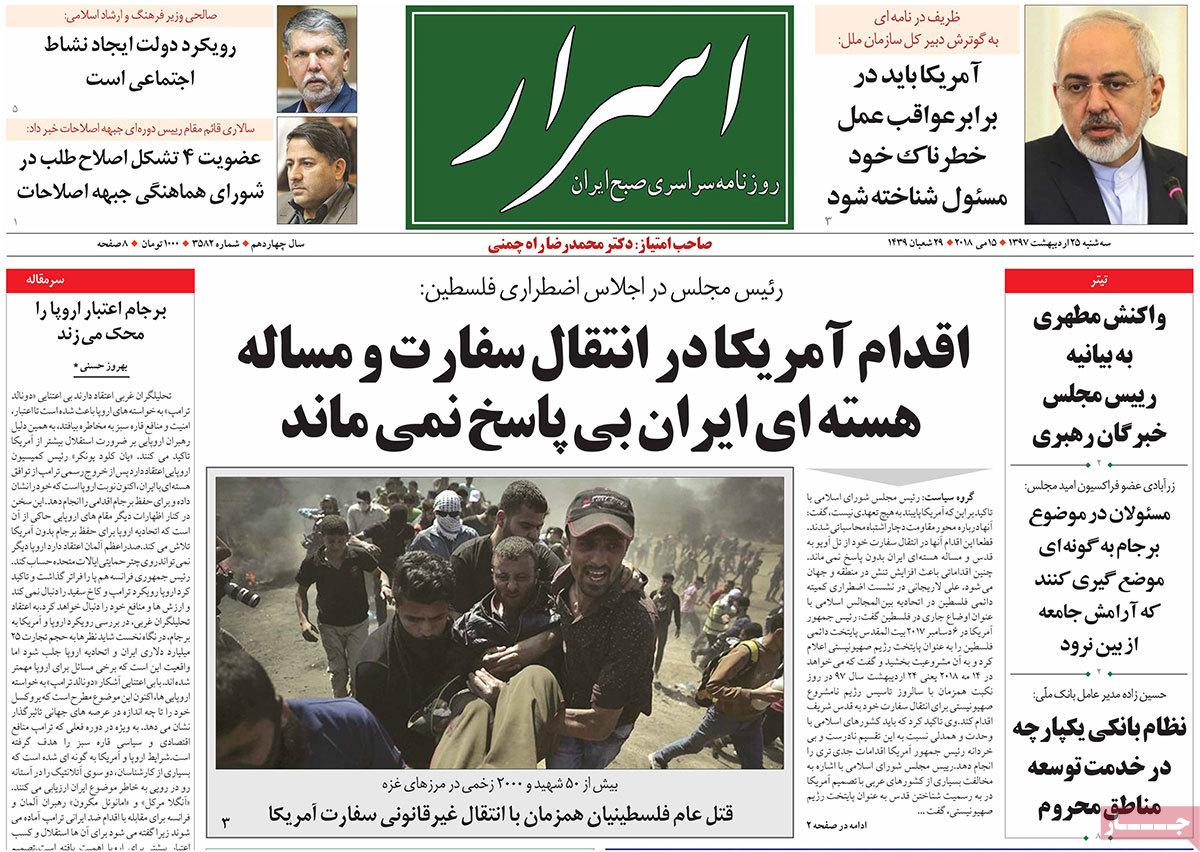
Almost all papers today covered the remarks made by Iranian Foreign Minister Mohammad Javad Zarif about Tehran’s reaction to Washington’s possible withdrawal from the Iran nuclear deal. Zarif, who is in New York on a six-day trip, stressed that Iran would not accept any changes to the JCPOA: either all or nothing.

Also a top story was the discovery of a mummified body in Shahr-e Rey, southern Tehran, which is said to be the body of Reza Shah Pahlavi, the former Shah of Iran.

The comments by renowned US filmmaker Oliver Stone, who is in Tehran to attend the International Fajr Film Festival, and the remarks made by Government Spokesman Mohammad-Baqer Nobakht and other officials about efforts underway to end the house arrest of Iranian opposition leaders also received great coverage.

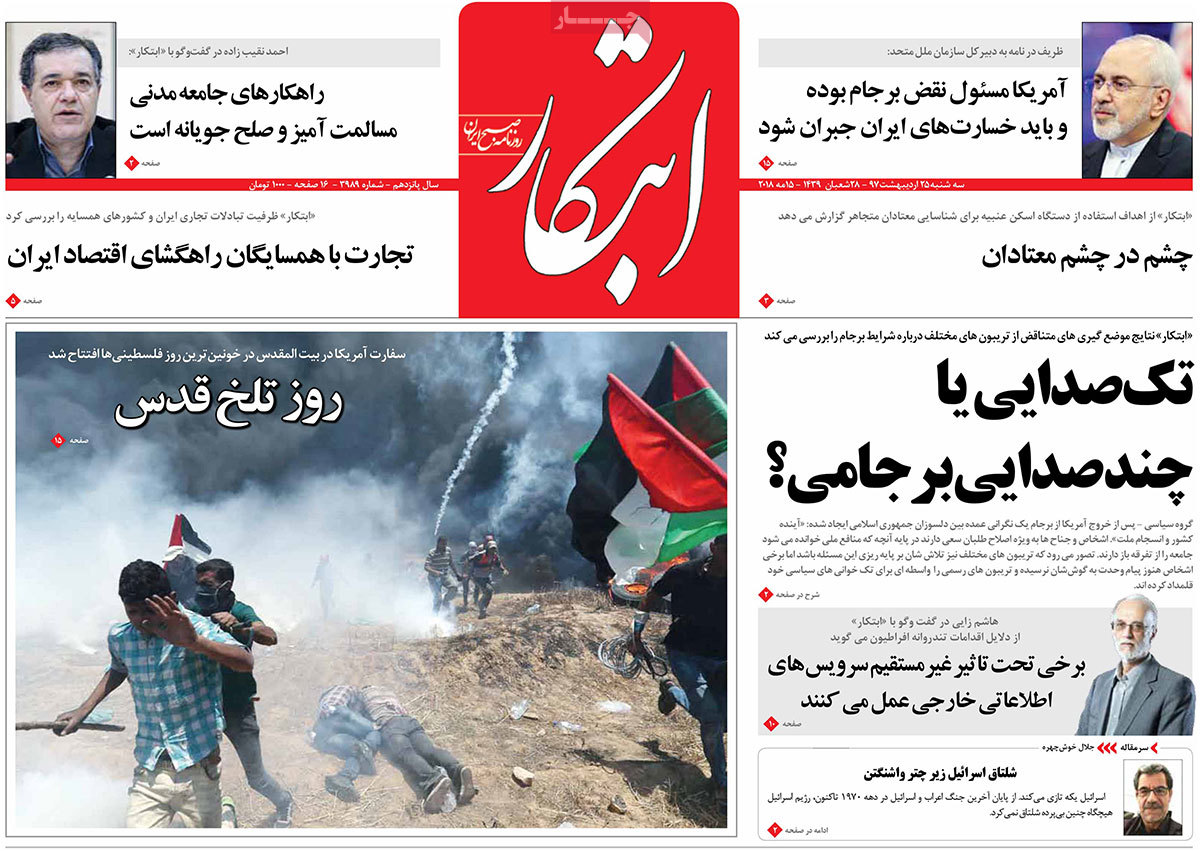
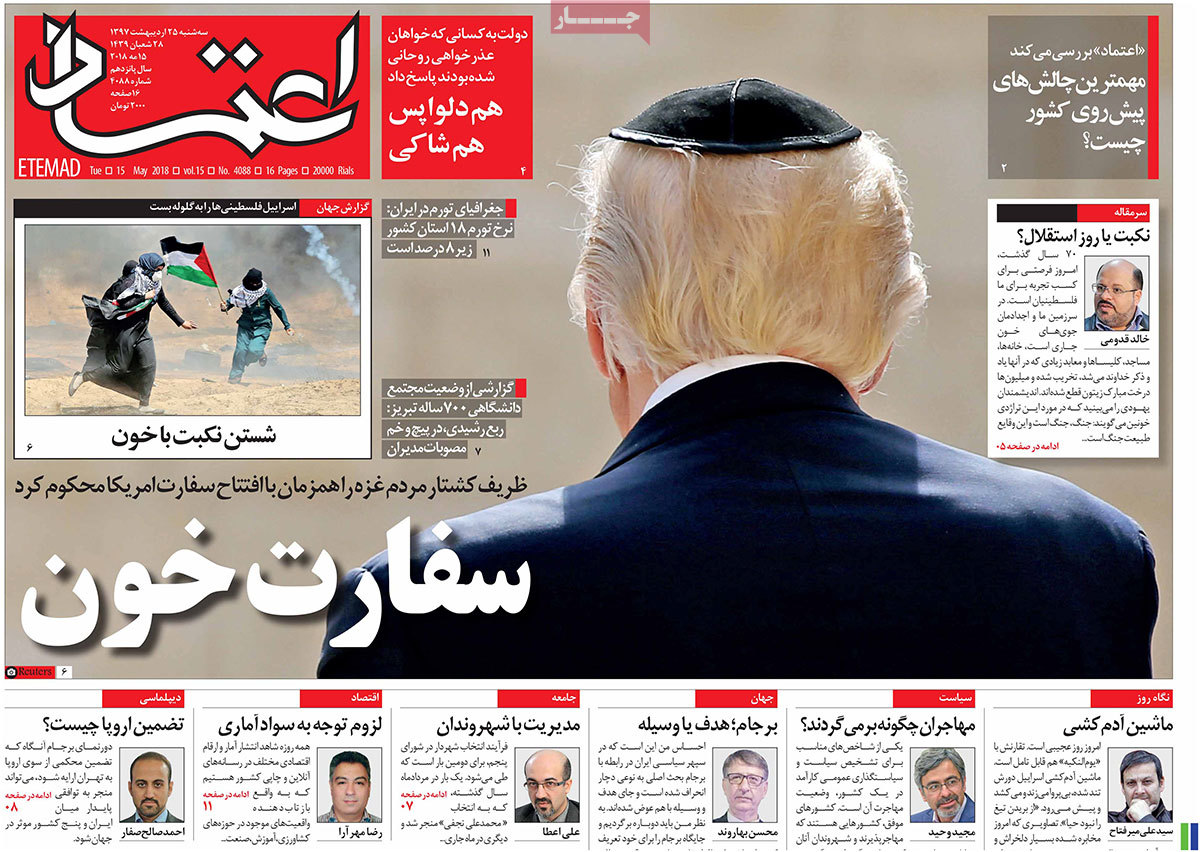
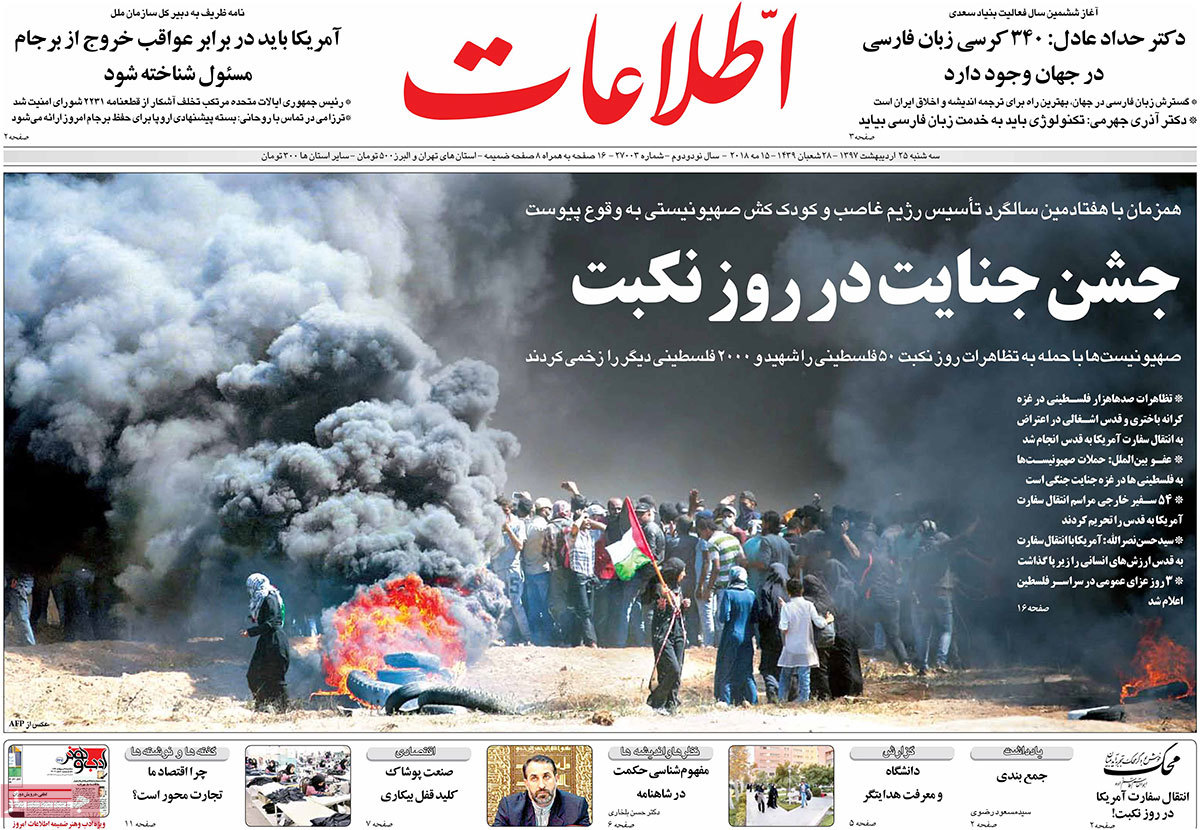
The above issues, as well as many more, are highlighted in the following headlines and top stories:


19 Dey:

  • Zarif on JCPOA: Either All or Nothing
  • Iran First VP: Entire Establishment United about New Forex Policy

A Look at Iranian Newspaper Front Pages on April 24


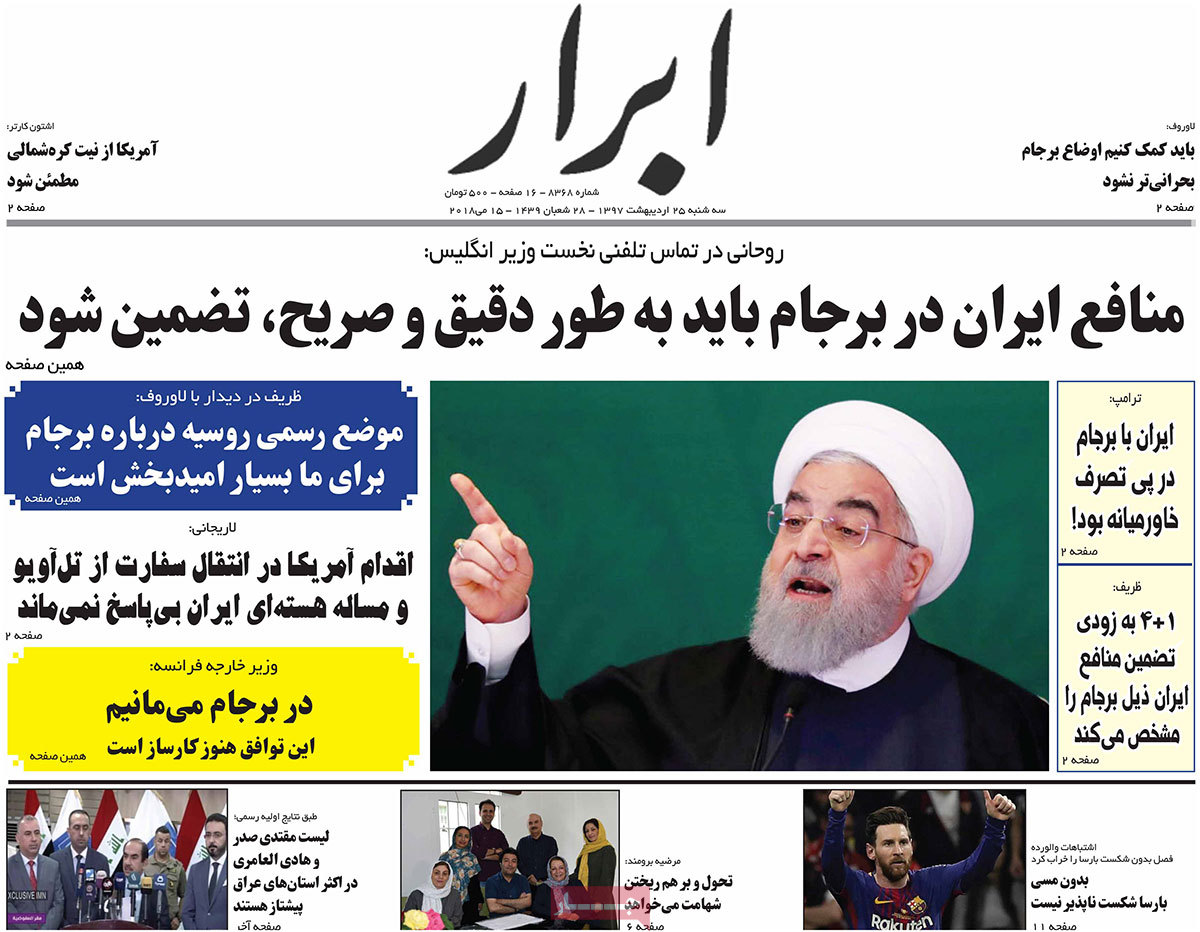
Abrar:

  • Zarif: Trump Administration Has Never Been in JCPOA
  • Arab Coalition Once Again Accuses Iran of Supplying Missiles for Ansarullah

A Look at Iranian Newspaper Front Pages on April 24


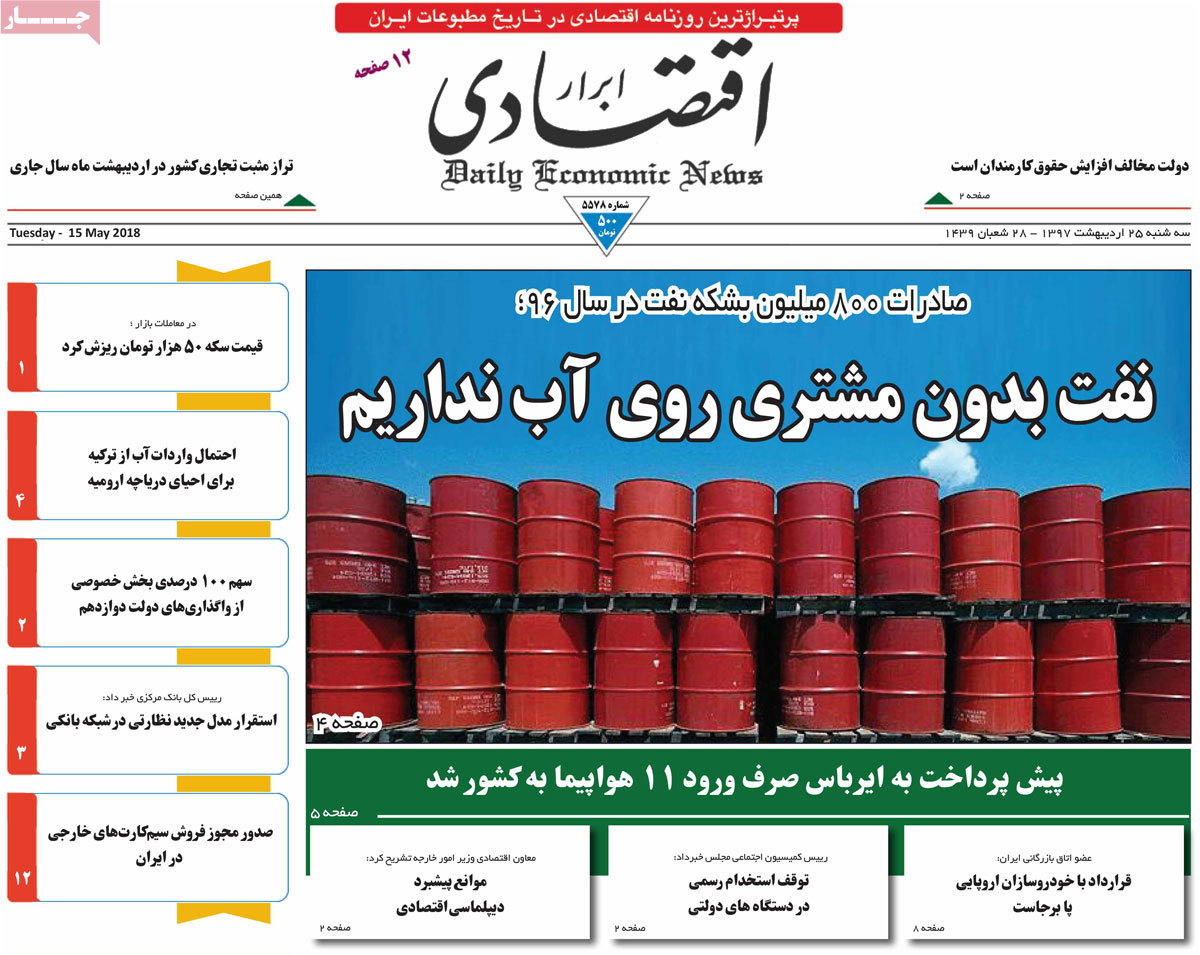
Abrar-e Eqtesadi:

  • Russia after Increased Trade with Iran

A Look at Iranian Newspaper Front Pages on April 24


Afkar:

  • Suggestions of Architect of Iran Sanctions for Macron
  • Boycott Iran’s Central Bank to Save Iran Nuclear Deal!

A Look at Iranian Newspaper Front Pages on April 24


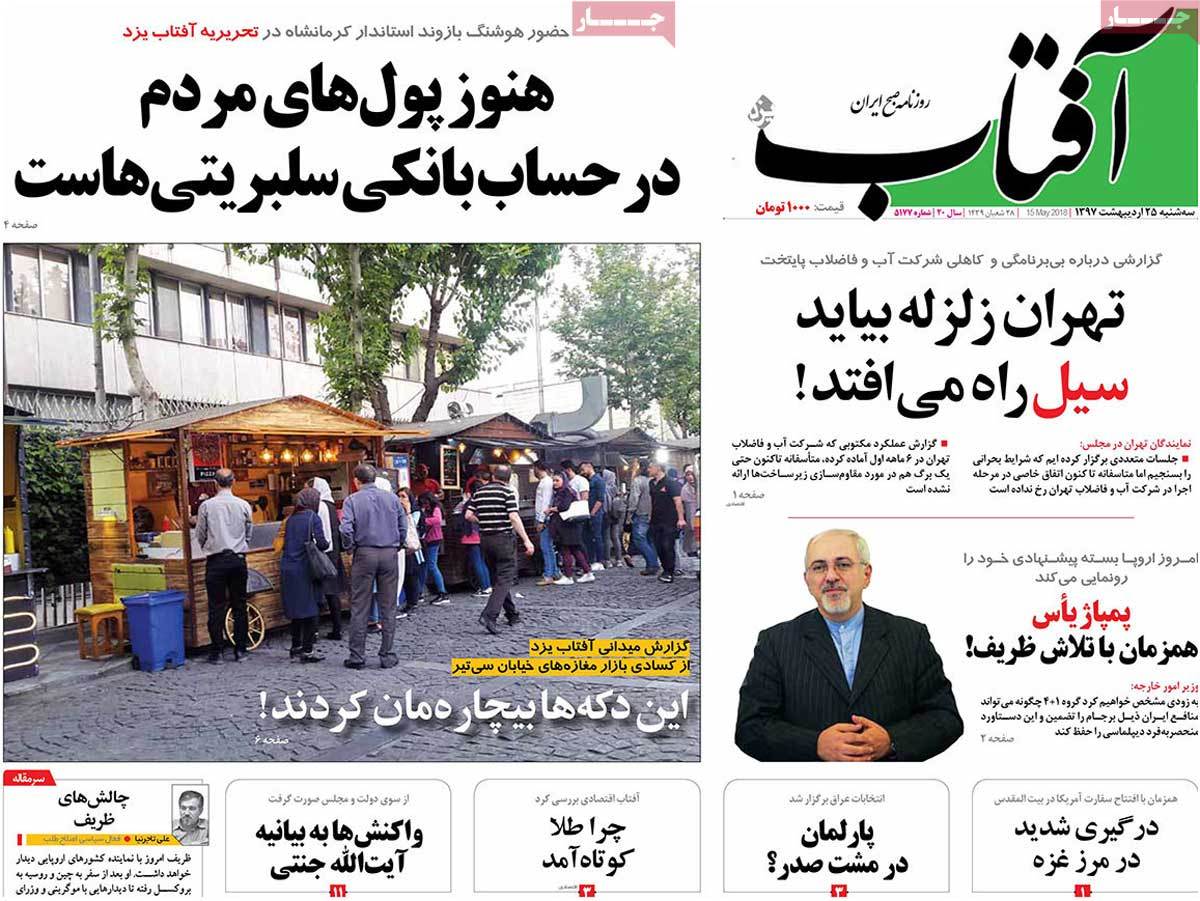
Aftab-e Yazd:

  • Ambiguous Fate of A Mummy
  • Mummy Found in Southern Tehran May Belong to First Pahlavi King!
  • Spokesman: I Wish People Could Witness Rouhani’s Efforts to End House Arrest of Opposition Leaders

A Look at Iranian Newspaper Front Pages on April 24


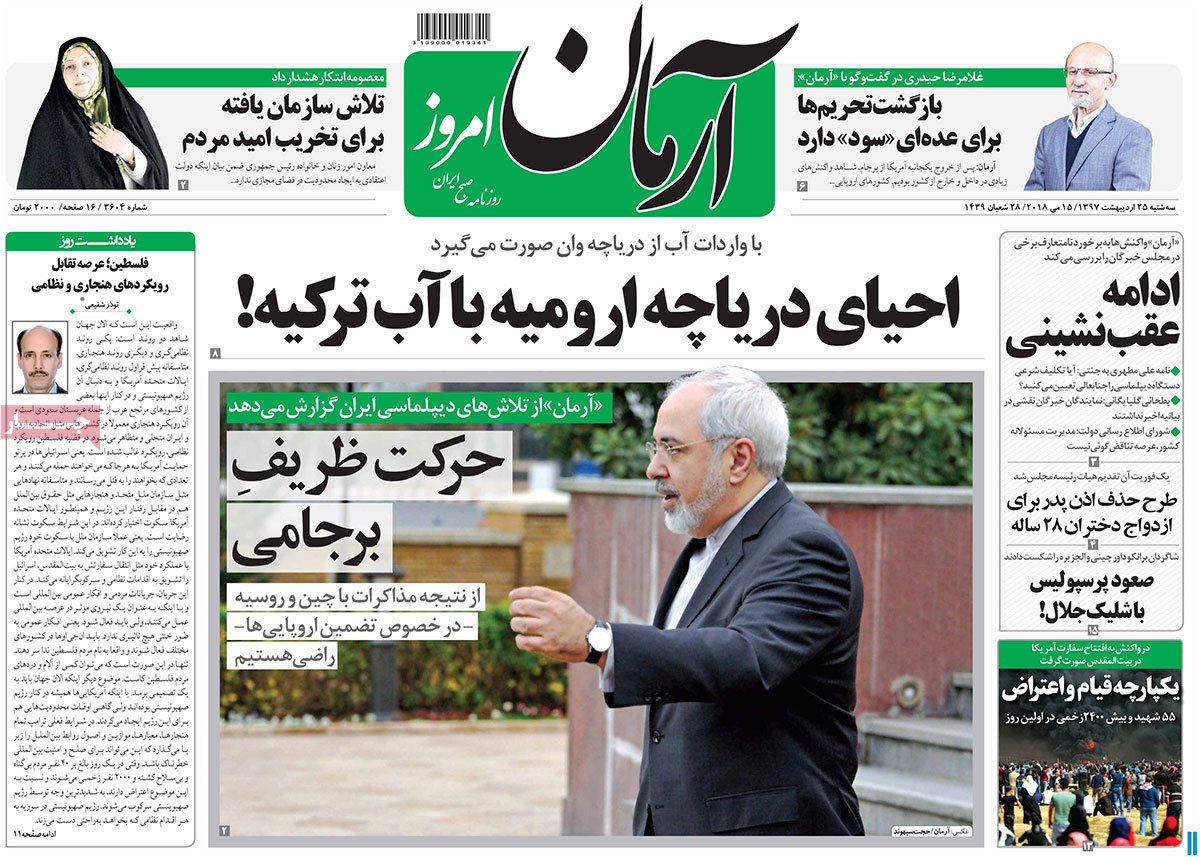
Arman-e Emrooz:

  • Zarif: Iran Nuclear Deal Only Option We Approve of
  • Three to Four Thousand Drug Traffickers to Survive Death Penalty under New Law

A Look at Iranian Newspaper Front Pages on April 24


Ebtekar:

  • Europeans’ Hard Efforts to Preserve Iran Nuclear Deal
  • Macron, Merkel to Visit Washington to Appease Trump
  • Gov’t Spokesman: Using Foreign Messengers among People’s Rights

A Look at Iranian Newspaper Front Pages on April 24


Etemad:

  • Worrying Statistics for Illicit Drug Trafficking
  • House Arrest of Opposition Leaders Will Hopefully Be Lifted: MP

A Look at Iranian Newspaper Front Pages on April 24


Ettela’at:

  • First VP: Water Shortage Main Problem in Iran
  • Gov’t Spokesman: Iran Not Waiting for US Decision; It Has Made Its Plans

A Look at Iranian Newspaper Front Pages on April 24


Haft-e Sobh:

  • Oliver Stone, Most Famous Guest of Fajr Festival, Calls Iranian Films ‘Boring’

A Look at Iranian Newspaper Front Pages on April 24


Hamshahri:

  • Oliver Stone in Keshavarz Blvd.
  • Oscar-Winning American Filmmaker Took a Walk in Tehran Streets

A Look at Iranian Newspaper Front Pages on April 24


Hemayat:

  • Saudis’ Blood Party in Yemeni Wedding Ceremony

A Look at Iranian Newspaper Front Pages on April 24


Iran:

  • Gov’t Spokesman: Whoever Returning to Iran Not a Spy
  • Zarif on Iran’s Options: Leaving JCPOA, NPT, Complaining to Nuclear Commission

A Look at Iranian Newspaper Front Pages on April 24


Javan:

  • Zarif’s “All or Nothing” Condition for the “Almost Nothing”

(Conservative media often describe the Iran nuclear deal as an accord that brought ‘almost nothing’ for Iran, quoting words by Central Bank governor Valiollah Seif)

  • After Rise in Divorce Rates, Now Number of Marriages Decreased
  • Oliver Stone: I Can’t Understand How Boring Iranian Films Win Int’l Awards!
  • Hollywood Has Deep Connection with White House

A Look at Iranian Newspaper Front Pages on April 24


Kayhan:

  • Israel Not Sending Jet Fighters to Military Drills Abroad for Fear of Iran 2 Weeks after T-4 Attack
  • Indian Ocean Naval Symposium Underway in Tehran with Commanders from 35 States in Attendance

A Look at Iranian Newspaper Front Pages on April 24


Quds:

  • IONS 2018: Biggest Military Conference in Iran’s History Begins

A Look at Iranian Newspaper Front Pages on April 24


Rooyesh-e Mellat:

  • Iran: Increased Airstrikes on Civilian Areas in Yemen Show Aggressors’ Desperation

A Look at Iranian Newspaper Front Pages on April 24


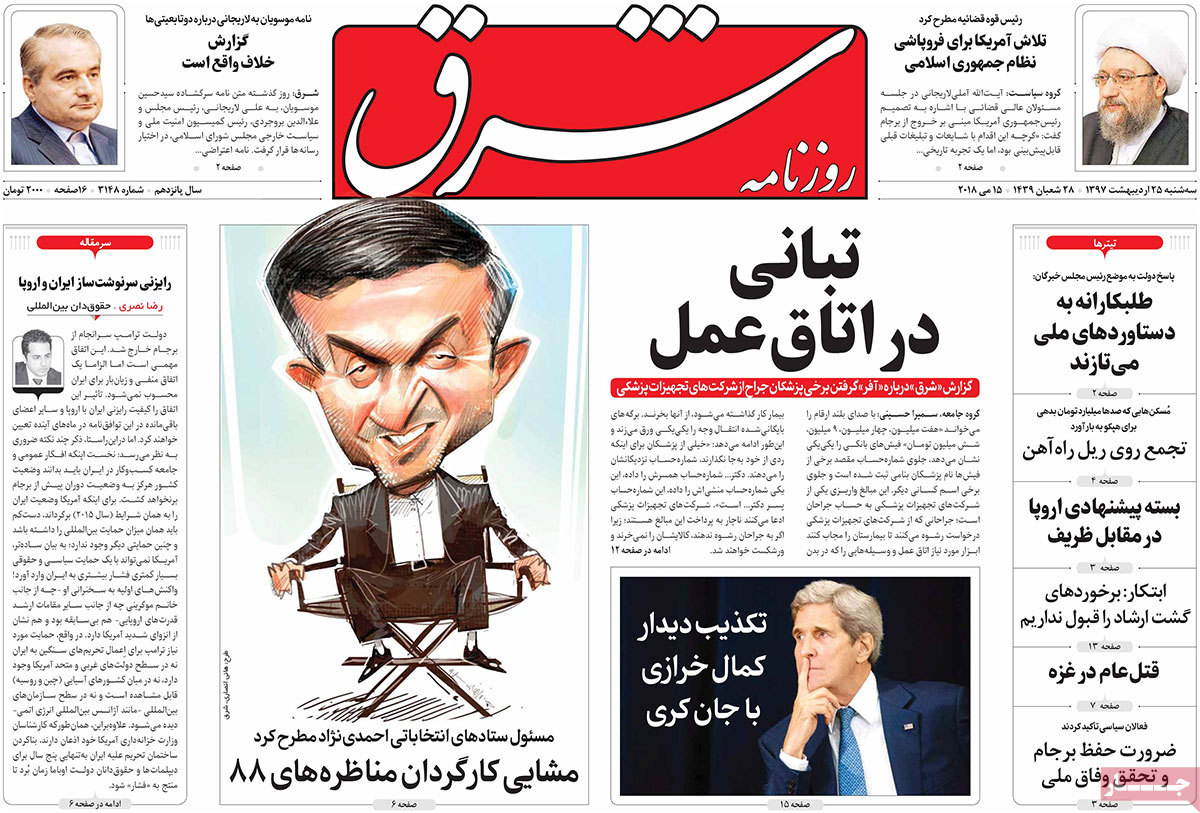
Shargh:

  • Gov’t Spokesman: House Arrest of Opposition Leaders to Be Lifted Soon
  • Contradictory Reports on Discovery of Reza Shah’s Mummified Body

A Look at Iranian Newspaper Front Pages on April 24


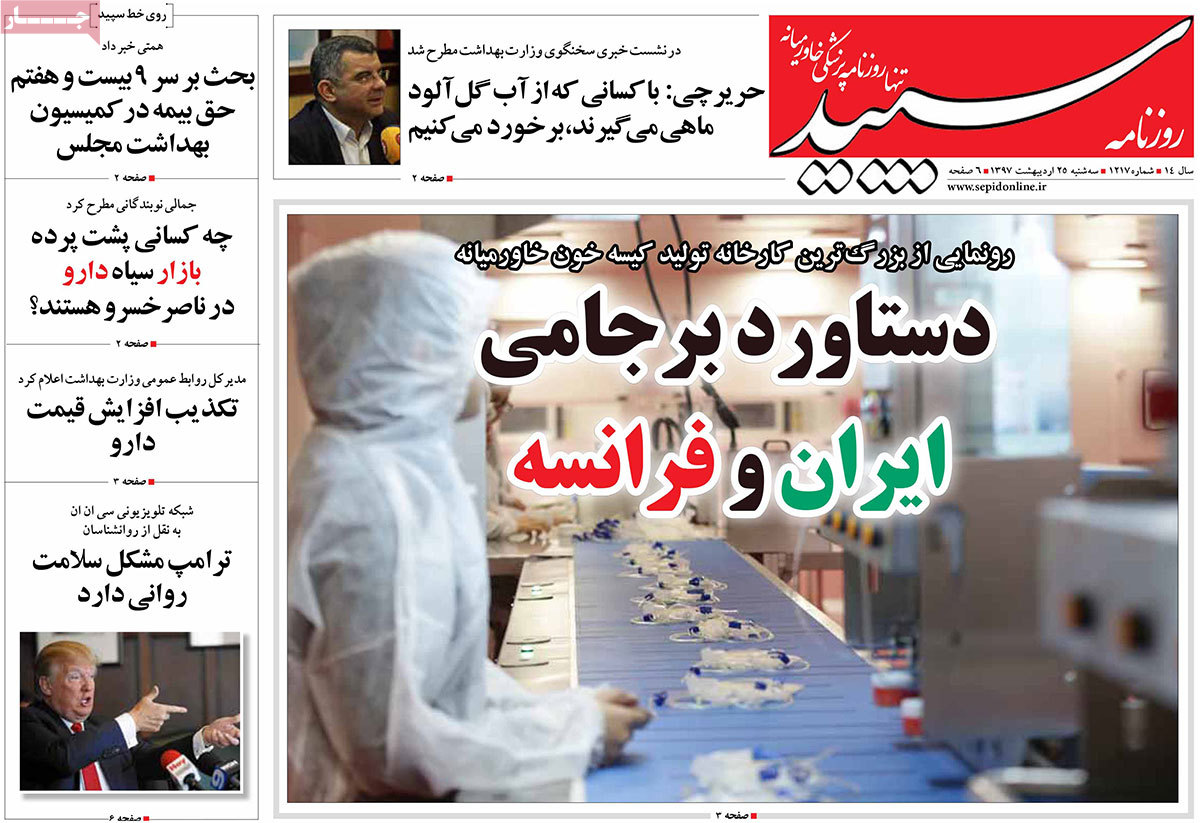
Siasat-e Rooz:

  • Preserving Iran Nuclear Deal to Make Europeans Happy
  • Parliament Speaker’s Aide: No Military Solution to Yemen Crisis

A Look at Iranian Newspaper Front Pages on April 24

Iran Fully Prepared to Deal with US Withdrawal from JCPOA: Rouhani

“Iran has plans on how to deal with hostile plots and will face no problem [if the US pull out of the JCPOA],” Rouhani said in a Tuesday address to a large gathering of people in Tabriz.

“Those in the White House should know that whether they honour their commitments, civilization and humanity or not, the Iranian government will firmly stand against any plot and design,” Rouhani said.

The warning comes weeks in advance of a May 12 deadline declared by Trump to renew the waivers for US sanctions on Iran that were lifted under the accord.

Trump, who calls the 2015 nuclear accord one of the worst deals ever negotiated, has threatened that he will return US sanctions on Iran unless what he calls “flaws” in the accord are fixed by other parties to the deal.

The JCPOA reached between Iran, the United States and five other world powers put confidence-building curbs on Iran’s nuclear program in exchange for sanctions relief.

The refusal of the US to keep the sanctions frozen will mean the US is longer bound by the pact.

“Nobody can disappoint this great nation and crush its hope for the future. We are abiding by our obligations stronger than even. But if anyone seek to betray his commitment to us, he should know that they will face severe consequences,” Rouhani said.

French President Emmanuel Macron is in Washington, trying to convince Trump not to tear up the accord.

Russia said on Monday it has agreed with China that Moscow and Beijing would try to block any US attempt to sabotage the nuclear deal.

Iran has warned that it will ramp up its nuclear program if the JCOPA collapses, to achieve a more advanced level than before the deal.

“Iran May Leave NPT If US Pulls Out of Nuclear Deal”

In remarks before departing Tehran for Russia’s Sochi to attend an international security conference, Shamkhani said Iran enjoys all the required capabilities to adopt a surprising measure against the other sides’ decision to exit the JCPOA.

“Unfortunately, since the early days of the Iran nuclear deal, the US has violated its obligations under the accord,” he was quoted as saying in a Farsi report by IRNA.

Shamkhani added based on the Treaty on the Non-Proliferation of Nuclear Weapons (NPT), the member states are entitled to pull out of it whenever they come to the conclusion that their national interests are not met within the treaty.

“With this condition, pulling out of NPT may be among the options on the table for the Islamic Republic of Iran,” he said.

The top Iranian official said Tehran is capable enough to resume its nuclear program whether or not the US implements the JCPOA or continues to violate it or delay its implementation.

In response to a question on Iran’s reaction to the Europeans’ decision to remain in the nuclear deal, he said “we welcome the decision but if the Europeans think that they can blackmail us into accepting what they like, I should say they are making a big mistake because the Islamic Republic of Iran will never allow any country to cross its redline.”


Israel to Be Punished for Attack on Iranian Forces in Syria

Elsewhere in his remarks, he also said Iran will punish Israel for airstrikes on Syria that led to the deaths of several Iranian military advisors.

He added Israel should have considered the consequences of its action when it launched the act of aggression.

Shamkhani said the strikes were pre-planned to target the anti-terrorist forces sent to Syria upon the request of the Syrian government.

Israel has not confirmed its role in the airstrike that hit Syria’s T-4 base earlier this month. But Iran, Syria, and Russia say Tel Aviv carried out the attack.

Iran President Strikes Conciliatory Tone towards IRGC

Iran President Strikes Conciliatory Tone towards IRGC

“Thanks to prowess of the beloved and brave [Guards] Corps, Army and self-sacrificing Basij [voluntary forces affiliated with IRGC], we enjoy exemplary security in Iran,” Rouhani said, according to a transcript of his speech posted on the president’s website.

“We honour our security, which has been achieved through unity and cohesion of the Iranian nation, and will work to [maintain] it,” he said on Tuesday, while addressing a huge gathering in Tabriz in north-western Province of East Azarbaijan11.

This is while Rouhani had made pointed remarks regarding the IRGC last Saturday.

In a speech on the occasion of the Army Day last Saturday, Rouhani hailed the Iranian army for refraining from getting involved in “political games.”

Alluding to the IRGC, Rouhani added, “Today there is not a single corruption case in which commanders of the army are involved … this is [because] of the purity and sincerity of the army.”

These comments were widely described as ‘divisive’, provoking immediate reactions from both the IRGC and the Army Chief-Commander.

Shortly after Rouhani’s comments last Saturday, the IRGC in a statement criticized certain internal figures for issuing statements that “harm unity and stoke division”.

In a statement marking the anniversary of its formation in 1979, the IRGC accused certain figures of “intentionally or unintentionally” echoing the enemy’s words to “weaken” the IRGC.

Moreover, Iran’s Army Chief-Commander Major General Abdolrahim Mousavi intervened in the feud in defence of the IRGC.

Attending a ceremony to commemorate the anniversary of the IRGC formation, Mousavi said his presence was a sign of unity among Armed Forces.

The military commander rejected any division between the Army and the IRGC, declaring that all the armed forces of Iran are united against the enemy plots to divide the armed forces of the country.

Rouhani has frequently issued veiled and sometimes unveiled criticisms against the IRGC in recent years.

Throughout his 2017 presidential campaign, Rouhani described it as “a government holding a rifle” due to the role of the IRGC in the country’s economic, political and media affairs.

Female Professor Bravely Defends “Persian” Gulf in Defiance of Dubai Officials

Iran Says Persian Gulf Always ‘Persian’ Gulf, not ‘Washington’ Gulf

Maryam Razzaqi-AzarMaryam Razzaqi-Azar, an Iranian researcher and specialist in Diabetes and Metabolism, recently addressed a symposium in Dubai, where an Arab researcher used the false title of Arabian Gulf to refer to Persian Gulf.

Razzaqi-Azar immediately corrected the researcher and said the body of water has been named as the Persian Gulf since ancient times and will remain so forever.

According to a Farsi report by Mizan News Agency, the remarks by the Iranian professor sparked mixed reactions in the conference.

Razzaqi-Azar had travelled to Dubai at the invitation of the French Ipsen Company to attend the scientific conference.

Her remarks were welcomed by the audience, but the representatives of Ipsen and Dubai urged her to admit she had made the issue political and should apologize. But Razzaqi-Azar responded during her second presentation: “My word was not political, we are friends but it was true.”

After saying this, her microphone was turned off and she was not allowed to finish her presentation. So, the Iranians attending the seminar decided to leave the conference hall.

When Razzaqi-Azar returned to her hotel, she found out that her door was locked. Then, the Dubai police arrived without an ID card, and asked her to either apologise in writing for using the term “Persian Gulf” at the conference or leave Dubai immediately.

Professor Razzaqi-Azar announced frankly she would prefer to leave the country in less than 24 hours. The professor also announced defiantly that “Although I’m too busy tomorrow, I prefer to pass through other countries than Dubai. And I will never sign the letter worded by you.”

The move by the Iranian professor has also been warmly welcomed by the Iranian politicians. In a message, Iranian Foreign Minister Mohammad Javad Zarif thanked Professor Razzaqi-Azar for her right move in defending the national and historical identity of the Persian Gulf.

Over the past years concerted efforts have been underway by some circles in the region and the world to change the original identity of Persian Gulf.

Iran has designated April 30 as National Persian Gulf Day to highlight the fact that the waterway has been referred to by historians and ancient texts as “Persian” since the Achaemenid Empire was established in what is now modern day Iran.

While historical documents show that the waterway has always been referred to as the “Persian Gulf,” certain Arab states and their allies have recently mounted efforts to remove “Persian” from the name of the waterway.

Tabriz Pioneer in Curbing Use of Plastic Bags

Kids posing with a fabric bag provided by Tabriz's Department of Environment as part of an initiative to curb the use of plastic bags

Plastic poses serious threats to our planet’s survival: From inflicting damage to the lives and environment of the sea creatures as well as animals and birds to creating the tough challenge of collecting piles of garbage, landfill and their consequent pollution across the world.

Plastic garbage is among the main challenges that we face today because tackling the problems and the dangers that they have created so far requires a huge amount of money. Many countries have failed to achieve a considerable success in dealing with the challenge. Many believe one of the most effective and economic ways to cope with this problem is to minimize the use of plastic in our daily lives. To this effect, packaging and production industries must lower the level of plastic use in their products.

In Iran, the officials of Tabriz have undertaken a new initiative to tackle the problem. At least 10,000 fabric bags have been distributed among the citizens who took part in the last Friday Prayers of the city, said Hamid Qassemi, Head of the Environment Department at East Azarbaijan.

“Following earlier coordination with the office of Seyyed Mohammad Ali Al-Hashem, the representative of Iran’s Leader and Friday prayers Imam of Tabriz who is among the leading environmentalist of the province, we decided to distribute fabric bags instead of plastic ones among the worshippers for keeping their slippers or shoes while in the grand mosque,” he was quoted as saying in a Farsi report by the DoE’s official website.

He underlined that the initiative was undertaken in support of the Leader’s initiative to name the current Persian year as the year of support for Iranian products.

“All the bags were designed and produced in Tabriz by local producers,” Qassemi said.

He referred to the issue of pollution as a global challenge facing all people concerned with environmental issues and said collecting huge piles of garbage in the world, their landfill and dire hygienic consequences are among the major issues for every small and developing country.

He outlined the plans already developed in the province to promote the culture of preserving the environment and said Iran’s Constitution attaches great significance to protecting the environment against pollution of various types.

“Dispatching environmental experts to schools, launching campaigns to collect garbage from across the province, holding local competition with the main theme of writing the best pieces on the importance of earth and its pollution are among the measures adopted by the provincial officials to make the province cleaner,” he noted.

Qassemi said the city’s entrances as well as highways leading to it were also cleaned up as part of a larger plan to mark Earth Day.

Earth Day is an annual event celebrated on April 22. Worldwide, various events are held to demonstrate support for environmental protection. First celebrated in 1970, Earth Day events in more than 193 countries are now coordinated globally by the Earth Day Network.


Legal Curb on Use of Plastic Bags

The Iranian administration will take the final decision by late June on approving previously drafted regulations which aim to decrease the use of plastic bags in the country, an official with the Department of Environment has said.

Levying tax on the use of plastic bags, promoting awareness towards harms of plastic, and manufacturing recyclable plastic bags are among the main subjects of this regulations, ISNA quoted Ali Moridi as saying on Sunday.

“Currently we are discussing the issue with the ministry of industry. Since these regulations affect the production and consumption of plastics, there is resistance against its implementation.”

Although there is no detailed data on the consumption rate of plastics in the country, it is evident that this consumption trend is way higher than that of advanced countries, he lamented.

Unfortunately, plastic bags are offered free of charge in Iran’s supermarkets while this is not the case in some other countries, he said, adding that putting extra charge on plastic bags will act as a deterrent and encourages citizens to use reusable cloth bags.

Kaveh Madani; Outcast Genius or Fugitive Agent?

“Due to the dissatisfaction of your beloved parents … and some pressures inside the country, I inevitably accept your resignation,” Isa Kalantari, the head of the Department of Environment, wrote in a recent emotional farewell statement in reaction to Madani’s resignation.

Madani, a 36-year-old expert who took leave from his post at London’s Imperial College last year to return to Iran, resigned late last month.

The resignation came after a photo taken five years ago showing him dancing went viral on social media. Iranian people, especially the country’s top officials, are supposed to adhere to Islamic laws that forbid dancing.

In a letter posted on his Twitter account last Wednesday, Madani wrote that some Iranian authorities had considered him an outsider and a threat, and he had faced weeks of pressure from conservative opponents of the Rouhani administration.

“During the six months you held a responsibility in the organization, you showed that how much one with such a unique knowledge, steadfastness and creativity … can serve his country and people,” Kalantari wrote.

The DoE chief said the organization’s staff and the Iranian people will never forget Madani’s service.

Kalantari wished Madani success and happiness, saying he is sure the young expert will continue to help improve living conditions of Iranians in the future.

Iran is suffering from a range of extreme environmental problems, including world-beating levels of air pollution and years of drought that have devastated swathes of its agricultural land. Rouhani was hopeful that he could tackle such problems by using the expertise of Iranian elites living abroad, including Madani.


Espionage Case

Madani had been called in for questioning in January during the arrests of nearly a dozen people involved in environmental activism on suspicions of espionage. One of those arrested, Kavous Seyed Emami, reportedly committed suicide in Tehran’s Evin prison in February.

Tehran’s prosecutor Abbas Jafari Dolatabadi said last week Madani’s resignation was due to “progresses” made in the espionage dossier, suggesting Madani could be a spy.

While Madani and reformist media considered such accusations as mere pretexts to prevent such “elites” from working in Iran, conservatives believe the environmentalist was an agent who fled the country before being tried.

Tasnim News Agency reported last Saturday that Madani’s dancing photos were first published by a Telegram channel affiliated with opponents of the Islamic Republic on March 28.

Tasnim wrote the photos, which were published just two days before Madani was supposed to return to Iran from a work trip, could be handed to the Telegram channel by Madani himself to provide a justification for his resignation.

Tasnim says the controversial photos, which had been taken long before Madani took office, could not cause any serious trouble for the environmentalist. Therefore, the release of the photos was an effort to divert the attentions from his alleged role in the espionage case.