Wednesday, December 24, 2025
Home Blog Page 3622

Iranian, American Universities Sign MoU on Earthquake Studies

Two Quakes Hit Iran as Fight against COVID-19 Goes On

Keyvan Hosseini told a press conference on Tuesday that “the main contents of this memorandum of understanding are in the field of research on earthquake data, especially quakes occurring around the city of Mashhad.”

He added that the School of Geosciences at the University of South Florida is one of the most advanced international science centres, and the signing of this memorandum can lead to joint valid research.

Meanwhile, Dr Ehsan Qaboul, the Director of Scientific and International Cooperation and Non-Iranian Students Affairs, also highlighted the University’s strategy of getting in touch with the best universities of the world with the aim of promoting its academic level.

Iranian, American Universities Sign MoU on Earthquake StudiesHe stressed that the signing of this agreement in the area of earthquake studies could pave the ground for other scientific collaborations with the University of South Florida, a report by the Persian-language Mehr News Agency said.

Iran is one of the most seismically active


countries in the world, being crossed by several major fault lines that cover at least 90% of the country. As a result, earthquakes in Iran occur often and are destructive.

The deadliest quake in Iran’s modern history happened in June 1990. It destroyed the northern cities of Rudbar, Manjil, and Lushan, along with hundreds of villages, killing an estimated 37,000 people.

Bam in the country’s southeastern province of Kerman witnessed a strong quake in December 2003 which killed 31,000 people.

“Saudi Arabia Driving Wedge between Iran, Tajikistan”

The Persian-language Mehr News Agency has, in a recent report, argued that attempts by Iran’s regional rival, Saudi Arabia, to sabotage relations between Tehran and Dushanbe and cash in on their estrangement have contributed to straining relations between the two countries.

During a trip to Saudi Arabia in 2016, Tajik President Emomali Rahmon received loans and financial aid from the Saudi government in what many believed were Riyadh’s attempts to pry a good ally away from Iran, the article said.

However, the article said the Tajik government must show vigilance towards the Saudis, as Riyadh’s assistance could have ulterior motives.

It said a pledge by Riyadh in 2017 to provide $35 million for construction of schools in Tajikistan is aimed at propagating an extremist mind-set among the youth in the Persian-speaking and predominantly Muslim state.

The Tajik government should fight a rearguard action against such efforts if it wants to prevent the country from turning into a breeding ground for advocates of a radical interpretation of Islam, it suggested.

The article said providing the Central Asian country with financial aid gives Saudi Arabia ample room for manoeuvre, setting up a situation ripe for the rise of extremism.

“Cold relations between Iran and Tajikistan, which share common cultural heritage, will create favourable conditions for Saudi Arabia and Takfiri groups that will definitely pose a great security challenge to Tajikistan,” the article said.

Takfiris are hardliners who accuse Muslims that do not follow their extreme interpretation of Islam of apostasy punishable by death.


Severed Ties between Tehran, Dushanbe

Iran was the first country to recognize Tajikistan’s independence in the early 1990s and acted as one of the mediators in talks to end its 1992-97 civil war.

But ties between the two nations have been strained since a leader of a banned Tajik Islamist party, Islamic Renaissance Party, attended a conference in Tehran in 2015, which angered the government in Dushanbe.

The Rahmon administration accused the Islamic Renaissance Party of Tajikistan of being behind a failed coup attempt in September 2015 and later banned the party, jailing some of its leaders and activists.

Last year, Tajikistan accused Iran of intervening in the 1990s Tajik civil war, sending assassins and saboteurs into the former Soviet republic, which worsened the situation in the country, the article said.

In a documentary broadcast by Tajikistan’s television in 2017, three Tajiks claimed that following training in Iran, they killed politicians and other prominent figures inside Tajikistan during the 1992-97 war and attacked a Russian military base there.

Tehran, however, denies the allegations.

The article said that the shuttering of several Iranian centres in the country at the request of Tajik authorities and their decision to slap travel and trade restrictions on citizens and goods from Iran in recent years contributed to the souring in relations.

Another irritant has been the fate of the assets of jailed Iranian billionaire Babak Zanjani, whose international business empire once included assets in Tajikistan, the article added.


Zarif’s Tajikistan Trip Could Pave Way for Thaw in Ties

Iranian Foreign Minister Mohammad Javad Zarif was in Dushanbe last week, where he held talks with President Rahmon in the Central Asian country.

In the meeting, held on the sidelines of the 23rd ECO Ministerial Meeting held on April 17, the two sides exchanged views on bilateral, regional and international issues, stressing the need to forge closer cooperation in different fields.

The meeting, described as “friendly”, was the second meeting between Zarif and Rahmon within the past few months.

Earlier in November 2017, the Iranian top diplomat had made a trip to the Central Asian country as the first of its kind in the past couple of years.

Mehr News Agency’s report further wrote that the trip could open a new chapter in bilateral ties if accompanied by concrete steps.

“Improvement of Iran-Tajikistan relations, which was pursued in the foreign minister’s recent trip, requires more fundamental and considerable measures so that the two countries that share a common language could get closer to each other,” read the article.

Iran Renews Call for Regional Talks on Mideast Security

Secretary of Iran’s Supreme National Security Council Ali Shamkhani on Wednesday lamented that violence is on the rise across the region and challenges to international security are getting more and more complicated.

Addressing the 9th International Meeting of High Representatives for Security Issues in the Russian Black Sea resort of Sochi, he said a host of factors contribute to the unpleasant situation in the region, including a misguided belief among some leaders that war could help them advance their agenda and meddling by outside powers who see their interests in increased tensions in the region.

For instance, Shamkhani said, the US, as the biggest exporter of weaponry who sells most of its weapons to West Asia, has no motive to help end wars in the region.

“The fixed policy of the US in this region is to foment insecurity and instability, so it can sell weapons and expand military bases and make interventions in the region’s affairs,” the SNSC chief said, according to a report by the Persian-language Fars News Agency.

Shamkhani said it is up to regional countries to mobilise resources to help stop wars, as history shows no conflict has ever been settled through war.

Regional countries should also work to move past stalemates and find political solutions to conflicts in West Asia, particularly those in Syria, Yemen, and Afghanistan, he said.

Iran is ready to join hands with regional countries to help settle disputes and unite the region to fight terrorism and restore stability to the region, Shamkhani said, adding that Iran’s role in the collapse of the so-called caliphate of ISIS proves Tehran is sincere in its desire to promote calm in the region.

Tehran in recent years has repeatedly called for establishment of a regional forum that enables cooperation among regional governments for curbing chaos in the region.

But its calls have mainly been ignored by powers hostile to Iran, including Saudi Arabia, which accuse Tehran of interfering in the affairs of regional countries and having aspirations to dominate the region.

Iran’s Beauties in Photos: Upside-Down Tulips in Western Iran

The flower sprouts on the Iranian plains of Isfahan and Chaharmahal and Bakhtiari provinces in mid-March every year. The full bloom of upside-down tulips is spectacular, as if it creates a red and green carpet. During this period, a lot of travellers visit areas where this wonderful flower blooms.

A place these tulips grow in is Khansar of Isfahan, at the foot of Golestan Kooh Mountain. Its flowering begins in early May and ends at the end of spring. These tulips, which have a short lifespan, enjoy healing properties for rheumatism and joint pains.

Following you can find photos of Golestan Kooh’s upside-down tulips retrieved from ISNA:

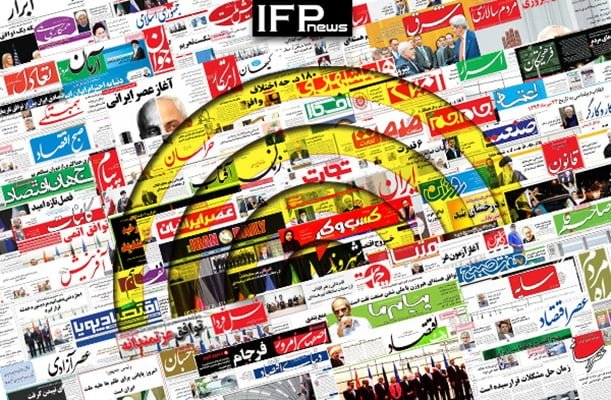
A Look at Iranian Newspaper Front Pages on April 25

A Look at Iranian Newspaper Front Pages on November 19

The top story in all papers today was the remarks made by Iranian President Hassan Rouhani and top security official Ali Shamkhani about the Iran nuclear deal and the consequences of the US withdrawal from the 2015 accord.

Also a top story was comments made by Foreign Minister Mohammad Javad Zarif on the Iran nuclear deal in separate interviews with American media in New York.

The martyrdom of Saleh al-Samad, a senior Ansarullah official, and the Yemeni group’s vow to take revenge from the Saudi perpetrators also received great coverage.

The above issues, as well as many more, are highlighted in the following headlines and top stories:


19 Dey:

  • Rouhani: We’ve Remained Committed to Our Promise
  • Zarif: We Hope Macron, Merkel Would Make Trump Understood

A Look at Iranian Newspaper Front Pages on April 25


Abrar:

  • Zarif: US Withdrawal from JCPOA to Free Iran from Commitments

A Look at Iranian Newspaper Front Pages on April 25


Afkar:

  • Shamkhani: We Won’t Show Restraint If Trump Hampers JCPOA Implementation
  • Rouhani: No One Can Make Iranian Nation Disappointed

A Look at Iranian Newspaper Front Pages on April 25


Aftab-e Yazd:

  • Rouhani: I Don’t Have a Weak Memory, So I’ve Not Forgotten My Promises

A Look at Iranian Newspaper Front Pages on April 25


Arman-e Emrooz:

  • Rouhani: Don’t Worry about Exports, Imports; We’ve Made Robust Forex Decisions

A Look at Iranian Newspaper Front Pages on April 25


Asrar:

  • Imam Khomeini’s Grandson: Social Media Have Ended Monopoly [of traditional media]
  • Rouhani: US to Pay Dearly for Violating Iran Nuclear Deal

A Look at Iranian Newspaper Front Pages on April 25


Ebtekar:

  • Leaving NPT among Iran’s Options in Case US Threatens JCPOA: Shamkhani

A Look at Iranian Newspaper Front Pages on April 25


Etemad:

  • Who Will Be Elected as Tehran Mayor? There Are Seven Candidates

A Look at Iranian Newspaper Front Pages on April 25


Ettela’at:

  • Zarif: Conflicts in Western Asia Must Be Stopped
  • Central Bank Allocates $2.3 Billion to Import

A Look at Iranian Newspaper Front Pages on April 25


Iran:

  • Oil Minister: What Are We Afraid of Interacting with Foreigners?
  • EU, Int’l Bodies Increase Pressure to Preserve Iran Nuclear Deal

A Look at Iranian Newspaper Front Pages on April 25


Javan:

  • JCPOA on Verge of Collapse
  • German Paper: Europe, US Have Agreed on More Iran Sanctions, Major Changes to JCPOA

A Look at Iranian Newspaper Front Pages on April 25


Kayhan:

  • Mr Zarif! You Don’t Need to Be A Revolutionary, Just Be A Diplomat!
  • A Report on Zarif’s Remarks against Iran’s National Interests in New York
  • Car in Toronto Kills 10, Wounds 16
  • Ansarullah Takes First Step to Avenge Death of Saleh al-Samad by Targeting Aramco Port

A Look at Iranian Newspaper Front Pages on April 25


Khorasan:

  • Rouhani’s Threatening Remarks on Iran Nuclear Deal
  • US to Pay Heaviest Costs

A Look at Iranian Newspaper Front Pages on April 25


Rah-e Mardom:

  • Iran Oil Minister: I’m Just Implementing Establishment’s Policies

A Look at Iranian Newspaper Front Pages on April 25


Resalat:

  • Rouhani: Nation, Gov’t to Stand against White House’s Plot

A Look at Iranian Newspaper Front Pages on April 25


Shargh:

  • Mr Macron’s Mission to Save Iran Nuclear Deal
  • What French President Looks for in Washington

A Look at Iranian Newspaper Front Pages on April 25


Vatan-e Emrooz:

  • Yemen’s Ansarullah to Take Revenge for Death of Its Top Official

A Look at Iranian Newspaper Front Pages on April 25

Iran President Inaugurates Tabriz 2018 Tourism Event

The event is held on the occasion of the designation of Tabriz, the third largest city in Iran, as the tourism capital of Muslim world in 2018.

The designation was made during a conference of the tourism ministers of the Organisation of Islamic Cooperation held in February in Bangladesh, a report by IRNA said.

Tabriz is the largest economic hub and metropolitan area in Northwest Iran.

As a 3,500-year-old city, Tabriz hosts around 1,800 cultural heritage sites registered on the national List of Cultural Heritage, notably the Grand Mosque and Tabriz Citadel.

The city is famous for its handicrafts, including hand-woven rugs and jewelry.

It has also been declared a World Craft City by the World Craft Council, which, along with Isfahan, makes it one of Iran’s only two cities to boast the title.

The population is overwhelmingly Azerbaijani, though Persian is spoken by residents as a second language.


Tourism Brings Great Benefits

Speaking in the ceremony, Rouhani said promoting tourism could be a good way to drive constructive engagement with the world.

“Tourism helps people know history of other countries and thus obtain a deeper understanding of other nations,” he said, according to a transcript of his speech posted on President.ir.

Rouhani said encouraging tourism could also bring significant economic benefits to the Iranian people.

“Developing relations with neighbors and other countries improves living conditions of Iranians and produce economic benefits,” he said.

The president said Tabriz, a key location on the legendary Silk Road and a gateway to Europe, has the potential to become a hot tourist destination for decades to come.

Besides western people, Rouhani said Tabriz could hold strong appeal for nations in the region and Muslim world.

“People and officials in East Azarbaijan Province should work towards turning Tabriz into a widely popular tourist destination in the world not only for 2018 but for decades,” he said.

Iran Rejects Potential US-Europe Deal on Fate of JCPOA

Signs of US Decline Clearer Than Ever: Iran Official

“In our view, any agreement between Europe and the US over the future of JCPOA and the fate of Iran’s nuclear program after the end of time-bound restrictions are invalid and worthless,” Secretary of Iran’s Supreme National Security Council Ali Shamkhani said on Wednesday.

The official made the statement while addressing the 9th International Meeting of High Representatives for Security Issues in the Russian Black Sea resort of Sochi, according to a report by the Persian-language Iranian Students’ News Agency (ISNA).

Trump, who calls the 2015 nuclear accord one of the worst deals ever negotiated, has threatened that he will return US sanctions on Iran unless what he calls “flaws” in the accord are fixed by Britain, France and Germany.

Shamkhani’s warning comes a couple of weeks before a May 12 deadline set by Trump to renew the waivers for US sanctions on Iran that were lifted under the accord.

The refusal of the US to keep the sanctions frozen will mean Washington is longer bound by the pact.

Meanwhile, French President Emmanuel Macron is in Washington, trying to convince Trump not to tear up the accord.

The deal was signed by Iran, the US and five other world powers to put confidence-building, temporary curbs on Iran’s nuclear program in exchange for sanctions relief.

Shamkhani said the Trump administration, who is undermining basic principles of international law, will never see its dreams regarding Iran came true.

“Engaging in new talks over extension of restrictions on Iran’s peaceful nuclear program will destroy the JCPOA, as the end of restrictions and normalization of Iran’s nuclear program was a major commitment [taken by the other side] under the international accord,” he said.

The Sochi security forum is attended by secretaries of national security councils, government ministers, aides to presidents and prime ministers in charge of security matters.

On the sidelines of the conference, Shamkhani will discuss bilateral and multilateral issues in talks with officials from other countries.

Islamic Architecture Deeply Rooted in Iranian Culture, Art: Swiss Expert

Professor Thomas Meyer-Wieser is a prominent architect who has spent a long time on Islamic culture and civilisation. According to him, a book named “Iran: Architectural Guide” is the result of the activities and trips he made to Iran.

He is very fascinated by the architecture of Iran and, of course, the people living in this country. What follows is the translation of an interview conducted by the Persian-language news website Honar Online, on the occasion of National Architecture Day, with this prominent Swiss professor who speaks very fervently about Iran and its civilisation:

Q: Please introduce yourself and tell us more about yourself.

A:  I am an architect and urban planner. I majored in architecture and urban planning and graduated from the Zurich ETH University. Since the time I was a student, I was very interested in the architecture and urban planning of the Muslim world. I also studied at the University of Architecture and Urban Development in Urbino, Italy in 1978, and I spent my internship at the Modam Company in Tehran.

In 1979, along with the UNESCO team, I worked on the Sassanid Qal’eh Dokhtar fortified palace in the city of Firuzabad in Iran’s Fars province, and from 1980 to 1984, I was an associate professor of Thomas Oswald at ETH. In 2009, I established my own company in the field of architectural and cultural activities, and from 1995 to 2005, I was in Switzerland teaching landscape architecture.

Q: When was the first time you came to Iran?

A: It was in 1979. My plan was to go to India after Iran and stay in India for one year, but Iran and Afghanistan were so attractive to me that I went to India after a year. I travelled to Iran because I had to go through an internship program under the Swiss training system. Accordingly, I chose Iran for my internship. I think I was 20 or 22 when I began to explore Iran. After working with the UNESCO team in rebuilding Qal’eh Dokhtar, I got more interested in Iran, and since then I have been coming to Iran at least once a year. I met with Dr Hosna Pourhashemi at Zurich’s ETH in 2011. Since then, with her collaboration, we brought about 14 European and Swiss groups of architects and urban planners to Iran and introduced them to Iran’s historical and natural places.

Q: What specific feature of Iran made you interested in the country?

A: The most important factor that attracted me to Iran was the people. Apart from its unique architecture, I had a good sense of the Iranian people. I really feel good here.

Q: How did you decide to write the book “Iran: Architectural Guide”?

A: I first wrote a book about Cairo, and then I went to the Museum of Islamic Arts in Switzerland where I got the idea to write a book on Iran. I started to write the German version of the book. I cannot say how long it took to write the book, but the process of writing, designing the pages and editing took about three months.

Q: What do you think is the most amazing structure that exists in Iran, and why it was attractive and wonderful to you?

A: If I want to talk about the design of a city, I will name the Shushtar New Town, designed by Mr Kamran Diba. New Shushtar’s design is a modern urban design. I think Mr Diba’s project is the culmination of the modern art of Iranian artists. Even those who do not have any information about architecture will be attracted by the design of this town.

Q: Islamic architecture does not just exist in Iran, and the Persian Gulf states have special Islamic architectures. What is the unique feature of Iranian architecture?

A: In my recent speech in Tehran, I have talked about this issue and the interactions that have taken place between Islam and various countries. When the Arab caliphs came to Iran to conquer the country, good things happened to both sides. Iran did not have the printing industry at that time, and it profited from the Arabs, and the Arabs did not have administrative, managerial, and cultural system, and they learned it from Iranians. Therefore, because of Iran’s rich culture, we can say almost all the things that exist in Islamic architecture are rooted in Iran and the Iranian culture.

Q: Are you working on any new research project or book about Iran?

A: I cannot say anything at the moment, but I would like to write separate books about the cities of Tehran and Isfahan.

Regional Peace Not Possible Unless US Leaves Mideast: Iran

Addressing a ceremony on Wednesday, Rouhani blamed the wrong policies of the US for most of the regional problems and said the US thinks that the region should be under its control and the White House should decide for the Middle East.

In a direct address to Washington, Rouhani said “you ask for money to remain in Syria and threaten to leave the country if there is no further money. You boast of protecting Iraq but Iraq is protected by Iraqi nation not you,” the Persian-language Iranian Students’ News Agency (ISNA) reported.

He called the US the main source of instability in the region and underlined that the region will become secure only if the US leaves it.

“You have provided Saudi Arabia with warplanes and sophisticated weapons to establish security in the region but what we see today is that the region is now far from security,” he added.

The president further criticised Washington for its violations of the Iran nuclear deal. He said the US has failed to live up to its commitments under the landmark agreement, and thus does not have the right to talk about its future.

Rouhani also mocked his US counterpart Donald Trump for calling the deal ‘flawed’, saying the US should have not signed the accord if it was terribly bad.

He noted that the deal proved that Washington’s claims about Tehran’s nuclear program were sheer lies.

“We proved our goodwill under the JCPOA and showed how wrong the Iranophobia propaganda is. You have violated your commitments under the deal in various ways including discouraging people from investing in Iran.”

President Rouhani blamed his American counterpart for not being familiar with politics and the international law and added Trump talks about the Iran deal from a real estate mogul’s point of view.

He underlined that Iran is after constructive cooperation with the world not only in nuclear field but also other areas and said “as we have said repeatedly, a win-win solution is the best way to remove the problems.”

Armenians in Iran Mark Anniversary of Armenian Genocide

A number of Christian clergymen, officials of the Armenian Caliphate Council, and Christian citizens of Isfahan attended the gathering.

In 1915, leaders of the Turkish government set in motion a plan to expel and massacre Armenians living in the Ottoman Empire. Though reports vary, most sources agree that there were about 2 million Armenians in the Ottoman Empire at the time of the massacre.

By the early 1920s, when the massacres and deportations finally ended, some 1.5 million of Turkey’s Armenians were dead, with many more forcibly removed from the country. Today, most historians call this event genocide – a premeditated and systematic campaign to exterminate an entire people.

However, the Turkish government does not acknowledge the enormity or scope of these events. Despite pressure from Armenians and social justice advocates throughout the world, it is still illegal in Turkey to talk about what happened to Armenians during this era.

What follows are ISNA’s photos of the ceremony held in Isfahan to commemorate the genocide: