“We became a country in army boots”: Zelensky
As he marked four months since Russia began its invasion, Ukrainian President Volodymyr Zelensky said his nation “became a country in army boots.”
“Everything changed for Ukraine four months ago. We became a country in army boots. A country in tanks, aircraft, ships. A country in trenches and shelters,” Zelensky wrote on his official Telegram channel on Friday.
“Our way of life changed, but not our worldview. The path on which we are going to the goal changed, but the goal remained the same,” he continued.
“We are fighting for our freedom and our land. We are fighting for the future of our children and grandchildren, for their life and opportunity to build a new Ukraine,” Zelensky added.
Russia began its invasion of Ukraine four months ago on Feb. 24.
Russia’s war to cast 40-50 million people into hunger: Blinken
Russia’s war against Ukraine, not Western sanctions, will add another 40 or 50 million more people to the ranks of the hungry, US Secretary of State Antony Blinken has said.
“There is no reason other than Russia’s blockade of Ukraine and Russia’s refusal in many cases to export its own grain for political reasons,” Blinken stated at a joint news conference in Berlin with German Foreign Minister Annalena Baerbock on Friday.
International partners “united” in fight against looming food crisis: German FM
German Foreign Minister Annalena Baerbock said Friday international partners are working together in the fight against the looming food crisis caused by Russia’s war in Ukraine.
”We are working together against Russia’s cynical grain war that threatens to destabilize countries,” Baerbock told reporters at a joint news conference with US Secretary of State Antony Blinken, adding, ”This difficult time is also a time of almost unprecedented closeness and unity.”
”We will not allow this war to starve the world,” Baerbock said, adding, ”There is insecurity in the world regarding delivery, especially of grains, and payment.”
Baerbock stated the top priority of Friday’s food security conference hosted by Germany is to set up reliable transport routes, including the opening of transport via sea and rail, to allow grain from Ukraine to be exported.
The German foreign minister also noted with the initiative of the US, temporary silos will be built in Ukraine to store and export grain to avert a global food crisis.
G7 FMs say Russia is to blame for exacerbating food insecurity
Russia’s war against Ukraine is exacerbating food insecurity, the G7 foreign ministers said Friday in a joint statement.
The ministers reiterated their condemnation of the war and called on Moscow “to cease its attacks and threatening actions and un-block the Ukrainian Black Sea ports for food exports.”
“In today’s meeting the G7 Foreign Ministers of Canada, France, Germany, Italy, Japan, the United Kingdom, and the United States of America, and the High Representative of the European Union, reaffirmed in the strongest terms their condemnation of Russia’s continued war of aggression against Ukraine,” according to the joint statement.
The ministers added that in addition to Russia’s blockade of ports, troops are bombing grain silos and damaging Ukraine’s agricultural infrastructure.
“Ministers rejected Russia’s false narrative and disinformation on sanctions. All G7 sanctions include exemptions to allow Russian food and agricultural products to get to global markets,” according to the statement.
The foreign ministers pledged to support Ukraine with military and defense assistance “for as long as necessary.”
All pledged rocket systems will be in Ukraine by mid-July: US defense official
The first batch of four High Mobility Artillery Rocket Systems that the US pledged to Ukraine are now in the country, and the newly announced batch of four HIMARS will be delivered by “mid-July,” according to a senior US defense official.
Another platoon of Ukrainians is in training to operate the systems, the official told reporters on a background call.
EU needs to buy energy collectively to prevent winter crisis: Belgian PM
European Union member states need to buy energy collectively and implement price caps on gas to prevent what could be a hard winter, Belgian Prime Minister Alexander De Croo said on Friday.
We are heading towards a winter that could be difficult. We can only get through this difficult period if we work together,” De Croo stated ahead of the European Council meeting in Brussels.
“We need to form an energy bloc, we need to buy energy collectively, we need to make use of price caps and we need to coordinate better among ourselves,” he added.
De Croo went on to say that the EU Commission “should really take the lead right now.”
If we all operate on our own, we won’t be able to get out of this,” he stressed.
Europe has tried to reduce its reliance on Russian natural gas since the invasion of Ukraine in late February.
Europe’s energy crisis escalated this month as Moscow further reduced supplies to Germany, Italy and other members of the European Union. Twelve EU countries have so far been affected by Russian gas supply cuts, the bloc’s climate policy chief Frans Timmermans said on Thursday.
Gas supply in the EU is “currently guaranteed” but the situation is “to be taken seriously,” the EU Commission told CNN on Thursday.
On Thursday, the EU and Norway agreed to further strengthen their cooperation in the energy field, providing the EU with additional gas supplies.
‘Russia has stolen our peace’: Zelensky
Ukrainian President Volodymyr Zelensky urged music fans at the Glastonbury Festival to “spread the truth about Russia’s war” on his country.
Speaking to the crowd at the British music extravaganza by video before a set by The Libertines, Zelensky stated that “we in Ukraine would also like to live the life as we used to and enjoy freedom and this wonderful summer, but we cannot do that because the most terrible has happened – Russia has stolen our peace”.
IAEA voices concern for staff at nuclear plant, demands access
The International Atomic Energy Agency is increasingly concerned about the welfare of Ukrainian staff at the Russian-held Zaporizhzhia nuclear power plant in Ukraine, it has said, adding that it must go there as soon as possible.
Russia trying but unable to impede weapons flow to Ukraine: US official
Russia is trying but has been unable to target Western weapons flowing into Ukraine, including longer-range systems that Kyiv hopes will be decisive on the battlefield, a senior US defense official has said.
The official also appeared to play down the significance of Russian advances in Ukraine and said a Ukrainian pullback from Sievierodonetsk would allow them to take a better defensive position.
“In moving the Ukrainian armed forces from Sievierodonetsk back, what they are doing is putting themselves in a position where they can better defend themselves,” the official added, speaking on condition of anonymity.
“Russia uses hunger as weapon of war and holds the whole world hostage”: Germany
German Foreign Minister Annalena Baerbock accused Russia of using ”hunger as a weapon of war” and holding ”the whole world hostage,” ahead of a key gathering on Friday in Berlin.
US State Secretary Antony Blinken is among those attending the conference on the looming food crisis caused by the war in Ukraine.
Baerbock told reporters in Berlin that the event, entitled “Uniting for Global Food Security,” will address supply shortages caused by the war, while aiming to “stabilize food supplies worldwide.”
She added the conference was called into action ”at very short notice” and that 50 delegations, as well as 40 ministers, from around the world will be attending.
The top priority is to set up reliable transport routes to allow grain from Ukraine to be exported, she said of the food security conference.
Anyone who does not attend the hunger crisis conference should ask themselves how they can contribute,” she continued.
The West has demanded that Russia stop the blockade of Ukrainian seaports to allow vast stores of grain to be taken to world markets as fears rise of famines in vulnerable regions.
Germany’s development minister Svenja Schulze, who was speaking at the same news briefing, said the country will spend $4.2 billion this year in the fight against global hunger.
The Berlin conference will take place as the leaders of the G7 countries prepare to meet in the Bavarian Alpine resort of Schloss Elmau between June 26 and 28.
Ukraine’s President Volodymyr Zelensky is expected to discuss financial aid for Ukraine with the G7 leaders by video link on Monday.
Kyiv: Russia seeking to surround Lysychansk, capture Severodonetsk
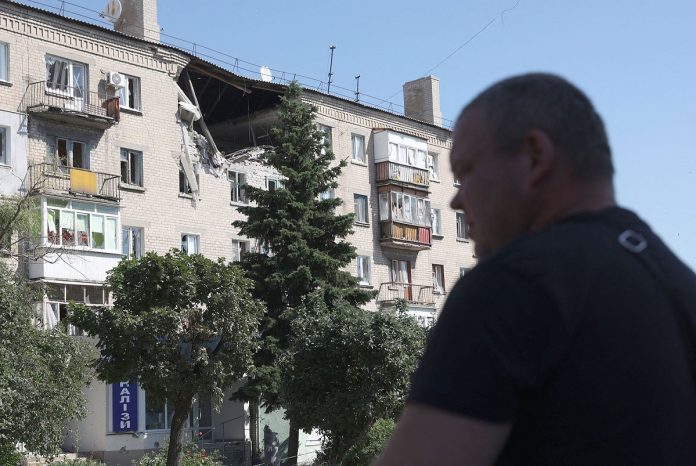
Ukraine’s defence ministry says Russian forces are seeking to surround the embattled city of Lysychansk and are mounting assaults on its sister city of Severodonetsk to establish full control.
The region’s governor said earlier that Ukrainian troops would “have to be withdrawn” from Severodonetsk and that they had been ordered to take up new positions.
Defence ministry spokesperson Oleksandr Motuzyanyk declined to comment on the governor’s remarks and told reporters at a briefing in Kyiv that the information was “closed” to the public.
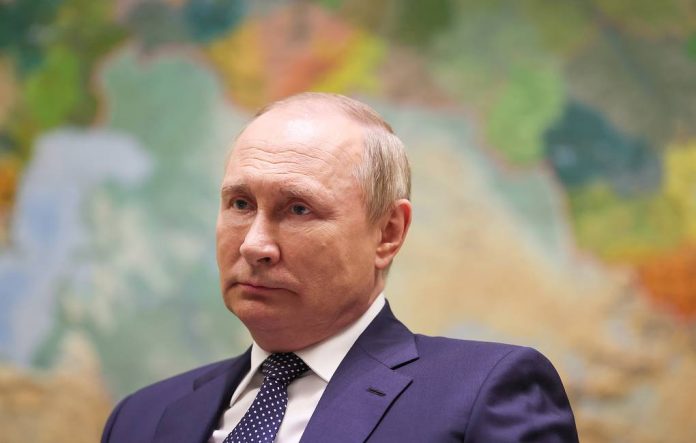
Russian President Vladimir Putin has accused Western countries of being cynical about global food problems.
In his speech at an online BRICS Plus summit on Friday, he noted that both supply and demand for goods and services had shrunk globally when the coronavirus pandemic broke out and the “food market was seriously disbalanced.”
He recalled the most famous quote attributed to Marie-Antoinette, the queen of France during the French Revolution, who said “Let them eat cake” when she was looking at her starving protesting subjects from her palace windows.
“Some Western countries are demonstrating such cynicism when they destabilize global production of agricultural products by imposing restrictions, say, on supplies of Russian and Belarusian fertilizers and impeding export of Russian grain to global markets,” he added.
According to the president, grain harvest in Russia is promising to be quite good this year.
“Hopefully, everything will be all right and we will be able to supply 50 million tonnes of grain to global markets, compare to 37 million tonnes we are supplying this year,” he noted.
However, he pointed to the problems of insuring grain-shipping transport and banking payments under contracts, and so on.
The West has been fanning hysteria over the export of Ukrainian grain, he said.
“Deliberate attempts are being made to stir up hysteria over suspended Ukrainian grain exports via Black Sea ports,” he pointed out.
He cited Russian and US estimates showing “five to six million tonnes of wheat and seven million tonnes of corn” have been locked there.
“Well, it’s something but it certainly won’t help resolve issues facing the global grain market,” Putin added.
“I have repeatedly stated and I would like to reiterate that Russia is not hampering grain exports from Ukraine and is ready to ensure a safe passage of vessels with grain to international waters, provided that the Ukrainian military clear the ports and the adjacent water areas of mines,” the Russian leader stressed.
Putin stated Moscow had already “reached a relevant understanding with UN Secretariat officials, but we are still lacking one thing – a constructive approach on the part of the Kiev regime”.
Russian forces in full control of Hirske district: Local official
Oleksiy Babchenko – head of Hirske municipality, stated Russian forces have “fully occupied” the district in eastern Luhansk region.
“Unfortunately, as of today … the entire Hirske district is occupied,” Babchenko said on a television broadcast.
“There are some insignificant, local battles going on at the outskirts, but the enemy has entered,” he added.
UN chief: World facing ‘catastrophe’ from global food shortage
The head of the United Nations says the world faces a “catastrophe” because of the growing shortage of food around the globe.
Antonio Guterres stated the war in Ukraine has added to the disruptions caused by climate change, the coronavirus pandemic and inequality to produce an “unprecedented global hunger crisis” already affecting hundreds of millions of people.
“There is a real risk that multiple famines will be declared in 2022,” he added in a video message to officials from dozens of rich and developing countries gathered in Berlin.
Lavrov: EU and NATO forming coalition ‘for war against Russia’
The actions taken by the EU and NATO essentially amount to the formation of a “new coalition” targeting Russia, Foreign Minister Sergey Lavrov told journalists on Friday, comparing the steps taken by Brussels to the actions of Nazi dictator Adolf Hitler before attacking the Soviet Union.
Moscow has “no illusions” about the prospect of “Russophobic sentiments” within the EU dissipating any time soon, Lavrov said.
Russia will closely follow all the “real steps” taken by the bloc and its candidate states, he added in a probable reference to Ukraine, which was granted EU candidacy status on Thursday.
Russian-installed Kherson official assassinated: Official
The deputy head of the Russian-installed authority in Kherson region says a senior official of the administration has been killed in an apparent assassination.
Dmitry Savluchenko, head of families, youth and sports department of the Kherson military-civilian administration, was killed in a bomb blast, the deputy head told Reuters news agency.
Russia’s TASS news agency added there were two burnt-out cars in a courtyard of Kherson – the regional capital where the blast took place – and that the windows of a four-storey house had been shattered.
Kherson sits just northwest of the Russian-annexed Crimean peninsula and was occupied during the first week of Russia’s invasion of Ukraine, which began in February.
EU must speed up efforts to get independent from Russian fossil fuel: Scholz
Europe needs to ramp up efforts to cut its dependency from Russian fossil fuel imports in the face of the latest crisis, German Chancellor Olaf Scholz said in Brussels on Friday.
“All together, we are very, very well prepared for the difficult challenge linked to Russian fossil fuel imports,” he told reporters as he arrived for the second day of an EU summit.
He added this was the reason why the bloc had not only imposed sanctions on Russian coal and oil at an early stage, but had as well worked on adjusting its infrastructure in a way that European countries can import gas from other countries, too.
US to blame Kaliningrad transit restrictions: Russia
Moscow’s foreign ministry says it blames Washington for a Lithuanian ban on sanctioned goods crossing from the Russian mainland to the exclave of Kaliningrad.
In a statement, the ministry also added that it was “impossible” to hold expert level consultations with Washington on a number of bilateral issues that had been due to take place in the near future.
The ministry did not specify which issues it was referring to, or when talks were supposed to take place.
Gazprom gas exports to Europe via Ukraine decreases
Gazprom – Russian gas producer – says its supply of gas to Europe through Ukraine via the Sudzha entry point was seen at 42.1 million cubic metres (mcm) on Friday versus 42.6 mcm on Thursday.
An application to supply gas via another major entry point, Sokhranovka, was again rejected by Ukraine, Gazprom added.
Energy costs could triple in Germany: Network regulator
German consumers could see a doubling or tripling of their energy costs, which, in some cases, are already between 30 and 80 percent higher due to price increases from last fall, the head of the Bundesnetzagentur network regulator, has told broadcaster ARD.
The regulator has considered various scenarios, Klaus Mueller stated, and most of them “are not pretty, and mean either too little gas at the end of winter or already very difficult situations in autumn or winter”.
Germany triggered the second of three phases of its emergency gas plan on Thursday, which kicks in when the government sees a high risk of long-term supply shortages of gas.
German economy minister warns of industry shutdown amid gas shortage
Germany is heading for a gas shortage if Russian gas supplies remain as low as they are now, and certain industries would have to be shut down if there is not enough come winter, the economy minister has said.
“Companies would have to stop production, lay off their workers, supply chains would collapse, people would go into debt to pay their heating bills, that people would become poorer,” Robert Habeck told Der Spiegel magazine, adding it was part of Russian President Vladimir Putin’s strategy to divide the country.
This is “the best breeding ground for populism, which is intended to undermine our liberal democracy from within,” Habeck said, adding that Putin’s plans must not be allowed to work out.
Habeck held out the prospect of further relief for companies and people affected by the lack of gas but warned that it would not be possible to absorb all the effects, reported Der Spiegel.
Johnson warns against seeking ‘bad peace’ in Ukraine
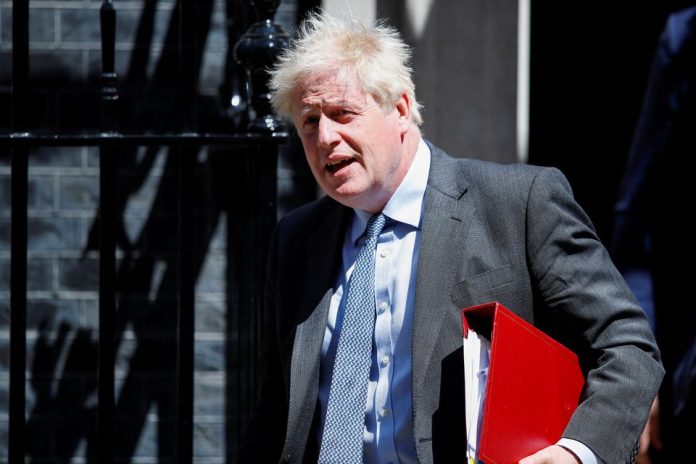
UK Prime Minister Boris Johnson warned G7 and NATO allies they should not encourage Ukraine to settle for unfavorable peace terms as Russia’s brutal war drags on.
Speaking to journalists traveling with him to Rwanda, Johnson repeated his concern that “that there is a lot of Ukraine fatigue now in the world.”
He called on Western powers to “give the Ukrainians strategic endurance,” adding that “my message to colleagues at the G7 and at NATO in particular is … now is not the time to settle and encourage the Ukrainians to settle for a bad peace, for a peace for which they are invited to give up chunks of their territory in return for a cease-fire.”
He warned such a scenario would be “a disaster” likely to embolden Russian President Vladimir Putin and cause further economic damage to the world.
“It is time to recognize that the Ukrainians need help to change the dynamic in Donbas, Severodonetsk and then the land bridge area in the south,” he added.
Johnson emphasized the importance of food security as he departed for the Commonwealth Heads of Government Meeting in Kigali.
“A lot of the countries we are about to see depend on that type of grain,” he continued, saying. “Some of the poorest countries in the world absolutely depend on supplies of grain from Ukraine.”
He ruled out sending in the Navy, but stressed the need to find a way of getting the grain out that is not subject to Putin’s control.
Ukrainian forces will have to leave embattled Severodonetsk: Governor
Ukrainian troops will “have to be withdrawn” from the mostly Russian-occupied battleground city of Severodonetsk, the Luhansk governor said on television on Friday.
“Remaining in positions smashed to pieces over many months just for the sake of staying there does not make sense,” Serhiy Haidai stated.
He did not indicate whether troops would be withdrawn immediately, or over what time frame the withdrawal would happen.
The UK’s defence ministry announced Thursday some Ukrainian troops had withdrawn from Lysychansk to avoid being encircled. If Russia takes both Severodonetsk and Lysychansk, it will hold the Luhansk region, which makes up half of the Donbas.
Russian forces captured another village near Lysychansk: Governor
Russian forces have taken the village of Mykolaivka, around 25km south of the key city of Lysychansk, the governor of Luhansk has said.
Serhiy Haidai stated Ukraine’s forces repulsed a Russian attack on Lysychansk, and the nearby village of Borivske, on Thursday.
He added the Russian army fired on Severodonetsk with “all available weapons” as well as the nearby villages of Bila Hora, Vovchoyarivka, Synetskyi and Pavlohrad.
“The enemy’s offensive near Borivske was successfully stopped. In addition, our soldiers repulsed the offensive in the direction of the southern outskirts of Lysychansk. However … Russians managed to capture Mykolaivka,” Haidai continued.
Russian air force likely lacks trained pilots for Ukraine invasion: UK
The Russian air force is likely struggling to support its Ukraine offensive with sufficient aircrew, the United Kingdom’s Ministry of Defence has said, citing recent Ukrainian information about a captured pilot flying a Russian plane who confessed to being a military contractor with the private Wagner army.
“Ukrainian forces have announced that the pilot of a Russian Su-25 FROGFOOT ground attack aircraft shot down on 17 June was captured shortly afterwards,” the defence ministry said in its latest intelligence briefing.
“The pilot has confessed to being a former Russian air force Major, who had taken employment as a Wagner military contractor and had flown several missions during the conflict,” it said, adding that this indicated a lack of sufficient aircrew in the Russian air forces.
“This is likely due to a combination of Russia’s insufficient numbers of suitably trained personnel and its combat losses,” the ministry added.
Kyiv likely preparing for loss of Severodonetsk and Lysychansk: ISW
Ukrainian authorities are likely setting conditions to prepare for the ultimate loss of both key Luhansk cities of Severodonetsk and Lysychansk, but this outcome would not represent a turning point in the war, the Institute for the Study of War (ISW) has announced.
“Ukrainian troops have succeeded for weeks in drawing substantial quantities of Russian personnel, weapons, and equipment into the area and have likely degraded Russian forces’ overall capabilities while preventing Russian forces from focusing on more advantageous axes of advance,” the Washington-based think-tank said.
“Russian offensive operations will likely stall in the coming weeks, whether or not Russian forces capture the Severodonetsk-Lysychansk area, likely granting Ukrainian forces the opportunity to launch prudent counteroffensives,” it added.
Russia to ‘carefully record’ Ukraine’s use of Western weapons: Spokesman
The Kremlin spokesman has stated that Russia’s defence ministry is carefully recording each use of weapons provided by the United States to Ukraine to ensure they aren’t being used to strike inside Russia, state media channel RT has reported.
“We carefully record all episodes of the use of these weapons,” Dmitry Peskov said.
“So, if any of these weapons reach the front lines and are not destroyed by our military, we will track how they are being used,” he added.
US sending advanced rocket systems, other aid to Ukraine
The United States will send another $450 million in military aid to Ukraine, including some additional medium-range rocket systems, to help push back Russian progress in the war, officials have announced.
The latest package includes four High Mobility Artillery Rocket Systems, or HIMARS, which will double the number they have now. All four were prepositioned in Europe, and training on those systems has already begun with the Ukrainian troops who will use them, stated Marine Corps Lieutenant Colonel, Anton Semelroth, a Pentagon spokesman.
The first four HIMARS that the US previously sent have already gone to the battlefield in Ukraine and are in the hands of troops there.
According to the Pentagon, the aid also includes 18 tactical vehicles that are used to tow howitzers, so the weapons can be moved around the battlefield, as well as 18 coastal and riverine patrol boats, thousands of machine guns, grenade launchers and rounds of ammunition, and some other equipment and spare parts.
Zelensky says EU leaders’ decision to grant Ukraine EU candidate status is “unique and historical”
Ukrainian President Volodymyr Zelensky said he commends the European Council’s decision to grant Ukraine candidate status to join the European Union.
Quoting European Council President Charles Michel’s tweet announcing the decision, Zelensky stated it is “a unique and historical moment” in relations between the European Union and Ukraine.
Zelensky has called the European Council decision to grant Ukraine candidate status a “victory.”
In a video posted on Instagram immediately after the announcement, he noted: “We have just received the candidacy. This is a victory we had waited for 120 days and 30 years. After that we will defeat the enemy and get some rest. Or maybe we shall rebuild Ukraine first and get some rest afterwards.”
Zelensky added, “And maybe shall will even win, rebuild, join the EU and then rest. Or maybe we won’t be getting rest. Though children would disagree with that. But we will definitely win.”
Ukraine’s Foreign Minister Dmytro Kuleba also tweeted that “Ukraine will prevail. Europe will prevail.”
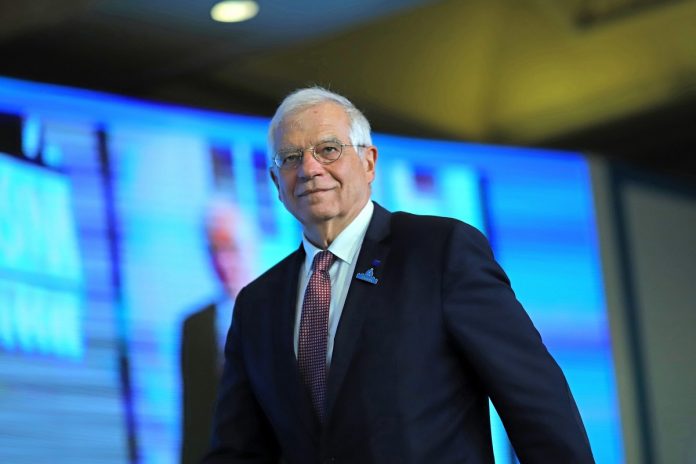
His tweet, accompanied by a short video with High Representative of the European Union for Foreign Affairs and Security Policy Josep Borrell, said: “Today marks the beginning of a long journey that we will walk together. The Ukrainian people belong to the European family. Ukraine’s future is with the EU. We stand together for peace.”
Ukraine files case against Russia at European Court of Human Rights
Kyiv said it has formally filed a case against Russia at the European Court of Human Rights to end “the mass and gross human rights violations” by Moscow’s forces during the war in Ukraine.
The move is considered symbolic, given that on June 7 the Russian parliament approved two bills ending the court’s jurisdiction in Russia.
A Ukrainian justice ministry statement said Russia’s invasion of Ukraine was illegal under the European Convention on Human Rights.
“The Court will be invited to find that Russia has been guilty of the most flagrant, serious and sustained violations of the Convention ever placed before the Court, and to award just satisfaction on an equally unprecedented scale,” it added.
Macron says today’s decision sends “a strong signal to Russia”
Speaking at a news conference alongside European Council President Charles Michel and European Commission President Ursula von der Leyen, French President Emmanuel Macron said that today’s decision to grant Ukraine and Moldova EU candidate status sends “a strong signal to Russia.”
“The message that is sent today very clearly and we just saw it with President [Volodymyr] Zelensky. It’s a very strong message, coherent with what our Europe since day one of the conflict has known to do. Which is: reacting swiftly, in a historic way and united. Through sanctions, two days later and six times since then. Through macroeconomic, military and financial support to Ukraine. And now through this political gesture,” Macron stated.
“This strong united Europe has been up to the task,” he added.
“More broadly today, it’s a European perspective that we recognize to Ukraine, Moldavia and Georgia. Which is a very strong signal to Russia and in the geopolitical context we mentioned and the choice made for Ukraine and Moldavia to be granted this candidate status to the European Union,” he added.
“We owed this to the Ukrainian people which is fighting to defend our values, their sovereignty and territorial integrity. And we also owed it to Moldavia regarding its political situation, of the destabilization attempts it is experiencing, and the generosity it showed in the context we just mentioned,” he said.
European Union approves Ukraine as candidate country
The European Union has approved the application of Ukraine to become a candidate country for admission to the 27-strong bloc. EU leaders meeting in Brussels have followed the recommendation of the European Commission, which was made on Friday 17 June.
The move comes just one day short of the four-month anniversary of President Putin ordering his troops into Ukraine for what Russia has insisted is not a war, but a “special military operation”.
The accession process to the EU can be lengthy. Until today the official list of candidate countries included Albania, the Republic of North Macedonia, Montenegro, Serbia and Turkey. Turkey gained candidate status in 1999, the Republic of North Macedonia in 2005.
European Commission president Ursula von der Leyen tweeted on Thursday, “Today is a good day for Europe.”
Von der Leyen said that European Union candidate countries have “homework” to do before the next stage of the of the accession process.
Speaking during a short press conference alongside French President Emmanuel Macron and European Council President Charles Michel following EU’s decision to grant Ukraine and Moldova EU candidate status, she stated, “The countries all have to do homework before moving to the next stage of the accession process but I am convinced that they will all move as swiftly as possible and work as hard as possible to implement the necessary reforms.”
She added that today’s decision strengthens Ukraine and Moldova, plus Georgia — which the EU is ready to grant candidate status once the outstanding priorities are addressed — “in the face of Russian aggression and it strengthens the European Union because it shows once again to the world that the European Union is united and strong in the face of external threats”.
“It’s a very strong message which is being sent out. A message of unity, of determination in political terms,” Michel noted.
EU says it will “swiftly work on a further increase of military support” to Ukraine
The EU says it will “swiftly” work on increasing military support to Ukraine and will work on further financial assistance.
In a news release following the first day of the two-day EU Summit, the European Council said, “The European Union remains strongly committed to providing further military support to help Ukraine exercise its inherent right of self-defence against the Russian aggression and defend its territorial integrity and sovereignty. To this end, the European Council calls on the Council to swiftly work on a further increase of military support.”
The European Council also urged Russia to “immediately stop targeting agricultural facilities and removing cereals, and to unblock the Black Sea, in particular the port of Odesa, so as to allow the export of grain and commercial shipping operations,” blaming Russia for the global food security crisis.
“Russia, by weaponising food in its war against Ukraine, is solely responsible for the global food security crisis it has provoked,” it added.
The European Council also condemned “Russia’s indiscriminate attacks against civilians and civilian infrastructure,” adding that “international humanitarian law, including on the treatment of prisoners of war, must be respected.”
“Russia, Belarus and all those responsible for war crimes and the other most serious crimes will be held to account for their actions, in accordance with international law,” it said.
BRICS countries — which include Russia — support Ukraine-Russia talks in joint declaration
BRICS countries announced they support talks between Russia and Ukraine in a joint statement published on the Kremlin’s website on Thursday.
The BRICS countries include Brazil, Russia, India, China and South Africa.
“We have discussed the situation in Ukraine and recall our national positions as expressed at the appropriate fora, namely the UN [Security Council] and UN [General Assembly]. We support talks between Russia and Ukraine,” the statement read.
“We have also discussed our concerns over the humanitarian situation in and around Ukraine and expressed our support to efforts of the UN Secretary-General, UN Agencies and ICRC to provide humanitarian assistance in accordance with the basic principles of humanity, neutrality and impartiality established in UN General Assembly resolution 46/182,” they added.
The BRICS summit, hosted by Beijing, marks Russian President Vladimir Putin’s first international forum with other heads of major economies since he launched his invasion in Ukraine back in February.
Since the beginning of Russia’s invasion, Ukraine’s President Volodymyr Zelensky has indicated that he was willing to hold direct talks with Putin.