Monday, January 12, 2026
Home Blog Page 1847

President Raisi in meeting with Putin: Iran-Russia anti-terror campaign brings peace to ME

Iran and Russian Presidents Raisi and Putin

President Putin who is visiting Iran to attend the Astana Peace Process Guarantor Countries went to the President’s Office for a meeting with President Raisi on Tuesday evening.

The two sides in the meeting discussed the latest status of bilateral ties, which has grown drastically during the recent months, especially in economic, security, infrastructure, energy, trade, and industrial fields, expressed satisfaction over the reached progress, and expressed will for further strengthening the bilateral ties.

They also agreed about the reached progress in campaign against terrorism, and stressed need for expansion of cooperation in regional and international fields, especially in strengthening regional cooperation and securing the stability of independent countries.

President Raisi stated that the expansion of bilateral relations is noticeable, arguing that after his meeting with President Putin in Moscow, and in Ashgabat, the process of expanding and deepening bilateral cooperation has been continuous, and it is still in need of further strengthening.

The president added that the record of successful bilateral cooperation in anti-terrorism cooperation in Syria paved the way for cooperation in the region to boost security and stability.

He noted that in the West Asia region those countries that claimed to be involved in campaign against terrorism had not taken any effective step in that regard, but the Islamic Republic of Iran, and Russia in their serious cooperation in campaign against terrorism, have proved their honesty and serious will.

Putin stated in the meeting that he is pleased to be in Iran, whose nation’s hospitality is famous, and welcomed comprehensive cooperation, especially in security and international fields.

“Iran and Russia have great shares in resolving the Syrian crisis,” he added.

White House says no information on Russia purchasing Iran drones

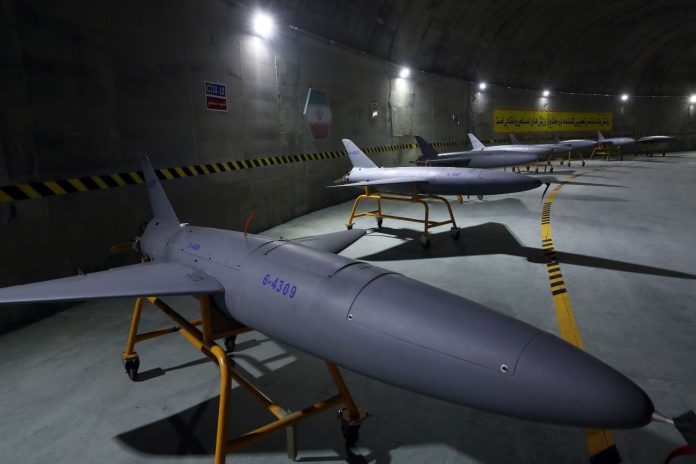
Iran Drones

Earlier in July, the White House warned that Iran is expected to supply Russia with “hundreds” of drones — including weapons-capable drones — for use in the war in Ukraine and that Tehran is preparing to begin training Russian forces on how to operate them as soon as this month.

Iranian Foreign Minister Hossein Amirabdollahian did not confirm US claim that Tehran is providing Russia with military equipment, including unmanned aerial vehicles. He assured that Tehran avoids any steps that may result in an escalation in Ukraine conflict.

“We don’t have any indications that the sale has actually occurred. And so therefore, we wouldn’t have any indications that there’s been training done on them,” Kirby said at the White House press briefing.

“Now, a lot of it’s going to depend on — how many does he buy, what kind of capabilities they have. But the Iranians have a domestic production capability of drones, and those drones have lethal capabilities,” he continued, adding, “We’ve seen that for ourselves in the attacks that they have perpetrated in Iraq and in Syria against our own troops and against our own facilities there. So, we’re watching this closely and we’re taking it seriously.”

Kirby on Tuesday noted it is “an indication of how much more desperate Mr. Vladimir Putin is becoming in terms of his own defense industrial base, and the degree to which he wants to continue to prosecute this war.”

Putin landed in Tehran on Tuesday and held talks with Iran’s Supreme Leader Ayatollah Seyyed Ali Khamenei, Iranian President Ebrahim Raisi and Turkish President Recep Tayyip Erdogan.

Putin’s visit to Iran is his first trip outside the former USSR territory since the beginning of the invasion to Ukraine, second foreign trip in total.

Raisi slams US sanctions on Syria in summit with Putin, Erdogan

Iran, Russia and Turkey Presidents Raisi, Putin and Erdogan

Addressing a trilateral summit in Tehran on Tuesday night with his Russian and Turkish counterparts, Vladimir Putin and Recep Tayyip Erdogan, Raisi stressed the importance of protecting Syria’s unity, territorial integrity and independence.

“The country’s fate should be decided at the hands of its own people through intra-Syrian dialog and free from foreign interference,” he said.

The summit, he said, is being held at a time when Syria is under pressure by unilateral sanctions, especially those imposed by the US.

“Sanctions violate international laws and the rights of countries. Besides condemning any sanctions on nations, the Islamic Republic of Iran declares that it will keep up its support for the Syrian people with stronger determination,” Raisi said.

Raisi also warned against any violation of Syria’s territorial integrity and said such breaches never contributed to regional security.

The summit was held within the format of the Astana peace process, which has helped significantly decrease violence in Syria and brought together Damascus and opposition groups in the country at the negotiating table since 2017.

For his part, Putin slammed the Western states for plundering Syria’s natural resources with the ultimate goal of splitting the country.

Putin also called on the UN to provide humanitarian aid to Damascus without any preconditions.

“Good steps must be taken in order to help inclusive dialog so that the Syrians would be able to determine their fate without external interference,” the Russian leader said.

In turn, Erdogan called the Astana process the only platform that had taken necessary measures for peace in Syria.

“We are all like-minded concerning [the fact] that the Syrian crisis can only be resolved through political solutions,” Erdogan added.

“It should be understood clearly that there is no room in our region’s future for separatist terror organizations,” he said.

“We will continue our fight against terrorist organizations in the time to come,” the Turkish president added.

Final statement

In a trilateral statement issued at the end of the event, the three states pledged to continue their cooperation to eliminate the remaining terrorists in Syria.

They “reaffirmed the determination to continue their ongoing cooperation in order to ultimately eliminate terrorist individuals, groups, undertakings and entities,” the statement read.

The trio also “expressed their opposition to the illegal seizure and transfer of oil revenues that should belong to Syria.”

They “rejected all attempts to create new realities on the ground under the pretext of combating terrorism, including illegitimate self-rule initiatives, and expressed their determination to stand against separatist agendas” in Syria.

Erdogan: Astana process, most effective measure to push political solution for Syria

Turkish President Recep Tayyip Erdogan

After the seventh summit of the Astana process held on Tuesday in Tehran, Erdogan said, “Once again, we reviewed our measures to create an atmosphere of peace and stability in Syria so that a political solution becomes feasible,” pointing out, “The Astana process format is the most effective measure that facilitates a political solution in this regard.”

Erdogan said the main problem in Syria is the militants in northern parts of the Arab country, and Turkey is determined to root out the foreign-backed militants.

The Turkish president also stressed Iran, Russia and Turkey, as the guarantors of the Astana process, have to spare no effort to ensure the next meeting of the Syrian Constitutional Committee would be convened, warning failure of efforts to write a new constitution for Syria would lead to the failure of the Astana process.

The tripartite summit in Tehran ended by a final statement, underling the resolve to continue the cooperation in the fight against terrorism.

Russian President Vladimir Putin had also joined his Iranian and Turkish counterparts in the Tehran summit.

Iran urges UN to help protect children via efforts to end armed conflicts

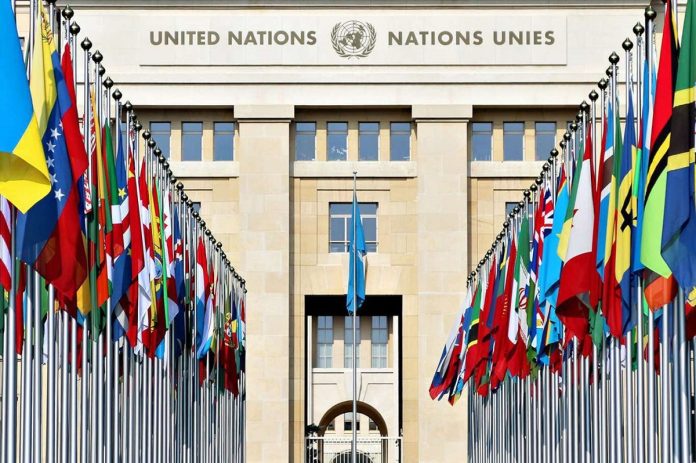
United Nations

Addressing a UN Security Council meeting on “Children and Armed Conflict,” Majid Takht-e Ravanchi warned that children were constantly facing a host of “egregious violations” of international humanitarian law in armed conflicts.

“Meanwhile, children who are refugees, internally displaced, or stateless as a result of conflicts are more likely to endure such severe violations and other major abuses, such as recruitment and usage, sexual violence, trafficking, and detention during armed conflicts,” he said.

In particular, the senior diplomat highlighted the plight of children in the conflict-torn countries of Afghanistan, Yemen, and Palestine.

He said, “Putting an end to ongoing conflicts, preventing their re-emergence, and guaranteeing the conflicting parties’ full and effective compliance with international humanitarian law are all necessary to protect children in armed conflicts.

Additionally, it is imperative to address the conflicts’ underlying causes.”
“Children have frequently been recruited in conflicts in order to support their families financially, and problems like poverty, lack of access to quality education and employment opportunities, as well as illegal unilateral sanctions and economic blockade, continue to play a significant role in such grave violations,” Takht-e Ravanchi added.

He called on UN Secretary-General Antonio Guterres to “conduct an assessment of the main causes of the conflicts, focusing on the detrimental effects of unilateral sanctions on the protection of children in such situations.”

Iranian MP confirms son’s jail term over ties to MKO terror group

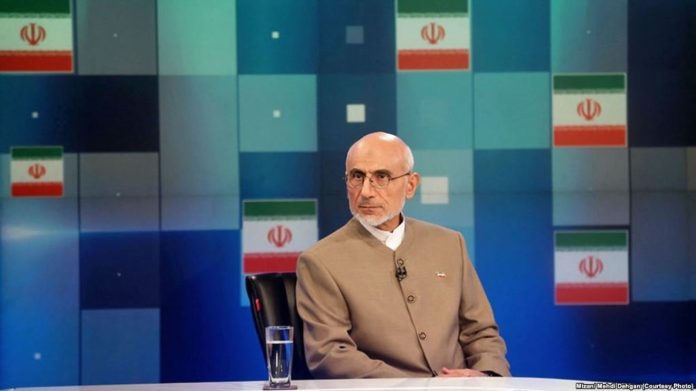
Iranian lawmaker Mostafa Mirsalim

In an interview with Tasnim News Agency, Mirsalim, a former minister of culture and Islamic guidance, spoke about the situation surrounding Mahdi’s arrest in July 2019 and the ensuing trial process, which found him guilty of having links to the MKO terror group.

“At the time of his arrest, with the information that security forces provided to me, I learned about the issues that had gotten him entangled. I think if I had found about these issues earlier, I could have saved him from that situation with a small bit of punishment,” he said.

The MKO terrorists, he said, had detected and exploited Mahdi’s weak points and entrapped him. They tried to obtain intelligence via him but of course to no avail, since he was not in possession of any classified information,” Mirsalim said.

The legislator said his son had been given a furlough due to his poor “mental and physical condition.”

The reports about the 2019 arrest has gone viral only recently, promoting criticism of Mirsalim’s failure to come clean about what had happened at the time.

Some critics highlighted the fact that the arrest had taken place prior to the 2020 parliamentary election, in which Mirsalim ran and managed to secure a seat at the legislature.

The MKO has carried out numerous acts of terror over the past 40 years against both civilians and statesmen. Over 12,000 Iranians have lost their lives to the much-hated group’s terrorist activities.

Spokesman: New round of Iran-Saudi talks to be held soon

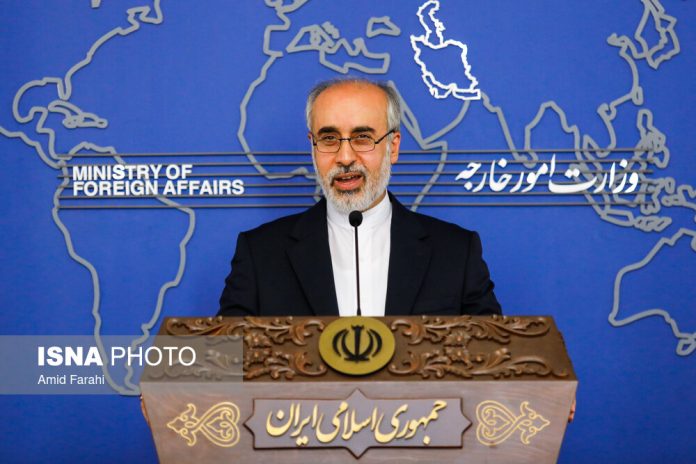
Iranian Foreign Minister Spokesman Nasser Kanaani

In an interview with Iran’s Arabic-language Al-Alam news channel, Kanaani said, “Fortunately, due to the common understanding between Tehran and Riyadh, both sides have reached a consensus to hold (a new round of) bilateral talks.”

He also praised Iraq for its constructive role as a mediator and a host for five rounds of talks aimed at restoring diplomatic ties between Iran and Saudi Arabia.

The spokesperson also said Iran would welcome and reciprocate any practical steps by the Saudi government to improve relations, hoping the negotiations would lead to tangible results.

Saudi Arabia severed diplomatic ties with Iran in January 2016 after Iranian protesters, enraged by the Saudi execution of prominent Shia cleric Sheikh Nimr Baqir al-Nimr, stormed its embassy in Tehran.

Iran has also been complaining that the kingdom is pursuing what it calls a confrontational foreign policy towards the Islamic Republic.

Saudi war on Yemen, Iran missile power and its nuclear program, Saudis’ support for Takfiri groups are also among other bones of contention between the two Middle Eastern powerhouses.

100 Iranian-made products to be showcased in Uzbekistan; technological exchanges between two countries to expand

100 Iranian-made products to be showcased in Uzbekistan

Developing exports and focusing on trade relations with Uzbekistan and Eurasia is one of the goals that are being pursued in the trip by Iranian Vice President for Science and Technology Sorena Sattari and 40 Iranian knowledge-based and creative companies to Uzbekistan, a trip that can help sustain and prolong the commitments and cooperation that were foreseen under the memorandum of understanding signed between the Islamic Republic of Iran’s Vice Presidency for Science and Technology and Uzbekistan’s Ministry of Innovative Development and Ministry of Foreign Investment and Trade.

Accompanying the Iranian vice president for science and technology are 40 knowledge-based and creative firms active in such technological fields as agriculture, animal husbandry, and health, which will develop their technological market and interactions in the region by taking part in specialized meetings with 150 peer Uzbek companies.

100 Iranian-made products to be showcased in Uzbekistan

Uzbek market hosts Iranian-made products

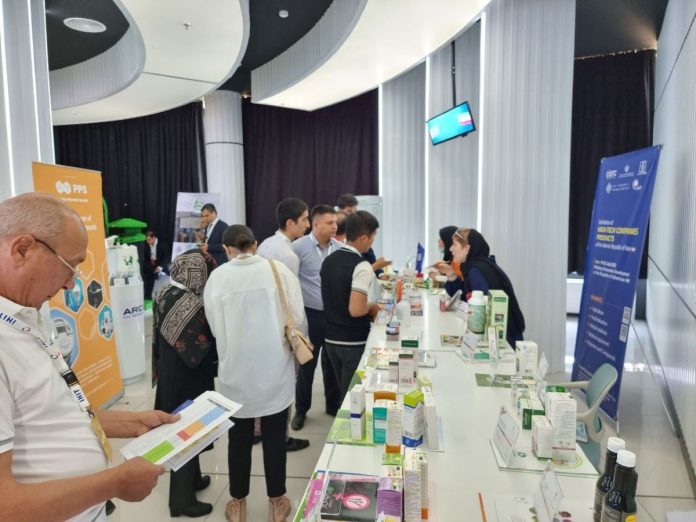
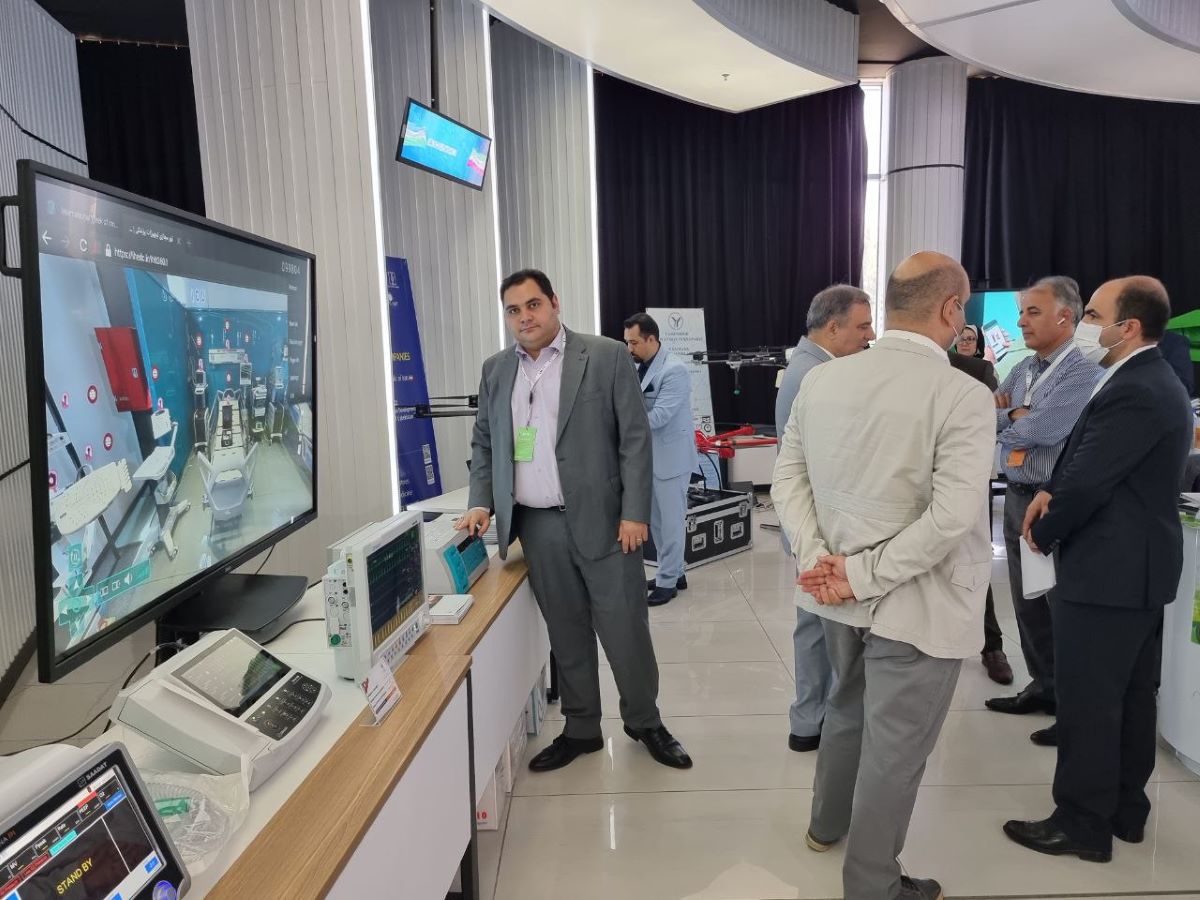
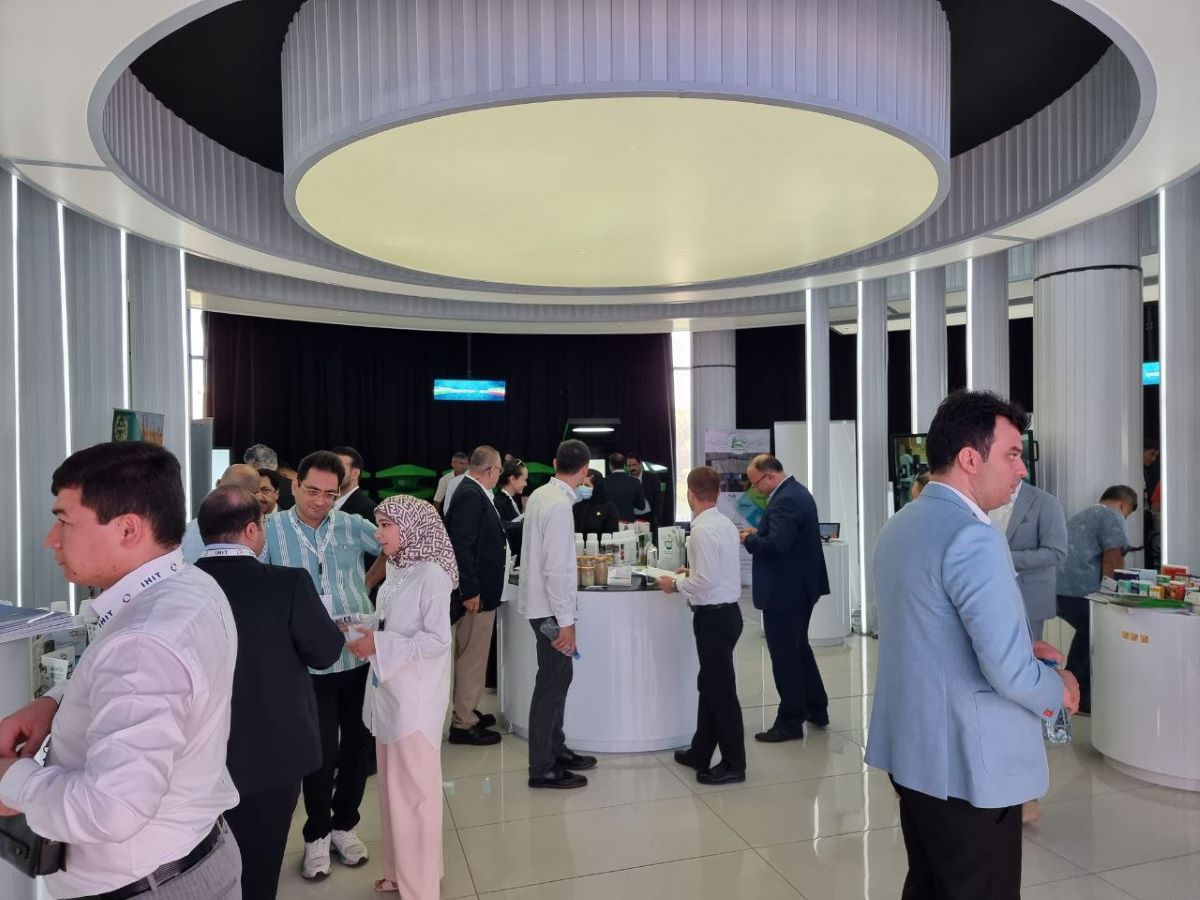
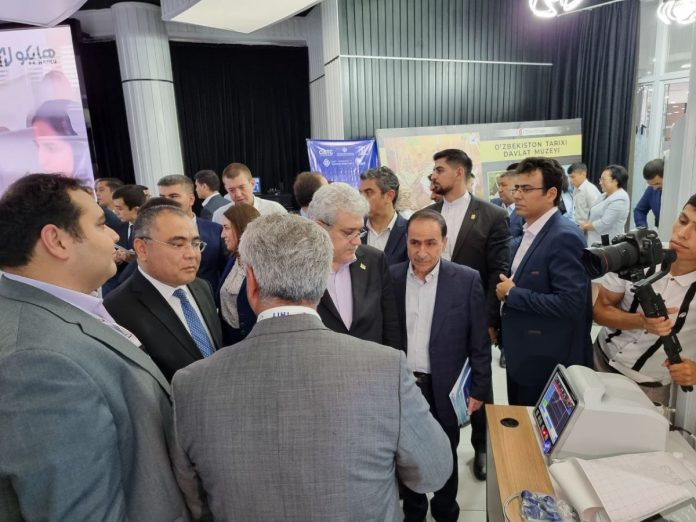
Among the other activities planned to take place during the trip is the holding of an exhibition in Uzbekistan of 100 Iranian-made products from 80 Iranian knowledge-based and creative companies.

The products will be showcased for Uzbek businessmen and managers of technological companies to facilitate the entry of Iranian knowledge-based and creative products to the market of the country and to Eurasia.

During the trip, Sattari will take part in the Iran-Uzbekistan Science and Innovation Forum and give a speech on Iran’s scientific and technological status at the event, which will also be attended by Uzbekistan’s minister of innovative development, technological companies, and tradespeople to help the market for Iranian products in Uzbekistan thrive.

100 Iranian-made products to be showcased in Uzbekistan

Facilitating the activities of Iranian knowledge-based and creative firms in Uzbekistan

Other planned activities are specialized meetings in order to familiarize Iranian firms with Uzbekistan’s rules and regulations governing the registration and activities of knowledge-based and creative companies active in the health and agriculture sectors as well as a workshop on trade with Uzbekistan.

The trip will be a good opportunity for knowledge-based and creative companies to introduce their scientific and specialized products and capabilities to Uzbek technological firms and develop their market in Central Asia’s most populous country, adjacent to the Silk Road, and take a big step toward entering the global market.

In recent years, economic and trade cooperation and investment between Iran and Uzbekistan have developed well and the profits of trade companies from both countries in technological fields have grown considerably; continuing that cooperation can have many financial and scientific benefits for the two states.

Sattari: Knowledge-based, creative firms serve as a new bridge facilitating Iran-Uzbekistan tech exchanges

Iranian Vice President for Science and Technology Sorena Sattari

Heading a delegation of 40 knowledge-based and creative companies, Sattari traveled to Uzbekistan to help pave the way for the development of scientific and technological exchanges between two countries.

The visit seeks to kick-start long-term cooperation and help define joint projects, and set the stage for joint meetings between Iranian and Uzbek knowledge-based and creative firms with the goal of promoting the market of Iranian products in Eurasia.

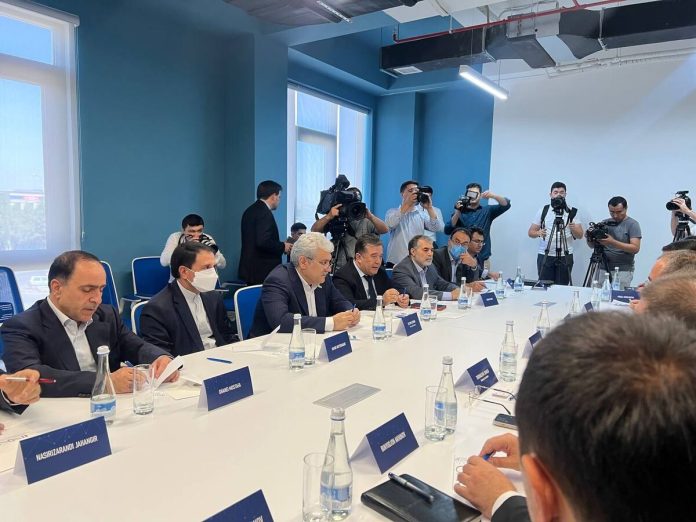
In the first meeting on the agenda of his two-day visit, Sattari sat down with Abdurakhmanov.

He later spoke to the reporters and praised the hospitability of Uzbekistan’s officials.

“A new chapter has been opened in technological and scientific cooperation between the two states, with knowledge-based and creative companies serving as the main pillars of the joint efforts,” Sattari said.

“In recent years, Iran has experienced a remarkable growth in the area of knowledge-based economy, especially in the areas of nanotech, ecotechnology, aerospace, medicine, and agriculture,” the Iranian official.

“In Iran, we have over 7,000 knowledge-based and creative firms which can serve as a new bridge between the two states facilitating the expansion of exports and imports and the development of technologies that would form the future pillars of energy and economic exchanges between the two countries,” he added.

Sattari further said, “Uzbekistan has made very notable progress in innovation areas and I think the country’s authorities have made right decisions for Uzbekistan’s future. Uzbekistan has a young educated population, with whose help the country can promote the innovation field powerfully.”

“The presence of Iranian start-ups and investors can bring a good future for cooperation between the two countries and open a new page in technological and scientific exchanges between Iran and Uzbekistan,” he said.

“Today, it’s the first time I’m in Uzbekistan. I thank the country’s officials for their hospitability and I hope good things will happen in technological and scientific exchanges between the two countries,” Sattari said.

Sattari is in Uzbekistan to pave the way for the development of technological and scientific exchanges between the two states.

Technological firms, which operate in technological fields such as agriculture, animal husbandry and health, will take part in expert meetings with 150 corresponding Uzbek companies and will work to increase their share of Uzbekistan’s market.

Meanwhile, an exhibition is being held in Uzbekistan putting on display 100 products from 80 Iranian creative and knowledge-based companies. Managers of Uzbek tech firms and businesspeople will visit the exhibition, in what could be an opportunity for Iranian knowledge-based and creative products to make their way into this country’s market and the broader Eurasia region.

Uzbekistan’s vice prime minister hosts Sattari; inter-university exchanges between Iran, Uzbekistan to witness a boost

100 Iranian-made products to be showcased in Uzbekistan

The two sides emphasized the significance of enhancing bilateral ties and promoting the level of scientific, cultural and economic cooperation between Iranian knowledge-based and creative firms and their Uzbek counterparts.

Sattari said that there was a good opportunity for the enhancement of economic ties and cooperation between Iranian and Uzbek scientists and elite, adding, “One of the priorities of the Vice Presidency for Science and Technology, regarding the expansion of ties between the two countries, is to broaden university exchanges.”

“Such exchanges lead, in a way, to the expansion of cultural communications. Currently there are 7,000 knowledge-based and creative companies active in Iran in technological areas, which can speed up the enhancement of scientific ties and tech cooperation between Iran and Uzbekistan. Of course, this depends on tackling some existing challenges such as the issue of visa. The main problem facing relations between Iranian and Uzbek knowledge-based firms is the visa issue, which we hope will be resolved,” Sattari said.

“Iranian knowledge-based and creative firms have based their activities on innovation. Many of Iran’s problems as well as economic and social challenges have been overcome thanks to the same innovative measures. Tomorrow, around 80 knowledge-based and creative companies will take part in a joint meeting with the corresponding Uzbek firms so that they can increase their presence in this country besides presenting their capabilities and products,” the senior official said.

Sattari added, “Our companies have presented a variety of products in the fields of information and communication technology, medical and laboratory equipment, nanotech, ecotechnology, stem cells, and advanced technologies, which can help fulfill the needs of Uzbekistan.”

Bilateral cooperation between technological firms can take place within the framework of mutual investments so that the firms can introduce their products and engage in tech exchanges,” he added.

‘Sanctions made Iran stronger’

Sattari went on to say, “Under a host of sanctions, Iran has succeeded, over the past years, in developing indigenous technologies and capabilities in different fields, and we stand ready to share them with the other side’s companies.”

“The high quality of Iranian products and, of course, the more reasonable prices compared to foreign models are among the advantages of Iranian technologies. Iranian tech firms have developed technologies in the maritime field and in terms of access to deep seas, which can facilitate transfers between the two states.

Besides allowing the monitoring of underground water resources, these technologies contribute to the discovery of different mines at a depth of 25 kilometers below the surface. Consequently, the discovery of water deep under the ground provide the opportunity to get access to water resources at different depths,” he said.

‘Formation of joint Iran-Uzbekistan working group is a must’

In turn, the Uzbek deputy premier described as positive the expansion of bilateral ties and stepped-up activation of relations in recent years.

“Within the framework of this meeting, we want to discuss the promotion of bilateral relations. Mutual economic and commercial cooperation is also in focus,” he said.

The two sides, he said, also seek to expand cooperation in petrochemical, textile and technological products, adding, “We have plans for the expansion of trade between the two countries, which will be followed up on. I hope that the joint working group will pursue joint cooperation between the two countries and the negotiations will bear fruit on the back of team work. In line with the tasks of this working group, we can deal with cooperation in the spheres of technology and economy.”

Kuchkarov pointed to the trip to Iran and visits paid to Iranian technological sector, saying he is certain that Sattari’s trip to Uzbekistan will help the enhancement of the activities of start-ups and knowledge-based firms active in tech-related fields.

He highlighted Iran’s achievements in the fields of nanotechnology, ecotechnoloy, and stem cells, as well as cooperation between knowledge-based firms, expressing hope that joint cooperation in such fields will be expanded.

The Uzbek official added that there were many areas for bilateral cooperation in the field of joint production of agricultural items via the transfer of the management of agricultural land and exchange of experience and technology in the area of agricultural research.

Heading a delegation of 40 knowledge-based and creative companies, Sattari travelled to Uzbekistan to pave the way for the development of technological and scientific exchanges between the two states.

Technological firms, which operate in technological fields such as agriculture, animal husbandry and health will take part in expert meetings with 150 corresponding Uzbek companies and will work to increase their share of Uzbekistan’s market.

Meanwhile, an exhibition is being held in Uzbekistan putting on display 100 products from 80 Iranian creative and knowledge-based companies. Managers of Uzbek tech firms and businesspeople will visit the exhibition, in what could be an opportunity for Iranian knowledge-based and creative products to make their way into this country’s market and the broader Eurasia region.