Zelensky meets with IAEA Director General in Kyiv
President of Ukraine Volodymyr Zelensky has stated that Ukraine is interesting in the International Atomic Energy Agency’s (IAEA) mission getting to Zaporizhia Nuclear Power Plant (NPP) and stressed that complete demilitarization of the power plant is a must.
“We want the IAEA mission led by Director General [Rafael] Grossi to find an opportunity due to our special services and security corridors to get to the power plant and do the utmost to avoid global security threats,” Zelensky said at a meeting with Grossi on Tuesday, according to the press service of the Office of the President of Ukraine.
“We trust our specialists. We want not only a check, which is a tactical action, but also strategic decisions. The power plant is owned by Ukraine and controlled by Ukrainian specialists,” the head of state added.
Zelensky stressed the necessity to “urgently demilitarize the power plant, withdraw any Russian military with explosives, any weapons, liberate our power plant, create a demilitarized area and return the power plant under control of the Ukrainian state.”
Iranian foreign minister to visit Moscow, Ukraine on agenda
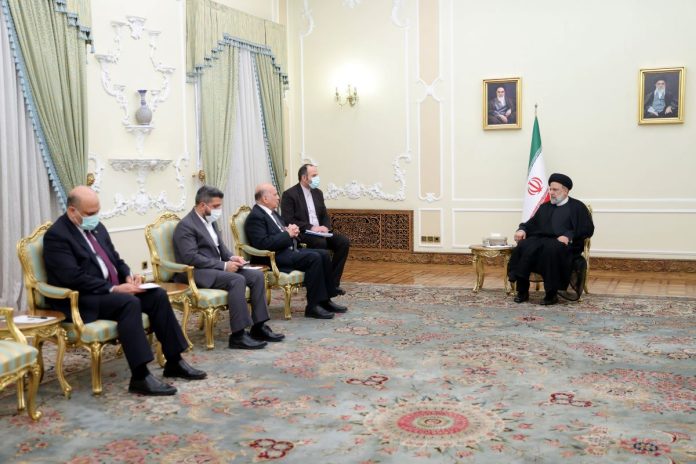
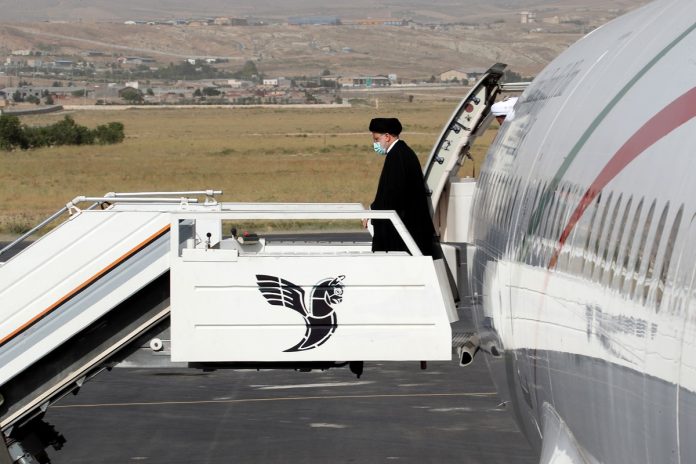
Iranian Foreign Minister Hossein Amirabdollahian says, in an effort to put an end to the war in Ukraine, he is going to visit Moscow.
Commenting on his upcoming trip to Russia, Amirabdollahian said, “The main goal of the visit to Moscow is making efforts to resolve the Ukraine crisis based on a request of the Islamic Republic of Iran.”
Ukraine and Russia accuse each other of shelling around Zaporizhzhia plant as IAEA team prepares to visit
Ukraine and Russia continued to accuse each other on Tuesday of shelling the area around the Zaporizhzhia nuclear power plant in southeastern Ukraine ahead of a planned visit by the United Nations’ International Atomic Energy Agency (IAEA) expected later in the week.
The Russian authorities, who are in control of the plant and the nearby city of Enerhodar, reported artillery strikes early Tuesday morning close to a spent fuel storage building. The claim was made on the authorities’ official Telegram account and put the blame on Ukraine.
A statement from the Russian defense ministry repeated the allegation and noted that “the radiation situation at Zaporizhzhia nuclear plant remains normal.”
Kyiv again blamed Moscow for attacking the area around the power plant.
Mykhailo Podolyak, an adviser to the head of the Office of the President of Ukraine, alleged in a tweet that Russia, “is deliberately shelling corridors for [the] IAEA mission to reach ZNPP [the Zaporizhzhia nuclear power plant],” and reiterated Ukrainian demands for Russian troops to withdraw from the plant.
The head of the IAEA, who is leading the organization’s mission to Ukraine, has said that “military actions near to such a large nuclear facility could lead to very serious consequences.”
Kremlin spokesperson Dmitry Peskov told journalists in a briefing Tuesday that he hoped the IAEA visit will proceed.
“We hope that this mission will take place as agreed and discussed. I repeat once again: We are interested in this mission and have been waiting for it for a long time,” he noted.
Pope condemns “morally unjust” and “barbaric” war in Ukraine
In a Vatican statement, Pope Francis issued by far his strongest words yet on Russia’s war in Ukraine, calling it “morally unjust, unacceptable, barbaric, senseless, repugnant and sacrilegious.”
The Vatican’s daily news bulletin called for everyone to pray to “rebuild peace” and the “defense of human life and the values connected to it, and not as political positions.”
In the bulletin, the Pope also responded to some of the criticism he’s faced due to his recent comments concerning the death of Darya Dugina, the daughter of Russian ultranationalist firebrand Alexander Dugin.
Dugina was killed after a bomb planted in a car she was driving went off in the outskirts of Moscow on Aug. 20.
Last week, the Pope stated, “I think of that poor girl who was blown up by a bomb that was under her car seat in Moscow. The innocent pay for war, the innocent.”
The Russian Federal Security Service (FSB) have blamed Ukrainian special services for the murder of Dugina; however, Ukraine has denied any involvement, calling the FSB claims fiction.
Ukraine’s Ministry of Foreign Affairs reacted last week by expressing disappointment over the Pope’s statement, saying it “unjustly” equates “the aggressor and the victim.”
Russia further decreases gas supply to France
Russian gas company Gazprom will reduce its supply of gas to France, effective today, French industrial energy group Engie announced in a statement on Tuesday morning.
The decrease in supply is “due to a disagreement between the parties on the application of contracts,” according to Engie.
“This reduction is the logical continuation of the actions of Gazprom for several months, which does not respect its contracts, and which reduces its supplies to most of its customers,” a source inside the cabinet of the French energy ministry told CNN.
“This new reduction announced by Gazprom does not compromise our security of supply,” the source added.
Engie also said these actions won’t affect supply.
The company had “already secured the necessary volumes to ensure the supply of its customers and of its own needs” and it has implemented a series of “measures to significantly reduce the direct financial and physical impacts that could result from an interruption of gas deliveries by Gazprom,” it noted.
Moscow condemns ‘Russophobia’ in Baltic states
Russia’s Foreign Ministry has condemned the demolition of Soviet-era monuments in the Baltic states as “Russophobic” and said that they would have an impact on bilateral relations.
In a strongly worded statement, Moscow also accused Latvia, Lithuania and Estonia of xenophobia and discrimination, saying they were treating ethnic Russian minorities as “second class people”.
“What is happening now in the Baltic states is unacceptable for us and will certainly affect the state of bilateral relations with these countries, which are already in complete decline,” the ministry added.
The Kremlin has also slammed calls by some European leaders for a visa ban on Russian tourists, saying the proposals were “irrational” and the latest manifestation of the West’s anti-Russian agenda.
At a meeting in Prague this week, European Union foreign ministers will discuss calls from the Baltic states and some others to stop granting Russians visas for access to the Schengen Zone.
Europeans paying for Brussels’ ‘irrational, absurd’ energy policy while US profits: Russia
Ordinary Europeans are being made to pay for their leaders’ “irrational” policies in relation to Russia, while Brussels’ American allies get rich from an energy bonanza, Presidential Spokesman Dmitry Peskov said.
“Step by step, unfortunately, both Brussels and individual European countries are demonstrating their absolute lack of reason,” Peskov told reporters on Tuesday.
“This is demonstrated in such anti-Russian impulses, outbursts of hatred for our country, through absolutely irrational and even absurd actions in the energy field, for which the publics of European countries – the EU, Britain and so on, have to pay, but which make it possible for American companies to turn a profit, for example,” he added.
Asked to comment on Brussels’ potential discussions of banning tourist visas for Russians, the Kremlin spokesman suggested that the possibility of even discussing such ideas at the EU level demonstrates the “set of irrational bordering on insanity” prevalent among the bloc’s political elites.
Germany in ‘better position’ to counter Russian gas threat: Chancellor
Government measures to assure supplies of gas over the winter have prepared Germany to deal with further curbs in Russian deliveries, Chancellor Olaf Scholz said, a day before Moscow is due to cut off gas supplies for three days.
The government announced Sunday it had made faster progress replenishing its gas stocks than expected and should meet an October target early.
The preparations meant Germany “was in a much better position in terms of security of supply than was foreseeable a couple of months ago,” Scholz said in a statement to journalists.
“We can deal well with the threats we are confronted with from Russia, which uses gas as part of its strategy in the war against Ukraine,” he added ahead of a government retreat in the eastern region of Brandenburg.
Ministers are set to discuss their further response to soaring prices for energy and relief for bill payers.
They will also be joined by Spanish Prime Minister Pedro Sanchez later today, whose country has capped the price of gas used at power plants to mitigate electricity price rises.
The measure is seen as a possible template for a reform of the wider European electricity market, as leaders search to reduce the pressure on households.
Yesterday, European Commission President Ursula von der Leyen said the EU is preparing to take “emergency” action to reform the electricity market and bring prices under control.
“Go home”: Zelensky promises to “chase” Russian forces to the border
Ukrainian President Volodymyr Zelensky vowed to “chase” Russian troops to the border in his nightly television address Monday.
“The occupiers must know: we will chase them to the border. To our border, which line has not been changed,” he said.
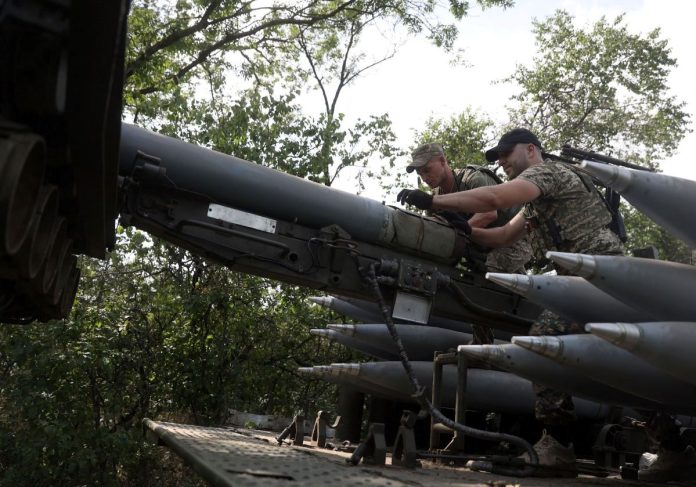
Zelensky was speaking after Ukraine started a counteroffensive aimed at recapturing Russian-controlled territory in the south of the country.
“If they want to survive, it’s time for the Russian military to run away. Go home,” he added.
“If they do not hear me — they will have to deal with our defenders, who will not stop until they free everything that belongs to Ukraine,” the president continued.
UN nuclear inspectors arrive in Kyiv ahead of visit to Zaporizhzhia nuclear power plant
A team of 14 experts from the United Nations’ nuclear watchdog has arrived in Kyiv ahead of their planned visit to the Russian-occupied Zaporizhzhia nuclear power plant in southeastern Ukraine later this week.
Members of the International Atomic Energy Agency (IAEA) delegation were seen at their hotel in the Ukrainian capital early Tuesday.
The visit comes amid renewed shelling at the facility and mounting fears over a potential nuclear accident.
The mission is headed by IAEA chief Rafael Grossi, Ukrainian Foreign Ministry spokesperson Oleg Nikolenko stated Monday.
Grossi tweeted Monday, “The day has come, IAEA’s Support and Assistance Mission to Zaporizhzhya (ISAMZ) is now on its way. We must protect the safety and security of #Ukraine’s and Europe’s biggest nuclear facility.”
White House says threat of Ukrainian counteroffensive has already impacted Russian military
The White House says it has seen reports that Ukraine has begun a counteroffensive against Russian forces in southern Ukraine but does not want to comment further on specific Ukrainian military operations, John Kirby, the communications coordinator for the National Security Council, said.
Kirby did note, however, that regardless of the size, scale and scope of the latest counteroffensive, the Ukrainians “have already had an impact on Russian military capabilities.”
“Because the Russians have had to pull resources from the east simply because of reports that the Ukrainians might be going more on the offense in the south,” Kirby continued, adding, “And so they’ve had to deplete certain units …in certain areas in the East in the Donbass, to respond to what they clearly believed was a looming threat of a counter offensive.”
Kirby also noted that Russia “continues to have manpower problems” in Ukraine, and is trying to expand its recruitment of fighters inside Russia as well as “entice” some of their conscripts and contract soldiers to serve beyond their time frames.
That is “because they are experiencing manpower challenges—manpower challenges that are not made any easier by the way they’ve had to respond to reports of a potential counteroffensive by the Ukrainians,” Kirby continued.
Kirby also said that “the idea of going on the offense is not new to the Ukrainians.”
“Now I recognize that what we’re talking about here is the potential for a major counteroffensive, which is different than going on the offense in a more localized way,” Kirby added.
But he said Ukrainian forces “have been taking the fight to the Russians inside” Ukraine for quite some time now, including in the early months of the war around the capital Kyiv.
“So, it’s not a new development for them to do this,” Kirby added.
Moscow on Monday acknowledged Kyiv’s counteroffensive in Ukraine’s south, but said the Ukrainian troops “suffered heavy losses” and “failed miserably” in their “attempted” offensive.
Ukrainian forces on Monday “attempted an offensive in the Mykolaiv and Kherson regions from three directions,” the Russian defense ministry said in a statement, adding, “as a result of the active defense of the grouping of Russian troops, units of the Armed Forces of Ukraine suffered heavy losses.”
The ministry announced that during the fighting, 26 Ukrainian tanks, 23 infantry fighting vehicles, nine other armored fighting vehicles were destroyed and two Su-25 attack aircraft were shot down.
“Another attempt at offensive actions by the enemy failed miserably,” it concluded.
Russian recruitment push “unlikely to succeed”: Senior US defense official
The US believes that Russian President Vladimir Putin’s decree to increase the size of Russia’s armed forces from 1.9 to 2.04 million is “unlikely to succeed, as Russia has historically not met personnel end strength targets,” according to a senior US defense official.
The official added, “any additional personnel Russia is able to muster by the end of the year may not in fact increase overall Russian … combat power” due to the measures Russia has taken to increase recruitment, such as “eliminating the upper age limit for new recruits, and also by recruiting prisoners.”
“Many of these new recruits have been observed as older, unfit and ill-trained,” the official, said, who reiterated that before Russia’s invasion of Ukraine, Russia “may have already been 150,000 personnel short of their million personnel goal.”
Russia claims Ukraine attempts futile offensive in Mykolaiv and Kherson regions
The Russian defence ministry says that Ukraine’s troops have attempted an offensive in the southern Mykolaiv and Kherson regions, sustaining significant casualties, RIA news agency reported.
“Enemy’s offensive attempt failed miserably,” it added.
White House calls for demilitarised zone around Ukraine nuclear plant
The White House has said that Russia should agree to a demilitarised zone around the Ukrainian nuclear plant that has become a dangerous front line in the ongoing war.
White House National Security Council spokesman John Kirby told reporters the Biden administration supports a visit led by the International Atomic Energy Agency (IAEA) to the Zaporizhzhia nuclear plant on the Dnieper river in southern central Ukraine.
A controlled shutdown of the plant would be the safest option, he added.
Russia oil output exceeds expectations but pressure looms: Energy chief
Russia’s oil output has exceeded expectations in the wake of the war in Ukraine but Moscow will find it increasingly difficult to uphold production as Western sanctions begin to bite, the head of the International Energy Agency (IEA) has said.
“In the absence of (western) companies, in the absence of the technology providers, in the absence of service companies, it will be much harder for Russia to maintain the production,” IEA chief Fatih Birol told Reuters.
Russian domestic demand has so far remained robust, and the country also offers large discounts to non-European buyers, Birol noted on the sidelines of a conference in Stavanger in southern Norway.
Nations that are members of the IEA could meanwhile release more oil from strategic petroleum reserves (SPR) if they find it necessary when the current scheme expires in November, he added.
He also said trust in Russia as an energy supplier had been eroded around the world following the invasion of Ukraine and its cuts to gas exports and that the loss of Europe as a partner would hurt Moscow.
“Russia is not winning the energy battle here,” Birol continued.
The upcoming winter season will be a test of Europe’s solidarity and if the continent fails when tested, the effect may be felt “beyond this energy crisis”, Birol added.
IEA members could release more oil from reserves: Director
Nations that are members of the International Energy Agency (IEA) could release more oil from strategic petroleum reserves (SPR) if they find it necessary when the current scheme expires, the head of the agency has stated.
“If our member countries believe that as a result of the supply disruption there is a need to make a stock release, I am sure (they) will consider (it) and it is not off the table,” Fatih Birol told the Reuters news agency on the sidelines of a conference.