Ukrainian forces started “shaping” for a counteroffensive: US officials
Ukraine’s forces have begun “shaping” operations in the south of the country to prepare the battlefield for a significant Ukrainian counteroffensive, two senior US officials told CNN.
Shaping operations are standard military practice prior to an offensive and involve striking weapons systems, command and control, ammunition depots and other targets to prepare the battlefield for planned advances.
According to the officials — who have been briefed on the intelligence — the US believes the much anticipated counteroffensive will include a combination of air and ground operations.
On Monday morning, Ukraine indicated that actions were underway.
“Ukrainian armed forces have started the offensive actions in several directions on the South front towards liberating the occupied territories,” Natalia Humeniuk, a spokesperson for Ukraine’s Operational Command South, told CNN.
“All the details will be available after the operation is fulfilled,” she added.
The plans come as Russia’s war in Ukraine has passed its six-month mark, with US assessments indicating that Russia has been able to deploy fewer units to the frontlines than initially thought, according to a senior US official.
The official said many of the existing units — which Russia organizes into Battlefield Tactical Groups (BTGs) comprising infantry, tanks, artillery and air defense — are deploying below strength, some even at half their normal manpower.
Additionally, the US has been observing Ukrainian forces benefiting from the use of US- and NATO-supplied HIMARS mobile rocket launchers, which have allowed Ukraine to strike and destroy targets in Russian-held territory.
Ukraine’s second city hit with cluster munitions: Regional governor
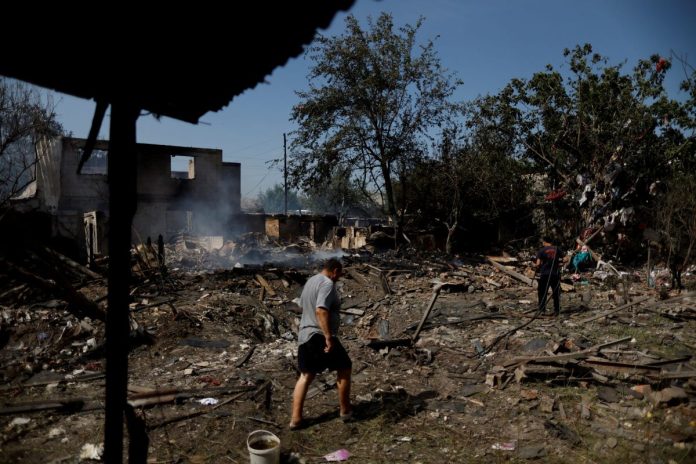
Kharkiv, Ukraine’s second-largest city, was hit with cluster munitions, regional governor Oleh Syniehubov reported.
As a result, a building and the headquarters of the regional administration in the city centre were damaged. No casualties were immediately reported.
Dmytro, a local resident, announced that “at least five strikes” were seen in the area. He explained that his house and daughter’s school were “partially destroyed.”
A crater, roughly five-metres deep, was also found.
Russia is trying to stop Europe from filling it gas storages: Zelensky
Russia is trying to prevent European nations from filling their gas storage enough to cope with the coming winter, Ukrainian President Volodymyr Zelensky has stated.
He was addressing an oil and gas conference in Norway via video link.
Swedish leader pledges $47mn in military aid for Ukraine
Sweden’s Prime Minister Magdalena Andersson announced on Monday that the country would provide a further 1 billion Swedish krona ($93.8 million) in aid to Ukraine, including both military and civilian assistance.
Half of the additional aid package — 500 million Swedish krona ($46.9 million) — will provide military assistance.
“Borders must never be changed by force or war. And it is our duty and honor to support you,” Andersson said at a press conference in Stockholm after hosting Ukraine’s Foreign Minister Dmytro Kuleba.
Kuleba reiterated Ukraine’s request for Sweden to provide howitzers, air defense systems, and more shells, adding that “as long as the war continues, we will be asking for more weapons for obvious reasons — to defend Ukraine, but also to defend [the] entirety of Europe.”
Moscow welcomes IAEA trip to Zaporizhzhia nuclear plant: Russian diplomat
Moscow welcomes the International Atomic Energy Agency’s (IAEA) planned trip to Zaporizhzhia nuclear power plant in southeast Ukraine, which is occupied by Russian forces, a Russian diplomat said according to state media.
Russia’s permanent representative to international organizations in Vienna, Mikhail Ulyanov, stated that Russia understands the IAEA will leave several representatives at the plant on a permanent basis, state media RIA Novosti reported.
“As far as we understand, it is the director general’s intention to leave several people at the station on a permanent basis,” Ulyanov continued.
Ulyanov added that the mission consists “of about a dozen employees of the agency’s secretariat dealing with safeguards and nuclear safety issues” as well as a large team of UN staff dealing with logistics and security.
“Russia has made a significant contribution to the preparation of this mission. We hope that the visit of the plant by the IAEA mission will dispel numerous speculations about the unfavorable state of affairs at the Zaporizhzhia nuclear power plant,” Ulyanov stated.
The Kremlin announced Monday that the IAEA’s mission will enter the Zaporizhzhia nuclear plant from the Ukrainian side, but Russia will ensure its safety on the territory occupied by the Russian army.
“As far as the territory controlled by Russia is concerned, security will be provided at the required proper level there,” Kremlin spokesperson Dmitry Peskov told journalists on a regular conference call. ”
“[The mission] will enter the [nuclear plant] territory from the zone controlled by the Ukrainian Armed Forces. There, security will be provided by the Ukrainians,” Peskov added.
When asked about the possibility of creating a demilitarized zone around the plant, Peskov said it was “not under discussion.”
Peskov added that Russia welcomes the long-awaited IAEA mission.
“We have been waiting for this mission for a long time. We consider it necessary,” Peskov said.
G7 welcomes IAEA trip to Zaporizhzhia nuclear plant
The G7 has welcomed a planned trip by the International Atomic Energy Agency (IAEA) to Zaporizhzhia nuclear power plant in southeastern Ukraine this week.
In a statement, the G7 group of nations said that it, “remains profoundly concerned by the serious threat the continued control of Ukrainian nuclear facilities by Russian armed forces pose to the safety and security of these facilities. These actions significantly raise the risk of a nuclear accident or incident and endanger the population of Ukraine, neighboring states, and the international community.”
IAEA staff must be able to access all nuclear facilities in Ukraine timely, safely and without impediment, and engage directly, and without interference, with the Ukrainian personnel responsible for operating these facilities,” the statement reads.
Early Monday, IAEA chief Rafael Mariano Grossi tweeted that the delegation would arrive in Zaporizhzhia — home to Europe’s biggest nuclear facility — “later this week.”
The mission — which will assess damage to the plant’s facilities, evaluate the working conditions of the staff, and perform urgent safeguard activities — comes amid renewed shelling at the facility and mounting fears over a potential nuclear accident.
EU plans to suspend deal easing Russian visa requests
The European Union is planning to suspend an agreement that eases the path for Russians to apply for visas to travel to the bloc, an EU diplomat has told reporters.
“We cannot continue the visa policy as it has been up to now,” he noted, requesting not to be named, ahead of a meeting of EU foreign ministers in Prague to discuss Russia’s invasion of Ukraine.
Hungary seeks increase to Gazprom gas supplies
Hungary will continue talks with Russia on additional gas supplies and expects to reach a deal with Gazprom to increase supplies further from next month, Hungarian Foreign Minister Peter Szijjarto has stated.
Szijjarto met his Russian counterpart Sergei Lavrov in Moscow last month, seeking 700 million cubic metres of gas on top of an existing long-term supply deal with Russia.
Gazprom started to increase gas supplies to Hungary this month, adding to previously agreed deliveries via the Turkstream pipeline.
IAEA team to inspect Zaporizhzhia nuclear plant
The United Nations nuclear watchdog will inspect the Russian-held Zaporizhzhia Nuclear Power Plant in Ukraine this week, it wrote on Twitter.
The announcement comes after months of negotiations in which the International Atomic Energy Agency sought to gain access to the facility, which Ukrainian staff are operating under the orders of Russian forces, a situation that the IAEA has said threatens the safety of Europe’s largest nuclear plant.
The mission led by IAEA chief Rafael Grossi will assess any damage from recent shelling near the plant, which Russia and Ukraine have blamed on each other.
Neither he nor the agency specified when they would arrive at Zaporizhzhia.
Ukraine’s energy ministry said it would not comment on the IAEA mission trip “for security reasons”.
The IAEA tweeted separately that the mission would assess physical damage, evaluate the conditions in which staff are working at the plant and “determine functionality of safety & security systems”. It would also “perform urgent safeguards activities”, a reference to keeping track of nuclear material.
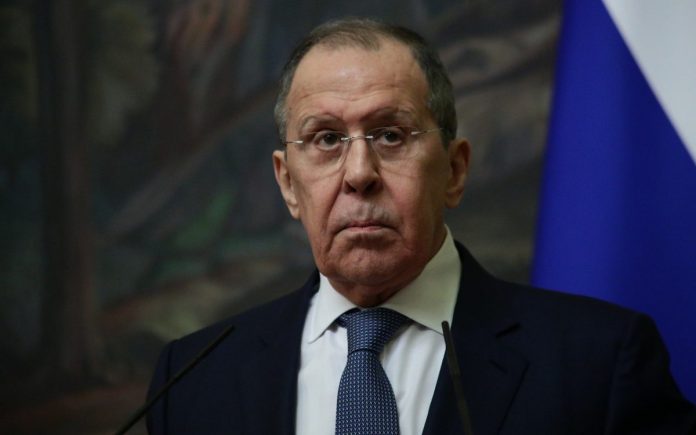
The West has reduced what was once called diplomacy to the policy of sanctions, Russian Foreign Minister Sergey Lavrov said in an interview with the Zvezda television channel.
“Among the most notable initiatives of recent years is the resolution yearly initiated by the Nonaligned Movement on the inadmissibility of unilateral sanctions in international life. It is a direct kick in the eye of the West. It is a lifeblood for the West. As a matter of fact, the West has reduced what used to be called diplomacy to sanctions,” he stated.
The West is seeking to disregard objective historic processes, which may slow down the forming of a multipolar world but will never stop it, he noted.
“Regrettably, our Western partners, who have ceded the reins of power to the United States, <…> are seeking to disregard objective historic processes, which may slow down the formation of a multipolar world but will never be able to stop it,” he added.
He was asked how many multipolarity belts he thinks have already been formed.
“It is not an agreed procedure, which is to be implemented. It is not a fire-year plan or a three-year budget, like the one we have. It is not like yearly budgets passed in other countries. It is living process. This is about politicians’ talents. They must see what is going on in real life and build their policy in line with the demands of history,” he stated.
“Let us look at an example from British life, for a change. They have a saying that before laying a garden path, it is necessary to let people make desire paths. In simple words, this is how it is necessary to act on the international arena: i.e. to build one’s proactive policy so that it doesn’t run counter to objective tendencies, including the tendency to multipolarity. This is how we are acting,” the foreign minister stressed.
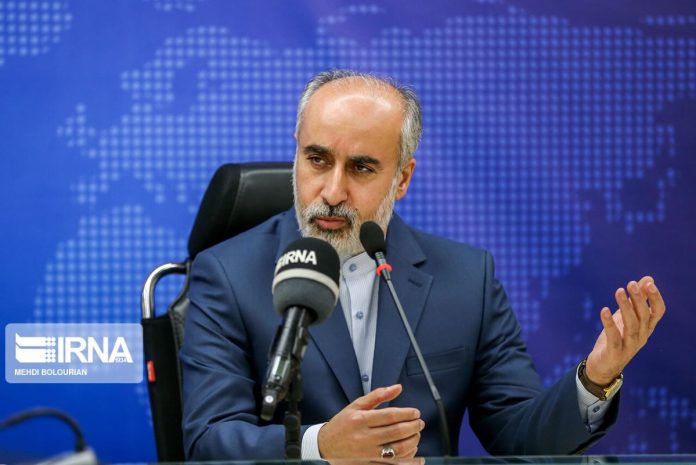
Moscow hopes that the visit to the Zaporozhye nuclear power plant by the International Atomic Energy Agency (IAEA) inspectors will finally take place, despite Kiev;s destructive influence, Russian Foreign Ministry Spokeswoman Maria Zakharova stated.
“We are convinced that it (an IAEA inspection) is to take place, despite the destructive influence on this process by the Kiev regime and all those who are backing it and those who are using the nuclear facility as a mere instrument of not even blackmailing but terrorism,” she said in an interview with the Voskresny Vecher (Sunday Evening) with Vladimir Solovyov program on the Rossiya-1 television channel.
“Because what the Kiev regime is doing around the Zaporozhye nuclear power plant is nuclear terrorism. Obviously, it can be done not only by those who possess nuclear weapons or dirty bombs, but also the way we see now,” she stressed.
She called for not believing the West’s fakes that Russia has allegedly been pressed for giving access to the Zaporozhye nuclear power plant for IAEA inspectors.
“I want to all on everyone to ignore reports and fake coming from the West that they have allegedly managed to press <…> the Russian side to agree to the inspection, that they have allegedly used all their diplomatic skills to persuade us to organize such an inspection,” she continued, adding, “It is not true. It is a lie. We have already seen attempts at presenting the situation this way, so I just want to warn that the information campaign will be unfolding this very way.”
Zakharova stressed that it was Moscow who was insisting on such an inspection.
“It has been calling for such an inspection, requesting it. Moreover, it has received full understanding from the IAEA, from its director general and for months has been sparing no effort to organize this visit. I remember how Russian Foreign Minister Sergey Lavrov met with the IAEA director general several months ago. I remember numerous contacts, telephone calls and personal meetings held by our representatives to this organization. Diplomatic efforts were focused on organizing the inspection,” she noted.
Europe at risk amid fighting near nuclear plant: Ukraine FM
Ukrainian Foreign Minister Dmytro Kuleba stated Russian forces have turned the Zaporizhzhia plant into a military base, putting the whole continent at risk, and has no business being there.
“Russian invaders turned Zaporizhzhia NPP into a military base putting the entire continent at risk. Russian military must get out of the plant,” he posted on Twitter.
Ukraine attacks Russian posts in Kherson
Ukrainian troops say they have attacked three Russian command posts and at least two ammunition depots in the Kherson region, in the country’s south.
The Ukrainian army’s Operational Command South announced their forces killed 11 Russian soldiers and destroyed 11 rocket launchers, three armoured vehicles and a self-propelled howitzer.
Russian-appointed administration chief Vladimir Leontyev confirmed the Ukrainian attacks to Russian state agency Ria Novosti, saying the city of Nova Kakhovka had been shelled four times.
US condemns Russia for blocking UN nuclear text
The United States has denounced Russia’s “cynical obstructionism” after Moscow blocked adoption of a joint declaration on nuclear non-proliferation following lengthy international negotiations at the United Nations.
The Nuclear Non-Proliferation Treaty (NPT), which 191 signatories review every five years, aims to stop the spread of nuclear weapons, promote complete disarmament and promote cooperation in the peaceful use of nuclear energy.
Russia on Friday prevented the declaration’s adoption, saying it took issue with “political” aspects of the text, a step criticised by Washington.
“After weeks of intensive but productive negotiations, the Russian Federation alone decided to block consensus on a final document,” at the conclusion of the four-week NPT review conference, US Department of State Deputy Spokesman Vedant Patel said in a statement.
He added Moscow’s move was done “in order to block language that merely acknowledged the grave radiological risk at the Zaporizhzhia Nuclear Power Plant in Ukraine”.
Gas stocks rising quicker than expected: Germany
Germany is replenishing its gas stocks more quickly than expected despite drastic Russian supply cuts, and should meet an October target early, the government has said.
Last week, Germany’s energy regulator the Federal Network Agency announced the country was unlikely to meet its goals.
But the government noted energy-saving measures in recent weeks and massive purchases of gas from other suppliers saw “significant progress” made.
“Despite the difficult circumstances … the reserves are filling up more quickly than expected,” Economy and Climate Minister Robert Habeck said in a statement.