Thursday, December 25, 2025
Home Blog Page 4624

Iran Aiming for Major Hike in Tourism Income

Soltanifar

In an interview with the Tasnim News Agency, Soltanifar said according to the plans, Iran’s income from attracting tourists will amount to the oil incomes in 2025.

Referring to a 12-14 percent rise in the number of foreign visitors to Iran over the past two years, he expected that the country will be hosting 20 million tourists in 2025.

Soltanifar described Iran as a “museum country” with invaluable historical sites and ancient handicrafts that need serious protection.

According to the official, the ICHHTO has compiled a list of 40 countries in order of priority, seen as the countries with the highest number of tourists traveling to Iran.

The main approach at the present time is to turn Iran into the hub of “halal tourism and religious tourism” for the world Muslims, he went on to say.

With a large number of attractive natural and historical sites, Iran is one of the most touristic countries in the world.

More foreign tourists are starting to arrive in Iran after a lasting nuclear deal between Tehran and the Group 5+1 (Russia, China, the US, Britain, France and Germany) came into force and nuclear-related anti-Iran sanctions were terminated.

Young Iranian director to judge US event

Abdollah-Shahi, who has made two short animations so far, will judge the American festival, slated for May, where over 150 international shorts are to be screened, Mehr News Agency reported.
She is known for her short production ‘The Little Boy’ (2015) which received the special jury prize at the 9th Asian Youth Animation and Comics Contest in the Chinese city of Guiyang last November.
The 8-minute animation will go on screen at the 19th Zoom International Film Festival in Poland, February 16 to 21, Tricky Women Festival in Austria, March 2-6, and the 23rd Stuttgart Festival of Animated Film in Germany, April 26-May 1.
The movie is about the residents of a city who evacuate their hometown upon repeated warnings by the army about the danger of a time bomb. However, a little orphan boy disregards the calls as he wants to finish doing something.
Abdollah-Shahi has also made another short ‘Red Line’ in 2012.
The US festival celebrates the best new work from independent animators around the globe. It will take place May 9-15, at the Hollywood Theatre in Portland, Oregon. A week later, it will repeat on May 20-22 at the Bijou Art Cinemas in Eugene, Oregon.

Iran, Italy sign up to $18.4bn contracts

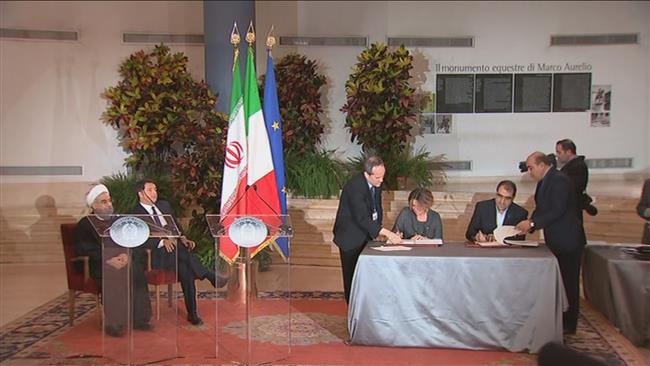
The contracts, worth up to 17 billion euros (USD 18.4 billion), were signed in a ceremony attended by Iranian President Hassan Rouhani and his Italian counterpart Sergio Mattarella in Rome on Monday night.

Prior to the ceremony, Reuters reported that a pipeline contract worth between 3.6-4.6 billion euros (USD 4-5 billion) for Italian oil services group Saipem was among the deals. The company’s shares surged 18.5 percent on Monday.

Moreover, Italian steel firm Danieli said it would sign commercial agreements worth up to 5.7 billion euros (USD 6.1 billion) with Iran. Infrastructure firm Condotte d’Acqua was also scheduled to sign deals worth up to four billion euros (USD 4.3 billion).

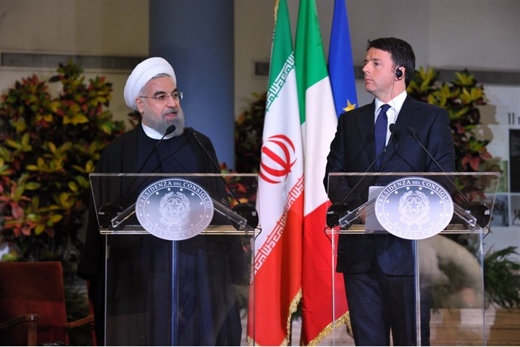
Following the signing ceremony, Rouhani and Italian Prime Minister Matteo Renzi held a joint press conference.

The Iranian president said the country’s market “offers Italian and European investors the opportunity to establish themselves in the entire region.”

Renzi, for his part, said business agreements Italy signed with Iran were just the beginning of cooperation between the two countries. “We have signed the first accords but we are only at the start of a long road.”

The Italian premier also noted that he had discussed the fight against Daesh terrorist group and the ways to end the war in Syria with the Iranian president. “If we could reach agreement on the nuclear issue, we can find one on Syria. We can and we have to.”

The Iranian president arrived in Italy on Monday on the first leg of his trip to three European destinations following the implementation of a nuclear agreement between Tehran and the P5+1 group of countries.

Rouhani left Tehran at the head of a high-ranking delegation, which includes government officials, Iranian entrepreneurs and businessmen. He was initially greeted by Italian Foreign Minister Paolo Gentiloni at the international Rome Ciampino Airport and then officially welcomed by President Mattarella.

Italian premier: JCPOA, new chapter in Iran-world relations

Renzi made the comment here during a joint press briefing with visiting Iranian President Hassan Rouhani, who arrived in Italy on Monday.

The nuclear agreement, better known as the Joint Comprehensive Plan of Action (JCPOA), was also an important step toward bringing peace and stability to the entire region, Renzi said.

US and the European Union lifted anti-Iran sanctions after the January 16 report released by the Director General of the International Atomic Energy Agency Yukiya Amano who approved of nuclear program in Iran.

Then, the implementation of the JCPOA started as Iranian Foreign Minister Mohammad Javad Zarif and European Union foreign policy chief Federica Mogherini issued a joint statement announcing the ‘Implementation Day’.

The JCPOA indicated that ‘if we could reach an agreement on nuclear issue, we will come to understanding about all regional questions,’ the Italian premier said.

Considerable cultural commonalities between Rome and Tehran can act as strong supporter for sustainable cooperation between the two nations, Renzi added.

Iran can play an effective role in ensuring peace in the region, said he, adding Tehran has also had active and important role in fight against terrorism.

He further added fight with terrorism needs global unity.

Italy is serious in strengthening relations with Iran in all areas, Renzi said.

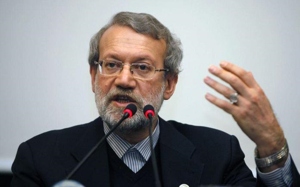
Larijani: Prince Bandar told me “we made mistake in Afghanistan and Iraq”

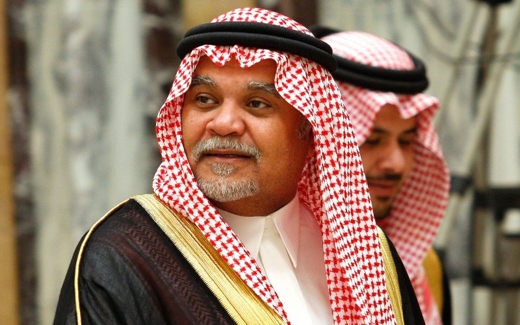
According to Nasim online that IFP has translated this article from, Mr. Larijani who has been to Iraq to attend Inter-Parliamentary meeting of member states of Islamic Cooperation Organization, said I asked Saudi Prince Bandar why they have supported terrorists in Afghanistan and Iraq and he acknowledged that they have made mistakes in doing so.

LarijaniIranian Parliament Speaker said Muslims and Shiites in Particular have not behaved harshly and most of the extremist acts have been carried out by Wahhabis and Saudis.

He added that Shiites have always acted reasonably but orientalists may did not want to explain the real essence of Islamic teachings to general public adding that Shiites and Sunnis behaviors have reflected the realities. Neither Shiite nor Sunni clerics have never preached or approved terrorism and extremism.

Mr. Larijani said after rise of Islamic extremist groups, the orientalists tried to depict the Islamic teachings as violent and extreme.

According to Mr. Larijani some Islamic countries and organizations have helped creation of extremist Islamic groups while foreign intelligent services and their financial and other form of backings clearly show such efforts. They created extremist groups to influence development in Syria and today terrorist groups in Syria are armed with TOW missiles. Such missiles have serial numbers and name of manufacturing countries is indicated on the weapon. Some regional states think that by supplying arms to terrorist groups in Syria can influence the events taking place in Syria.

Iranian Parliament Speaker while reiterating Iran’s support for groups like Al-Hashad al- Sha’bi and Hezbollah said we back Hezbollah and don’t hide our backing but some regional countries back terrorist groups and deny such support.

Hezbollah was created to fight Zionist oppression and cruelty and an anti terrorist group in Iraq was formed named Al-Hashad al- Sha’bi when the terrorists invaded this country by order of religious authority and Iraqi youth was asked by country’s Jurisprudent to resist against terrorist groups and that’s why we support both resistance groups in Iraq and Syria.

Mr. Larijani described backing of terrorist groups by Islamic Republic as absurd and said terrorists themselves confess to Iran’s enmity towards them but some countries accuse Iran of backing the terrorist groups.

Parliament Speaker while accusing Saudi rulers of committing strategic mistakes said Saudis are Muslim and our brothers and we have no serious problems with them but they have wrong understandings about the challenges faced by the Islamic World.

Price Bandar himself told me that they made mistakes in respect to Afghanistan and Syria, therefore accusing Iran of supporting terrorist groups is a kind of contradiction, said Mr. Larijani …..

He strongly condemned Saudi attacks against Yemen and said OK they can support terrorists but why they have attacked Yemen and devastated the country’s entire infrastructure? Why they have killed tens of thousands of Yemeni people under the pretext that Yemen has become Iran’s backyard? Isn’t an Arab country allowed to decide its own destiny? Some behavior of some regional countries are unwise and un-Islamic.

Top Iranian lawmaker said Iran has entered the era of peaceful nuclear energy and described signing of nuclear agreement with 5+1 world powers as a good omen adding that Iran has never contemplated and pursued atomic weapons and does not consider it as beneficial for the region. Mr. Larijani said nuclear weapon has no place in Iran’s doctrine and logic.

President Rouhani’s Europe Tour Aims to Normalize Iran-West Ties: MEP

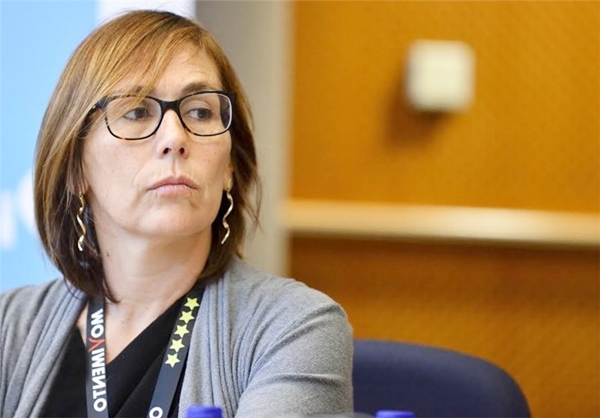
“I see this first visit of President Rouhani to my country in the broader context of the normalization of Iran’s relation with the West. This normalization was much sought as it was needed and President Rouhani’s visit has a deep geopolitical and economical meaning,” Tiziana Beghin, an EU lawmaker from Italy’s anti-establishment 5-Star Movement who sits on the parliament’s influential trade committee, told Tasnim ahead of President Rouhani’s three-leg Europe tour to Italy, France and the Vatican.

Following is the full text of the interview.

Q: Iranian President Hassan Rouhani on Monday departed for Rome on the first leg of his trip to three European destinations. A large delegation of political and economic leaders, including the ministers of oil, transport, industry and health are accompanying the president. What is your take on his first visit to Italy?

A: I see this first visit of President Rouhani to my country in the broader context of the normalization of Iran’s relation with the West. This normalization was much sought as it was needed and President Rouhani’s visit has a deep geopolitical and economical meaning. It is my understanding that the president will be accompanied by Iranian officials charged to sign agreements in many different fields to incentivize economic cooperation between our countries. Indeed the trip to Italy will be the first stop of his broader visit to Europe and he will meet leading Italian industrialists and investors. This visit means Iran is back to the international political scene and I hope this would translate into better living conditions for the Iranians and more peace to the region, even if the recent harshening of relations between the Saudis and the Iranians is definitely worrying.

Q: Do you believe that Iran can be a lucrative market for Italian companies following the removal of anti-Tehran sanctions? 

A: Definitely so. The sanctions limited Iran’s ability to be an effective player in the international field. Probably the recent harshening of relations with the Saudi is a first sign of how this country sees Iran as a competitor in the region now that the sanctions have been lifted.

Q: What will the future hold in terms of economic opportunities in Iran now that anti-Tehran sanctions are gone?

A: Iran has much to offer to Italy and Iran will definitely receive important flow of investments from my country. Like our EU Partners, we look with interest to exporting more goods and services to Iran. Iran will probably need not just more consumers’ goods, but technology and knowledge. This is exactly the kind of exports our market has to offer.

Q: How do you evaluate the performance of Italian Prime Minister Matteo Renzi in 2015?

A: Our political Movement is the main opposition to Mr Renzi’s government in Italy, but this is not the reason we are not satisfied with his work in 2015. I may quote the new unconstitutional reforms the executive is trying to push, or the non-transparent management of multi-billion infrastructures like EXPO Milan, but I would like to focus on something broader: indeed, for the first time after the crisis Europe is growing again. Clearly, this is due to some exogenous conditions such as the extremely low price of crude oil or the weakness of the Euro currency; nevertheless countries like Ireland, Spain and Romania are performing extremely well, while Italy, once more, still lags behind. Our country is growing by a minuscule percentage and we blame Mr Renzi’s government, as it was not able to capitalize on the extremely favorable international conditions.

Q: What is your opinion about the unemployment situation in Italy?

A: Unemployment is still high in Italy: almost 12% of the population is unemployed, but the figure skyrockets way above 40% when you look at young unemployed. Mr Renzi has pushed an extensive reform of labor law that has done nothing to lower this, but that decrease workers’ rights and make it easier to fire them with no reason. Of course in time of crisis and huge employment, it is important to decouple work from revenue, this is why our Movement’s proposal is simple: introduce in Italy a minimum income scheme, like it exists in almost all EU countries, but the government has been indifferent to our request so far.

Q: What is your proposal for resolving EU economic crisis in 2016?

A: We saw enough austerity and selfishness in Europe. It is time to decide whether to be united and support each other or abandon what was once the European dream. The management of monetary and financial policy in Europe is still in the hands of a few powerful entities, while economic and fiscal policies are tied as long as they stay in national control without the monetary counterpart. We have a tough decision to make. Either we choose more integration, but then we must go down the path of more solidarity or we break this Union and leave each countries all the tools to adjust and face the crisis on its own. In the old times, national states were giving up their sovereignty to the European Community to achieve peace and prosperity, but nowadays I don’t wish to stay in a Union where sovereignty is given up to the supranational level without transferring as well the democratic scrutiny.

Q: What is your prediction of how Italy’s economy will be in 2016?

A: It’s hard to predict what the situation will be like in Italy in the next year, but probably this favorable international economical conjuncture will continue so it will depend on how the government will be able to take advantage of this opportunity. Unfortunately, from how it performed in the past, it is hard to be optimist.

Q: What measures can the Italian government take in order to fight extremism, Daesh terrorists in particular?

A: I cannot speak for the Italian government, but I can tell what I would do against extremism if I were in charge. The current situation stems from years of war brought by the west to countries on the other side of the world only for economic interests, while at home our governments criminalized and marginalized migrants. And even where integration worked, you still find extremism, because I believe that our societies stopped providing values to the young generations and what the young cannot find in their environment, they search in extreme ideologies. I was always inspired by a quote that goes “young people don’t need to be told what to do, they need examples”. We should probably focus on being the change we would like to see in our world, as one enlighted spirit once said. Extremism is a deep rooted problem and no short term solution will solve it. I want to add that the current situation of insecurity in Europe will not be solved by more bombs in Syria or Libya. For once we should try to fight terrorism inside our borders, instead of helping ISIS recruiting new people by bombing their homes.

Q: Do you have any suggestions for solving the crisis gripping the refugees fleeing violence in Syria and elsewhere in Middle East and North Africa?

A: On the issue of refugees our political movement has long emphasized the need to solve the problem at its roots. Take the example of Syria and Libya, those countries were Europe’s allies up to five years ago, even more: in the case of Libya we used to sell them weapons! How wise was that?

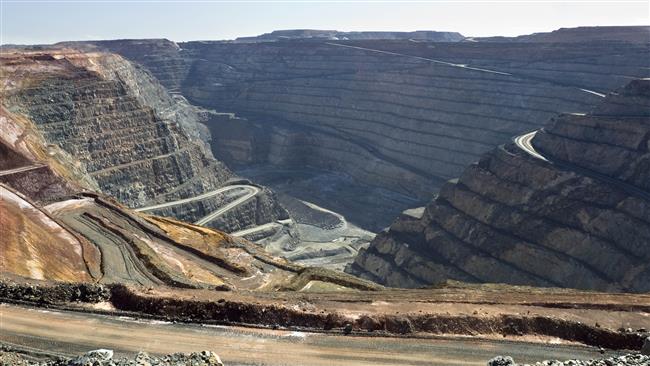
Iran, Italy, France line up mining deals

Iranian and Italian companies hope to finalize investment plans worth 5 billion euros when President Hassan Rouhani arrives in Rome on Monday on the first leg of a landmark visit to Europe.

“Several memorandums worth 5 billion euros have been prepared with Italy for investment in Iran’s mining industries,” Deputy Industry, Mine and Trade Minister Mehdi Karbasian said on Monday.

The MoUs envisage joint investments in the steel production chain in southern Iran in an area stretching from Chabahar on the Gulf of Oman to Bandar Abbas and Jask in the Persian Gulf, he said.

Italy’s Persiana Metalica would have a majority 60% stake compared to 40% for Iran’s IMIDRO in the ventures, Karbasian added.

The Italians are also about to partner Iranian and Chinese companies on carrying out the second phase of Salco, the largest aluminum smelter plant in Iran.

Karbasian said another MoU has been worked out with France’s Fiault company for downstream aluminum projects which the two sides hope to finalize during Rouhani’s visit to Paris.

Europe is rolling out the red carpet for Iran’s president for the first time in years, with Rouhani about to visit Italy and France through January 25-27.

Italian companies are interested in aluminum and steel projects and French firms are eyeing aluminum and “technical cooperation”, Karbasian has said before.

Japan’s leading steelmakers have also indicated interest in Iran’s mining projects, including production of precious metals such as titanium.

Iran received Chinese President Xi Jinping in Tehran on Saturday, accompanied by a large trade delegation. During the visit, several major Chinese firms discussed financing coal production in Tabas in central Iran and Ziraba in the northern Mazandaran province, Karbasian said.

Other Chinese companies are about to begin aluminum and zinc projects in a month, he added without giving details.

Karbasian said Iran could tender new mines for development amid massive exploration underway to establish their reserves.

Fifteen projects for production of iron ore, steel, chromite, aluminum, bauxite, copper, zinc and gold are to be rolled out for investment, he has already said.

Investment projects

For mining in Iran, foreign investors must set up a company and sign into a long-term deal which includes royalty payment to the state under the current investment law, he said.

“Interested parties can come forward for 100% ownership or enter into joint partnerships with us or do so with a local or international company of their choice.”

Iran awarded development of the Niku’iyeh gold deposit in northern Qazvin in October after an unnamed European company was cited to have been interested in it.

A consortium of Iranian, Omani and Australian companies has also won a $1 billion zinc production project in Mahdiabad of Yazd. It is said to be holding the biggest deposits of zinc in the Middle East, estimated at more than 160 million tonnes on top of sizable reserves of lead, barite and mercury.

Iran’s aluminum production will grow to 1 million metric tons by next year from 820,000 tons in 2013, and copper output will rise to 500,000 tons by 2020 compared with 220,000 tons in 2013.

The country’s production of iron ore, used to make steel, will reportedly rise to 40 million tons next year from 38 million tons in 2013. Steel output is set to jump to 55 million tons by 2025 from 22 million tons this year, Karbasian said in August.

Iran is also seeking $20 billion to develop a domestic steel industry, head of international affairs at the Iranian Iron Ore Producers and Exporters Association Kayvan Jafari Tehrani has said.

Iran, Egypt resume trade ties: Report

Intensified sanctions imposed on Iran in 2012 put a stop on the last remaining channel of connectivity with Egypt in the absence of diplomatic ties.

In recent months, officials from both countries had hoped that the lifting of sanctions would revive trade ties and help improve diplomatic relations.

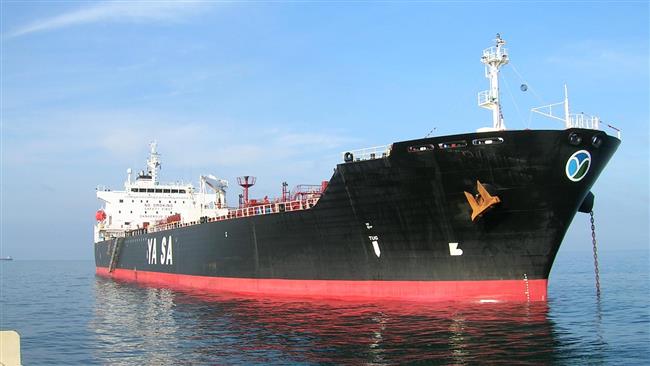
“Iran has no limitations to sale of crude oil and oil products to Egypt and any official request will be considered when it is made,” Managing Director of the National Iranian Oil Company (NIOC) Roknoddin Javadi has said.

On Monday, a report released by the customs office of the Pars Special Energy Economic Zone showed a petrochemicals cargo had been sent to Egypt in the new year, without specifying the type of the products or their volume.

Last November, Petroleum Minister Tarek El Molla said Egypt looked to Iran’s ramp-up of oil production which could boost the Arab nation’s proceeds from transit of crude through the SUMED pipeline.

“They used to work with us through SUMED. They used to store their crude there at Ain Sukhna terminal and Sidi Kerir. It will boost back again the activity of SUMED,” Reuters quoted him as saying.

State-run Egyptian General Petroleum Corp owns the 320-km SUMED which runs from the Red Sea to the port of Sidi Kerir west of Alexandria.

Western sanctions imposed on Iran’s oil sector brought shipments through SUMED and the Suez Canal to a virtual halt since 2012, hitting revenues for cash-strapped Egypt, former Egyptian oil minister Sherif Ismail said in July.

According to NIOC’s international affairs head Mohsen Qamsari, “With the annulment of sanctions, Iran’s oil ties with Egypt will definitely improve and more crude oil will be exported to Europe through the SUMED transit line or Suez.”

Javadi hoped expansion of oil trade would help improve political relations between Iran and Egypt.

Iran and Egypt have held no diplomatic ties since 1980 when Cairo offered asylum to the former shah, Mohammad Reza Pahlavi, and maintained peace treaties with Israel.

Oil prices will rise to $50 in 2016, $70 in 2017, expert estimates

Oil prices will grow to $50 a barrel in 2016 and $70 in 2017, oil trader Pierre Andurand told Bloomberg TV in a recent interview.

But the investors should expect heightened volatility along the way, he added.

‘We are in a world where we see very low prices followed by very high prices,’ he said.

‘I actually think it has bottomed,’ the oil trader who had correctly predicted a previous crash in the prices of the commodity, further said.

The world market has seen a freefall in the oil prices in recent months with the price of the commodity falling in the $20 range.

Venezuela has been calling for an emergency meeting to discuss steps to prop up prices, which are at their lowest since 2003. But Iran and the Persian Gulf members of the OPEC have been rebuffing Venezuela’s push for a special meeting.

Iran’s Petroleum Minister Bijan Zangeneh said on Friday any emergency meeting of the Organization of Petroleum Exporting Countries would hurt the crude oil market if it made no decision to shore up falling prices.

Iran’s President Pens Letters to Leaders of G5+1, Neighboring States

According to the Iranian president’s social network account, in the letters to the Group 5+1 leaders, Rouhani expressed his pleasure with the recent implementation of the nuclear deal between Tehran and the world powers.

He further expressed the hope that the parties to the deal will fulfill their commitments and take the required measures as per the nuclear deal (also known as the JCPOA) in a timely manner.

Rouhani also wrote separate letters to the leaders of Iran’s neighboring countries, in which he stated that Tehran hopes the opportunities and capacities created after the JCPOA implementation would be tapped into for mutual cooperation in different fields.

The letters were sent hours before Rouhani left Tehran for Italy on Monday in a tour that will take him later to France.

They came a week after a historic nuclear deal between Iran and world powers came into force and opened the doors of world trade to Iran after years of sanctions imposed on the country for its peaceful nuclear program.

Iran in different occasions has clearly announced that the country’s first priority following the nuclear deal and termination of anti-Tehran sanctions is strengthening ties with the neighboring countries.