Wednesday, December 24, 2025
Home Blog Page 4524

Time for Multilateral Foreign Policy

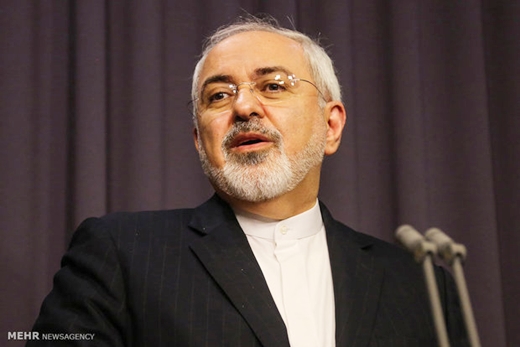
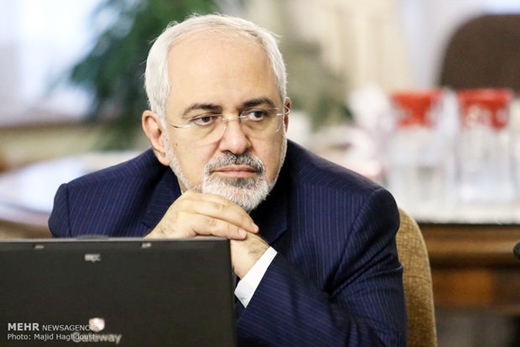
Iran’s Foreign Minister Mohammad Javad Zarif gave an interview to Khorasan to answer a host of questions about the JCPOA, its parliamentary reception, Iran’s foreign policy, and so on. Zarif believed that the strength of late Imam Khomeini (RA) and the Islamic Republic of Iran lay “in our independence and religious democracy,” and added that “Iran should exploit all capacities at the same time to reclaim its share in regional scope of influence.”

The following is an excerpt of his interview with Khorasan daily:


Last year, you said what the Islamic Republic has is the result of its resistance against being dissolved in the international system, that it has based its discourse on its own ideology which is an ‘anti-hegemonic’ system. How effective do you think this ‘anti-hegemony’ will be for our foreign policy, and how will the country’s outlook for foreign policy be in the future?

I believe that after the Cold War, the Americans engaged in bloodshed for ten years to create hegemony through illegitimate means, but they failed. The US policy changed in Bush’s second term when they realized that any attempt at creating hegemony would end in failure. In fact, the election of Obama as President underscored the necessity for a change in policies as well as presenting a new and repaired image of the States.

In the transition period, given the increased number of players as well as the methods of play, I deem it necessary to improve our creative power, that is, our independence, and our distinct identity which would not be dissolved into the dominant global order. All this provides us with a tool for power and influence. Today, power is multi-dimensional. What has made our people stand out is their resistance, not their tools. Let’s imagine an atmosphere of power which consists of a range of military, economic, and geographic powers down to conceptual as well as ideological powers. If we consider a set of power tools [for the Islamic Republic], we will find that a part of the Islamic Revolution’s discourse is anti-Imperialism, with a second part being self-belief. A third part is rejecting dominance and hegemony. Even our constitution declares that the Islamic Republic would not seek to dominate or would not give into being dominated. That is, this revolutionary discourse does not reward hegemonic-imperialistic sentiments; nor would it come to terms with being subject to the dominance of others. Recent isolated cases of claims by some [in the government] that Iran had been an expansionist power and would occupy the regional capitals diametrically oppose the discourse of the Islamic Revolution and undermine our instruments of power. It is very clear that a source of power lies in the discourse of Imam Khomeini (RA), independence, and our religious democracy. I believe we must use all our tools in parallel to secure our scope of power and influence in this time of transition, as the Leader has recommended. Right now, we are a player respected and recognized on a global scale; a status which should not espouse short-term petty gains only to be relegated to position of passivity and merely being able to ward off outside impositions. We are so much greater than this, and the US is not omnipotent, as omnipotence implies hegemony. We should come to the belief that we have a power of our own and must have faith in our abilities.


About the axis of resistance, there have been speculations [in the media] that resistance groups may not be satisfied with the JCPOA. Nevertheless, Hezbollah Chief Hassan Nasrallah has offered his congratulations to Iran three times. Given your meetings with these groups in Lebanon, how would you interpret the dominant impression of this?  

I have always said that resistance is our regional approach and our support for the oppressed is one of the most important contributing factors to our power; thus, it is fundamentally wrong to set our national interests and ideological interests in binary opposition. Mr. Hassan Nasrallah is a personal friend and his Hezbollah respect the Islamic Republic of Iran as an important player in protecting the resistance front.


In an interview with ISNA, you once said that “In other cases, Iran would seek negotiations with the US.” This would violate redlines set by the Leader of the Islamic Revolution…

I did not say such a thing. What I said was the verbatim phrasing of the Leader, who had said that if the US showed seriousness in negotiations, Iran would consider negotiating other issues as well. The government implements the policies set by the Leader.


How would you interpret the Leader’s remarks that there were more serious issues than the JCPOA?

I believe the JCPOA is an opportunity which should be grasped; the Leader of the Islamic Revolution has demanded that all capabilities and opportunities should be exhausted to attain economic growth, that is, the country should not be a mere consumer market for foreign goods. My own criticism also touched the same point: in the past, the country only imported goods with oil income and let domestic production dwindle. When sanctions hit our economy, this dependence on oil took its toll, with economic growth as low as minus 7%, ludicrously. A second issue is that of infiltration. I believe that the world is a world of concrete realities, and any country should use any innovation and craftsmanship to improve its influence and infiltrate its potential markets. This is the rule of the game – if you fail to infiltrate, you will be a victim of infiltration by others. To embrace success in modern times, states should be as innovative as possible. Passivity and inaction cannot provide desirable results. I believe that media overzealousness about the JCPOA, fuelling a propaganda war, will not achieve anything for our national interests. This is what I understand from the Leader’s remarks.


Recently, [in the months following the JCPOA], Tehran has frequently hosted European heads of state and prime ministers, including from Switzerland, Hungary, Austria, and others. What place do these countries occupy in Iran’s foreign policy?

The time has passed when a minimalist foreign policy divided countries; now it is time to see the whole field, with players acting in order to maximize their gains. We are such a player, in some ways. We have some economic conditions which other countries wish to make use of, and we are interested in other countries’ capabilities with the same purpose – maximizing our gains. This approach would benefit the country the most.


To what extent is it true that our focus on improving ties with Europe is primarily aimed at secondary countries in terms of importance (Italy, Spain, etc.), rather than influential countries (such as Britain, France, Germany)?

The first justification is that in foreign policy, any relationship is shaped by the relative advantages a country provides. It is inaccurate to say that we should prioritize specific countries and relegate others of secondary importance. Wherever our interests demand, we should improve ties with the country. As for relations with Russia and China, our relations are more smooth and rapid due to a modest level of détente. This would not precipitate exclusivism, however. Our foreign policy is multilateral, and is informed by national interests and the advancement of Iranian causes. We use Russia for present expediency, and they export goods to our country, and finance other necessities. With China, we have signed contracts worth billions of dollars in financing our oil and gas and other economic projects. This is the craft of foreign policy – to exploit the current resources globally. We have strategic ties with Russia, and in Syria we are close partners. We do not want to be a pure consumer market, but instead seek an active role in this global production chain.
Navy Foils Pirate Attack on Iranian Ship

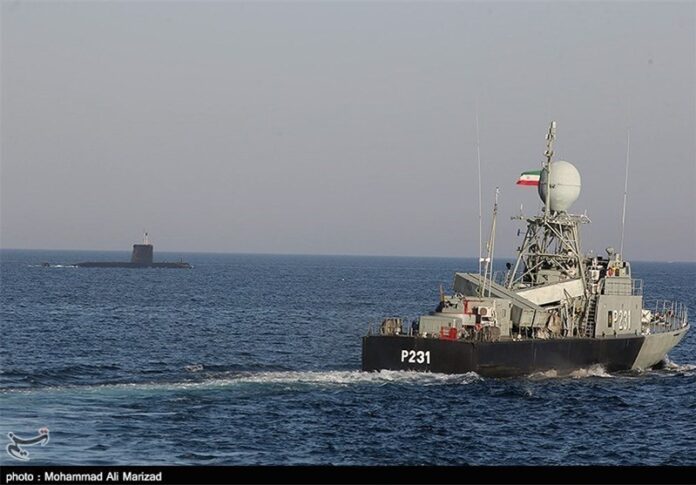
Speaking to the Tasnim News Agency on Monday, the commander said pirates on board 7 boats launched an attack on Saturday to hijack an Iranian vessel, but were forced to flee after fierce action by the 40th fleet.

Comprised of Alborz destroyer and Tonb warship, the 40th fleet left Iran for the Gulf of Aden and the Red Sea in early April on a mission to ensure security in the international shipping routes for the Iranian vessels.

Since November 2008, the Iranian navy has conducted anti-piracy missions in the Gulf of Aden and Bab el-Mandeb Strait to protect the country’s vessels against pirate attacks.

A Haircut in the Middle of a Football Match

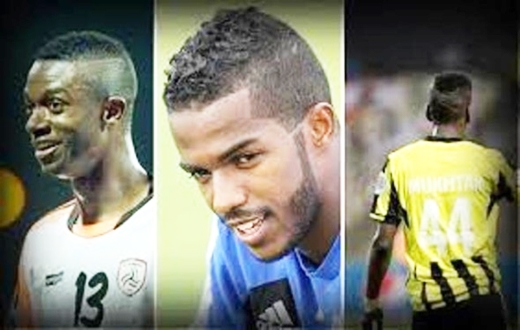
According to Shafaqna, the video footage shows two people busy cutting his hair on the sideline of the pitch while the crowd of fans looked on.

Saudi sport authorities have issued an instruction which requires athletes of all sports to comply with Islamic code of appearance, which prohibits sportsmen from having certain fashionable haircuts. Those who do not obey the rule will be barred from taking part in matches, and from entering sporting facilities.

The Saudi clergy have issued a decree which forbids sportsmen from imitating the hairstyles of European athletes.

Iran Cabinet Orders Flood Damage Recovery

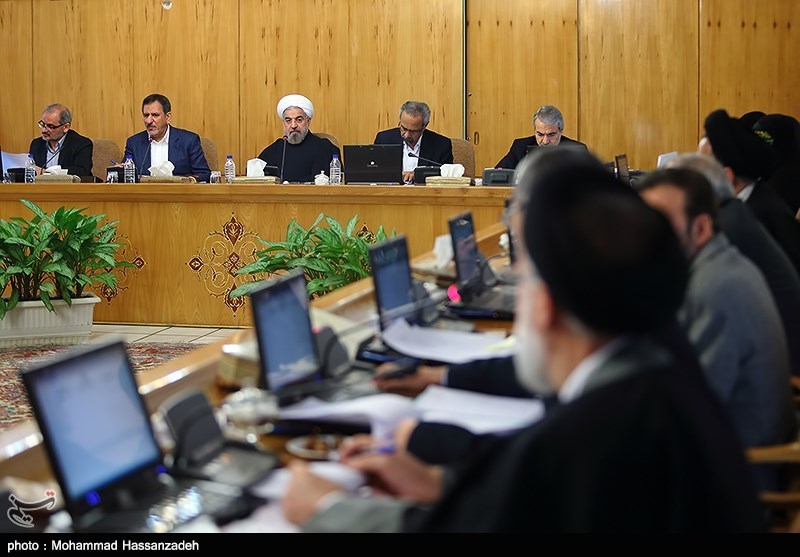
Chaired by President Hassan Rouhani, the cabinet held a session on Sunday evening, commending the whole ministries, state-run centers and non-governmental organizations for the handling of a recent flood that inundated vast areas of the country’s west and southwest after days of heavy spring rainfall.

139209201505347351720504

The cabinet also tasked the responsible organizations to recover the damage and rebuild the destroyed constructions.

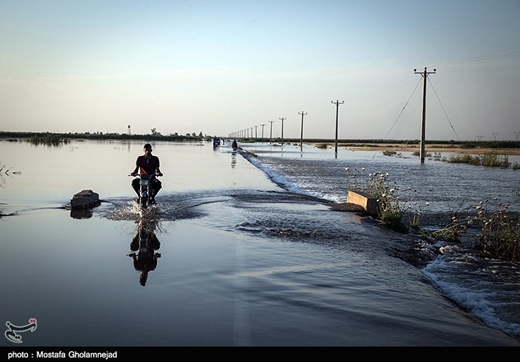
Last week, heavy rain and major flooding hit the provinces of Lorestan, Ilam, Kermanshah, Fars, Khuzestan, Chaharmahal and Bakhtiari, and Kurdistan.

At least 7 people have been pronounced dead in the flooding, while hundreds of others have been evacuated to makeshift camps.

Dams in the southwestern regions were pushed to their limits due to days of relentless rain, while flooding cut off water supply and electricity to thousands.

First Air France Jet in Years Lands in Iran

The plane – an A330 – landed in Imam Khomeini International Airport (IKIA). It was carrying the French Transport Minister Alain Vidal, as well as the CEOs of Air France and Boeing among others.

This is the first Air France jet to land in Iran in eight years following a landmark nuclear deal between Iran and the P5+1 that went into effect in January.

Air France will fly to Iran three times a week. German carrier Lufthansa and Austrian Airlines also run several flights a week connecting Iran and Europe. British Airways will start offering six flights a week to Tehran on July 14.

Speculations are already rising that Vidal’s trip to Tehran could lead to the finalization of a major deal between Iran and Airbus to purchase scores of new planes.

The $27bn deal – which was signed during Iran’s President Hassan Rouhani’s visit to Paris – envisages the delivery of 118 planes as early as July.

Also, the reported trip to Tehran by the Boeing chief could mean that a deal – possibly for 100 new planes – with the American aviation giant is around the corner.

Ali Abedzadeh, the president of Iran Civil Aviation Organization (CAO), said in March that talks with Boeing over the purchase of new planes are in advanced stages, stressing that a deal with the American aviation giant is “very likely” to be sealed.

This could make the plane-maker the first major American enterprise to seal a deal with Iran.

Iranian officials have already emphasized that the country will need to buy 500 commercial jets of various models for various short-, medium- and long-distance routes.

According to Minister Akhoundi, Iran’s current civil aviation fleet consists of 248 aircraft with an average age of 20 years, of which 100 are in storage.

Zarif to Meet US Counterpart in NY

“Mr. Zarif is scheduled to have meetings with some officials attending the ceremony; he will also hold talks with US Secretary of State John Kerry on the JCPOA and its implementation process,” announced Foreign Ministry Spokesman Hossein Jaberi Ansari.

Iran’s foreign minister will further deliver a speech in a meeting with graduates of Harvard University during his visit.

The Deputy FM for Legal and International Affairs, Seyyed Abbas Araghchi, the Deputy FM for European and American Countries, Majid Takht-Ravanchi, as well as FM Spokesperson Hossein Jaberi Ansari are accompanying Zarif on the visit.

The Paris Climate Change Agreement opens for signatures on April 22, 2016 during a high-level ceremony convened by UN Secretary-General Ban Ki-moon in New York.

Iran Welcomes Ceasefire in Yemen

amir-abdolahian21

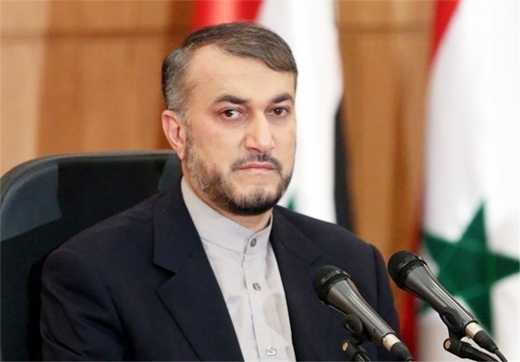
In a meeting with his Czech counterpart in Tehran on Sunday, Amir Abdollahian said the recent truce in Yemen opens up a good opportunity for the start of Yemeni-Yemeni talks.

The Iranian diplomat also expressed concern about the spread of terrorism and a persistent humanitarian crisis in Yemen.

Last week, a UN-brokered ceasefire across Yemen came into force, putting a halt to the airstrikes by a Saudi-led military coalition.

The coalition, comprised of mostly Arab countries, launched its campaign against Yemen’s Houthis in March 2015. Since then, more than 9,000 people have been killed in the war, including more than 3,000 civilians, according to the United Nations. The fighting has also displaced 2.4 million people.

Now the truce is meant to build confidence between Yemen’s warring sides ahead of the UN-sponsored peace talks scheduled to take place in Kuwait on April 18.

Meanwhile, the UN special envoy for Yemen, Ismail Ould Cheikh Ahmed, has urged all parties to work to ensure that the cessation of hostilities is “fully respected.”

One of the most daunting consequences of the war has been the spread of hunger across Yemen. The impoverished nation of 26 million, which imports 90 percent of its food, already had one of the highest malnutrition rates in the world, but in the past year the statistics have surged.

The number of people considered “severely food insecure” — unable to put food on the table without outside aid — went from 4.3 million to more than 7 million, according to the World Food Program. Ten of the country’s 22 provinces are classified as one step away from famine.

The UN children’s agency has also warned that the children of Yemen are bearing the brunt of the conflict. UNICEF said in a statement that at least 900 children have been killed — a seven-fold increase, compared to the number of fatalities among children in 2014.

Iranian Students to Appreciate CBI Chief’s “Honesty” on JCPOA

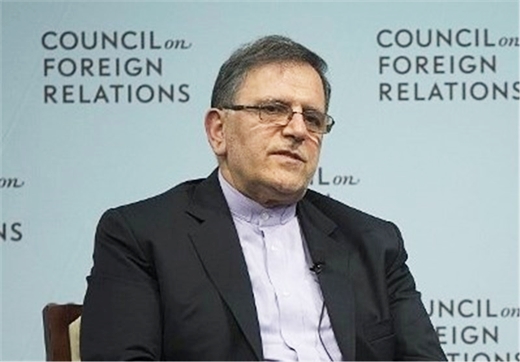
According to a report by Tasnim News Agency, Iran’s Association of Islamic Societies of Independent University Students announced in a statement that it plans to reward Seif with the statue to appreciate his honest remarks made during an official visit to the US. There, he talked about the poor implementation of the JCPOA, particularly the USA’s violations of its commitments as per the historic deal.

“Salvation is in honesty. A lack of honesty upsets people more than incompetence does. Therefore, we have repeatedly requested the country’s executive officials to talk honestly about the JCPOA,” the statement read, alluding to contradictory remarks made by President Hassan Rouhani’s administration on the JCPOA parties fully complying with their commitments.

“After the official statements by the CBI Governor on the economic results of the JCPOA, and his reference to the fact that ‘almost nothing has happened yet … and Iran has not seen the results it expected from the JCPOA’, Iran’s Association of Islamic Societies of Independent University Students will give him the ‘Statue of Honesty’ for his honesty in telling the truth to the people,” it added.

According to the statement, the statue will be marked with the expression, “Salvation is in honesty”, which is a Hadith [saying] from the Prophet Muhammad (PBUH).


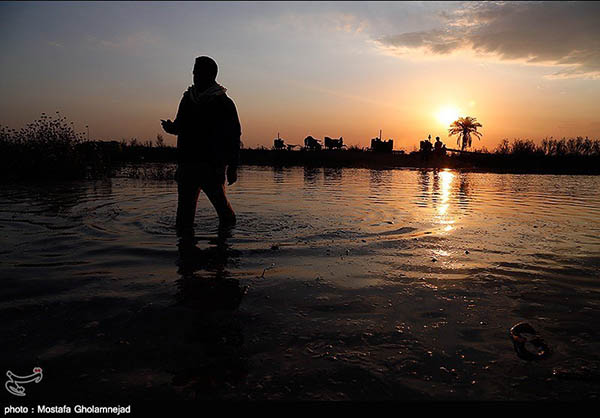
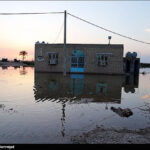
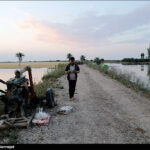
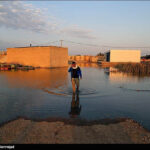
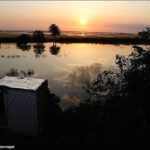
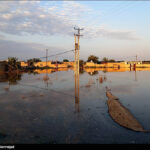
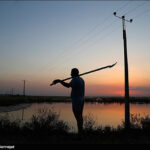
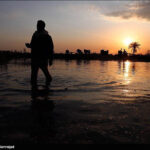
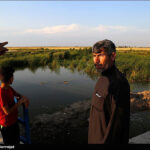
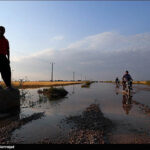
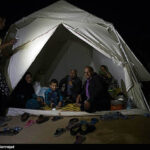
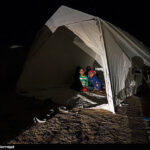
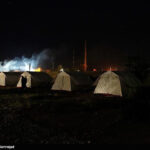
People in Flood-Hit Khuzestan Province in Southwestern Iran

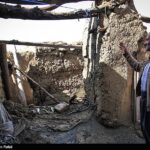
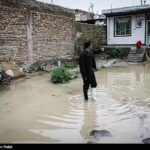
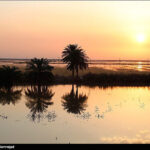
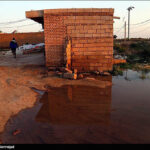
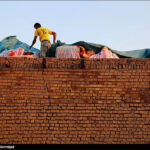
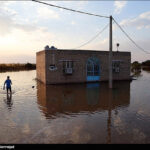
After the heavy rainfall and flood that recently hit several Iranian provinces including Khuzestan in Iran’s southwest, people in these areas are struggling to return to normal life.


Czech Economic Delegation Arrives in South Khorasan

The delegation is led by Deputy State Secretary for European Affairs at the Office of the Government of Czech Republic, Martin Tlapa.

The Czech delegation will stay for three days to become familiarized with the economic and trade capacities of the province.

The members of the Czech delegation will also hold economic meetings with provincial officials.

South Khorasan enjoys good mining capacities. It holds 75% of the coal resources of the country.

The Czech delegation was in Tehran on Sunday, where it held talks with members of the Chamber of Commerce, Industries, Mines and Agriculture.

During the talks, the two agreed to allocate 50m Euros to build a 50-MW power plant.