
William Shakespeare is known all over the world as one of the greatest playwrights ever. His works, such as Hamlet, Othello, King Lear, Macbeth,Romeo and Juliet, A Midsummer Night’s Dream, and Richard III, have been translated into many languages. Shakespeare also composed many sonnets. He was born in the year 1564 and died in 1616. This year marks the 400th anniversary of his death, and different events will take place across the world to mark the occasion.
Shakespeare’s commemoration ceremony and World Book Day will be held on Saturday, April 24, at 3p.m. in the Cultural Center of Book City, entitled “Four Hundred Years of Shakespeare”.
In this event, the following people will deliver speeches: Dr. Shideh Ahmadzadeh on ‘Shakespeare and Poetry’, Amir Ali Nojoumian, on ‘Shakespeare and Cinema’, and Kamran Sepehran on ‘The Timeless Stage of Shakespeare’. The event will also be attended by Reza Sorour, translator of the books ‘Shakespeare, Our Contemporary’ by Jan Kott, and ‘Roar of the Canon: Kott & Marowitz on Shakespeare’ by Charles Marowitz and Jan Kott, which is about the position of these two books from experts in the field of Shakespeare.
Also at the meeting, parts of the film ‘In Search of Shakespeare’ will be screened. Those interested can attend the meeting at the Book City Cultural Center located on Shahid 3rd Alley; Ahmad Qasir (Bucharest) St; Beheshti Ave. Entry is free for all.
Shakespeare’s commemoration ceremony to be held in Shahr-e Ketab

Tehran, Seoul to Sign MoUs in May
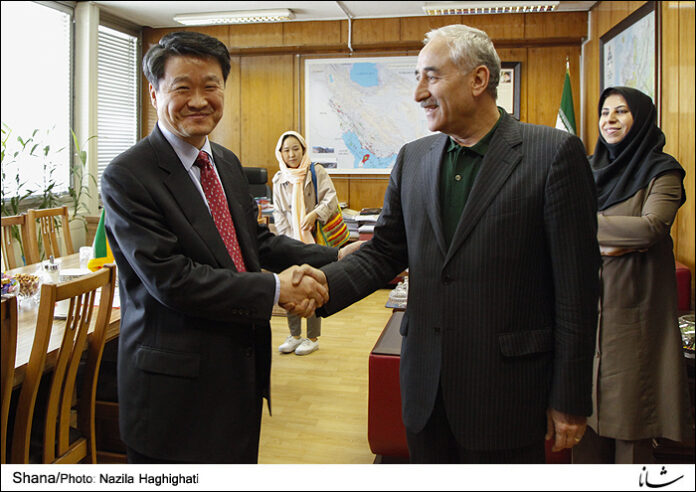
Enhanced oil recovery, technological investments and investment in construction of Iran gas trunklines 9 and 11 (IGAT 9 and 11) as well as petrochemical cooperation will be considered by the two sides through the agreements, she said.
Tehran-Seoul trade balance was over $4.1b in 2013 of which $360m accounted for Iran’s exports to South Korea and the rest ($3.8b) accounted for South Korean exports to Iran.
Iran’s melamine exports target European markets
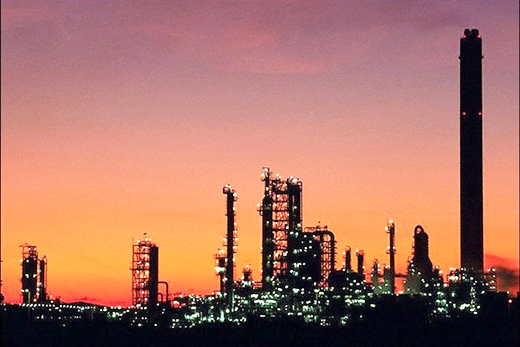
Marzieh Tavasoli told reporters that the current production capacity of Khorasan Petrochemical Complex (KPC), part of Iran’s National Petrochemical Co (NPC), stands at approximately 850,000 tons of petrochemical and polymeric products, adding “on average, about 500,000 tons of urea, 330,000 tons of ammonia and 200,000 tons of melamine crystals are produced annually in the KPC.”
She went on to add that each year the KPC exports some 365,000 tons of urea and 11,000 tons of melamine crystals to global markets, with Iraq, Afghanistan, India, Malaysia, Sri Lanka and some African countries such as Mozambique, as the target countries.
Tavasoli maintained that currently an annual capacity of 70,000 to 100,000 tons of urea are exported in the form of swap.
She noted Turkey and India as two traditional markets for Iran’s crystal melamine, saying the KPC has started exporting this petrochemical product to European countries since the start of 2016.
“Germany is at the moment the biggest consumer market for polymer products in Europe,” she said. “on this basis, we managed to sign contracts with German and Spanish companies for melamine exports, and several shipments have already been shipped to these two countries.”
Tavasoli further added that the KPC is currently holding negotiations with some other companies from the Netherlands, Germany, Turkey, Slovenia, India and Pakistan to export its products.
KCP’s melamine is being produced under the license of Italy’s Technip, she said.
Iran’s Parliament Receives Quarterly Report on JCPOA
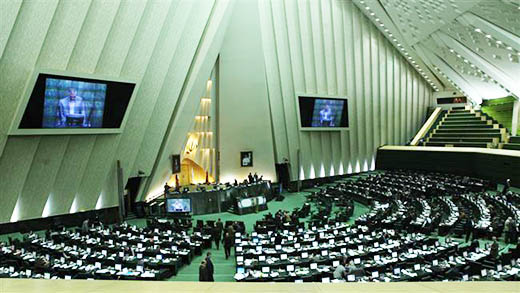
The parliament’s National Security and Foreign Policy Commission has received a report from the Foreign Ministry on the status of implementation of the Joint Comprehensive Plan of Action (JCPOA), the comprehensive 159-page deal on Tehran’s nuclear program, over the past three months, Nozar Shafiee, a member of the commission, told Tasnim on Sunday.
The report contains information about different aspects of the JCPOA, including the nuclear commitments, removal of the sanctions and the so-called PMD (possible military dimensions) in Iran’s peaceful nuclear program.
The report underscores that the International Atomic Energy Agency (IAEA) has passed a resolution in December 2015 that closed the case on PMD once and for all.
Tehran and the Group 5+1 (Russia, China, the US, Britain, France and Germany) on July 14, 2015, reached a conclusion over the text of the JCPOA.
The accord took effect in January, terminating all nuclear-related sanctions against Iran.
According to a law that requires the Iranian administration to safeguard the nation’s achievements and nuclear rights, the National Security and Foreign Policy Commission has a duty to monitor “the proper implementation” of the JCPOA, and is required to submit a report on the issue to the presiding board of the parliament every six months.
Interview: Postgraduate Due to Marry a Man Condemned to Death
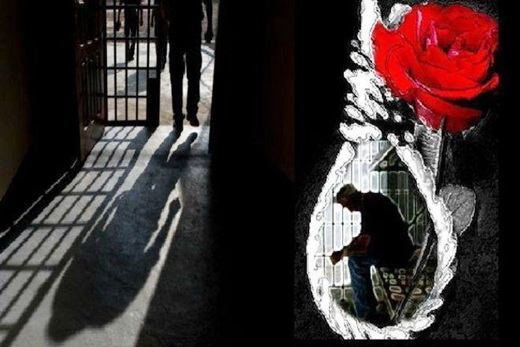
It was difficult, but Elham finally decided that she could not live without him. She decided to marry him. Marrying a person due to be executed was a strange but romantic choice. Everything, from the first meeting to the proposal, happened in the prison. The young boy never thought that in the extremes of despair, a young girl could bring hope to his life. Elham wants to marry him, so she can perhaps save him. Both her and her family are happy for the marriage to go ahead – a marriage to a boy who won’t live much longer, unless they can gain forgiveness from the victim’s next of kin.
This is not going to change Elham’s mind, however. She doesn’t have any doubt. To marry him, she has gone and got permission from the criminal court. They will be married on Thursday, on Imam Ali’s birthday. Yesterday morning, she went to the court for the last time, and after meeting Judge Shahriari, head of Tehran criminal court, received her marriage permission.
This educated girl tells her own story, from meeting the boy to reaching this momentous decision.
How old are you?
28.
What’s your level of education?
I completed my Master’s in Physical Education.
What is your job?
I own a gym, where I work as a trainer.
Tell us about meeting this young boy.
It was almost 5 months ago when I met Mehrdad in prison. This was when I used to go there to visit my brother. I met Mehrdad’s mother, who was there to visit her son. They both looked very sad. From listening to their conversation, I could hear the boy repeating that he was innocent. His mother was just crying with intense sadness. I was curious to know more.
Why was your brother in prison?
He was there for 14 days, for drinking alcohol. I was constantly visiting him.
What happened next?
After seeing this mother and son, I wanted to know more about their case, so I asked my brother. He told me that they were cellmates. He said that Mehrdad had killed someone, and was awaiting execution. I was interested about his claim of innocence, if he had killed someone. On my next visit, I gave him my phone number, through his mother, hoping that I could do something.
Why did you do this?
I don’t know. I feel that, from the very first time, I felt a connection with him, so I decided to help him.
What happened next?
Mehrdad called me, and we talked. He told me about the murder he’d committed. He said that, on January 4, 2010, he had been asleep in his bed, when his brother and his nephew [Mehrdad’s sister’s son] started fighting. When Mehrdad got up, he found that his brother had been stabbed in the side. He picked up the knife, trying to end the fight, but the nephew ran away. Mehrdad ran after him, and while catching up with him, tripped over a brick, accidentally stabbing and killing the boy with the knife. After that, Mehrdad was found guilty of murder, and was sentenced to death.
His sister’s family won’t forgive him?
They say that if they receive IRR5bn [approx. $150,000], they will forgive him, but Mehrdad doesn’t have that much.
What made you decide to marry him?
When I met Mehrdad, and talked with him, I had a good feeling. We had a great connection, and eventually he proposed, and I accepted. We now have a date, and plan to get married on Imam Ali’s birthday.
What is your plan for after the wedding?
The family of the victim requested IRR5bn. I’m trying to collect the blood money for my future husband, to get him out of jail. I’m asking for help from the public, too.
Your family wasn’t against the marriage?
No. My family don’t disagree at all. My father is slightly unhappy about it, but I’m sure he will come round to the idea.
If your husband gets executed, what will you do?
I’ll do whatever it takes to save him.
The Dedication of an Iranian Doctor now Commemorated in Iraqi Schoolbooks
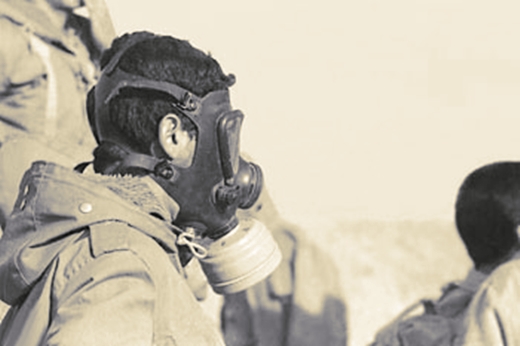
Hamshahri writes: What do heroes look like? How did they become heroes? How did their names become immortal?
There are thousands of stories of real people, not imaginary, who at just the right moment of a person’s life, become unforgettable heroes. They are those who made fateful decisions which affected their past, present and future.
Dr. Heshmatollah Veisi, an Iranian doctor, is one of those heroes. He saved tens of children who were the victims of the chemical attack in Halabja.
Now, as a sign of gratitude, Iraqi educational authorities have decided to make him the subject of a lesson in the fourth grade textbook. They want to narrate the story of a brave man who put himself in danger, and who saved many children. They were neither his relatives, nor from his country. This is not how the story ends, however. Years later, he reunited two of the children from the Halabja chemical attack with their families.
I talked to him about those days in Iraq.
Your name and your life story is being recorded in schoolbooks. This seems like a great honour.
Yes. It’s the story of children who were affected by chemical attacks in Halabja. They want to thank an Iranian who was a victim of a chemical attack himself. The lesson will be titled, “I am an Iranian.”
How did you feel when you found out that your name would be published in a different country, and knowing that children would know you as “The dedicated doctor”?
It’s difficult to describe. It’s not as if I want to be world-famous. God knows that I didn’t do it for praise. The day I went to Halabja, I didn’t consider my health, nor did I think that I’d be praised someday. I went there because the victims were innocent children who couldn’t do anything about stop-smoking-guru.com. I was a victim of chemical weapons myself, and I knew that only people like us had experienced such pain and suffering. I could sympathize with them. How could someone do what I did, without knowing what those children were going through? No-one would have volunteered for such a job, and those kids would have been abandoned. I invented a medicine to improve the lungs of chemical attack victims, but didn’t use it myself. I tried to make sure that this medicine would be available to everyone around the world for free. I promised myself to give my life and my money for my country. I dedicated my health then, and now I can dedicate my wealth. I’m proud to be an Iranian who can help others worldwide. I became a member of Medecins Sans Frontieres, to fulfil that desire. I’m an Iranian, and the compassion of Iranians is unlimited – the world should know that.
You were also affected by chemical weapons?
Yes, in the Kerbala 5 operation, in Shalamcheh. They dropped chemical weapons on us. Even though I was just a non-combatant, I was affected. I was transferred to Baghiatallah Hospital in Tehran. I was admitted there when I heard Imam Khomeini’s speech asking for us to go and help the disaster-stricken people of Halabja. I couldn’t remain in the hospital after hearing that, so I went. When I told my uncle I was going there, he tried to stop me, but when my mother heard, she gave me permission to go. She saw me off with eyes full of tears, but she wanted me to help others.
Tell us about Halabja. What did you see there?
Disaster is not a strong enough word to describe what I saw. There were corpses everywhere. A child who couldn’t even climb down the steps to get out of a house. An 8-year-old who was cradling his baby sister, not knowing what to do, but imitating his mother by trying to give milk to the baby. A mother who had tried to save her baby, but failed. An infant only a few months old left in a corner, whose mother had tried to save her other children. So many had been blinded. Many were crying from the burns in their eyes, and many more lost their eyes entirely. Even the photos of those days can’t show the pain and tragedy that was there. Iraq dropped three types of chemicals on Halabja on March 15-16 1988 – mustard gas, toxic gases and nerve agents. We set up our tents immediately. Everyone was bringing children, often not their own, or who was too young to know what it meant to lose parents, but was crying with pain. I didn’t know what to do, faced with such inhumanity.
How were the medical facilities there?
Almost nothing. I had a small bag with me, with a few bandages and first aid medicines. I helped those kids as much as I could, then took 17 younger children back to Kermanshahr. We put those kids in a pool and washed them, then admitted them to Tehran and Kermanshahr hospitals.
Do you know what happened to them afterwards?
I was separated from the kids for a while, since I was suffering from chemical inhalation myself, and was not in a good condition. When I recovered, I searched for them. It’s hardly an exaggeration to say I scoured the earth for them. I found 40 kids from the Halabja disaster in Tehran and Kermanshahr graveyards. On their headstones, it was written, “Unidentified Martyr.” That was it, until 2 years ago, I found out that one of the kids, called Ali, had gone back to Kermanshahr to look for his parents. He was one of the kids I’d saved. A family from Mashhad, who had children themselves, was in Kermanshahr during the war. When they saw Ali, they adopted him. Later, they told him the truth, and just 2 years ago, Ali decided to go and find his family. I helped him find his family, who live in Iraq now. I found another girl called Maryam last year, and helped her to find her parents last year.
Iran’s OPEC Governor to Attend Upcoming Doha Oil Talks
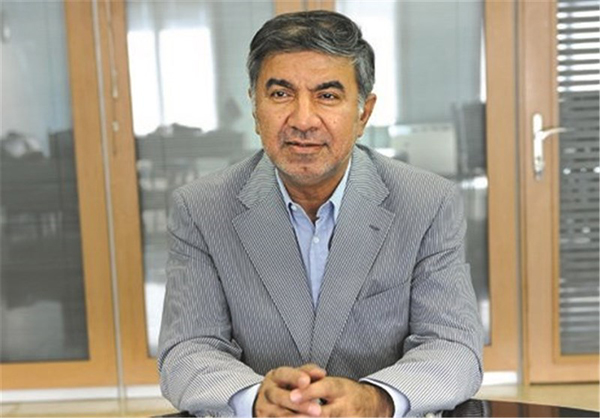
“Hossein Kazempour Ardebili, Iran’s governor at OPEC, will attend the Doha meeting on behalf of Iranian Oil Minister Bijan Zangeneh to announce Tehran’s positions,” Akbar Nematollahi, the ministry’s spokesman, said as cited by Shana news agency.
He added that the Islamic Republic backs the Doha talks but plans to reclaim its previous position at the global oil market by continuing to raise its crude production.
In relevant remarks on Saturday, the Iranian oil minister welcomed the oil freeze talks in Doha but stressed that the country has no plan to freeze its oil production before the return of the country’s crude oil production and export to the pre-sanctions levels.
OPEC and non-OPEC producers are set to hold a meeting in the Qatari capital on April 17 to discuss a proposed plan to freeze oil output at January 2016 levels.
Earlier, Zangeneh had dismissed any freeze agreement that would apply to Iran as “ridiculous” because the nation aims to revive production after anti-Tehran sanctions were lifted following the implementation of the Joint Comprehensive Plan of Action (JCPOA) between Iran and six world powers on January 16.
Iran now reportedly produces around 3.1 million bpd of oil. The sanctions had cut crude exports from a peak of 2.5 million bpd before 2011 to just over 1 million bpd in recent years.
While an initial accord in February between Saudi Arabia, Qatar, Russia and Venezuela to cap production at January levels temporarily helped revive oil prices, analysts believe a freeze would have little impact even if more nations join.
CBI to Chair IFSB
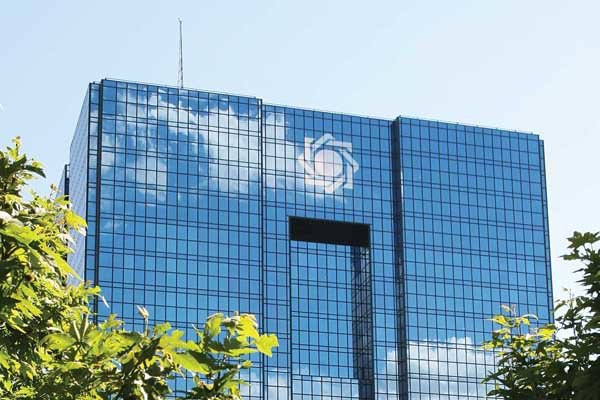
The 28th Meeting of the Council and 14th General Assembly of the IFSB was hosted by the Central Bank of Egypt in Cairo on April 10-12 and Iran was appointed as the chairman of the international financial body for the year 2017.
Accordingly, IFSB Annual Meetings 2017 will be hosted by the Central Bank of Egypt.
Deputy Governor of the Central Bank of Iran (CBI) Akbar Komijani attended the Meeting of the Council as deputy director while the session discussed several issues including the organization’s performance in the previous year, the proposed program and budget for 2017, financing strategies as well as mechanisms to determine the new secretary general of the organization.
A number of side Events were also held in conjunction with the IFSB Annual Meetings 2016 like the IFSB Seminar on Islamic Capital Markets, the 8th IFSB Public Lecture on Financial Policy and Stability as well as Development of the Sukūk Sector where the speakers offered their latest findings.
Established in 2003, the IFSB is the key international body in developing standards and regulations for Islamic financial markets.
Being an international standard setting organization promoting and enhancing the stability of Islamic services industry through issuing standards and principles, IFSB conducts research and organizes seminars and conferences for regulators in the banking, capital market and insurance sectors.
The IFSB also conducts research and coordinates initiatives on industry related issues, as well as organizes roundtables, seminars and conferences for regulators and industry stakeholders, according to the official website of the IFSB.
Iran Opening Petrochemical Offices in Africa
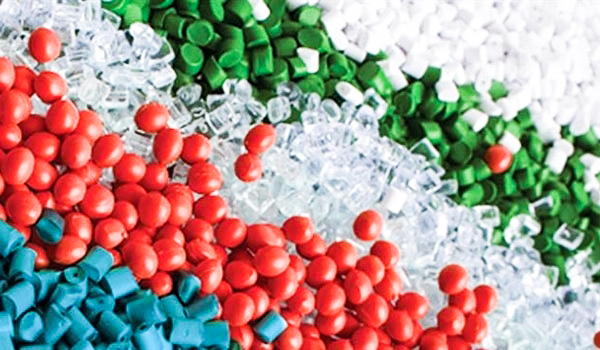
Speaking to reporters in Tehran on Sunday, Abbasi said after the lifting of sanctions the volume of petrochemical exports to Europe and Africa has risen significantly, adding that Iran will soon open regional offices in the African Continent to facilitate trade.
According to the official, this way, Iranian companies can market, ship, and store their petrochemical products in the target markets.
Meantime, Iranian firms at the 10th Iran Plast Exhibition are working out future cooperation with their international counterparts.
Head of Iran’s National Petrochemical Company Marziyeh Shahdaei said on Saturday that Iranian companies have held talk sessions with foreign petrochemical companies to find business opportunities in Iran.
She said the talks are aimed at linking Iranian petrochemical firms with their foreign opposite numbers now that US-engineered sanctions on Tehran’s nuclear program are lifted and prospects are brighter than ever for cooperation and investment of foreign financiers in the petrochemical sector.
Iran welcomes expansion of ties with Balkans

The meeting took place on Sunday following a non-official visit of Serbian Presdient Tomislav Nikolić to Iran to attend the opening ceremony of the fifth Symposium of World Federation of Neurosurgical Societies due on April 17-22.
President Rouhani maintained that Tehran and Belgrade have ample capabilities and potentials that could be used to expand cooperation in line with mutual interests.
Rouhani then deemed spread of terrorism and violence one of the major problems for the region and the world, roundly condemning certain attempts for relating terrorism to religions; “divine religions, and particularly Islam, promote kindness and friendship among human beings, are fundamentally against terrorism, and thus all must unite in the fight against it.”
Nikolić, for his part, expressed his country’s interest in expanding ties with Iran, adding “the Islamic Republic’s fierce resistance during the time of sanctions and the nuclear negotiations indicates the country’s greatness and rich cultural roots.”
The Serbian president, heading a high-ranking economic and scientific delegation, is also scheduled to meet with Vice-President for Scientific and Technology Affairs Sorena Sattari.
