Friday, December 26, 2025
Home Blog Page 4500

USA Torpedoing JCPOA Would Reaffirm Iran’s Distrust

Here is the full text of the article co-authored by Mousavian and Sina Toossi, as published by Huffington Post and covered by NasimOnline.

The nuclear deal reached between Iran and the P5+1 world powers last summer, formally known as the Joint Comprehensive Plan of Action, was predicated on a basic give-and-take. In exchange for Iran agreeing to intrusive international inspections and monitoring and limits on its enrichment and heavy water capacity for a confidence-building period, the P5+1 would respect Iran’s right to nuclear enrichment and remove all nuclear-related sanctions. Today, the future of this quid pro quo is under threat — and not from the Iranian side.

The consequences of the JCPOA falling through would not only be on the size and scope of the Iranian nuclear program. For Iran, the JCPOA was a criterion for judging whether it could trust the West to cooperate on other issues. If the United States faithfully abides by its commitments under the deal, then the view of Iranian leaders towards broader negotiations would be positively affected. However, if the United States acts with ill intent and makes it difficult for Iran to receive the benefits it is due under the deal, then the belief of Iranian leaders that the United States is insincere and cannot be trusted will be reaffirmed. Years of diplomacy will be undone and a zero-sum mentality will once again take hold between the two countries — with disastrous consequences for the region.

By the JCPOA’s “implementation day” on Jan. 16, Iran had followed through on all of its commitments; reducing its enriched uranium stockpile by 98 per cent, capping its number of centrifuges enriching uranium to 6,000, modifying its heavy water reactor and implementing strict surveillance measures, among other obligations the International Atomic Energy Agency has verified and Iran has abided by.

However, now that the JCPOA has been implemented, Iran has yet to derive the expected benefits from sanctions relief. As Iran’s Supreme Leader Ayatollah Ali Khamenei has said: “They [the United States] write on paper that banks can cooperate with Iran, but in practice they promote Iranophobia so that no one trades with Iran. American officials say that sanctions are still in place so that foreign investors get scared and do not come.”

If the US acts with ill intent and makes it difficult for Iran to receive the benefits it is due under the deal, then the belief that America is insincere and cannot be trusted will be reaffirmed.

Indeed, fearful of existing non-nuclear sanctions and the prospect of new sanctions, international banks and corporations with US-based operations have been fearful of trading with or investing in Iran. Major European banks have in the past paid billions in fines due to supposed Iran sanctions violations. As a consequence, Iran has not been able to receive expected foreign investment or have international banks facilitate the business agreements it has signed since the JCPOA’s implementation.

“The most important problem is that the United States is taking a back seat after eight years of scaring everybody off, imposing heavy penalties on people who wanted to do business with Iran,” Iranian Foreign Minister Javad Zarif said in a recent interview with The New Yorker’s Robin Wright. “The United States needs to do way more. They have to send a message that doing business with Iran will not cost them.”

US sanctions have also prevented Iran from repatriating its much-hyped frozen oil revenues, which have been held at banks abroad. For Iran to retrieve this money, much of which was denominated in US dollars, requires the foreign banks to conduct dollar-clearing sanctions for Iran, which they are hesitant to do for fear of running afoul of US sanctions. According to US Secretary of State John Kerry, Iran has so far been able to repatriate only $3 billion of its $55 billion to $100 billion in frozen funds abroad.

Adding insult to injury, the US Supreme Court also recently broke all precedent by ruling that families of American victims of a 1983 Beirut bombing can sue Iran for $2 billion worth of frozen Iranian assets. Iran’s centrist and pragmatic president, Hassan Rouhani, called the decision a “continuation of hostilities against Iran” and a “flagrant theft and a legal disgrace.” Iran’s Central Bank Chief Valiollah Seif also placed blame on the Mahmoud Ahmadinejad administration for making investments in dollars, whichwere among the frozen assets the Supreme Court ruled on.

In January, the United States also adopted new visa regulations requiring Europeans who visit Iran to attain a visa before entering the United States, creating another barrier to European trade with Iran. All of these measures have not just spurred frustration in Iran, but also in Europe.

“Europe is being taken hostage by American policy, ”declared Marietje Schaake, the vice president of the European Parliament’s Delegation for Relations with the United States. “We negotiated the nuclear deal together, but now the US is obstructing its execution.”

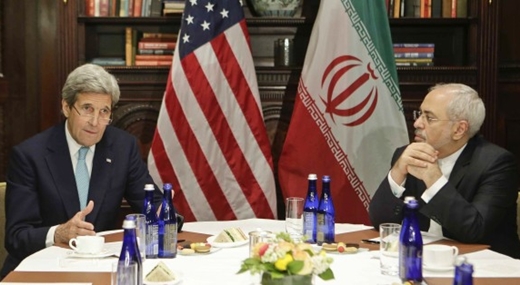
With all of this said, there is still reason to hope that these hurdles will be overcome and Iran will reap the benefits it is due from sanctions relief. Secretary Kerry and Foreign Minister Zarif met twice last week to discuss how to resolve the problems with Iran receiving sanctions relief. Kerry said after his meeting with Zarif: “The United States is not standing in the way and will not stand in the way of business that is permitted with Iran since the (nuclear deal) took effect.”

He added: “We’ve lifted our nuclear-related sanctions as we committed to do and there are now opportunities for foreign banks to do business with Iran. Unfortunately, there seems to be some confusion among foreign banks and we want to try to clarify that as much as we can.”

If the deal collapses, not only would there be no chance for any compromise between Iran and the US on any other issue, but Iran would also lose its faith in the Security Council.

The Obama administration recognizing these problems and declaring it is willing to clarify what transactions foreign financial institutions can conduct with Iran is a hopeful sign. The JCPOA was the first major agreement between Iran and the United States, and also involved the rest of the five permanent members of the U.N. Security Council plus Germany. For it to be a step towards a more constructive relationship between Iran and the West, it is imperative that all sides faithfully implement their commitments.

Foreign Minister Zarif said in this regard recently: “As the Leader [Ayatollah Ali Khamenei] said last year, if the experience of the nuclear negotiations proves that the United States is changing its approach toward Iran — is basing its approach to Iran on mutual respect and interests — then there is a chance of change.”

If the JCPOA collapses, not only would there be no chance for any compromise between Iran and the United States on any other issue, but Iran would also lose its faith in the U.N. Security Council. Unfortunately, there are powerful forces in US politics that seek to increase US-Iran enmity and revert Iran and the United States back onto the path to war. These special interest groups are doing everything in their power to destroy the landmark diplomatic agreement and have strong sway over Congress, which is pushing for over a dozen new sanctions against Iran. The efforts of these groups, sadly, are done more at the behest of the Israeli and Saudi governments and done more for the purpose of obstructing President Obama’s foreign policy goals than enhancing global peace and security.

Ambassador Seyyed Hossein Mousavian is a research scholar at Princeton University and a former spokesman for Iran’s nuclear negotiators. His nuclear book, “The Iranian Nuclear Crisis: A Memoir,” was published by the Carnegie Endowment for International Peace. His latest book, “Iran and the United States: An Insider’s View on the Failed Past and the Road to Peace” was released in May 2014. Sina Toossi in an analyst focusing on the Middle East and Iran.
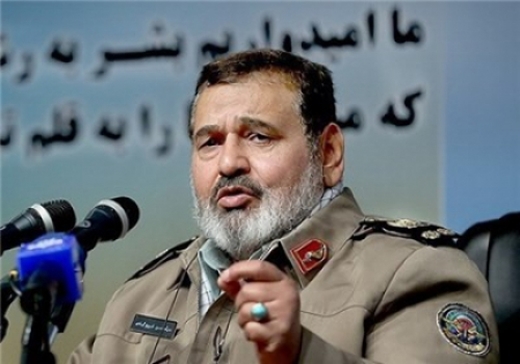
Top Officer Supports Police’s “Moral Security” Plan

Moral security is a great stength and advantage of Iran’s Islamic society, and the agencies in charge of social security and order should not allow it to be violated by a number of social deviants or enemy mercenaries, Firouzabadi said in an address, as reported by Sepah News and translated by IFP.

“What the law enforcement is trying to confront is the enemy’s attempts and plans to counter religious values, the Islamic Revolution, and the Islamic Establishment,” he went on to say.

“After its failure in hard and semi-hard conflicts, the enemy has resorted to a soft war, and is targeting society’s values and ethical and cultural principles in its confrontation with Iran,” the Iranian top officer added.

He further described the Hijab, one of the main aspects of the Moral Security Plan, as a phenomenon interwoven with Iranian identity, adding, “The Hijab has been accepted as a value in Iranian society for several centuries, and given its influence on society’s security, health, and peace, enemies of Islam have always tried to spoil it so as to achieve their goals.”

“Moral and psychological security are among the nation’s basic and inalienable rights,” he noted, stressing that the Moral Security Plan intends to provide just such psychological peace and security in order to accelerate the country’s development.

He strongly supported the plan, and described it as a legal move. “Any opposition to the plan will be regarded as resistance to the enforcement of law,” he added.

Isfahan to host general assembly of World Crafts Council

A jury member of the WCC said that the event will be held in Isfahan on Sep 25, 2016.

Citing the event as a turning point in Iran’s handicraft industry, Omid Shiva said the WCC is seeking to help craftsmen and -women across the world.

Last year, the World Crafts Council announced that the Iranian cities of Isfahan and Tabriz had been registered as world cities of handicrafts and carpets.

The Council’s President, Wang Shan, congratulated the Head of Iran’s Cultural Heritage, Handicrafts and Tourism Organization Masoud Soltanifar on this success.

In 2015, only six countries were candidates for global registration. The two cities mentioned were successfully registered for their particular features in terms of handicrafts and carpet-weaving.

One of the programs for Iranian traditional arts in the incumbent government is their motto of ‘Each province a global brand, each city a national brand’.

The World Crafts Council is a non-profit, non-governmental organization that was founded in 1964 to promote fellowship, foster economic development through income-generating craft-related activities, organize exchange programs, workshops, conferences, seminars, and exhibitions – and in general, to offer encouragement, help, and advice to the craftspersons of the world.

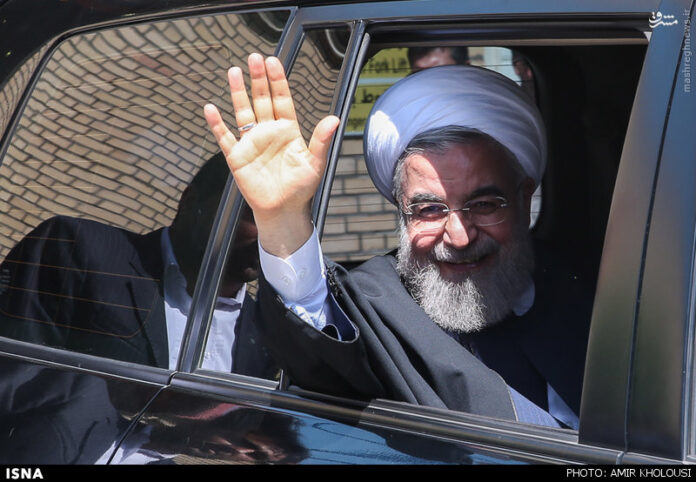
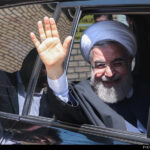
Why President Rouhani Stayed in His Car during Workers’ Day Visit

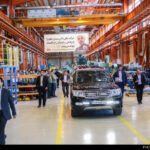
On May Day, Rouhani visited MAPNA workers while remaining inside his car, moving around the factory, waving for the labourers on their “International Day”.

According to Asr-e Khabar’s report, translated by IFP, it was a very decent move by the country’s president to pay a visit to the hardworking labourers and personally monitor the achievements of a domestic factory.

However, the photographs published after the visit were not so favourable. The hardworking labourers expected to see their president up close, and to have a rare meeting with him, not to see him being driven around the factory floor in a luxurious car.

This move by the President’s handlers was absolutely wrong. If they chose this method due to the large factory and a shortage of time, they could have limited the visit to a small part, walking among the workers in that particular part of the factory. There was no need for a visit to the entire plant.

If, however, the move was due to security reasons, it is still unacceptable, because the factory and the workers are no more of a threat than the cities President Rouhani usually visits. Thus, no security issue would have been allowed to happen.

A government that sees itself as part of the nation should be flexible with its formalities to some extent, and should behave in a friendlier way towards the people who voted for it.


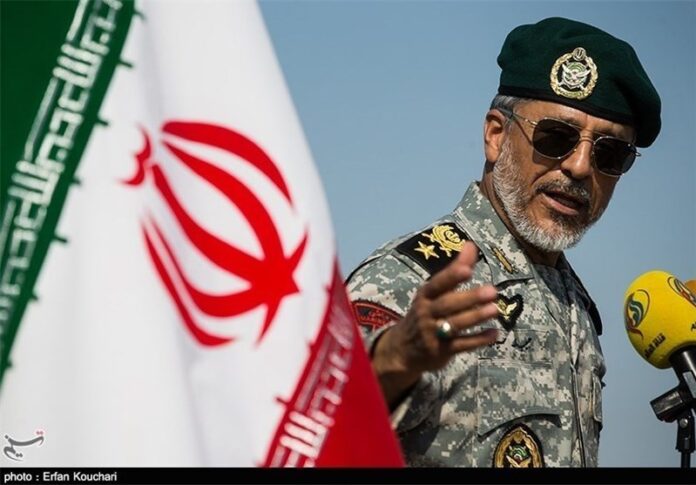
Iran’s Navy to Hold 20 Specialized Wargames: Commander

Speaking to reporters in Tehran on Tuesday, Rear Admiral Sayyari talked about the Navy’s plans, saying that holding 20 specialized wargames is on their agenda.

He added that the military drills, which include electronic warfare, missile tests, intelligence operations, deployment of submarines, and relief and rescue operations, will start in a few weeks.

The commander further pointed to the US government’s opposition to Iran’s plans for wargames in the Persian Gulf, saying that although they are against an Iranian military presence in the Strait of Hormuz and the Persian Gulf, “We will continue our powerful presence in the two areas … and will stage our wargames.”

In relevant remarks, Leader of the Islamic Revolution Ayatollah Seyed Ali Khamenei had earlier hammered the US for its schemes against Iran’s military presence in the Persian Gulf and made it clear that the Islamic Republic will continue to demonstrate its power in its home waters.

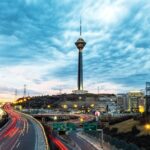
South Korean President Visits Milad Tower in Tehran

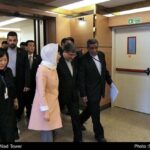
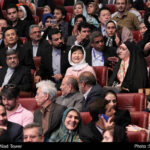
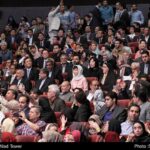
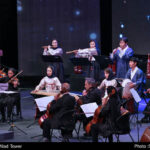
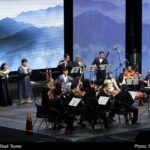
South Korean President Park Geun-hye attended a ceremony held on Monday night in Tehran’s iconic Milad Tower to mark the beginning of “Iran-Korea Cultural Week”.

During the ceremony, which was also attended by Iran’s Culture Minister Ali Jannati and Vice-President for Women’s Affairs Shahindokht Molaverdi, Iranian and South Korean national orchestras had a joint performance.

A huge crowd of Iranian and Korean nationals participated in the ceremony, filling the large conference hall of Milad Tower.

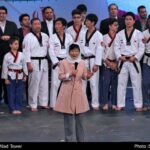
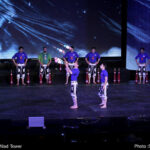
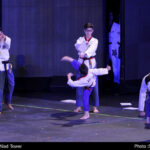
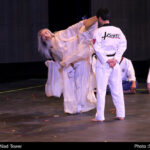
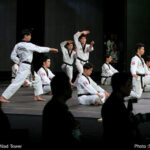
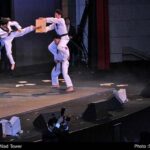
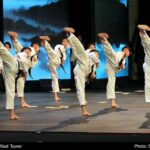
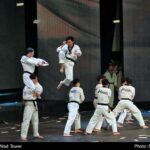
Live demonstrations of Iran’s Zurkhaneh sports and South Korea’s Taekwondo were also performed as part of the ceremony.


Iran and Switzerland Hold Financial Talks in Bern

The Iranian team at the talks was led by Hamid Tehranfar, Monitoring Deputy of the Central Bank of Iran (CBI), while the Swiss delegation was headed by Rene Weber, director of financial markets of the Finance Ministry.
Announcing Switzerland’s support for the implementation of the Joint Comprehensive Plan of Action (JCPOA), Weber announced his country’s readiness for cooperation in financial and banking fields as well as campaigning against money laundering and terrorism financing.
Meanwhile, Tehranfar called for taking advantage of the experience of Switzerland in monitoring and banking regulations and said continuation of the talks will lead to the promotion of financial and banking cooperation at bilateral and international levels.
He said the next round of the talks will be held in Tehran before the end of the year.
This is the first round of financial talks between Iran and Switzerland in line with the roadmap of bilateral relations, which was agreed upon by the presidents of the two countries in the course of the visit to Iran of the Swiss President Johann Schneider last year.

Iran Eyes Closer Ties with Ukraine and Montenegro

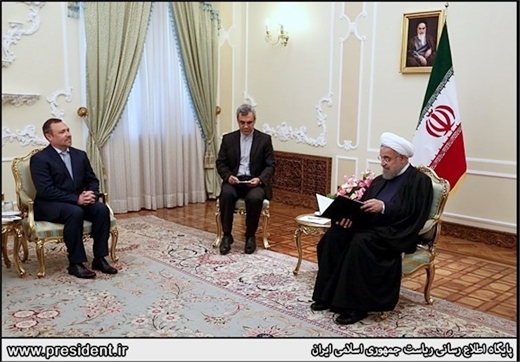
President Rouhani held separate meetings with the incoming ambassadors of Ukraine and Montenegro on Tuesday and received their credentials.

In the meeting with Ukrainian Ambassador Sergei Buldiliak, the Iranian president said the post-sanctions era has opened up an opportunity for Tehran and Kiev to promote bilateral cooperation.

He voiced Iran’s enthusiasm for expanding political, economic and cultural relations with Ukraine.

The European envoy, for his part, said he sees good prospects for cooperation between the two nations.

In the meeting with Montenegro’s Accredited Ambassador to Tehran Branko Milic, President Rouhani said the Islamic Republic of Iran’s administration is ready to expand relations with Montenegro in the economic, energy, industrial and tourism fields.

Milic, too, emphasized that a good atmosphere exists for the promotion of cooperation between Podgorica and Tehran.

The implementation earlier this year of the JCPOA, the comprehensive nuclear deal between Tehran and the Group 5+1 (Russia, China, the US, Britain, France and Germany), has prompted the international community to pursue closer ties with Iran.

Life in Iran Totally Different Before and After JCPOA: Rouhani

“We have entered a new stage, and whether we want it or not, the post-JCPOA world is totally different from the world before the JCPOA,” Rouhani said in an address to the opening ceremony of the Tehran International Book Fair.

“Our nation achieved great successes in a historic and important event, after complicated negotiations, in talks with world powers.”

The nuclear deal was to the benefit of both sides, Rouhani said, stressing that the JCPOA was in the interests of Iran, the other parties, the region, and the world.

“Of course, there are certain factions in our region who feel the deal is detrimental for them. In a world where 188 countries gain such huge benefit from the deal, a couple of countries might be disadvantaged; this is normal,” Rouhani said.

“They [the regional sides] are very angry and seek to stonewall every day, but I am sure the great nation of Iran, having gained such a success, will continue its work as strongly as before,” the Iranian president asserted.


Gov’t Supervision over Book Industry Should Be Restricted to Policy-Making

Elsewhere in his remarks, Rouhani stressed that the government should not interfere in all affairs. “The government is responsible for planning and policy-making,” he pointed out.

The administration must maintain [indirect] supervision, but it should be carried out by the people themselves, he went on to say.

“We should help authors to write books using their own minds, ideas, and experiences,” Rouhani said, adding that authors should not be afraid of censorship when they intend to write.

He also thanked the foreign participants, particularly the Russian President Vladimir Putin, for sending representatives to Tehran’s Book Fair.

Rouhani further highlighted Tehran municipality’s efforts in building the “huge, beautiful” fairground, Shahr-e Aftab (Sun City), south of the capital, near Imam Khomeini’s Shrine.

The 29th edition of Tehran International Book Fair will receive visitors from May 4 to 14 in the newly-built fairground located next to the Persian Gulf Highway.

The fairground halls have been built with a total area of 120,000 square metres, and comprise three types of salon. The main hall has a floorplan of 25,000sq.m, four middle-sized halls are as large as 15,000sq.m, as well as there being four small halls of around 8,000sq.m each.

These halls form the main venues of the fairground.  Each hall is a large, integrated space with a huge, beautiful roof, creating a unique atmosphere.

The Hall of Nations is constructed over two storeys with an area of 8,000sq.m, and a height of 24m.

To see photos of the newly-opened, purpose-built exhibition site, click here.

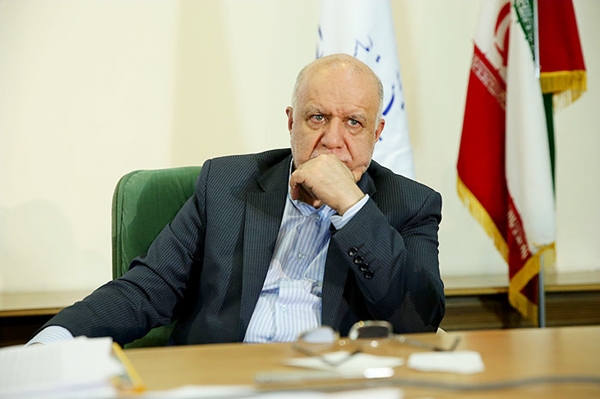
Oil Minister: $4bn to be Added to Iran’s Petrochemical Value

Speaking at the launch ceremony of the Lorestan Petrochemical Complex, Zangeneh said in the current calendar year (began March 20, 2016), over 8m tons will be added to national petrochemical production.
According to the minister, the production capacity of Kavian Petrochemical Complex is 2m tons, of which 1m tons has been put into operation, with the remainder becoming operational by the end of the current year.
He said, “Petrochemicals are among the most significant indicators of the “Resistant Economy” which prevents raw selling and leads to employment and extraversion.”
Referring to the opening of new petrochemical complexes in Kurdestan and Mahabad, Zanganeh stated that the two together will add 960,000 tons of polyethylene and other polymer production.
He said that Lorestan Petrochemical Complex has been totally ceded to the private sector, and is among the country’s largest investments, with a value of $400m.