Wednesday, December 24, 2025
Home Blog Page 4454

Japan Announces Continued Collaboration with Iran in Reviving Lake Urmia

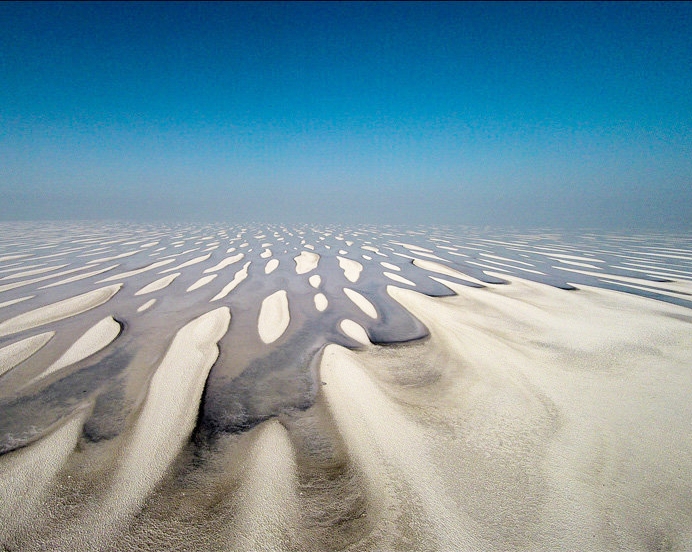
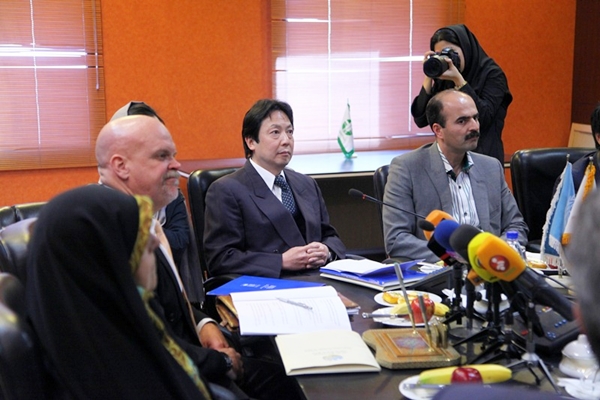
On Tuesday evening, Japan’s charge d’affaires in Iran attended the signing ceremony of the third phase of collaboration with the Representative of the United Nations Development Programme (UNDP) and Japan for reviving Lake Urmia. In this ceremony, which was held in Iran’s Environmental Protection Organization headquarters, he said, “We have been supporting the revival of Lake Urmia since 2014 and this support will be continued. This is the third phase of Japan’s support in this cause.”

Japan’s charge d’affaires drew attention to the fact that Lake Urmia needs urgent support, saying, “With the lake’s serious condition, Japan’s government decided to allocate $1m to the Lake Urmia revival programme through UNDP in January 2016.”

He added, “We hope that with Japan and Iran’s collaboration, the Lake Urmia revival project will continue, to the extent that it improves both the health of the lake and the lives of local people.”


1 (2) (1)

Iran, Turkey, Azerbaijan Agree on 2-Year Cooperation Agenda

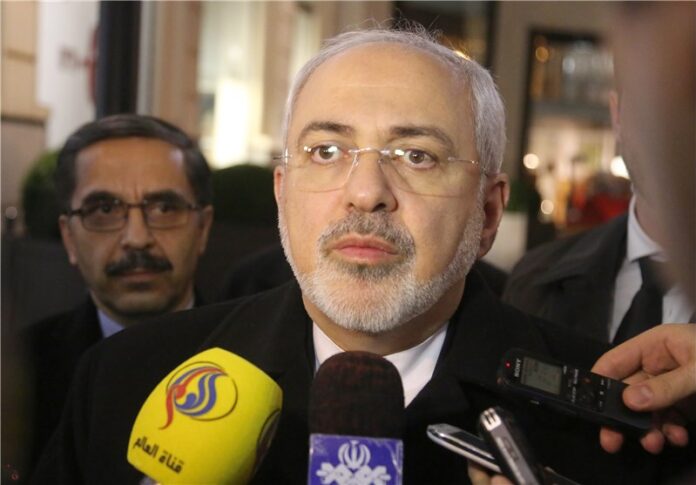
Zarif held the meeting with his Azeri counterpart Elmar Mammadyarov and Turkish FM Mevlut Cavusoglu in the resort city of Ramsar on closer cooperation among the three neighbors, with a focus on coordination in the fight against terrorism.

After the meeting, Zarif told reporters that the three sides signed two documents, one of which focuses on commitments of and cooperation among Tehran, Baku, and Ankara.

The other document, Zarif added, includes the agenda for trilateral cooperation within the coming two years, explaining what measures should be taken and what sessions be held.

Iran’s top diplomat further referred to tourism, transit of goods, and joint efforts to provide regional peace and security as other areas of cooperation.

He also pointed to the topics discussed in his talks with Mammadyarov and Cavusoglu, saying the three sides underlined their commitments to peaceful resolution of ongoing crises in the region, including the one in Nagorno-Karabakh, through international solutions.

At least 30 soldiers have been killed in fighting between Armenian and Azerbaijani forces along the frontlines of the Nagorno-Karabakh region. Each side blames the other for the fighting.

Nagorno-Karabakh has been under the control of Armenian military and separatists since a war between Armenia and Azerbaijan ended in 1994. Years of negotiations have brought little progress in resolving the dispute.

34th FIFF announces screening programs in two categories

In this edition of the festival, 12 foreign films and three Iranian ones will vie in the section of Cinema Salvation for six awards – Best Film, Best Director, Best Screenplay, Best Actor and Actress, and the festival’s Special Award. The list of the screening programs for foreign films in the category of Cinema Salvation is as follows:

1944 (Estonia, Finland)

Amama, When a Tree Falls (Spain)

El Clasico (Iraq)

Walking Distance (Mexico)

Frenzy (Turkey)

Dawn (Estonia, Poland, Lithuania)

Song of Songs (Ukraine)

Rams (Ireland, Denmark, Norway, Poland)

The Treasure (Romania, France)

Guarani (Paraguay, Argentina)

Norfolk (England)

I’m a Teacher (Russia)

The three Iranian films to be screened in Cinema Salvation will be announced soon.

Screening programs in Eastern Panorama Section

In the Eastern Panorama Section, 12 foreign films and three Iranian films will be screened. The Asian films in the Cinema Salvation section will also be judged. The section will grant one award to the best film as judged by the panel of juries.

The list of the screening programs for foreign films in Eastern Panorama Section is as follows:

3000 Nights (Palestine, France, Jordan, Lebanon, Qatar, UAE)

Walnut Tree (Kazakhstan)

Bloody January (Azerbaijan)

What a Wonderful Family (Japan)

Habib Al-Ard (Kuwait)

My Sister the Pig Lady (South Korea)

Solomon (Goergia)

Martyr (Iraq)

Stranger (Kazakhstan)

Zinna Flower (Taiwan)

Madame Courage (Algeria, France)

The New Classmate (India)

The three Iranian films to be screened in the Eastern Panorama Section will be announced soon.

In addition to these two categories, the festival will also screen films in the Short Films Competition Section, three documentaries in the Special Screenings Section, and more than thirty features and short films in the Film Market will be screened for the international film buyers and distinguished festival directors.

The 34th edition of Fajr International Film Festival will be held from April 20th to April 25th, 2016 in Charsou Cineplex, under the supervision of the well-known Iranian filmmaker, Reza Mirkarimi, who is also the Managing Director of Khaneh Cinema.

 

A Bus Selling Iranian Handicrafts

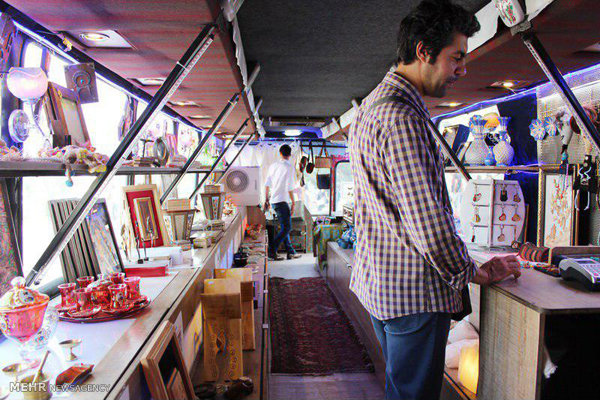
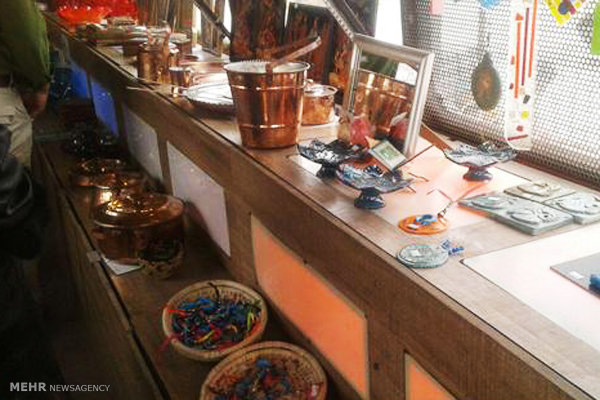
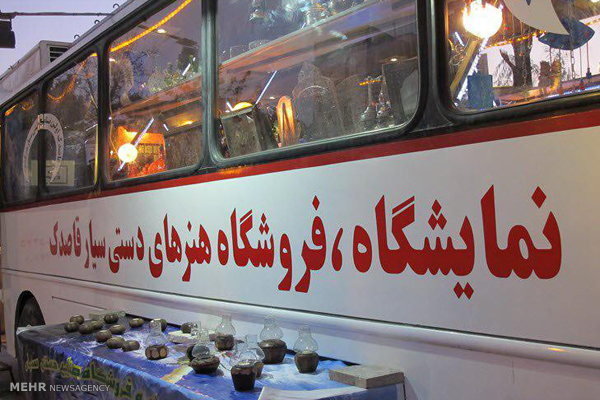
Hassan Nikzad, 56, came back to Iran after 35 years of living in the southern German city of Freiburg, in order to follow his interest in cultural heritage and handicrafts of his country. Nikzad, who was born in the central Iranian city of Arak, studied electronics, but now manages a restaurant and a bowling alley in Germany. Nikzad’s childhood interest in handicrafts led him to make a decision: setting up the handicrafts bus in Iran in 2012. He has decided to drive the bus to Europe in order to show Iranian handicrafts to other people. He attends fairs, universities and promenades to display handicrafts. There has been a warm welcome of these items in Iran. “I have gained a great deal of experience in displaying handicrafts in my bus, and this will be useful for my future trip to Europe,” he said.

“My restaurant in Germany is called Isfahan

Nikzad married a German woman and they have two kids. His restaurant is decorated with handicrafts from different parts of Iran. He explains, “A partnership was declared between Freiburg and Isfahan. I set up a restaurant called Isfahan, which has been visited by Isfahan’s mayor and Iranian athletes. The restaurant is so busy that people need to reserve several days in advance. Otherwise, it is booked out.”

Bus - Handicrafts

“I know where to sell my handicrafts”

Nikzad is an artist himself. When the artist parks his bus in a beautiful place, he sets up a desk near his bus and begins carving. “I have been interested in woodwork since my childhood,” he says. “Nowadays, I do woodcarving, engraving and burling as well. Wherever I park my bus, I make some items that people enjoy. My knowledge of handicrafts helps me know what kind of items people such as the Germans like. Wherever I go, I contact local artists and ask them to help me. I even buy their artworks to display in my Ghasedak.”

Bus - Handicrafts (5)

“I want to drive my bus to Europe”

Nikzad has registered his plan, and Iranian officials promised to pave the way for his trip abroad by bus, helping him to take Ghasedak all across Europe. The artist notes that there are many Iranian handicrafts which fascinate European people. He adds, “Of course, all Iranian handicrafts are attractive, especially enamels from Isfahan, inlays from Shiraz, pottery from Lalejin and Iranian carpets. They are interesting for other nations, especially for Europeans. Also, there are certain items which are not very important for us Iranians, but are worth more in Europe. Rock salt is ordinary in Iran, but is very attractive to others, because they are well aware of its medical importance.”

FIFA records Iran’s bid to host Futsal World Cup

A record of 13 Member Associations, from five continents, have stepped forward registering their interest in bringing the FIFA Futsal World Cup 2020 to their country in four years’ time.

The full list published by FIFA includes Costa Rica, Croatia, Czech Republic, Egypt, Georgia, Iran, Japan, Kazakhstan, Lithuania, Netherlands, New Zealand, the United Arab Emirates and USA.

Candidates can now expect to receive bid packs which include further information regarding the bidding process and the requirements to host the event, with the next step being them solidifying their commitment, with formal declarations of interest needed by 6 May.

The 2020 tournament will be the ninth edition of futsal’s premier competition, which has thus far been played on four of the six confederations, since beginning life at Netherlands 1989.

Iran never to allow Syria partition: IRGC chief

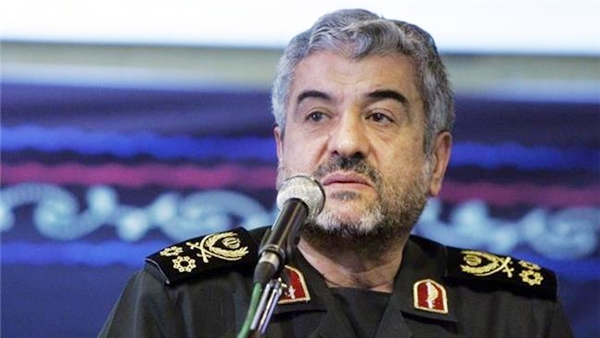
“We will continue to support the survival of the Syrian government [in its fight against terrorist groups] and its sovereignty and territorial integrity and will never allow any partitioning of any of Muslim territories,” Major General Mohammad Ali Jafari, the chief of the Islamic Revolution Guards Corps (IRGC), said on Tuesday in a meeting with IRGC commanders.

“We view disintegration as a British-American-Zionist strategy, therefore we will never allow any weakening of Muslim nations,” he added.

Opponents of the Syrian government have on several occasions floated the idea of the partition and federalization of Syria as the solution to the crisis in Syria.

Ram Ben-Barak, the director general of Israel’s Intelligence Ministry, called on February 14 for the partition of Syria along sectarian lines.

“I think that ultimately Syria should be turned into regions, under the control of whoever is there – the Alawites where they are, the Sunnis where they are,” Ben-Barak said.

Militancy began in Syria in March 2011, and has, according to the so-called Syrian Observatory for Human Rights, killed at least 270,000 people. Some reports, however, put the death toll at as high as 470,000.

The United Nations has appointed several special envoys for Syria over the course of the conflict in the country. Italian-Swedish diplomat Staffan de Mistura is the latest person to serve in the post.

Iran to ‘multiply’ missiles

General Jafari also said Iran will continue to develop more missiles as deterrence against enemy threats against the Islamic Republic.

“Our missiles that have become more precise and more destructive will be multiplied more than before,” he said.

“Before being ready for political and diplomatic options, we have become ready for [facing] the military option,” he added, noting that Iran would never “welcome” any war.

The IRGC successfully test-fired two ballistic missiles on March 9 as part of military drills to assess the IRGC’s capabilities. The missiles dubbed Qadr-H and Qadr-F were fired during large-scale drills, code-named Eqtedar-e-Velayat.

On March 8, Iran fired another ballistic missile called Qiam from silo-based launchers in different locations across the country.

The United States claims that Iran’s missile tests violate the UN Security Council Resolution 2231 that endorsed a nuclear agreement, known as the Joint Comprehensive Plan of Action (JCPOA), reached between Iran and the P5+1 group of countries – the five permanent members of the UN Security Council plus Germany – on July 14, 2015.

Iran, however, has repeatedly announced that the missile launches were not against the Security Council resolution.

Iran Offers to Mediate Between Armenia, Azerbaijan

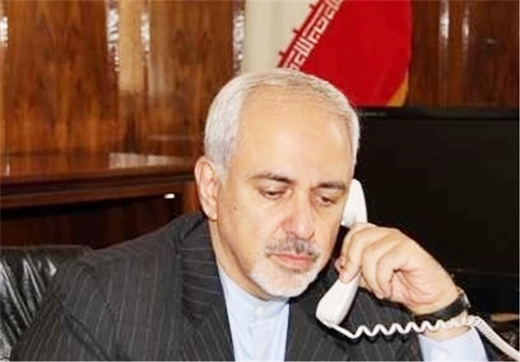
Mohammad Javad Zarif made the comments at a telephone conversation with his Armenian counterpart Eduard Nalbandian.

He said Iran is ready to play a role in the settlement of the crisis if the two warring sides want so.

Zarif once again called for the cessation of hostilities and for restoration of peace to the region.

The top Iranian diplomat is also going to meet his Azeri counterpart on Tuesday at a counter-terrorism meeting in Iran’s northern city of Ramsar.

Iran has repeatedly called on Baku and Yerevan in recent days to show restraint and start peaceful negotiations instead of military confrontation.

At least 30 soldiers have been killed in fighting between Armenian and Azerbaijani forces along the frontlines of the Nagorno-Karabakh region. Each side blames the other for the fighting.

Nagorno-Karabakh has been under the control of Armenian military and separatists since a war between Armenia and Azerbaijan ended in 1994. Years of negotiations have brought little progress in resolving the dispute.

Fighting on Saturday marked the worst clashes since 1994, said David Babayan, spokesman for the region’s separatist president.

Iran inks agreements with foreign pharmaceutical companies

Iran’s drug imports totaled nearly $1 billion over the last Iranian calendar year, which ended on March 20, 2016, he said.

There is no home-made version for the imported drugs, he said, adding sometimes the locally-produced drugs are unable to meet the market needs and that is why certain medicines are imported to Iran.

He further said that Iran has signed an agreement with an Austrian company to accomplish a semi-built drug factory.

The company used to produce drugs in India and export them to Afghanistan, Tajikistan, Georgia and Iran, he said, adding the agreement is being implemented and the companies’ drugs are made in Iran.

Riyahi further noted that a very large German serum-producer company has signed an agreement with Iran and would soon start making the product inside the country.

He continued that French multinational pharmaceutical company Sanofi plans to make drugs for specific diseases in Iran.

According to the Iranian official, Iran has inked an agreement with Danish Novo Nordisk drug-maker to make insulin and diabetes-related diseases medicine.

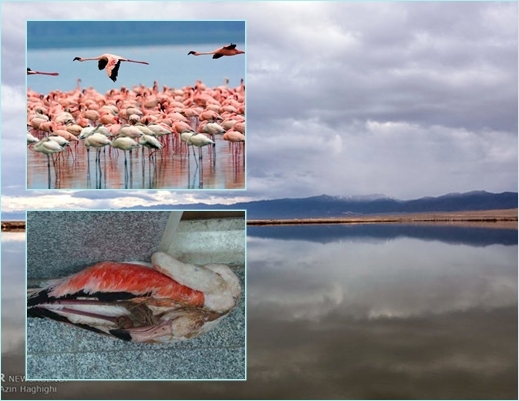
Return of the Flamingo to Lake Urmia after 28 Years

The Head of the West Azerbaijan Department of the Environment said, “Our department agents found a wounded flamingo while they were conducting a tour of the Solduz area of Lake Urmia National Park.”

Omid Yusefi said, “The flamingo was severely wounded in its leg by hunters.”

He continued, “The ring around the bird’s tarsus stated that the flamingo was born in 1988 in Lake Urmia National Park. The lake’s water-level was high that year, leading many flamingos to roost there.”

He added, “The flamingo is currently at a veterinary clinic, and will be kept there until it fully recovers.”

This region used to be a safe and regular breeding and nesting place for flamingos and other waterfowl in the years before Lake Urmia began facing its current water problems.

Recycling​ Park: The Most ​Unique Park in Tehran

In different parts of the park, for instance, benches and even flowerpots are made of used tires.

Innovative citizens have also used their creativity to build multi
​-​dimensional statues using iron and other metals. The statues are installed in various ​places to ​beautify the park.

​This means that citizens can see how a park can be decorated using​ leftover materials; such moves help them better understand the importance of managing their waste.