Sunday, December 21, 2025
Home Blog Page 2892

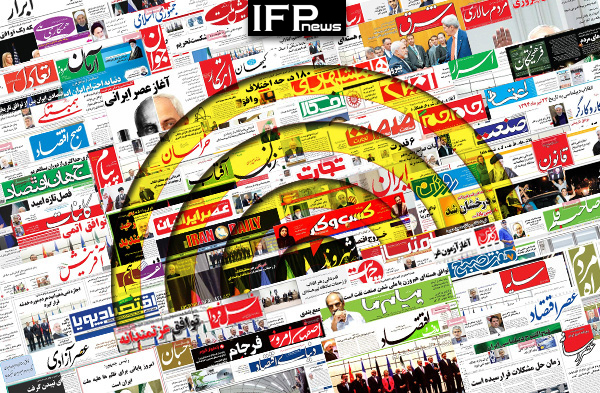
A Look at Iranian Newspaper Front Pages on March 16

Iranian Newspapers

Iranian Newspapers

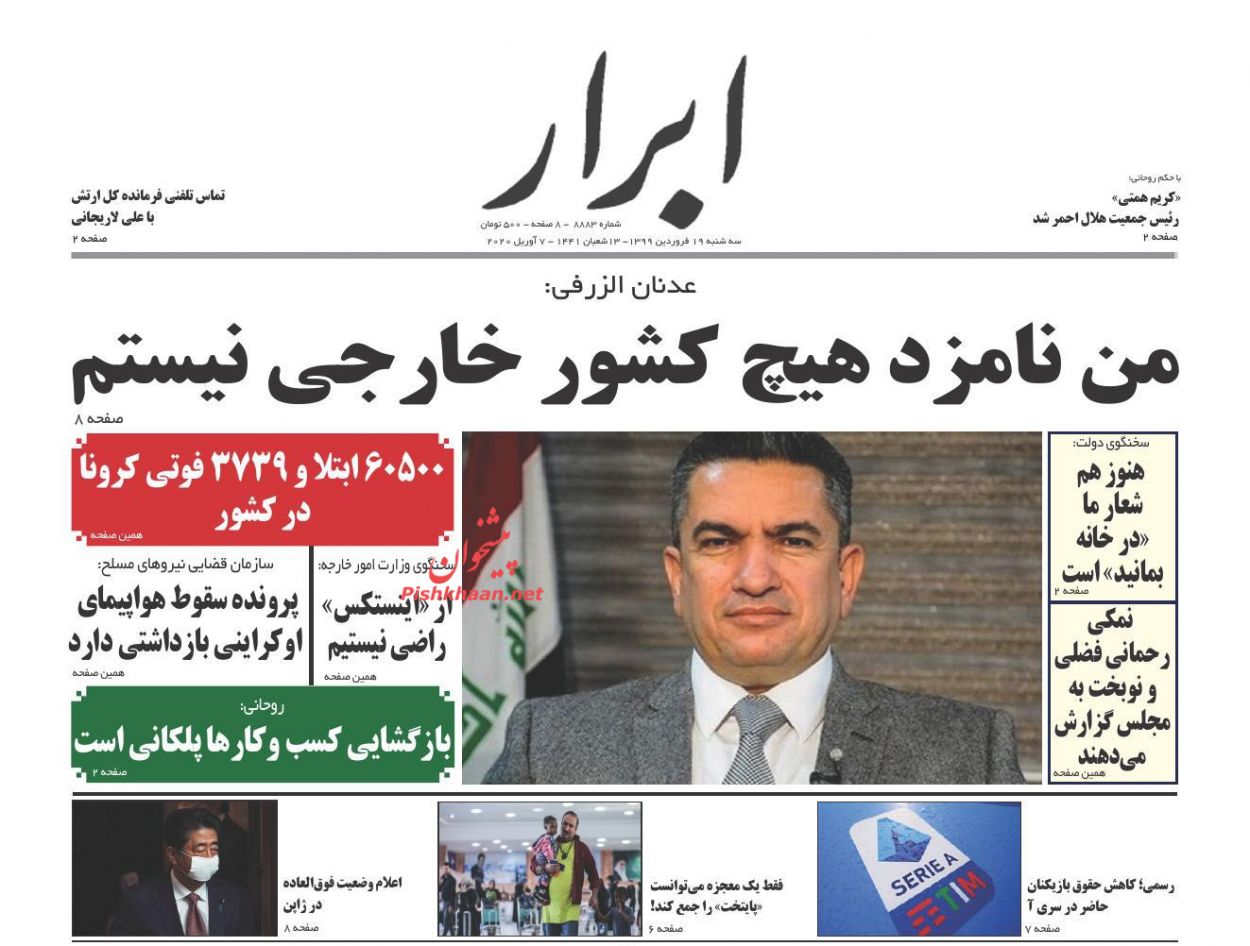
Abrar:

1- Rouhani: We Have No Quarantine; Neither Today, Nor in Nowruz Holidays

2- Khuzestan Quarantined

3- General: IRGC Has Come to Help Corona Battle with Full Force

A Look at Iranian Newspaper Front Pages on March 16


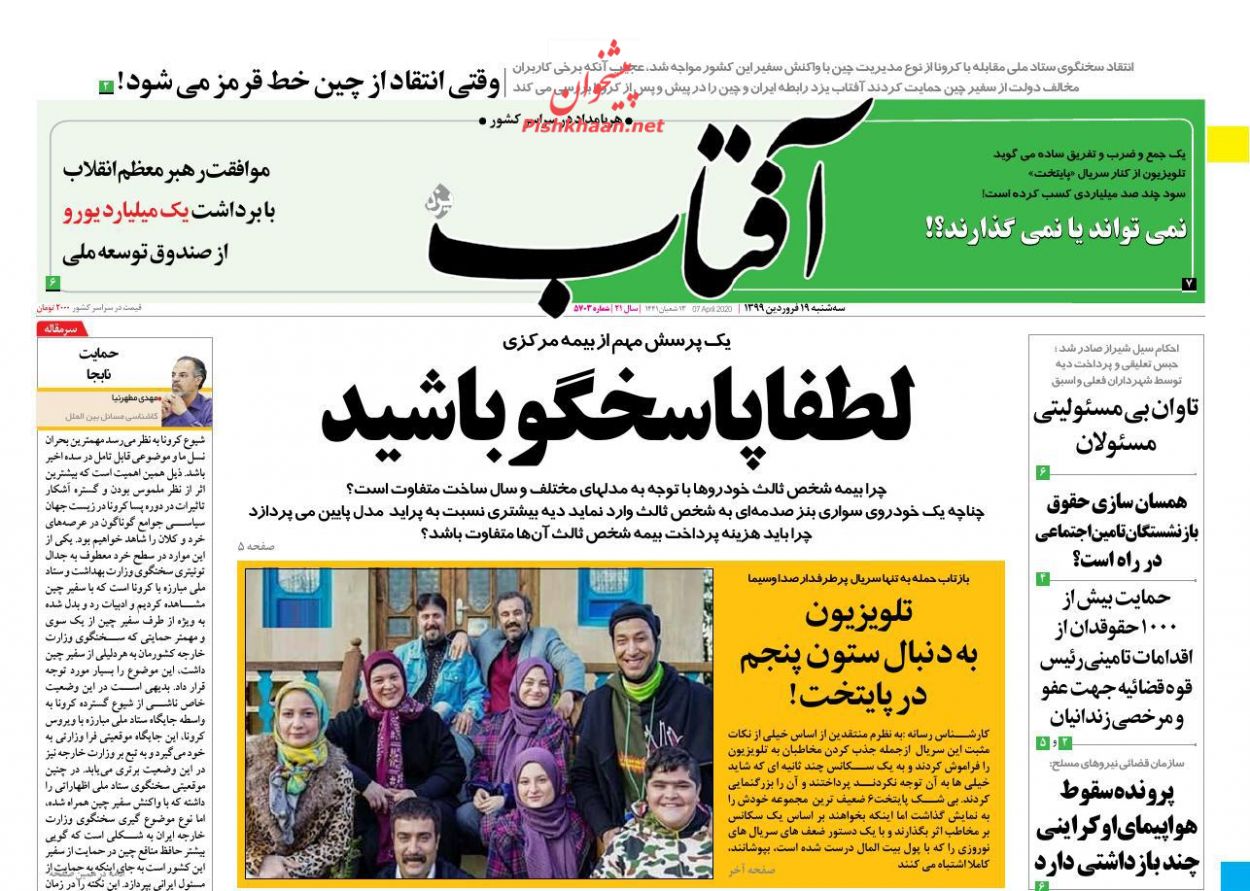
Aftab-e Yazd:

1- Experts Quarrel on State TV over COVID-19

* All People Will Be Infected

* 70% Will Be Infected

A Look at Iranian Newspaper Front Pages on March 16


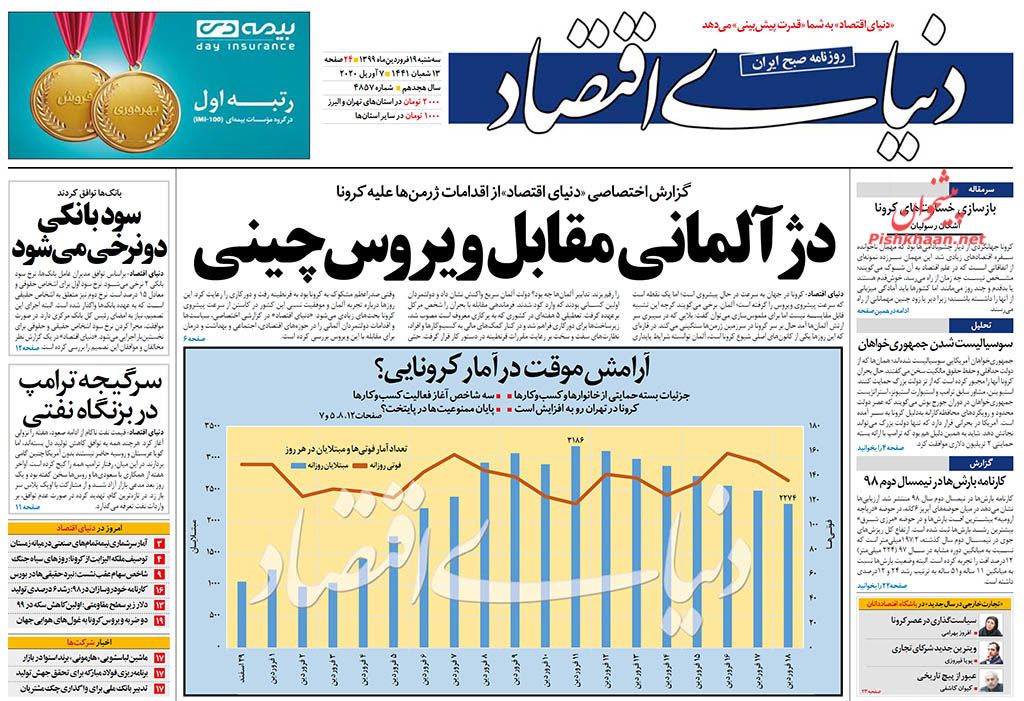
Donya-ye Eqtesad:

1- Impact of Oil Price Fall on Trump’s Chance of Re-Election

A Look at Iranian Newspaper Front Pages on March 16


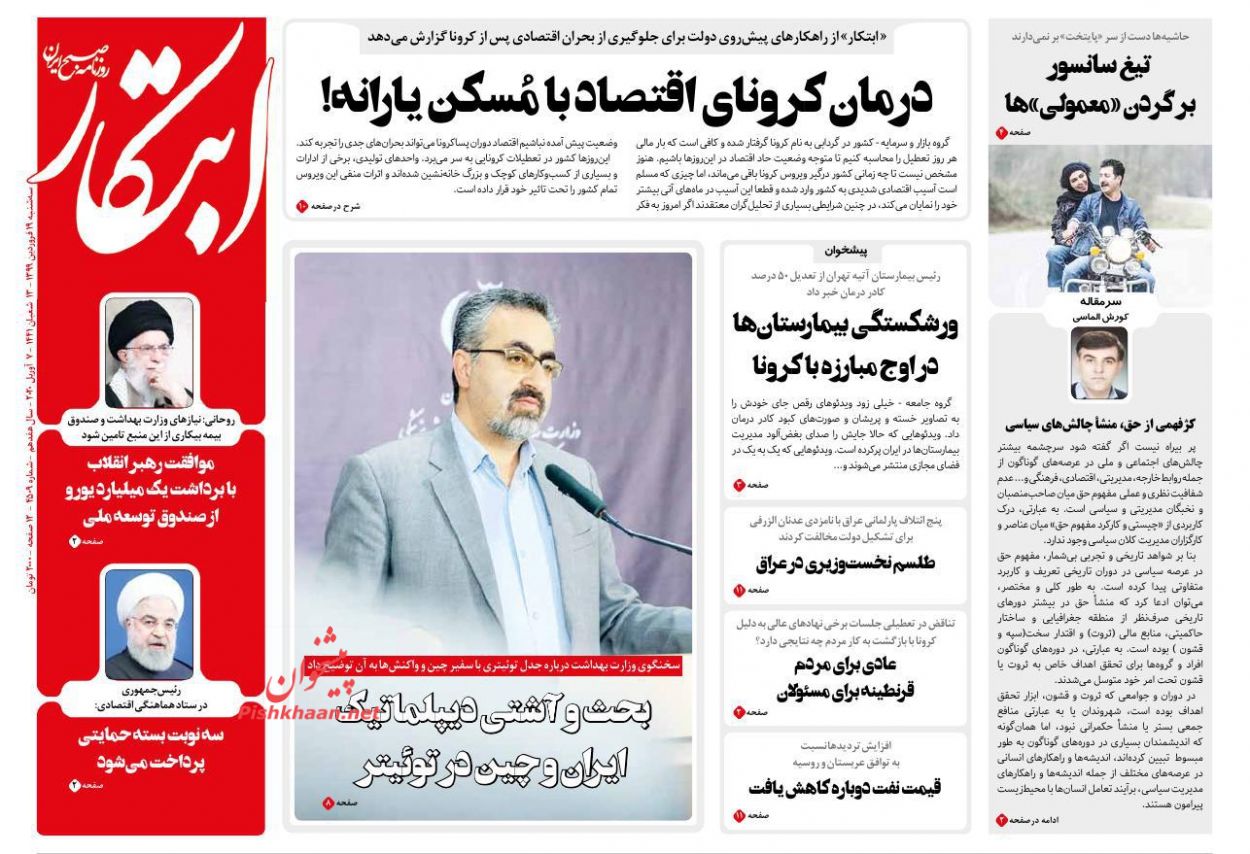
Ebtekar:

1- Sanctions Bypass Strait of Corona

2- Zarif’s Letter to Foreign Counterparts on Coronavirus Delivered to Envoys

A Look at Iranian Newspaper Front Pages on March 16


Etemad:

1- Tehran Mayor: We’re Unable to Quarantine Tehran

2- Netanyahu Taking Advantage of Pandemic for Personal Interests

A Look at Iranian Newspaper Front Pages on March 16


Ettela’at:

1- All Basic Needs Met; People Shouldn’t Worry: Rouhani

2- People Screened at Entry Points of Cities by Army Ground Force

A Look at Iranian Newspaper Front Pages on March 16


Hemayat:

1- Biological Defence to Defeat Coronavirus

2- 35 Percent of Corona Patients Discharged from Medical Centres

A Look at Iranian Newspaper Front Pages on March 16


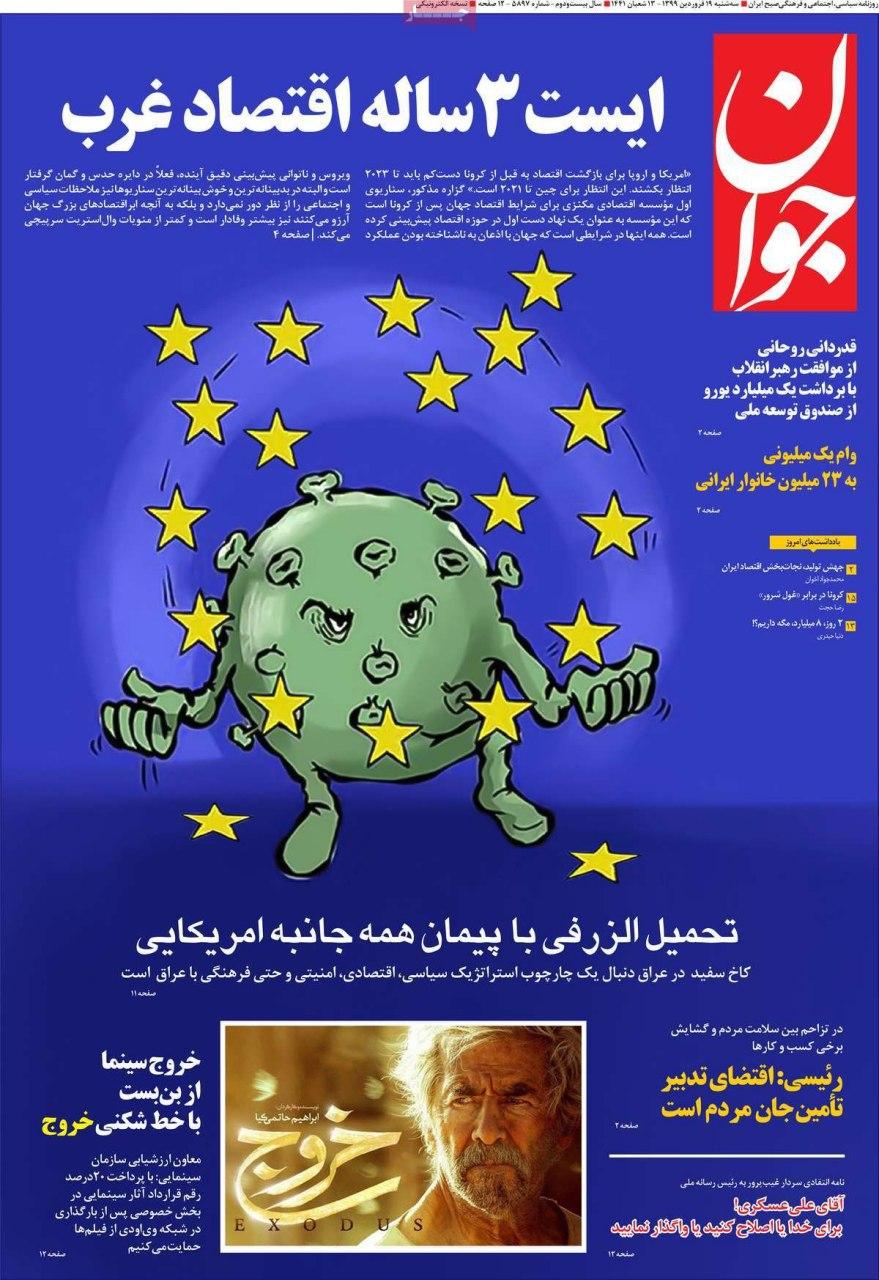
Javan:

1- Iraq’s Military Option against US Deployment

2- Iraqis’ Resistance Confused America

3- IRGC Battling Corona with Full Force

4- Dramatic Increase in Coronavirus Infections in Europe, US

A Look at Iranian Newspaper Front Pages on March 16


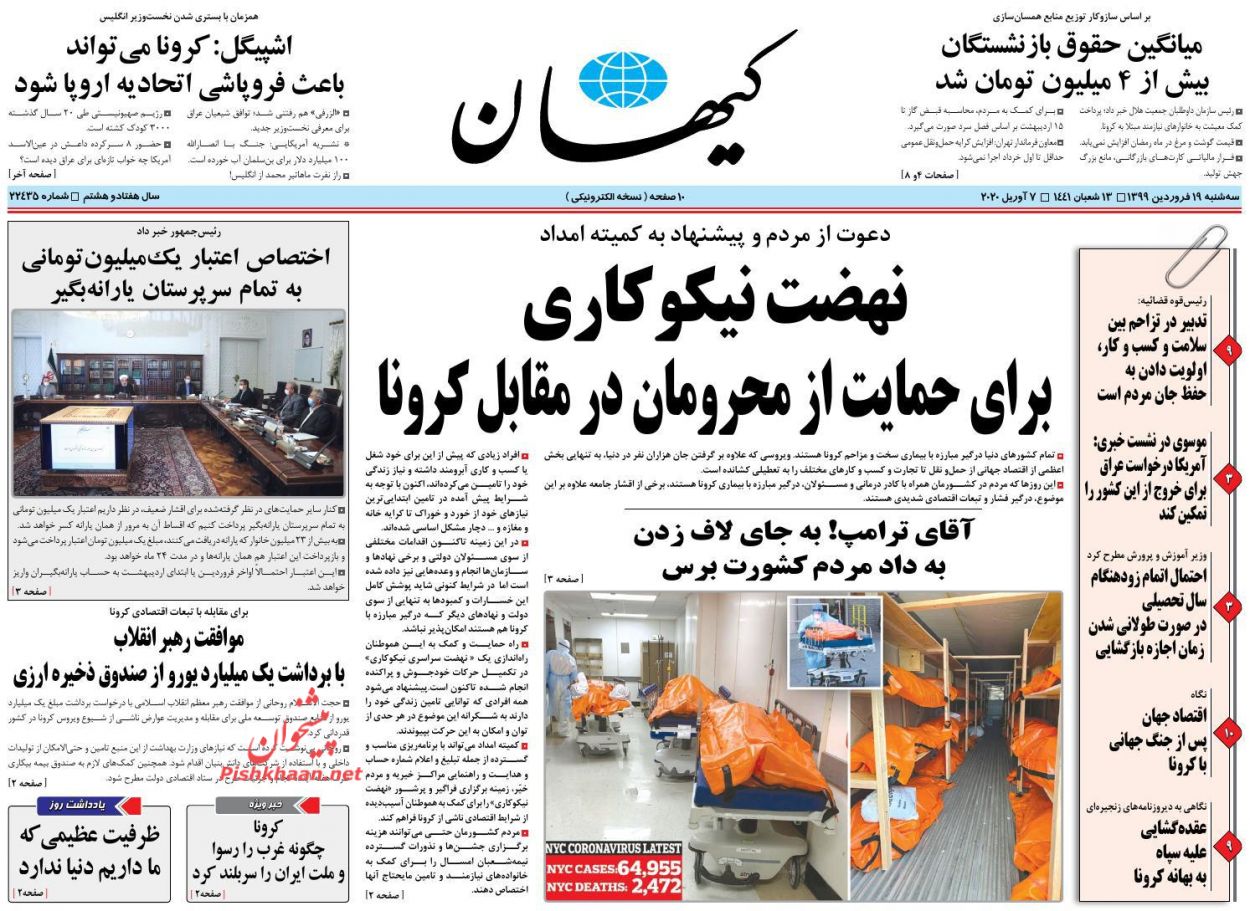
Kayhan:

1- Empty Shelves in West, and UK Ambassador’s Surprise at Abundance of Goods in Iran

2- Iraqis Resolved to Expel Americans

A Look at Iranian Newspaper Front Pages on March 16


Mardom Salari:

1- US Sanctions Impede People’s Access to Medical Needs: Top MP in Letter to US Congress

A Look at Iranian Newspaper Front Pages on March 16


Setareh Sobh:

1- Coronavirus Hunt in Iran and the World

2- We’re Not Yet as Resolved as China in Battle against COVID-19

A Look at Iranian Newspaper Front Pages on March 16


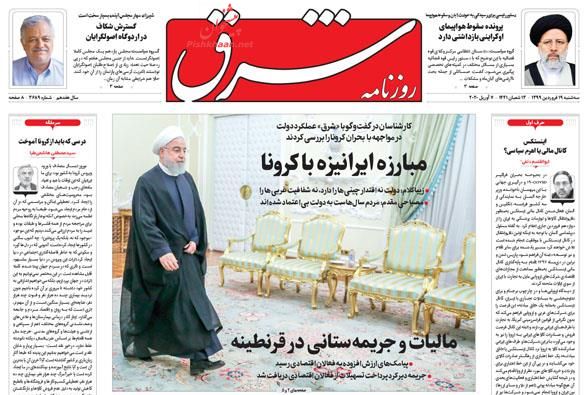
Shargh:

1- Iran Leader Praises Those Fighting Coronavirus

2- First VP Jahangiri’s Coronavirus Test Negative

3- Remote Control: How Rouhani Is Spending These Days

4- Health Ministry Spokesman: Over 100 Die of Coronavirus in Iran in 24 Hours

A Look at Iranian Newspaper Front Pages on March 16

IRGC Chief Says Stage Set for Tackling COVID-19 in Iran

IRGC Chief Says Stage Set for Tackling COVID-19 in Iran

In comments at the IRGC’s Biodefense Base on Monday, Major General Hossein Salami said the IRGC has assigned the tasks to handle the situation across Iran after the outbreak of coronavirus, noting, “We have now reached the conditions that the country has been reorganized to rein in the phenomenon (coronavirus).”

The commander said Iran has obtained the critical protocols for containing the contagious disease.

The highest number of hospital beds allocated to the coronavirus patients is available in the IRGC’s Baqiyatallah Hospital in Tehran, the general noted, saying the hospital has also one of the most advanced virology laboratories across Iran.

The military hospital has raised the number of its ICU beds from 30 to 70 after the outbreak of coronavirus, Salami noted, saying they will reach 100 in the near future.

The IRGC has also prepared 1,000 beds for the convalescents recovering from COVID-19, he noted.

The IRGC Ground Force and Navy have provided 37 stationary and mobile hospitals for the Coronavirus Battle National Headquarters, the general stated, adding that a total of 380 clinics run by the IRGC are offering services across Iran.

Coronavirus Kills 129 More Iranians: Health Ministry

Coronavirus Kills 129 More Iranians: Health Ministry

Health Ministry spokesman Kianoush Jahanpour on Monday confirmed 1,053 new cases of coronavirus infections, including 129 new deaths, during the past 24 hours.

The 14,991 cases include 3,774 in Tehran, 1,374 in Mazandaran, 1,301 in Isfahan, 1,023 in Qom, 858 in Gilan, 714 in Alborz, 712 in Markazi, 568 in Khorasan Razavi, 484 in Semnan, 447 in Qazvin, 409 in East Azarbaijan, 377 in Yazd, 301 in Golestan, 306 in Khuzestan, 295 in Fars, 289 in Lorestan, 224 in West Azarbaijan, 216 in Zanjan, 184 in Ardabil, 165 in Kurdistan, 136 in Kermanshah, 131 in Hamadan, 107 in South Khorasan, 106 in Hormozgan, 103 in Ilam, 97 in Kerman, 97 in North Khorasan, 71 in Sistan and Baluchestan, 52 in Chaharmahal and Bakhtiari, 38 in Bushehr, and 32 in Kohgiliyeh and Buyer-Ahmad.

Iranian Radiologist Helping European COVID-19 Patients for Free

Iranian Radiologist Helping European COVID-19 Patients for Free

Even though it is difficult for him to walk, Dr Hamidreza Edraki has not limited his services to the borders of the country. In his workplace, he looks at radiology images of COVID-19 patients from deprived areas of Iran to European countries without asking for money and he receives kind messages from European physicians.

Last year, he was selected as the nation’s premier radiologist, but he may also be chosen as one of the volunteer doctors in the current year due to his sense of responsibility and expertise shown in the analysis of corona patients’ lung radiology.

He analyzes radiology photographs of patients across Europe without any expectation because he wants to fight the global deadly virus.

According to Fars News Agency, he is currently a faculty member of Shahid Beheshti University of Medical Sciences in Tehran. When he arrived in Germany in 1996 and received his degree in CT scans and MRIs, his expertise was still very limited in the world. He has gone all this way without his legs. When we say he has no legs, it’s because Dr Edraki left his legs near Arvandrood at the time of Iran-Iraq war when he was 18. But as we see, this 57-year-old man is still full of motivation to serve the people. However, till the end of the interview, we were unaware of his disability. He tried not to say this until the story of the radiology images made us realise the story of this war veteran.

For the past few months, with no reports of coronavirus infections in Iran, he spontaneously studied X-ray and CT scans of corona patients in China. All the lung images were examined since the outbreak of the disease to the deterioration of the patient, and every moment, seeing the photographs and reading the analyses, he wished the virus be contained in China and never cross the borders. But that didn’t happen, and now Dr Edraki had to do the job and continue the path he had taken. Now, through its worldwide network of Pacs systems, he strives to help other physicians around the world and in remote areas of the country.

Corona Specifications

Dr Edraki runs a large charity radiology centre. He is very active. We meet him at his office. Talking to us, he analyses a radiology image. Without being disrupted, he explains about the Pacs system.

“Pacs electronic system helps radiologists to exchange radiology images of their patients from around the world and use each other’s findings to detect anomalies in radiology images. Every day, I try to share my findings with other doctors around the world. I even analyse their images and send them my opinion.”

He keeps silent for a few seconds as he puts images of a patient on a light screen. He writes his comment on a piece of paper and continues.

“These days are just like the battlefield days. Throughout my studies, I have found that the virus attacks the lungs in very specific conditions. What can be said to people is that the lungs of the coronavirus patients have lesions similar to the sand or tiny crystalline granules that grow from the bottom of the lungs until they reach the upper part. These spots quickly whiten the lungs and cause a small amount of water to accumulate in the lungs. The lung involvement with the coronavirus is similar to other lung diseases, but the way the lesions are placed in lungs is quite different from other diseases such as pneumonia, tuberculosis, etc.”

“It’s been two weeks since European doctors from Germany, England, France, Italy, etc. have been asking us how do lung lesions of the coronavirus look like? What are the differences with other lung problems? What are the first symptoms in a corona patient’s lung? How are the patients in critical conditions? And thousands of other questions that I’ll answer using sample images. Most of the time they send me pictures of their patients for diagnosis and analysis. I analyse almost over 25 images of European patients every day and send them my opinion. European doctors are very grateful and happy that they have not entered the test phase using Iranian doctors’ opinions.”

Q: As you have seen the lung images of Chinese, Iranian and European patients, is it true to say that the status of Iranian patients differs from other patients in other countries?

A: That’s not the case. All cases are the same. If there is a difference it is in an individual. It is because of each patient’s immune system. What I have seen in radiology images is that the behaviour of the virus in the lungs is almost the same. These statements have no scientific basis and are all rumours. It is better not to pay attention to them.

Q: Which countries receive the most help from Iranian radiologists?

A: “Mostly the German doctors send me images of their patients’ lungs because Germany is so advanced in medical sciences and the Pacs system is active in their country. Although Italy is more involved with the virus, it is less connected to the global Pacs network.

Q: You’ve seen a lot of radiology, CT scan and MRI Images all these years. What is the most fascinating radiology photo you’ve ever seen?

A: My own radiology image.

Q: Why?

A: I was 18 years old and volunteered for war in my hometown of Boroujerd, Lorestan. My parents were very attached to me. But I couldn’t go to the warfront. I had to prove that I am a grown-up man. In 1984, Khorramshahr had just been liberated, but Iraqi forces and our soldiers on both sides of the Arvandrood were constantly exchanging fire. In one of these attacks an enemy mortar hit my legs. I heard from my friends that the mortar shell had severely damaged both my legs so that the initial actions were taken at the Khorramshahr Field Hospital. There, the doctors at the field hospital cut my legs to keep me alive. When I opened my eyes, I was in the Ahwaz hospital and had no legs. For years I was looking for the doctor who cut my legs, but the more I searched, the less I could find.

Years later, I passed the university entrance test to study at Shahid Beheshti University of Medical Sciences. I even passed the radiology course. It was 1999 and 15 years had passed since my injury. A conference was held at Shahid Beheshti University in the presence of radiologists and orthopaedists. One of the orthopedic surgeons was sharing with other radiologists and orthopedists his 30-year experience. When he put the image on the light screen, I looked down at the image. It was written in Persian Hamidreza Edraki. I could not stand on my prosthetic feet. Seeing him in the hall, I went and asked, “Whose image was the one you showed?”. He said a youth in Khorramshahr Field Hospital. I said I am that young man! He did not move and was gazing at me. When he found out I am a radiologist, he was no longer able to stand on his feet. Dr Emami was so happy. We’ve been visiting each other ever since. He later shared another secret with me. He said “When I was performing the surgery, because of a lot of blood loss your heart stopped. We all lost hope. You were almost dead but suddenly you returned to this world.”

“If today I strive for the health of my patients wholeheartedly, it is just to be grateful to God who bestowed me another life,” said Dr Edraki.

Coronavirus Epidemic’s Peak in Iran Over: President

Coronavirus Epidemic’s Peak in Iran Over: President

Speaking at a Monday session of the Coronavirus Management National Headquarters, President Rouhani said the statistics and figures about the process of battle with COVID-19 in Iran are promising.

Praising the Iranian medical society for the unwavering efforts to contain the contagious disease, President Rouhani said statistics show that the coronavirus epidemic’s peak has passed in Iran.

The president, however, advised all people to keep staying at home and to observe all health protocols in case they need to get out of the house.

In the meeting, attended by all provincial governors via video conference, President Rouhani underlined that national mobilization, collective efforts and public cooperation have been shaped to defeat COVID-19.

He also noted that the Health Ministry and the Interior Ministry will begin to screen people with fever thermometers at the exit of the roads that will be announced, starting Tuesday.

The death toll form coronavirus in Iran rose to 724 on Sunday, while nearly 4,600 patients have recovered from the disease in the country so far.

Tamiflu Not Effective in Treating COVID-19: Iran

Tamiflu Not Effective in Treating COVID-19: Iran

“The matter was raised in the scientific committees and also discussed in the National Headquarters to Fight against Coronavirus. It was also removed from the COVID-19 treatment protocol,” reads his tweet.

Tamiflu is a prescription medicine used to treat the flu (influenza) in people two weeks of age and older who have had flu symptoms for no more than 2 days. Tamiflu can also reduce the chance of getting the flu in people 1 year and older. Tamiflu does not prevent bacterial infections that may happen with the flu.

Tamiflu belongs to a class of drugs called antivirals. It’s an influenza neuraminidase inhibitor, which prevents the flu virus from multiplying (making more virus) inside your body.

Tamiflu comes in two forms, both of which are taken by mouth. These forms include capsules and a liquid suspension.

Tamiflu is a drug to treat the flu, and it will not protect people from getting the new coronavirus. Researchers internationally have been working to develop antivirals, but at the present time, there is no specific treatment or vaccine.

After a cluster of severe pneumonia cases were reported on New Year’s Eve 2019 in China’s Wuhan, in the Hubei Province, virologists and other public health researchers identified the strain as a novel coronavirus, which was tied to a specific “wet market” in the city of Wuhan, where they sell fish and other live animals.

These markets have been known to transmit viruses before. For cultural reasons in the region, people want to see the specific animals they’re buying be slaughtered in front of them, so they know they’re receiving the products they paid for. As a result, particles of infectious viruses or bacteria can be aerosolised and, in rare instances, jump from animals to people. It’s how SARS, another coronavirus, started in 2003.

Governments around the world have stepped up restrictions on the movement of their citizens to reduce the spread of the COVID-19 endemic, which has killed around 6,000 people globally.

Tehran’s Representative in Assembly of Experts Dies of COVID-19

Tehran’s Representative in Assembly of Experts Dies of COVID-19

Born in 1941 in Googad, Golpayegan, he sat at the feet of Imam Khomeini and other grand Ayatollahs in the Islamic Seminary of Qom.

He had won a seat in the Assembly of Experts – a body tasked with choosing the Leader and overseeing his performance – in 2016 thanks to being on the list of candidates supported by reformist leader Seyyed Mohammad Khatami.

Up to now several Iranian senior officials have lost their lives because of the novel coronavirus.


Related Articles:

Police Has No Plan to Quarantine Cities over Coronavirus: Iran

Police Has No Plan to Quarantine Cities over Coronavirus: Iran

Brigadier General Hossein Ashtari said on Sunday that while the National Headquarters for Fight against Coronavirus and the police have no plans to quarantine cities, the enemies want to create a chaos.

Ashtari noted that the outbreak of the coronavirus has become a global issue that besides Iran has involved more than 150 countries.

He said the police forces are trying to contain and control the virus to reduce its casualties.

“Police believe the disease will be controlled by the sacrifice, empathy and national participation of all citizens,” underlined Ashtari.

He went on to say that in the first phase, with the preventive, educational and informative measures, it was attempted to make the citizens aware of the various threats of the virus and to follow the self-care instruction.

“Police have mobilised all its human resources and capacities in an effort to stop the spread of the disease.”

Appreciating the efforts of his colleagues who are at the forefront of dealing with the devastating coronavirus, he said, Police forces should do their missions well and take good care of their health by observing all health standards.

Iran announced on Sunday over 100 people have died in the past 24 hours, with the confirmed cases nearing 14,000. Tehran says its fight against coronavirus is being severely hampered by US cruel sanctions.

Iran has ordered the closing of religious shrines in the holy city of Qom, where the country’s coronavirus outbreak is thought to have begun.

It is also advising people to limit their movements and stay at homes and has announced all construction work in the capital, Tehran will stop.

President Briefed on Iran’s Scientific Programs to Contain COVID-19

President Briefed on Iran’s Scientific Programs to Contain COVID-19

Sorena Sattari said on Sunday that he has given the president a report on the measures and strategies of the Vice Presidency for Science and Technology in the fight against the coronavirus.

He said the president has emphasized the necessity of advancing the scientific and technological projects to contain the coronavirus, developing the medical equipment and supplies by the domestic knowledge-based companies, and also synthesizing new medicines for clinical tests.

Sattari said the Vice Presidency for Science and Technology and the Ministry of Health and Medical Education have established a joint scientific committee that has defined tens of joint research projects, the results of some of which will come out soon.

President Rouhani has stressed the need for efforts to discover the nature of the novel virus, its function and its effects on various people immediately, Sattari noted, calling for support for the knowledge-based companies and the researchers contributing to the battle with COVID-19.

He finally noted that the Vice Presidency for Science and Technology is formulating new medical protocols in coordination with the Health Ministry to control the coronavirus epidemic, saying a series of clinical studies have been also carried out under permission of the Health Ministry and in coordination with the ministry’s Medical Ethics Committee.

Billions of Locusts Swarm Southern Iran

Billions of Locusts Swarm Southern Iran

The spokesperson for the Plant Protection Organization of Iran has told Iran daily newspaper that the worst locust outbreak over the past week has occurred in the coastal province of Bushehr.

Mohammad Reza Mir said the number of locusts in a single swarm attacking the Bushehr Province exceeded 2 billion, noting that large areas of land were strewn with dead insects after using biological control mechanisms.

He also noted that the southern provinces have prepared airplanes for the aerial application of pesticides in the war against the locusts.

The biological control mechanisms have been exercised in more than 32,000 hectares of territories in the five endangered provinces, he noted.

Every year, several swarms of locusts, mainly coming from the Arabian peninsula and Africa, penetrate into Iran’s southern farmlands, threatening crops and food security in large areas of the coastal provinces.

While swarming, which is also called the “gregarious” phase and could last until April 8, female locusts lay egg pods of about 80 eggs that usually hatch within two weeks. Factoring in hatching and survival rates, each pod leads to about 16 to 20 adult locusts, which mature in two to four months and start the cycle again, according to Smithsonian magazine.