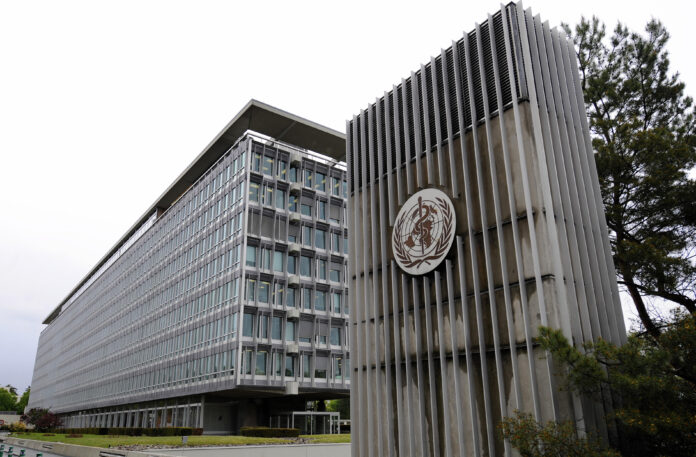
Namaki said on Thursday that during an online meeting with the international body, they approved Iran’s acceptable moves in the fight against COVID-19.
He said one of these moves was the National Mobilisation Plan in which 90 percent of the targeted society have been screened.
He said some questions have been raised as to why the corona infection rate has increased despite our acceptable measures. The answer is because the country is now able to discover more cases.
Namaki stressed that people must know “we are in the stage of disease management and have not yet reached the stage of disease control.”
He further raised hope that by April 8, which is the end of the first phase of social distancing plan, people have more cooperation because this will have an impact on future moves.
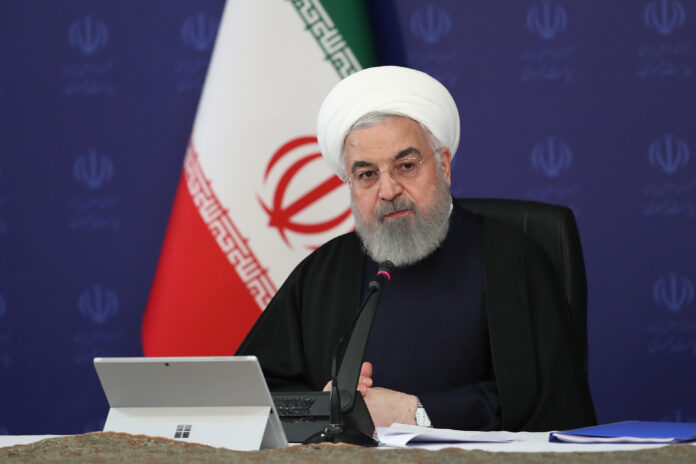
President Rouhani stressed that the Islamic Republic will have no problem supplying foreign currency by the end of the year, and the government has planned to be able to supply goods on time.
Addressing the economic meeting of the cabinet on Thursday, President Rouhani said four million tonnes of goods are in customs.
“We can be sure that in the coming days this four million tonnes of goods will be imported into the country. This is a great move for the country’s market and resources,” he added.
He further mentioned that the government must strive to meet the needs of those who must keep working so that they can both do business and adhere to health principles.
“At today’s meeting, we made good decisions, and God willing, the final decisions will be announced at the National Coronavirus Fight Headquarters meeting on Sunday.”
Elsewhere in his remarks, Rouhani thanked all those who worked in the production centres during the holidays, especially those busy at production lines of goods required by the health ministry.
“Nearly most of the requirements are met internally. Almost three-quarters of our needs are met inside the country. Items such as ventilators, masks and disinfectants are all manufactured domestically. We have to thank all these producers and other producers who provide the people with the necessary goods.”
“I also thank the banks of the country that were active during this period. There is a heavy burden on the banks. For the future, we will set new assignments for the central bank and banks in the business sector.”
Rouhani also appreciated the efforts of police and the Red Crescent Society.
In the end, he added that the corona issue will not be over within days saying it may stay for months and even by the end of the year. The health guidelines and protocols issued by the health ministry must be observed constantly.
He also expressed hope that the nation would pass this stage through further cooperation.
In a post on his Instagram account, Sattari said the three independent groups are conducting research to produce a vaccine for COVID-19.
Hundreds of clinical tests are being carried out in Iran every day, he added, noting that the country has now reached a point that has been able to control the coronavirus epidemic.
Highlighting the efforts that the local knowledge-based companies, academic centers, researchers and start-ups have been making day and night to supply the necessary items for the fight against the contagious disease, Sattari said Iran is now manufacturing the industrial machinery for producing masks, medical ventilators, ICU equipment, computed tomography (CT) scanners, coronavirus diagnostic test kits, and disinfectants.
“Now we have to get used to this new uninvited guest. This virus has become part of the lives of people all over the world and will remain with the people of the world forever,” Sattari noted, saying even after development of a vaccine for the novel coronavirus, the lifestyle and habits of people will change under the shadow of the disease.
The Iranian vice president explained that the new pandemic would result in the creation of new businesses and in the extinction of a series of others.
“There are ample opportunities for the youth who have new ideas for the improvement of quality of lives of people in the world under the coronavirus situation,” Sattari noted.
In remarks on Sunday, Iranian President Hassan Rouhani called for all-out efforts to develop a vaccine and medication for the novel coronavirus.
He’s the highest-ranking Iranian official to contract the virus so far.
Many Iranian officials and political figures have been already infected with or died of the novel coronavirus.
COVID-19 has taken the lives of newly-elected MP Fatemeh Rahbar, ex-ambassador to Syria Hossein Sheikholeslam, member of the Expediency Discernment Council Seyyed Mohammad Mirmohammadi, newly-elected lawmaker Mohammad Ali Ramezani, former lawmaker Mohammad Reza Rahchamani, former ambassador to Vatican City Seyyed Hadi Khosroshahi, advisor to the Judiciary chief Ahmad Tuiserkani, and Mojtaba Fazeli, the chief of staff of top cleric Ayatollah Shobeiri Zanjani.
Mohammad Asaie, Head of Documentation Committee to Fight Corona, said this channel will not meet the needs of the country to deal with coronavirus, stressing that sanctions should be lifted sooner with the help of international organisations.
Speaking at a video press conference on Thursday, Asaie also stated since the beginning of spread of the disease in the country, safety measures have been taken in the air and land border areas.
A large number of Pakistani and Afghan pilgrims from the eastern borders wanted to enter the country, but the Islamic Republic quarantined both sides of the border and started screening the passengers, he said.
“Both Pakistanis and Afghans visiting Iran were screened at the borders. Suspicious and positive cases were quarantined and others returned to their home country. When these people entered Afghanistan and Pakistan, they were also screened for 14 days.”
Asaie also added that Iran took this opportunity to collaborate with other countries and benefit from their experiences. He said articles and research papers on this process were gathered and given to faculty members at universities.
He said that protecting human resources and promoting them scientifically has been one of the most important issues for the health ministry, as the level of healthcare protection varies in the hospitals of each country.
“There are various mortality rates in each country, and no accurate death toll has been reported in any country. We didn’t have the proper prevention equipment in the first few weeks, but now proper shifting has helped a lot in protecting the health of the medical staff.”
Regarding the Social Distancing Plan he said it has been implemented in most countries. “This may have been implemented more vigorously in a country and with delay in another country. This is part of the WHO recommendation, such guidelines may vary at different times. We organise services based on the course of the disease and the symptoms the virus shows.”
Regarding the European countries health system, the rate of infection is very high and European countries may have been shocked.
“I’m not saying our health care system is better than European countries, but we can’t compare it with Italy. It must be noted that Iran’s primary health care system is much higher than some other countries.”
The adviser to the health minister said countries such as Singapore, South Korea and Japan have made good use of the primary health care system. In France and England, the primary health care system may be different. In the UK, people are also advised to stay home.
“In areas where there is no consistent coordination between the health sector and the referral system, we will certainly face challenges.”
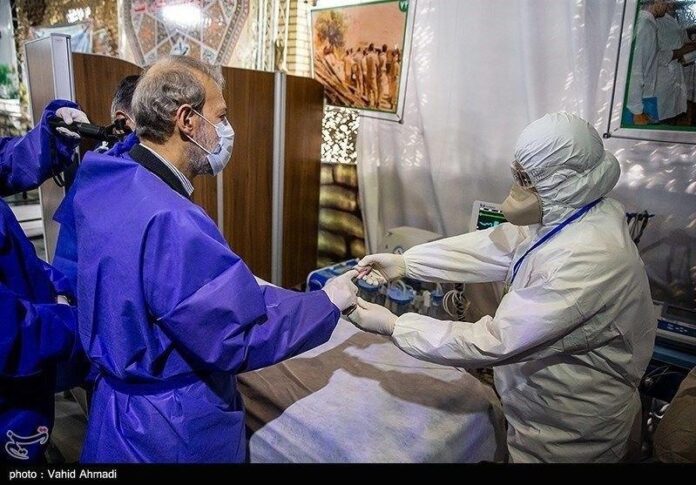
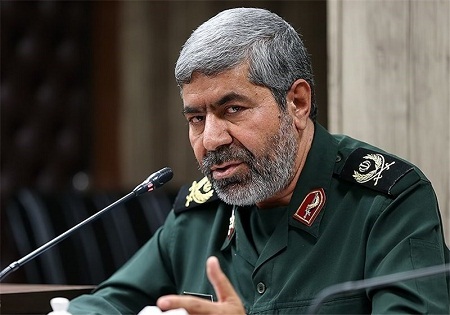
Brigadier General Ramezan Sharif said the IRGC and Basij research departments have gained new achievements and developed capabilities to diagnose, care and treat the corona disease.
He added the number of inpatient beds and ICU units have been increased at the IRGC hospitals throughout the country, particularly at Baqiyatallah Hospital in Tehran.
Ramezan Sharif went on to say that the production and distribution of disinfectants and hygiene items such as masks and gloves has been underway in different neighbourhoods and Basij continues to run new workshops to produce more of these items.
Sharif also stressed the IRGC’s field and mobile hospitals are ready to serve the patients, saying the ground forces have run five mobile hospitals that have been dispatched to Babol, Gorgan, Kashan and Qom so far.
The IRGC spokesman pointed out that the ground forces hospitals have about 1,700 inpatient beds, two-thirds of which are allocated to corona patients, and so far 471 patients have been admitted to them and 229 have been discharged.
He said Tehran’s Shahid Sadouqi Hospital is the largest field hospital in West Asia, which has 500 inpatient beds and 30 intensive care beds, that are ready to admit COVID-19 patients.
He stressed that Baqiyatallah Hospital in Tehran has admitted about 14,000 patients since the outbreak of the coronavirus, of which 2,560 have been hospitalised as corona patients and more than 2,000 have been discharged.
Elsewhere in his remarks, he announced an N95 mask production line has been launched in recent days by the efforts of Baqiyatallah Hospital specialists noting that the factory has a capacity of producing between 3 and 4 thousand masks every day.
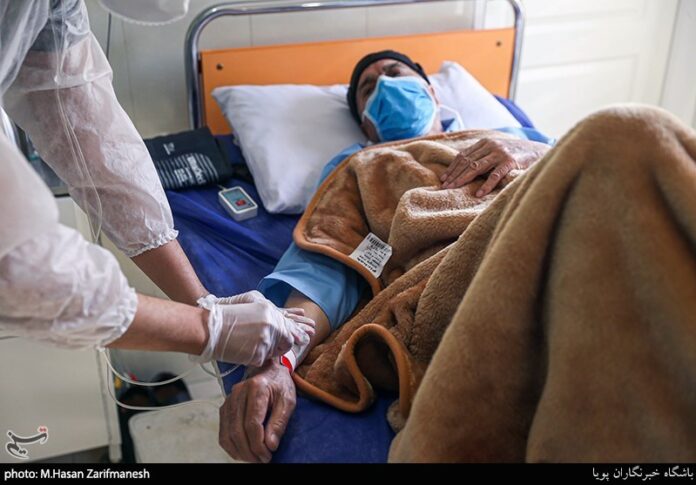
Health Ministry Spokesman Kianoush Jahanpour said on Thursday that the total number of infections has been increased to 50,468 and the death toll to 3,160.
Jahanpour further noted that 16,711 patients have recovered and been discharged from the hospital.
According to Jahanpour, 3,956 patients are in severe conditions.
The Iranian official also noted that up to now over 69 million Iranians have been screened for COVID-19 as part of the national mobilisation plan.
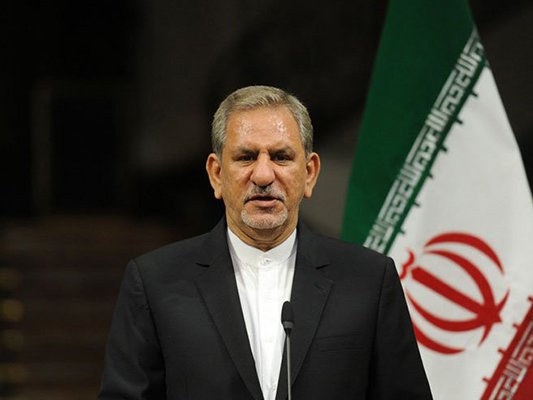
Es’haq Jahangiri said every effort should be made to help citizens who cannot earn a living and make ends meet.
“I’m asking people who know needy individuals [to introduce them],” he said.
“… Over the past few days, a video clip was posted on social media showing an old man saying he couldn’t afford to buy cheese for his children,” said Jahangiri.
He quoted the old man as saying that “‘It’s been two days that my kids have been asking me to buy cheese for them, but I can’t. I’m a street vendor working at the underground station. Police keep telling me to get my stuff and go home. If I go home [without having earned money], what am I supposed to eat?”
Jahangiri said it would be heart-wrenching to see people going hungry.
“People’s hearts are touched when they see someone needs food, but can’t get it,” he said.
The vice president further noted that the government has allocated finances to help the needy.
“We have earmarked funds for some three million people who didn’t have any jobs or who had very small earnings, so that they would receive between two million and six million rials per month, so their lives won’t be harmed. If such people are introduced, the Welfare Ministry will definitely cover them,” he said.
He further asked all fellow countrymen to help the destitute and those who have been affected by the coronavirus outbreak in the country.
“We also ask benevolent people to rush to the help of such individuals if they run into them, those who have not been spotted by the government, so that they will not be harmed; institutions such as the Imam Khomeini Relief Foundation and the Rehabilitation Organization should pay serious attention to people who are not receiving the government’s financial support, but who are in need,” he said.
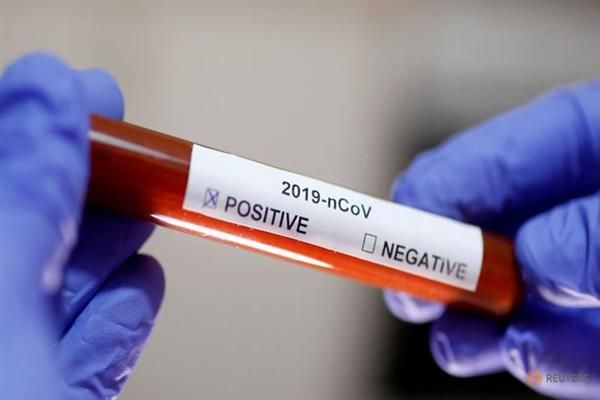
Ali Rabiei said in the field of kit manufacturing, the country is now able to produce almost 20,000 kits while these kits were not available in the early days of the outbreak.
“At the beginning, some kits were donated by China and the World Health Organisation and we were heavily relied on imports, but today our kits have been developed to such an extent that we can greatly expand the number of our tests,” noted Rabiei.
Now the private sector is also working on these kits and people are taking home diagnostic kits, underlined Rabiei.
Speaking to the state TV on Wednesday, Rabiei also added the industrial production of masks has also quadrupled in the country.
He said we have to increase our production in this area, but now this number is enough for the treatment sector. As for disinfectants, it was reported that stores have begun to supply more.
Regarding the decrease in the number of the coronavirus infections, he stated the number of victims has declined gradually, reflecting the impact of quarantine on patient care.
“At one of our most important hospitals in Tehran, referrals have declined by a quarter, and in another by one fifth which is good news. Of course, this trend is different in our provinces, and in some of them, although not upward, there is a steady trend.”
Raising hope about passing the peak of the outbreak in the country Rabiei said “I have no medical expertise, but I hope we have passed the disease peak; at least the evidence shows that we have passed the peak.”
On the subject of the number of labs Rabiei said there are 66 state-owned and 33 private laboratories for corona testing in the country.
“Among those, who have been infected and killed by coronavirus, 70% were almost 70 years old and had underlying disease. Of the children, who were said to have been infected by the coronavirus I must say there were five and they had underlying problems, so people should not be worried.”
The spokesman for the government said over 60 million people have participated in the screening plan so far, adding that more than 100,000 people have been advised to stay home and that their conditions is being followed up. Also, 18,000 people were introduced to hospitals in this plan and 5,600 needed to be hospitalised.
Emphasising that there is no evidence of the exact timing of the end of the outbreak, he said, “However, we can say its control and containment is going on.”
“Considering the country’s health care, we would say in the future, if the health recommendations are observed, the mortality rate will be very low,” reiterated Rabiei.
He continued that the government believes investment in the production of kits, medicines and ICU beds must be promoted, and the government will import these stuff whenever needed, but thank God no one is left behind the hospital door.
It was also agreed that foreigners, who are living in Iran and cannot afford the costs, should be treated at the expense of the government if they become ill.
As long as the disease persists, people should use public transport according to the protocols and in fact pursue a new lifestyle, he emphasised.
About the restrictions imposed on Nature’s Day, Rabiei said “96% of foreign flights and 70% of domestic flights have been cancelled in the Social Distancing Plan for Nature’s Day. Passenger shipments were down by 97 percent, and we witnessed 80 percent of decrease in transportation.”
He further added the existence of a culture of caring for the elderly in the country, on the one hand, and the European population being older than Iran on the other hand, has led to a lower corona mortality rate in the country.
“There are still 4,000 beds in the armed forces facilities and 13,000 in the health ministry hospital beds, and about 100,000 beds that the armed forces have prepared are still vacant, which is a very big achievement.”
After the first wave of the outbreak, there existed a problem in the world regarding the supply of ventilators. But the Islamic Republic produces 38 ventilators a day, and the contract to produce 2,000 more is signed with private companies and knowledge-based ones. However, in some countries they attach eight beds to one ventilator, he pointed out.
“Dear Americans: If we don’t fight the Coronavirus globally it will reappear globally, again and again and again,” Hessamoddin Ashena said Wednesday.
“Trump’s economic sanctions equal further spread of the virus in Iran which equals further spread of the virus in the US! Help us help you,” tweeted Ashena, the head of the Strategic Research Centre of the Presidential Office.
So far, different countries have called on Washington to lift unfair sanctions against the Iranian nation under the current circumstances when the coronavirus has spread across the world.
Nevertheless, the White House has not responded to those calls yet, and, ironically enough, added several other companies to the list of sanctions.
Stephane Dujarric, the spokesman for the UN Secretary General Antonio Guterres, said Friday that sanctions imposed on countries should be lifted for the fight against the coronavirus.
Earlier, Guterres along with the World Health Organization and High Commissioner for Human Rights together with Russia, China, Pakistan, Britain, Iraq, Venezuela, Nicaragua, North Korea and Cuba have made extensive diplomatic efforts to get US sanctions lifted at a time when the coronavirus pandemic has gripped the world.
In a letter to the UN chief, a number of countries have described the current times an opportunity to practice multilateralism and counter the United States’ unilateral moves. They have reiterated that Washington’s economic terrorism against Iran is in contravention of the UN Charter as well as numerous decisions of the UN General Assembly.