Thursday, December 25, 2025
Home Blog Page 2835

A Look at Iranian Newspaper Front Pages on April 30

Iran Newspaper Headlines

Abrar Newspaper:

1- UN Security Council Prepares Draft Resolution for 90-Day Global Ceasefire across the World

2- US Takes Draft Resolution to UNSC for Extending Iran Arms Embargo: AP

3- Trump: Corona Must Have Been Controlled in China

4- Iran Borders, Border Markets Must Get Active Again

5- Suicide Attack in Kabul Kills 3, Wounds 15

A Look at Iranian Newspaper Front Pages on April 30


Aftab-e Yazd Newspaper:

1- US’ New Game: Washington Takes Draft Resolution to UNSC to Extend Iran Arms Bans

2- After Kim, N Korea Will Undergo Structural Changes, Not Behavioural Ones

A Look at Iranian Newspaper Front Pages on April 30


Arman-e Melli Newspaper:

1- Persian Gulf Islands to Become Residential Upon Iran Leader’s Order

2- Plasma Therapy Can Treat COVID-19: 150 Patients Treated

A Look at Iranian Newspaper Front Pages on April 30


Ebtekar Newspaper:

1- Victory over Corona Will Be Nation’s Victory, Not Government’s: Rouhani

2- Return of Drive-in Cinemas to Iran

A Look at Iranian Newspaper Front Pages on April 30


Ettela’at Newspaper:

1- Iran Leader Donates Some $30,000 to Release of Needy Prisoners

2- Terrorist Blast in Syria’s Afrin Kills 46

3- Rouhani: People’s Active Participation in Stock Exchange Market Shows Hope for Future

4- 80% Decrease in People’s Visits to Hospitals for Coronavirus

A Look at Iranian Newspaper Front Pages on April 30


Jomhouri Eslami Newspaper:

1- Rouhani: Not Clear When COVID-19 Crisis Will Be Over in World

2- Coronavirus Toll in US More Than Vietnam War’s

A Look at Iranian Newspaper Front Pages on April 30


Kayhan Newspaper:

1- World’s Biggest Project for Plasma Therapy of COVID-19 Patients Implemented in Iran

2- Rouhani: People’s Health, Supply of Their Demands Is Our Priority

* Everyone Must Keep Taking Seriously ‘Stay at Home’ Motto

A Look at Iranian Newspaper Front Pages on April 30


Sazandegi Newspaper:

1- Corona Epicentre: Has Novel Coronavirus Escaped from This Lab in Wuhan?

A Look at Iranian Newspaper Front Pages on April 30


Shargh Newspaper:

1- Rouhani: Here’s ‘Persian’ Gulf, Not ‘New York’ Gulf

A Look at Iranian Newspaper Front Pages on April 30

Over 75,000 Patients Recover from COVID-19 in Iran

Over 75,000 Patients Recover from COVID-19 in Iran

Speaking in his daily briefing on Thursday, Health Ministry Spokesman Kianoush Jahanpour confirmed 983 new cases of COVID-19 infection.

That brings to 94,640 the total number of cases confirmed so far across the country, he said.

According to the spokesman, 71 patients have died of the virus in the past 24 hours, increasing the death toll to 6,028.

2,976 patients are also in severe conditions of the disease, he noted.

So far, 463,295 COVID-19 tests have been taken across the Islamic Republic, Jahanpour added.

Knowledge-Based Firms Instrumental in Fighting COVID-19: Iran

Knowledge-Based Firms Instrumental in Fighting COVID-19: Iran

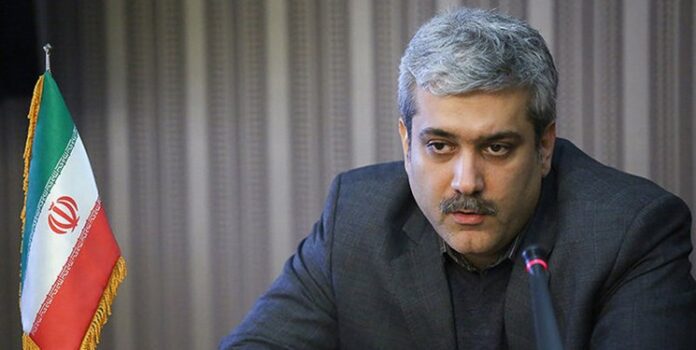
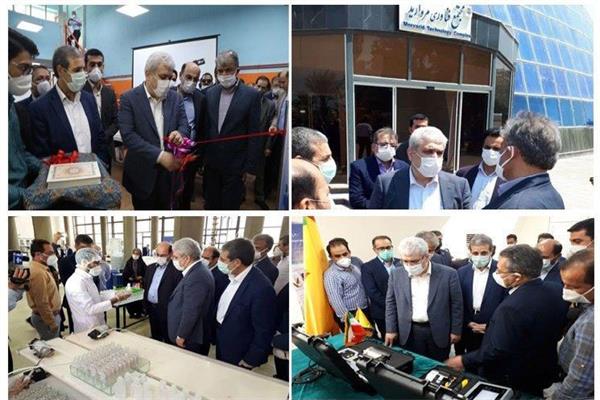
Vice President for Science and Technology Sorena Sattari has, in an interview with Fars New Agency (FNA), weighed in on the achievements of local knowledge-based companies in fighting the coronavirus outbreak. The highlights of the interview follow:

Q: Knowledge-based companies were trying to produce vaccines for coronavirus. Where have they got?
A: Knowledge-based firms have, so far, signed contracts for the production of 6 types of vaccines. By the end of this year, 5 human vaccines will be added to the country’s drug production cycle. This is the first time that Iran’s private sector has stepped into the domain of vaccine production.

Q: Knowledge-based companies also shone well in the field of diagnosis kits.
A: We have several kits in the domain of coronavirus diagnosis. The kits have been domestically developed and are approved. A letter has been sent to the health minister and we have received the permit to export kits. It’s been weeks that serology kits have been mass-produced and are being used by different centres. We produce enough kits to meet the health ministry’s demand.

Now, some one million coronavirus testing kits are produced every day. Reaching such a high figure comes on the back of efforts by knowledge-based companies. These tests are conducted based on blood samples.

We don’t have any special problems in the production of masks and disinfectants, either.
Among other measures adopted is developments in the domain of artificial intelligence. The Sharif University of Technology has developed a method whereby it can analyze CT scan images to tell, with 97 to 99 percent accuracy, if a person has contracted the coronavirus.

Q: We have ventilators made in Iran. How is their quality compared to that of ventilators made in foreign countries?
A: There are two knowledge-based companies in Iran which make this apparatus and have even exported ventilators to Britain and Sweden, and also meet the country’s demand for the product.

Q: One of the requirements to fight the coronavirus is masks. What have we done in this regard?
A: Another activity which has been done is the production of N95 masks. This mask is very similar to an ordinary one, but its filtering system is based on natotechnology. This mask absorbs more than 95 percent of contaminants which are 10 micron in size.

Today, 56 knowledge-based companies produce masks. Moreover, we manufacture mask-producing machines and even export them.

Q: What have we done in the domain of medicine?
A: Only one week into the coronavirus outbreak, Iranian companies began producing drugs similar to the ones produced abroad. Now, the length of time that coronavirus patients need to recover has decreased by 5 days using Iranian-made drugs.

Knowledge-based companies have done very well in fighting the coronavirus. These companies have been very active in studying the nature and identifying the genetic basis of the virus, and have achieved good results, too.

Since the beginning of the COVID-19 outbreak in the country, a scientific committee was set up at the National Coronavirus Headquarters. It should also be mentioned that individuals themselves contributed heavily to the activities of knowledge-based companies.

Iran Says Many Hospital Beds Free as COVID-19 Patients Recover

Iran Says Many Hospital Beds Free as COVID-19 Patients Recover

President Hassan Rouhani on Thursday expressed content with the declining number of COVID-19 infections in the country.

“I was seeing the figures last night and I got very happy because they are dropping, i.e., the number of infected cases and those hospitalized is falling,” said the president.

He also noted more and more patients are recovering, expressing hope more hospital beds will become empty in the future.

Elsewhere in his remarks, he said economic activity has resumed while taking the necessary precautions and observing health protocols.

He said many of those who had registered for unemployment benefits have now returned to work, which is good news.

Trees Named after Blood Donors in Iran’s Mashhad

Trees Named after Blood Donors in Iran’s Mashhad

Officials say this campaign has been launched for the first time in Mashhad and will continue until the end of month Ramadan.

They say citizens are asked to give new life to patients by participating in this campaign.
Blood reserves decrease in some periods of the year due to declining blood donation volunteers; however, in recent months the coronavirus has considerably reduced the country’s blood product reserves, especially in Khorasan Razavi province which is one of the largest blood producers in Iran.

Blood donation volunteers send their photo when donating blood so that one of the trees in the area can be named after them.

Mashhad Municipality officials say the photo of the blood donor along with his name and surname will be installed on the tree, taking into account the environmental protocols not to harm the tree.

Iran’s Beauties in Photos: Upside-Down Tulips in Mourpiseh Plain

Upside-Down Tulips in Mourpiseh Plain 3

Mourpiseh plain in Kohgiluyeh and Boyer-Ahmad province, west-central Iran, is one of the main regions where the upside-down tulips grow.

The plain is located near Kakan village of Boyer-Ahamd county, 45 km from Yasuj city.

Upside-down tulips grow in more than 1,000 hectares of the province’s plains; including the slopes of Dena mountain, “Tasuj”, “Sargachineh”, “Shabliz”, “Kouh Dameh”, “Jalil Babakan”, “Sardena”, “Madab”, “Saverz”, “Margoun”, “Gorgou”, “Kakan”, “Sisakht”, “Kouhgol” and “Narmab”.

According to botanists, the upside-down tulip is an extremely endangered plant species, as its number and habitat areas have considerably reduced. The uncontrollable harvest of the flower and its bulb, as well as the attempt of some people to dig up its bushes, are the main reasons that increasingly put the flower in the danger of extinction.

That said, in order to not become extinct, the species needs special care from the officials and people.

What follows are ISNA’s photos of the upside-down tulips of Mourpiseh plain:

History Will Not Allow Distortion of Persian Gulf’s Name: VP

History Will Not Allow Distortion of Persian Gulf’s Name: VP

In a post on his Twitter account on Wednesday, the Iranian Vice President offered congratulations on the National Day of Persian Gulf.

“Today is the national day of the Persian Gulf, a name that the history will not allow to be distorted and a place where regional peace and coexistence have blocked the way for interference and evil acts from the hegemons,” Jahangiri said.

“The ever-Persian Gulf is the arena for coexistence and genuine cooperation among all neighbours, as the Iranian government and nation have been always prepared for this job, and even more prepared amid such critical situation in the world,” the Iranian Vice President noted, referring to the global coronavirus pandemic.

Civilians to Inhabit Persian Gulf Islands Under Aegis of IRGC

Civilians to Inhabit Persian Gulf Islands Under Aegis of IRGC

In comments at a radio interview on Wednesday, IRGC Navy Commander Rear Admiral Ali Reza Tangsiri said the strategic Iranian islands in the Persian Gulf are going to accommodate civilians.

“We have plans to promote our services to facilitate the residence of people on the Persian Gulf islands by strengthening the residential infrastructures, so that we would witness thriving jobs and activities for the youth in those regions,” the commander added, noting that Ayatollah Khamenei has called for developing such initiative.

“When the top official of the country orders us to prepare living accommodations for people there, it means that we are after security of the region,” the IRGC Navy chief stated.

He also unveiled the IRGC Navy’s plans to construct airports and seawalls on the Persian Gulf islands, saying, “We have built an international airport on Greater Tunb. An airport has been also constructed on Lesser Tunb. Moreover, the IRGC Navy has created more than 50 seawalls for people.”

The commander finally reiterated that Iran sends the message of peace and friendship to the Muslim nations, stressing that the Persian Gulf security would be ensured with convergence and cooperation among the neighbors.

“The aliens have no place in our region and must get out of this region,” Rear Admiral Tangsiri concluded.

Iranian, Russian Diplomats Discuss Yemen Crisis

Iranian, Russian Diplomats Discuss Yemen Crisis

Iranian Foreign Minister’s Senior Assistant in Special Political Affairs Ali-Asghar Khaji and Russian Deputy Foreign Minister Sergey Vasilyevich Vershinin held a telephone conversation on Wednesday as part of the constant consultations between Tehran and Moscow.

In the conversation, the two diplomats talked about the latest developments in Yemen, emphasized the need to protect the Arab country’s territorial integrity, and described a political solution as the only way to settle the crisis in Yemen.

Ramadan Traditions in Northwestern Iran

Ramadan Traditions in Northwestern Iran

Some of the most popular traditions and rituals practiced during this month are described below.

Qabakhlama Tradition

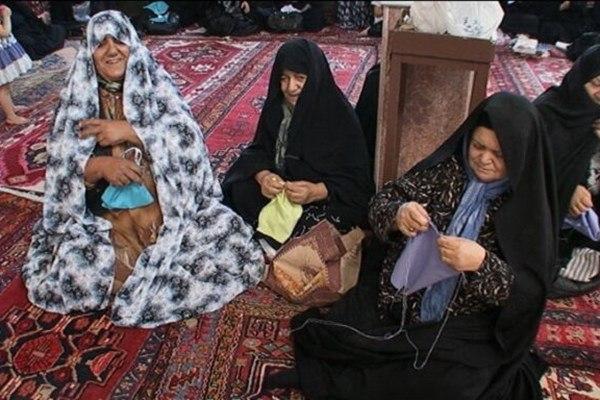
It has been hundreds of years that Azeris (people from northwestern provinces of East Azarbaijan and West Azarbaijan) begin practicing the Qabakhlama Tradition 3 to 10 days before the arrival of the month of Ramadan to honour the occasion. They do not mark Ramadan by fasting only. Rather, they clean their houses and mosques for one month of praying and worshipping. Local women, especially those in villages, attach special importance to cleaning homes because they believe a house which is not cleat as Ramadan begins will not be blessed during the holy month.

Cooking Meals with Sacrificed Meat

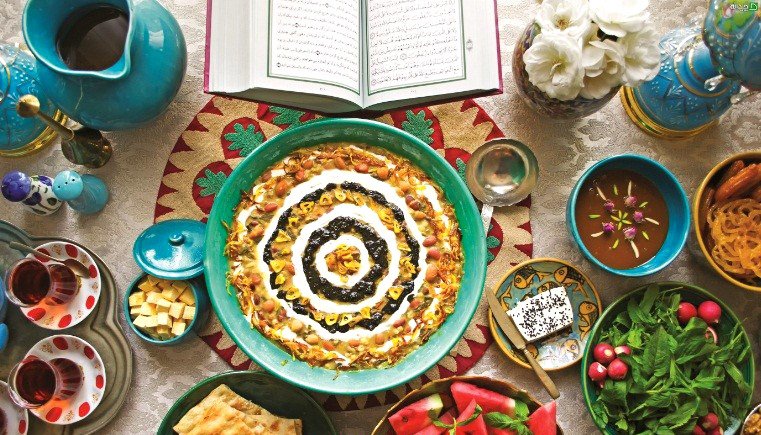
In some parts of East Azarbaijan province, it is customary for each family to sacrifice an animal, one that they can afford, and then use that meat to cook meals throughout the month of Ramadan. They believe doing so will bring blessings to the house. They would make meals served before dawn and at fast-breaking time at dusk with this meat. Of course, the fast-breaking table in this locality always has two items on it: dates and salt. People in East Azarbaijan believe Imam Ali would break his fats with dates and salt; hence, the same should be on their table, too.

Seeing One’s Face in Mirror

In northwestern Iran, it is a custom to look at oneself in the mirror after Ramadan begins at recite prayers for the souls of Prophet Mohammad and his Household. Still many of the elderly grab the mirror and move it round themselves and other family members at home after seeing themselves in the mirror in order to ward off evil and vice. This tradition is based on the belief that the hearts of the faithful should be clean like a mirror.

Obashdan Ritual

In most cultures, it is a custom in Ramadan to wake up neighbours and people in the neighbourhood at dawn when people have Suhoor. In northwestern Iran, a ritual called “Obashdan” is practiced whereby people wake up their neighbours at the time of Suhoor. In the past, villagers would specify the time of dawn as well as the call-to-prayers time by tracking the movements of stars. In this region, people now wake up neighbours and locals by reciting prayers at mosques as well as banging on the drums and home doors.

Tabagh Orooji Tradition

Another Ramadan tradition in northwest Iran is the “Tabagh Orooji” ritual which is performed for families whose daughter or son has just got married. In this tradition, the family of the groom puts some clothes, shawls, headscarves and different types of cookies and fruit on a tray and takes it to the newlywed couple’s home as a Ramadan gift.

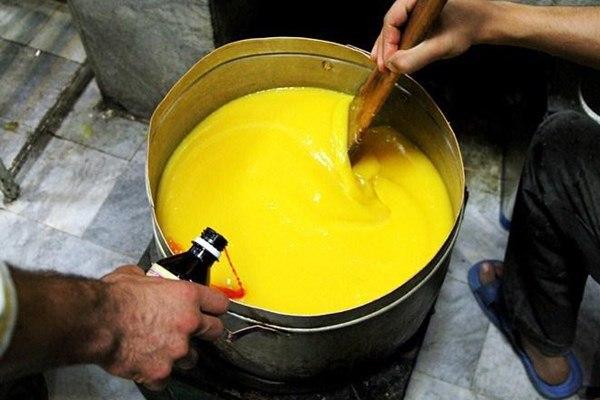
Cooking Tareh-Halvasi and Yaghlifatir

Azeri women decorate tables with colourful foods in Ramadan. One of the foods cooked in Ramadan and served at fast-breaking time at dusk is the “Tareh-Halvasi” pudding.
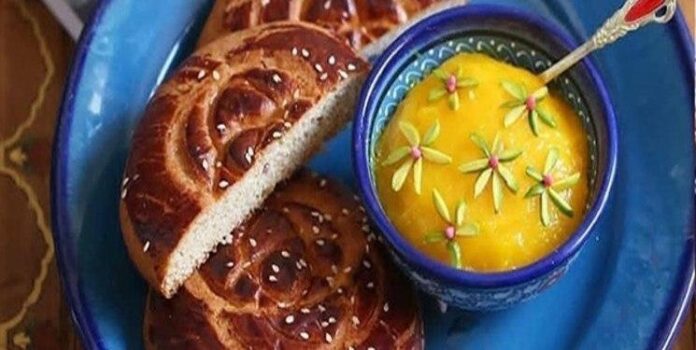
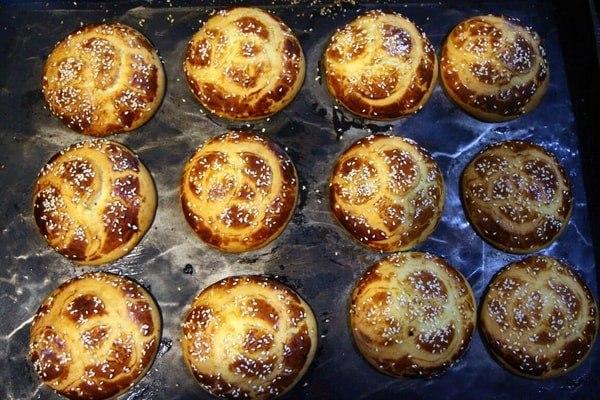
The traditional bread known as “Yaghlifatir” is another popular food cooked in the month of Ramadan and found on the tables of most Azeri people. If someone wants to give a votive offering or a gift in Ramadan, they cook this type of bread. They believe they feel less hungry when they eat this type of bread