Monday, December 22, 2025
Home Blog Page 2797

All People Are Artists in One Way or Another: Blake English

All People Are Artists in One Way or Another: Blake English

After that, he and his team “after Romeo” took on the responsibility of composing music for many films produced by well-known film companies, including Disney. despite After Romeo’s success, its members split in 2017 to pursue their destiny. Blake has recently released his latest album “Spiders Make Great Poets”. On the occasion of the release of “Spiders Make Great Poets”, we have had a conversation with him, which you will read briefly here.

+ You and your team were in charge of composing music for many films. if you wanted to set “Spiders Make Great Poets” tracks to movies, what were those movies? 

– So, the way I have structured my album is like a musical. There is a storyline and each track plays a big part in moving the story along. So I would say they were made for my movie.

+ So “Spiders Make Great Poets” was made for your movie. As the world you show us in your music videos is surrealistic, is your world surrealistic too?

– I would say I view the world through a very surrealistic lens. I grew up with surrealism being which allowed me to escape from the hell that was my reality. I also just love playing make-believe and being different characters in different worlds.

+ What effect do you expect the songs you make to have on the audience?

– As an artist and person, I am but a culmination of all my favorite things. When I was younger, it was artists that permitted me to be whom I wanted to be and express myself in raw and honest ways. So my aim as an artist is to be for others what artists were to me: an inspiration to be whom I wanted to be without limitations. I think artists have a perfect platform for communicating social justice and should use it to bring positive change to the world. On that note, I believe all people are artists in one way or another.

+ Who is you legend?

I have many artistic inspirations but one in the particular that has remained at the top of my list, is Lady Gaga. From her skills as a performer to her kindness and generosity she gives to the world, I think she sets a great example of the type of artist I aim to be like.

+ How do you make yourself feel happy?

My hobbies include: going hiking (I love outdoors), writing music, hanging out with my friends and family, going to the movies, walking around the neighborhood and enjoying the sunshine, dance, yoga, and meditation. All of those things make me happy but particularly being outdoors always gets me in a good mood.

+ Would hold any concerts in the middle east?

– I would love to visit and perform in the middle east. I love going to new places, meeting new people, and learning customs and traditions different than the ones I grew up practicing. I also think the architecture is beautiful in the middle east! There is something so magical about a place with so much history.

Will COVID-19 Pandemic Impact Iran’s 2021 Presidential Election?

Will COVID-19 Pandemic Impact Iran's 2021 Presidential Election

The deadly coronavirus has changed many global equations and right now the governments are thinking of altering their strategies and approaches after the end of this pandemic.

Experts believe that the new virus may have threats and opportunities for the governments and people in the long run.

Iranian academic and politician Mostafa Moein says the governments must take the post-corona opportunity to make up for their past mistakes.

The former Iranian presidential hopeful also believes that people must help the government to overcome the negative effects of the deadly pandemic.

In addition to being involved in politics, Mostafa Moein has been a professor at Tehran University of Medical Sciences for some time. He is also the director of the Immunology, Asthma and Allergy Research Centre and the Supreme Council of the Medical System.

Shargh daily has conducted an interview with Dr Moein, asking about the relationship between politics and medicine, and also the effects of the coronavirus on politics and health.

Here are excepts from the interview translated by IFP:

Q: What is your idea about a world infected with COVID-19?

A: It’s not a small disaster, the epidemic is a pervasive, global virus that has infected about five million people so far. Many more are virus carriers. It has killed more than 320,000 people leaving countless families in poverty. It is the most horrible pandemic after the 1918 flu pandemic. But this is just the beginning! Epidemiologists predict the spread of the disease and its new peak will affect human society for many years. Although the situation is catastrophic, in any case, a new era has begun, which, as you said, disrupted the current order of the world.

Q: What do you think the corona pandemic has changed regarding the social order?

A: You can see that people’s lifestyles, administrative and social systems, the economy and the type of communication have changed which will more or less continue in the long run. Meanwhile, family ties were strengthened and public participation enhanced, the importance of the development of civic institutions and their role in managing such crises became clearer, and the observance of personal and social health protocols became more important. Moreover, the need for government investment in the health sector has shown itself more than ever. Environmental degradation has declined, virtual education has expanded, e-government has emerged as an urgent necessity, structural weaknesses in the management of biological crises, and flaws in the social and cultural infrastructure of countries even in developed countries were revealed.

Q: Political experts believe that the world of politics will be different after the corona. Do you agree?

A: Under the new conditions, past assumptions will not work anymore. Like it or not, the attitude of people and the approach of the governments will change. During the corona pandemic, the safety and health of human beings was imposed on the neoliberal governments as a general demand instead of economic and military development. The current health care costs, especially in superpower states are very low compared to their arms budgets. In fact, the right to biological, environmental, and all-inclusive physical, mental, and social health will be one of the most serious demands of the nations after corona. It is also predicted that the role of civil society intermediaries in mobilising the people and attracting public participation in decision-making and policy-making systems of countries will be greater than before. The economic, and political influence of the US will be decreased, while the European Union will become more unstable. However, economic superiority and greater global influence of countries like China, India and Japan could be observed.

Q: Let’s talk about Iran. Do you think we will see a different Iran from what it was in February 2020?

A: In the new era and the age of communication, it is not possible to build a wall around countries and prevent the impact of global processes on a nation. In Iran, we have more or less witnessed the same global developments that I mentioned above. The post-corona Iran can be a better country than ever before, provided that both the government, the elites and the masses take advantage of the crisis as an opportunity to change attitudes, policies and behaviours. Increase of government trust in people and civil society, maintaining national and relative solidarity achieved during the COVID-19 outbreak and raising social capital are some of the changes expected. On the other hand, political and social opportunities must open up to decentralise the government and reduce bureaucracy. The decision-making system must be transparent and corruption be eradicated. Moral and social values have to promote to develop science, etc.

Q: That’s right, but we saw the decline of social capital and public confidence in Iran earlier. According to some sociologists and politicians, this situation will definitely change. Do you think these changes will be positive or negative?

A: It seems solidarity has increased among people, and they trusted more in medical staff who were in the frontline of defending the society’s health. At the same time, the corona crisis provided an opportunity for government officials to make up for some of the inefficiencies of the past with their actions, and fill up the gaps that were revealed in the socio-political tensions of November last year. In Iran, the corona crisis is a double-edged sword. If we take it as an opportunity to make up for past mistakes and inefficiencies, we will become stronger, otherwise the virus will be a major threat to the country’s chronic shortcomings!

Q: In your opinion, what new form will politics take in the post-corona Iran?

A: Given the process of the recent parliamentary elections, there may not be a tangible political impact in the short term, but it may affect the 2021 presidential election in the medium term and, in the long run, lead to structural reforms to further democratise the country. All of this, in addition to changing the government’s approach and the behaviour of officials, depends on the responsible efforts of the elites and the civil society.

Q: Looking at Iran’s social and political structure, what is the most effective model of governance and management for the country facing the corona crisis today? How do you think this model should change in the post-corona era?

A: As I said in response to the previous question, we need a democratic model based on public and managerial participation. We need to recognise the fundamental rights of people, especially their right to choose their destiny. The right to monitor the performance of officials as well as the officials’ honesty and transparent accountability are among these changes!

It is necessary for the country to have a well-written national and strategic plan for the post-corona era in order to manage the consequences of the crisis. In that national program, strategies and programs to win public trust and youth participation must be explained. The government must benefit from the ideas and cooperation of academics and elites to solve the economic, psychological and social problems of the people.

Q: You recently said that the corona had been the result of an unbalanced and unsustainable development of human civilisation over the past two centuries, adding that this national and global challenge could lead to new threats or opportunities. What will be these threats and opportunities?

A: In my opinion, the new threats will be the continuation of economic, psychological, and social damage of the pandemic and its more severe recurrence in the future. The economic recession, the increase of unemployment and poverty and despair of the young generation about the future next to migration, violence and political and social tensions will be among other threats.

Notable opportunities in the post-corona era include: planning to raise public awareness and health literacy, greater accountability of people and elites and civic institutions, reform of social, political and economic structures, accountability of governments about their legal duties, the realisation of the goals of sustainable development programs in the long run and the reduction of environmental degradation.


Iran’s Business Sector Could See Innovation after Pandemic

Iran's Business Sector Could See Innovation after Pandemic

This effectively forced the Iranian government to completely shut down the economy and hope for the best as the pandemic continued and spread all over the world.

Now, however, it seems that the situation has calmed down in Iran and there are not as many infections compared to the beginning of the year.

This has resulted in re-opening, letting people go back to work, and generally starting the economy back up again.

But an experience like this is surely to rub off on some Iranian people, especially businessmen who either lost all of their companies or significant parts of them. It is extremely likely that Iranian businessmen and entrepreneurs are going to start looking for new opportunities in sectors that are virtually invulnerable to disasters like these. Sectors that represent both necessities, as well as luxuries, thus starting a completely new understanding of how business is conducted in the country.

Foreign investments

One of the key defining features of Iranian businessmen and investors is that they like to found and build brands outside of the country. This has mostly to do with sometimes crippling economic issues due to the geopolitical situation of the country considering all of the sanctions it is currently handling.

Therefore, for an Iranian investor, it’s much more important to keep his or her businesses not only profitable but also protected from as many external threats as possible. The first answer to this was, of course, having businesses outside of the country, but as we can see from the pandemic, that’s not 100% safe as well.

What’s most likely to happen is digital services in various countries that focus not only on the local population, but also any potential Iranian customers as well. Let’s see which ones they could touch upon.

The entertainment industry

Iranian businessmen often try to establish brands in neighboring countries so that travel and control is not very difficult. The primary destination for these companies is usually the Caucasus when considering close-proximity countries, and Canada when considering distant countries.

In the Caucasus, most Iranian brands are either tourism agencies or real estate companies, which as we’ve already mentioned are not very safe. But in Canada, most of the brands are already digitized in the entertainment industry. This gives an amazing stepping stone for Iranian entrepreneurs to adopt this business model in neighboring countries, especially the Caucasus.

For example, one of the most effective brands that businessmen can have in Canada is an online casino for real money, as locals are more than willing to use these services. However, it’s not as big as it is supposed to be due to the competition. In the Caucasus market, these brands would perform admirably well, as brands already in the region mostly focus on Turkish and Russian customers. This is something that Iranian businessmen don’t necessarily do as of yet.

But delving into this interesting sector could yield results that many will not be able to give up in the future.

Digital oil industry

Iran has quite the oil reservoir on its territory, but the recent pandemic has made it virtually useless as less and less is being produced and consumed. However, the financial aspect of the commodity is still alive and well. People are still buying and selling barrels of oil in the world and the production nor the consumption loss are affecting it to an extreme degree anymore.

Many Iranian businessmen may consider that the business of producing oil is much less profitable than the business of speculating with its prices.

Because of this, it is all too possible for many new brands to appear in foreign countries that specifically focus on deals with local Iranian oil drilling companies. This is mostly due to the connections that Iranian entrepreneurs may have with the owners of these drilling companies or the sheer ease of access to such a large stock of black gold.


‘Honour’ Killing of 14-Year-Old Girl Causes Outrage in Iran

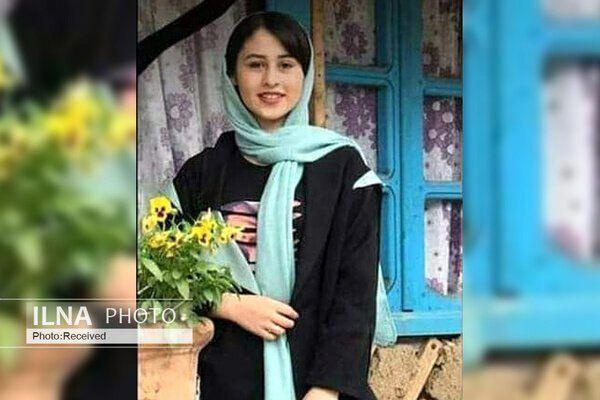
A furious man has, in a heinous move, murdered her 14-year-old daughter. The man, who is in detention, claims the murder was an honour killing. Of course, he will not be penalized under the eye-for-an-eye law of retribution as he himself is the next of kin of his slain daughter, i.e., the one who is entitled to demand blood money.

On May 21, 2020, the crime was committed in one of the villages of the town of Talesh in northern Iran that sent shockwaves across the nation.

It is the story of a man who sickled to death his 14-year-old daughter Romina because she had run away from home with a 29-year-old man Bahman.

After the father was apprehended, he claimed that his daughter had eloped with that boy and wanted to marry him, but that he (the father) disapproved of that marriage because they had a large age difference and that basically he believed the marriage would not be in the best interests of her daughter. He says the boy finally deceived her daughter into running away from home.

“On the day of the incident, I was so furious at what had happened that I went insane for a second and killed my daughter with a sickle. I only wanted to scare her. Now I really regret it and will never forgive myself,” said Romina’s father in his confessions.‘Honour’ Killing of 14-Year-Old Girl Causes Outrage in Iran

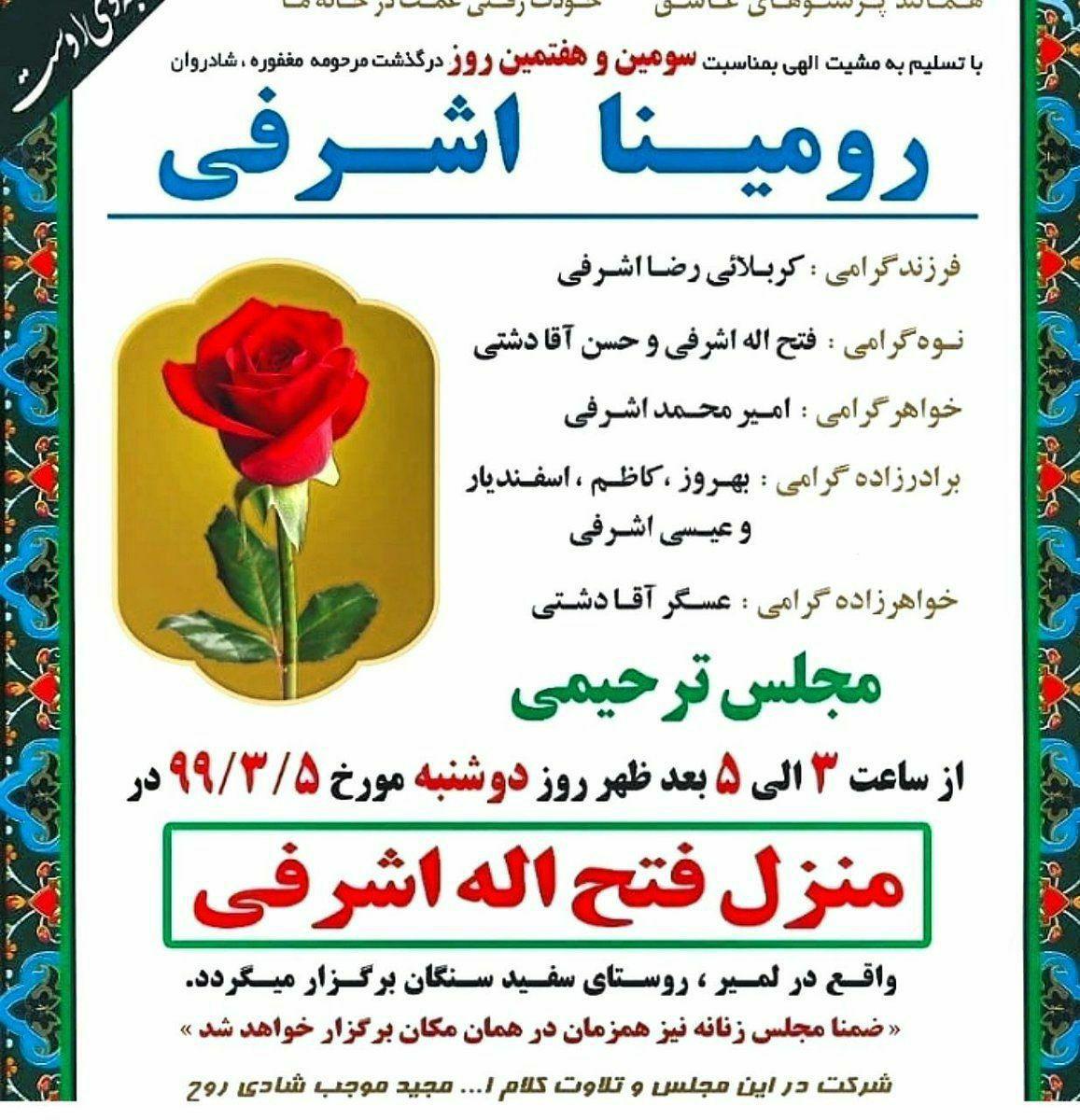
A few days on since her murder, the image of her obituary leaflet has gone viral on social media. The announcement mentions the name of the murderer on top as the father of the deceased, making the atmosphere on social media all the more tense and prompting users to react. The reactions mostly revolve around the issue of “violence against women that sometimes just stops short of honour killings.”

Rehabilitation Organization Gets Involved

Among the details of Romina’s murder case, one point worth mentioning is that Romina had been forced to return home.

When the girl ran away with the man, the father filed a lawsuit, and Romina was finally arrested. At the court, the girl begged the judge not to let the father take her home again, but the father kissed her hands in front of the judge and promised he won’t harm her. The judge was convinced and let her go home. The crime was committed later that day.

Reza Jafari, the deputy head of the Rehabilitation Department of Gilan Province, says Romina’s murder at the hands of her father is an example of blatant violation of the rights of a child by a person who had been expected to offer the most support to her child in order to properly bring up and rear her.

“Due to the nature of the crime, the prosecutor has got involved in the case as public prosecutor in accordance with Article 5 of the Children and Youth Support Act, and the Rehabilitation Department, as an organization backing children’s rights, will try its utmost to restore the inalienable rights of this child.

“The Social Emergency Department of the town was informed through official channels after the murder had taken place,” said Jafari.

“Before that, we didn’t know of that family row,” he added.

He said if the family had contacted the Social Emergency Department before the crime was committed, both the child and the family would have had a better destiny.

Jurists’ Viewpoint

Among all developments pertinent to Romina’s murder, what has prompted the strongest public reaction is the possible punishment of her murderer who happens to be her father.

“Definitely, no ruling will be issued to mete out an-eye-for-an-eye punishment for her father. Only with regard to the public dimension of the crime, the convict will be imprisoned or, in some cases, banished. Generally speaking, in such cases, the father will not be sentenced to eye-for-an-eye retribution, but he may be served with prison sentence of 3 to 10 years at the discretion of the judge, and could be sentenced to paying blood money. And the blood money, in the first place, shall be given to the mother first, then the sister and brother,” he added.

Vice President’s Order to Follow up on Murder Case

Iranian Vice President for Women and Family Affairs Masoumeh Ebtekar has called for further action to be taken to look into Romina’s murder case. She asked the official in charge of citizens’ rights working at her office to pursue the matter as soon as possible.

Forecasts about parents’ punishment have once again brought into spotlight a controversial article that the Guardian Council reacted to, while studying a bill on supporting children and youth’s rights. Parliament has been asked to put the bill on top of its agenda.

The bill has been reviewed and ratified by Parliament and sent to the Guardian Council. Although the council has, so far, found fault with bill three times, the bill still awaits final reconsideration by the council. According to Ebtekar, this is the last time that the Guardian Council will express its view on this bill and the contentious article on the punishment of irresponsible parents, and that if the fault that the council has found with the article is corrected, part of “our main concerns will be removed, too.”

The vice president has called on Parliament to expedite the procedure to pass the bill.

Another Victim of “Honour” in Iran

Since the word “honour” entered humans’ language, it has taken more victims than all world wars have. Its victims are sometimes men, but mostly women.

International organizations such as the United Nations Population Fund suggest that honour and shame killings take some 5,000 lives across the world annually. Some surveys suggest the most common murders in Iran, i.e. 20 percent of all murders and 50 percent of family killings, are related to sexual and honour issues.

Academic papers and university theses and dissertations that deal with this issue suggest between 375 and 450 honour killings occur each year. The rate is higher in provinces where ethnic group and clan culture prevails. The rate of honour killings in Khuzestan, Kurdistan, Ilam and Sistan-Baluchestan is higher than that of other areas.

Qalibaf Elected as New Speaker of Iran’s Parliament

Qalibaf Elected as New Speaker of Iran's Parliament

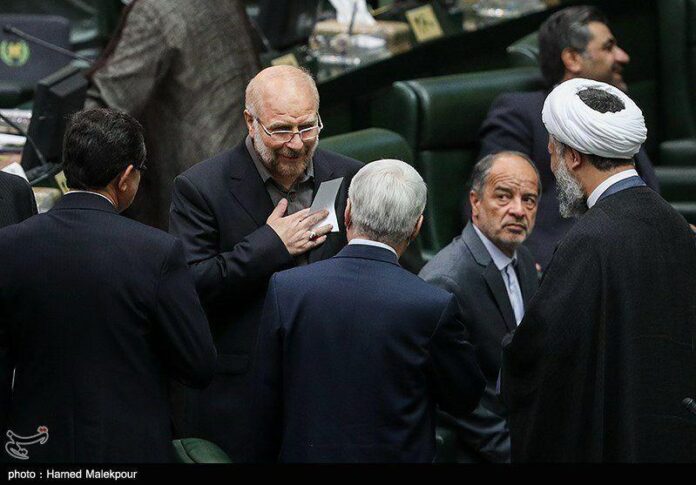
In the first open session of the new Parliament on Thursday, the conservative lawmaker was unanimously elected as the speaker with 231 votes.

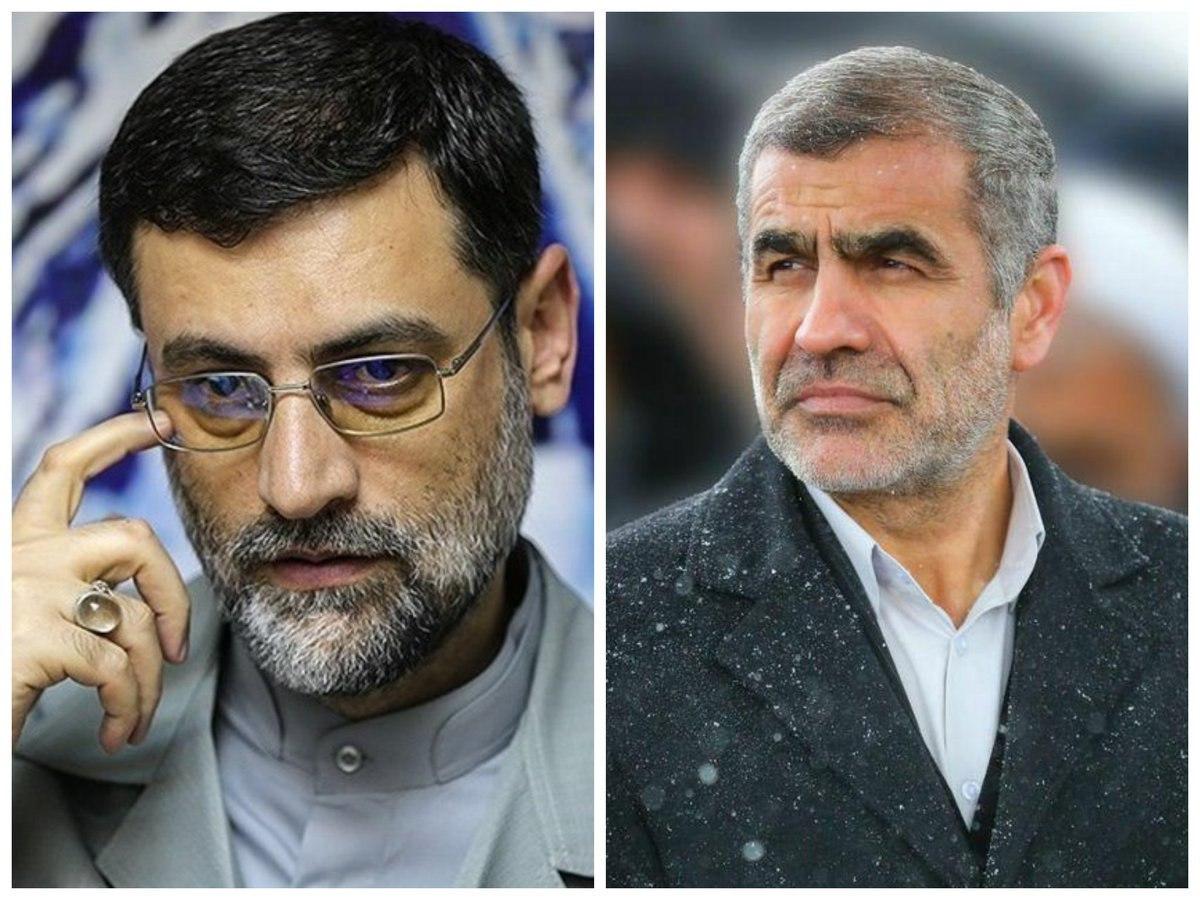
Amir-Hossein Qazizadeh Hashemi and Ali Nikzad, both conservatives, were also elected as the first and second vice-speakers of the Parliament.

Qazizadeh secured 208 votes and Nikzad, a former minister in Mahmoud Ahmadinejad‘s cabinet, won 196 votes.

Qalibaf Elected as New Speaker of Iran's Parliament 1

French FM’s Comments on Adelkhah to Further Complicate Her Case: Iran

Iran Condemns Bahrain’s Plan to Normalize Relations with Israel

In a statement on Wednesday, Seyyed Abbas Mousavi said only Iranian courts have jurisdiction over Iranian nationals.

“Only Iranian courts are judicially competent to look into crimes committed by Iranian nationals,” said Mousavi.

“This case has been examined by the court in accordance with regulations, and Ms. Adelkhah has enjoyed her citizenship rights [during the legal procedure],” the spokesman added.

“The ruling issued is a verdict of first instance and Ms. Adelkhah can appeal the ruling through legal channels,” he added.

Mousavi underlined that the Judiciary of the Islamic Republic of Iran has full independence as stipulated in the Constitution.

He said unilateral interpretations of independent judicial verdicts will be “unconstructive” for relations between the two countries.

“Any threatening and meddlesome tone will further complicate this case, and the Islamic Republic of Iran brooks no disrespect of its sovereign principles, including the independence of the Judiciary,” he added.

France’s foreign minister said on Tuesday that relations with Iran had become more difficult after Tehran sentenced Adelkhah to jail in what he said was a politically-tainted decision.

“This sentencing was founded on no serious elements and was politically motivated. So we firmly say to the Iranian authorities to release Fariba Adelkhah without delay,” Jean-Yves Le Drian told France Inter radio.

“This decision makes our relations with the Iranian authorities a lot more difficult,” he said.

Also last Thursday, the French Foreign Ministry spokeswoman urged Iran to release Adelkhah.

“It is vital and urgent for the Iranian authorities to be transparent in this case as well as for all cases of foreign nationals arrested in Iran,” Agnes von der Muhll said.

She claimed that France has repeatedly demanded consolatory access to Adelkhah and her release from prison, and that Iranian officials rejected the request based on her Iranian nationality, and only allowed her family to meet her a few times.

Adelkhah, a 60-year-old anthropologist and researcher at Sciences Po’s Center for International Studies (CERI) in Paris, was reportedly arrested in June on charge of espionage.

Tehran announced on Friday that based on the Iranian law, it does not recognize the dual citizenship of Adelkhah.

Iranian Diplomat, UN Envoy Discuss Syria Developments

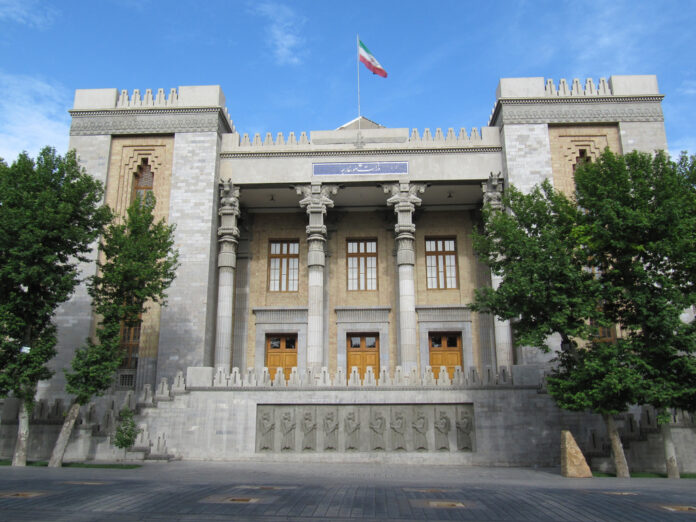
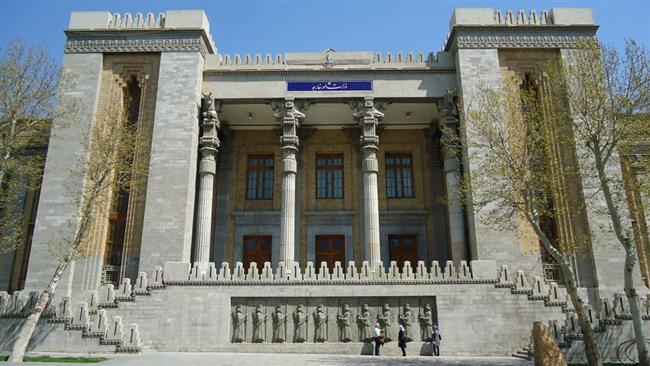
Iran's Foreign Ministry

In a telephone conversation on Wednesday, Pedersen and Khaji discussed the latest political and on-the-ground developments in Syria, the humanitarian issues, the Syrian people’s problems, and holding the next meeting of Syria’s Constitutional Committee.

The Iranian and the UN diplomats also stressed the necessity of providing humanitarian assistance for the people of Syria, particularly amid the outbreak of the coronavirus, helping the return of the displaced people and refugees, and the continuation of the political process for the peaceful settlement of the Syrian issue.

In the telephone conversation, the senior assistant to Iran’s foreign minister highlighted the unlawful and inhumane nature of the unilateral sanctions against people of Syria, calling for the removal of the bans.

Khaji also stressed the need for the restoration of stability and security to Syria and the fight against terrorism.

Iran Confirms over 2,000 New Cases of COVID-19 Infection

Iran Confirms over 2,000 New Cases of COVID-19 Infection

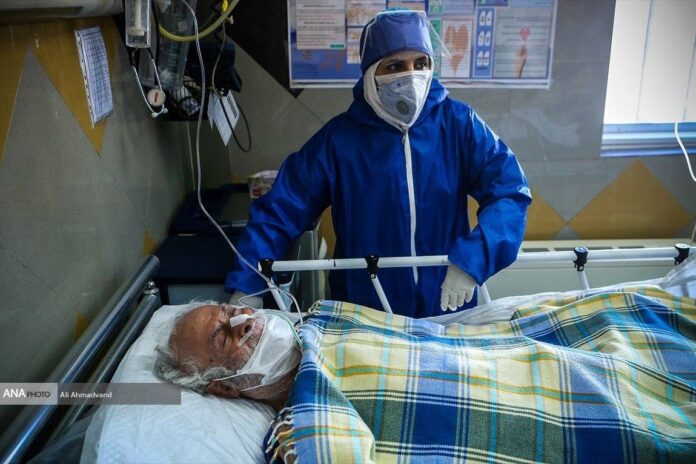
In his Wednesday briefing, Kianoush Jahanpour said 56 people have died of the virus in the past 24 hours, bringing the total number of fatalities to 7,564.

The spokesman said 111,176 patients have so far recovered from the disease, and been discharged from hospital.

2,551 patients are also in severe conditions of the disease, he added.

Jahanpour noted that 856,546 COVID-19 tests have been taken across the country.

Coronavirus online test
If you are worried that you may have contracted the Coronavirus, take this test right now.

Another Mild Quake Strikes Iranian Capital

Another Mild Quake Strikes Iranian Capital

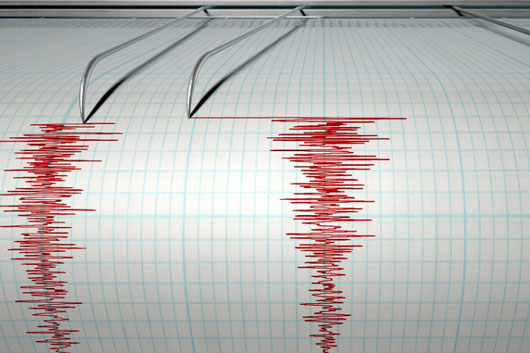
According to the Seismological Centre of the Institute of Geophysics of Tehran University, the Wednesday quake hit an area near the city of Damavand, west of Tehran, at 13:41 pm (local time).

The epicentre, with a depth of 12 km, was determined to be at 35.78 degrees of north latitude and 52.04 degrees of east longitude.

Data from the seismological centre showed the location of the quake at 7 km from Damavand and 57 km from Tehran.

There have been no reports of casualties yet.

Iran is one of the most seismically active countries in the world, being crossed by several major fault lines that cover at least 90% of the country. As a result, earthquakes in Iran occur often and are destructive.

In November 2018, the western province of Kermanshah was hit by a major 7.3-magnitude quake that killed 620 people according to the latest toll.

The deadliest quake in Iran’s modern history happened in June 1990. It destroyed the northern cities of Rudbar, Manjil, and Lushan, along with hundreds of villages, killing an estimated 37,000 people.

Bam in the country’s southeastern province of Kerman witnessed a strong quake in December 2003 which killed 31,000

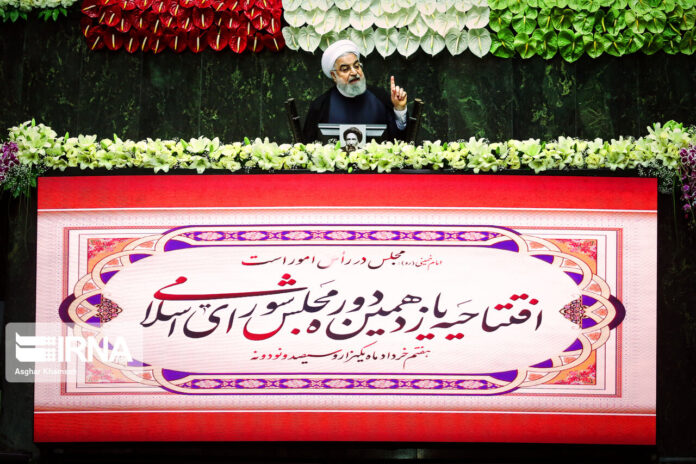
Iran’s Parliament Symbol of Islamic Democracy: Rouhani

Iran’s Parliament Symbol of Islamic Democracy: Rouhani

Addressing the parliament on Wednesday, President Rouhani said the government and Majlis together can counter the US sanctions and fight against coronavirus.

He noted that all must work in line with the national interest and security while the public interest must be the main priority.

The fact that Iran is on the list of successful countries in the fight against the coronavirus is because the foundations of treatment and health in the country has been strengthened by the government and parliament, added the Iranian president.

Rouhani further mentioned that the enemies wanted the Iranian establishment to be disrupted, the economy to collapse, and with all the psychological war and economic pressure wanted to overthrow the Islamic Republic before its 40th year. However, the nation stood against the enemies and they have not achieved their goals so far.

Rouhani referred to some of the achievements of his administration amid the outbreak of the coronavirus and thanked the parliament, the Leader of Islamic Revolution, and the armed forces for their cooperation in this regard.

Iran’s new parliament convened on Wednesday after the February 21 elections under strict health protocols and social distancing rules.

Next week, lawmakers will choose a parliament speaker for a one-year term.