Monday, December 29, 2025
Home Blog Page 2088

40th Fajr Film Festival kicks off in Tehran, other cities

On the first day, two films “Biro” about the goalkeeper of the Iranian national team Alireza Biranvand and the film “The Loser Man” directed by Mohammad Hossein Mahdavian were screened for critics. 

In the Simorgh section, which is the main part of the festival, 22 Iranian films will be screened. Following the announcement of the list of qualified films in this category, a number of critics and directors criticized the removal of some films by the jury. 

Meanwhile, despite the current coronavirus surge in Iran, reports indicate that on the first day, health protocols were rarely observed. 

From Tuesday, the public can watch the movies in theaters in Tehran and other Iranian cities. The director of cinema affairs of the festival earlier announced that 30 cinemas in Tehran and other cities (62 halls with 14896 seats) will screen festival fims. 

The 40th Fajr Film Festival, marking the anniversary of the victory of Iran’s  Islamic Revolution, will run through February 11 and will end with an awards ceremony.

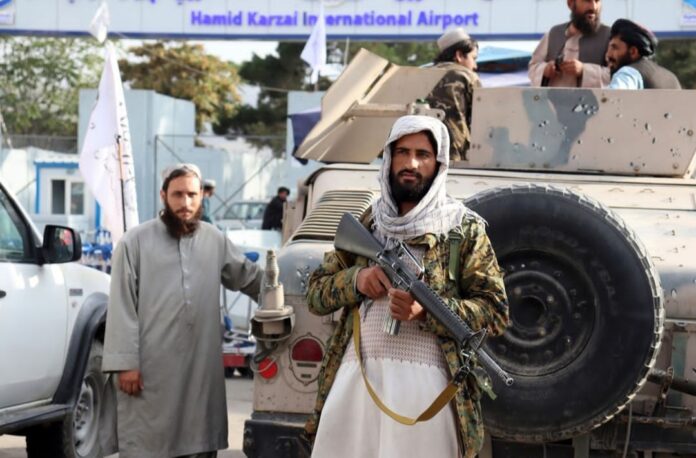
Taliban reject UN report of ex-Afghan officials killings

Taliban

On Monday, Reuters reported that UN Chief Antonio Guterres in a report to the UN Security Council stated the UN mission in Afghanistan “continues to receive credible allegations of killings, enforced disappearances and other violations” against former officials, security force members and people who worked for foreign troops in Afghanistan.

“The mission has determined as credible reports that more than 100 of those individuals have been killed – more than two-thirds of them allegedly by the Taliban or their affiliates – since Aug. 15,” the report said as quoted by Reuters.

“Human rights defenders and media workers continue to come under attack, intimidation, harassment, arbitrary arrest, ill-treatment and killings,” it added.

The The Ministry of Interior (MoI), reacting to the report, said that after the general amnesty no one has been killed by Islamic Emirate forces.

The MoI rejected the UN’s report, saying the UN should make itself familiar with the realities on the ground and not rely on information that may have been provided by “biased circles.”

“The Islamic Emirate killed no one after the general amnesty,” the MoI added.

The MoI said some members of the former security forces might have been targeted due to personal disputes, adding that it is investigating such cases.

Islamic Emirate spokesman Zabihullah Mujahid also rejected the UN report, stressing that under the general amnesty no one is allowed to take such actions.

Guterres also raised concerns over Afghanistan’s economy noting it is on a downward spiral and he called for the injection of liquidity into the country.

“To pull it back from the brink, liquidity must be rapidly injected. Time is of the essence. Without action, lives will be lost, and despair and extremism will grow,” he continued.

The UN chief has also recommended that the Security Council approve a restructuring of the UN mission in Afghanistan to deal with the situation, including the creation of a new human rights monitoring unit.

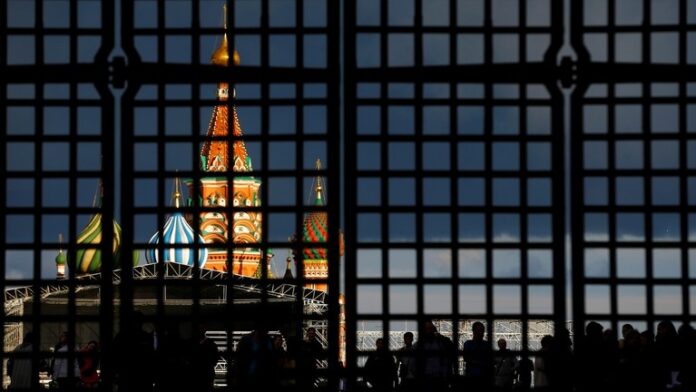
Russia says to retaliate possible UK sanctions

Peskov blasted the threats as “an attack on businesses”.

“The British foreign secretary spoke about some sanctions. But here, I think, we must call everything by its proper name. Sanctions are something legitimate and something formally approved via a decision of the UN Security Council,” Peskov said on Monday.

“In this case, we are talking about an undisguised attack on businesses,” he added.

According to the official, any such aggression will bring countermeasures from Moscow to protect Russia’s national interests.

British media outlets previously reported that the cabinet plans to announce a new round of sanctions against Russia on 31 January, targeting energy companies and other “strategic” industries. At the same time, Foreign Secretary Liz Truss stated the government would present a new draft law in the UK Parliament in a bid to widen the anti-Russian sanctions list.

The threats come amid deteriorating ties caused by the Ukrainian crisis, as London continues to accuse Moscow of planning an invasion of Ukraine and seeking to install a “puppet government” in Kiev.

Moscow, in turn, blasted the allegation as “fake” and said that the escalation is deliberately being hyped up by the UK and the US, who are planning a provocation against Russia in Ukraine.

Simon Clarke, Chief Secretary to the UK Treasury, speaking on the Sky News Monday once again threatened Moscow with sanctions amid heightened tensions between the two sides.

“We are very clear that if Russia takes further action against the Ukraine, then we will further tighten the sanctions regime targeting those businesses and people with the closest links to the Kremlin,” he asserted.

Western powers accuse Russia of amassing troops near the Ukrainian border to invade the country. Moscow rejects the allegations and says the deployments are defensive in nature.

Kremlin officials accuse the West of Russiophobia, saying it has no right to lecture Moscow on how to act after it expanded the NATO military alliance eastwards after the fall of the Soviet Union, and sowed seeds of chaos and mayhem in Iraq and Syria.

IAEA: Iran moves centrifuge-parts production from Karaj to Isfahan

Iran informed the IAEA that it would produce the parts in the city of Isfahan instead of at the TESA Karaj workshop, according to the IAEA.

It added that IAEA inspectors had installed surveillance cameras in Isfahan on Jan. 24 and that the production of the parts there had not started then.

Back in December, Tehran announced it has voluntarily allowed the IAEA to replace the damaged cameras at the Tessa Complex in Karaj with new ones. According to reports, Iran’s initiative prevented a misunderstanding with the IAEA over an issue which was raised during Director General Rafael Grossi‘s visits to Tehran in September and December.

Allowing the IAEA to install new cameras at TESA Karaj Complex is seen as another attempt by Iran to give diplomacy a chance as the country is involved in negotiations with the remaining nuclear deal parties to remove US sanctions and bring Washington back into the landmark agreement.

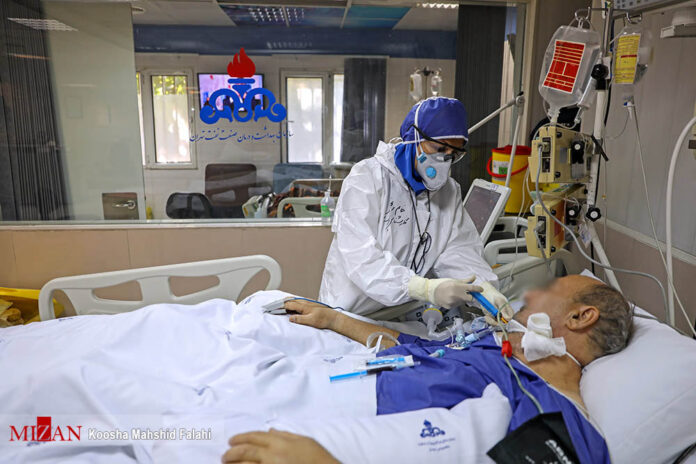
Covid-19 infections surge in Iran

Nearly 29,000 people with the disease have been detected over the past 24 hours compared with nearly 22,000 on Sunday, Iran’s Health Ministry announced on Monday.

The latest official figures also show that 30 more people have lost their lives to the respiratory disease compared with 44 on Sunday.

Days ago, Iranian Health Minister Bahram Einollahi announced the beginning of a new wave of coronavirus pandemic, as the number of people infected with the new strain keeps surging.

The minister urged more caution and said getting booster shots as soon as possible can play a significant role in preventing a fresh surge in the number of Covid-19 deaths and infections.

Iran’s intensified national vaccination program has seen a total of well over 132,200,000 doses of coronavirus vaccine administered, with more than 54,000,000 people fully inoculated. So far, nearly 17,300,000 people in the country have had their third shots.

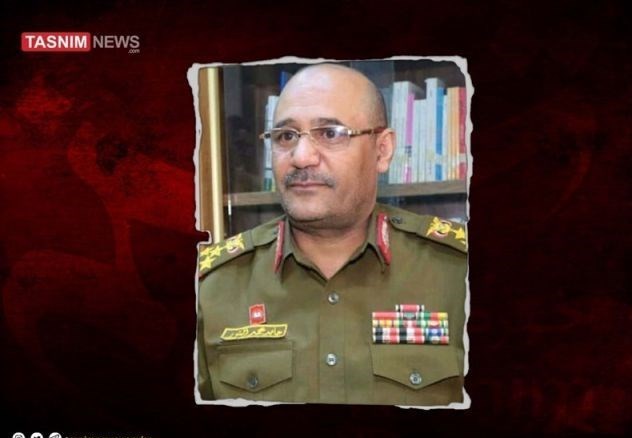
Yemeni general: Future attacks on UAE will be more powerful

General Abed bin Mohammad al-Thawr, head of the Spiritual Guidance Office of the Yemeni Armed Forces, added that the Yemeni armed forces are now able to carry out advanced operations deep inside the aggressor coalition member states, especially the United Arab Emirates. 

He said Operation Storm Yemen 2 sent a message to the UAE leader Muhammad bin Zayed that he should know he will suffer a lot, the cost of his efforts to please Israel is very high, and Abu Dhabi will pay the price. 

Al-Thawr maintained that Operation Storm Yemen woke up the UAE, but now the Emirati people must know that the dangers ahead will be the result of the stupidity of their rulers and they will not be able to bear the consequences. 

He noted that if the leaders of the UAE leave the fate of their country in the hands of bin Zayed, they should know that they have exposed the UAE to Yemeni forces. 

“The UAE is trying to gain a foothold in the region through its aggression against Yemen, but the move has been counterproductive and we see that the UAE is destroying itself,” he said.

Al-Thawr added that the United States is playing an increasingly active role in supporting the crimes of the Saudi-Emirati-Zionist coalition against the Yemenis and Palestinians. 

The general however said Yemen’s future attacks will be more painful and will push back the UAE to square one.

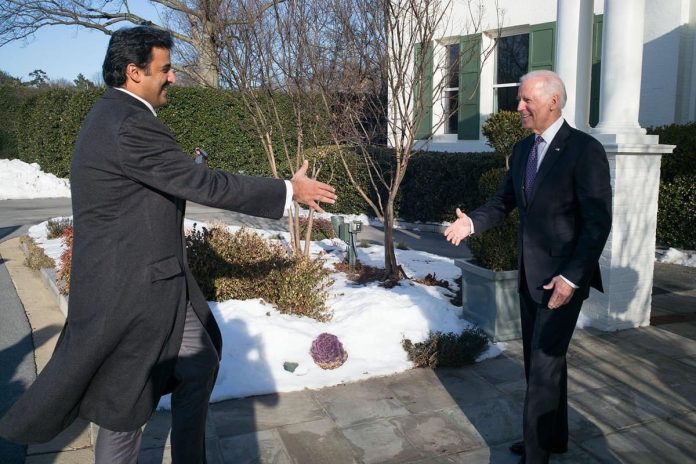
Biden, Qatari emir to discuss Iran, energy

Biden, Qatari emir to discuss Iran, energy

Qatar is the world’s largest supplier of liquefied natural gas (LNG) and may divert supplies to Europe if the Ukraine conflict disrupts Russian gas deliveries to the continent.

Ukrainian and Western officials have sounded the alarm several times in recent months of an imminent offensive, pointing to Moscow’s troop movements near its border with Ukraine, where they estimate 100,000 Russian soldiers are stationed. However, the Kremlin has repeatedly rejected accusations that the country’s armed forces are planning to strike its neighbor, with its Press Secretary Dmitry Peskov calling such claims “groundless.”

Tamim will also meet separately with Homeland Security Secretary Alejandro Mayorkas and discuss arms sales and other military issues with Defense Secretary Lloyd Austin, an official told reporters.

Biden’s agenda for the Oval Office meeting will also include the Iran nuclear talks and relations with Afghanistan, where Washington’s interests are now represented by the small Persian Gulf country.

Earlier this month, Iranian Foreign Minister Hossein Amir Abdollahian was in Doha for high-level talks with the Qatari FM as well as the Qatari Emir.

Also on Thursday, Qatar’s Foreign Minister Mohammed bin Abdulrahman Al Thani held meeting with Amir Abdollahian in Tehran in what some observers suggested could be related to the emir’s upcoming US visit.

But, Iranian media sought to douse the speculation, saying some are “fabricating” that the Tehran meeting is a means to facilitate direct talks with Washington.

However, in recent days, the US and Iranian officials have voiced openness to meeting directly to discuss nuclear deal, after months of negotiations in Vienna between Tehran and the other signatories to the accord.

The Qatari emir’s visit comes as the negotiating delegations are expected to go back to Austria’s capital to resume talks in the coming days.

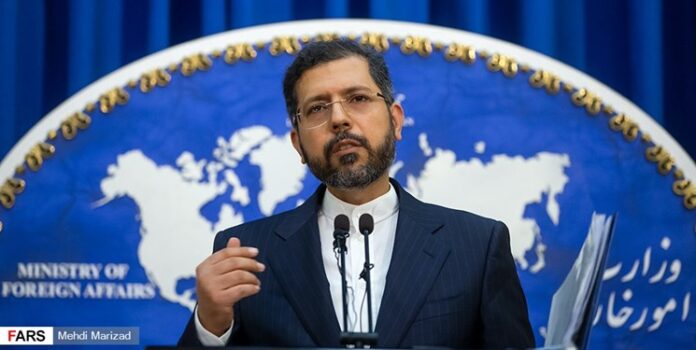
On Monday, Iranian Foreign Ministry Spokesperson Saeed Khatibzadeh stressed that the negotiations can yield a reliable agreement once Tehran receives the “right answer” from the other sides to its rightful demands.

Iran insists that the talks must lead to the removal of all American sanctions that were imposed against Tehran following Washington’s unilateral withdrawal from the landmark agreement in May 2018. Tehran has also demanded credible guarantees that Washington will not abandon the deal again.

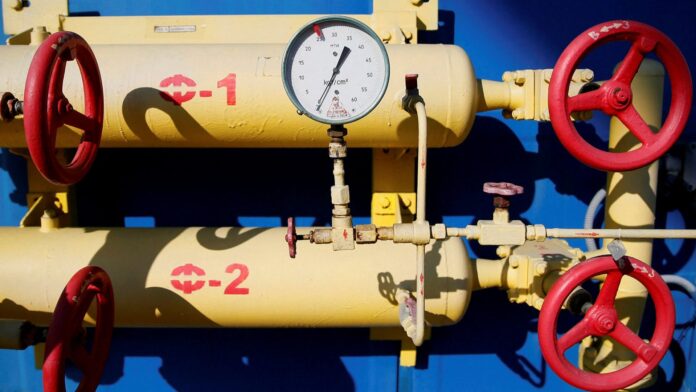
EU in gas talks with US, Qatar, Azerbaijan amid standoff with Russia

“We are prepared in case diplomacy fails and we are looking at all options. This includes improving our resilience, including by working with partners like the US, Qatar, and Azerbaijan, on the issue of gas supply in case Russia decides to reduce or halt deliveries,” he wrote in his blog. 

Earlier, Bloomberg, citing its sources in the EU, reported that the EU is discussing the possibility of a swap deal with a number of countries in order to avoid interruptions in gas supplies to Europe, which, in particular, may be caused by the situation around Ukraine. According to the report, the EU is discussing swap deals with Qatar and Norway. At the same time, Brussels is in close contact with Algeria and Egypt, as well as Asian countries, to find out if this kind of deal is possible. 

In recent months, statements have been made in the west, as well as in Kiev, about a possible Russian invasion of Ukraine. The Kremlin called the allegations baseless, aimed at escalating tensions. 

NATO Secretary General Jens Stoltenberg has also suggested that Europe diversify its energy supply. 

“We are concerned about the energy situation in Europe because it demonstrates the vulnerability of being too dependent on one supplier of natural gas and that’s the reason why NATO allies agree that we need to work and focus on diversification of supplies,” Stoltenberg stated on Sunday. 

Russia, which supplies close to a third of Europe’s natural gas, was not directly referenced, but the recent escalation in tensions between Russia and NATO over Ukraine is thought by some to be a catalyst for his comments. 

NATO allies have discussed wide-ranging sanctions and military action should Russia invade Ukraine. However, the European Union, of which many nations are NATO members, is heavily dependent on Russian energy exports. 

In 2019, 60.7% of the EU’s energy came from imports. Russia was the largest supplier of coal, crude oil, and natural gas, and, over the past decade, the EU has become increasingly reliant on Russian natural gas. 

The growing demand for Russian natural gas led to the development of the Nord Stream 2 pipeline. The pipeline runs under the Baltic Sea connecting Russia and Germany and has long been a politically divisive topic within NATO. 

One primary stated concern was the ability for Russia to use energy as a bargaining chip. The pipeline was completed in September of 2021. 

Europe is also in the midst of an energy crisis. The continent had to dip into energy reserves during an exceptionally hot summer and has seen lower than anticipated energy production from wind turbines. 

In the fourth quarter of 2021, natural gas prices at the Dutch TTF contract, the European benchmark, were at a record high of $31.14/MMBtu. Prices have dropped in the first quarter of 2022, but supply remains low compared to recent averages. 

On Sunday, Pentagon spokesperson John Kirby said the US is looking at deterrents against Russia’s aggression toward Ukraine “the likes of which we have not looked at before,” though he stated that there is still “room and space for diplomacy.” 

“Fox News Sunday” host Dana Perino asked Kirby what efforts are being made to signal the possible consequences from the US if Russia invades Ukraine. 

“I think we’ve been very clear with Mr. [Vladimir] Putin about the economic consequences that could come his way and the way the Russian people should he further incur — invade inside Ukraine. And one of the things about sanctions is once you once you trip that, then the deterrent effect is lost,” Kirby added.  

“I think we’ve been very, very clear that we’re going to look at sanctions and economic consequences, the likes of which we have not looked at before even considering even as far back as 2014,” he

nued. 

However, Kirby also said during his interview that “it doesn’t have to come to conflict.” 

“We still believe there’s room and space for diplomacy and we’d like to see that be the solution here,” he added. 

US Ambassador to the United Nations Linda Thomas-Greenfield has also said Russia would not have amassed such a large military presence along the Ukrainian border without the intention of using it. 

“We’ve seen the Russian playbook before. They are using disinformation. They’re encouraging Ukrainians not to worry about an attack, but we know that the attack is possible,” Thomas-Greenfield said on ABC’s “This Week” on Sunday. 

“You don’t amass 100,000 troops if you don’t have intentions to use them,” she added of the Russian troops along the border. 

Her remarks come as concerns about a potential Russian invasion of Ukraine mount. 

Last week, President Joe Biden announced that he would send a small number of US troops to the eastern Europe in the “near term”. 

“I’ll be moving troops to Eastern Europe in the NATO countries in the near term,” Biden said on Friday to reporters at Joint Base Andrews, adding, “Not too many.”


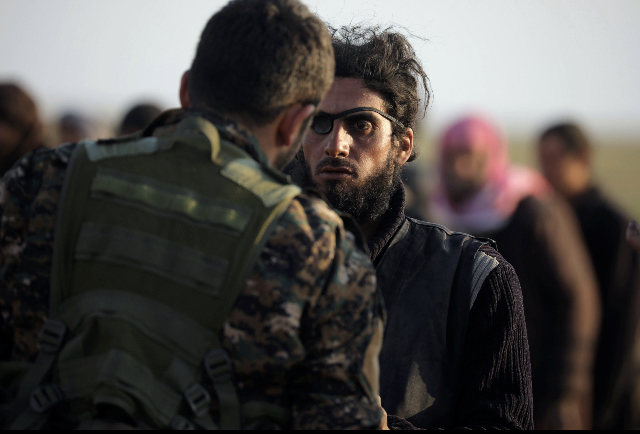
US says Kurds recapture Syria prison after Daesh assault

In a statement, national security adviser Jake Sullivan said the Syrian Democratic Forces (SDF) were able to “re-take full control” of Hasakah prison, ending the prison break attempt from Daesh (ISIS or ISIL). 

“Thanks to the bravery and determination of the SDF, many of whom paid the ultimate sacrifice, ISIS failed in its efforts to conduct a large-scale prison break to reconstitute its ranks,” Sullivan announced in a statement.  

Sullivan added Sunday that ISIS’s violent prison break attempt showed why the terrorist organization must be contained, saying nations “must work together to address the thousands of ISIS detainees in inadequate detention facilities.” 

“ISIS remains a global threat that requires a global solution. The United States remains committed to working with our partners in Iraq and northeast Syria, and the Defeat-ISIS Coalition, to counter the ISIS threat to our homelands,” Sullivan concluded in his statement. 

The forces’ commander, Mazloum Abadi, tweeted that all fugitives had been arrested.  

Assailants broke into the sprawling Ghwayran prison complex near the city of Hasakah on January 20, sparking days of heavy fighting that killed 270 people. 

The SDF announced that it had recaptured the prison on Wednesday, but “mop-up operations” continued. About 3,500 Daesh members surrendered, but others barricaded themselves inside the prison. 

The violence prompted 45,000 people to flee Hasakah, the UN announced. Many took refuge in relatives’ homes, while hundreds more have slept in the city’s mosques and wedding halls. 

The fighting also raised concerns among NGOs about the fate of some 700 children of Daesh fighters housed in the prison, who the SDF calls “Caliphate Cubs”. 

The SDF has called on the UN to urge countries that have Daesh nationals detained in Syria to “accelerate the pace of their repatriation” – primarily children and women. 

UN Under-Secretary-General Vladimir Voronkov told the Security Council on Thursday the deadly prison siege underscored the need to deal with those allegedly linked to the armed group in prisons and camps in Syria’s northeast. 

Daesh lost its last patch of territory near Baghouz in eastern Syria in March 2019. Since that time, it largely went underground and waged a low-level battle, including roadside bombings, assassinations, and hit-and-run attacks mostly targeting security forces. 

In eastern Syria, fighters carried out 342 operations over the last year, many attacks on Kurdish-led forces, according to the Syrian Observatory. 

The prison break in Hasakah was its most sophisticated operation yet. It was part of a recent uptick in attacks that have stoked fears the armed group is gaining momentum in Syria and Iraq.

Iran: We will make each and every effort to end ordeal of Yemenis

 Speaking to journalists in his weekly news briefing, Khatibzadeh warned that the tragedy in Yemen is worsening due to the Saudi-led attacks against the country in recent days. 

He noted that the Islamic Republic of Iran believes the Yemen crisis has no military solution and it can be resolved only through political means and the cessation of military aggression against the country.

Khatibzadeh also spoke of the Vienna talks that aim to revive the Iran nuclear deal, JCPOA. He said if the other parties to the negotiations respond positively to Iran’s righteous demands and inalienable rights the day after delegations return to the Austrian capital, then a good and lasting deal will be within reach and there will be no need for artificial deadlines. 

He however noted that the parties have made considerable progress in the talks over sanctions removal, nuclear obligations, verification and guarantees in recent weeks. 

Khatibzadeh urged the US to recognize Iran’s rights and to not demand anything beyond the JCPOA. 

The Foreign Ministry spokesman underlined that Iran will not accept anything beyond the deal. Khatibzadeh further responded to a question about the visit of the Israeli president to the UAE. He said the fake regime creates crises and depends on terrorism and violence for survival.