Tuesday, December 23, 2025
Home Blog Page 2038

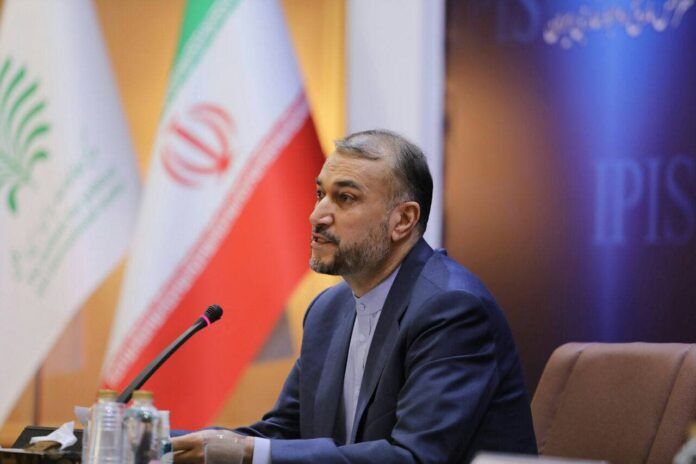
Amir Abdollahian to Ukraine FM: Islamic Republic against war

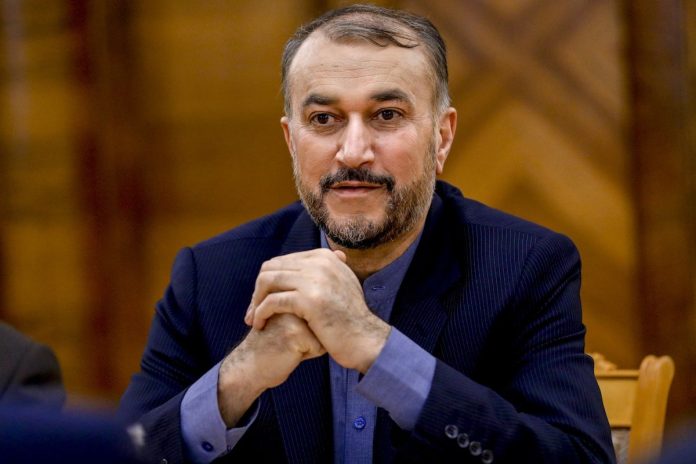
Hossein Amir Abdolahian

Hossein Amir Abdollahian, in a phone conversation with Dmytry Kuleba, outlined the Islamic Republic of Iran’s stance which is based on opposition to war.

Referring to the Ukraine crisis, The Iranian foreign minister also described the recent meeting between his Russian and Ukrainian counterparts in Turkey as important and underlined the significance of continuing and strengthening the diplomatic path.

Amir Abdollahia said the Islamic Republic of Iran supports any political effort to resolve the crisis.

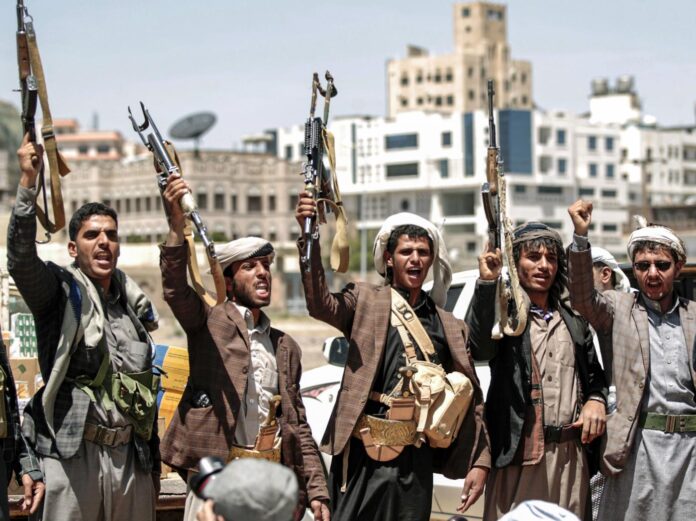
He said, “We oppose war in Ukraine, Afghanistan, Yemen and other countries without adopting double standards.”

He also underlined that Tehran is making coordination with the Polish government to station a Red Crescent medical team on the Poland-Ukraine border to provide assistance to refugees there.

Dmytry Kuleba for his turn thanked Iran’s stance to oppose war and also for sending humanitarian aid to the Ukrainian refugees along the Ukraine-Poland border. He also underscored his country’s demand for stopping the war and hostilities.

Kuleba referred to his recent talks with Russian Foreign Minister Sergei Lavrov and said continuation of talks is necessary for ending the crisis. Kuleba asked for Tehran’s political assistance to stop the war.

Iran FM: Remaining issues in Vienna talks Tehran red lines

Hossein Amir Abdollahian, in a phone conversation with his Omani opposite number Badr bin Albusaidi, underlined that the Islamic Republic of Iran is quite serious about reaching a good, reliable and lasting deal.

Amir Abdollahian said the process of talks in Vienna has not stopped and that there is just a short hiatus in the negotiations in coordination with the EU coordinator.

He noted that Iran’s top negotiator in Vienna is diligently continuing efforts to reach a good, robust and lasting deal.

The Omani foreign minister also hailed positive relations between the two countries and spoke about some bilateral issues.

Albusaidi thanked Iran for its logical stances, saying the Sultanate of Oman always believes in talks and dialog for the purpose of resolving various crises.

Albusaidi also spoke of the Vienna talks. He expressed hope that a deal will finally be reached, saying such an agreement will be in the interest of all sides and the region.

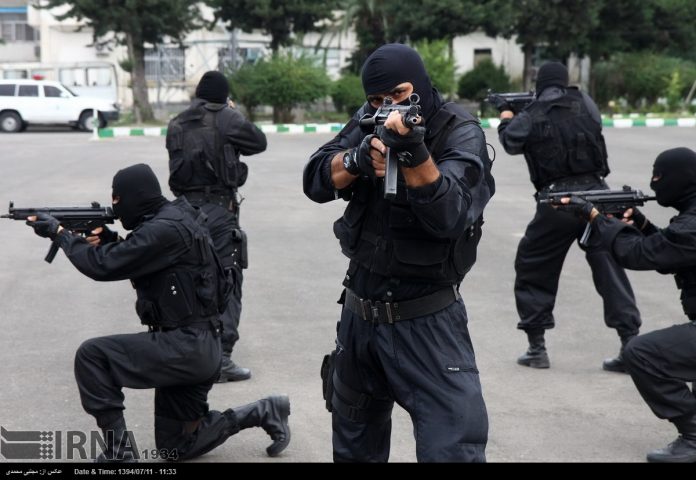
Iran security forces destroy two terrorist cells

Iran Security Forces

Iran’s Intelligence Ministry announced on Monday that six armed terrorists who had entered the country on a mission to assassinate several foreign nationals working on infrastructure projects in Sistan and Baluchestan Province, were identified and arrested.

In addition, the ministry said in its statement that the support team of the terrorists was also destroyed.

UN condemns Saudi Arabia mass execution

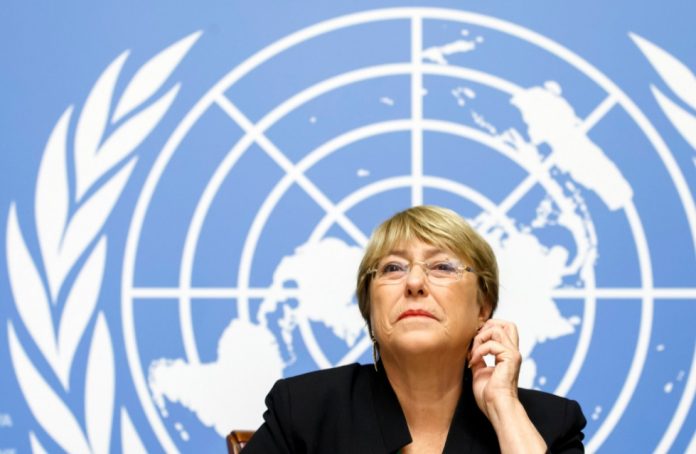
UN Michelle Bachelet

Bachelet said war crimes may have been committed if people were beheaded following court cases that do not offer proper fair trial guarantees.

Saudi Arabia announced Saturday it had executed a record 81 people in one day for terrorism-related offences, exceeding the total number killed in the whole of 2021 and sparking criticism from rights activists.

All had been “found guilty of committing multiple heinous crimes”, the official Saudi Press Agency reported, saying they included convicts linked to the Islamic State terror group, Al-Qaeda, Yemen’s Houthi rebel forces or “other terrorist organisations”.

“I condemn Saudi Arabia’s mass execution on Saturday of 81 people on terrorism-related charges,” Bachelet announced in a statement.

The United Nations High Commissioner for Human Rights noted that among those beheaded, 41 belonged to the Shiite minority, and had taken part in anti-government protests in 2011 and 2012. A further seven were Yemenis and one was a Syrian national.

“Our monitoring indicates that some of those executed were sentenced to death following trials that did not meet fair trial and due process guarantees, and for crimes that did not appear to meet the most serious crimes threshold, as required under international law,” Bachelet added.

“I am also concerned that some of the executions appear to be linked to the ongoing armed conflict in Yemen,” she continued.

“Implementation of death sentences following trials that do not offer the required fair trial guarantees is prohibited by international human rights and humanitarian law and may amount to a war crime,” she added. The Saudi authorities should return the bodies of those executed to their families, the former Chilean president said.

“I am concerned that Saudi legislation contains an extremely broad definition of terrorism, including non-violent acts that supposedly ‘endanger national unity’ or ‘undermine the state’s reputation’,” she said, adding, “This risks criminalising people exercising their rights to freedom of expression and peaceful assembly.”

Bachelet stated that Saudi Arabia was among 38 countries that continues to implement the death penalty. The wealthy Persian Gulf country has one of the world’s highest execution rates, and has often carried out previous death sentences by beheading.

“I call on the Saudi authorities to halt all executions, immediately establish a moratorium on the use of the death penalty, and commute the death sentences against those on death row,” Bachelet underlined.

“I also urge the Saudi authorities to bring the country’s counter-terrorism laws fully into line with international standards,” she underscored.

Iran rights body denounces S Arabia’s mass execution, calls for probe

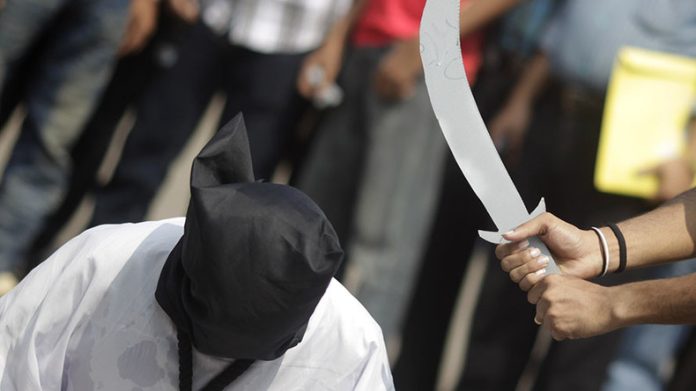
Execution in Saudi Arabia

It said in a statement on Monday that Saudi Arabia has once again committed widespread violations of human rights and abuse of power in its territory.

“The mass execution of 81 people, including eight Yemeni citizens and 40 residents of Qatif region, has cast serious doubt on the charges pressed against them, turning it into a political and ideological score settling that would be described as arbitrary execution,” part of the statement read.

Iran’s High Council for Human Rights blasted the inhumane mass execution and called on all regional and international human rights authorities to pay attention to it.

Member states of the United Nations Human Rights Council are expected to investigate the different aspects of this mass execution away from any politicization… and double standards, the Iranian rights body said.

READ MORE: Iranian president condemns West’s silence on mass execution in Saudi Arabia

It added that special rapporteurs of the UN Human Rights Council particularly the special rapporteur on extrajudicial, summary or arbitrary executions are expected to immediately carry out a comprehensive investigation into this episode.

“In this regard, the High Council for Human Rights expresses it deep regret over the silence and inaction of countries and international organizations, that claim to be advocates of human rights, regarding such actions,” the statement read.

Yemeni forces make huge gains in country’s northwest

Yemen’s Al-Masirah channel cited the source as saying that the Yemeni forces made those gains in the city of Hardh.

Al-Masirah added that the Yemeni troops carried out a mopping-up operation that cleared Hardh and many surrounding villages of the Saudi mercenaries.

According to the military source, the offensive lasted 2 days and the Yemeni forces took control of 54 square kilometers while killing or wounding 500 Saudi forces and Sudanese mercenaries. He noted that the dead include 80 Sudanese and 15 Saudis.

Many other Saudi forces and Sudanese mercenaries were captured while huge amounts of arms and munitions were seized from the invaders during the fighting.

Hardh is highly important as it has a strategic route that links Yemen to Saudi Arabia.

Saudi Arabia and its allies attacked Yemen in March 2015 in hopes of removing the Ansarullah movement from power and restore fugitive former president Abd rabbuh Mansur Hadi in a short period of time.

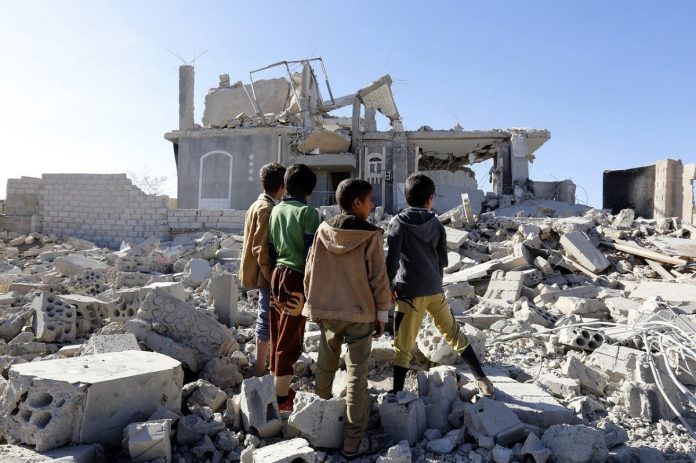
According to the UN more than 377,000 people were killed directly or indirectly in the war with millions more internally displaced.

Iran FM advisor censures UN approach to Yemen ‘as biased’

Yemen War

Ali Asghar Khaji, senior advisor to the Iranian foreign minister for special political affairs stated the UNSC was under the influence of considerations and political lobbying by the aggressor countries.

Khaji made the remark in a Monday phone conversation with Peter Semneby, Sweden’s special envoy for Yemen.

During the phone call, the senior advisor to the Iranian foreign minister added this approach goes against the political process aimed at resolving the Yemen crisis and will increase mistrust between the warring sides more than ever before.

Khaji and Semneby further underlined the need to expand cooperation for the purpose of resolving the ongoing humanitarian catastrophe in Yemen as soon as possible.

Saudi Arabia and its allies launched a war against the Arab world’s most impoverished nation in March 2015.

The war has claimed more than 370,000 lives, directly and indirectly, the UN says, and has caused widespread suffering, with four fifths of Yemen’s 30 million people needing aid.

Iran Culture Ministry website hacked

Hack Hacker

The official website of the ministry and its affiliated sites were apparently taken down briefly during the hacking attack on Monday, and images of the leaders of anti-Iran terrorist group Mujahedin Khalq Organization (MKO) were displayed on them.

Officials of the Ministry of Culture and Islamic Guidance have been unavailable for comment and no explanation has been provided by the authorities in this regard.

Back in January, a number of Iranian television channels were briefly hacked in a similar way.

Iranian president condemns West’s silence on mass execution in Saudi Arabia

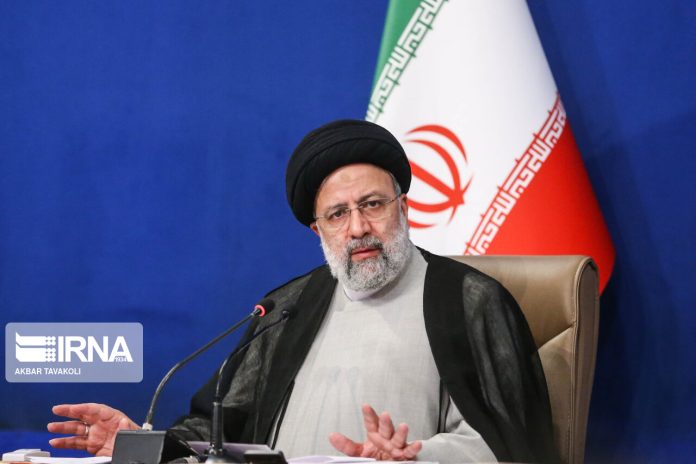
Iran President Ebrahim Raisi

Raisi said the silence and inaction of the self-styled defenders of human rights with regard to the execution of innocents in Saudi Arabia is a sign of hypocrisy on the part of Western governments.

The Iranian president said this shows these self-proclaimed protectors of democracy only use the concept of human rights to achieve their political goals against independent countries.

Raisi urged international organizations and the free press to break their silence over the killings in Saudi Arabia.

READ MORE: Iran says Saudi mass executions against basic principles of human rights

The kingdom on Saturday executed 81 people, mostly for political reasons. Those executed include teens and young people. Convicts are executed in Saudi Arabia with one stroke of the sword.

While some rights groups condemn this as mediaeval, Western governments and the mainstream media impose a blackout on Riyadh’s dire rights record in this regard. Saudi Arabia is the West’s main oil supplier.

Iran receives 2.2mn doses of Astrazeneca shots donated by Germany

Astrazeneca COVID Vaccine

Customs Administration Spokesman Ruhollah Latifi said the latest batch took the total number of Astrazeneca shots received by Iran to over 18 million.

He said Iran has imported 158 million doses of Covid-19 vaccine since January last year.

“With the majority of people vaccinated, and domestic production in good shape, commercial imports of the vaccine have now stopped and the vaccines that have been imported in recent months are mostly donations,” Latifi explained.

Iran has used imported vaccine types and domestically manufactured shots in its national inoculation campaign which has considerably helped contain the outbreak.

The intensified vaccination drive has seen a total of over 145 million doses of vaccine administered in the Islamic Republic. Well over 56 million people in Iran have so far been fully vaccinated while more than 25,200,000 have received their booster jabs.