During the visit, senior officials of the two countries will join formal meetings aimed at paving the way for the expansion of scientific cooperation and technological exchanges between the two sides.
In addition, Uzbekistan’s Ministry of Innovative Development is planning to host the first session of the Iran-Uzbekistan Science and Innovation Forum on July 20, along with B2B meetings between Iranian and Uzbek knowledge-based companies.
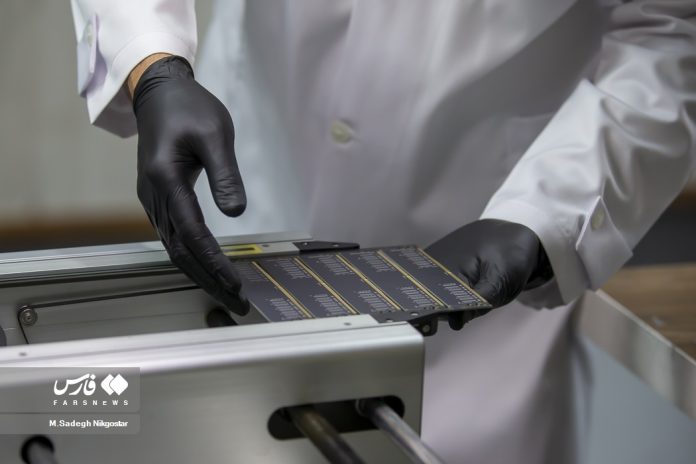
On this date, an exhibition will be held to put on display the technological products of the participating Iranian and Uzbek firms with the aim of enabling the two sides to get to know each other’s capacities and achievements in fields such as agriculture, animal husbandry, health, medical equipment, and so on, and to get engaged in technological exchanges and bolster their trade relations.
The following is the excerpt of an interview with Mr. Mahdi Ghal’e Noei, the head of the Center for International Science and Technology Cooperation at Iran’s Vice Presidency for Science and Technology, which sheds more light on Iran’s innovation and tech ecosystem and the goals of the upcoming key visit:
A look at Iran’s innovation and technology ecosystem
It’s been some time since an ecosystem has come into existence in Iran based on a professional workforce from universities at home or abroad, which has led, thanks to its various elements, to the growth and development of science and technology in the country. Naturally, the workforce needs a set of instruments in order to be effective.
Those instruments include:
1. Technological firms, the start-ups that can be set up, and the industrial fields that they can enter and bring about their growth
2. A professional workforce and technology research funds that provide venture capital (VC) services
3. Innovation factories
4. Innovation centers
5. Science and technology parks
6. Different industrial firms
In order to launch start-ups, the workforce personnel need these instruments so that they can materialize the ideas, thoughts and the designs they have in mind.
In other words, the abovementioned ecosystem should be capable of meeting and overcoming domestic needs and problems, respectively, and serve the Iranian economy in a way that it can cut reliance on oil and, instead, base the economy on science and technology.
In the next stage, the ecosystem should enter the global markets and move on the path of development toward exports and international cooperation.
Today, we are treading the same path in Iran and have reached a point where we possess achievements worthy of being presented on competitive markets across the world.
Currently, we have nearly 70 technology research funds that serve the workforce, companies and start-ups active in knowledge-based fields and offer support, VCs and other assistance services in these specialized areas.
On the other hand, there are currently some 57 science and technology parks in Iran, which allow individuals to transform their ideas from the start-up level into economic technological firms and enterprises.
Currently, there is a notable number of innovation factories and centers inside Iran, which are all at the service of the knowledge-based ecosystem and the professional workforce.
Meanwhile, the ecosystem includes around 8,000 knowledge-based firms and about 2,000 innovative companies. Here, innovative firms refer to the ones operating in the fields of content production, arts and culture, handicrafts, games, and animation, and, in general, in areas other than production of items.
It is necessary to assist all these companies so that they can achieve a proper level of growth and make their way from domestic markets into regional and international ones.
For that purpose, a set of mechanisms have been designed at the Vice Presidency for Science and Technology and its Center for International Science and Technology Cooperation to empower these companies and pave the ground for their entry into global markets.
Among those mechanisms is a large network of international entrepreneurs who work to facilitate the presence of these firms on international markets.
In addition, the Vice Presidency has founded Iran’s Houses of Innovation and Technology (iHiTs) in six locations of the world, including Kenya, Russia, China, Syria, Iraq’s Kurdistan region and Turkey, while three more iHiTs will be opened elsewhere later this year.
All these mechanisms and tools have been designed to be placed at the disposal of knowledge-based, creative and technological firms, minimize the risks in their way of international markets, and lay the foundation for their constructive exchanges on the international stage.
As you know, Iran has the first place in the region in terms of science and technology, while it follows China, Japan and South Korea in the broader Asian continent and is now engaged in a competition with them.
The country should thus exert greater efforts in the area of commercialization in order to enter regional and global markets so that it can secure a bigger share of the international economy that would be in harmony with its capabilities.
Technological and Scientific exchanges between Iran and Uzbekistan
Ties between Iran and Uzbekistan is deeply rooted in history, but unfortunately, scientific and technological cooperation between the two states has been overlooked; therefore, both countries should strive to help each other promote their technology level and make use of the capacities existing in the markets of the respective countries in line with the development of technological products. Iran and Uzbekistan should also make plans for joint production so that they can powerfully enter other markets.
Such cooperation can be the starting point of a win-win game for both countries, given the fact that our companies enjoy great capabilities in the technological sphere and are able to place these capacities at the disposal of Uzbekistan’s firms, businessmen and its science and technology sectors.
That is why the forthcoming visit by Iran’s knowledge-based firms to Uzbekistan will be a turning point in technological and scientific cooperation between the two countries.
Naturally, the inking of a memorandum of understanding between the two sides on technological cooperation can lead to the enhancement of bilateral relations and set the stage for further interactions between Iranian and Uzbek companies.
It is hoped that in this trip, where over 40 technology firms are expected to accompany Iranian Vice President for Science and Technology Dr. Sorena Sattari to Uzbekistan, with the help of the respected Uzbek government, the necessary relationship will be established between the firms of the two sides and an effective, helpful, constructive relationship that can be developed would be built for both countries. We see no limit for cooperation with Uzbekistan in the field of technology and welcome technological cooperation with the country in all fields.
Ukraine rules out ceding territory to Russia to secure peace
Ukrainian Foreign Minister Dmytro Kuleba has ruled out ceding territory to Russia as part of any peace deal and said no peace talks were under way between Moscow and Kyiv.
“The objective of Ukraine in this war… is to liberate our territories, restore our territorial integrity, and full sovereignty in the east and south of Ukraine,” he told a briefing.
“This is the end point of our negotiating position,” he noted.
Russia took control of Luhansk province in eastern Ukraine this month and hopes to capture all territory it does not yet control in neighbouring Donetsk, the other province in the industrial Donbas region.
US calls for observers in Russian-held amid reports of child separation
The United States has called on Russia to immediately release Ukrainians it has forced out from their home country and to allow outside observers, citing reports that Moscow was putting Ukrainian children up for adoption and “disappearing’ thousands of others.
“The unlawful transfer and deportation of protected persons is a grave breach of the Fourth Geneva Convention on the protection of civilians and is a war crime,” US Secretary of State Antony Blinken stated.
Russia awaits progress on Kaliningrad transit embargo, issue unresolved: Kremlin
Moscow is anticipating progress on the Lithuania transit embargo against Kaliningrad though the predicament is still not finalized, Kremlin Spokesman Dmitry Peskov told journalists on Wednesday.
“So far, this situation has not been finalized. We are awaiting some progress yet right now we cannot state that this problem has been resolved,” he stated in response to a request to comment on reports that the EU and Russia have allegedly reached agreements on the transit of cargoes to the region.
This information was earlier reported by Izvestia citing unnamed sources from the Russian side. That said, the Kaliningrad Region stated that it had not yet received any official notices or documents on any removal of restrictions.
On June 18, Lithuania blocked the transit of goods specified by the European sanctions to and from Kaliningrad. The Russian Foreign Ministry and the Kremlin stated that Vilnius’ actions were unlawful and contradicted international agreements. Governor of the Kaliningrad Region Anton Alikhanov reported that the region had proposed four alternatives to respond to the Lithuanian transit ban. In their turn, the Lithuanian government and the EU leadership noted that the country had not introduced any unilateral or additional restrictions yet was simply consistently implementing the current European sanctions.
EU may lift blockade of Russian exclave
The EU is in talks with Lithuania on lifting sanctions on the transit of goods to Russia’s exclave of Kaliningrad, the newspaper Izvestia reported on Wednesday, citing two unnamed Russian officials.
The officials told the news outlet that the EU had sent a draft document to Moscow in early July outlining that the transit of goods by both rail and road from mainland Russia to Kaliningrad would be removed from sanctions. However, the sources said that Vilnius, which previously blocked shipments of goods to the region via Lithuania’s territory in order to comply with sanctions, has not yet agreed to finalize the document.
“Lithuania does not want to agree to the compromise proposed by the EU. In many ways, the position of Vilnius is determined by the US, which puts pressure on it. The issue is now under consideration of the Lithuanian side,” one of the sources told Izvestia.
The second source told the news outlet that the carve-out for the transport of goods to Kaliningrad via Lithuania may be included in the next EU sanctions package, which is set to be adopted later this month.
Both officials stated that the draft document provided by Brussels “completely satisfied” Moscow.
Two-thirds of Ukraine refugees plan to stay put for now: UN
Around two-thirds of refugees from Ukraine expect to stay in their host countries until hostilities subside and the security situation improves after Russia’s invasion, a survey by the United Nations refugee agency UNHCR has found.
Most of the refugees from Ukraine, mainly women and children, hope to return home eventually, according to the survey of around 4,900 people from Ukraine now living in the Czech Republic, Hungary, Moldova, Poland, Romania and Slovakia. The survey was conducted between mid-May and mid-June.
UNHCR says 5.6 million refugees are now recorded across Europe, with nearly 8.8 million people crossing out of Ukraine and nearly 3.3 million crossing back in since the Russian invasion on February 24.
Lithuania aims to decouple Baltics from Russian power grid
Lithuania is pushing to decouple the Baltic States from the Russian power grid already in early 2024 compared to a previous plan for end-2025, Lithuanian power grid operator Litgrid’s CEO Rokas Masiulis has said.
Masiulis added discussions with Estonia and Latvia on the matter had started, and that the European Commission was also involved.
Litgrid’s CEO also assured that European power grid network ENTSO-E will connect to the Baltic states’ grids within 24 hours if the countries were to be disconnected by Russia.
Ukraine says ‘security’ needed for grain exports but deal within reach
Ukrainian Foreign Minister Dmytro Kuleba told journalists that “security” was needed to ensure that ships carrying grain can transit through Ukrainian ports safely.
“Security for us means that [the] Russian navy won’t be able to attack our ports from the sea in… these open corridors, because you don’t know, you know, we cannot trust the Russians,” Kuleba was quoted by AP as saying.
The foreign minister added that Moscow was using grain negotiations to obtain the lifting of financial measures that have hit its economy hard.
“They are playing their hunger game, putting millions of people in Africa and in Asia at risk simply because they want to get rid of some of the sanctions,” Kuleba continued.
In an interview to the Spanish newspaper El Pais, he expressed optimism and stressed that Ukraine was “ready to export grain to the international market.”
“We are two steps away from a deal with Russia,” Kuleba noted.
Russia would consider gas transit via Ukraine beyond 2024
Russia will consider continuing to send gas to Europe via Ukraine beyond its current deal which ends in 2024, as long as European countries still want Russian gas and Ukraine’s national transit system works, the RIA news agency has cited the foreign ministry as saying.
Despite the war in Ukraine, Russia has continued to ship large quantities of gas across Ukraine into Europe – Moscow’s key global customer for its multi-billion dollar gas exports.
Anti-Russian sentiment growing in occupied Ukraine: UK
Anti-Russian sentiment is growing in occupied Ukraine, and Russian-backed officials are at risk of escalating attacks which would exacerbate the “already significant challenges facing Russian occupiers,” the UK’s ministry of defence has announced.
“Anti-Russian sentiment in occupied Ukraine is leading to Russian and pro-Russian officials being targeted. The Russian-appointed administration in Velykyi Burluk acknowledged that one of its mayors was killed on 11 July 2022 by a car bombing,” the ministry said in its latest intelligence briefing.
“The targeting of officials is likely to escalate, exacerbating the already significant challenges facing the Russian occupiers and potentially increasing the pressure on already reduced military and security formations,” the briefing added.
The ministry also noted Russian forces will likely focus on taking several small towns in the Donetsk region in the coming week, including Siversk and Dolyna, as they approach the cities of Sloviansk and Kramatorsk.
Moscow shares all information about Kiev forces’ crimes with UN colleagues
Russia promptly delivers to its UN colleagues all information about crimes committed by the Ukrainian military, Russian First Deputy Permanent Representative to the UN Dmitry Polyansky has said.
“There are many opportunities for promoting our truth, including on the UN platform. And, of course, we are going to use them,” he told the Soloviev Live channel late on Tuesday.
“In any case, we do not hush up any information about crimes committed by the Ukrainian military and nationalists. On the contrary, we show and tell it to our UN colleagues at every opportunity,” the diplomat added.
The United Kingdom, the United States and France should get used to the fact that interests of other states should be respected as well, he said.
It’s time for the United States to recognize its role in the 2014 state coup in Ukraine, he noted.
“It’s common knowledge that the US tried to overthrow President of Venezuela. Now waiting for acknowledgement of US pivotal role in illegal Maidan coup in Ukraine in 2014 which is an open secret too,” the Russian diplomat wrote on Twitter, commenting on former high-ranking White House official’s remarks about his participation in staging coups abroad.
On Tuesday, John Bolton, a former White House national security adviser, noted, “As somebody who has helped plan coups d’etat – not here but you know (in) other places – it takes a lot of work.”
Nearly 200 in need of medical help after Ukrainian attack
Nearly 200 people have requested medical assistance after sustaining injuries in a strike targeting the Ukrainian city of Novaya Kakhovka, the local administration’s head, Vladimir Leontyev, has claimed.
He added that local authorities did not count “minor scratches,” referring to light wounds that were treated on the spot.
At least seven people died in the attack, carried out by Kiev, the media reported.
“187 people injured [in the strike] sought [medical assistance],” Leontyev told TASS, adding that the authorities managed to provide the necessary aid to only 90 of them.
Plumes of smoke are still rising over the area hit by the Ukrainian missile strike in the early hours of Tuesday, a local administration head in the Kherson region told TASS on Tuesday, adding that the area is still being rocked by explosions.
The attack hit a cluster of warehouses in the town of Novaya Kakhovka, the local authorities said.
The Ukrainian authorities reported that a Russian ammunition depot had exploded in the city after being targeted by Kiev’s forces.
Local emergency teams and military personnel are still clearing the rubble and demining the area, Leontyev said, adding that the number of casualties could rise. Many people remain trapped under rubble, he told TASS. According to Russian media, the Ukrainian strike also destroyed a warehouse where 35 tons of humanitarian aid, including food for inhabitants of the city, were stored.
NATO, EU want to ‘track’ weapons sent to Ukraine: Report
Concerns are growing among NATO and EU members about the way Ukraine handles the weapons supplied by the West, the Financial Times reported.
Western nations are now seeking to establish a special tracking mechanism to try and prevent these arms from ending up in Europe’s black markets, the paper added.
Since the start of the Russian military operation in Ukraine, the US and its allies in Europe and elsewhere have pledged over $10 billion in military assistance to Kiev. The weapons shipments included scores of small arms, as well as portable anti-tank and anti-air missiles.
“All these weapons land in southern Poland, get shipped to the border and then are just divided up into vehicles to cross: trucks, vans, sometimes private cars,” an unidentified Western official told the Financial Times, explaining why the EU and NATO wanted Kiev to keep a detailed inventory list for all the Western weapons it received.
“From that moment we go blank on their location and we have no idea where they go, where they are used or even if they stay in the country,” the official added.
According to the EU’s law enforcement agency, some of the arms might have already left Ukraine’s territory and found their way back to Europe.
In April, Europol warned that its investigations indicated the weapons were being trafficked out of Ukraine and into the EU to supply organized criminal groups. The conflict in Ukraine “has resulted in the proliferation of a significant number of firearms and explosives in the country,” the agency said at the time.
Europol appeared to be particularly concerned about the fact that Ukrainian authorities had “abandoned” the practice of keeping “registers of firearms handed out to civilians” at the beginning of the conflict.
“Firearms have been distributed without records since then,” the agency said, calling for a similar register to be created for all weapons and military materials transferred from the EU to Ukraine.
Kiev has denied “becoming a major hub for arms smuggling.” According to Yury Sak, an adviser to Ukraine’s defense minister, “any movement of weaponry either into Ukraine or out of Ukraine … is very closely monitored and supervised both by Ukraine and our international partners.”
Washington also said it trusted Kiev, even though it admitted that the prospect of American weapons sent to Ukraine getting into the wrong hands was “among a host of considerations” due to the “challenging situation” on the ground.
“We are confident in the Ukrainian government’s commitment to appropriately safeguard and account for US [weapons],” the US undersecretary for arms control and international security, Bonnie Jenkins, told reporters in Brussels last Friday.
US and UK have ‘conned’ EU: Russia
Washington in tandem with London conned EU members “like a couple of shell-game tricksters” by drawing them into the economic war against Moscow, former Russian president Dmitry Medvedev claimed, commenting on the weakening of the euro.
On Tuesday, for the first time in 20 years, the US dollar and euro exchange rates reached parity on the Moscow Exchange. This turn of events, according to Medvedev, who now serves as deputy chair of the Russian Security Council, means that “predictions about the onset of a systemic crisis in the eurozone are beginning to come true.”
In his opinion, the fall of the euro demonstrates “who pays in hard currency for the bloody crisis” in Ukraine.
“Washington in tandem with London conned the Europeans like a couple of shell-game tricksters,” the former president wrote on Telegram.
Prior to imposing “crazy restrictions” against Russia, European countries should have calculated “their own monetary and economic problems,” Medvedev claimed, adding that the White House normally weighs its risks much better.
“But the ‘useful European idiots’ suffered much more at the mercy of the Americans,” the deputy chair of the Security Council stressed.
However, Medvedev does not feel sorry for them since, in his opinion, “the Russophobes from the EU” unleashed “a hybrid war” against Russia and opened “a wide economic front” against it.
The former head of the state said that the transition to new trade payment methods, including the use of national currencies – the Russian ruble, Chinese yuan, Indian rupee and others – would be the best protection against “a rotting euro.” He didn’t rule out the possibility that, in the future, the BRICS countries might come up with a new reserve currency.
“The modern world clearly needs more than the dollar, euro, and pound sterling. For now, $1 = €1. Keep savings in rubles!” Medvedev wrote.
Commenting in mid-June on the economic sanctions against Moscow, Russian President Vladimir Putin called them “insane and thoughtless.”
Previously, he alleged that European leaders were committing economic “suicide” under pressure from the US.
The EU, however, insists that its members were aware of the grave consequences of anti-Russia sanctions for their own economies.
“But this is the price to pay to protect democracies and international law, and we are taking the necessary steps to address these issues in full solidarity,” the bloc’s top diplomat, Josep Borrell, said earlier this month.
European Space Agency terminates cooperation with Russia on Mars mission
European Space Agency is terminating cooperation with Russia on the mission to launch Europe’s first planetary rover, designed to search for signs of life on Mars, the agency’s chief said on Tuesday.
The ExoMars Rover, a collaboration between the ESA and the Russian space agency Roscosmos, had been on track to leave for Mars in September this year. But the ESA said in February that Russia’s invasion of Ukraine had made that “very unlikely.”
Then in March, the agency suspended cooperation with Roscosmos over their joint mission on Mars in the wake of the Ukraine invasion and sanctions imposed on Russia.
“Today ESA Council addressed the ExoMars Rover and Surface Platform mission, acknowledging that the circumstances which led to the suspension of the cooperation with Roscosmos – the war in Ukraine and the resulting sanctions – continue to prevail,” ESA’s Director General Josef Aschbacher wrote on Twitter.
As a consequence, the agency’s board instructed him to officially terminate cooperation with Russia on the program, Aschbacher continued.
“New insights on the way forward with other partners will come at a media briefing on 20 July, details to come,” he added.
The rover was initially scheduled to launch in July 2020 but was delayed by the coronavirus pandemic.
The mission is intended to search for life on Mars and investigate the history of water on the red planet. The rover has the capability to drill beneath the surface of Mars to a depth of 6.5 feet (about 2 meters), where the scientists hope they may find signs of life.
France cautious on possible Ukraine-Russia grain deal
France’s foreign minister has said she remains cautious about the prospects of four-way talks in Turkey to unblock Ukraine’s grain exports succeeding, given that Russia had repeatedly added obstacles to achieve such an accord.
Speaking to lawmakers in parliament, Catherine Colonna stated she hoped the talks between Russia, Ukraine, Turkey and the United Nations on Wednesday would see progress, but noted that in previous weeks, Russia had “added conditions on conditions”, making her prudent about any positive outcome.
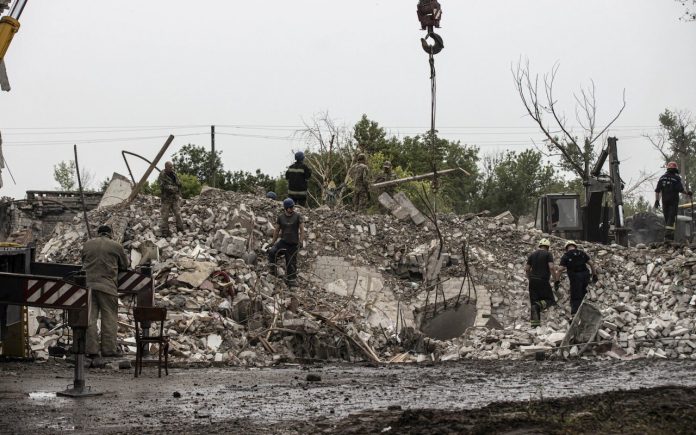
Chasiv Yar death toll hits 45
The death toll after a Russian missile strike on the town of Chasiv Yar has increased to 45, Ukraine’s State Emergency Service has reported.
Ukrainian authorities announced Russian forces attacked the five-story residential building in Chasiv Yar with missiles.
Zelensky quiet on reported civilian deaths from Ukrainian strike
Ukrainian President Volodymyr Zelensky vaguely alluded to the reported air raid by Ukrainian forces on Nova Kakhovka, in Russia-occupied Kherson, but remained quiet about a Moscow-backed official’s claim that at least seven people, including civilians, were killed in the strike and dozens more injured.
In his nighttime speech to the nation, Zelensky mentioned ongoing Russian strikes on Mykolaiv, Kharkiv and areas in the eastern Donbas region.
But, he stated, “it should also be remembered that even in such conditions, the state takes steps forward – in cooperation with partners – in institutional development. And, of course, on the frontline.”
“The occupiers have already felt very well what modern artillery is, and they will not have a safe rear anywhere on our land, which they occupied. They have felt that the operations of our reconnaissance officers to protect their Homeland are much more powerful than any of their ‘special operations’,” he added.
Ukraine’s military announced on Tuesday that the attack hit an ammunition dump in the town of Nova Kakhovka and killed 52 Russian. The attack came after Washington supplied Ukraine with advanced high mobility artillery rocket systems (HIMARS), which Kyiv says its forces are using with growing efficiency. Kyiv also claims it is planning to retake the occupied Kherson region in a counteroffensive using hundreds of thousands of troops.
“Unsanitary conditions are growing” in Severodonetsk: Ukrainian official
“Unsanitary conditions are growing” in Severodonetsk and “there is not enough water and not enough food” in the city, said Roman Vlasenko, head of the city’s regional administration.
Vlasenko added that there are also issues with gas and electricity supplies.
He described the living situation as “very sad” for those that have remained even though “there are not many people left there.”
A sign in the city was repainted from Ukrainian to Russian colors on Monday.
Vlasenko stated that “pressure continues on pro-Ukrainian activists” and that they continue to face serious challenges.
In an interview with Tasnim, Hossein Sabah Zangeneh, Iran’s former ambassador to the Organization of Islamic Cooperation, played down the Biden administration’s claim that it no longer considered the Middle East a priority.
He said Washington would not leave the Middle East but would instead try to create a “special structure” that would help the Americans achieve their goals in the region, including gaining dominance over oil reserves and selling weapons to the countries there.
Instead of direct involvement, he said, the US is trying to create a structure under which it could make the regional countries spend on protecting Israel’s security.
Sabah Zangeneh ruled out the possibility of forming a Middle Eastern coalition against Iran, saying such alliances cannot play a major part in regional equations.
As a case in point, he referred to a futile war being waged against Yemen by a Saudi-led coalition of countries since early 2015.
“Large countries that have issues with the Zionist regime will not be ready to join a coalition whose goal is to support the regime’s security. That would be a big insult to the Arab countries,” he explained.
The Americans imagine that such a coalition can advance their interests if they take the lead themselves, “while the realities on the ground and the region are much more complicated than this,” the analyst said.
Al-Agal’s death was announced on Tuesday by the Pentagon’s Central Command (CENTCOM), the military command covering the Middle East.
CENTCOM said that the strike took place outside Jindayris in northwest Syria, an area currently under the control of Turkish-backed forces.
A deputy of al-Agal was also targeted in the strike, and was seriously injured, according to a CENTCOM statement.
“The removal of these ISIS leaders will disrupt the terrorist organization’s ability to further plot and carry out attacks,” CENTCOM spokesman Col. Joe Buccino stated, adding, “ISIS continues to represent a threat to the US and partners in the region.”
The US has carried out a number of strikes and raids on senior IS personnel in northwestern Syria in recent months.
An alleged top leader of the group was detained by US forces in a raid last month, while overall IS commander Abu Ibrahim al-Hashimi al-Qurashi killed himself with a suicide vest during a raid by US special forces in the area in February.
While small groups of IS militants remain active in Syria, the group’s power and influence has been all but destroyed in recent years. While IS once commanded vast swathes of territory in Iraq, Syria and North Africa, a military campaign by the Syrian government and Russia, as well as an air campaign by the US and its allies, successfully crushed the organization from 2015 onwards.
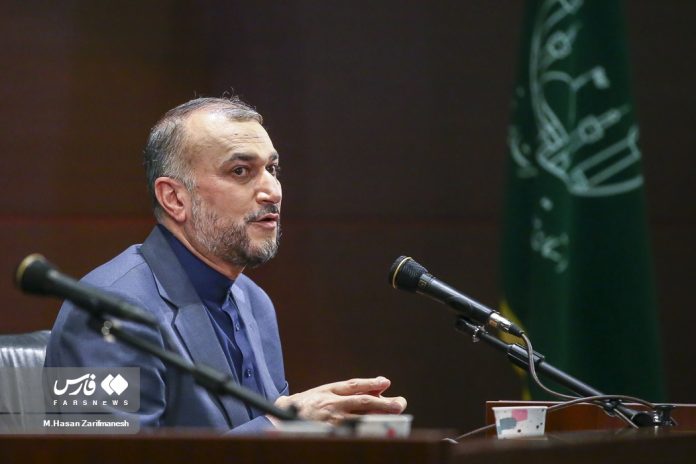
Amirabdollahian was referring to Iran’s stance on the outcome of any agreement to revive the 2015 nuclear deal, JCPOA. He was speaking at the International Affairs Institute, IAI, a think tank in Italy.
The foreign minister said there are no provisions in the wording of the JCPOA that can be interpreted and everything is clear in the agreement.
Amirabdollahian then criticized the US withdrawal from the JCPOA, lamenting the fact that former US president Donald Trump got Washington out of the deal with impunity.
He said the EU trio only said Trump was a bad man while “we didn’t care if Trump was bad or not and what mattered for us was to be able to enjoy economic benefits of the JCPOA.”
The Iranian foreign minister said the European countries once criticized Iran for “driving a wedge between Europe and the US, but we did not negotiate to cause divisions between you and we were only seeking to protect our own interests.”
He added that Iran believes there must not be any inconsistency between nuclear surveillance and economic benefits on the part of Iran.
Amirabdolalhian reiterated that Tehran is not making any demands beyond the JCPOA and it only wants guarantees that it will enjoy economic benefits of a deal.
He underscored that foreign companies must do business with Iran after the revival of the JCPOA without facing any sanctions.
The foreign minister said Iran has kept the door of diplomacy open and will continue efforts to reach the finish line in the talks.
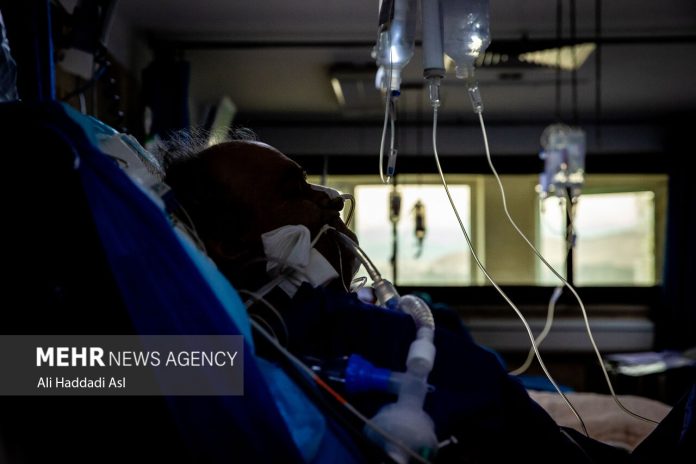
According to the official tally for Tuesday, at least 3,588 people were diagnosed with COVID-19, and 386 of them had to be hospitalized.
Seven patients also died of the disease during the past 24 hours.
Those figures were increasingly up from a couple of weeks ago when merely dozens of cases and no deaths were registered daily.
According to experts, the reemergence of the pandemic is due to the fact that the new subvariants of Omicron are resistant to vaccines and therefore highly contagious.
On Monday, Dr. Mehrdad Hagh Azali, a top infectious disease specialist and a member of Iran’s coronavirus taskforce committee, said the new subvariants, namely BA.4 and B.A5, were the leading cause of the new surge.
Iran’s Deputy Health Minister Dr. Kamal Heidari also said the subvariants had spread to Iran from the United States and Europe.
So far, 150,742,572 doses of different COVID-19 vaccines have been administered in Iran, including 28,013,941 third booster shots.
COVID-19 has killed 141,451 Iranians as of Tuesday, according to the Iranian Health Ministry. Over seven million people have also recovered.
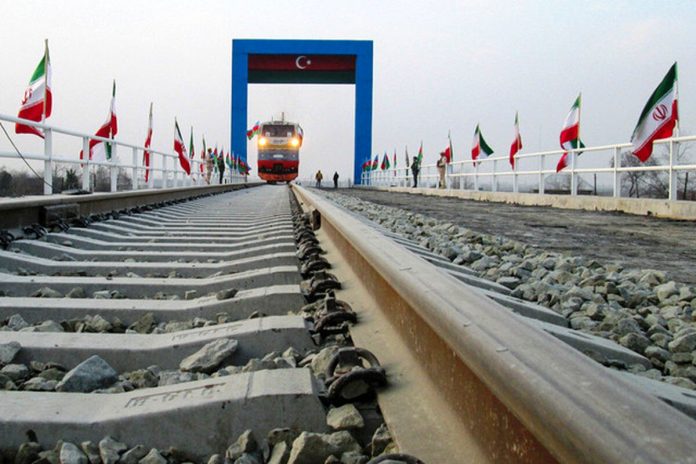
The transit container train entered Iran via the Sarakhs railway border during a ceremony attended by Vice President Mohammad Mokhber and the ministers of oil, industries, agriculture and roads and urban development.
Mokhber said during the ceremony that given Iran’s position in the region, using the transit capacity is a definite strategy and economic policy of the administration of President Ebrahim Raisi.
He added that the transit capacity and its economic benefits had been forgotten in the past.
The vice president also pointed to the importance President Raisi atatches to foreign policy for the purpose of boosting and increasing trade exchanges and communications with neighbors.
Mokhber said Iran’s transit capacity will initially increase to 8 million tons and then to 20 million tons with efforts by the ministry of roads and urban development.
He noted that Iran is even capable of increasing this capacity to 300 million tons.
The Iranian vice president went on to say that revenues from the transit capacity can be very high while it’s also very important for Iran politics-wise and in terms of international relations.
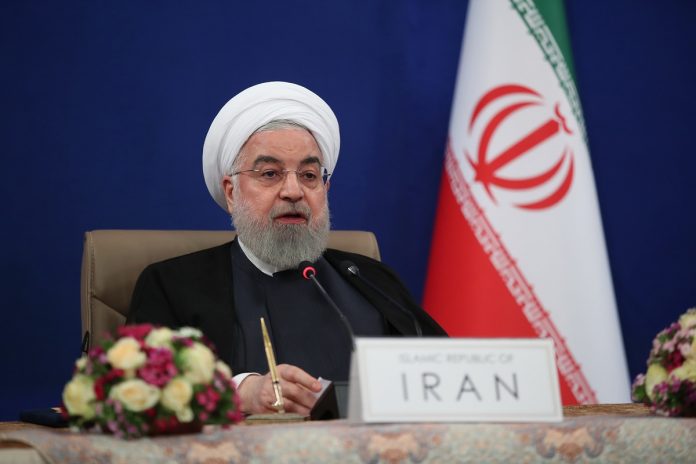
Hassan Rouhani issued a message on Tuesday to condemn the assassination and offer condolences to Japan over Abe’s murder, as the Japanese people turned out in their thousands to bid farewell to the former prime minister, who was shot dead on Friday during a campaign rally.
“Mr. Abe traveled to Iran at the height of [former US president] Trump’s economic war against the Iranian nation, just like his father, who visited Iran in his capacity as Japan’s foreign minister for mediation during the war imposed [by Iraq] on Iran,” he said.
He said during Abe’s term in office, “great strides” were made in bolstering historical Iran-Japan relations through mutual visits.
Abe was assassinated on July 8 by a former Japan Maritime Self-Defense Force sailor while delivering a campaign speech in Nara ahead of the 10 July election.
On Tuesday, crowds packed pavements lined by police as Abe’s hearse left central Tokyo’s Zojoji Temple.
Iran and many other world countries extended heart-felt condolences to Japan over the tragedy.
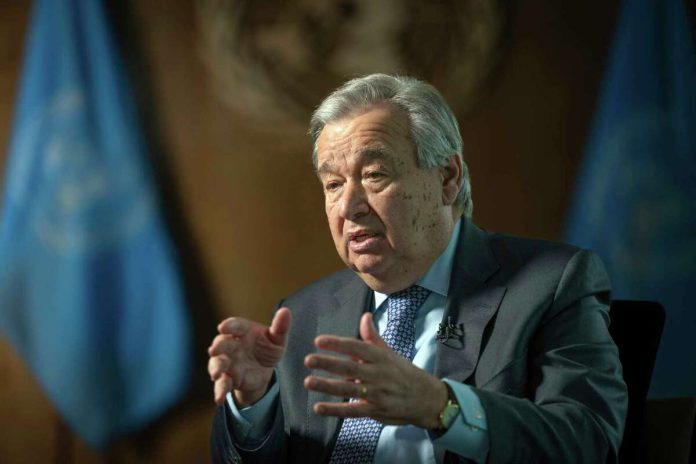
Guterres stated in the annual “Children and Armed Conflict” report that Israeli troops killed 78 Palestinian children, maimed another 982, and detained 637 in 2021.
“Should the situation repeat itself in 2022, without meaningful improvement, Israel should be listed,” Guterres warned in the report, referring to the UN’s “List of Shame” of those committing grave violations against children.
The UN chief added he was “shocked” by the killing and injuring of Palestinian children by Israeli forces in airstrikes on densely populated areas and through the use of live ammunition, and “at the continued lack of accountability for these violations.”
He also expressed serious concern about the excessive use of force, urging “the Israeli forces to exercise maximum restraint… in order to protect lives”.
Guterres also called on “Israel to investigate every case in which live ammunition was used”.
Referring to the issue of the Palestinian children held in Israeli jails, Guterres stressed the need for Israel to adhere to international standards regarding the detention of children, and to end administrative detention of kids, as well as ill-treatment and violence in detention.
Under the administrative detention, Israel keeps Palestinians without charge for up to six months, a period which can be extended for an infinite number of times. The detention takes place on orders from a military commander and on the basis of what the Israeli regime describes as ‘secret’ evidence. Some prisoners have been held in administrative detention for up to 11 years.
Palestinians and human rights groups say the administrative detention violates the right to due process since evidence is withheld from prisoners while they are held for lengthy periods without being charged, tried, or convicted.
Kazem Gharibabadi made the demand in a letter to the UN high commissioner for human rights.
Gharibabadi also demand the immediate release of Nouri and reparations for the damage caused by his illegal detention.
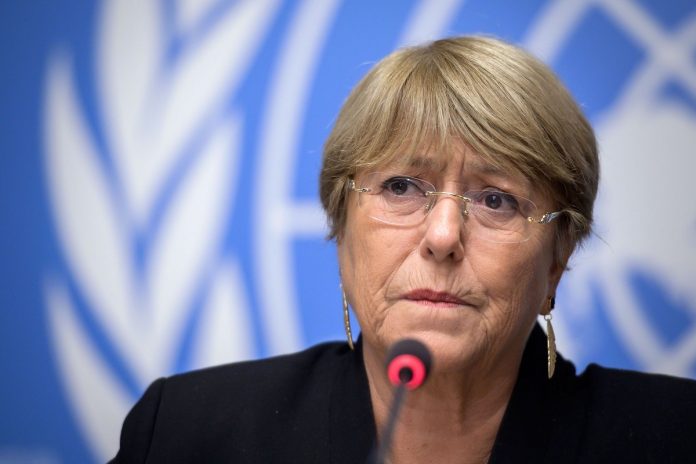
He referred to the dire conditions under which the Iranian national is held in custody, urging Michelle Bachelet to pursue the case as her responsibility is to protect the rights of nationals of world countries.
He noted the Sweden is a signatory to a number of international agreements including the 1963 Vienna Convention governing consular relations and is obliged to respect human rights.
The Iranian Judiciary deputy chief said Nouri was detained by virtue of an arrest warrant issued by the Swedish prosecutor based on unfounded allegations by a number of the MKO terrorist group.
Gharibabadi said since his arrest, the Iranian national has been held in solitary confinement, which shows the arrest was arbitrary detention in the first place.
In his letter, Gharibabadi said Nouri’s family travelled to Sweden twice but were denied a meeting with him.
Nouri was arrested in 2019 while visiting Sweden on a tourist visa.