Wednesday, January 14, 2026
Home Blog Page 1821

‘WSJ claim of Iran dropping IRGC delisting demand from US lacks credibility’

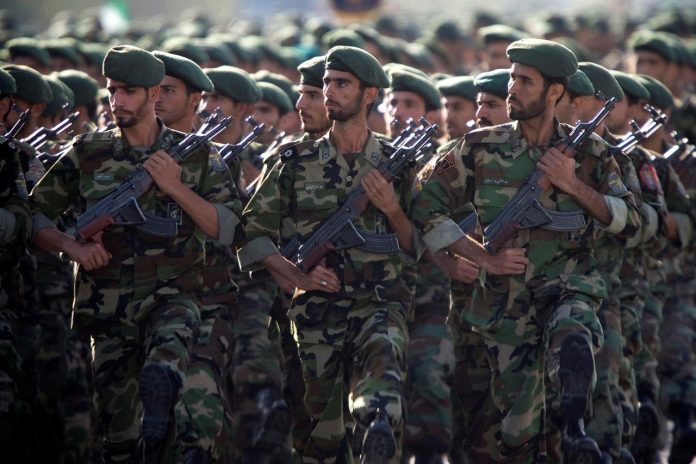
IRGC

“The Islamic Republic of Iran has not set aside the demand for the removal of the IRGC from the ‘terrorism’ list and media claims in that regard lack credibility,” the source told the official Iranian news agency, IRNA, on Thursday.

The Wall Street Journal had claimed in a report that Iran had withdrawn a condition for the US to remove the IRGC from its so-called terrorism list.

Iran, the source added, “has shown its good will in the negotiations and is seriously determined to reach a deal” aimed at reviving the nuclear deal, officially named the Joint Comprehensive Plan of Action (JCPOA).

“The ball is now in the court of the US and if they seek to achieve a deal with Iran, they must seize the opportunity provided to them by the JCPOA parties and act responsibly,” the source said.

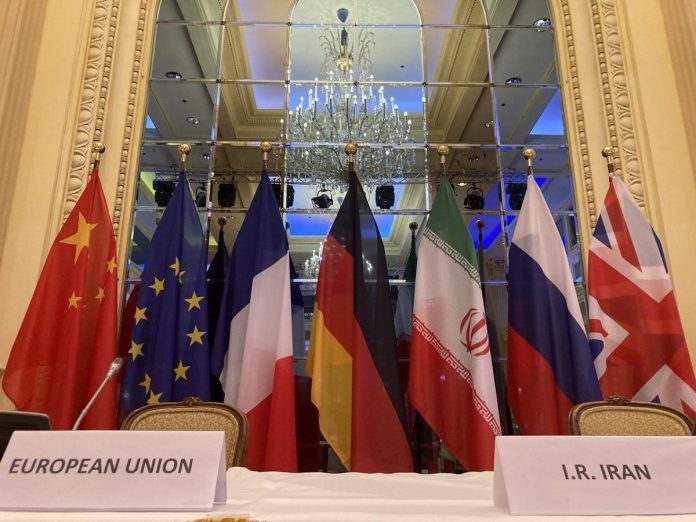
Talks to revive the 2015 nuclear deal between Iran and world powers are set to resume later on Thursday, as representatives from Iran and the United States return to Vienna for a new round of discussions mediated by the European Union.

The original format — also including China, Russia, France, Germany and the United Kingdom, shaping a Joint Commission — that began talks to restore the nuclear accord in April 2021, will be reconvened.

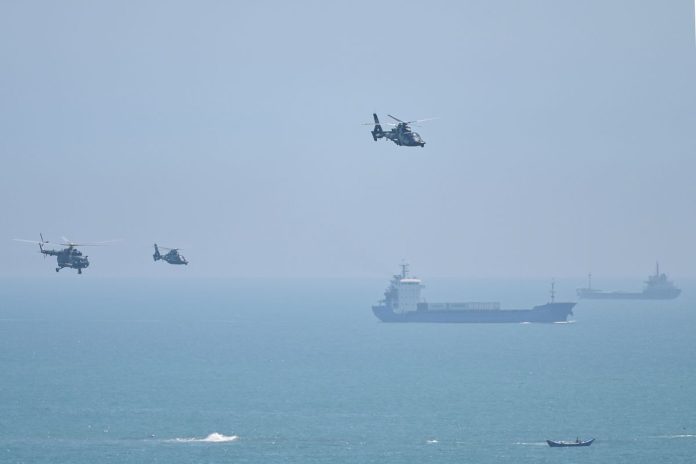
China starts massive military drills around Taiwan after Pelosi visit

China starts massive military drills around Taiwan

According to the TV channel, drills kicked off at 12:00 local time, and will continue till August 7.

Taiwan’s Central News Agency reported earlier that three out of the six areas of China’s drills overlap with the waters Taiwan’s administration considers as territorial waters.

China’s Global Times reported on Wednesday that the drills will involve J-20 and J-11 fighter jets, H-6K strategic bombers, 052D project torpedo boat destroyers, 056A project corvettes. Apart from that, the Chinese army will use DF-11 shorter-range ballistic missiles and DF-17 hypersonic systems. It is planned to fire conventional rockets directly over Taiwan to hit hypothetical targets east of its coastline.

According to experts, five of the six drills areas are located east of the so-called median line in the Taiwan Strait, which is considered as a hypothetical border between mainland China and the island.

The drills were announced shortly after Pelosi arrived in Taipei.

The Chinese People’s Liberation Army launched missiles with conventional warheads into the water areas east of Taiwan in large-scale drills around the island, Spokesperson for the Chinese Army’s Eastern Theater Command Senior Colonel Shi Yi said in a statement on Thursday.

“On the afternoon of August 4, the missile troops of the Eastern Theater Command of the Chinese People’s Liberation Army conducted launches of missiles with conventional warheads against many water areas east of Taiwan,” the statement reads.

All the missiles accurately hit the notional targets in the designated areas of the drills, the spokesperson added.

A China’s top diplomat has denounced Pelosi’s visit to Taiwan as a “complete farce,” warning that those who “offend” Beijing will face consequences.

Speaking to reporters on the sidelines of a meeting in Cambodia on Wednesday, Foreign Minister Wang Yi slammed Pelosi’s junket to the island, deeming the trip a provocation as Beijing considers Taiwan part of its own territory.

“This is a complete farce. Under the guise of ‘democracy,’ the US is violating China’s sovereignty,” he said, adding that “These perverse actions will not alter the international consensus on the One China principle, nor the irreversible historical trend that Taiwan will return to the motherland.”

“Those who play with fire will perish by it, and those who offend China will be punished,” he stressed.

Iran intelligence forces arrest 10 Israel-tied Daesh elements, foil terror attacks

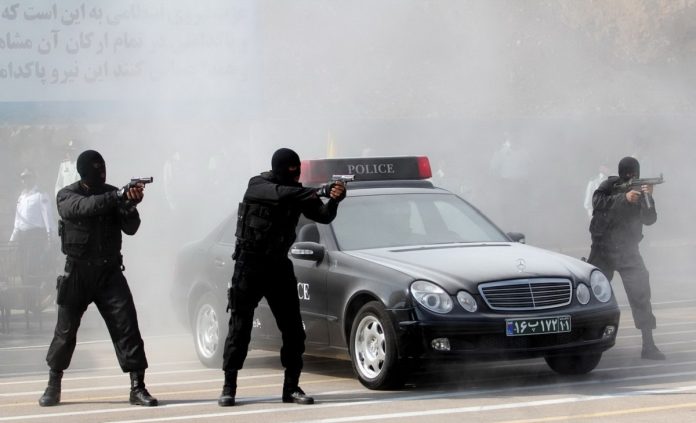
Iranian security forces

In a statement released on Thursday, the ministry said the Takfiri-Zionist terrorists of Daesh had been arrested in the course of the past three days before they could launch their attacks.

It said the Israeli regime, “having suffered a great setback last week by failing to blow up a sensitive site” in Iran, attempted to use “Takfiri-Daesh teams” to carry out terrorist operations targeting mourning ceremonies for Imam Hussein.

The terrorists had been under watch by Iranian intelligence forces from the points of entry into Iran, namely Iraq and Turkey, and were detained in two western and southern regions of the country, the statement added.

The Intelligence Ministry warned the Israeli regime, “the Takfiri-Daesh proxies, and terrorist separatists” that their abortive attempt would face a “crushing response” from the Iranian intelligence forces.

All the explosives, communication devices, and weapons that the terrorists were carrying with them had been confiscated, said the statement, adding that two Iranian forces were injured as the terrorists opened fire on them during the arrest operation.

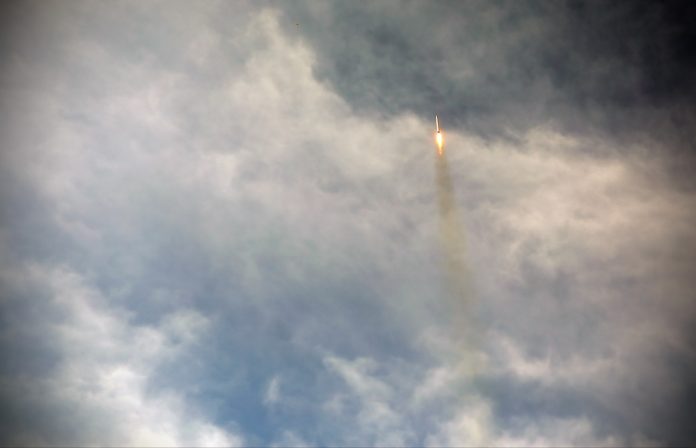
Iran’s Khayyam satellite ready for launch

Nour satellite

The remote sensing satellite, developed and owned by Iran’s Space Agency (ISA), will provide the infrastructure for computerizing various sectors in Iran.

Khayyam, due to its accurate sensors and through topographic maps and data, can be used in improving productivity in agriculture, accurate monitoring of Iran’s water resources, managing natural disasters, monitoring changes in use of land, unauthorized constructions, and deforestation among others.

Iran launched its first homegrown satellite into orbit two years ago and the second one earlier this year.

The soon-to-be-launched satellite has been named after the 11th Century Persian polymath Omar Khayyam, known for his vast knowledge in mathematics, astronomy, philosophy, as well as poetry.

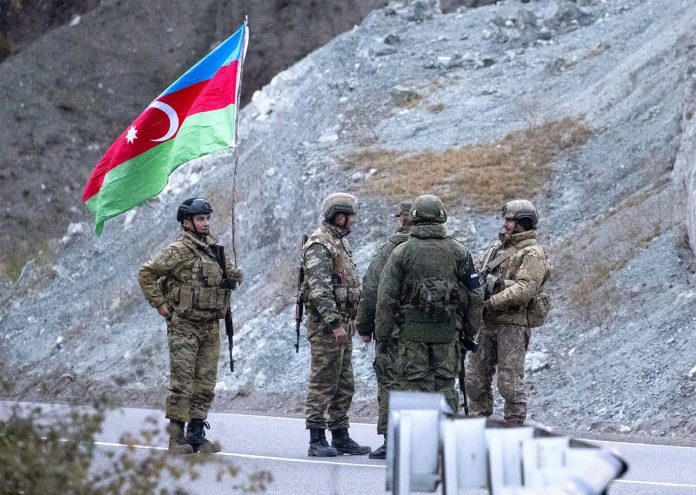
Azerbaijan conducts military operation in Nagorno-Karabakh

Azerbaijani Forces Nagorno-Karabkh

“Members of illegal Armenian militias present in Azerbaijan at the territory where Russian peacekeepers are deployed have committed and act of terrorism and provocation, which resulted in death of Azerbaijani serviceman Anar Kyazymov. In addition, they attempted to capture the Gyrkhyz height and deploy combat positions there. The ‘Vengeance’ response operation resulted in Azerbaijani Armed Forces taking control over the Gyrkhyz height and a number of other dominant heights along the Karabakh ridge,” the ministry said in its statement on Wednesday.

The ministry stated that Azerbaijani forces currently carry out engineering works on the captured positions.

“Azerbaijan has stated repeatedly that presence of illegal Armenian militias in the republic violates the trilateral statement of the leaders of Azerbaijan, Russian Federation and Armenia and remains a source of danger,” the ministry added, noting that “demilitarization of these territories, total withdrawal of Armenian forces and disarmament of illegal Armenian militias are mandatory.”

Meanwhile, the Foreign Ministry of Armenia published a statement, calling on the international community to take measures in response to “Azerbaijan’s aggressive actions” and reaffirmed its commitment to peace in the region.

Earlier, Armenian media reported citing Nagorno-Karabakh forces that, on August 3, two servicemen died and 14 were injured in an abrupt escalation at the contact line with Azerbaijan.

The Azerbaijani Defense Ministry also said on Wednesday that Nagorno-Karabakh suffered significant losses in manpower and equipment in Azerbaijan’s retaliatory special operation.

“A number of combat positions of illegal Armenian units were destroyed during the special operation. In addition, an airstrike was conducted on a military base in the Yukhary Oratag settlement in the former Aghdara District, which killed troops, destroyed several D-30 howitzers, as well as several military vehicles and a large amount of ammunition,” the statement reads.

The ministry emphasized that Azerbaijan was determined to prevent any kind of provocations.

“In accordance with Azerbaijan’s Constitution, terrorist attacks and provocations in the country will be resolutely prevented and retaliatory measures will be even more devastating,” the statement added.

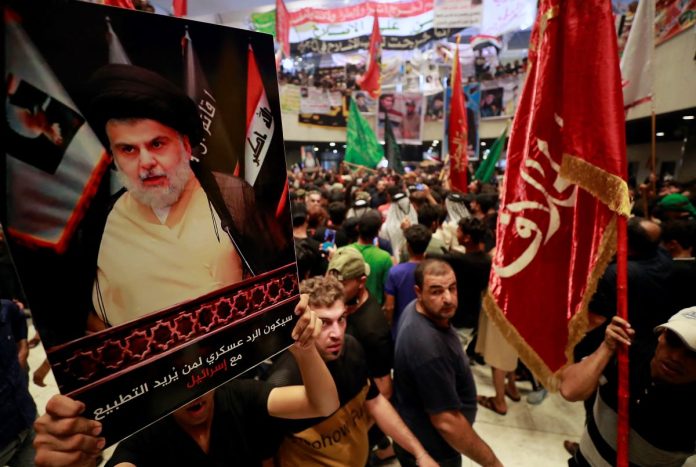
Muqtada al-Sadr demands dissolution of Iraqi parliament, early elections

Muqtada al-Sadr

The remarks, delivered by the Shia Muslim leader in a televised address from Najaf on Wednesday, could prolong a political deadlock that has kept Iraq without an elected government for nearly 10 months.

Thousands of al-Sadr’s followers stormed Baghdad’s fortified Green Zone, which houses government buildings and foreign missions, last weekend and took over the empty parliament building staging a sit-in that is continuing.

Al-Sadr supporters have set up an encampment with tents and food stalls surrounding parliament.

The moves were a response to attempts by his Shia Muslim rivals to form a government with prime ministerial candidates of whom al-Sadr does not approve.

Sadr won the largest number of seats in parliament in an October election but failed to form a government that would exclude his rivals.

He withdrew his lawmakers from parliament and has instead applied pressure through protests and the parliament sit-in, drawing on his popular base of millions of working-class Shia Iraqis.

Al-Sadr reiterated during his address that he was ready to “be martyred” for his cause.

“Dissolve parliament and hold early elections,” al-Sadr said.

Al-Sadr noted in his speech that he also had “no interest” in negotiating with his rivals, stressing, “Don’t believe the rumours that I don’t want dialogue.”

“But we have already tried and experienced dialogue with them,” he continued, adding, “It has brought nothing to us and to the nation – only ruin and corruption.”

The deadlock between al-Sadr and his rivals has left Iraq without a government for a record time in the post-Saddam Hussein era.

Outgoing Prime Minister Mustafa al-Kadhimi has called for a “national dialogue” in a bid to bring all sides together to talk, and on Wednesday he spoke with President Barham Saleh.

Both men stressed the importance of “guaranteeing security and stability” in the country, according to the official Iraqi News Agency.

Earlier on Wednesday, the United Nations mission in Iraq called on leaders to put their country first and end the long-running power struggle.

“Meaningful dialogue among all Iraqi parties is now more urgent than ever, as recent events have demonstrated the rapid risk of escalation in this tense political climate,” the UN mission warned.

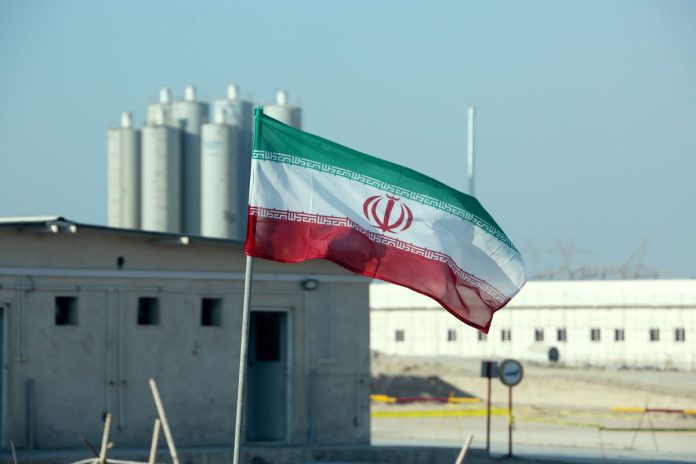
Iran to resume full implementation of nuclear-related measures if US makes right decision

Iran nuclear programe

At the UN, the ambassador highlighted Iran’s responsible behavior with strategic patience that could preserve the agreement. As the envoy announced, Islamic Republic has held talks “in good-will” since April 2021.

Below is the full text of the ambassador remarks:

In the Name of God, the Compassionate, the Merciful

Mr. President,

I congratulate you on your election as the President of this important conference. My delegation aligns itself with the NAM statement delivered by Azerbaijan.

This Review Conference provides an opportunity to scrutinize the Non-Proliferation Treaty’s strengths and weaknesses.

NPT consists of three pillars, namely, disarmament, non-proliferation and peaceful use. Under Article VI of the NPT, nuclear-weapon States have explicitly committed to negotiating to achieve nuclear disarmament. In the 2000 NPT Review Conference, nuclear-weapon States agreed to “13 Practical Steps” to implement Article VI, which included in Step 6 “an unequivocal undertaking to accomplish the total elimination of their nuclear arsenals leading to nuclear disarmament.” In the “2010 Action Plan”, nuclear-weapon States committed to reducing and ultimately eliminating all types of their nuclear weapons. However, half a century after entry into force of the NPT, there are still thousands of nuclear weapons, deployed and stocked, hundreds of billions of dollars spent to replace and upgrade nuclear arsenals, and a quantitative and qualitative nuclear arms race is taking place.

Since the last Review Conference in 2015, no negotiation has begun among nuclear-weapon States on the reduction or elimination of their nuclear weapons and no new reduction in nuclear forces has occurred.

This frustrating status in nuclear disarmament emanates from the blatant non-compliance of nuclear-weapon States with their legal obligations under Article VI of the Treaty. The existence of this legal obligation was affirmed by the International Court of Justice in 1996. It appears from the actions and policies of certain nuclear-weapon States that, in practice, they have put aside their nuclear disarmament obligations.

For instance, the United States has recently increased the role and number of its nuclear weapons and this modernization costs around $1.2 trillion. The United Kingdom has announced its intention to develop and build 80 new nuclear warheads. France is spending billions of euros to gradually augment and upgrade its nuclear weapons and their launch platforms.

We believe that this crisis has seriously undermined confidence in the Treaty. Let’s not forget that the NPT strikes a delicate balance between disarmament, nonproliferation, and peaceful use. Article VI is the central part of the bargain on which the NPT is based, i.e., nonproliferation in exchange for nuclear disarmament. It will not be possible to indefinitely maintain the current unbalanced implementation of the NPT.

The proposals to manage the nuclear risks instead of nuclear disarmament, in our view, seek to legitimize, maintain and manage the status quo. The top priority and objective of this Review Conference should be to define a path forward to change the status quo and eliminate the risks of nuclear weapons. The urgent commencement of negotiations on a comprehensive convention on nuclear weapons leading to their total elimination within a specified timeframe will provide a real path to change the status quo.

Mr. President, ladies, and gentlemen,

The non-nuclear-weapon States are adhering to their nonproliferation undertakings, except for a few European Parties including Germany which host many nuclear weapons in their territory in breach of the spirit and letter of the Treaty.

The Islamic Republic of Iran as a steadfast supporter of nuclear disarmament is equally committed to nuclear nonproliferation. We support the non-discriminatory and impartial implementation of the safeguards system by the IAEA. It is crucial that the IAEA should carry out its professional duties free from interference by third parties, particularly the intelligence services that provide unsubstantiated allegations.

Non-proliferation provisions should be applied globally and without exception. Unfortunately, as a result of the application of double standards in enforcing non-proliferation provisions, the Zionist regime’s nuclear weapons, developed with the support and assistance of the US, continue to pose a serious threat to the security of Middle Eastern States Parties to the Treaty. Since its inception, this regime has committed all international core crimes, including aggression against all its neighbors, war crimes, crimes against humanity, and occupation of the territories of several neighboring countries.

This terrorist regime has assassinated several innocent nuclear scientists and has, time and again, threatened to attack safeguarded peaceful nuclear facilities of my country. In addition to condemnation of such threat to use force, States Parties need to take appropriate deterrent action against this law-breaking regime. If this regime commits such foolish aggression, it will pay a heavy price. Furthermore, the supreme interests of our country, as a state party to the Treaty, will be jeopardized. The Review Conference should promptly address this threat of Israeli regime.

The Islamic Republic of Iran strongly supports the establishment of a nuclear-weapon-free zone in the Middle East and expresses its deep concern over the long delay in the implementation of the 1995 Resolution and the 2010 Plan of Action on the Middle East.

Before concluding, I would like to make a few points regarding the nuclear negotiations. While Iran was implementing its nuclear commitments under the nuclear deal as certified by the 15 IAEA reports, the US withdrew from it in May 2018 and subsequently re-imposed US sanctions on Iran and launched a maximum pressure campaign against Iran to prevent Iran’s enjoyment of the economic benefits promised in the agreement. The Islamic Republic of Iran acted responsibly and with strategic patience and maximum resistance preserved the agreement. Since April 2021, Iran has negotiated in good-will with other participants for resuming the full implementation of the deal. Achieving this objective has been delayed because the United States is yet to decide to give assurance that Iran will enjoy the promised economic benefits in the agreement. When the US makes the right decision, Iran, in turn, will cease its remedial actions and resume the full implementation of its nuclear-related measures in accordance with the 2015 agreement.

I thank you, Mr. President.

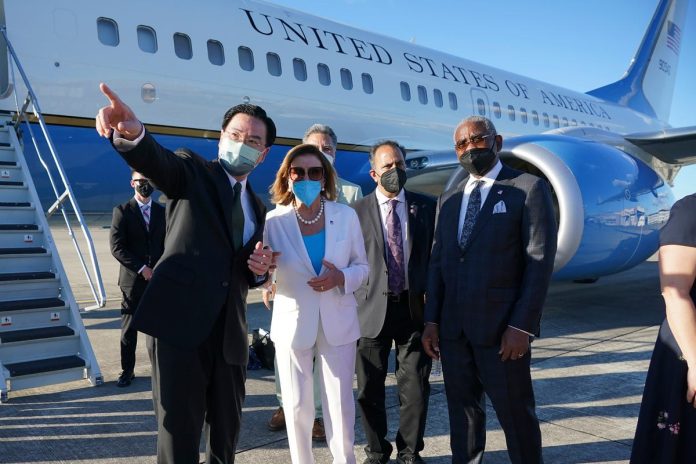
Iranian daily scolds foreign ministry for taking sides in China-US spat

Nancy Pelosi

In an article on Thursday, Tehran-based Jomhouri-e Eslami Daily said it was “very odd” that the spokesman for the Iranian Foreign Ministry moved “with incredible speed to take a stand in the verbal dispute between China and America over [US House Speaker] Nancy Pelosi’s visit [to Taiwan].”

“It is unclear how a policy of impartiality in such disputes would hurt us… Doesn’t the policy of ‘Neither East, Nor West’ necessitate that we take neither side in a dispute between two hegemonic powers?” the article read.

It said anyone pinning their hope on China-US spats was “very naive.”

“What do we gain from taking these positions? Who do we serve?” it added, citing an axiom that said, “If your prayers are granted, have your wheat ground with a prayer!”

Nasser Kanaani, the Iranian Foreign Ministry Spokesman, said on Tuesday — the day when Pelosi arrived in Taiwan — that the visit was “an instance of interference in the People’s Republic of China’s internal affairs and a violation of the country’s territorial integrity.”

Pelosi, a longtime and outspoken critique of the Chinese government, traveled to Taiwan despite the objections of Beijing, which insists that it has sovereignty over the self-ruled island.

Jomhouri-e Eslami also said in the article that while Pelosi “humiliated” China with the trip, Beijing was prudent and would handle the matter with tact and without endangering its interests.

Oil minister says Iran to continue constructive interactions with OPEC

OPEC

Speaking during a ministerial meeting of OPEC and non-OPEC member countries (known as OPEC Plus), Owji condoled with all the member countries, Nigeria in particular, on the demise of the late secretary general of the organization, Nigeria’s Mohammad Barkindo.

He also wished success for the new OPEC Secretary General Haitham al-Ghais of Kuwait in the “challenging times for fossil fuels”.

“I am confident that the successes of OPEC in recent years will continue in the future under the management of Al-Ghais,” he noted.

The world’s oil-exporting countries have agreed to a tiny increase in output next month amid fears that a global recession will crimp demand.

The Organization of the Oil Exporting Countries and its allies — which includes Russia — also known as OPEC+, confirmed on Wednesday that it would produce an additional 100,000 million barrels a day in September.

This was the first OPEC meeting since US President Joe Biden visited Saudi Arabia last month. Biden urged the country — which is the group’s biggest oil producer — to start pumping more.

For months, prices have climbed as Western embargoes on Russian oil over its invasion of Ukraine have limited global supply. Those prices have helped the world’s biggest oil companies reap record profits, even as millions face surging fuel bills.

A gallon of regular gasoline in the United States surpassed $5 for the first time in June, though prices have fallen back significantly since then.

MP: US, Europe showing flexibility in new proposals for Iran deal revival

Vienna Talks

In an interview with ILNA, Javad Karimi Ghoddousi, who sits on the Parliament’s National Security and Foreign Policy Committee, commented on an upcoming round of negotiations between Iran and the remaining parties to the nuclear deal as well as indirect exchanges with the US.

He referred to the energy crisis facing the US and Europe in the wake of the sanctions placed on Russia over the Ukraine conflict, saying US President Joe Biden recently visited Saudi Arabia in the hope of addressing the energy issue, among other things, but he returned home empty-handed.

“As a result both the Europeans and the Americans are holding their breath to reach an agreement with us so that they can get rid of their energy-related concerns through our presence,” he said.

“The recent proposals that they have put forward contain good flexibility, which are being worked on again, and Iran is offering its views on them. For the time being, Iran’s initiatives are reaching the US side as well,” he said.

The focus of the several rounds of talks held under the administration of President Ebrahim Raisi has been the Iranian nation’s economic interests — including the issues of sanctions removal, verifications and guarantees — and the negotiations “have not been allowed to extend to security and political fields,” the lawmaker said.

A new round of talks to try to salvage the Iran nuclear deal, JCPOA, will be held in Vienna this week.