NATO chief: Russia must not win in Ukraine
Russia should not be allowed to win the war in Ukraine, NATO Secretary-General Jens Stoltenberg stated.
“It’s in our interest that this type of aggressive policy does not succeed,” Stoltenberg said in a speech in his native Norway.
“If President [Vladimir] Putin even thinks of doing something similar to a NATO country as he has done to Georgia, Moldova or Ukraine, then all of NATO will be involved immediately,” he continued.
To prevent Moscow from succeeding, NATO and its member countries may have to continue to support Ukraine with arms and other assistance for a long time to come, Stoltenberg added.
Up to 20,000 Russian soldiers killed since war began: Western officials
Western officials have told CNN they estimate that up to 20,000 Russian soldiers have been killed since Moscow began its invasion of Ukraine on February 24.
They added 55,000 Russian soldiers have been wounded, saying that between the dead and injured, Moscow suffered around 75,000 casualties in total.
“The course of the battle has slowed down and so the statistics have slowed down as well,” the officials told CNN on Thursday.
“We are still up to 20,000 Russian soldiers dead and then, in terms of the 75,000 number in (total) casualties, that would sound right to us,” they continued.
“That’s broadly our understanding,” the officials noted, adding, “But certainly the battle has slowed.”
WHO: Ukraine health crisis worsens as medics work amid shelling
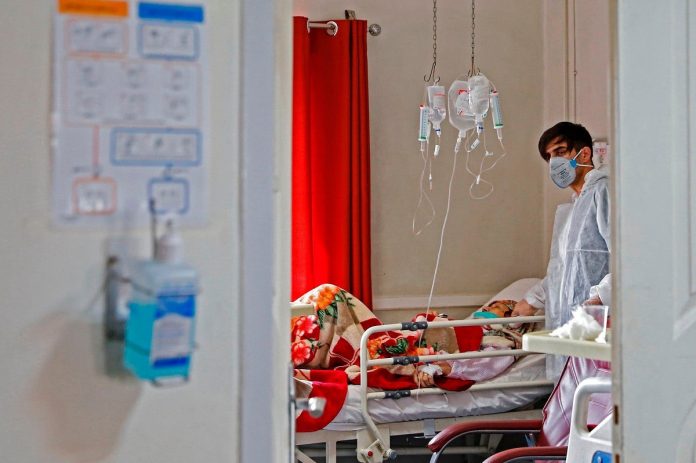
Ukraine is facing a worsening health emergency, the World Health Organization said, with a combination of burned-out staff, increased shelling and the approach of winter fuelling the agency’s concerns.
There have been 434 attacks on healthcare facilities in the country, out of 615 such attacks reported this year worldwide, according to a WHO tracker.
The WHO’s Ukraine emergency coordinator, Heather Papowitz, noted healthcare teams in many areas have become used to working with shelling outside their window.
“It’s kind of falling off the news in a way … but this is an emergency of public health,” Papowitz told Reuters on Wednesday.
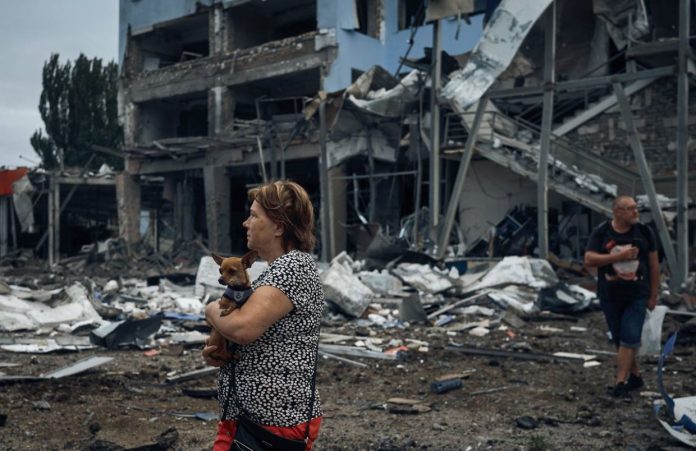
Russia denies it targets civilians, but many Ukrainian towns and cities have been destroyed and thousands killed.
Amnesty International says Ukrainian Armed Forces violating humanitarian law
Ukrainian forces have put civilians in harm’s way by establishing bases and operating weapons systems in populated residential areas, including in schools and hospitals, as they try to repel the Russian invasion that began in February, Amnesty International said in a statement on Thursday.
It added that such tactics violate international humanitarian law and endanger civilians, as they turn civilian objects into military targets.
“We have documented a pattern of Ukrainian forces putting civilians at risk and violating the laws of war when they operate in populated areas,” stated Agnès Callamard, Amnesty International’s Secretary General.
“Being in a defensive position does not exempt the Ukrainian military from respecting international humanitarian law,” she continued.
Not every Russian attack documented by Amnesty International followed this pattern, the statement added, saying: “In certain other locations in which Amnesty International concluded that Russia had committed war crimes, including in some areas of the city of Kharkiv, the organization did not find evidence of Ukrainian forces located in the civilian areas unlawfully targeted by the Russian military. Between April and July, Amnesty International researchers spent several weeks investigating Russian strikes in the Kharkiv, Donbas and Mykolaiv regions.”
Ukrainian presidential adviser Mykhailo Podolyak criticized the Amnesty report, accusing Moscow of trying to “discredit the Armed Forces of Ukraine in the eyes of Western societies.”
It was, he added in a tweet, “a shame that the organization like Amnesty is participating in this disinformation and propaganda campaign.”
“The only thing that poses a threat to Ukrainians is (Russian) army of executioners and rapists coming to (Ukraine) to commit genocide,” he said in the tweet.
Amnesty announced that throughout the investigations, researchers found evidence of Ukrainian forces launching strikes from within populated residential areas as well as basing themselves in civilian buildings in 19 towns and villages in the regions.
Most residential areas where soldiers located themselves were kilometers away from front lines, according to the statement.
Amnesty International said viable alternatives were available that would not endanger civilians — such as military bases or densely wooded areas nearby, or other structures further away from residential areas.
It also added that on the cases it documented, Amnesty International was not aware that the Ukrainian military who located themselves in civilian structures in residential areas asked or assisted civilians to evacuate nearby buildings which amounts to a failure to take all feasible precautions to protect civilians.
Podolyak said protecting civilians is the priority of Ukrainian forces.
“Our defenders protect their nation and families. People’s lives are the priority for Ukraine, that is why we are evacuating residents of front-line cities,” he added.
Russian shelling kills eight in eastern town of Toretsk
At least eight people have been killed and four wounded in Russian artillery shelling in the eastern Ukrainian town of Toretsk in Donetsk region, Governor Pavlo Kyrylenko said.
The shelling hit a public transport stop where people had gathered. Three children were among the wounded.
Andriy Yermak, the Ukrainian president’s chief of staff, stated the attack was “another terrorist act” by Russia, and repeated his calls for other nations to declare Russia a state sponsor of terror.
Russia has previously denied targeting civilians and has rejected allegations of war crimes.
Separatist authorities say 5 people killed in Ukrainian shelling of Donetsk
Authorities in the self-declared Donetsk People’s Republic (DPR) in eastern Ukraine said five civilians have been killed in Ukrainian shelling of the Donetsk city center on Thursday.
The Territorial Defense of the DPR added that the Ukrainian shelling was designed “to inflict maximum damage on the civilian population, including the leadership of the Republic.”
The shelling took place close to a theater where the leaders of the DPR were attending a memorial service.
“As a result of the shelling of residential areas in the Voroshilovskyi district, five civilians were killed, six people were injured, residential buildings, a hotel, and civilian infrastructure were destroyed,” the Territorial Defense announced.
There’s been no word from the Ukrainian side on the strike. But the city, which is only 20 kilometers (12.4 miles) from the front lines, has come under fire by Ukrainian artillery and rockets since the Russian invasion began.
EU aims for $8.15bn Ukraine aid package by September
The European Union intends to put together another financing package for Ukraine by September that will amount to about $8.15bn (eight billion euros), a German government source stated.
Part of the package would be made up of grants that do not have to be repaid while another part will consist of loans, a government official told journalists.
The envisaged aid should support the Ukrainian government’s budget, while military, humanitarian and reconstruction aid would be financed from other sources.
Germany will also contribute to the new aid package, the source said, adding that other EU countries such as Italy and France have held back so far and that Berlin is in close contact with its European partners and the European Commission on the issue.
In May, the Group of Seven’s financial leaders agreed on $9.5bn in new aid to Ukraine, mainly from the United States. Germany had contributed one billion euros (about $1bn) in the May package, which it has already paid.
Moscow says Norwegian consul should leave after ‘Russophobic’ insults
Moscow has said a Norwegian consul could no longer stay in Russia after she was filmed declaring “I hate Russians” during an angry outburst at a hotel reception.
“After what happened, Elisabeth Ellingsen’s presence in Russia is impossible,” the foreign ministry said in a statement.
Earlier in the day, the foreign ministry summoned Norwegian Ambassador Rune Resaland to protest against Ellingsen’s “insulting Russophobic remarks”.
The Norwegian diplomat was recorded insulting Russians at a hotel reception in the Arctic city of Murmansk.
The video was posted over the weekend by the Mash Telegram channel, reputed to be close to the Russian security services, and sparked an outcry in the country.
“I hate Russians … Just give me a room … I’m used to clean rooms. I’m from Scandinavia,” Ellingsen was recorded as saying in English.
Ukraine tells Lebanon to reverse decision to clear grain shipment for travel
Ukraine has called on Lebanon to reverse a decision by a court in Tripoli to authorise the departure of a seized Syrian ship carrying what Kyiv says is stolen Ukrainian grain.
In a statement, the Ukrainian foreign ministry announced it was disappointed by the court’s decision to clear the Syrian-flagged Laodicea for departure and added that Kyiv’s position had not been taken into account.
UN watchdog appeals for access to Ukrainian nuclear plant
The head of the United Nations nuclear watchdog appealed for access to a Ukrainian nuclear power plant now controlled by Russian forces to determine whether it was a source of danger.
Contact with the Europe’s largest nuclear plant, which is at Zaporizhzhia and is being operated by Ukrainian technicians, was “fragile” and communications did not function every day, International Atomic Energy Agency (IAEA) head Rafael Grossi told Swiss paper Tages-Anzeiger.
“We can’t afford faulty communication with the plant in areas relevant to safety. We know of allegations that live ammunition is stored in the plant, that there are attacks on the power plant,” he said in interview published in German.
“Frankly, if I don’t have access, I can’t determine that. There are contradictions between the accounts of the Russian and Ukrainian sides. I receive information, I also mention it in my situation reports, but I have no way of determining whether it corresponds to the facts,” he added.
US claims Russia aims to fabricate evidence in prison deaths
Officials from the United States believe Russia is working to fabricate evidence concerning last week’s deadly strike on prison housing prisoners of war in a separatist region of eastern Ukraine.
US intelligence officials have determined that Russia is looking to plant false evidence to make it appear that Ukrainian forces were responsible for the July 29 attack on Olenivka Prison that left 53 dead and wounded dozens more, a US official familiar with the intelligence finding told The Associated Press.
Russia has claimed that Ukraine’s military used US-supplied rocket launchers to attack the prison in Olenivka, a settlement controlled by the Moscow-backed Donetsk People’s Republic.
The Ukrainian military denied making any rocket or artillery strikes in Olenivka. The intelligence arm of the Ukrainian defense ministry claimed in a statement Wednesday to have evidence that local Kremlin-backed separatists colluded with the Russian FSB, the KGB’s main successor agency, and mercenary group Wagner to mine the barrack before “using a flammable substance, which led to the rapid spread of fire in the room.”
Ukraine grain export deal must be ‘sustainable’: Turkish FM
With the first ship carrying Ukrainian grain continuing to sail to Lebanon, Turkey’s foreign minister said that the grain export deal signed in Istanbul had to be “sustainable” and could be the basis for a “comprehensive ceasefire” to end the war in Ukraine.
“It has to be sustainable, and the duration of this agreement is for four months,” Mevlut Cavusoglu told a joint news conference with his Malaysian counterpart Saifuddin Abdullah in Kuala Lumpur.
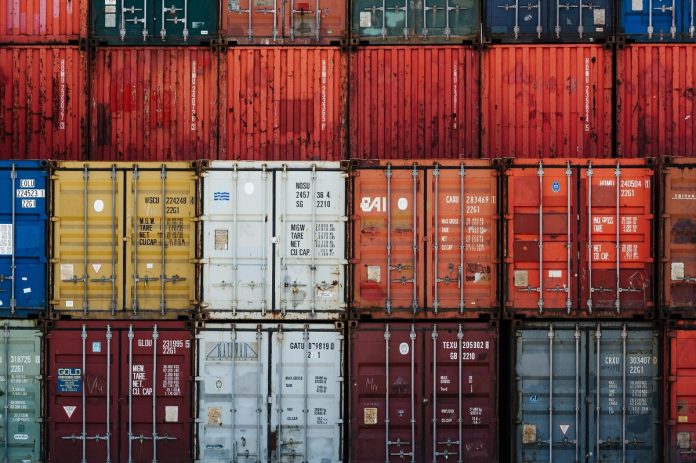
To oversee Ukrainian grain exports, a joint coordination centre (JCC) in Istanbul was officially launched on July 27, comprising representatives from Turkey, the UN, Russia, and Ukraine to enable the safe transport by merchant ships of commercial foodstuffs and fertilizers from the three key Ukrainian Black Sea ports.
Noting that the vessel carrying corn from Ukraine continues to sail towards Lebanon after inspections were done at the JCC, Cavusoglu added if the deal is extended without any objections, then “Russia will also be able to export its own grain and related products as well as fertilizers”.
Ukraine says negotiations with Moscow contingent on ceasefire, withdrawal
Ukraine has dismissed comments by ex-German chancellor Gerhard Schroeder that Russia wanted a “negotiated solution” to the war and said any dialogue would be contingent on a Russian ceasefire and the withdrawal of Russian troops.
Ukrainian presidential adviser Mykhailo Podolyak described Schroeder as a “voice of the Russian royal court” and made clear that the grain agreement would not lead to negotiations.
“If Moscow wants dialogue, the ball is in its court. First — a ceasefire and withdrawal of troops, then – constructive [dialogue],” Podolyak wrote on Twitter.
Ukraine blames Russian military contractor Wagner for attack that killed 50 POWs
Ukrainian agencies — along with the help of outside experts — continue to investigate the cause of the explosion that killed 50 Ukrainian prisoners of war last week and injured many more at a detention center in the self-declared Donetsk People’s Republic.
The Ukrainian Defense Ministry’s Defence Intelligence department claimed Wednesday that the detonation of the building where Ukrainian soldiers were held “was carried out by the fighters of the ‘Wagner’ military command center using a highly flammable substance, which led to the rapid spread of the fire in the premises.”
Wagner is a private military contractor whose fighters have been involved in the Russian invasion of Ukraine, as well as other conflicts in Africa and the Middle East.
Videos and images from the scene at the detention center in Olenivka — which was used to house many Ukrainian soldiers who surrendered at the Azovstal plant in Mariupol — show that many of the victims were badly burned.
The Defence Intelligence department also said that interrogations at the Olenivka pre-trial center involved the security services of the DPR and Russia as well as Wagner personnel.
It claimed that “physical torture and beatings were actively used during interrogations. Such measures, first of all, were aimed not at obtaining certain confidential information, but at bullying, physical humiliation, psychological demoralization.”
In part, the intent was to have prisoners admit on camera to “crimes committed by them, atrocities against the local population, the fighters’ renunciation of their views, as well as condemnation of the actions of the leadership of Ukraine,” the department alleged.
It went on to claim that “the Russian side had no intention of exchanging prisoners of war and in order to hide the improper conditions and forms of interrogation of Ukrainian servicemen (which could serve as evidence at The Hague Tribunal), deliberately destroyed the prisoners.”
Ukraine has consistently accused Russian forces of carrying out the attack last Thursday night, in response to Russian claims that Ukraine had used US high mobility artillery rocket systems to attack the center in order to prevent Ukrainian prisoners from admitting war crimes.
The International Committee of the Red Cross (ICRC) confirmed Wednesday it had been able to visit the Olenivka facility once in May this year to deliver water tanks.
“But we did not have access to POWs held there on an individual basis – as per ICRC’s modalities of work in detention facilities – and that continues to be the case,” the Red Cross stated.
The ICRC added, “Under the Third Geneva Convention, during international armed conflicts, the ICRC must be granted access to all PoWs, wherever they are held. We also have full liberty to choose the places we wish to visit. Since February 2022, our teams have been able to have access to some PoWs, but not all.”
The ICRC noted it has requested access to the detention center again since the attack last week, but it has not received permission from the Russians.
Ukraine raises grains harvest forecast to 65 million tonnes
The Ukrainian government has raised its forecast for this year’s harvests of grain and oilseeds crops.
A meeting chaired by the Prime Minister Denys Shmyhal was told this year’s harvest is expected to be larger than was initially predicted — 65 to 67 million tonnes instead of the 60 million tonnes previously forecast.
Shymal said that “despite all the troubles, the harvest continues. According to the information provided by the Ministry of Agrarian Policy and Food, during the harvest period, crop harvesting was carried out on an area of 3.5 million hectares, in fact, 12 million tons of grain of the new crop were collected,” said Shmyhal.
“In June we exported 3.2 million tonnes out of the 5 million that were needed. Exports are gradually increasing by rail, road, and through the Danube ports. Seaports will significantly expand these capacities and farmers will get new opportunities to sell their products,” he added.
Shmyal’s remarks came as the first ship to leave a Black Sea port laden with grain passed through the Joint Coordination Center in Istanbul.
Shmyhal stated the government was working to improve participation in state credits for farmers, many of whom have had their equipment and storage destroyed or are unable to get their produce to market economically.
Denys Marchuk, deputy head of the All-Ukrainian Agrarian Council, told a news conference Wednesday that 16 more ships are waiting for their turn to leave Ukraine’s Black Sea ports after being stranded there since February.
He noted the first task was to begin shifting the 20 million tonnes stored by agricultural producers from the last harvest.
He also added that government ministries were discussing with the Coordination Council in Istanbul the possibility of including ports in the Mykolaiv region in the deal to export Ukrainian crops
Moscow says 27 exchanges of prisoners, bodies completed with Kyiv
A Russian official noted on Wednesday that Kyiv and Moscow have exchanged prisoners and the bodies of those killed in the conflict 27 times since the war began.
“With the participation of the Red Cross, it has been possible to organise dialogue with Kyiv on the exchange of prisoners and of dead soldiers. So far, 27 such operations have been carried out,” Russian deputy defence minister Alexander Fomin stated at a briefing with foreign military attaches, according to Interfax news agency.
UN to establish fact-finding mission into Ukraine prison attack: Secretary-general
United Nations Secretary-General António Guterres said in a Wednesday news conference that the UN is seeking to establish a fact-finding team to study the attack on a Ukrainian detention facility that resulted in at least 50 deaths and dozens of injuries of Ukrainian prisoners of war.
Russia and Ukraine both requested an investigation into the attack, Guterres told reporters in New York. He added that the terms of reference for the panel would need to be accepted by Russia and Ukraine before the fact-finding mission would begin.
Guterres also stated the fact-finding team would not be a criminal investigation, adding that the UN is looking for “independent team members.”
Russia previously invited experts from the UN and the International Committee of the Red Cross to conduct an “objective investigation” into the deaths of Ukrainian prisoners held at the Olenivka jail in the Donetsk region, according to a statement from the Russian Defense Ministry on Saturday.
However, the International Committee of the Red Cross told CNN Saturday that its “demands for access” to the site have not been granted.
OPEC agrees to small increase in oil output
The world’s oil-exporting countries have agreed to a tiny increase in output next month amid fears that a global recession will crimp demand.
The Organization of the Oil Exporting Countries and its allies — which includes Russia — also known as OPEC+, announced on Wednesday that it would produce an additional 100,000 million barrels a day in September.
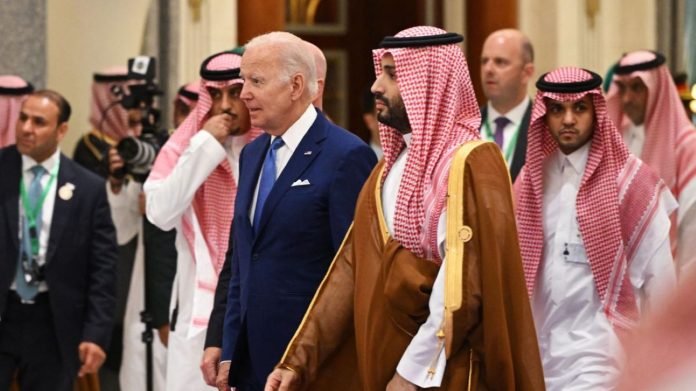
This was the first OPEC meeting since US President Joe Biden visited Saudi Arabia last month. Biden urged the country — which is the group’s biggest oil producer — to start pumping more.
For months, prices have climbed as Western embargoes on Russian oil over its invasion of Ukraine have limited global supply. Those prices have helped the world’s biggest oil companies reap record profits, even as millions face surging fuel bills.
A gallon of regular gasoline in the United States surpassed $5 for the first time in June, though prices have fallen back significantly since then.