Tuesday, December 23, 2025
Home Blog Page 1412

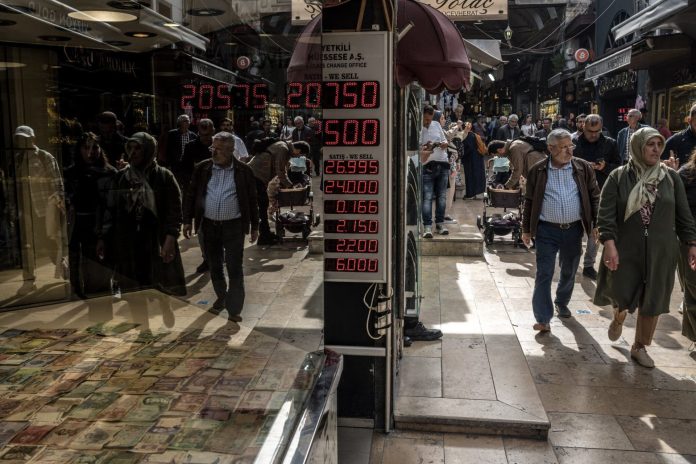
Turkish lira sinks to record low after Erdogan’s victory

Turkey's Lira

The currency was at 20.05 to the dollar during Asian hours, just shy of the 20.06 record low hit on Friday.

The lira, prone to sharp swings before regular trading hours, has weakened more than 6% since the start of the year and lost more than 90% of its value over the past decade with the economy in the grip of boom and bust cycles, rampant bouts of inflation and a currency crisis.

Since a 2021 crisis, the authorities have taken an increasingly hands-on role in foreign exchange markets with daily moves having become unnaturally small and mostly recording a weakening while FX and gold reserves have dwindled.

“The current set up is just not sustainable,” said Tim Ash at BlueBay Asset Management.

“With limited FX reserves and massively negative real interest rates the pressure on the lira is heavy,” he added.

Erdogan prevailed despite years of economic turmoil which critics blame on unorthodox economic policies which the opposition had pledged to reverse.

“An Erdogan win offers no comfort for any foreign investor,” stated Hasnain Malik, head of equity research at Tellimer.

“Only the most optimistic would hope that Erdogan now feels sufficiently secure politically to revert to orthodox economic policy,” Malik continued.

Erdogan’s surprisingly strong showing in the first round of the election two weeks ago had triggered a selloff in Turkey’s international bonds and a spike in costs to insure exposure to its debt amid fading hopes of a change in economic policy.

The nation’s dollar bonds slipped to their lowest in at least six months last week, while the cost of insuring exposure to Turkey’s debt via credit default swaps (CDS) rose to a seven-month high.

On Monday, the bond maturing in 2036 was stable, Tradeweb data showed. CDS too were steady after closing at 666 basis points on Friday. It was around 480 bps before the election.

In his victory speech, Erdogan acknowledged that inflation was the most urgent issue, but said it would also fall, following the central bank’s policy rate that was cut to 8.5% from 19% two years ago.

Analysts were cautious in how much economic change Erdogan’s new government would herald.

“Erdogan is unlikely to embrace an outright economic orthodox approach,” Wolfango Piccoli, co-president at advisory firm Teneo, said, adding, “However, some adjustments to the current heterodox approach could be adopted with the aim of gaining time ahead of the March 2024 local elections.”

Trading is expected to be thin on Monday, with many markets in Europe, as well as the United States closed for holidays.

President Raisi congratulates Turkey’s  Erdogan on reelection

Turkey Election

In a message issued on Sunday, Raisi considered Erdogan’s election victory as signaling the continued valuable trust that the Turkish people have in the incumbent president.

Iran’s president expressed confidence that in the coming period, the friendly relations between Iran and Turkey, which are based on strong historical, cultural, and religious bonds, good neighborliness, mutual respect and common interests of the two nations, will further strengthen and the close cooperation between the two countries will provide more suitable conditions for strengthening the peace and stability and development of the region.

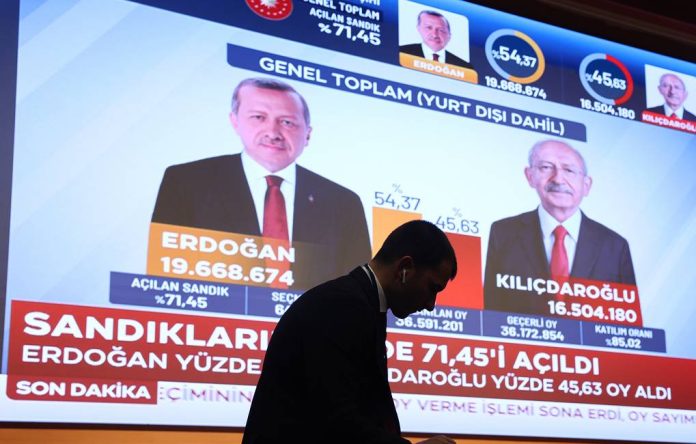
Ahmet Yener, who heads Turkey’s highest election authority, the Supreme Election Council, said late on Sunday that with 99.43% of the ballots counted, Tayyip Erdogan gets 52.14%, and Kemal Kilicdaroglu – 47.86%.

Erdogan, 69, was first elected as the president of Turkey in 2014 and re-elected to the post in 2018. So far, only the first three presidents of Turkey were elected to three consecutive presidential terms – the founder of the republic Mustafa Kemal Ataturk (1923-1938, four terms), his successor Mustafa Ismet Inonu (1938-1950, four terms) and Mahmud Celaleddin ‘Celal’ Bayar (1950-1960, three terms).

Iran FM: Iran, Oman considering comprehensive cooperation plan in near future

Iran and Oman FMs

Amirabdollahian made the comment after meeting his Omani counterpart Sayyid Badr Albusaidi in Tehran.

The top Iranian diplomat said they reiterated the need for stronger shipping cooperation between the two countries and activation of port capacities.

He added that mutual trade doubled after Tehran and Muscat signed 13 cooperation agreements during Iranian President Ebrahim Raeisi’s visit to Oman last year.

This, he said, will be boosted by the four agreements on energy, investment, free trade zones and industrial cooperation, signed by the two sides during the ongoing visit by the Sultan of Oman.

Albusaidi, for his part, said the visit opens a new chapter in mutual relations. He said he and Amirabdollahian also discussed potential cooperation in the field of tourism, food security, renewable energies and shipping cooperation.

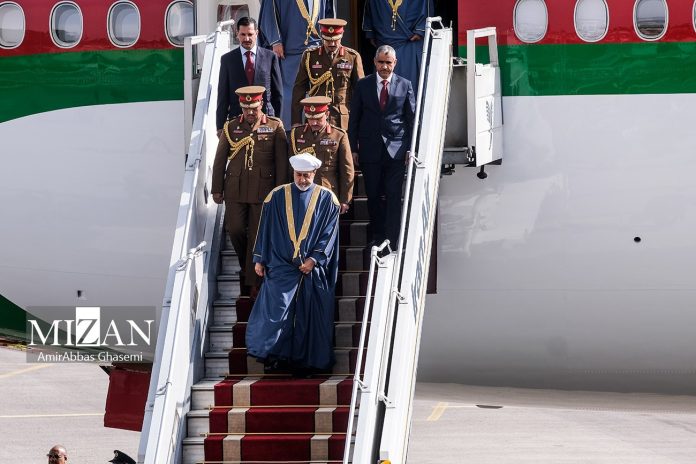
Heading a high-ranking delegation, Haitham bin Tariq the Sultan of Oman arrived in Tehran on Sunday afternoon for a two-day visit to the Islamic Republic.

Ukraine official says Iran to face consequences over drone attacks, Tehran denies involvement

Russia Ukraine War

“Tehran has become a key ally of Moscow in this war, deliberately supplying it with weapons for attacks on civilian cities,” Mykhailo Podolyak, the adviser to the head of the Office of the President of Ukraine, wrote on Twitter.

“Attack on Kyiv with 50 Shaheds on City Day is another eloquent confirmation of this truth,” the adviser said, referencing an annual holiday celebrating the capital.

“In legal terms: Iran is doing this with direct intent and realizing the consequences of its actions. And there will definitely be consequences,” he added.

“Today, I would like to remind official Tehran of the basic laws of life, in particular the law of the boomerang. Do not be confused by the illusion of geographical remoteness or a misunderstanding of Ukraine’s priorities today. Once released, Shahed will definitely find its way to its manufacturer one day,” Podolyak warned.

Podolyak said Ukrainian President Volodymyr Zelensky would propose to the government sanctions on Iran for 50 years.

The head of the Office of the President of Ukraine, Andriy Yermak, specified the sanctions proposed would include trade, financial and technological restrictions on Iranians, barring Iranian shipments and flights through Ukrainian territory, and a ban on Iranian citizens from withdrawing funds from Ukraine.

Both Iran and Russia have repeatedly denied claims that Tehran has provided Moscow with drones to be used in the Ukraine war.

Iranian Foreign Minister Hossein Amirabdollahian in November dismissed media controversy over Iran’s alleged support for Russia in the Ukraine war, adding, however, that Tehran had provided Moscow with a limited number of drones months before the war in Ukraine.

He also assured that Iran will not be indifferent if it is proven that Russia has used Iranian drones in the conflict.

European countries call on Israel to halt demolition of Palestinian homes

Israel Palestinian Homes

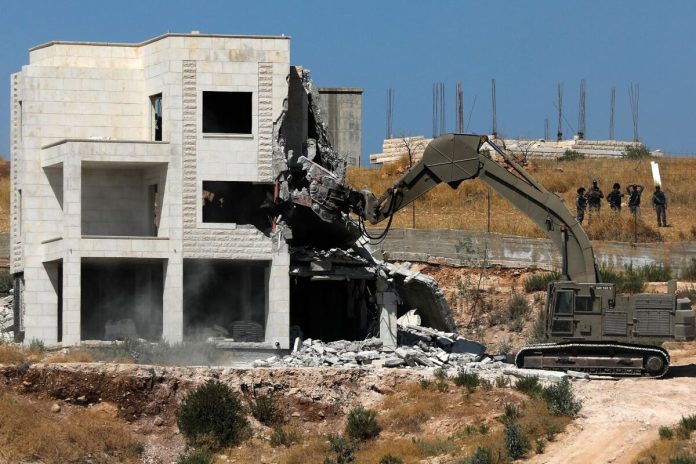
They also demanded the Tel Aviv regime give unimpeded access to humanitarian organizations in the West Bank.

The statement called on Tel Aviv to “return or compensate for all humanitarian items funded by the consortium of donors,” in reference to Israel’s demolition of buildings funded by the European Union.

The countries “strongly condemned the recent demolition of the donor-funded school in Jubbet Adh Dhib” and expressed “their grave concern about the threatened demolition of another 57 schools in the West Bank.”

The European Union has time and again condemned the Israeli demolition of EU-funded schools across the West Bank.

Israel argues the homes it demolishes were built without a permit. However, the regime rarely, if ever, approves such permits for Palestinians.

Israel has already occupied thousands of dunums of Palestinian agricultural land to construct and expand settler units in the West Bank.

The international community views the Israeli settlements – hundreds of which have been built across the West Bank since Tel Aviv’s occupation of the territory in 1967 – as illegal under international law and the Geneva Conventions due to their construction on the occupied territories.

Over the past months, Israel has also ramped up attacks on Palestinian towns and cities throughout the occupied territories. As a result of these attacks, dozens of Palestinians have lost their lives and many others have been arrested.

Russia’s “Special Operation” in Ukraine; Day 460: Ukraine says has shot down 37 Russian missiles, 29 drones

Russia Ukraine War

Ukraine says it downed 11 Iskander missiles launched by Russia in daytime attack

Ukraine downed 11 Iskander missiles launched by Russia in a daytime attack on Monday, the commander in chief of Ukraine’s Armed Forces said Monday.

“At about 11:30am, it attacked Kyiv region with ballistic and cruise missiles from the Iskander missile system,” Valerii Zaluzhnyi stated.

“A total of 11 missiles were fired: ‘Iskander-M’ and ‘Iskander-K’ from the northern direction. All targets were destroyed by air defense forces and means,” he added.


Russian defense ministry claims it hit Ukrainian airfields and destroyed all targets

Russian forces hit Ukrainian airfields, destroying all targets, the Russian Defense Ministry claimed Monday.

“Tonight, the Armed Forces of the Russian Federation launched a group strike with long-range precision air-launched weapons against enemy targets at airfields,” the defense ministry said.

“As a result of the strike, command posts and radar posts, as well as aviation equipment, storage facilities with weapons and ammunition of the Armed Forces of Ukraine were hit,” it added in its daily briefing.

Earlier on Monday, Ukraine claimed that Russia launched a widespread missile and drone attack on its territory overnight. Ukraine’s Armed Forces said Ukrainian air defenses destroyed 67 out of 75 “air targets” launched on Kyiv.

Khmelnytskyi regional military administration said Russia had attacked a military facility, in the western region overnight, damaging five aircraft.


Denmark pledges another $2.5bn in military aid for Ukraine

Denmark’s Prime Minister Mette Frederiksen has announced another $2.59bn for military aid to Ukraine over this year and next in what Ukrainian President Volodymyr Zleensky has described as a “major contribution”.

Frederiksen, who is seen as a potential contender to become the new head of NATO, said on Monday that a further 17.9bn crowns (£2.08bn) would be used for military aid for Ukraine, adding to the already-established $1bn fund for military, civilian and business aid to Ukraine in 2023.

Zelensky said on Twitter: “This major contribution will further strengthen the combat capabilities of the Armed Forces of Ukraine in the short and medium term.”


Metros in Kyiv became ‘largest city shelter’ for residents amid Russia’s missile attacks

Ukraine’s Ministry of Defence said in a tweet that Metro stations in Kyiv became the “largest city shelter” for thousands of Ukrainians amid Russia’s fresh wave of daytime attacks.

Kyiv officials say the Ukrainian armed troops shot down all Russian missiles targeted at the city.


Putin signs law allowing elections in Kremlin-occupied Ukrainian territories

Russian President Vladimir Putin has signed a new law which will allow elections in Russian-occupied Ukrainian territories to take place later this year.

The Kremlin took over these Ukrainian regions during its war in the country.


Ukraine shelling settlements in Russia’s Belgorod region: Governor

Ukrainian forces are shelling several settlements in Russia’s Belgorod region, which borders north-eastern Ukraine, according to its governor.

Vyacheslav Gladkov said in a Telegram post Monday that two industrial facilities had been attacked in the town of Shebekino. He added four people were injured after the shelling of building containing “paint and varnish liquids”.

Reports of Ukraine’s shelling of Belgorod comes after a group of anti-Putin Russian nationals, who are aligned with the Ukrainian army, claimed responsibility for an attack in Russian’s southwestern region of Belgorod last week.

The so-called Freedom for Russia legion launched a cross-border attack on Belgorod, which Russian Defense Minister Sergei Shoigu on Wednesday designated a “terrorist act.”

The Ukrainian government distanced itself from the Russian fighters, saying “in Ukraine these units are part of defense and security forces. In Russia they are acting as independent entities.”


Attacks on Russian military bases in occupied Mariupol increasing: Ukrainian officials

Following reports of explosions in the Russian-occupied city of Mariupol on Sunday, the exiled Mariupol City Council said Monday the number of attacks on Russian bases in and around the southern city is increasing.

“The number of attacks on Russian occupiers’ bases in the Mariupol sector is increasing. Recently, explosions have been heard in Mariupol and in the district,” the council said in a Telegram post.

“In particular, according to preliminary information, strikes were carried out in Yurivka, Nikolske and Urzuf. These are the locations of Russian military warehouses and bases. Recently, the occupiers considered these settlements to be rear areas, but the situation is changing,” the post added.

Mariupol, a strategic port city on the Sea of Azov, witnessed some of the most intense fighting since Russia launched its invasion more than a year ago. Ukrainian President Volodymyr Zelensky has estimated that “tens of thousands” died during the siege of the city. Ukrainian forces finally evacuated the city in May last year, after resisting Russia’s advances for nearly three months.

Images of Mariupol’s destruction became symbols of the Kremlin’s use of indiscriminate firepower in Ukraine, drawing stark visual parallels with the levelling of cities like Syria’s Aleppo or the Chechen capital Grozny.

Ukraine’s military intelligence has accused Russian officials of overseeing war crimes against the civilian population in Mariupol in the course of the siege.

The reports of increased Ukrainian strikes on the occupied city come amid speculation that Kyiv is set to launch its counteroffensive in an attempt to reclaim territories captured by Russia.


Black Sea grain deal will cease to be operational if demands not met: Russia

Russia’s Foreign Minister Sergey Lavrov stated that if Moscow’s demands are not fulfilled in the UN-brokered Black Sea grain deal, the deal will no longer remain operational.

Speaking at a briefing in Kenya, Lavrov said that less than 3% of the grain exported under the deal had reached the world’s poorest countries and that Russia’s requirements were not being fulfilled “at all.”


Sweden to discuss NATO membership with Turkey

Sweden’s Foreign Minister Tobias Billstrom says he will discuss his country’s NATO membership with his Turkish counterpart, Mevlut Cavusoglu, at the military alliance’s meeting in Oslo, according to Swedish media reports.

Billstrom said he had contacted Cavusoglu to congratulate President Recep Tayyip Erdogan on his re-election over the weekend.

“He responded very quickly and confirmed that we could make contact and discuss the NATO question,” he told Swedish national broadcaster SVT.

Sweden and Finland submitted NATO membership bids last year, in an effort to fortify their armed forces after Russia invaded Ukraine.

Turkey has only ratified Finland’s NATO membership. Erdogan said Sweden has not yet met all of his country’s demands.


Ukraine says Russia fired ballistic missiles in new attacks on Kyiv

Ukraine’s air force says Russia fired ballistic missiles at Kyiv in the latest wave of daytime attacks on the Ukrainian capital.

“The enemy used missiles of a ballistic trajectory — preliminarily Iskanders. There is a possibility that S-300 and S-400 missiles were also used,” air force spokesman Yuri Ihnat told Ukrainian TV.


Vacuum in the field of arms control: Kremlin

Kremlin spokesman Dmitry Peskov says a vacuum is emerging in the area of arms control due to poor ties with a number of states.

“The Treaty on Conventional Armed Forces in Europe was an inanimate mechanism and ceased to operate through no fault of the Russian Federation,” Peskov told reporters, according to Russia’s TASS news agency.

“There will be no direct consequences of the denunciation of the Treaty on Conventional Armed Forces in Europe now, but there is a vacuum in the field of arms control that needs to be filled,” he added.

The armed forces treaty was signed in 1990 and became effective in 1992. It aims to limit “key armaments from the Atlantic Ocean to the Ural Mountains between NATO and the Warsaw Treaty Organisation”.


Wagner chief ‘appears to have indirectly undermined’ Russia’s Putin: ISW

Russia’s paramilitary group Wagner’s chief Yevgheny Prigozhin “appears to have again indirectly undermined Russian President Vladimir Putin’s authority and regime”, according to US-based think tank Institute for the Study of War (ISW).

ISW’s assessment comes after Prigozhin told a journalist that he is convinced that senior Kremlin officials have banned reporting about him in state media.

The Wagner chief then spoke about an unnamed official and said “If you are starting a war, please have character, will, and steel balls – and only then you will be able to achieve something.”

“Prigozhin’s comments are likely targeted at Putin whom the Russian state media has routinely portrayed as a leader minutely involved with small infrastructure projects and the lives of ordinary Russian people,” ISW said.


Russia puts US Senator Graham on wanted list

Russia’s interior ministry has put US Senator Lindsey Graham on a wanted list, Russian media have reported, citing the ministry’s database.

In an edited video released by the Ukrainian president’s office of Graham’s meeting with Volodymyr Zelensky on Friday, Graham was shown saying “the Russians are dying” and then saying US support was the “best money we’ve ever spent”.

After Russia criticised the remarks, Ukraine released a full video of the meeting which showed the two remarks were not linked.

Russia’s Investigative Committee said on Sunday that it was opening a criminal investigation into Graham’s comments. It did not specify what crime he was suspected of.

Graham disputed Russian criticism of his support for Ukraine on Sunday, saying he had simply praised the spirit of Ukrainians in resisting a Russian invasion with assistance provided by Washington.


Russia attacks military facility in Ukraine’s western Khmelnytskyi region

Russia has attacked warehouses, including a military facility, in Ukraine’s western Khmelnytskyi region overnight, local officials said Monday.

It is rare for Ukraine to publicize attacks on military facilities.

“At the moment, work is underway to localize fires at fuel and lubricant warehouses and storage of military material assets,” the Khmelnytskyi regional military administration said on Telegram.

“Five aerial vehicles have been put out of action. The runway is being repaired,” the post said, adding that data on victims is being clarified.


Ukraine says air defenses shot down dozens of Russian cruise missiles and drones early Monday

Ukrainian air defenses destroyed 67 out of 75 “air targets” launched overnight in the latest Russian attack on Kyiv, the commander-in-chief of Ukraine’s Armed Forces said Monday.

Gen. Valerii Zaluzhnyi stated that 37 cruise missiles, 29 drones and one reconnaissance unmanned aerial vehicle were shot down by Kyiv’s forces.

“Overnight, the Russian occupiers attacked Ukrainian military facilities and critical infrastructure objects with cruise missiles and attack drones,” Zaluzhnyi said on Telegram.

“The enemy fired up to 40 Kh-101/Kh-555 air-launched cruise missiles from nine Tu-95MS strategic aircraft from the Caspian Sea. From the northern and southern directions, the enemy attacked with Iranian Shahed-136/131 UAVs. A total of 35 attack drones,” he added.

Kyiv’s military administration previously estimated Ukrainian air defenses had shot down more than 40 “air targets.”

Kyiv police Chief Andrii Nebytov said “almost all enemy targets were destroyed,” but some buildings were damaged.

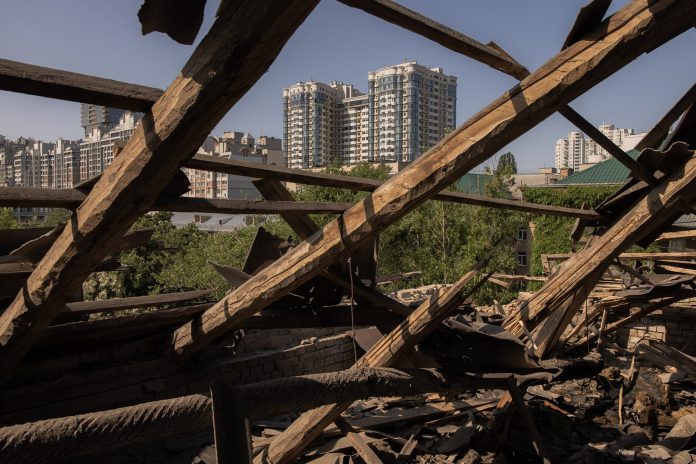
“As a result of the attack, residential buildings and infrastructure facilities in several districts of the region were damaged. No one was killed or injured,” Nebytov added.

The new attack comes a day after a huge wave of Russian drones targeted Kyiv, marking the largest such assault on the capital since the conflict began, according to Ukrainian authorities.


Blasts reported in Kyiv early Monday: Mayor

Explosions were reported in multiple districts across the Ukrainian capital of Kyiv early Monday, a local official said on Telegram.

Kyiv mayor Vitali Klitschko stated there were explosions in the southwestern district of Holosiivskyi and the Podilskyi district.

Klitschko also added missiles had been shot down near Kyiv, writing on Telegram “The air defense is at work!”

So far there have been no reports of injuries.

Klitschko said a house in the Podilskyi district had caught fire from falling debris and that debris had also fallen on a home in the Sviatoshynskyi district that had already been evacuated.


Zelensky hails Ukrainian air defenses as heroes following Kyiv drone attacks

Ukrainian President Volodymyr Zelensky hailed Ukrainian air defenses as “heroes” following a barrage of drone attacks on Kyiv overnight.

In a post on his official Telegram channel on Sunday, Zelensky highlighted the work of the Air Defenses of Ukraine, who he said, “hear the air raid alarm differently than most people.”

“You look up to destroy enemy missiles, aircraft, helicopters, and drones. Every time you shoot down enemy drones and missiles, lives are saved,” the president said.

“You are our heroes,” Zelensky continued.

On Sunday, Ukrainian air defenses said they had succeeded in downing 52 out of the 54 drones launched by Russia. In the capital, Kyiv, the defenses managed to shoot down 40 drones, according to the city’s military administration officials.


European allies still with us on Ukraine’s territorial integrity: FM

Ukraine’s foreign minister says the country’s European allies remain in lockstep with Kyiv over the war, amid reports that Chinese envoy Li Hui, who has been visiting European capitals, is urging acceptance of Russia’s territorial gains as a way to end the fighting.

Western interlocuters of the Chinese diplomat on his recent visit – which took in Kyiv, Warsaw, Berlin, Paris, Brussels and Moscow – were told to put pressure on Ukraine and force it to make compromises on territory, according to the Wall Street Journal.

But in a video message on his Facebook page, Dmytro Kuleba said western partners had assured him that no such moves had been entertained in discussions with the Chinese envoy.

“I immediately contacted my colleagues in the capitals [Li] visited, and all of them confirmed there had been no talks or negotiations about recognizing as Russia those territories [it currently controls] in Ukraine,” Kuleba stated.

“No one will do anything against us behind Ukraine’s back, because we have built trusting relationships with all our key partners,” he added.

Beijing is a key ally of Moscow, particularly in economic ties, but has been careful to maintain a degree of distance over Russia’s actions in Ukraine.

In February, China published a series of principles it said should form the basis for ending the war, including rapid resumption of direct dialogue between the parties and a comprehensive ceasefire.

However, the 12-point paper made no mention of possible Ukrainian concessions, instead stipulating: “The sovereignty, independence and territorial integrity of all countries must be effectively upheld.”

In his video message, Kuleba stressed Ukraine would continue its dialogue with China but reiterated his country’s long-standing position there would be no discussion of territorial concession, nor of putting the conflict into a ‘freeze.’

Russia’s Foreign Minister Sergey Lavrov, who met with Li in Moscow on Friday, said China had a “balanced position” on the war, and welcomed “Beijing’s readiness to play a positive role in its settlement,” according to a statement on the Russian Foreign Ministry website.

Iran, Oman ink four agreements on economic, energy cooperation

Iranian President and Oman's Sultan

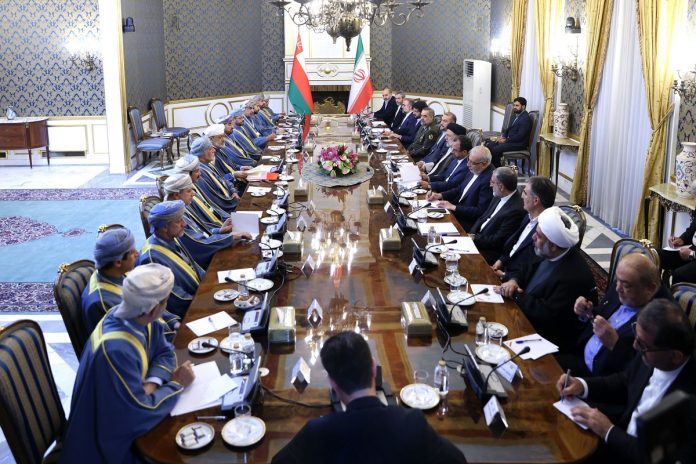
On Sunday, the high-ranking economic delegations of Iran and Oman, headed by Iranian President Ebrahim Raisi and the Omani sultan, sat down for talks on ways to promote commerce between the two Persian Gulf neighbors.

Four deals were signed between the two sides in the fields of economic cooperation, investment, cooperation in free trade zones and energy.

Speaking at the event, Raisi said ties with Oman have grown from trade to the investment level.

“The shared views of the leaders of Iran and Oman and their approach of bolstering regional convergence, along with the capacities and proper mutual grounds [for cooperation], can help enhance the relations between the two countries in the bilateral and regional arenas,” said the Iranian president.

The president highlighted the capacities of the two countries for cooperation in different spheres, including industry, trade, communications, defense and security affairs, roads and railways, maritime transport and transit, financial and monetary exchanges, and energy, among others.

He said during their negotiations, Iran and Oman stressed the need to finalize the formation of a support fund for the development of joint investments.

Raisi also referred to the common positions of Iran and Oman on the plight of Palestine and Yemen, thanking Muscat for playing a constructive role in efforts to restore the rights of the Palestinian and Yemeni nations.

For his part, Sultan Haitham expressed gratitude for Raisi’s hospitality and said ties between the two sides have witnessed a significant boost following the Iranian president’s visit to Oman last year.

Although the volume of trade exchanges has doubled, the two sides are still far from the desired level of relations.

Health minister: 1.2 million foreign patients received treatment in Iran last year

Iran Surgery

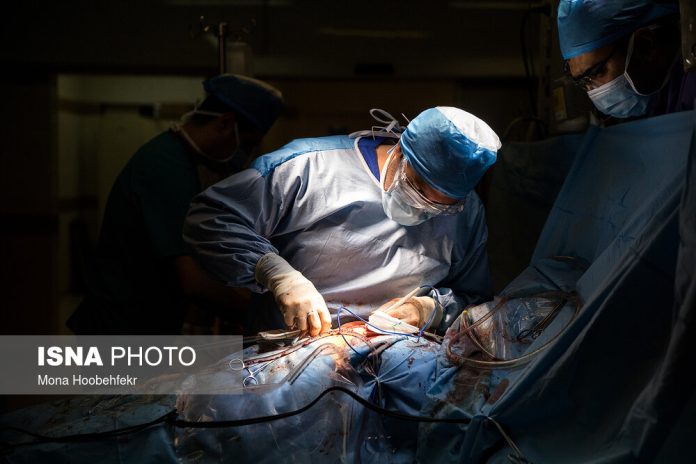
Dr. Einollahi said the remarkable progress in Iran’s health sector has been one of the main achievements of the 1979 Islamic Revolution, and that the Islamic Republic is one of the leading states in the healthcare sector not just in the region but the entire world.

He said most of the foreign nationals who received healthcare services in Iran were from countries such as Afghanistan, Iraq, Azerbaijan, Pakistan, Turkey, India, Turkmenistan, Lebanon and Tajikistan.

The minister said gynecology, eye surgery, orthopedics, cosmetic surgery, cardiovascular diseases, urology, general surgery, and cancers were the fields that attracted the most health tourists to the country.

Einollahi praised the expertise of Iranian doctors and healthcare workers, saying health tourists choose Iran due to a variety of reasons ranging from low-cost and high-quality treatment to the use of modern medical technologies and methods, among other things.

He said Iran ranked first in the field of science in West Asia last year, adding that the country ranks15th in the world.

Erdogan re-elected as Turkey president

Erdogan

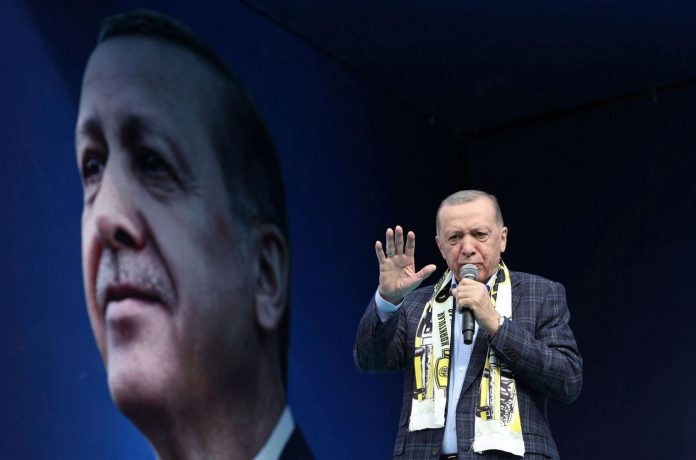
With 97 percent of ballot boxes opened, Erdogan received 52 percent of votes in the second round on Sunday, beating his challenger, Kemal Kilicdaroglu, who won 48 percent.

The official Supreme Election Council has yet to confirm the results.

The vote seals Erdogan’s place in history as he extends his 20-year rule for a further five years.

He had already outstripped the 15-year presidency of the Republic of Turkey’s founder, Mustafa Kemal Ataturk.

As Erdogan’s victory seemed complete, crowds headed to the presidential palace in Ankara to wait for his celebratory speech.

Prior to that, Erdogan appeared outside his residence in Istanbul’s Uskudar, where he sang before thanking an adoring crowd.

“We have completed the second round of the presidential elections with the favour of our people,” Erdogan said.

The two-month election period witnessed one of the most bitter campaigns in recent memory.

Erdogan repeatedly referred to his opponent as being backed by “terrorists” – due to the support offered by the main pro-Kurdish party – while Kilicdaroglu ended the campaign by calling Erdogan a “coward”.

The campaign took on an increasingly nationalist tone, with the opposition in particular promising to force Syrians and other refugee populations to leave.

Sunday’s run-off vote was the first time since direct presidential elections were introduced in 2014 that the vote had gone to a second stage.

Despite citizens being called to vote again two weeks after May 14’s initial election, the turnout remained around 85 percent.

For Turks following the opening of ballot boxes on television, the results depended on which platform they were following – the state-run Anadolu news agency or the Anka agency, which has ties to the opposition.

The elections – a parliamentary poll was run alongside the leadership race on May 14 – were widely billed as the most important in recent Turkish history and took place during the centenary year of the republic’s foundation.

The choice between the candidates was portrayed in similarly striking terms – either an extension of Erdogan’s two-decade rule or a leader pledging a return to a parliamentary system.

The polls, in which more than 64 million Turks at home and abroad were entitled to vote, took place against a background of a cost-of-living crisis that saw inflation peak at 85 percent in October and earthquakes in February that killed more than 50,000 people in the country’s southeast.

Erdogan, who came to power in 2003, initially as prime minister, offered a vision of further development, promising to extend the improvements made by his Justice and Development Party (AK Party) government.

Following his success in the parliamentary election – the AK Party and its allies won 323 of 600 seats – Erdogan was also able to promise the stability offered by controlling both the legislature and the government.

Kilicdaroglu, meanwhile, pledged democratisation and a rollback of Erdogan’s “one-man rule” while addressing what he called economic mismanagement.

The nationalist tone preceding the presidential run-off was partly a bid to gain the support of voters who backed Sinan Ogan, the candidate who secured more than 5 percent of the vote on May 14.

Ogan eventually backed Erdogan, but other nationalists backed Kilicdaroglu.

Erdogan reached 49.5 percent in the first round against Kilicdaroglu’s 44.9 percent.

Having endured the last two months of campaigning, voters now have 10 months to steel themselves for local elections in March, when Erdogan will push to retake cities including Istanbul and Ankara that were taken by the opposition in 2019.

Oman’s sultan arrives in Iran for two days of high-level talks

Oman's Sultan

Heading a high-ranking delegation, the Omani monarch arrived in Tehran on Sunday afternoon and was welcomed by First Vice President Mohammad Mokhber at the airport.

Sultan Haitham is slated to meet with Leader of the Islamic Revolution Ayatollah Seyyed Ali Khamenei and President Ebrahim Raisi of Iran during his stay.

Oman’s Diwan of Royal Court said the delegation accompanying the sultan would include the head of the armed forces Vice Admiral Abdullah Bin Khamis Raisi, as well as the ministers of finance, commerce and defense.

The trip follows a diplomatic push by Muscat to broker the restoration of ties between Saudi Arabia and Iran.

The diplomatic effort, which also featured talks in Iraq and Jordan came to fruition in China in March, when Tehran and Riyadh announced a reconciliation agreement.

Earlier, Iran’s Ambassador to Oman Ali Najafi Khoshroudi said the two countries were enjoying “an unprecedented level of partnership.”

“Both countries engage in fruitful discussions on economic and political matters that serve the best interests of their respective peoples,” he said.