Tuesday, December 23, 2025
Home Blog Page 1413

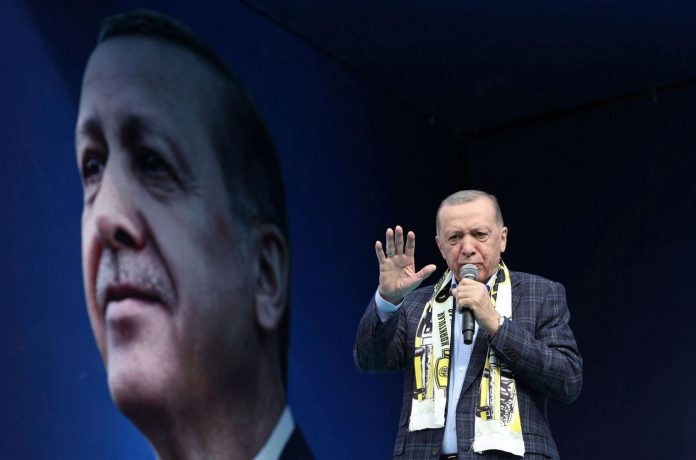
Erdogan re-elected as Turkey president

Erdogan

With 97 percent of ballot boxes opened, Erdogan received 52 percent of votes in the second round on Sunday, beating his challenger, Kemal Kilicdaroglu, who won 48 percent.

The official Supreme Election Council has yet to confirm the results.

The vote seals Erdogan’s place in history as he extends his 20-year rule for a further five years.

He had already outstripped the 15-year presidency of the Republic of Turkey’s founder, Mustafa Kemal Ataturk.

As Erdogan’s victory seemed complete, crowds headed to the presidential palace in Ankara to wait for his celebratory speech.

Prior to that, Erdogan appeared outside his residence in Istanbul’s Uskudar, where he sang before thanking an adoring crowd.

“We have completed the second round of the presidential elections with the favour of our people,” Erdogan said.

The two-month election period witnessed one of the most bitter campaigns in recent memory.

Erdogan repeatedly referred to his opponent as being backed by “terrorists” – due to the support offered by the main pro-Kurdish party – while Kilicdaroglu ended the campaign by calling Erdogan a “coward”.

The campaign took on an increasingly nationalist tone, with the opposition in particular promising to force Syrians and other refugee populations to leave.

Sunday’s run-off vote was the first time since direct presidential elections were introduced in 2014 that the vote had gone to a second stage.

Despite citizens being called to vote again two weeks after May 14’s initial election, the turnout remained around 85 percent.

For Turks following the opening of ballot boxes on television, the results depended on which platform they were following – the state-run Anadolu news agency or the Anka agency, which has ties to the opposition.

The elections – a parliamentary poll was run alongside the leadership race on May 14 – were widely billed as the most important in recent Turkish history and took place during the centenary year of the republic’s foundation.

The choice between the candidates was portrayed in similarly striking terms – either an extension of Erdogan’s two-decade rule or a leader pledging a return to a parliamentary system.

The polls, in which more than 64 million Turks at home and abroad were entitled to vote, took place against a background of a cost-of-living crisis that saw inflation peak at 85 percent in October and earthquakes in February that killed more than 50,000 people in the country’s southeast.

Erdogan, who came to power in 2003, initially as prime minister, offered a vision of further development, promising to extend the improvements made by his Justice and Development Party (AK Party) government.

Following his success in the parliamentary election – the AK Party and its allies won 323 of 600 seats – Erdogan was also able to promise the stability offered by controlling both the legislature and the government.

Kilicdaroglu, meanwhile, pledged democratisation and a rollback of Erdogan’s “one-man rule” while addressing what he called economic mismanagement.

The nationalist tone preceding the presidential run-off was partly a bid to gain the support of voters who backed Sinan Ogan, the candidate who secured more than 5 percent of the vote on May 14.

Ogan eventually backed Erdogan, but other nationalists backed Kilicdaroglu.

Erdogan reached 49.5 percent in the first round against Kilicdaroglu’s 44.9 percent.

Having endured the last two months of campaigning, voters now have 10 months to steel themselves for local elections in March, when Erdogan will push to retake cities including Istanbul and Ankara that were taken by the opposition in 2019.
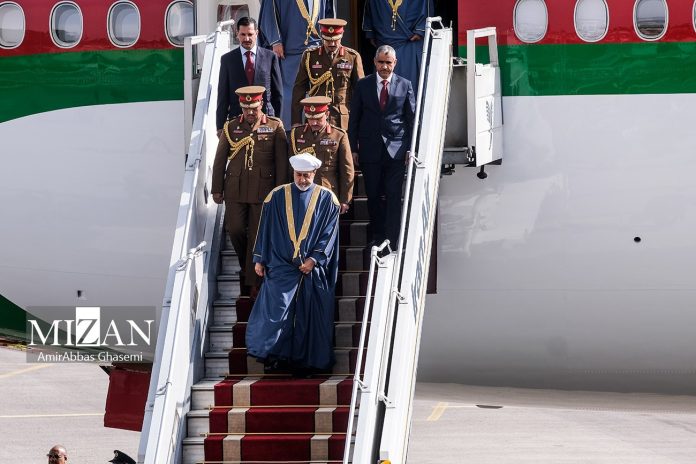
Oman’s sultan arrives in Iran for two days of high-level talks

Oman's Sultan

Heading a high-ranking delegation, the Omani monarch arrived in Tehran on Sunday afternoon and was welcomed by First Vice President Mohammad Mokhber at the airport.

Sultan Haitham is slated to meet with Leader of the Islamic Revolution Ayatollah Seyyed Ali Khamenei and President Ebrahim Raisi of Iran during his stay.

Oman’s Diwan of Royal Court said the delegation accompanying the sultan would include the head of the armed forces Vice Admiral Abdullah Bin Khamis Raisi, as well as the ministers of finance, commerce and defense.

The trip follows a diplomatic push by Muscat to broker the restoration of ties between Saudi Arabia and Iran.

The diplomatic effort, which also featured talks in Iraq and Jordan came to fruition in China in March, when Tehran and Riyadh announced a reconciliation agreement.

Earlier, Iran’s Ambassador to Oman Ali Najafi Khoshroudi said the two countries were enjoying “an unprecedented level of partnership.”

“Both countries engage in fruitful discussions on economic and political matters that serve the best interests of their respective peoples,” he said.

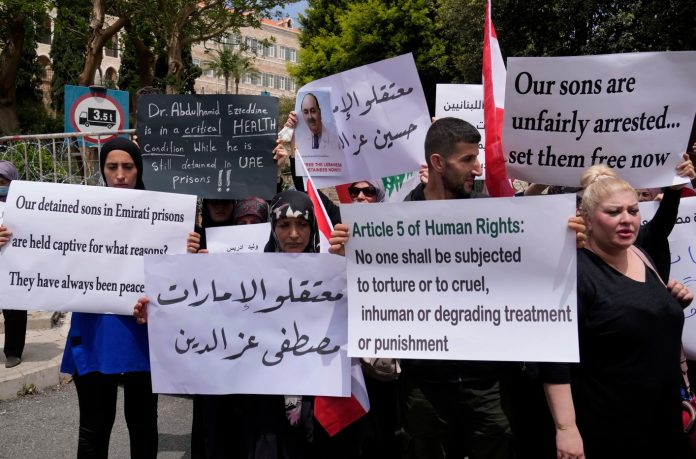
UAE frees Lebanese detainees after death in custody raised allegations of mistreatment

Lebanese prisoners in UAE

Lebanon’s ambassador to the UAE notified the ministry of the release of 10 Lebanese detainees who had been arrested there about two months ago, the ministry said in a statement.

The release comes after the death earlier this month of a Lebanese man who was detained in the UAE on unknown charges. A committee of family members of Lebanese citizens detained in the UAE alleged in a statement that Ghazi Ezzedine, 55, had died under torture, and rights groups raised concerns about the Emirati government’s lack of transparency regarding Ezzedine’s case and the linked detentions.

Emirati authorities have not commented on the case or on the release of the other detainees.

Afif Shouman, head of a group of Lebanese families with relatives detained in the Persian Gulf country, stated that seven Lebanese citizens remain detained in the UAE, none of whom have been convicted of a crime, and called for their release.

UAE authorities have detained dozens of Lebanese, mostly Shiites, in the past over alleged links to Hezbollah. The UAE, like other Persian Gulf Cooperation Council members, considers Hezbollah a “terrorist organization”.

In 2019, the UAE sentenced one Lebanese national to life in prison and two to ten years in prison on charges of links to Hezbollah.

Amnesty International announced in a statement at the time the trial of the men “failed to meet international fair trial standards,” as the evidence included confessions that were “extracted under duress, and the defendants were detained incommunicado for months and denied access to lawyers during interrogation and investigation.”

MP urges President Raisi to put Iranians’ medical needs before those of Indonesians

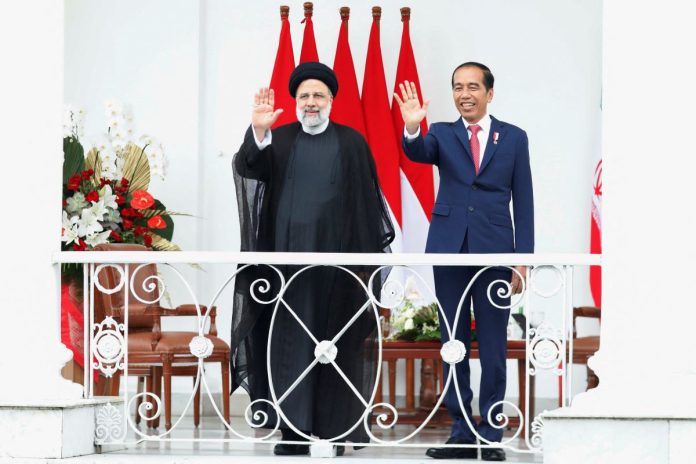
Ebrahim Raisi and Joko Widodo

Moein el-Din Saeidi, who represents the people in the port city of Chabahar at the parliament, called on President Raisi to address the “pain” of the Iranians before taking care of the needs of Indonesians.

He urged the Health Ministry to take urgent measures to further equip the Navy hospital in Konarak County and build new ones elsewhere in the southeastern province of Sistan and Baluchestan.

In his recent visit to the southeast Asian state of Indonesia, President Raisi promised to equip 12 hospitals with Iranian-made products.

FT: Saudi Arabia in talks to join BRICS bank

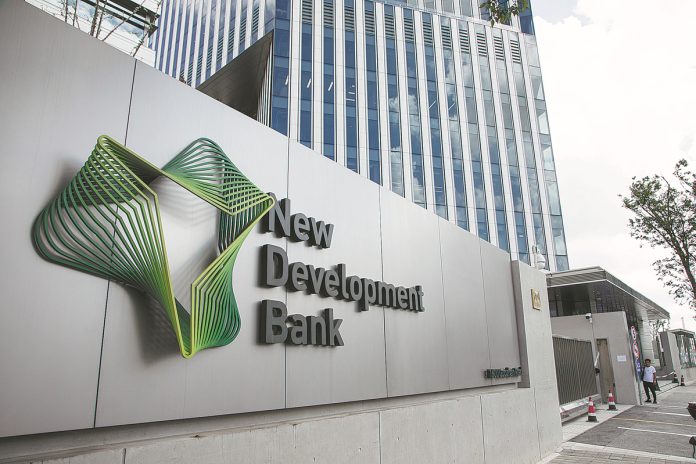
The New Development Bank (NDB)

The move is expected to cement ties between the Shanghai-based lender, established by BRICS (Brazil, Russia, India, China, and South Africa) back in 2014, with the world’s second biggest producer of oil.

“In the Middle East, we attach great importance to the Kingdom of Saudi Arabia and are currently engaged in a qualified dialogue with them,” the NDB said in a statement seen by FT.

Launched with the purpose of financing infrastructure and sustainable development in member states and other emerging economies, the NDB has expanded its membership to include Bangladesh, the United Arab Emirates, Uruguay and Egypt. It has lent $33 billion to more than 96 projects in the five founding member nations.

The multinational financial institution is preparing to embark on a formal evaluation of its funding options, which were shaken after Russia was hit by several waves of Western sanctions over its military operation in Ukraine. The BRICS bank is scheduled to hold its annual meeting from May 30-31.

For Riyadh, membership in the bank offers the prospect of strengthening bonds with the BRICS member states. The five economies account for more than 40% of the world’s population and nearly a quarter of global GDP.

The talks also come at a time when Saudi Arabia and China are increasing co-operation. In March, Beijing mediated a landmark agreement between the kingdom and Iran, helping to ease regional tensions. Saudi Arabia has also significantly strengthened its energy ties with China.

The Saudis are expected to emerge as another financially reliable shareholder in the NDB as the international lender assesses its ability to mobilize funds. Sanctions on Russia have raised concerns about the bank’s dependence on Moscow, which holds a stake of around 19%.

Ukraine president proposes imposing sectoral sanctions against Iran for five decades

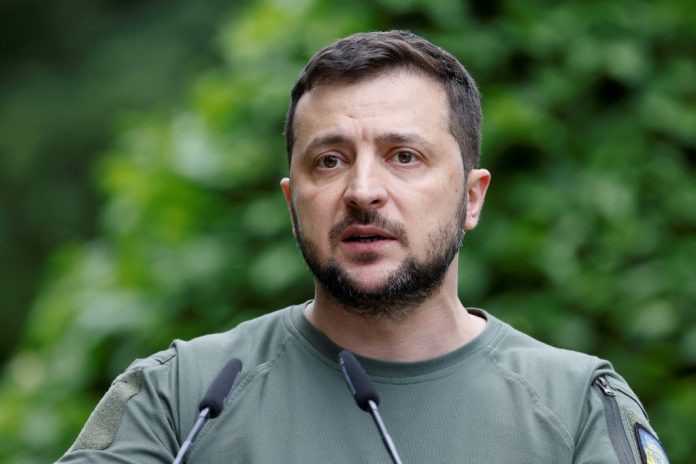
Ukraine President Volodymyr Zelensky

In the draft resolution on the website of the Ukrainian Parliament, it was stated that “Implementation of sectoral special economic and other restrictive measures (sanctions) on the Islamic Republic of Iran for 50 years”.

If the bill is passed by the lawmakers, commercial activities with Iran will be completely banned, the transit of resources, flights and transportation on the territory of Ukraine will be stopped.

In addition, it will become impossible to attract capital to Iranians living outside Ukraine. In addition, a number of measures could be implemented by Kiev against Tehran, including a ban on any investment in Iran.

Ukraine and Western countries have accused Iran of providing Russia with military drones for use in the war. Both Iran and Russia have repeatedly denied claims that Tehran has provided Moscow with UAVs to be used in the Ukraine war.

Iranian Foreign Minister Hossein Amirabdollahian in November dismissed media controversy over Iran’s alleged support for Russia in the war, adding, however, that Tehran had provided Moscow with a limited number of drones months before the war in Ukraine.

He also stressed that Iran will not be indifferent if it is proven that Russia has used Iranian drones in the conflict.

Ex-envoy: Taliban using water, border closure as pressure lever on Iran

Taliban Afghanistan

Abolfazl Zohrehvand, in an interview with Entekhab news outlet, voiced concerns over the ongoing frictions between Iran and the Taliban, saying there is a risk of a repetition of the clashes that broke out between Iranian border guards and the Taliban.

“The recent conflict with the Taliban — the motives of which are still not fully clear — has sounded the alarm about how to interact with this group,” he said.

“The excessive demands of the Taliban, along with their recent behavior towards water and disruption in the borders, have caused relative tensions, which can have more dangerous dimensions in the future,” the ex-envoy warned.

Zohrevand drew attention to the US’s attempts to provoke tensions in the Taliban’s ties with Iran and Pakistan.

“The Taliban are using their pressure levers, including the Helmand water and the closure of the Dogharoun border. This situation was, of course, predictable, because the Americans have fully invested in creating a crisis in this region,” he added.

He said that the Taliban are posing threats to China and Russia as well, warning, “We are currently at a sensitive juncture of history.”

Iraq announces $17bn transport project linking Asia and Europe

Persian Gulf

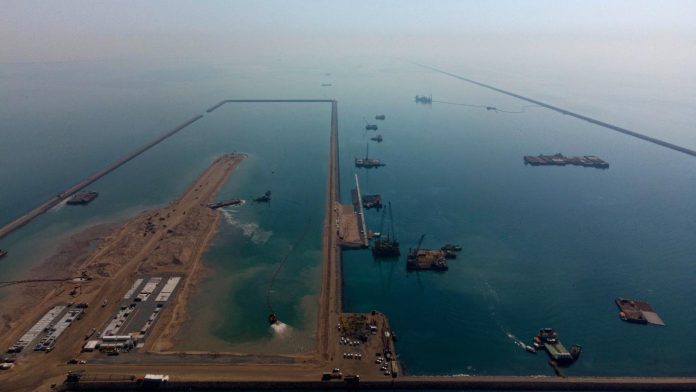
Iraq has launched an ambitious 1,200km rail and road infrastructure project spanning the length of the country, which seeks to link Europe with the Middle East and Asia.

The $17bn project, dubbed the “Route of Development”, would tie the Grand Faw Port in the oil-rich south of the country to the Turkish border in the north. It could rival Egypt’s Suez Canal as the region’s transportation hub.

Al-Sudani launched the plan during a conference on Saturday with transport ministry officials from Iran, Jordan, Kuwait, Oman, Qatar, Saudi Arabia, Syria and the United Arab Emirates.

“We see this project as a pillar of a sustainable non-oil economy, a link that serves Iraq’s neighbours and the region, and a contribution to economic integration efforts,” Sudani said.

The project will include high-speed trains moving both goods and passengers at up to 300km per hour, and reconstructing the country’s road network.

The current rail network includes a slow oil freight and an overnight passenger train from Baghdad to Basra, which takes up to 12 hours to travel 500km.

The new route is set to consist of around 15 stations, including the cities of Basra, Baghdad and Mosul.

The Iraqi parliament’s transport committee announced that any country that wished to “will be able to carry out part of the project”, which it said would be completed in “three to five years”.

Work is already underway on the commercial Grand Faw Port, a new sea port that lies on the northern tip of the Persian Gulf.

Iraqi infrastructure has been ravaged by decades of conflict, including the US invasion and subsequent war in 2003, and the fight against the Islamic State group, which seized almost a third of the country before being beaten back by late 2017.

In recent years, Iraqis have seen a reduction in security measures and direct armed confrontations and bombings, but political gridlock and uncertainty has slowed the reconstruction process.

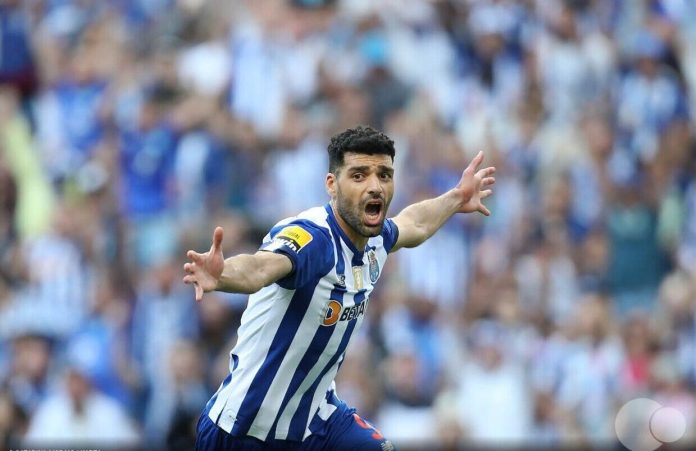
Iran’s Taremi clinches top scorer title in Portuguese Primeira Liga

Mehdi Taremi

Taremi has become the top scorer in the Portuguese football league system’s top level Liga Portugal. The Iranian forward sealed his position as top scorer in Liga Portugal’s 2022-2023 edition with 22 goals after his team FC Porto finished second in the league late on Sunday.

He outperformed Gonçalo Matias Ramos of the league’s winners Benfica who scored 19 goals this season.

Taremi was nicknamed the Persian Gulf Boy after celebrating his 100th match in Porto’s jersey in August 2022.

While FC Porto’s strong campaign concluded with a second-place finish, it was Benfica who ultimately claimed the coveted Liga trophy. Benfica’s commanding 3-0 triumph over Santa Clara on the final matchday propelled them to victory, amassing an impressive total of 87 points.

FC Porto overpowered Vitória S.C. 3-0 on Sunday, finishing as the runner-up in the league with 85 points.

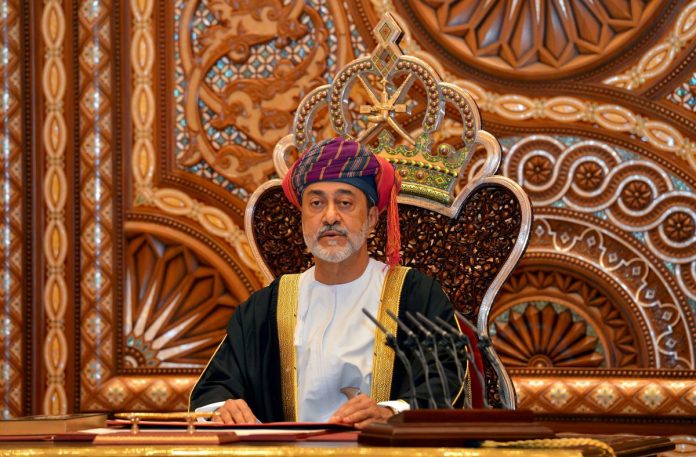
Official: Omani sultan’s Iran visit another sign of growing ties with Persian Gulf neighbors

Omani sultan

Addressing an Iranian-Arab dialog conference in Qatar, Kamal Kharrazi praised the reconciliation process between Iran and Saudi Arabia, recalling his earlier remarks that the two Middle East powers cannot seek each other’s elimination.

He called on the leaders of the region to move toward building a “strong region,” adding that the “first step,” which he described as dialog, has fortunately been taken.

Today’s trend in the region, he said, is considered a sign of “maturity and intelligence” of the regional states in making use of the international developments to serve the interests of their own countries and the entire region.

The foreign policy advisor to Leader of the Islamic Revolution Ayatollah Seyyed Ali Khamenei also warned against the presence of the US and the Israeli regime in the Persian Gulf, saying such activities will not only fail to bring security but will even be a threat to the regional stability.