Number of Ukrainians who have entered Russia during conflict revealed
More than 3.5 million Ukrainian citizens have crossed into Russia since Moscow launched its military operation more than a year ago, Vladimir Kulishov, the head of Border Guard Service, said.
Speaking to TASS news agency, Kulishov noted that “due to the aggravated humanitarian situation in the area of hostilities” Russian authorities have taken a number of steps to facilitate entry for millions of Ukrainians. The official did not clarify whether the figure represents the number of Ukrainians who have remained in Russia, or whether some of them later left the country.
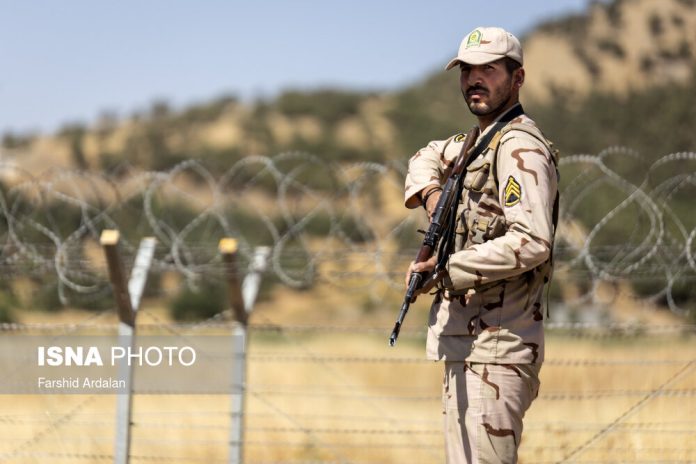
Kulishov added the conflict has resulted in an “escalation of military threats” to the nation’s border, stemming from Kiev’s attempts to “stage provocative acts” and send sabotage and reconnaissance forces into Russia. Earlier this month, a Ukrainian raid in the Belgorod Region, near the Ukrainian border, left one civilian dead and several others injured.
To stave off any such incidents in the future, Russian authorities have ramped up security measures in the border area, including creating defense fortifications, Kulishov explained.
Drone attacks on Kyiv largest to date: Ukraine
The overnight drone attacks on Kyiv that left one person dead were the largest to date, the Ukrainian Ministry of Defence says.
“Last night, Russian [sic] terrorists carried out the largest drone strike on Ukraine to date,” the ministry tweeted.
“Ukraine’s air defense shot down 52 out of 54 drones,” it added.
Kyiv has been regularly targeted in recent weeks but fatalities have been rare.
Russia says US doubts about Kiev’s ability to return lost lands realistic
Chairman of the US Joint Chiefs of Staff Gen. Mark Milley’s doubts about Ukraine’s ability to recapture the territory it has lost to Russia since February 2022 in near future is a step forward toward the West’s understanding the reality on the ground, Russian Foreign Minister Sergey Lavrov said on Sunday.
“He [Milley] said that Ukraine is likely unable to return all its territories within the 1991 borders in foreseeable future. That is a step forward toward understanding the reality on the ground,” Lavrov stated.
The top Russian diplomat also called Western military supplies to Ukraine an “unacceptable escalation,” adding that this understanding exists even in the West.
“Of course, it is unacceptable escalation. I think that there are still people in the West who realize this, but it is Washington, London and their satellites inside the European Union that are dictating everything,” Lavrov added.
Earlier in the week, Milley said that in the short term Kiev is likely unable to achieve its strategic objective, which is to return control of all the territory it has lost to Russia.
South Africa appoints panel to investigate US allegations of arms shipment to Russia
South African President Cyril Ramaphosa has appointed a panel to investigate allegations by the US ambassador that a Russian ship had collected weapons from a naval base near Cape Town last year, the presidency has said in a statement.
South Africa has denied claims made by the US ambassador to South Africa, Reuben Brigety, on May 11 and the allegations have since caused a diplomatic row between the two countries, calling into question South Africa’s non-aligned position on the Ukraine conflict. South Africa has abstained from voting on UN resolutions about the war, saying it is impartial.
In a statement published on Sunday, the presidency said: “The President decided to establish the enquiry because of the seriousness of the allegations, the extent of public interest and the impact of this matter on South Africa’s international relations.”
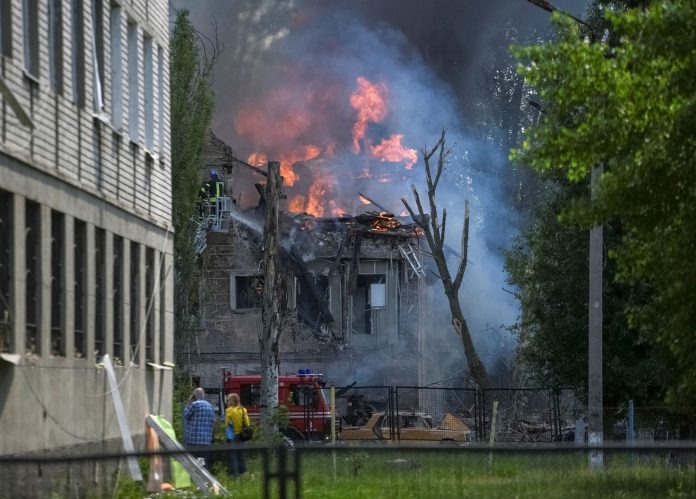
Death toll from Friday’s attack on a medical facility in Ukraine’s Dnipro rises to 4
The death toll from Russia’s attack on a medical facility in Dnipro on Friday has risen by one to four, according to the head of Dnipropetrovsk region military administration, Serhii Lysak.
Among the dead are a 56-year-old doctor, a 64-year-old employee of the medical facility and a 57-year-old veterinary clinic employee, Lysak said on Telegram.
Lysak did not provide any details about the identity of the fourth victim.
Russian forces struck a medical facility in the city of Dnipro on Friday morning, after intense shelling rained over central Ukraine overnight.
A veterinary clinic nearby was also hit, where animals undergoing treatment having to be dug out of the rubble.
It is the latest attack on healthcare in Ukraine and sparked widespread criticism. with Kyiv and its allies calling for Russia to be made accountable.
Putin says border guards to continue protecting Russia’s sovereignty territorial integrity
Russian President Vladimir Putin has congratulated veterans and current service members on Border Guards Day, saying that Russian border guards will continue protecting the country’s sovereignty and territorial integrity and will ensure the movement of military and civil cargo to new constituent entities of Russia.
“You, the successors and heirs of the victors’ generation, of those who defeated Nazism, continue to discharge your duty with honour and dignity, solve challenging high-priority tasks to protect the state borders, carry out border control and protection of marine resources, make an important contribution to implementing international integration projects and development of cross-border cooperation, fight transnational crime and smuggling, and prevent diversions and terrorist attacks,” Putin said in a Sunday statement.
The Russian president thanked border guards for their service, particularly those participating in the special military operation in Ukraine.
“I am confident that you will continue to act selflessly, bravely and efficiently, and will competently and effectively use all available resources and means to protect the sovereignty and territorial integrity of Russia and the security of our people,” Putin added.
The president stated that Russian border guards must work in close cooperation with other units of the Federal Security Service, the Armed Forces and the National Guard of the Russian Federation, as well as regional government bodies.
“… it is vitally important to ensure fast movement of both military and civil vehicles and cargoes, including food, humanitarian aid, and construction materials on their way to new constituent entities of the Russian Federation – the Donetsk and Lugansk people’s republics, and the Zaporozhye and Kherson regions,” Putin continued.
Over 50 Russian drones downed in wave of attacks on Ukrainian capital, Kyiv
A wave of Russian drone attacks on the Ukrainian capital left one person dead and sparked fires around the city, officials in Kyiv stated early Sunday.
Kyiv’s Mayor Vitali Klitshko said Ukrainian air defense forces had “already intercepted more than 20 UAVs (unmanned aerial vehicles)” heading toward the capital and warned that “a new wave of drones is on its way.”
The Ukrainian Air Force announced that 54 drones had been launched by Russia overnight and that 52 of them had been destroyed by Ukrainian forces.
“The enemy launched another overnight attack on military facilities and critical infrastructure in the country’s central regions, specifically Kyiv Oblast. Near the zone Air Command ‘Center’, most of the attack drones were destroyed!” the air force said in a Twitter post.
The use of such a large number of drones may be an effort by Russia’s army to overwhelm Ukraine’s air defences.
Сounteroffensive could start at any moment: Ukrainian official
Ukrainian forces are “ready” to launch their much-touted counteroffensive, the head of the National Security and Defense Council told the BBC in an interview on Saturday. Aleksey Danilov said the military top brass are now waiting for the right moment to launch the attack.
“It could happen tomorrow, the day after tomorrow or in a week,” Danilov answered when pressed about a potential start of the counteroffensive, which Kiev has been talking about for months.
A major assault was initially expected to start in spring or even late winter, but Kiev repeatedly postponed it, citing adverse weather conditions and the need to obtain all necessary weapons and equipment from western backers.
Danilov added it would have been “weird” for him to reveal the exact date, as “that cannot be done.” He described the planned attack as a “historic opportunity” that his nation “cannot lose” if it wants to become a “big European country.”
“We understand that we have no right to make a mistake,” he continued.
In April, The New York Times reported that Ukraine’s Western supporters might start to pressure Kiev into launching talks with Moscow should the much-anticipated offensive fail to yield any major gains.
Kiev has been sending mixed signals on the counteroffensive. Earlier this week, Ukrainian President Volodymyr Zelensky’s aide, Mikhail Podoliak, told Italy’s Rai TV channel that it “has been going on for several days”. However, on Thursday, another presidential advisor, Igor Zhovkva, contradicted that statement, saying Ukrainian forces were still preparing for the operation.
Danilov denied the offensive had already begun, claiming that Ukrainian strikes against Russian “control centers” and “military equipment” were just routine operations.
Danilov’s remarks came as Russia outlined its conditions for ending the conflict with Ukraine. Russian Deputy Foreign Minister Mikhail Galuzin told TASS on Saturday that Kiev should abandon the idea of joining NATO and the EU, guarantee the rights of minorities, and declare Russian a state language.
Ukraine must also recognize the “new territorial realities,” the high-ranking diplomat said, referring to four former Ukrainian territories that joined Russia following referendums in autumn 2022, as well as Crimea, which reunited with Russia in 2014 following another referendum.
However, Danilov stated earlier in May that there could be no peace talks “on Russia’s terms.”
Ukrainian intelligence acknowledges role in Crimean bridge attack
Seven months after an explosion badly damaged the bridge connecting Russia to Russian-occupied Crimea, the leader of Ukraine’s intelligence service has confirmed Kyiv’s involvement in the attack.
“Since this is a logistics route that we had to cut off from the enemy, appropriate measures were taken,” said Vasyl Malyuk, the head of the domestic intelligence service SBU in a YouTube interview with Ukrainian journalist Dmytro Komarov.
He did not give details of the operation.
Most observers have long assumed Ukraine was behind the attack, although Kyiv has largely declined to comment on the incident.
Malyuk hinted in December that his agency might have had something to do with it.
Russian shelling in Ukraine’s Kharkiv region leaves at least one person dead: Regional leader
At least one person is dead and another is injured after Russia shelled Ukraine’s northeastern Kharkiv region Saturday, according to the region’s military administration.
The attack took place in the village of Shipuvate, which is about 50 kilometers (around 30 miles) from the Russian border, and in the region’s eastern Kupyansk district, according to the official, Oleh Syniehubov.
A 61-year-old woman died in Shipuvate, the regional leader said. The person injured was a man who suffered shrapnel wounds and has since been hospitalized.
Russian attacks across Zaporizhzhia region leave at least 1 person dead
At least one person is dead and two others wounded after Russia attacked 16 settlements across Ukraine’s southern Zaporizhzhia region, according to the region’s military administration.
The person killed was identified as a 73-year-old woman in Novodanylivka and the two wounded people were both women in Huliaipole, according to the head of Zaporizhzhia’s military administration, Yurii Malashko.
Fifteen civilian structures have been destroyed across Zaporizhzhia, Malashko said on Telegram Saturday.
The regional leader claims 108 attacks were carried out in the following areas:
- 96 artillery attacks on Huliaipole, Novodanylivka, Novoandriivka, Stepnohirsk, Kamianske and other villages
- 6 multiple launch rocket system attacks on Huliaipilske, Bilohirsk and Temyrivka,
- Unmanned aerial vehicle attacks on Stepove, Olhivske, Malynivka and Chervone
- Missile attacks on the villages of Rizdvinka and Liubytske
Western countries are becoming more and more involved in the Ukraine conflict day by day, Kremlin Spokesman Dmitry Peskov said in an interview with the ‘Moscow. Kremlin. Putin’ TV program.
“It’s hard to say where the breaking point is. In fact, the breaking point should bring nations of the collective West to senses, but regrettably, it is not happening. Obviously, the degree of direct and indirect involvement in this conflict by the countries of the collective West is surging day by day,” he said when asked about limits of the escalation.
Peskov was asked this question in the context of new arms supplies to Kiev.
“This may protract the conflict, but will not turn the tide drastically. It cannot turn the tide at all,” Peskov emphasized.
“Russia will press on with the [special military] operation, and Russia will ensure its interests one way or another and achieve the designated objectives,” he added.