
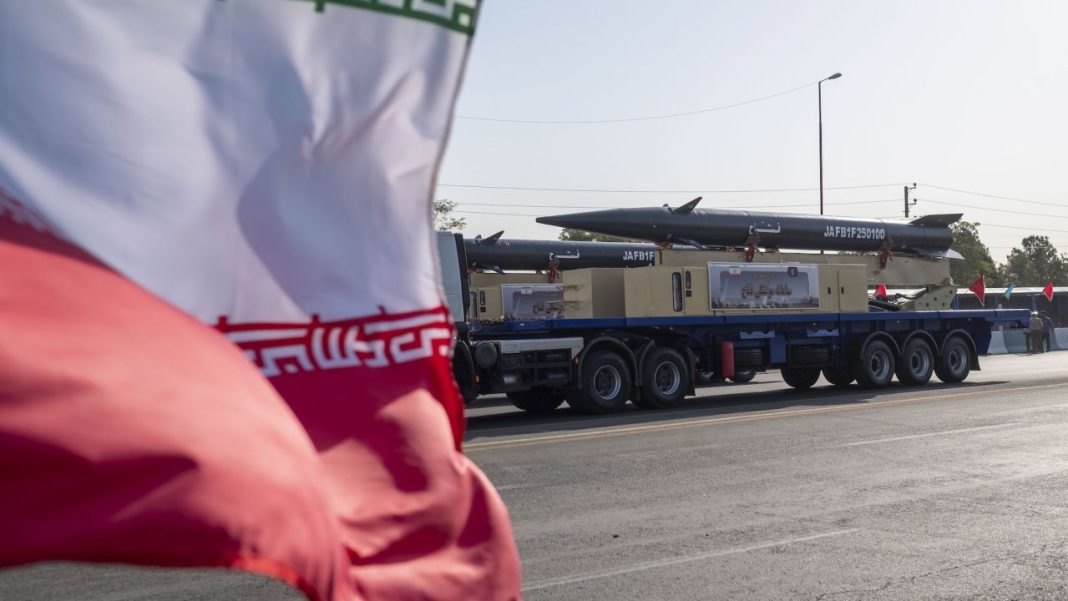
Iran’s missile program — long regarded as a principal instrument of strategic deterrence — has in recent years undergone pivotal technological leaps that have turned the country into a missile superpower.
The introduction of guided reentry warheads (MaRVs) into near-space has produced a dramatic improvement in the accuracy of Iran’s missiles.
After separating from the main booster and re-entering the atmosphere, these warheads locate and strike their targets.
MaRV technology (Maneuverable Re-entry Vehicle) represents Iran’s most important step toward becoming a precision missile power.
Iranian MaRV-equipped missiles have achieved accuracies below 10 meters.
The adoption of composite (solid) propellants has allowed missiles to remain concealed in storage or on mobile launchers for years and be fired within minutes.
A sharp reduction in operational readiness time, greater survivability, and easier maintenance are among the benefits of using composite solid fuel in Iran’s missiles.
Hypersonic capability is another feature of Iran’s Fattah-1 missiles. Nearly all ballistic missiles travel at hypersonic speeds (faster than Mach 5) during part of their flight.
The unveiling of Fattah-1 brought Iran into the exclusive club of countries possessing maneuverable hypersonic weapons.
Fattah-2 is another type of Iranian missile that uses HGV (hypersonic glide vehicle) technology.
Rather than following a purely ballistic descent, this weapon behaves like a very fast paper airplane.
The booster launches it to the edge of space; the warhead separates and then glides for hundreds of kilometers above the atmosphere. This glide capability lets it change course and strike from unexpected angles.
The Hormoz anti-radar ballistic missile acts like a hunter descending from space; instead of pursuing a conventional target, it homes in on enemy radar emissions and attacks the signal source itself (the radar). The Hormoz-1 is a short-range ballistic missile optimized for SEAD (suppression of enemy air defenses) missions.
In a conflict scenario, Iran could begin its first wave of attacks with anti-radar ballistic missiles to blind the enemy’s air-defense sensors. That forces enemy radar operators into a deadly dilemma: keep their radar on to detect threats and be targeted, or switch it off and allow subsequent waves of missiles and drones to reach their targets unimpeded.
