
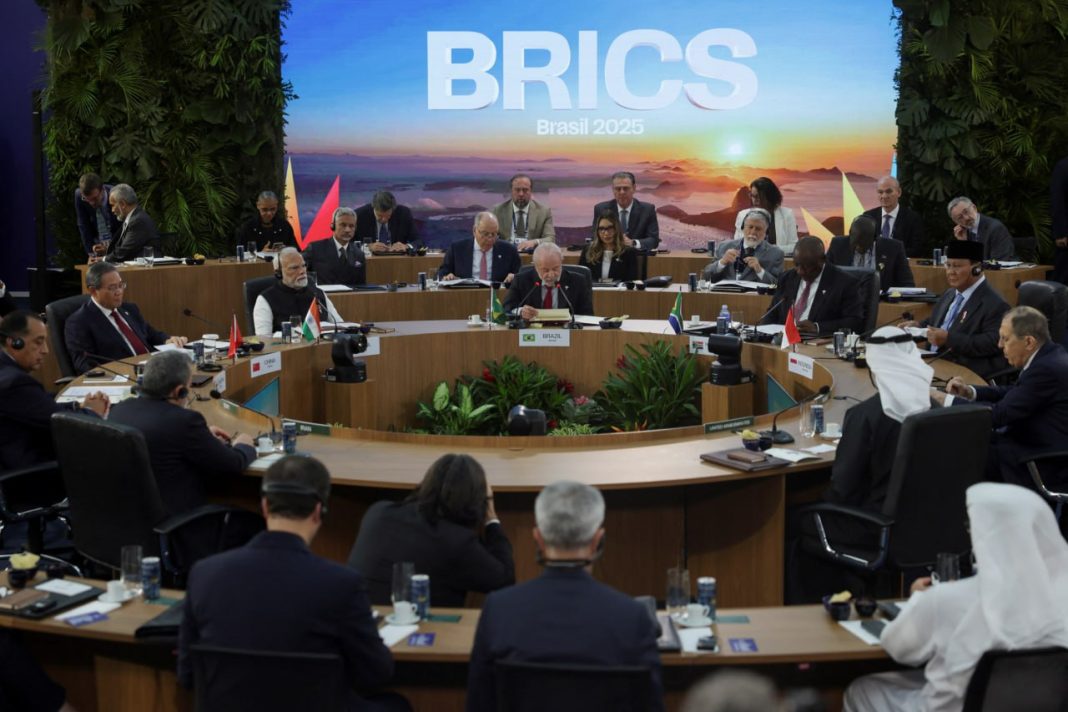
Speaking at the 17th BRICS Summit in Rio de Janeiro, Brazil, Araqchi stated that the Islamic Republic of Iran, which has itself faced years of unjust sanctions, believes BRICS should take the lead in reforming global governance.
He emphasized the rejection of unilateral coercive measures and stressed the need to strengthen the central role of the United Nations, along with supporting structural reforms to better align with the realities of today’s world.
Araqchi highlighted the importance of enhancing South-South cooperation, empowering regional organizations, and promoting dialogue among countries to counter and balance domination-oriented narratives.
He also underscored the need to expand the role of the BRICS New Development Bank (NDB) in financing infrastructure, energy, and technology projects in member states and other Global South countries.
Araqchi added that the Islamic Republic of Iran, as a major energy producer and a strategic connectivity hub, possesses vast capacities to contribute to energy diversification and interconnection among BRICS members.
The Iranian foreign minister also proposed the establishment of a BRICS Center for Artificial Intelligence and Emerging Technologies.
In another part of his speech, referring to the recent aggression by the United States and the Israeli regime against Iran, Araqchi said: “The people of Iran are mourning their loved ones, including women and children, who were martyred as a result of the savage aggression by the Israeli regime — carried out with the support, cooperation, and ultimately direct participation of the United States. These military attacks were carried out solely because Iran seeks to acquire nuclear technology for peaceful purposes.”
Brazil, Russia, India, China, South Africa, Iran, Saudi Arabia, United Arab Emirates, Egypt, and Ethiopia are member states of BRICS.
