Wednesday, January 14, 2026
Home Blog Page 685

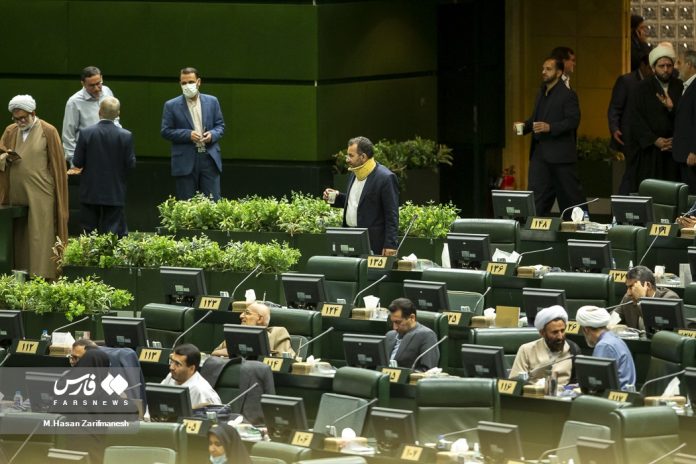
Iran parliament national security, foreign policy commission members visit Persian Gulf island

Iran Parliament

This visit comes in the wake of recent controversies sparked by certain Persian Gulf countries and a statement from the European Union questioning Iran’s sovereignty over the three islands of Abu Mousa, the greater and lesser Tunbs.

Iran firmly rejects these claims, asserting that the trio islands have always been and will remain an integral part of Iranian territory, a fact rooted in historical continuity.

The delegation’s visit includes meetings with local residents and inspections of key infrastructure to ensure the well-being and stability of the islands’ inhabitants.

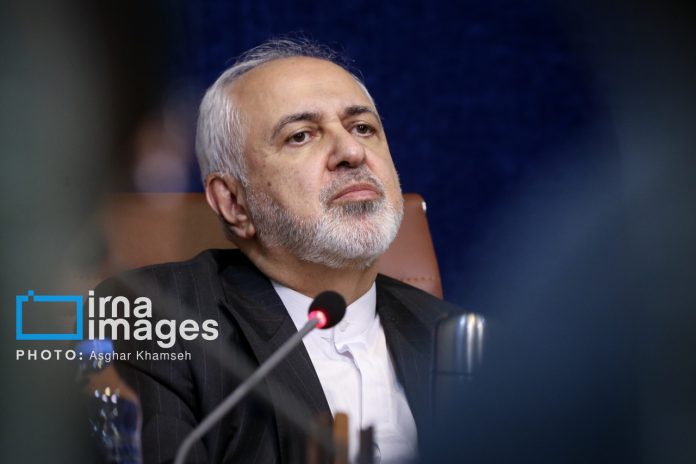
Zarif: Israel seeks to sacrifice Azerbaijan, not support it

Zarif highlighted Iran’s role in the post-Islamic Revolution era, stressing regional synergy to cope with challenges facing the region.

He noted that Iran has become a reliable power, capable of safeguarding its territorial integrity and overcoming its 200-year security challenges.

This strategic confidence, Zarif asserted, enables Iran to pursue the policy of a strong regional strategy.

The Iranian Vice-President for Strategic Affairs also reiterated that Iran, with its geopolitical significance and abundant material and human resources, can become a regional hub for transit, technology, and energy.

Referring to the 3+3 initiative involving Iran, Turkey, Russia, Azerbaijan, Armenia, and Georgia, Zarif stressed the importance of comprehensive cooperation to solve regional issues without foreign interference.

He proposed a mixed transit consortium to enhance regional cooperation following the Nagorno-Karabakh ceasefire between Armenia and Azerbaijan, ensuring the mutual benefit of all Caucasus and neighboring countries.

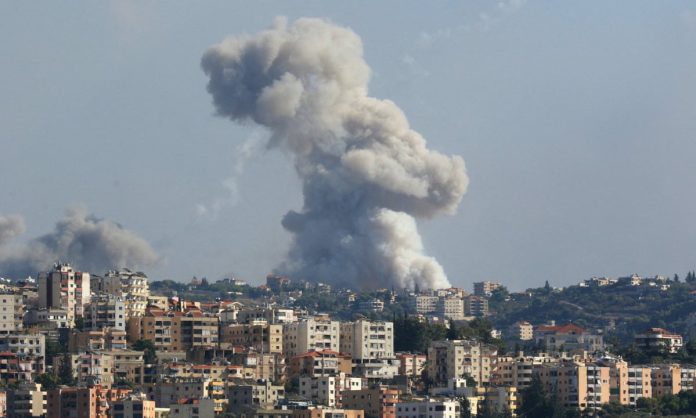
3 soldiers killed in Israeli attack on southern Lebanon

Lebanon War

The Israeli attack is the second deadliest on the Lebanese Army in four days.

“The Israeli enemy targeted Lebanese army personnel in the vicinity of Yater village, in Bint Jbeil in the south, while carrying out an operation to evacuate wounded, resulting in three martyrs, including an officer,” the Lebanese Army said in the statement.

Earlier on Sunday, the Israeli army killed three soldiers when it targeted their military vehicle in southern Lebanon.

Israel has mounted a huge air campaign in Lebanon since last month against what it says are Hezbollah targets in an escalation from a year of cross-border warfare between Israel and the group since the start of Israel’s brutal offensive on Gaza.

Over 2,570 people have been killed and more than 12,000 injured in Israeli aggression since October last year, according to Lebanese health authorities.

Israel expanded the conflict on Oct. 1 this year by launching a ground assault into southern Lebanon.

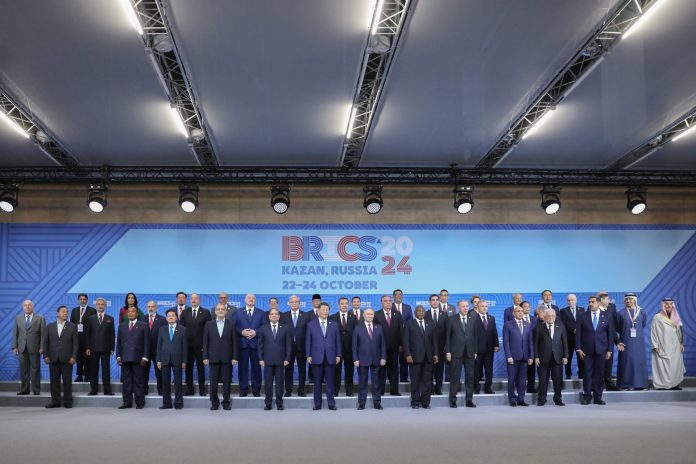
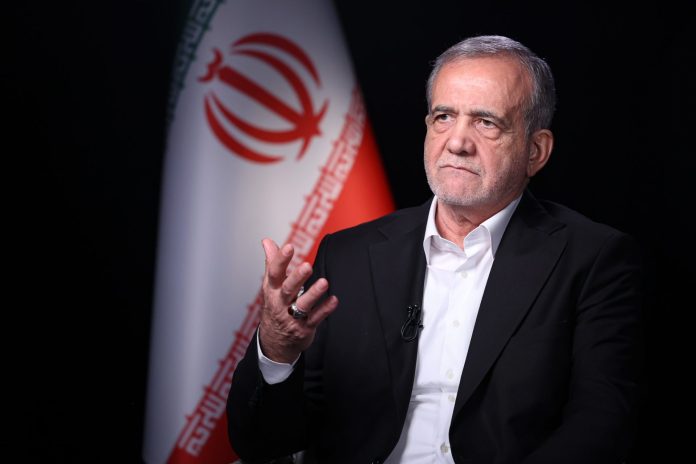
Iran’s Pezeshkian says foundations of unilateralism collapsing

“Coalitionism and efforts to create constructive and friendly relations are part of today’s reality and the demand of many countries and international players to get rid of unilateralism,” Pezeshkian said in an address to a meeting of the BRICS+ group in the Russian city of Kazan on Thursday.

Since its formation, the group has managed to turn into a “successful” model of cooperation and convergence among the countries in the regional and international scenes thanks to its lofty goals, he continued.

He emphasized that a better word will be established when there is no trace of sanctions, imposition of will, aggression, war, conquests and genocide.

A better word will be a place where multilateralism will prevail over unilateralism, the majority outweighs the minority, discrimination is replaced with equity, transparency is chosen instead of deception, democracy is preferred over authoritarianism and dialogue has put an end to war, the Iranian president stated.

Pezeshkian said illegal sanctions have destructive impacts on international relations and block access of countries to their own financial resources.

He warned that illegal sanctions will have adverse consequences on the countries’ effective role in international cooperation aimed at countering the negative effects of climate change, global warming, environmental destruction and provision of humanitarian aid.

The Iranian president urged BRICS and BRICS+ to draw up and implement a clear, fair, inclusive and non-discriminatory mechanism based on multilateral trade rules with a special focus on developing and less developed countries.

He added that countries favoring unilateralism will continue to impede developing countries’ access to modern technologies, stressing the need to accelerate collective cooperation and share experience to counter such moves.

Contrary to all recognized principles of international law and human rights, unilateral sanctions have challenged global norms and human rights, he emphasized.

The president warned that many processes of development have faced numerous challenges due to coercive measures and political prejudice, expressing regret that a sustainable movement toward a safe and developed world has been disrupted.

Elsewhere in his address, Pezeshkian pointed to the regional developments over the last year and the serious threat to West Asia’s peace and security, and said the Israeli regime has crossed many red lines regarding the countries’ sovereignty in violation of international regulations.

He noted that Israel has added another dark page to the history of its widespread crimes by creating a new wave of violence and terror.

The Iranian president emphasized that international forums, particularly the United Nations Security Council, are not efficient enough to end the ongoing war in the Gaza Strip and Lebanon.

The unwavering support provided to the Israeli regime by the US and the West has made it difficult to establish peace and end war in Gaza and Lebanon, he pointed out.

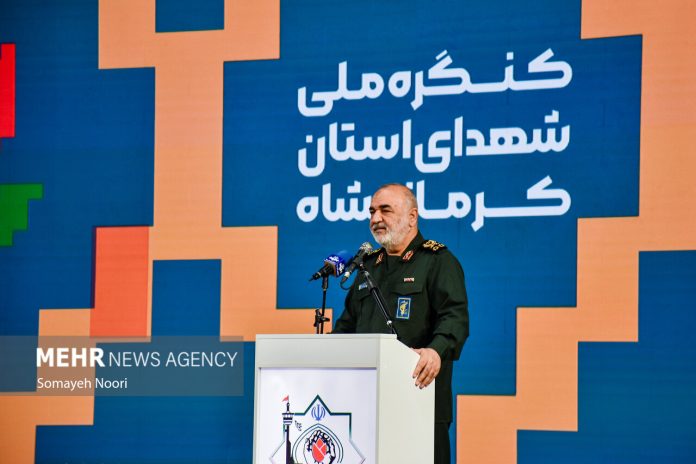
IRGC chief warns Israel not to pin its fate on US missile shield

On Thursday, Major General Hossein Salami played down the capabilities of THAAD, which the US has recently supplied to the Israeli regime.

The general advised the Zionist regime not to rely on the barrels of THAAD.

He noted that such missile defense systems are “limited” equipment, reminding the Zionists that they have counted upon a finite power.

“Shoot as much as you wish, your enemies will shoot many times more than you. You cannot win in this and we will defeat you.”

The top general warned that the Zionist regime, 98% of whose economy is dependent on sea, could head towards downfall instantly if it makes unwise decisions.

Earlier this month, in its latest round of military assistance to Tel Aviv, Washington sent its THAAD anti-missile defense system to Israel along with scores of soldiers and crew to operate it.

US President Joe Biden said the deployment was meant “to defend Israel,” and bolster the regime’s air defenses after heavy missile attacks by Iran and regional resistance groups, including Lebanon’s Hezbollah.

On October 1, Iran responded to the Israeli assassination of Hamas political bureau chief Ismail Haniyeh, Hezbollah Secretary General Seyyed Hassan Nasrallah, and IRGC general Abbas Nilforoushan by launching as many as 200 ballistic missiles toward the Zionist regime’s military and intelligence bases all over the occupied Palestinian territories.

While the Zionist regime has threatened to retaliate, Iranian officials have warned that Tehran’s reciprocal response to any Israeli action will be harsh, proportional and well-calculated.

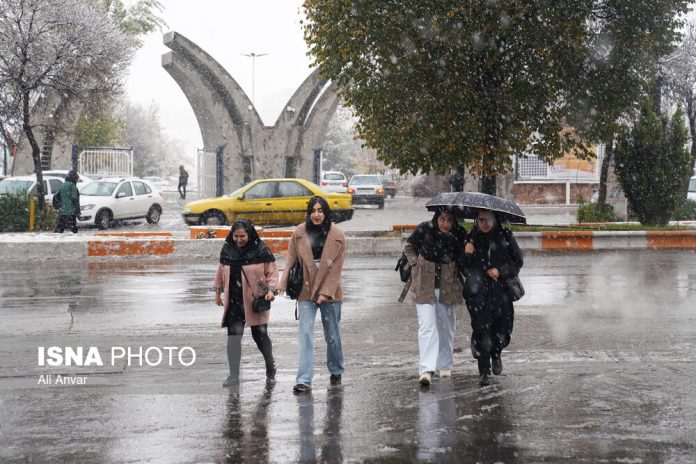
Many cities in Iran experience continued snow, rainfall

The Caspian coastal provinces, the southern slopes of the Alborz mountains, parts of the northwest, southwest, southeast, northeast, and central areas experience adverse weather conditions.

Snowfall is also expected in the highlands and the intensity of rainfall is expected to be higher in Kohgiluyeh and Boyer-Ahmad, Bushehr, and Fars provinces.

The head of the National Weather Forecasting Center has warned of avalanche risks due to the recent heavy snowfall in the northwest and Alborz highlands.

A significant drop in temperature is expected across large parts of the country, posing a risk of frostbite.

Many cities in northern Iranian province of Gilan, including Masal, experienced the first snowfall of the year.

Fariborz Moradi, Director General of Gilan’s Road Maintenance and Transportation, reported a halt in snowfall in the Talesh Highlands, where snow has accumulated to 90 cm.

He said 175 km of roads have been cleared over the past 36 hours, but some routes in the region still remain closed due to severe blizzards and insufficient safety.

Iran, China urge immediate ceasefire in Gaza, Lebanon

Pezeshkian Xi

In a meeting on the sidelines of the BRICS summit in the Russian city of Kazan on Wednesday, Pezeshkian and Xi discussed a range of issues pertaining to the relations between Tehran and Beijing and the regional developments.

Hailing China as a friend and major trade partner of Iran, Pezeshkian expressed confidence that mutual cooperation can help stand against the Western countries’ totalitarianism.

The Iranian president denounced the unconditional supports from the US and a number of Western governments for the Zionist regime as the main threat to regional peace, saying Israel has crossed all red lines and has proved that it does not respect any humanitarian or legal principles by massacring innocent people and civilians.

Iran does not seek clashes and believes that wars would not benefit anybody, Pezeshkian added, but warned that any act of aggression will draw Iran’s firm and decisive response.

For his part, President Xi voiced China’s readiness to promote relations with Iran, stressing the need to strengthen mutual trust.

Lauding the constructive interaction between the two countries at the regional and international levels, the Chinese president said the two states can cooperate fruitfully in various fields.

Pointing to the worrying situation in the region, he described an immediate establishment of ceasefire as the key to de-escalation of tensions.

China believes that Iran makes the appropriate arrangements to create peace and stability in the region, President Xi added, calling for efforts to prevent the deterioration of clashes.

Pezeshkian says martyrdom of Safieddine opening new chapter in resistance against Israel

Masoud Pezeshkian

In a message on Wednesday night, Pezeshkian expressed condolences on the martyrdom of Saffiedine in an Israeli airstrike on Beirut.

The president extended his condolences to Leader of the Islamic Revolution Ayatollah Seyyed Ali Khamenei, the Lebanese and Palestinian people, as well as Saffiedine’s family and his comrades in the resistance front, and all the freedom-loving people in the world.

Saffiedine, who was inspired by the teachings of Ashura, courageously dedicated his entire life to defending the oppressed people of Palestine and Lebanon as well as strengthening the resistance front, Pezeshkian added.

He noted that although Saffiedine’s martyrdom is a great loss for the axis of resistance and the Lebanese nation, it will definitely open a new chapter in the resistance and struggle against the Zionist occupiers.

The president also stated that the great martyr left behind brilliant legacies of resistance and fight against oppression and tyranny, which will continue to be inspiring.

Pezeshkian referred to the Zionist regime’s assassination of Hezbollah Leader Seyyed Hassan Nasrallah in September, stressing the Zionist enemy thought that it could stop the resistance by assassinating Nasrallah, but Hezbollah will continue to grow and has remained stronger than before, powerfully pursuing its goals and inflicting heavy blows to the occupiers.

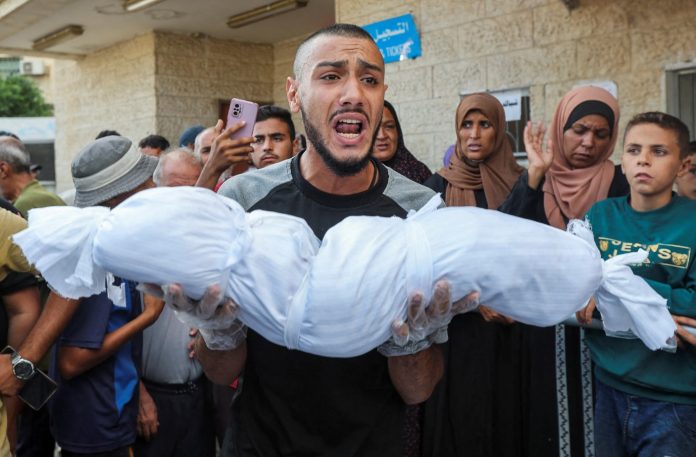
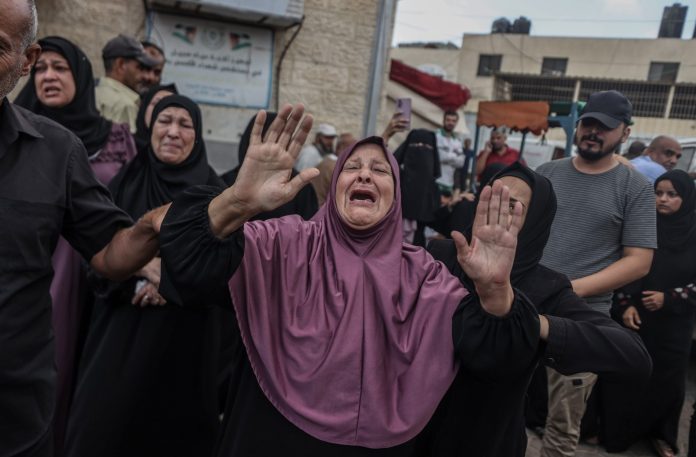
Over 770 killed in 19 days of Israeli siege on Gaza’s Jabalia: Gov’t media office

It said in a statement that more than 200 civilians, including women, have been “kidnapped”, and dozens more remain missing amid communications issues.

“We express our fear that they may have been executed in the field, as has been done on many previous occasions,” it added.

More than 100,000 wounded and sick people in the northern parts of Gaza are in “urgent need” of assistance, which remains elusive due to the Israeli military’s destruction of the health system and four hospitals in the area, according to the office.

United Nations Secretary General Antonio Guterres expressed deep concern Wednesday for civilians suffering under Israel’s siege in north Gaza.

“People suffering under the ongoing Israeli siege in North Gaza are rapidly exhausting all available means for their survival,” Guterres wrote on X.

Emphasizing the need to protect civilians and ensure they receive the necessary humanitarian assistance, he reminded Israel of its obligations under international law, saying “that’s what international humanitarian law requires”.

The Israeli army has intensified its assault in northern Gaza amid a suffocating siege that has left tens of thousands of people without food and water.

The onslaught, which began on Oct. 5, is the latest episode in Israel’s brutal offensive that has killed nearly 42,800 people, mostly women and children, and injured more than 100,400 since last October following an attack by the Palestinian resistance group Hamas.

The Israeli onslaught has displaced nearly the entire population of the territory amid an ongoing blockade that has led to severe shortages of food, clean water and medicine.

Israel also faces a genocide case at the International Court of Justice for its actions in Gaza.

Iran urges UN Security Council to force Israel into stopping aggression in Gaza, Lebanon, Syria

Iravani made the remarks during a Security Council meeting on Syria on Wednesday, amid deadly Israeli airstrikes on the Arab country as well as the regime’s bloody war on Gaza and Lebanon.

“We once again urge the Council to take swift, decisive action to compel the Israeli regime to end its aggression and atrocity crimes in Gaza, Lebanon, and Syria, and to ensure full compliance with international law and relevant UN Security Council resolutions. The time for action is now,” he said.

“Now, more than ever, this regime poses a grave and undeniable threat to international peace and security. Its relentless acts of terror are pushing the region to the brink of full-scale war. ”

Since early October 2023, Israel has killed at least 42,700 people in the besieged Gaza and 2,500 others in Lebanon.

Over the same period, the usurping entity has launched more than 116 aerial assaults on Syrian territory in blatant violation of international law and the UN Charter.

Iravani stated that Israel’s terrorist attacks on Syria have claimed the lives of over 100 civilians, including 12 children, and caused widespread destruction of civilian infrastructure such as schools, hospitals, and airports.

“The occupying regime is deliberately pursuing a systematic policy to cripple the infrastructure of the Syrian Arab Republic, exacerbating Syria’s security challenges and undermining critical humanitarian efforts,” he added.

The Iranian envoy also expressed deep concerns about Israel’s blatant disregard for red lines and shameless strikes on humanitarian convoys, facilities, and relief workers.

“These actions are flagrant violations of international law … The protection and support the regime receives from the United States emboldens its continued acts of violence across the region, allowing it to act without consequence,” he emphasized.

He further called for respect for Syria’s sovereignty and territorial integrity in order to ensure lasting peace and stability in the country and the entire region.

Additionally in his remarks, Iravani highlighted the suffering of the Syrian people amid economic instability, and foreign occupation and terrorism, saying the nation is also subject to hostile policies of the Western countries.

The humanitarian situation remains dire in Syria, which is grappling with a sharp decline in donor contributions for UN programs and the influx of refugees from neighboring Lebanon, he noted.

The Iranian envoy also assailed the United States for its use of sanctions as collective punishment, its politicizing of humanitarian aid, and obstruction of international efforts to support Syria’s reconstruction process.

“The United States and its allies continue to pursue their failed policy of inhumane, unilateral sanctions, effectively using them as a tool for the collective punishment of the Syrian people,” he said.

“Such harmful policies and practices have only prolonged the conflict and worsened the suffering of the Syrian people,” he added.