Wednesday, January 14, 2026
Home Blog Page 684

Report: Informed source says Iran ready to respond to Israeli aggression

Iran Missile

The source added that, as stated previously, Iran is fully ready to respond to this aggressive act.

Tasnim quoted the informed source as saying that Iran reserves the right to respond to any aggression, adding that Israel will undoubtedly receive a proportional reaction.

Iran’s Air Defense announced that the Israeli regime conducted attacks on military centers in the Iranian provinces of Tehran, Ilam, and Khuzestan. It added that the raids were successfully intercepted and that minor damage occurred.

Multiple explosions heard in Tehran

The reports say the attacks targeted a number of military sites on the outskirts of Tehran.

Iranian Fars News agency reported investigations and initial follow-ups show that several military bases in the west and southwest of Tehran were the targets of the Israel’s attack.

Additionally, some of the sounds were attributed to air defense fire, and surveys indicate that most images circulating online are outdated and unreliable.

Tasnim News Agency reports that, so far, no missile strikes or attacks have occurred on IRGC military centers in western and southwestern Tehran.

IRNA reports that, as of 3:22 a.m. on Saturday, Tehran’s emergency services have received no reports of incidents requiring assistance within the capital or its surrounding areas.

An informed source told Iran newspaper that the air defense response was successful.

Iran previously warned that any Israeli attack would be met with a “firm response beyond imagination.”

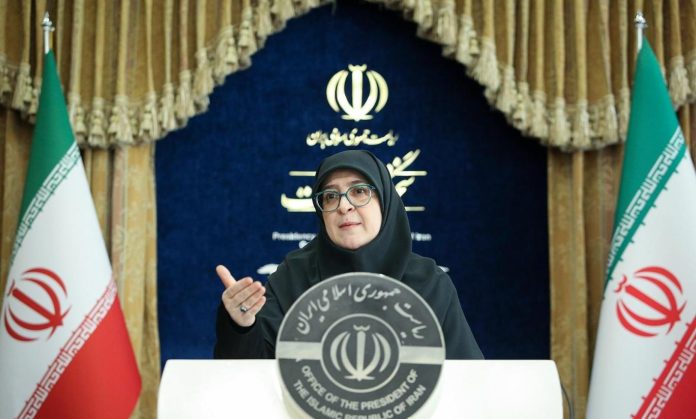
Iran govt. spokeswoman says Israel killing of journalists in Lebanon state terrorism 

In a post on X, Fatemeh Mohajerani said the airstrike was a targeted attack meant to hide the crimes being committed in Gaza and Lebanon from world people.

She added that Israel’s attack on media outlets in Lebanon is a sign of a bigger disaster.

Mohajerani also said criminals always try to keep the world unaware of their crimes.

She noted that the Geneva Conventions and the law on protecting the lives of journalists in wartime were established in order to keep the free flow of information to prevent crimes in silence.

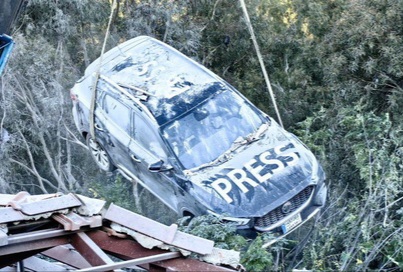
On Friday morning, Zionists killed three members of the al-Mayadeen and al-Manar news teams by deliberately targeting the residence of journalists in the town of Hasbaya in southeastern Lebanon.

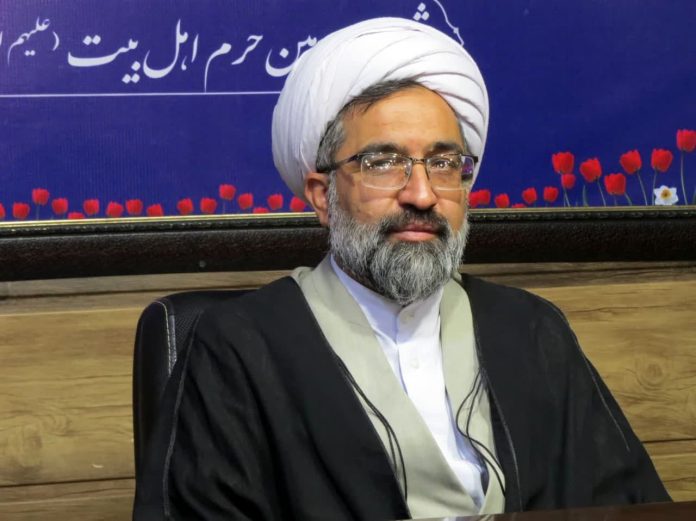
Friday prayers leader assassinated in southern Iran 

Mohammad Sabahi was shot after leading the Friday prayers at noon for unspecific reasons.

He was rushed to the hospital but succumbed to his injuries on the way to the medical center.

The assailant committed suicide after the shooting.

The Governor of Kazeroun, Mohammad Ali Bekhrad, confirmed the assassination, saying “there is a possibility of personal hostility in this incident.”

The governor added an investigation has been launched into the case.

Iran condemns Israel’s deadly targeting of journalists in Lebanon as war crime

In a post on X, Ismail Baqaei strongly condemned the Israeli regime’s airstrike in the town of Hasbaya early Friday, which resulted in the martyrdom of three journalists.

The television network Al Manar confirmed the death of one of its photographers, Wisam Qasim. Meanwhile, Al Mayadeen announced the deaths of photographer Ghassan Nayar and technician Muhamad Reda.

Baqaei added that the Israeli regime has killed 180 journalists and media personnel over the past year.

The Iranian Foreign Ministry spokesman also emphasized that international agreements, particularly the 1949 Geneva Conventions, grant immunity to journalists in conflict zones.

The Lebanese government has also condemned the deadly Israeli strike as a war crime.

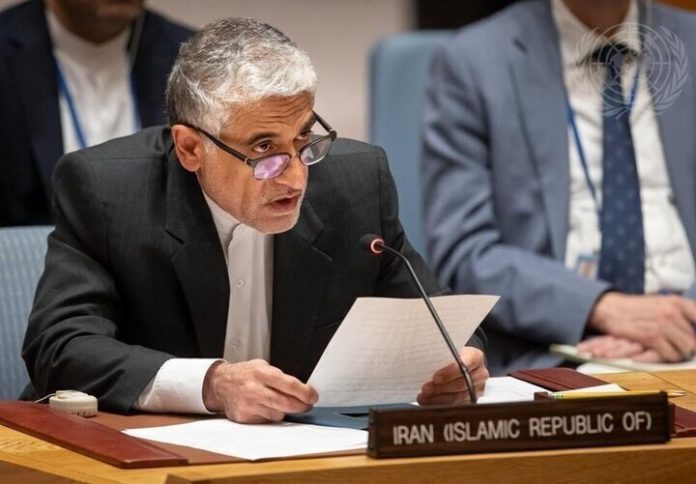
Iran’s UN Envoy Calls for UNSC Action on Killing of Iranians in Lebanon

In a letter to the UN Security Council and the Secretary-General, Iravani described the Israeli regime’s attack as a clear violation of Lebanon’s sovereignty and territorial integrity, demanding that it be condemned in the strongest possible terms.

On October 19, Massoumeh Karbasi, an Iranian national, and her Lebanese husband were killed in an Israeli airstrike in Jounieh, north of Beirut.

Additionally, on October 22, Dr. Ali Heidari, an Iranian physician and aid worker providing medical assistance to the injured, was killed in an Israeli airstrike on the Lebanese capital.

The Iranian envoy emphasized that these attacks undermine the global commitment to protecting fundamental humanitarian rights.

Iravani stressed that the attack on the Iranian woman and her husband reflects the Israeli regime’s disregard for civilian lives and the principles of international law.

The Iranian diplomat also condemned the targeted killing of Dr. Heidari, who was performing his humanitarian duties, noting that this reprehensible act constitutes a direct violation of the 1949 Geneva Conventions and qualifies as a war crime.

Governor: 2 to 3 million Afghan migrants add to Tehran’s complications

Mohammad Sadegh Momenian, in an interview with Khabaronline news website, shared insights into the challenges facing the capital, highlighting the need for equitable distribution of resources and balanced development.

He emphasized that while Tehran is the most migrant-receiving province, the distribution of infrastructure between the city and counties is unequal.

The highlight of his remarks was with a total population of 15 million residents, adding Tehran has reached its capacity and cannot accommodate further population growth.

Momenian noted that daily, approximately 2 million people commute within Tehran, contributing to the city’s severe congestion issues.

Overcrowding is also evident in the education sector, with some areas experiencing student densities as high as 48 students per class, the highest recorded in the province, he noted.

The governor pointed out that Tehran’s problems, including water crises, air pollution, traffic congestion, and inadequate urban development, stem from a lack of implemented plans and policies.

Despite contributing to over 33 percent of the country’s revenue, many socio-economic indicators in Tehran are below the national average, he deplored.

In response to these challenges, Iran plans to repatriate 2 million migrants to alleviate some of the demographic pressures before the current Iranian year on March 20 in order to improve living conditions and infrastructure for all residents.

Momenian emphasized the need for focused management and strategic policy-making to enhance employment, production capacities, and the equitable distribution of resources.

Iran’s President lauds BRICS efforts against US unilateralism

Masoud Pezeshkian

At the end of his three-day visit to Russia and upon his arrival at Tehran’s Mehrabad Airport on Thursday night, President Pezeshkian remarked that BRICS is dedicated to countering U.S. unilateralism, the dominance of the U.S. dollar over the global economy, and the severe sanctions imposed on various countries.

President Pezeshkian further noted that the BRICS meeting included discussions about establishing an independent monetary fund. This initiative is intended as a tool to resist U.S. policies influencing the International Monetary Fund (IMF) and to mitigate sanctions.

He also highlighted the summit’s final communique, which condemned the Israeli regime’s crimes in Gaza and Lebanon. The communique also underscored the importance of enhancing economic, cultural, scientific, and security cooperation among BRICS member states.

During his visit, President Pezeshkian held bilateral meetings with the presidents of China, Russia, and South Africa, as well as the Prime Minister of India among others.

He described the visit as a “golden opportunity” for Iran to expand its synergy with BRICS members.

BRICS currently includes Brazil, Russia, India, China, South Africa, Iran, Egypt, Ethiopia, the United Arab Emirates, and Saudi Arabia. Additionally, Turkey, Azerbaijan, and Malaysia have formally applied for membership.

Ayatollah Khamenei: Hezbollah Alive, thriving, strongest defender of Lebanon

Ayatollah Khamenei

In a message of condolence over the martyrdom of Sayyed Hashem Safieddine, the head of Hezbollah’s Executive Council, the Leader said, “As always, the Islamic Republic will continue to support the mujahideen of Quds and those resisting the usurping criminal gang’s occupation of Palestine.”

Ayatollah Khamenei said Sayyed Hashem Safieddine was one of the most eminent figures of Hezbollah, adding with the planning and courage of leaders like him, Hezbollah was able to protect Lebanon once again from the danger of being broken up and collapsing by neutralizing the threat of the usurping Zionist regime

Ayatollah Khamenei added today, Hezbollah remains the strongest defender of Lebanon and the firmest shield in the face of the avarice of the Zionist regime, which has long sought to break up Lebanon.

Hezbollah has recently confirmed that Hashem Safieddine, one of its leading figures who was widely expected to succeed Sayyed Hassan Narallah as the secretary general of the movement, was killed in an Israeli air strike on southern Beirut, Lebanon.

Tehran bids farewell to Iranian Dr. Ali Heydari, victim of Israeli regime’s drone strike

A devoted physician and aid worker, Dr. Heydari had traveled to Lebanon to offer medical assistance to the wounded and sick, driven by a sense of humanitarian and religious duty.

His vehicle was struck by the Israeli regime’s drones, leading to his martyrdom.

Dr. Heydari was known for his selfless service, treating ill pilgrims free of charge during the Arbaeen pilgrimage.

His body was returned to Iran Thursday, where his family and the people of Tehran gathered to pay their respects.