Thursday, January 1, 2026
Home Blog Page 600

IRGC chief: Iran’s power ‘impervious’ to fall of Syrian gov’t

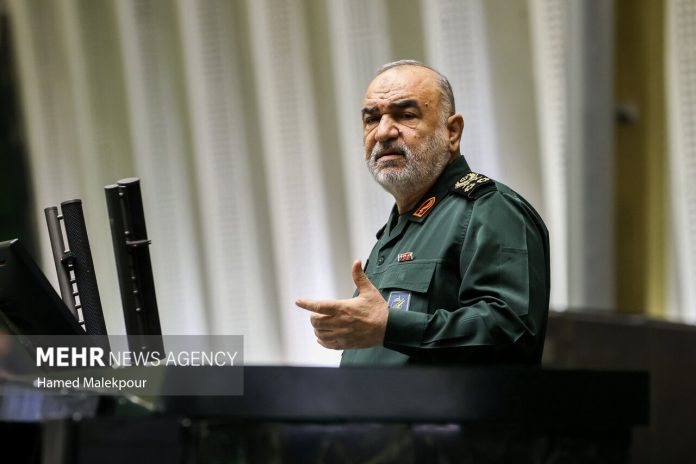
Major General Hossein Salami made the remarks on Tuesday as he attended a closed-door briefing session at the Iranian Parliament (Majlis) on Tuesday over the situation in Syria, after militants, led by Hay’at Tahrir al-Sham (HTS), seized the capital Damascus and declared the end of al-Assad’s 24-year rule.

Briefing reporters after the session, the spokesperson for the Iranian Parliament’s National Security and Foreign Policy Committee, Ebrahim Rezaei, said the IRGC chief provided an in-depth analysis of the status quo in West Asia, stating, “Our sphere of power and influence has not shrunk, and our military might has not suffered a setback at all.”

Salami also stressed that attempts aimed at the downfall of the Zionist regime remain high on the Islamic Republic’s agenda, praising the influential role of the late top Iranian anti-terror commander, Lieutenant General Qassem Soleimani, in the elimination of the Takfiri Daesh terrorist group, Rezaei added.

The IRGC chief also emphasized that forces within the Axis of Resistance have gained self-sufficiency in developing various types of munitions and military hardware, the Iranian legislator pointed out.

Militants waged a surprise two-pronged attack on Syria’s Aleppo and the countryside around Idlib on November 27.

Soon afterward, they seized control of several major Syrian cities, including Hama, Homs, Dara’a, and Suwayda, before entering the capital Damascus on December 8.

Armed groups, led by HTS militants, announced that they had fully captured Damascus, and confirmed reports of the fall of Assad’s government.

Iran pursuing national interests in Syria after overthrow of Assad: Gov’t spokesperson

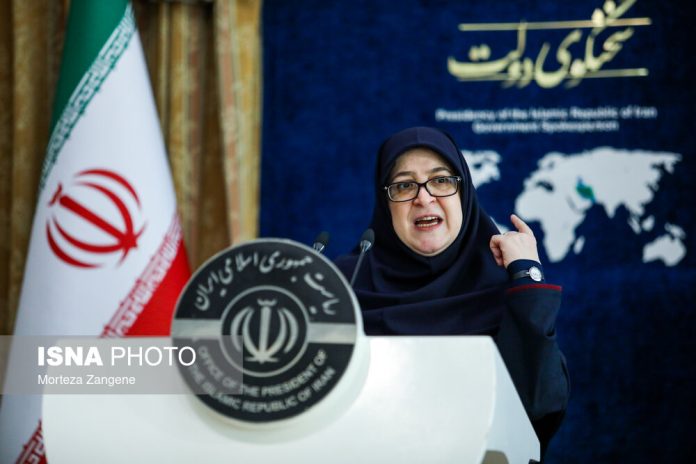
Mohajerani told reporters on Tuesday that, to preserve national interests, the Islamic Republic will make all necessary follow-ups and hold consultations with different parties in Syria, following the change of government in the Arab country.

She stated that Iran will advance its ties with other countries based on the three principles of dignity, wisdom, and expediency, as pointed out by the Supreme Leader.

The spokeswoman also called for the defense of sacred sites and diplomatic premises, as well as the protection of human dignity in Syria.

Referring to the long-standing cultural and civilizational ties between Iran and Syria, Mohajerani wished the Syrians all the best.

She also urged respect for Syria’s national sovereignty and territorial integrity.

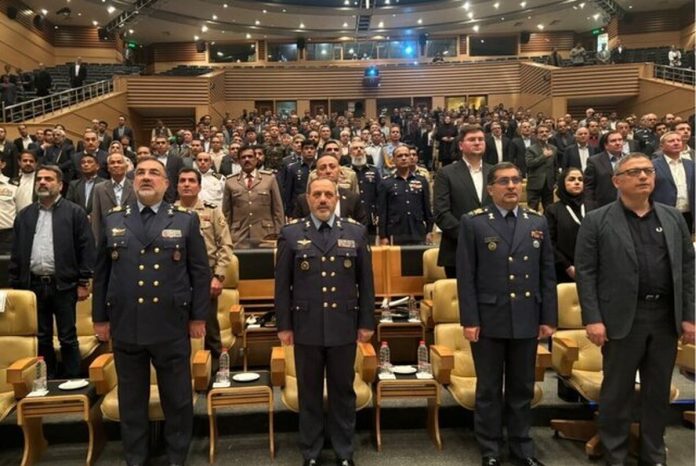
Iran’s Int’l Aviation and Aerospace Exhibition opens with defense minister’s attendance

The event opened on Tuesday morning with the presence of Air Force Commander Brigadier General Hamid Vahedi, the head of the Defense Ministry’s Aviation Industry Organization Brigadier General Afshin Khajeh-Fard, and head of the Civil Aviation Organization Siavash Pourfarzaneh.

Running from December 10 to 13, 2024, the exhibition is the largest gathering in Iran’s aviation and aerospace sector.

It brings together domestic and international companies, research centers, aerospace faculties, and knowledge-based companies.

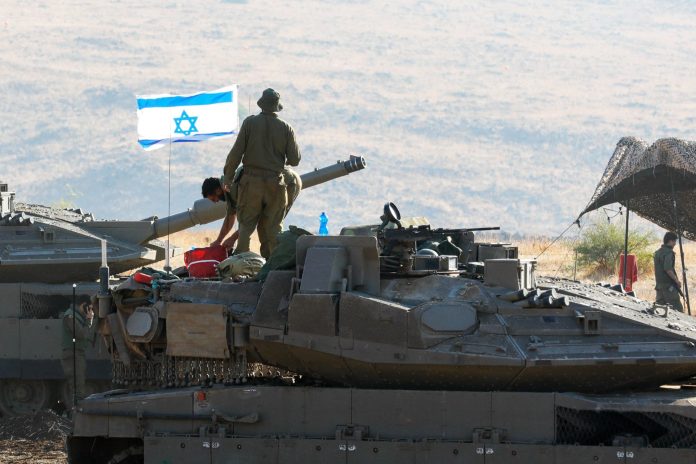
Israeli tanks reach outskirts of Damascus in wake of gov’t fall

Israel Army

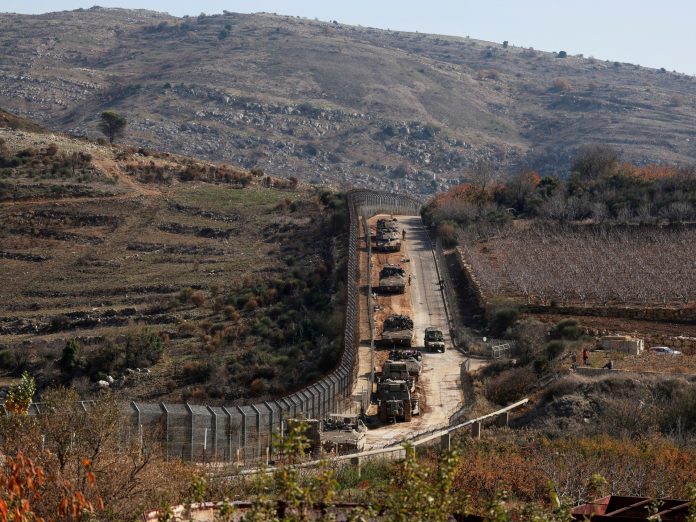
According to Al Mayadeen, the tanks advanced beyond the buffer zone, where Israel moved troops earlier this week, and were stationed near the southern village of Qatana, 21 kilometers from the Syrian capital.

The Israel Defense Forces (IDF) has yet to comment on the information, Al Mayadeen added.

As Syrian rebels captured the country’s capital Damascus over the weekend, Israel ordered its military to seize the buffer zone that separates the Israeli-occupied Golan Heights from the rest of Syria.

Israeli Prime Minister Benjamin Netanyahu has claimed that these actions were taken in response to recent developments in the Arab country and are of a “defensive nature”. He stated that the Syrian Golan Heights will remain part of the occupied territories “for eternity”.

The Israeli military has also launched airstrikes on at least 250 targets across Syria following the collapse of the al-Assad regime, Israel’s Army Radio reported Monday.

Beyond the land incursion, Israeli military has been bombing several targets across Syria since Al-Assad’s ouster on Sunday.

The Golan Heights was partly occupied by Israel in 1967, with a buffer zone separating territory they control and territory still held by Syria created in 1974.

Several Arab states condemn Israel’s seizure of buffer zone in Syria’s Golan Heights

Egypt’s Foreign Ministry described the move as “an occupation of Syrian territory and a flagrant violation to the 1974 Disengagement Agreement”.

The agreement led to Israel’s withdrawal from some Syrian territories but left the Golan Heights under Israeli control.

Egypt announced Israel’s action was a breach of international law and a violation of Syria’s territorial integrity.

It called on the United Nations Security Council and world powers to assume their responsibilities and take “a firm position” against Israel’s attack on Syria.

Saudi Arabia’s Ministry of Foreign Affairs said “the assaults carried out by the Israeli occupation government, including the seizure of the buffer zone in the occupied Golan Heights and the targeting of Syrian territory by Israeli occupation forces, confirm Israel’s continued violations of international law and its intent to sabotage Syria’s chances of regaining security, stability and territorial integrity”.

The statement emphasized “the need for the international community to condemn these Israeli violations and reaffirm respect for Syria’s sovereignty and territorial integrity and that the Golan is occupied Syrian Arab land”.

Qatar, in a statement from its Foreign Ministry, strongly condemned “the Israeli occupation’s seizure of the buffer zone with the sisterly Syrian Arab Republic and the neighboring leadership sites”, describing it as “a dangerous development and a blatant attack on Syria’s sovereignty and unity, as well as a flagrant violation of international law”.

It warned that the Israeli policy, including its attempts to seize Syrian territories, “will lead the region to further violence and tension.”

Kuwait, in a statement from its Foreign Ministry, also expressed “its strong condemnation and denunciation of the Israeli occupation forces’ seizure of the buffer zone on the Syrian border”.

It described the act as “a blatant violation of international laws and UN Security Council resolutions, which emphasize the necessity of respecting Syria’s sovereignty, independence, territorial integrity and regional safety”.

In this context, Jordanian Foreign Minister Ayman Safadi, speaking before his country’s parliament, said: “We condemn Israel’s actions of entering Syrian territory and taking control of the buffer zone,” according to a statement from the Ministry of Foreign Affairs.

Safadi stressed that “Israel’s aggression against Syria and the occupation of this land constitute a breach of international law, an unacceptable escalation and an assault on the sovereignty of an Arab state.”

Iraq’s Ministry of Foreign Affairs also issued a statement condemning “the Zionist entity’s seizure of the buffer zone with Syria in the Golan and the adjacent lands”, adding that “this act represents a blatant violation of international law and relevant international legitimacy resolutions”.

The Arab League, in a statement on Sunday, expressed “its full condemnation of Israel, the occupying power, for its illegal attempts to exploit Syria’s internal developments, whether through seizing additional lands in the Golan Heights or declaring the 1974 Disengagement Agreement void.”

Israeli Prime Minister Benjamin Netanyahu ordered his army on Sunday to capture the buffer zone in the Golan Heights, an area under Tel Aviv’s occupation for decades.

Images and videos released by the Israeli military showed soldiers and armored vehicles in the buffer zone, further consolidating Israel’s hold on the region.

Assad and his family fled to Russia after militant groups took control of the capital Damascus early Sunday, marking the collapse of the Baath Party regime, which had been in power in Syria since 1963.

Syrian rebels to name senior Assad gov’t officials wanted for torture

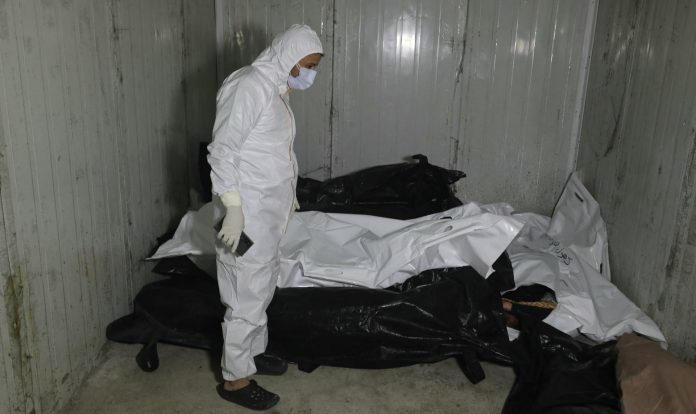
For half a century, the Assad family ruled over the country with an iron fist, with long-documented reports of “mass incarceration, torture, extra-judicial killings and atrocities” against their own people.

The rebels will “announce List no. 1 that includes names of the most senior officials involved in torturing the Syrian people”, according to a statement from Military Operations Command, the rebel coalition led by armed group Hayat Tahrir al-Sham (HTS).

HTS “will not hesitate to hold accountable the criminals, murderers, security and army officers involved in torturing the Syrian people”, said its leader Ahmed Al Sharaa, better known by his nom de guerre Abu Mohammed al-Jolani.

“We will pursue war criminals and demand them from the countries to which they fled so that they may receive their just punishment.”

The statement added rewards would be offered for information about senior army and security officers involved in alleged war crimes.

Sharaa also reiterated that a general amnesty for conscripted soldiers in the Syrian military remains in force. The rebels earlier urged the Assad regime’s security forces to register with what they are calling “a settlement center”. Amnesty does not apply to officers and soldiers who volunteered to serve.

Hayat Tahrir-al-Sham militants, along with other anti-government factions, seized control of Damascus on Saturday following a swift advance in several regions of Syria.

US sanctions failed to crimp Iran’s oil supply: Chevron CEO

Iran Oil

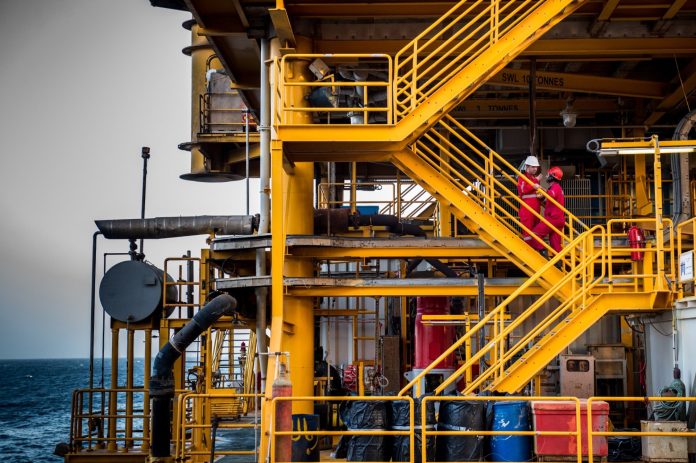
CEO of US oil company Chevron said in recent remarks made to the think tank Atlantic Council that current US sanctions have not really kept Iranian barrels out of the market, but rather redirected them.

“And that is true for a lot of the sanctions that are in place right now. They haven’t really crimped supply. They’ve just redirected supply,” Michael Wirth stated.

Wirth was referring to the fact that a bulk of Iranian crude oil supplies are being purchased by private buyers in China instead of being sold to governments around the world.

Iran has ramped up its exports of oil to Chinese buyers in the past year with recent estimates suggesting current Iranian oil supplies delivered to China are at over 1.5 million barrels per day (bpd).

Importing more than 0.75 million bpd of oil from Iran, China was the largest official buyer of Iranian oil before 2018 when former US president and current president-elect Donald Trump withdrew from an international deal on Iran’s nuclear program and imposed sanctions on the country.

However, the sanctions caused China to stop its official purchase of Iranian oil and instead allow its teapot refiners to buy the shipments.

Wirth, whose company is the only US firm involved in oil production activity in a sanction-hit country, made the remarks as he hopes a new administration led by Trump would adopt better policies with regard to oil supplies from countries like Venezuela, where his company is working, as well as from Iran and Russia.

Israel’s presence in Syria buffer zone violates 1974 deal: UN

Prime Minister Benjamin Netanyahu on Sunday stated that he had ordered the military to “take control” of the buffer zone, which separates the Israeli-occupied Golan Heights from the rest of Syria.

The UN has confirmed that Israeli troops entered the buffer zone and were moving within that area, where they remain in at least three locations, according to Dujarric.

“There should be no military forces or activities in the area of separation,” he said.

Dujarric also added UNDOF personnel, who are tasked with maintaining a ceasefire between Israel and Syria and supervising the areas of separation and limitation, remain at their positions and are carrying out their mandated activities.

“Currently, the situation in the UNDOF area of operations is relatively calm.”

Iran condemns continued Israeli attacks on Syrian infrastructure, Golan Heights

Esmael baghaei

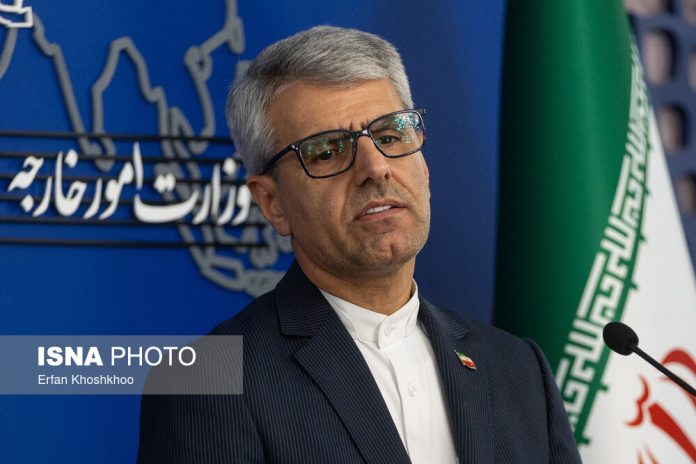
Baqaei criticized the Western countries for their silence and inaction regarding the violation, which Israel interprets as approval of its aggressive moves.

He highlighted that the Zionist regime’s military aggression against Syria, while the Syrian people are experiencing developments amid the political changes, is a blatant violation of the United Nations Charter.

Baqaei called for an immediate response from the UN Security Council to halt the aggression and hold the occupying regime accountable.

The spokesperson also noted that Israel’s occupation of the Golan Heights and its violations of UN Security Council resolutions reflect its expansionist and belligerent approach, showing disregard for international legal norms.

He stressed the need to utilize all regional and international capacities to stop Israel’s aggressions against Syria.

The Israeli military on Sunday moved to seize a buffer zone in the occupied Golan Heights as the Bashar Assad government falls in Damascus.

The Golan Heights was partly occupied by Israel in 1967, with a buffer zone separating territory they control and territory still held by Syria created in 1974.

Iran warns of strong reaction to snapback mechanism threats

Iran Nuclear Program

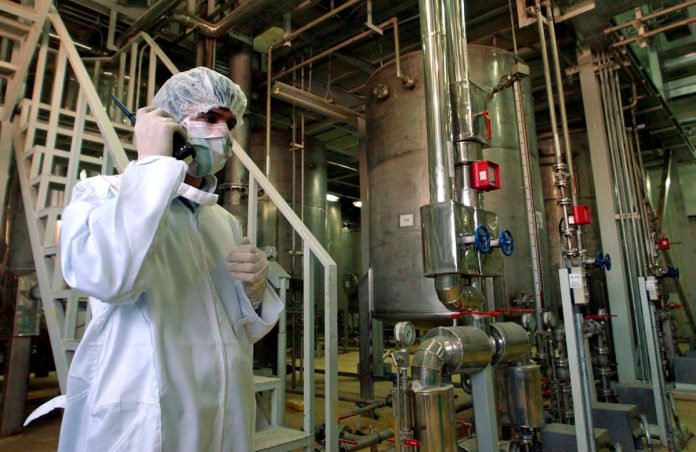
In a letter to the UN Security Council and secretary general, Amir Saeed Iravani criticized “unfounded accusations” by Britain, Germany, and France against Iran regarding its commitments under the Joint Comprehensive Plan of Action (JCPOA) nuclear accord and UN Resolution 2231.

The envoy emphasized that Iran remains committed to good faith diplomacy and addressing common challenges through all diplomatic avenues.

He highlighted that meaningful diplomacy requires genuine engagement and adherence to commitments.

The letter also pointed out that the current JCPOA issues stem from the unilateral US withdrawal in 2018 and the subsequent failure of the European Troika and the EU to fulfill their obligations.

He called for the recognition of Iran’s efforts to uphold the agreement despite ongoing provocations and violations by the US and the Troika.

The letter also criticized the Troika’s misrepresentation of Iran’s cooperation with the IAEA and reiterated Iran’s transparency and compliance despite external pressures including the US sanctions.

Iravani urged the Troika to acknowledge the necessity of real engagement and respect for commitments to achieve meaningful diplomatic progress.