Thursday, January 1, 2026
Home Blog Page 599

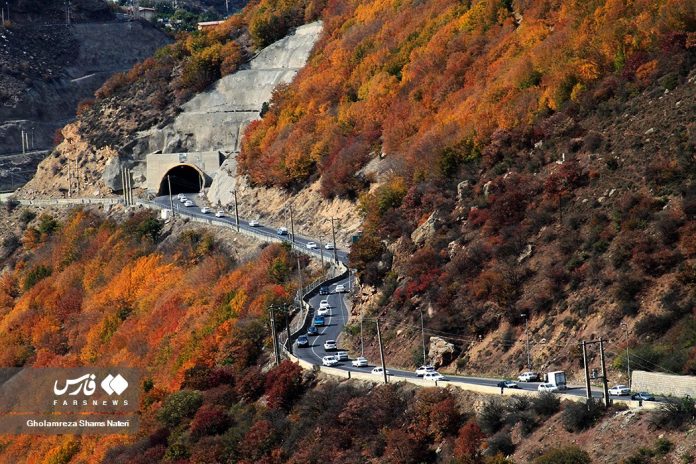
Heavy traffic in northern Iran roads as Tehran residents flee pollution during closures

Iran Road

The decision, made by the Tehran Air Pollution Emergency Committee, aimed to protect public health during the peak of pollution, however, the influx of vehicles, coupled with snowfall and rain, has resulted in heavy traffic congestion, especially on the Kandovan and Haraz highways leading to the provinces of Mazandaran and Golestan.

Colonel Hadi Ebadi, the acting head of Mazandaran province’s road police, reported extremely heavy traffic on major roads, including the Kandovan route from Shahrestanak to Nesa and the Tehran-North Freeway.

Ebadi urged travelers to drive carefully, manage their trips, and adhere to traffic laws to ensure safety.

The Iranian capital and several other cities have been hit by severe air pollution over the past week, forcing schools and universities to rely on remote leading.

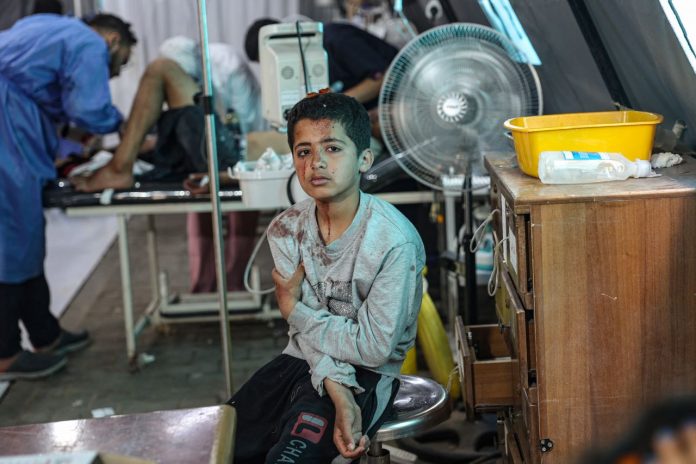
Authorities say dozens of patients at Gaza hospital at risk of starving to death

Gaza War

The Ministry of Health in Gaza said in a statement late on Tuesday that 60 patients were “at risk of death”.

“The humanitarian situation inside the hospital has become extremely dangerous, as the wounded lack basic needs, which increases their suffering under the difficult conditions imposed by [Israeli] forces,” the ministry added.

The hospital is located in Beit Lahiya in the north of the Gaza Strip, which has been under Israeli military siege since early October.

The death toll from more than 14 months of Israeli attacks on Gaza has reached 44,800 people, the ministry announced. An estimated 1,200 people were killed in Israel during attacks led by the Palestinian armed group Hamas on October 7 2023, and 250 were taken captive.

The ministry’s latest update came after Sigrid Kaag, the United Nations’ humanitarian coordinator for the Gaza crisis, briefed members of the UN Security Council in a closed meeting in New York on Tuesday afternoon.

Speaking to reporters after the briefing, Kaag said she told the council the situation in the Gaza Strip is “a very, very bleak picture”.

“I’ve spoken of the inhumane conditions in which our fellow human being civilians are trying to survive, the young and the old,” she added.

Kaag also stated she discussed with members of the UN Security Council “our hope for a ceasefire and the unconditional release of the hostages that this would enable, obviously, a further surge of assistance”.

Kaag’s comments came as Israel’s Channel 13 reported that Israeli National Security Council ministers have been briefed that Hamas has expressed an interest in reaching a ceasefire and captive agreement.

Channel 13 also reported that Qatar has been “playing a significant role in negotiations for the deal” after previously announcing it was suspending its role as mediator.

Speaking at the Doha Forum on Saturday, Qatari Foreign Minister and Prime Minister Sheikh Mohammed bin Abdulrahman Al Thani said “momentum is coming back” to ceasefire talks.

The latest expectations of a truce come as the Israeli military announced it had launched 480 attacks on Syria in the 48-hour period after Syrian rebels toppled the decades-long government of the al-Assad family.

Israeli soldiers also seized Syrian-controlled territory in a buffer zone of the Golan Heights that was established by a 1974 ceasefire agreement with Damascus.

A separate ceasefire deal between Israel and Hezbollah in Lebanon has largely continued to hold.

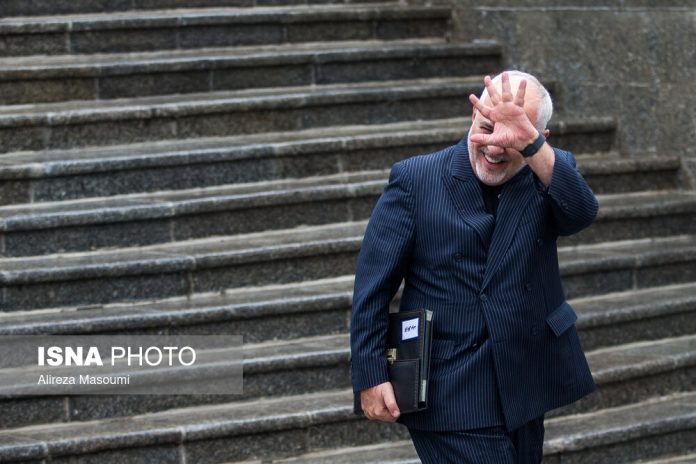
Iran vice president Zarif clarifies children’s US citizenship

Javad Zarif

Zarif said, “At the time of the birth of both my children, I was not a diplomat. If I had been a diplomat, my children would not have received citizenship.”

“I had a regular passport. I had a G visa, not an A visa as some claim; this visa is for UN employees and representatives to the United Nations,” he noted.

The former Iranian foreign minister also explained that he received his first diplomatic passport in 1988, while his son was born in 1984, and his daughter in 1987.

Zarif asserted that his children are natural-born citizens of the US, and dismissed claims that he applied for citizenship as false.

“My children are 40 years old, and I am not their guardian,” he concluded.

The statements come in light of recent scrutiny over the citizenship of Iranian officials’ children and spouses, raising questions about their loyalty and commitment to the country.

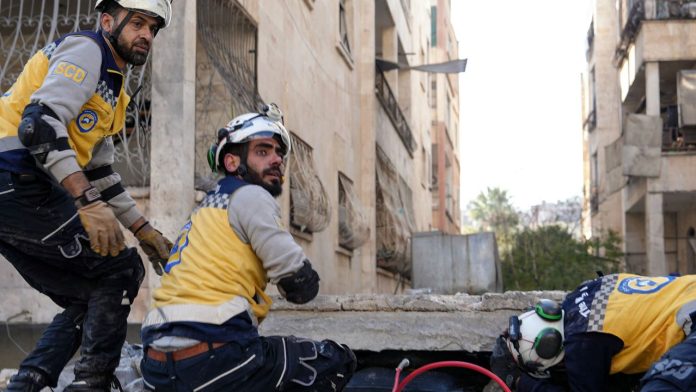
Syrian civil defense group urges Putin to pressure Assad to reveal locations of secret prisons

White Helmets

Assad fled to Russia – one of his key allies — after rebels took the Syrian capital, Damascus, over the weekend.

“We at the Syrian Civil Defense have submitted a request to the United Nations through an international mediator, urging Russia to pressure the criminal wanted for justice in Syria, Bashar al-Assad, to hand over maps of secret prison locations and lists of detainees’ names so we can reach them as quickly as possible,” White Helmets Director Raed Al-Saleh posted to X on Tuesday.

He said the “brutality and crimes committed by the Assad regime against Syrians — through killing, detention, and torture — are beyond description, prolonging the pain and heartbreak of mothers” adding that justice for the victims and holding “perpetrators accountable” would be “the first step towards healing wounds and supporting peace-building efforts”.

The Assad government’s notorious detention facilities were black holes where, as far back as the 1970s, anyone deemed an opponent disappeared, CNN wrote in a report.

Saydnaya prison was one of the most infamous sites, known as “the slaughterhouse” – where as many as 13,000 people were hanged between 2011 and 2015, according to Amnesty International.

Syrian rebels freed many prisoners from Saydnaya amid their swift advance this past weekend. But the White Helmets did not find any evidence of secret, sealed-off areas holding people after speculation mounted online of secret cells.

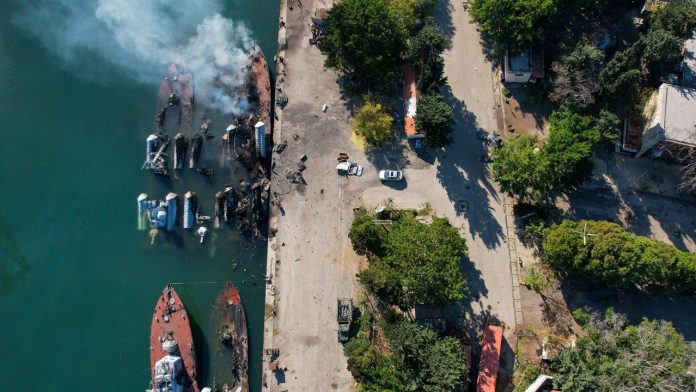
Israel says carried out about 480 strikes in Syria in two days

The Israeli military said in a statement Tuesday that it carried out about 480 strikes over the past 48 hours on strategic military targets in Syria.

The regime’s military claimed that it struck facilities and that it struck most of the strategic weapons stockpiles in Syria.

The military added the targets included 15 naval vessels, anti-aircraft batteries and weapons production sites in several cities.

Also, reports suggest that weapons depots, navy vessels and a research center have been destroyed.

Israel has also sent troops into a buffer zone east of the occupied Golan Heights. Still, the regime denies advancing towards Damascus, insisting that its forces were stationed within the zone.

Hundreds of Israeli strikes have been reported since the fall of President Bashar al-Assad’s government in Syria.

The Israeli army has claimed that it had destroyed as much as 80% of the military capabilities of al-Assad’s government.

Army operations “have been completed, with 70-80% of Assad’s regime’s military capabilities destroyed,” according to Israeli Army Radio, which indicated that “350 Israeli warplanes carried out strikes from Damascus to Tartus, targeting dozens of aircraft, helicopters, air defense systems, and ammunition depots”.

Israel has also announced it is planning a “sterile defence zone” in southern Syria as it continues attacking the country in the wake of al-Assad’s ouster.

The UN special envoy for Syria has called the Israeli attacks a deeply troubling development, describing the current situation in the Arab country as highly fluid.

Geir Pedersen said tensions remain unresolved and urged other countries to avoid actions that could impede the ongoing transformation.

Putin says Russia has possible replacement for atomic weapons

Vladimir Putin

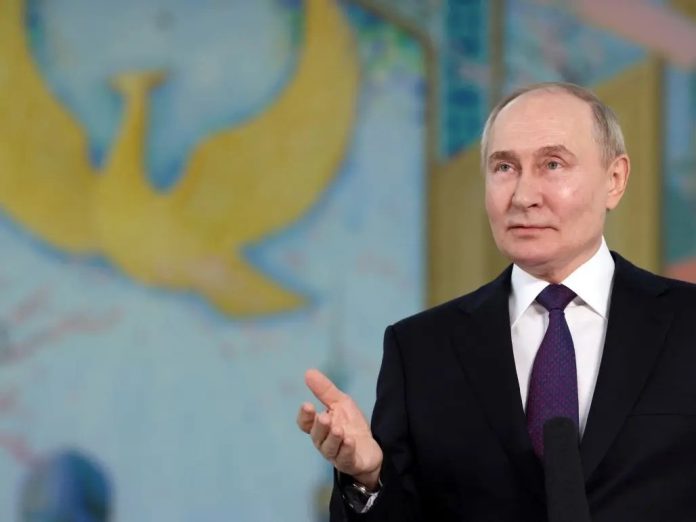
Russia is not tightening, but improving its nuclear doctrine, Putin said regarding the recent update to the country’s nuclear posture. He explained that Russia needs to improve its new missile system more than it does its nuclear doctrine.

“What we need now is not to improve the nuclear doctrine, but the Oreshnik, because, if you look at it, a sufficient number of these modern systems… simply put us on the brink of virtually no need to use nuclear weapons,” the president added.

The Russian leader has warned that the use of Western-supplied long-range missiles would drastically “change the nature” of the Ukraine conflict and insisted that such sophisticated weapon systems could not be operated without the direct involvement of NATO personnel.

In November, Russia officially revised its nuclear doctrine, lowering the threshold for using nuclear weapons. According to the document, Moscow reserves the right to deploy its nuclear arsenal against a nuclear or conventional attack that poses “a critical threat to its sovereignty and/or territorial integrity”.

The updated nuclear doctrine states that an attack against the country by a foreign nation that does not have weapons of mass destruction, but is backed by a nuclear power, should be considered a joint attack by both.

Last week, after signing a security treaty with his Belarusian counterpart Alexander Lukashenko, the Russian president noted that Oreshnik systems could be stationed in Belarus as early as the second half of next year, depending on how soon they enter regular service with Russia’s strategic forces.

Belarusian Deputy Chief of the General Staff Sergey Lagodyuk later stated that the decision to deploy Oreshniks in Belarus was a direct response to US plans to station medium-range missiles in Germany.

Rebels name Mohammed al-Bashir as caretaker PM of Syria

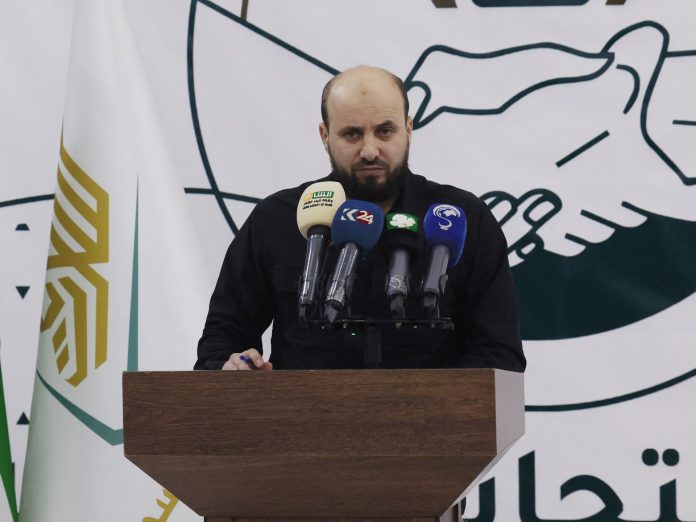
Al-Bashir, who headed the Hayat Tahrir al-Sham-led de facto government in Idlib province, will lead a transitional Syrian government until March 1, 2025, he said on Tuesday in a televised statement.

The appointment comes after al-Bashir met with members of al-Assad‘s government.

“Today we had a meeting for the cabinet and we invited members from the old government and some directors from the administration in Idlib and its surrounding areas, in order to facilitate all the necessary works for the next two months until we have a constitutional system to be able to serve the Syrian people,” he told Al Jazeera.

“We had other meetings to restart the institutions to be able to serve our people in Syria,” he told Al Jazeera.

He stated that his country needed peace and stability after nearly 14 years of war.

“Now it is time for this people to enjoy stability and calm.”

Al-Bashir headed the Syrian Salvation Government (SSG) in Idlib province before the 12-day lightning offensive swept into Damascus, toppling longtime leader al-Assad and ending more than half a century of al-Assad family rule.

Al-Bashir has close ties to Hayat Tahrir al-Sham (HTS) – the group that led the Damascus takeover – which is tied to the SSG he headed.

The SSG, with its own ministries, departments, judicial and security authorities, was set up in the northwest bastion of Idlib in 2017 to assist people in the rebel-held area who were cut off from government services.

Al-Bashir also previously held the role of development minister in the SSG.

The SSG has begun rolling out assistance in Aleppo, the first major city to fall from government hands after opposition forces began their offensive.

A Facebook page of the rebel administration says al-Bashir was trained as an electrical engineer, later received a degree in sharia and law, and has also held posts in education.

HTS’s leader Ahmed al-Sharaa, also known as Abu Mohammed al-Julani, met outgoing Prime Minister Mohammed Ghazi al-Jalali on Monday to discuss the transition to a caretaker government.

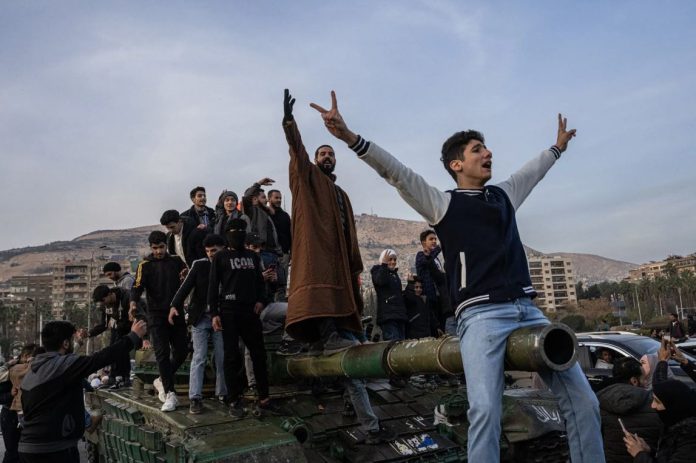
As the caretaker prime minister was announced, life in the Syrian capital showed some signs of a return to normalcy, with banks and shops reopening.

The Syrian war started as a largely unarmed uprising against al-Assad in March 2011, but eventually turned into an all-out war that dragged in foreign powers, killed hundreds of thousands of people, and turned millions into refugees.

Iran’s oil minister elected as OPEC president for 2025

OPEC

Paknejad expressed gratitude for the trust placed in him, pledging to utilize all his efforts and resources to strengthen OPEC’s unity and progress.

“Serving as OPEC president is an honor for me and for Iran, as one of OPEC’s founding members,” he said.

Paknejad highlighted the importance of maintaining unity within OPEC and fostering cooperation with non-OPEC partners under the Declaration of Cooperation (DOC).

He also congratulated members on the eighth anniversary of the DOC, emphasizing its critical role in navigating global energy challenges.

Iraq’s Oil Minister was also elected as vice president for the upcoming term.

Additionally, OPEC’s Secretary General Haitham Al-Ghais from Kuwait was reappointed for another three-year term.

The 189th OPEC meeting, chaired by Gabon’s Oil Minister Marcel Abeke, finalized key decisions, including approving OPEC’s budget and urging timely financial contributions from member states.

Iran will assume the presidency on January 1, 2025, in alignment with OPEC’s alphabetical rotation policy.

Iran advocates for Syrian-led dialogue, stability

During a recent meeting with Foreign Minister Seyed Abbas Araghchi, Rezaei noted, the Iranian top diplomat reiterated Iran’s commitment to the sovereignty, independence, and territorial integrity of Syria.

Rezaei highlighted Araghchi’s remarks, stating, “We strongly support peace, stability, and the active participation of the Syrian people in governing their country.”

He added that ensuring the security of Iran’s diplomatic missions and safeguarding sacred sites in Syria remain key priorities for Tehran.

Araghchi reportedly assured the National Security and Foreign Policy Commission of Iran’s readiness to continue its engagement in supporting Syria, despite acknowledging the challenges of gaining a comprehensive understanding of the current situation.

He stressed the importance of closely monitoring developments to adapt to emerging dynamics in the region.

Schools, universities, offices in Tehran province closed due to air pollution

This closure includes public and private institutions, except for banks and essential health and service centers, according to the Deputy for Urban Affairs of Tehran Province governor.

This comes as the Meteorological Organization issued an orange-level warning for worsening air pollution, predicting unhealthy air quality in eight cities, including the capital Tehran.

The agency cautioned that without controlling pollution sources, air quality may reach hazardous levels.

The stagnant atmospheric conditions forecast for Wednesday and Thursday will lead to increased pollution in major cities such as Tehran, Isfahan, Arak, Tabriz, Urmia, Qazvin, Karaj, and Qom.

This situation is expected to result in unhealthy air for all population groups.

In high-traffic areas, pollution indices could escalate to dangerous levels if emissions from stationary and mobile sources are not mitigated.

Authorities urge residents to minimize outdoor activities and take necessary precautions to safeguard their health during this period of deteriorating air quality.