Friday, December 26, 2025
Home Blog Page 599

Russia carries out large aerial attacks on Ukraine’s energy grid

Russia Ukraine War

Dozens of drones were also used in the attack, which comes as both Moscow and Kyiv manoeuvre ahead of Donald Trump’s return to the White House in January.

Later on Friday, Vladimir Putin’s spokesperson Dmitry Peskov praised Trump, saying his criticism of Ukrainian strikes inside Russia “impresses us”.

The alignment on the strikes between Trump and the Kremlin will cause alarm in Ukraine, where there is hope that Trump may prove surprisingly amenable to continuing US military aid to the country but also fear that his history of pro-Russian rhetoric could see Kyiv forced to sign an unfavourable deal.

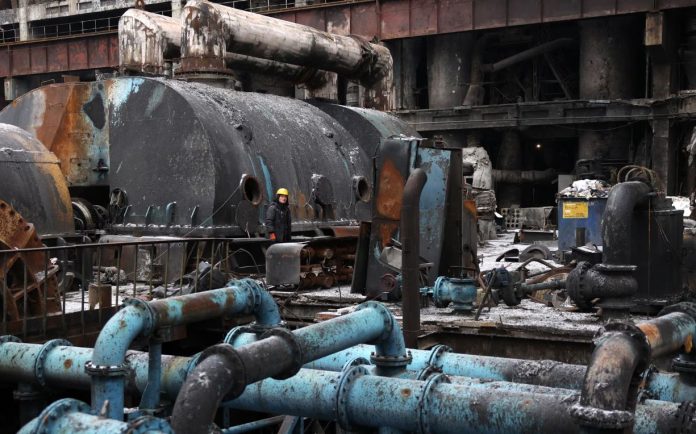
Russia has been systematically targeting Ukraine’s civilian energy infrastructure in recent months, in a bid to sow chaos in the country ahead of winter, with temperatures due to drop well below zero in most of Ukraine over the coming days.

Energy minister Herman Halushchenko stated energy workers were doing everything possible to “minimise negative consequences” for the energy system.

President Volodymyr Zelensky claimed on Friday morning that Russia had used 93 missiles and over 200 drones in the attack. He added Ukrainian forces had managed to shoot down 81 of the missiles, including 11 which had been successfully targeted by F-16 planes. Ukraine’s air force announced the Russian attack included hypersonic Kinzhal missiles launched from the air.

Svitlana Onishchuk, head of the western Ivano-Frankivsk region, said the area had suffered “the biggest attack since the beginning of the full-scale war”, from cruise missiles and drones.

“As Ukrainians wake to the coldest day of the winter so far, the enemy tries to break our spirit with this cynical terrorist attack,” stated Maxim Timchenko, CEO of the private energy company DTEK.

“Right now, multiple DTEK teams are urgently assessing damage to our power stations and deploying all possible resources to restoring power for the people of Ukraine,” Timchenko added.

The Kremlin claimed the latest strikes were in retaliation for a Ukrainian attack on an airbase in southern Russia last week using US-provided long-range missiles. The Joe Biden administration last month lifted long-standing restrictions on using missiles for hitting targets inside Russia.

Trump used an interview with Time magazine this week to criticise the decision.

“It’s crazy what’s taking place. It’s crazy. I disagree very vehemently with sending missiles hundreds of miles into Russia. Why are we doing that? We’re just escalating this war and making it worse,” said Trump.

“The statement fully aligns with our position, with our view on the reasons for escalation,” Peskov told reporters on Friday, adding, “That impresses us. It is obvious that Trump understands exactly what is escalating the situation.”

Russia’s attacks on energy infrastructure have resulted in repeated emergency shutdowns and scheduled power cuts, as the battered grid struggles to cope with demand. Around half of the country’s generating capacity has been destroyed over nearly three years of war.

Andrian Prokip, a Kyiv-based energy expert with the Kennan Institute in Washington DC, told the Guardian earlier this week that he expected the attacks to continue ahead of Trump’s return.

“I have a feeling that they would like to pressure the Ukrainian power system as much as they can before Trump’s inauguration. The Russians would like Trump to believe that Ukraine is already destroyed,” added Prokip.

Zelensky, in response to Friday’s attack, said: “This is Putin’s ‘peace plan’ – destroy everything. This is how he wants negotiations, by terrorising millions of people.”

Trump has promised to bring Russia and Ukraine to the table and end the war, but many observers of the conflict say there is little sign Russia wants to negotiate, except on terms that would be unacceptable to Ukraine.

On 21 November, Russia used an intermediate range hypersonic missile, which Putin has dubbed the Oreshnik, for the first time, striking an industrial plant in the city of Dnipro. Putin has used the missile, which has nuclear capabilities, as a way of raising the stakes and threatening the West, and has said it could be used again, including against “decision-making centres” in the country.

US officials warned on Wednesday that another Oreshnik strike on Ukraine could be imminent, though there was no sign the weapon was used in Friday’s attack.
Ove one million Syrians displaced in 2 weeks: UN

Syria War

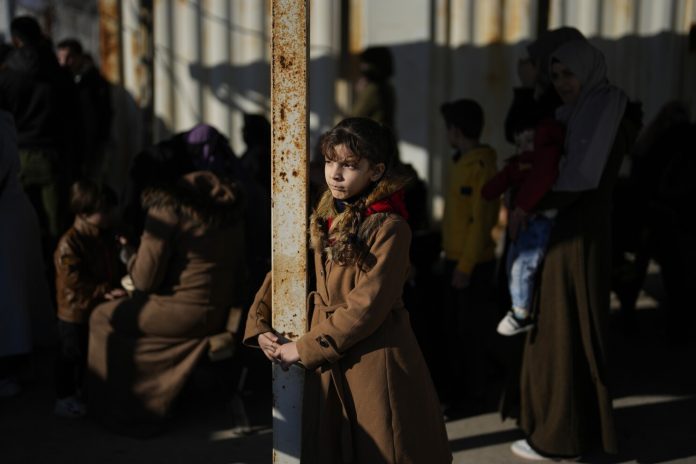
The UN Office for the Coordination of Humanitarian Affairs (OCHA ) said in a statement that most of the newly displaced are women and children. The figures include data from when the fighting between Syrian government forces and armed opposition groups began to escalate late last month.

“As of 12 December, 1.1 million people have been newly displaced across the country since the start of the escalation of hostilities on 27 November. The majority are women and children,” the statement read.

The OCHA noted nearly 640,000 people have fled the Aleppo governorate, while hundreds of thousands of others left Idlib and Hama over the past few days.

It added that more than 400,000 people are currently in hundreds of collective shelters in northeastern Syria, receiving humanitarian aid, including food, hygiene kits, and psychological support.

Militants waged a surprise two-pronged attack on Syria’s Aleppo and the countryside around Idlib on November 27.

Soon afterward, they seized control of several major Syrian cities, including Hama, Homs, Dara’a, and Suwayda, before entering the capital Damascus.

On Sunday, armed groups, led by HTS militants, announced that they had fully captured Damascus, and confirmed reports of the fall of Bashar Assad’s government.

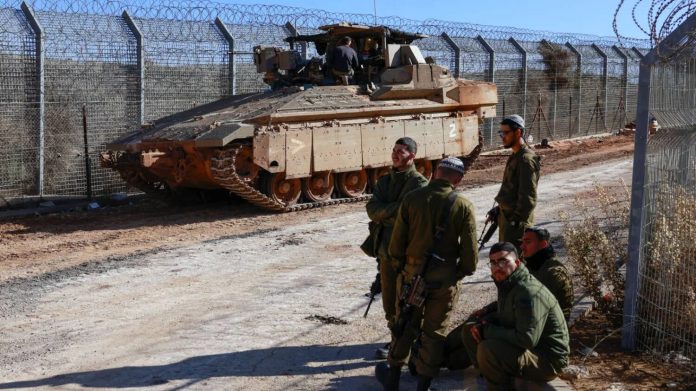
UN chief ‘concerned’ by Israel expansion into Golan Heights and Syria attacks

Israel Army

Guterres described Israel’s actions as “deeply concerning” and called for the Israelis to stop firing into Syria and respect its sovereignty.

“The secretary-general is particularly concerned over the hundreds of Israeli airstrikes on several locations in Syria,” the UN said in a statement, calling for urgent de-escalation “on all fronts, throughout Syria”.

“The secretary-general is particularly concerned over the hundreds of Israeli airstrikes on several locations in Syria,” it added.

“He stresses the urgent need to de-escalate violence on all fronts, throughout Syria.”

Israel has occupied the Golan Heights since the 1967 war with Syria.

Between 1974 and 2024 the territory was divided between areas controlled by Israel and areas controlled by Syria, split by a buffer zone.

The secretary-general also urged Israel to adhere to the 1974 Disengagement of Forces Agreement between Israel and Syria, which ended the Yom Kippur War.

The agreement established a UN-monitored buffer zone in the Golan Heights to prevent further conflict.

It delineated areas of control for each side and included provisions for the return of displaced civilians.

But after the Syrian government collapsed after fighters from Hayat Tahrir al-Sham (HTS) took control of Damascus, Israel began infiltrating the UN buffer zone and occupied Mount Hermon.

The Israelis claimed it was establishing a “buffer zone” by taking further control of areas near the occupied Golan Heights.

Israeli forces has also launched hundreds of air raids and bombed parts of Damascus it claimed were chemical weapons factories and Syrian military infrastructure over the last week – including large chunks of the Syrian navy and air force.

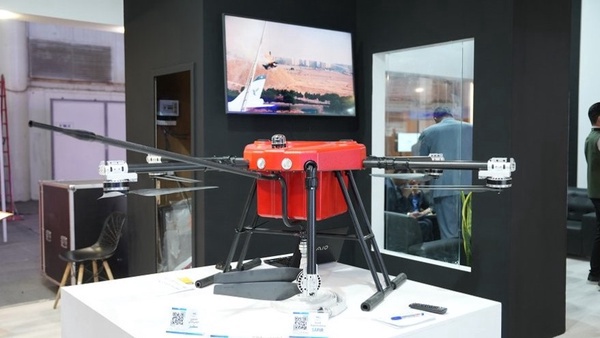
Tehran hosting 12th “Made in Iran” Exhibition

A total of 278 Iranian knowledge-based and technology firms are participating in this exhibition, putting 10,000 products at display.

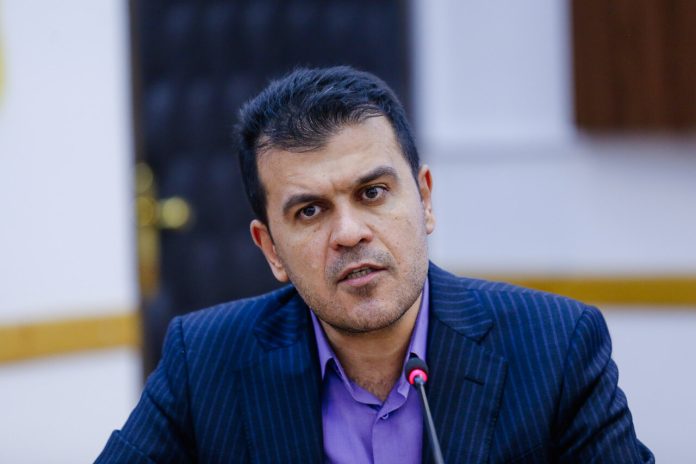
According to Reza Bakhi Ani, Deputy for Knowledge-Based Economy Development at the Vice Presidency for Science, Technology, and Knowledge-Based Economy, and President of the “Made in Iran” exhibition, the presentation of knowledge-based products at this exhibition has increased by 20% compared to the previous edition.

He also added that the exhibition emphasizes the development of exports of Iranian knowledge-based products. On the final day, two top awards will be given to the best companies, one for exports and the other one for industrial designs.

This exhibition coincides with the first day of Research and Technology Week and the 25th Exhibition of Achievements of Research, Technology, and Innovation.

On the sidelines of the exhibition’s opening, Hossein Afshin, Deputy for Science, Technology, and Knowledge-Based Economy at the Presidency, told reporters that this exhibition aims to support research infrastructure in Iran to mainly enhance people’s lives and the environment.

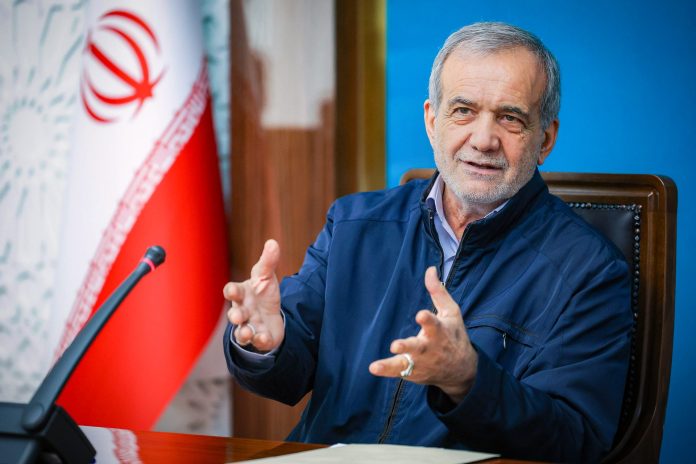
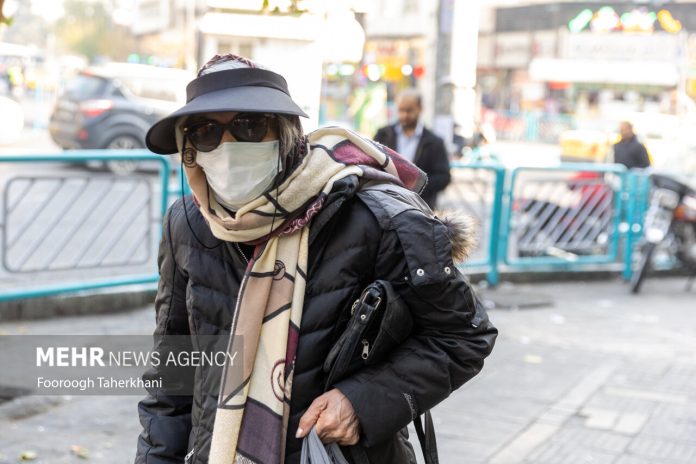
Iranian president requests citizens to lower heating amid severe cold spell

Masoud Pezeshkian

In a video message on Thursday night, the president emphasized the impact of air pollution on public health and the need to conserve fuel. He encouraged citizens to lower heating to ensure fuel availability for all.

The plea comes as Maziar Gholami, Tehran’s Meteorology Director, warned on Thursday of a dramatic temperature drop, predicting temperatures to plummet by 10 to 15 degrees Celsius in northern parts of the country and 8 to 12 degrees in southern and central areas over the next three days.

A cold front from Siberia is expected to bring freezing temperatures, snow, and rain, leading to potentially hazardous conditions in the country, he explained.

In response to severe weather forecast, all schools and educational centers in northern Mazandaran province will close on Sunday and Monday.

The decision, aimed at energy management and safety, will shift education to virtual formats.

The Mazandaran Meteorological Office has issued a warning, cautioning against floods, landslides, and road closures, and advised against non-essential travels.

It is forecasted that the temperature in Tehran will drop to minus 3 degrees Celsius in the coming days

Iran vice president for science says cabinet drafting charter of National AI Organization 

The organization aims to plan and oversee AI activities rather than directly intervene, the vice president explained.

Afshin also revealed plans for the country’s most advanced GPU processing system to be operational by May 2025, primarily serving private sectors and universities.

He said the administration is seeking to shore up researchers in various ways and stressed the importance of preventing talent migration and encouraging the talented people to stay within their own provinces.

Afshin announced a new regulation offering monthly grants of approximately 15 million Tomans for PhD students to encourage research and scientific activities.

The scientific vice president also addressed housing issues for talented individuals, with collaborations in provinces like Yazd, Qom, and Isfahan, and agreements with Tehran’s municipality.

Highlighting the need to support the private sector, Afshin pledged to prevent state-owned companies from entering the production areas of successful private and knowledge-based firms.

He also noted that the 12th Iran-Made Exhibition in Tehran, showcasing over 10,000 innovative products from 300 companies, reflects national confidence in technological advancement.

UN Envoy: Over 6 Million Afghans Reside in Iran 

In his remarks at the UN Security Council, Iravani urged the international community to provide adequate and sustainable support to countries like Iran and Pakistan, which are facing ongoing challenges related to Afghanistan.

He highlighted a recent report from the UN Secretary-General regarding severe economic and humanitarian challenges in Afghanistan, noting that 23.7 million people, particularly women and children, still require urgent assistance. This situation poses a serious concern for neighboring countries directly affected by the humanitarian crisis.

According to Iravani, the irresponsible withdrawal of the United States from Afghanistan in August 2021 has led to widespread migration from Afghanistan, placing significant pressure on Iran, which was already under unilateral and illegal sanctions.

He also expressed Iran’s deep concern regarding the ongoing drug problem in Afghanistan.

Iravani stressed Iran’s serious worries about the increasing threat posed by the terror group ISIS-Khorasan, as the group continues its attacks and propaganda, jeopardizing the security and stability of both the country and the region.

He voiced Iran’s concerns over restrictive measures against girls, women, and ethnic minorities in Afghanistan, particularly regarding access to education and their political and social rights.

Iravani called on Afghanistan’s rulers to reconsider their policies and lift all such restrictions.

Iravani emphasized that Afghanistan’s frozen assets should be returned unconditionally, and sanctions should not hinder efforts to revive the country’s economy.

He stated that Western countries, which occupied Afghanistan for over 20 years and then withdrew irresponsibly, must fulfill their commitments to assist in rebuilding Afghanistan’s economy and combating terrorism.

He also announced that Iran intends to hold a fourth quadrilateral meeting at the ministerial level, involving Iran, China, Pakistan, and Russia, on the sidelines of the 79th UN General Assembly in New York.

Iran, Qatar, UAE FMs call for halt to Israeli Attacks on Syria 

Iran’s Foreign Minister, Seyed Abbas Araghchi, had a phone conversation with his Qatari counterpart, Sheikh Mohammed bin Abdulrahman Al Thani, on Thursday morning to discuss regional developments, with a particular focus on Syria and other issues of mutual interest.

During the talks, both sides emphasized the need for serious efforts and measures to stop the Zionist regime’s attacks on Syrian infrastructure and the occupation of more Syrian territories.

They also discussed and exchanged views on continuing bilateral and multilateral talks on the developments in Syria to help establish a comprehensive political system in the country that reflects the will of the Syrian people.

Araghchi also held a phone conversation with Sheikh Abdullah bin Zayed Al Nahyan, Deputy Prime Minister and Foreign Minister of the United Arab Emirates, during which they discussed regional developments, particularly the situation in Syria.

The two sides reviewed recent developments in Syria and underscored the necessity of safeguarding Syria’s national sovereignty and territorial integrity, as well as maintaining the country’s security and stability.

Both ministers also called for the immediate cessation of ground and air assaults by the Zionist regime on Syria.

The conversation further addressed the importance of preserving regional peace and stability and avoiding provocative actions that could disrupt the atmosphere of friendship and cooperation among regional countries during these sensitive times.

Tehran ranks world’s most polluted city for 2nd consecutive day

The city recorded an Air Quality Index (AQI) of 241, placing it at the top of the list for hazardous pollution levels.

Authorities are under pressure to implement measures to mitigate the worsening air pollution, which continues to dominate global rankings.
The air pollution has also led to the shutting down of offices, universities, and schools across the entire province of Tehran over the past days.

One of the reasons for air pollution in Tehran is the phenomenon of temperature inversion. Temperature inversion typically traps air pollution close to the ground.

Extensive vehicle traffic, high fuel consumption in cars, the use of non-standard fuels, and especially the burning of mazut in power plants are additional factors contributing to air pollution in Tehran and other major cities in Iran.

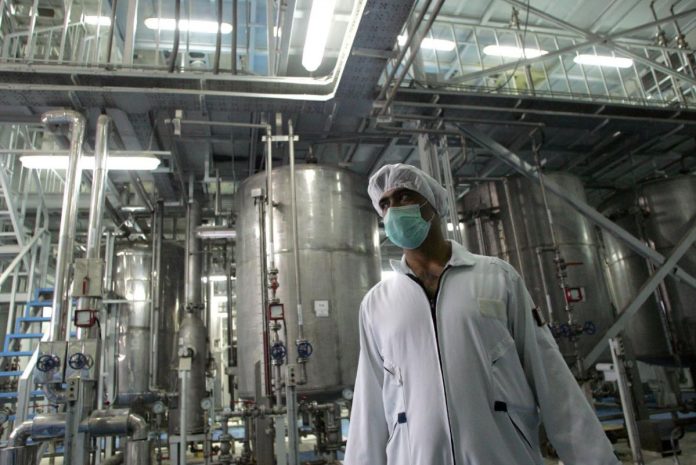
Iran rejects additional monitoring amid sanctions, criticizes IAEA stance

Iran Nuclear Program

Gharibabadi criticized recent remarks by International Atomic Energy Agency (IAEA)’s Director General Rafael Grossi, describing them as “unprofessional and politically motivated.”

He said Grossi is adopting the rhetoric of politically driven actors, stating that “he cannot, based upon mere probabilities and speculations, speak as if he were a political official from countries with political agendas, uttering whatever suits his purpose.”

The Iranian official underscored that the IAEA is authorized to document and report any verifiable deviation from nuclear material safeguards detected during the verification process. However, he warned Grossi to “refrain from publicizing speculations and assumptions,” as such actions fall outside the agency’s mandate.

The remarks come amidst escalating tensions following a letter from the E3—France, Germany, and the United Kingdom—sent to the United Nations Security Council. The letter threatened the activation of the Iran nuclear deak, JCPOA’s, trigger mechanism, which could lead to the reinstatement of sanctions on Iran.

In response, Iran’s Permanent Mission to the United Nations has submitted its own letter to the Security Council, urging the body to address the European parties’ alleged violations of UN Security Council Resolution 2231.
The resolution endorses the JCPOA and calls for the lifting of sanctions in exchange for Iran’s adherence to nuclear commitments.