Friday, December 26, 2025
Home Blog Page 600

EU’s top diplomat says frozen Russia’s assets should be used to aid Ukraine

Russia Ukraine War

Kaja Kallas, the EU’s high representative for foreign affairs and security, said that Ukraine had a legitimate claim for compensation and that Russian assets held in the EU were “a tool to pressure Russia”.

The EU has already begun skimming the profits off Russian assets held in the bloc for Ukraine, but has balked at seizing the entire sum (€210bn in the union) because of doubts about the legality of such a move. The EU holds more than two-thirds of Russia’s $300bn sovereign assets frozen by western allies after the full-scale invasion of Ukraine.

Kallas, a lawyer who was Estonia’s prime minister until July, predicted that despite “sensitivities … we will get there one day”, in an intervention that raises pressure on European governments to reconsider the issue.

She suggested the Russian funds would help pay the bill for “all the damage that Russia has caused to Ukraine”.

“Better to have a small bird in your hand than a big bird on the roof,” she continued, adding, “So we have the small bird in our hand [the frozen assets] and this is the tool to also pressure Russia.”

Her proposal comes amid growing questions over how to fund Ukraine in the medium term and pay its colossal reconstruction bill. Donald Trump, who has derided US aid to Kyiv, will also return to the White House next year.

In her first sit-down interview with print media since starting her new role, Kallas said Europe needed to step up aid to Ukraine if the US withdrew funding.

She added that financial support for Ukraine “is not charity”, but in the interest of Europe and the US.

“If they [the US] reduce the aid, then we need to continue supporting Ukraine, because I’m worried about what happens if Russia wins. I think we will have more wars, bigger wars.”

Aiding Ukraine was “investment” in “our own security” and global security, she said, citing the involvement of North Korean soldiers in Ukraine and Chinese military exercises in the South China Sea.

“China is also learning from what Russia does.”

She was speaking in her office on the 12th floor of European Commission headquarters, where the bare walls and empty shelves testified to a heavy schedule in her first 11 days.

On her first day in the post, she went to Kyiv to meet Ukraine’s president, Volodymyr Zelenskyy, who said his country needed “diplomatic solutions” only when Russia was unable to launch further attacks.

This week Poland’s prime minister, Donald Tusk, said peace talks on Ukraine could start “in the winter” but Kallas would not be drawn on dates, observing: “Russia doesn’t want those negotiations.”

Asked about recent phone calls between Vladimir Putin and the Hungarian prime minister, Viktor Orbán, on Wednesday, and the German chancellor, Olaf Scholz, last month, she stated: “They [Orbán and Scholz] are doing this for domestic purposes; so I wouldn’t do it, but this is not for me to criticise.”

Foreign ministers meeting on Monday, she said, would discuss whether there was “any added value” from such diplomacy.

Ministers would assess “why some members are doing this, what they want to achieve by this and is there any added value”, Kallas continued, adding: “Putin really wants to humiliate Europe. That is what we have to keep in mind all the time.”

Russia was betting on “outlasting” western allies, she said, but the war for Ukraine remained winnable.

“What we saw in Syria [is] they are not able to keep up that fight,” she stated, referring to Moscow’s failure to keep propping up its long-term ally, the Syrian President Bashar al-Assad. Russia had been “somewhat humiliated” in Syria, while “their thoughts were elsewhere”.

Kallas took office a week before the dramatic collapse of the 54-year-old Assad government in Syria, a development no one in the region, much less Brussels, had foreseen.

“Syria’s future is right now, quite hopeful, but still uncertain,” she said, adding that Europe’s approach to engaging with the dominant rebel group, Hayat Tahrir al-Sham (HTS), would be based on conditions, including “no radicalisation, no revenge, no retaliation”.

Kallas said it was too soon to talk about recognising Syria’s transitional government or lifting sanctions on HTS – a proscribed terrorist group in the EU and US – but that did not prevent talks.

“The question at this really early stage is not the question of recognising the government. It’s rather, assessing the deeds and the direction of Syria,” she continued.

The EU, Kallas added, needed a common approach to Syrian asylum seekers. Showing rapid speed, several European countries have suspended processing Syrian asylum claims, while Austria announced a “repatriation and deportation” programme.

Kallas said she had been told by her counterparts in the Middle East that some Syrian refugees in neighbouring countries were already returning on a voluntary basis. She added that EU asylum rules must be followed.

The European public wanted to know when Syrians would return, she went on. In Europe, “we have seen elections where migration is the main topic. Then it’s clear that, in several countries, this is the thing people want to hear: What happens now to the refugees? Are the refugees returning?”
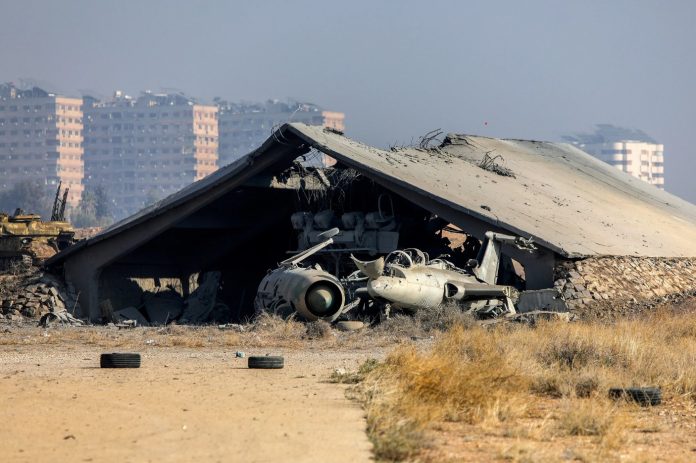
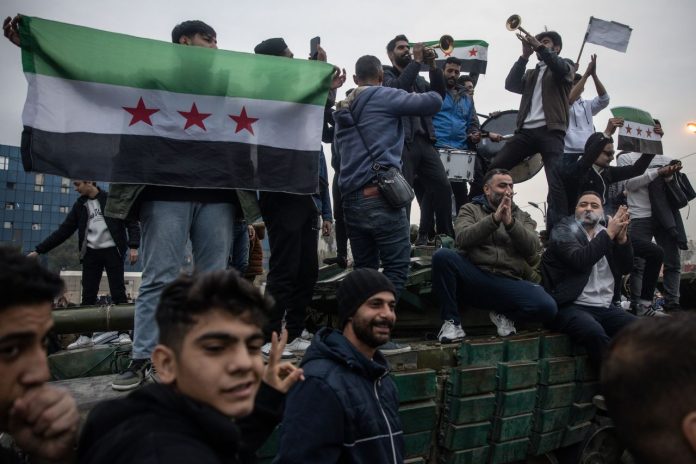
IRGC: US, Israel exploiting chaos to destroy Syrian infrastructure

In a statement Thursday, the force strongly condemned attacks on Syria’s territorial integrity, marked by “intense and intensive aggression and bombing of residential and military areas, the destruction of infrastructure and vital centers, and the occupation of areas of Syrian territory”.

It also condemned the “astonishing silence of international communities in the face of this blatant aggression and assault”.

“As stated in the fundamental policies of the Islamic Republic of Iran, preserving the national sovereignty and territorial integrity of Syria and creating conditions for determining the fate and future political system of the country through the will and choice of its people is an indisputable, legitimate and legal right which must be respected and internationally supported,” it said.

The world, the statement added, is at a major historical turning point, where a new power geometry and global order is forming, with Islam led by the Islamic Republic of Iran being one of its main aspects.

This is “an undeniable truth that has prompted the camp of the enemies of Islam and Muslims to bring all its forces into the field of hostilities with the support of an all-out combined war and the media empire to prevent it from happening”, it said.

The IRGC added the Islamic Resistance Front will “definitely not remain passive, but intelligently confront any plan that seeks to disrupt the resistance and weaken the power and authority of the regional countries through partitioning them and changing their geography”.

The resistance “will make its growth, self-reliance, and stronger motivation a solid support for expelling the US from West Asia and realizing the ideal of freeing the Holy Quds and liberating the Palestinian people”, the statement read.

Foreign-backed armed militants, led by Hay’at Tahrir al-Sham (HTS), stormed the Syrian capital of Damascus early on Sunday after scoring major gains in the Arab country’s north following their resurgence in two weeks, which led to the fall of President Bashar al-Assad’s government.

Numerous reports pointed to the militants receiving strong support on the part of the Israeli regime, Turkey, and some Western states, which have been acting as the main backers of anti-Damascus outfits since the outbreak of foreign-backed militancy in Syria in 2011.

Pouncing on the heightened chaos in the Arab country, the Israeli regime launched a ground offensive in Syria’s southwest and targeted various areas with a fusillade of missiles.

The Israeli military claimed to have destroyed up to 80 percent of Syria’s military capabilities in what it bragged to be one of the largest offensive operations in the illegal regime’s history.

G7 says to ‘fully support’ Syrian government that respects ‘rule of law’

“We stand ready to support a transition process … that leads to credible, inclusive, and non-sectarian governance that ensures respect for the rule of law, universal human rights, including women’s rights, the protection of all Syrians,” the statement said.

“The G7 will work with and fully support a future Syrian government that abides by those standards and results from that process,” it added.

The leaders also called on “all parties” to “preserve Syria’s territorial integrity and national unity, and respect its independence and sovereignty”.

The UN announced on Wednesday that Syria’s transitional government must be more inclusive, emphasising the need to bring in different parties and communities to avoid new civil strife.

“My biggest concern is that the transition will create new contradictions in the manner that could lead to new civil strife and potentially a new civil war,” the UN’s envoy to Syria, Geir Pedersen stated.

Fighters in Syria who toppled President Bashar al-Assad, have appointed Mohammed al-Bashir as the country’s caretaker prime minister.

The new interim prime minister stated he aimed to bring back millions of Syrian refugees, create unity and provide basic services, but rebuilding would be daunting.

“We have no foreign currency and as for loans and bonds, we are still collecting data,” said al-Bashir, who headed a HTS-led administration in Idlib before the lightning offensive swept into Damascus and toppled al-Assad.

He stated that the full appointees of the interim government will be announced within days.

He explained that most government employees have returned to work and reiterated that the door was open for those to join the interim government, except, he said, those who were involved in “the blood of the people” would not be welcomed back.

Starting next week, schools and universities will reopen, he added.

According to Hayat Tahrir al-Sham (HTS), the current transitional government is set to rule until March 2025.

Militants waged a surprise two-pronged attack on Syria’s Aleppo and the countryside around Idlib on November 27.

Soon afterward, they seized control of several major Syrian cities, including Hama, Homs, Dara’a, and Suwayda, before entering the capital Damascus.

On Sunday, armed groups, led by HTS militants, announced that they had fully captured Damascus, and confirmed reports of the fall of Assad’s government.

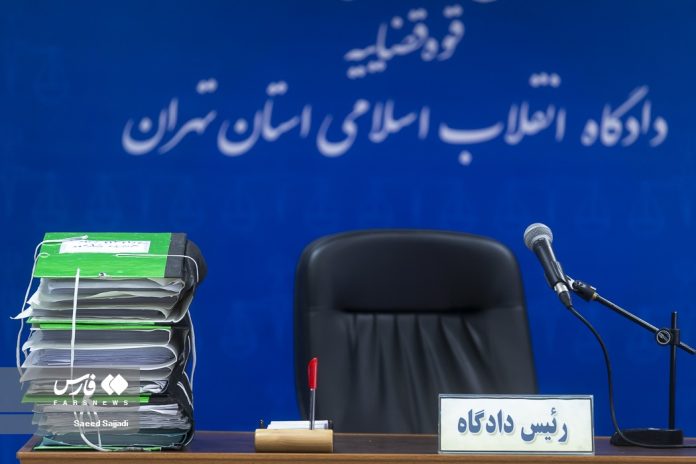
Iran judiciary files legal case against ‘unauthorized’ concert

Iran Court

In response to the release of the video, titled Hypothetical Concert, which lacked legal authorization and failed to comply with the country’s legal and cultural regulations, the judicial authorities have intervened and filed a legal case against the singer and the production team.

Iran has introduced a set of whole new rules and regulations, particularly on female solo performances and certain genres of music deemed inappropriate, since the 1979 Islamic Revolution.

These rules are based on religious and cultural norms and violations can lead to legal consequences.

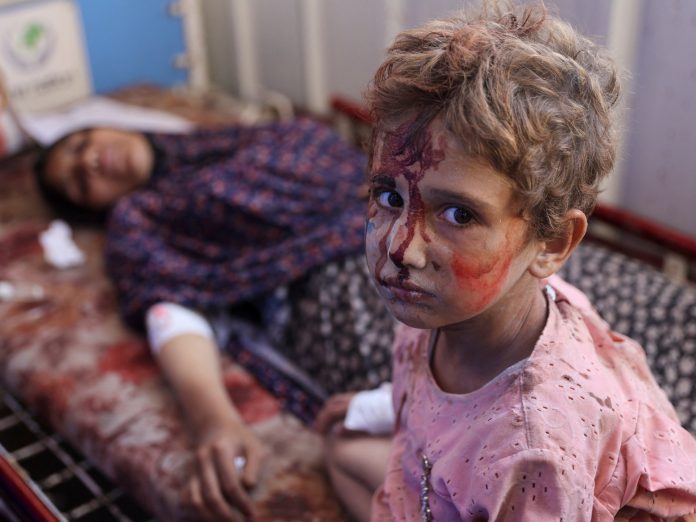
Death feels imminent for 96% of Gazan children: Study

Gaza War

A needs assessment, carried out by a Gaza-based NGO sponsored by the War Child Alliance charity, also found that 92% of the children in the survey were “not accepting of reality”, 79% suffer from nightmares and 73% exhibit symptoms of aggression.

“This report lays bare that Gaza is one of the most horrifying places in the world to be a child,” Helen Pattinson, chief executive of War Child UK, said.

“Alongside the levelling of hospitals, schools and homes, a trail of psychological destruction has caused wounds unseen but no less destructive on children who hold no responsibility for this war,” Pattinson added.

The survey questioned parents or caregivers of 504 children from families where at least one child is disabled, injured or unaccompanied. The sample was split between southern and northern Gaza and was complemented by more in-depth interviews. The survey was carried out in June this year, so is likely to understate the accumulated psychological impact of Gaza’s children now, after more than 14 months of Israel’s assault on the territory.

The estimated death toll in Gaza is more than 44,000 and a recent assessment by the UN Human Rights Office found that 44% of the fatalities it was able to verify were children.

The new psychological survey published on Wednesday was carried out by ​​a Gaza-based organisation, the Community Training Centre for Crisis Management, with backing from the Dutch Relief Alliance as well as the War Child Alliance.

“The psychological toll on children was severe, with high levels of stress manifested in symptoms such as fear, anxiety, sleep disturbances, nightmares, nail biting, difficulty concentrating and social withdrawal,” the report said.

It added, “Children have witnessed the bombing of their homes and schools, experienced the loss of loved ones, and have been displaced or separated from their families while fleeing for safety.”

About 1.9 million Palestinians in Gaza, approximately 90% of the territory’s total population, have been displaced, many several times. Half of that number are children who have lost their home and been forced to flee their neighbourhoods.

More than 60% of the surveyed children reported having experienced traumatic events during the war and some had been exposed to multiple traumatic events.

An estimated 17,000 children in Gaza are unaccompanied, separated from their parents, although the study notes the real number may be much higher.

The report warns: “Being separated from their families places these children at a heightened risk of exploitation, abuse and other serious violations of their rights.”

“As a result of such exposure, children develop responses that may persist long after the war has ceased, profoundly affecting their daily lives,” it adds.

“Traumatic responses can manifest in various ways, including ongoing emotional distress, anxiety, behavioural changes, difficulties in relationships, regression, nightmares, sleep disturbances, eating issues, and physical symptoms such as pain,” it says.

The sense of being doomed has become pervasive. Almost all the children (96%) felt their death was imminent, and 49% actually wished to die, a feeling that was much more prevalent among boys (72%) than girls (26%).

War Child says the charity and its partners have so far been able to reach 17,000 children in Gaza to provide mental health support, but it ultimately aims to reach a million children with psychosocial and other support, in what it says will be the biggest humanitarian response in its three-decade history.

“The international community must act now before the child mental health catastrophe we are witnessing embeds itself into multigenerational trauma, the consequences of which the region will be dealing with for decades to come,” Pattinson stated.

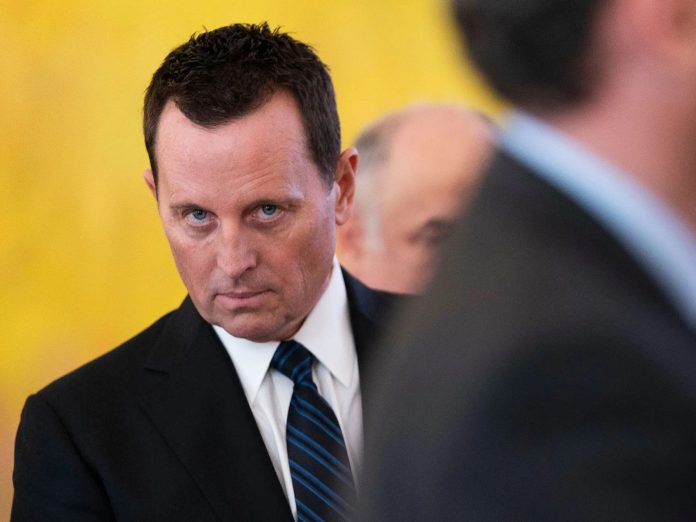
Trump considering ex-intelligence chief as special envoy for Iran

“He’s definitely in the running,” said a person familiar with transition deliberations, who asked not to be identified.

No final decisions on either personnel or strategy on Iran have been made official yet by Trump, including whether to slap fresh sanctions on the country, pursue diplomacy or both in order to halt their nuclear program.

Trump’s plans for the role have not previously been reported.

But his consideration of a key ally for such a posting sends a signal to the region that the new US president may be open to talks with a country he has previously threatened and whose elite Islamic Revolutionary Guard Corps have sought to assassinate him, according to the US government. Iran has dismissed the claim.

In the role, Grenell is expected to be tasked with speaking with countries in and beyond the region about the Iran issue as well as taking Tehran’s temperature on possible negotiations, stated one of the people.

Iran’s President Masoud Pezeshkian said following Trump’s election that Tehran must “deal with the US” and “manage” relations with its arch-foe.

It’s not the first job Trump has considered for Grenell, who served as Trump’s ambassador to Germany, a special presidential envoy for Serbia and Kosovo peace negotiations, and as acting director of national intelligence during Trump’s 2017-2021 term.

After campaigning for Trump in the lead up to the Nov. 5 election, he was a top contender to be secretary of state and for special envoy for the Ukraine war. Those jobs went to US Senator Marco Rubio and retired lieutenant general Keith Kellogg, respectively. Trump takes office next month.

During his first term in office, in 2020, Trump ordered a US air attack that killed Iran’s top military commander, Qassem Soleimani.

Trump in 2018 also reneged on a nuclear deal struck by his predecessor Barack Obama in 2015 and re-imposed US economic sanctions on Iran that had been relaxed.

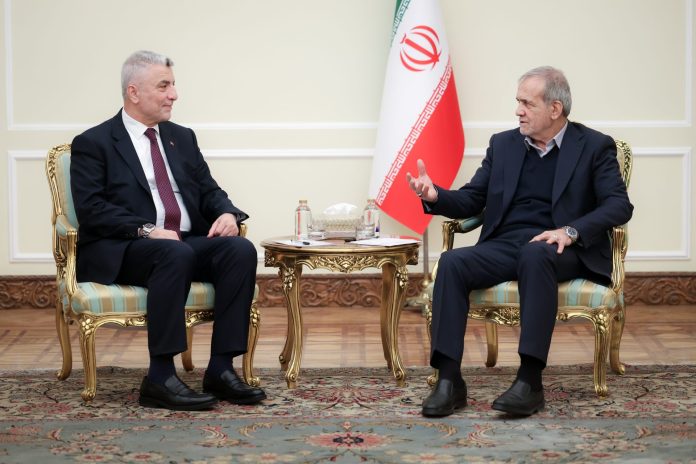
Iran’s president says regional developments demonstrate Israel’s exploitation of discord within Muslims

“What is happening in the region shows that the Zionist regime is exploiting division among Islamic countries”, the Iranian president said on Wednesday as he hosted Turkish Trade Minister Omer Bolat in Tehran.

Pezeshkian added that the Israeli regime “is conducting aggression on Gaza, Lebanon, and Syria, killing Muslims. If we put aside our differences, the Islamic world will become more powerful.”

He also stated that that Islamic countries should continue to develop their ties, which will benefit the entire Islamic world, making the “Zionist regime and other powers not dare commit crimes and interfere in Muslim affairs”.

Islamic nations should resolve their problems in a brotherly way and in practice not just in words, Pezeshkian stressed.

Elsewhere in his remarks, the Iranian president said that his country seeks to eliminate the dollar from its transactions with Turkiye in the face of unfair sanctions by the US and Europe.

The Turkish trade minister, for his part, stated that his country intends to increase its trade with Iran to $30 billion, stressing that Ankara is doing all it can to realize that goal.

In addition, Omer Bolat added, Turkiye wants to renew its 25-year trade agreement with Iran in the energy sector.

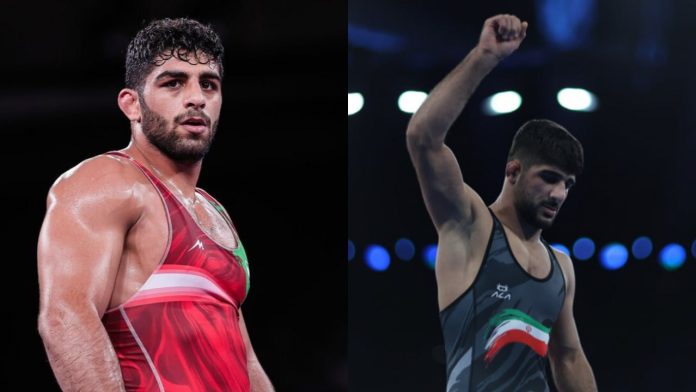
Iran’s Esmaeili, Saravi crowned among world’s top Greco-Roman wrestlers

The latest ranking by the United World Wrestling Federation for 2024 places Saeid Esmaeili and Mohammad Hadi Saravi, who clinched gold medals at the Paris Olympics, at the top of the 67 kg and 97 kg weight classes, respectively.

The final ranking of the world’s best Greco-Roman wrestlers in 2024 puts Eldaniz Azizli in the 55 kg category from the Republic of Azerbaijan on the top spot.

China’s Liqchao emerged as the leader in the 60 kg category, while Kazakhstan’s Yerzhan Zalirkasin took first place in the 63 kg category.

In the 72 kg category, Elvin Mursaliyev from the Republic of Azerbaijan claimed the top ranking.

Japan’s Nao Kusaka led the 77 kg category, and Hungary’s Erik Silowasi dominated the 82 kg category.

Semen Novikov from Bulgaria topped the 87 kg category. Lastly, Yasmani Fernandez from Chile was ranked first in the 130 kg category.

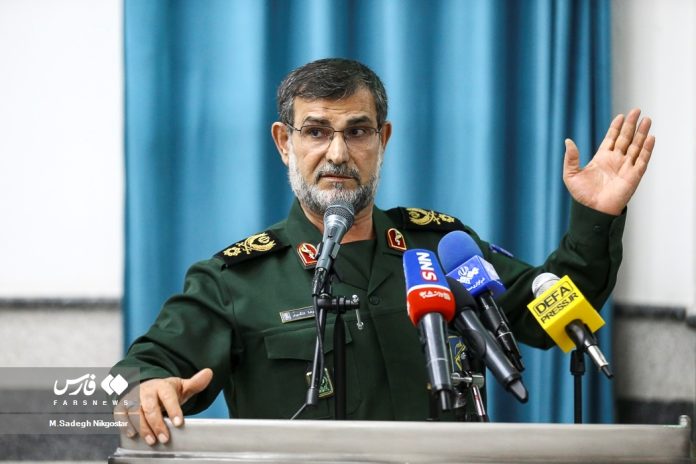
Senior commander says Iran’s new drone to ‘surprise world’

Rear Admiral Alireza Tangsiri

Tangsiri on Wednesday announced the pending integration of the groundbreaking and uniquely advanced unmanned aerial vehicle into the force.

Speaking on the sidelines of the 12th edition of the Islamic Republic’s International Aerospace Exhibition on the Kish Island in the country’s southern waters, he said the aircraft that has been developed in cooperation between the IRGC Navy and Iran’s Defense Ministry “will surprise the world”.

“The horizon of joint cooperation between the IRGC Navy and the ministry will change” upon integration of the aircraft into the force, Tangsiri noted, asserting that the drone would not serve as the last instance of collaboration between the two sides.

“We will, in fact, change the horizon (of the bilateral cooperation)” through unveiling of the aircraft, the commander added.

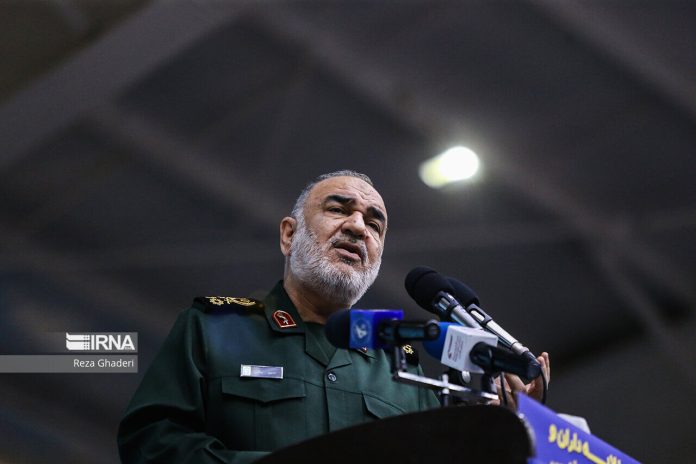
General Salami: IRGC forces last personnel to leave Syria after Assad’s fall

Hossein Salami

During a briefing with IRGC commanders, General Salami highlighted Syria’s unique stance among Arab countries in opposing Zionism and refusing any ‘peace plans’ with Israel, noting Syria’s historical victory in reclaiming the Quneitra province from Israeli occupation during the Arab-Israeli conflicts.

General Salami explained that Western forces could not eliminate Iran’s spiritual influence through conventional means, thus they “resorted to creating extremist groups as a countermeasure.”

He detailed that approximately 300,000 extremists were brought into Syria and Iraq with the aim of massacring Shia Muslims and destroying religious sites.

The commander praised Iran’s significant efforts to combat these groups, stating, “The direct military presence and advisory roles played by the IRGC, under the command of the late General Qassem Soleimani, were crucial in curbing the spread of extremism.”

“Combating dangerous Takfiri movements was a great service that the Islamic Republic rendered to all of humanity,” he added.

Citing Iran’s intelligence data, he warned that the threat of extremism persists.

General Salami also reiterated Iran’s continued support for Hezbollah and Palestinian resistance movements in the face of Israel’s aggressions.